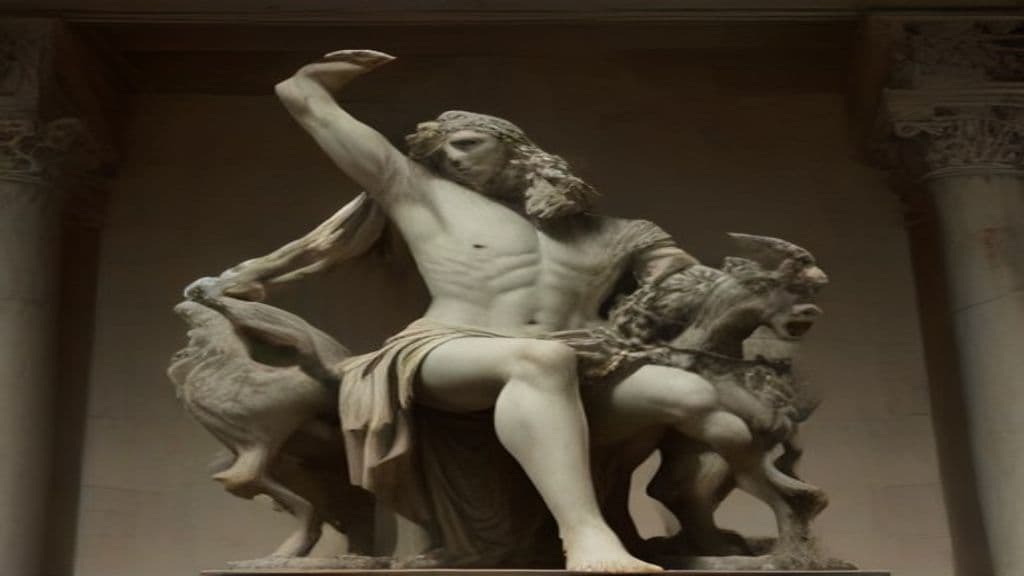
Deiphobos is attested in the epic cycle and later literature as one of the sons of King Priam and Queen Hecuba of Troy. Classical summaries identify him among Priam's children and rank him as 'the greatest of Priam's sons after Hector,' placing him within the royal household and the social-political order of Troy during the mythic Trojan War.
Classical and later summary sources provided do not offer a detailed physical description of Deiphobos. He is portrayed narratively as a princely warrior and member of Priam's household in the scenes and set pieces of the Trojan War and the sack of the city, but extant supplied materials do not record specific bodily, facial, or costume attributes.
In the literary tradition summarized by the sources, Deiphobos functions as an active warrior in the Trojan War. Secondary summaries state he 'killed four men of fame' in the conflict; specific traditions (citing Apollodorus in summary) report that Deiphobos threw a spear that killed Ascalaphus. He appears in combat episodes, seeks support from fellow Trojan leaders (one scholarly commentary notes a moment where his reaction is to seek Aeneas' support), and is associated with narrative actions around his household during the fall of Troy.
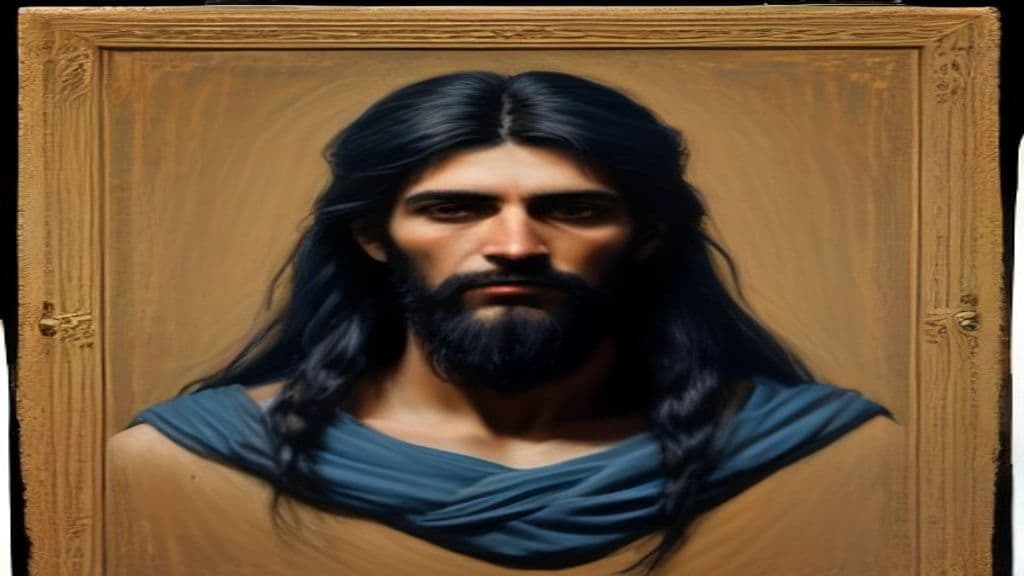
*Péh₂usōn (reconstructed)
Péh₂usōn is a hypothetical Proto‑Indo‑European pastoral guardian reconstructed by comparative scholars from parallels in Greek and Vedic traditions. Proposed as a Graeco‑Aryan ancestor‑figure, the reconstruction describes a protector of flocks, roads, and travellers rather than an attested historical cultic personality.
Aba (disambiguation / name-form)
Aba is a polyvalent name-form attested across many unrelated contexts (place names, personal names, animal names, and brief mythological listings). The provided sources do not support a single, coherent supernatural entity called "Aba" and offer no descriptive or ritual material for such a being.
Abandinus
Abandinus is a locally attested Romano‑Celtic theonym known from a single inscribed bronze feather (votive object) dedicated at Godmanchester (the Roman fort Durovigutum) in Cambridgeshire. Scholars interpret him as a local god or male spirit tied to a specific place and possibly associated with a nearby spring or stream; this association is tentative and based on etymological readings of the name.
Abarbarea
Abarbarea is a name attested in classical Greek and Roman sources for freshwater nymphs (naiads). The name appears for at least two individual mythic figures — a naiad wife of Bucolion and a naiad counted among ancestors of the Tyrians — and Hesychius records plural forms that may indicate the name was also used as a class-name (Abarbareai / Abarbalaiai).
Abas
Abas (Ancient Greek: Ἄβας, gen.: Ἄβαντος) is not a single mythic being but a recurring personal name borne by multiple mortals and minor mythic figures in Greek epic and genealogical traditions — kings, founders, seers, warriors, attendants, a centaur, and a youth transformed by a goddess. The name is glossed in the sources as 'guileless' or 'good-hearted' and appears across Argive, Theban, Trojan, Euboean, and other local cycles.
Abderus
Abderus (Ancient Greek: Ἄβδηρος, romanized Ábdēros) is a mortal heroic figure in Greek myth closely associated with Heracles, remembered as the youth left in charge of the Mares of Diomedes who was killed by them. He functions as an eponymous local/divine-hero ancestor for the city of Abdera and received funerary commemoration and athletic agones at his tomb.
Abdiel
Abdiel (Hebrew עֲבְדִּיאֵל) is primarily a theophoric Hebrew personal name meaning "servant of El/servant of God," attested once in the Hebrew Bible (1 Chronicles 5:15). In later literature—most notably John Milton's Paradise Lost—Abdiel is reimagined as a faithful seraph who opposes Satan's revolt. The provided sources do not treat Abdiel as an autonomous folkloric spirit type or record rituals or wards associated with the name.
Abellio
Abellio is a theonym attested in Roman‑period inscriptions from the Comminges area of the Pyrenees and reported as worshipped in the Garonne Valley of ancient Gallia Aquitania. Surviving evidence is limited to a small number of inscriptions; scholars have variously hypothesized solar or arboreal associations and compared the name to forms of Apollo or to Celtic Belenus, but the deity's precise role in local cosmology remains uncertain.
Abiel
Abiel is attested in the supplied sources only as a male given name — borne by several historical American individuals and listed as two minor biblical figures. The provided materials contain no evidence presenting Abiel as a supernatural, mythological, or folkloric entity.
Abigail
Abigail is a female figure in the Hebrew Bible portrayed in 1 Samuel 25 as the intelligent and beautiful wife of Nabal who intervenes to prevent David from committing violence; later tradition regards her as one of the Tanakh's seven female prophets and as a model of beauty and wisdom.
Abnoba
Abnoba is a Gaulish theonym and toponym attested in Roman-era sources and inscriptions: a localized deity associated with woods, springs and the sources of rivers (notably the Danube) and simultaneously the name applied to a mountain or mountain range in the Black Forest/Baar/Odenwald region. Roman altars equate her with Diana, reflecting syncretic cult practice in frontier provinces.
Abomination of Desolation
An apocalyptic prophetic phrase originating in the Book of Daniel designating a profaning thing or act that renders the Jerusalem Temple cult desolate; later reused in the Synoptic Gospels as an eschatological sign prompting urgent flight. The term denotes ritual/cultic impurity (Hebrew shiqquts) and is variously interpreted as pagan offerings or altar, a foreign cult statue, or (in some New Testament readings) an acting agent.
Community Record
- [1]Deiphobus (Wikipedia). "In Greek mythology, Deiphobos was a son of Priam and Hecuba. He was a prince of Troy, and the greatest of Priam's sons after Hector." and "Deiphobos killed four men of fame in the Trojan War."wiki
- [2]Virgil / Chaucer backstory (faculty.goucher.edu). "Those readers would have known, as Chaucer did, that we know what happens at Deiphobos house the night Troy fell, and what happened to Deiphobos, Helen, Hector, and Troilus."literary
- [3]Virgil commentary (faculty.goucher.edu). "Why is Deiphobos house the first to be consumed in flames." (discussion of Deiphobos' house in accounts of Troy's fall)literary
- [4]A Pragmatic and Sociolinguistic Account of δαιµόνιε in Early Greek Epic — H. Paul Brown. "Deiphobos reaction, 13.458459, is to seek support from Aeneas." (scholarly article commenting on epic lines and reactions)academic
- [5]Ascalaphus (son of Ares) (Wikipedia). Cites Apollodorus: 'Deiphobos threw a spear and killed him.' (summary referencing the killing of Ascalaphus by Deiphobos)wiki
- [6]Deiphobos — Meaning (babynamespedia). "Deiphobos language of origin is Old Greek. The name is of the meaning 'fear'." (name-meaning source)other