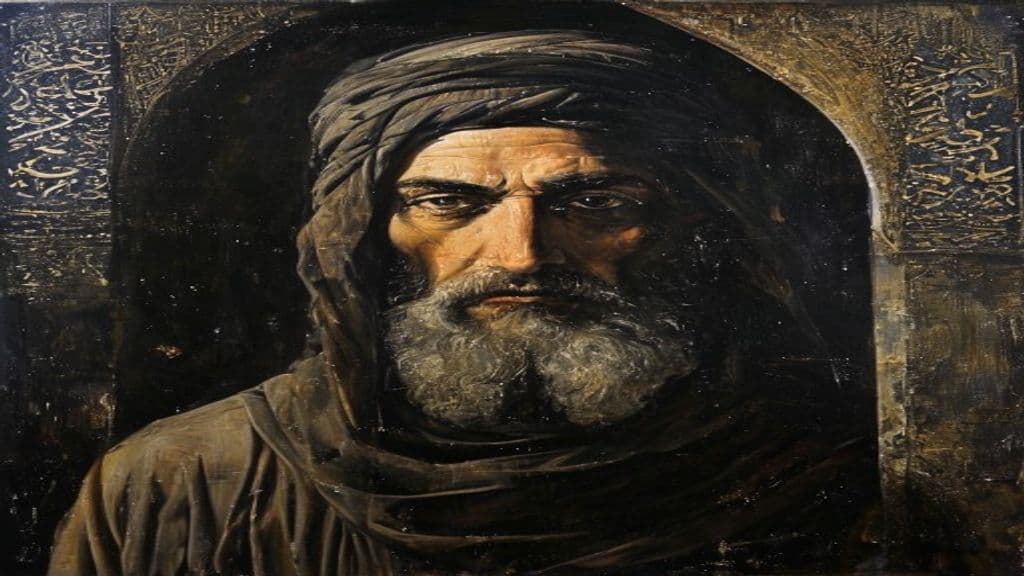
The sources do not describe Allah as a created or mythic-born being; rather, Islamic theology presents Allah as the transcendent, uncreated creator and sovereign of the universe. Linguistically, most scholars represented in the sources understand the Arabic form Allāh as derived by contraction from al- + ilāh (literally 'the deity' or 'the God'). Historical evidence summarized in the sources shows the term pre-dating Islam in Arabian contexts where it could denote a supreme or remote deity invoked alongside local gods; Arabic-speaking Christians and Jews also used cognate forms for God. Alternative etymological proposals (e.g., Syriac loan or other grammatical derivations) are noted in the literature as minority or debated hypotheses.
The provided sources record no anthropomorphic or iconic representation of Allah. Wikipedia notes explicitly that 'No iconic representation of Allah is known to have existed.' Theological and historical materials treat Allah as transcendent and beyond pictorial depiction, and the sources do not supply physical descriptions.
Within the supplied material Allah is presented as the singular, sovereign creator and governor of the universe in Islamic theology. The term functions as God's most unique proper name (Lafẓ al-Jalālah) and theological literature attributes divine names and attributes to Allah. The provided hadith material frames divine attributes in ethical teaching (for example, 'Allah is Beautiful and loves beautification'), linking God's attributes to moral instruction; beyond general creator/sovereign status and such attribute-language, the sources do not enumerate further specific supernatural actions.
A'ra
No reliable sources in the supplied material establish A'ra as a distinct supernatural entity. The token "A'ra" appears in the dataset as (a) part of general references to pre-Islamic Arabian deities, (b) a modern Korean female given name (A-ra/아라), and (c) an Arabic toponym (A'ra, one village merged into Ar'ara).
Ababil
Ababil (Arabic: أبابيل, romanized abābīl) are miraculous birds mentioned in the Qur'anic account of Surah Al‑Fil. In Islamic tradition they appear as a divinely sent avian host that defended the Kaaba by pelting an invading army with small clay stones; tradition places the event in the year traditionally given as 570 CE.
Abaddon
In Hebrew scripture Abaddon is primarily a noun meaning 'destruction' or a section/condition of the underworld paired with Sheol; in the New Testament Book of Revelation Abaddon is personified as an angelic figure (Greek Apollyon) described as the king of an army of locusts released from the abyss during the apocalypse.
Abadir
Abadir is a polysemous name attested in distinct cultural contexts: a legendary founding saint and clan ancestor in eastern Ethiopia (Sheikh Abadir Umar Al‑Rida / Aw Abadir), a term applied to cone‑shaped cult stones in Phoenician religious description, and a personal name of a martyr (Abadir/Apater) in the Coptic Synaxarium. The attestations are independent usages of the same name rather than a single supernatural being.
Abadiu of Antinoe
Abadiu of Antinoe was a fourth‑century bishop of Antinoe (Antinoopolis, in Roman Egypt) commemorated as a martyr and saint in the Coptic Orthodox Church, with a feast day on 26 December. Sources record that he was killed during a theological dispute with Arian opponents and reference him in collections of Egyptian martyrs.
Abagtha
Abagtha (Hebrew: אבגתא, ’Ǎḇaḡṯā) is a named human court official in the Hebrew Bible’s Book of Esther, listed among seven chamberlains who ministered before King Ahasuerus and were commanded to bring Queen Vashti before the king. He is attested only in Esther 1:10 and is presented as an institutional palace attendant rather than a supernatural being.
Abanoub
Abanoub is a 4th‑century Egyptian Christian child martyr venerated in the Coptic tradition. Remembered for his public confession of Christ, miraculous healings associated with his passion, and the translation and veneration of his relics, his feast is observed on July 31 (Epip 24) and his cult centers include Nehisa and Samanoud.
Abaskhiron the Soldier
A Coptic Orthodox martyr venerated for refusing imperial idolatry during the Diocletian persecution; reputedly healed by the Archangel Michael, preserved in monastery relics, and commemorated on 14 June (7 Paoni).
Abdel Messih El-Makari
Abdel Messih El-Makari (1892–1963) was a Coptic Orthodox monk and priest venerated as a 20th‑century Coptic saint. Associated with the Monastery of Saint Samuel the Confessor and the Monastery of Saint Macarius (Scetes/Wadi El‑Natrun), he is remembered for humility, asceticism, charity, and reported spiritual gifts such as prescience, discerning of spirits, and healing.
Abdul Qadir Gilani
A historical 11th–12th century Hanbali jurist, preacher, and Sufi shaykh who became the eponym and principal early figure of the Qadiriyya tariqa; venerated in Sunni Sufi traditions as an Awliya (saint) and often given exalted hagiographical ranks such as Muḥi al‑Dīn and Ghawth.
Abel
Abel is the second son of Adam and Eve in the Genesis narrative, a shepherd whose accepted offering and subsequent murder by his brother Cain form the biblical account of the first death. Later interpretive traditions expand his role, treating him as an archetypal righteous victim, a postmortem avenging or adjudicating figure, and in some systems (notably Mandaean) identifying him with an angelic lightbeing.
Abgal
Abgal (Arabic: أبغال) is a pre‑Islamic local tutelary figure attested in the Palmyrene cultural sphere (c. 154–270 AD), primarily venerated by nomadic Arab groups in the Syrian desert. He appears in inscriptions and reliefs as one of a constellation of armed, mounted protective deities associated with caravan and nomadic protection, though no ritual texts survive in the cited sources.
Community Record
- [1]Allah - Wikipedia. Wikipedia contributors, 'Allah', Wikipedia, The Free Encyclopediawiki
- [2]Muslim: Hadith on arrogance and divine beauty (Archive recording). Archive: Heart Therapy 13 - Arrogance (hadith excerpt reported by Muslim (91))folk
- [3]Muslim di Lithuania! Ya Allah Bawa Aku Kembali (Archive). Archive devotional material (Muslim life reflections)folk
- [4]Keseimbangan Hidup Berkomunitas dan Sendirian (Archive). Archive devotional/practical reflections (listening to God's voice in solitude)folk