
The lexeme derives from the Proto-Slavic root běsъ and belonged to the pre-Christian Slavic supernatural vocabulary as a named class of harmful spirits. With the acceptance of Christianity across Slavic lands the bies concept was syncretized into Christian demonology: the term came to be used interchangeably with chort/čort in some contexts and was used to translate New Testament terms for malign spirits (for example, Russian biesy is used in translations of Mark 5:12 to render the devils entering the swine). Literary authors in later centuries—Pushkin, Dostoevsky, Sologub and others—continued to employ the term, sometimes metaphorically, so that bies retained both its older spirit-entity identity and a role as a cultural symbol of inner disorder or social evil.
The provided sources do not record a consistent traditional physical description for the bies; ethnographic or canonical folk texts giving standard corporeal features are absent from the cited materials. Instead, the term appears mainly in lexical, scriptural-translation, and literary contexts. Modern popular culture has produced corporeal images—e.g., the video game The Witcher 3 uses the word bies for a fictional monstrous, horned predator with special powers—but such portrayals are explicitly modern fictional adaptations and are not attested as traditional Slavic descriptions in the sources provided. Literary references (for example, Pushkin's 'Old Bies' or Dostoevsky's Besy) use the name in narrative and symbolic registers rather than as ethnographic portraiture.
In traditional and linguistic evidence bies functions as an evil or malign spirit whose identity was mapped onto the Christian devil and demonic beings; through this association it carries the same broad attributes found in scriptural contexts—causing affliction, spirit-possession, and moral or mental disturbance. The use of biesy in Russian translations of Mark 5:12 links the term to the New Testament motif of demons entering animals, while Slavic lexical reflexes (Polish zbiesić się, Ukrainian bisy/bisytysia, Slovenian/Croatian/Serbian bes/bijes meaning 'rage' or 'fury') show a semantic range that includes inducing madness, frenzy, or overwhelming violent affect. Specific supernatural powers or a detailed catalogue of abilities (e.g., hypnotism, self-healing) are not recorded for the traditional bies in the supplied sources and where such attributes appear (as in The Witcher 3) they are modern fictional inventions.

Chort
A chort is an anthropomorphic malign spirit figure in Slavic folk tradition that occupies a liminal space between older Slavic demonology and Christian notions of the devil. Depending on region and narrative function it appears as numerous lesser malignant spirits, a trickster antagonist who tempts or is tricked by humans, or as a cover-term for 'unclean forces' credited with various negative creations in the world.
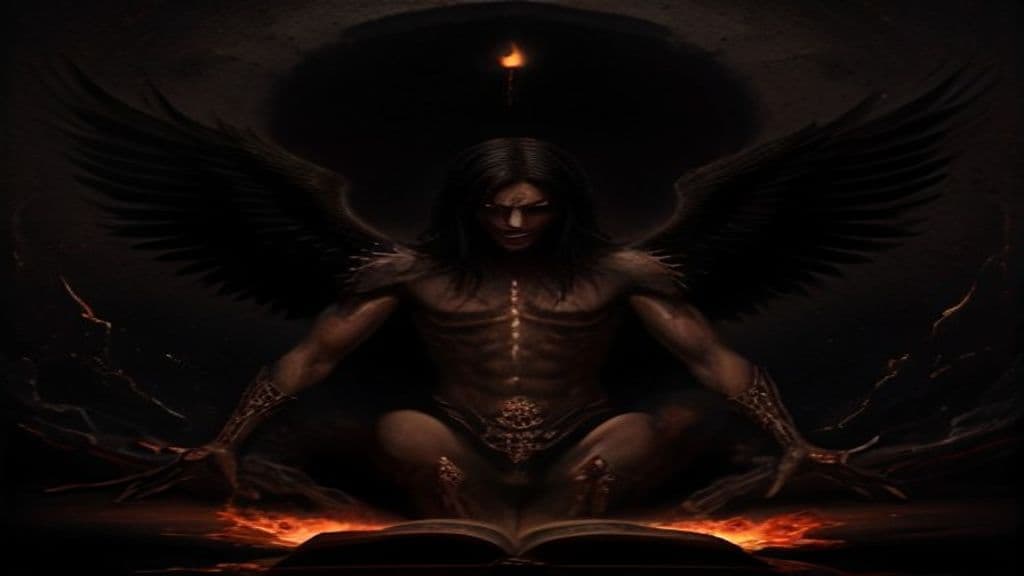
Iblis
The primordial deceiver in Islamic theology; a jinn who refused God's command to bow before Adam and was expelled from heaven. The source of all temptation and whispered suggestion.

Strigoi
The vampire of Romanian folklore — either a living witch (strigoi viu) or an undead blood-drinker (strigoi mort). The source tradition from which the literary vampire emerged.

La Llorona
The Weeping Woman of Mexican folklore — the ghost of a mother who drowned her children and now wanders rivers and lakes, weeping for them and taking other children she finds at night.

Banshee
A female spirit of Irish and Scottish folklore whose wail heralds an impending death in a family of Gaelic descent. Not a cause of death — a witness to it.

Churel (Chudail)
A South Asian female revenant or vengeful ghost associated with women who die cruelly or unpurified; often said to target male relatives and sometimes described as latching onto trees, producing a tree‑attached tree‑spirit variant in local tales.
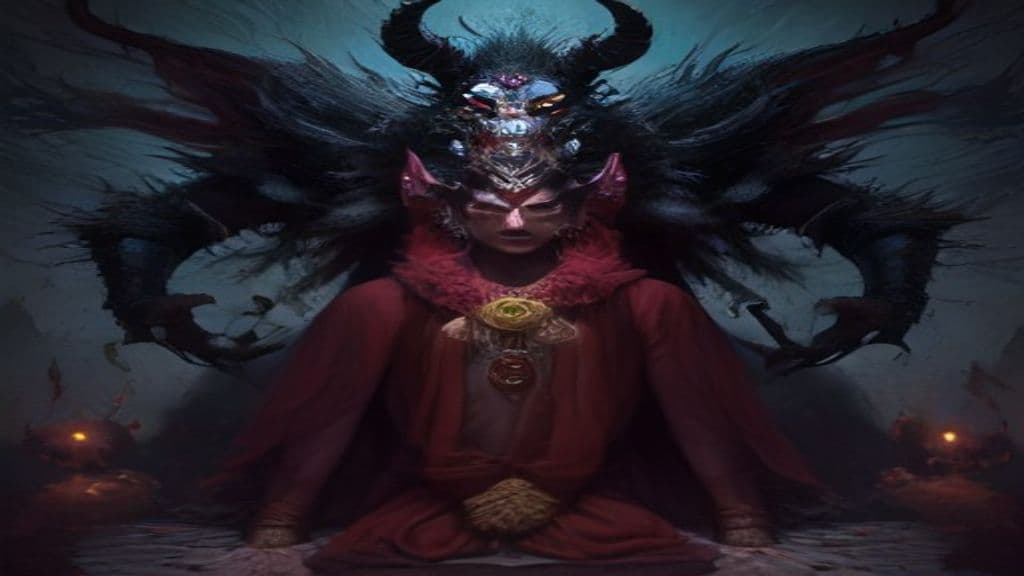
Rakshasa (Himalayan variants)
A Himalayan reception of the pan-Indian rakshasa motif: hostile or disruptive non‑human beings known from Sanskrit epic and Puranic literature, here noted where Himalayan sources and discussions intersect with the broader epic tradition. The supplied sources do not document distinct, well‑attested Himalayan folklore variants; the entry therefore presents primarily the epic/legendary profile as transmitted into Himalayan contexts in general references.

Bhoot (bhoota)
A bhoot (also bhoota, bhoot, bhut) is the culturally specific term across parts of the Indian subcontinent for a perturbed, restless spirit generally understood to be the ghost of a deceased person. Sources describe bhoots as arising when a person's death or post-death circumstances prevent them from moving on — for example violent death, unresolved affairs, or failures in funerary rites — and the term appears frequently in modern South Asian media and discussions.
Abaddon
In Hebrew scripture Abaddon is primarily a noun meaning 'destruction' or a section/condition of the underworld paired with Sheol; in the New Testament Book of Revelation Abaddon is personified as an angelic figure (Greek Apollyon) described as the king of an army of locusts released from the abyss during the apocalypse.
Abadir
Abadir is a polysemous name attested in distinct cultural contexts: a legendary founding saint and clan ancestor in eastern Ethiopia (Sheikh Abadir Umar Al‑Rida / Aw Abadir), a term applied to cone‑shaped cult stones in Phoenician religious description, and a personal name of a martyr (Abadir/Apater) in the Coptic Synaxarium. The attestations are independent usages of the same name rather than a single supernatural being.
Abadiu of Antinoe
Abadiu of Antinoe was a fourth‑century bishop of Antinoe (Antinoopolis, in Roman Egypt) commemorated as a martyr and saint in the Coptic Orthodox Church, with a feast day on 26 December. Sources record that he was killed during a theological dispute with Arian opponents and reference him in collections of Egyptian martyrs.
Abagtha
Abagtha (Hebrew: אבגתא, ’Ǎḇaḡṯā) is a named human court official in the Hebrew Bible’s Book of Esther, listed among seven chamberlains who ministered before King Ahasuerus and were commanded to bring Queen Vashti before the king. He is attested only in Esther 1:10 and is presented as an institutional palace attendant rather than a supernatural being.
Abanoub
Abanoub is a 4th‑century Egyptian Christian child martyr venerated in the Coptic tradition. Remembered for his public confession of Christ, miraculous healings associated with his passion, and the translation and veneration of his relics, his feast is observed on July 31 (Epip 24) and his cult centers include Nehisa and Samanoud.
Abaskhiron the Soldier
A Coptic Orthodox martyr venerated for refusing imperial idolatry during the Diocletian persecution; reputedly healed by the Archangel Michael, preserved in monastery relics, and commemorated on 14 June (7 Paoni).
Abdel Messih El-Makari
Abdel Messih El-Makari (1892–1963) was a Coptic Orthodox monk and priest venerated as a 20th‑century Coptic saint. Associated with the Monastery of Saint Samuel the Confessor and the Monastery of Saint Macarius (Scetes/Wadi El‑Natrun), he is remembered for humility, asceticism, charity, and reported spiritual gifts such as prescience, discerning of spirits, and healing.
Abel
Abel is the second son of Adam and Eve in the Genesis narrative, a shepherd whose accepted offering and subsequent murder by his brother Cain form the biblical account of the first death. Later interpretive traditions expand his role, treating him as an archetypal righteous victim, a postmortem avenging or adjudicating figure, and in some systems (notably Mandaean) identifying him with an angelic lightbeing.
Abib and Apollo
Abib and Apollo are Christian ascetics and hagiographic saints of Akhmim (Upper Egypt) attested in Coptic sources and the Historia Monachorum. Remembered for extreme asceticism, monastic leadership, angelic encounters, and inclusion in the Coptic Synaxarion (feast day November 4).
Abiel
Abiel is attested in the supplied sources only as a male given name — borne by several historical American individuals and listed as two minor biblical figures. The provided materials contain no evidence presenting Abiel as a supernatural, mythological, or folkloric entity.
Abijah of Judah
Abijah (also Abijam or Abiah) is presented in the biblical and later interpretive traditions as a short-reigning human king of Judah from the Davidic line. He is portrayed as a dynastic successor whose military actions (notably the battle at Mount Zemaraim) and moral evaluation in rabbinic literature are interpreted theologically in relation to the Davidic covenant.
Abimelech
Abimelech is a Hebrew personal name and occasionally a regnal title attested in the Hebrew Bible and later traditions. It appears as the name/title of Philistine rulers in the patriarchal narratives (the "king of Gerar" who interacts with Abraham and Isaac) and as the personal name of Abimelech son of Jerubbaal (Gideon) in Judges, a dynastic usurper whose brief rule ends in violent death.
Community Record
- [1]Bies. Wikipedia contributors, 'Bies,' Wikipedia, The Free Encyclopedia.wiki
- [2]Bies (Wikidata). Wikidata entry Q9634173 for Bies.other