
Scholarly and folkloric accounts place the chort within a history of syncretism. In Slavic pre-Christian frames the lexical root (*čьrtъ) has been connected by different hypotheses to notions of enchantment (*čarъ/*čara 'magic'), to cutting or lameness (*ker- giving forms meaning 'lame' or 'short'), and to drawing a line or furrow (*čersti / čьrtǫ), which has led some scholars to suggest an original fate-determining or draughtsman role. Under Christianization that older profile was merged with concepts of Satan and Hell so that chorts appear in many sources as numerous lesser denizens of Hell or as devilish minions. In some localized narratives a singular chort is even named as a son of mythic figures (one account links a chort to Chernobog and Mara). In Anatolian and Turkic-adjacent materials the cognate Çor occupies a parallel unseen realm of spirits that may be benevolent, malevolent, or neutral, demonstrating cross-cultural exchange in border regions.
Descriptions across Slavic areas portray the chort as an anthropomorphic but clearly nonhuman figure. Common features include horns, a tail, fur, a snout, claws and hooved feet (sometimes a single hoof), and backwards-bent knees or bird-like feet described in Ukrainian accounts as 'chicken' or 'stork' feet. Eyes and tongue are reported as of a 'hellish' colour. Tales emphasize imperfect shapeshifting: a chort may don human clothing to appear as a handsome young man, a count, or a huntsman yet betray itself by small details—hidden small horns in the hair, a single hoof inside a boot, a tail or fur showing under garments. Czech and Slovak descriptions often give the 'true form' as a smallish hairy man with tail, horns and one or two hoofs; Ukrainian descriptions stress a motley, failed-evil look rather than perfect malevolence.
Folktales and ethnographic summaries depict chorts as tricksters and tempters who bargain for human souls or attempt to induce vice (notably greed). In Czech and Slovak narratives the čert repeatedly tempts people to sell their souls for worldly gains but can be outwitted, and in many tales the čert himself is tricked into laborious tasks (building walls, digging ponds, moving stones). Shapeshifting is common but imperfect. In Ukrainian tradition chorts are also credited with producing negative things in the world—folk accounts attribute to them items and features such as vodka, tobacco, cliffs and ravines—and they are described as able to interact physically with the world. Turkic-adjacent Çor materials further describe such beings as sometimes composed of fire yet still able to affect people and objects; moral valence in those contexts can be mixed (Ak-çor = white/good, Kara-çor = black/evil, or neutral). Within folk-Christian framing chorts function as lesser minions of Satan or as inhabitants of Hell under Lucifer.
Weaknesses
- conditionOpposition by Christian authority / exorcism
- ritualÇoraman (Anatolian/Turkic exorcist figure)
Wards
- ritualExorcism/opposition framed by folk Christianity
- ritualÇoraman (named Anatolian exorcist role)

Mara
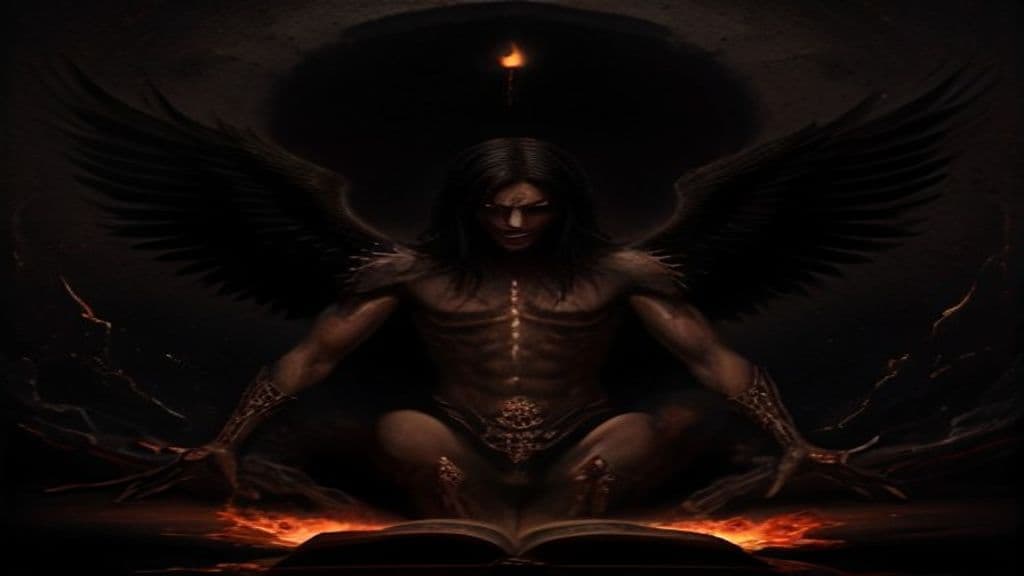
The nightmare spirit of Northern European tradition who rides sleeping people at night, causing suffocation, terror, and the sensation of an invisible weight on the chest.
Iblis
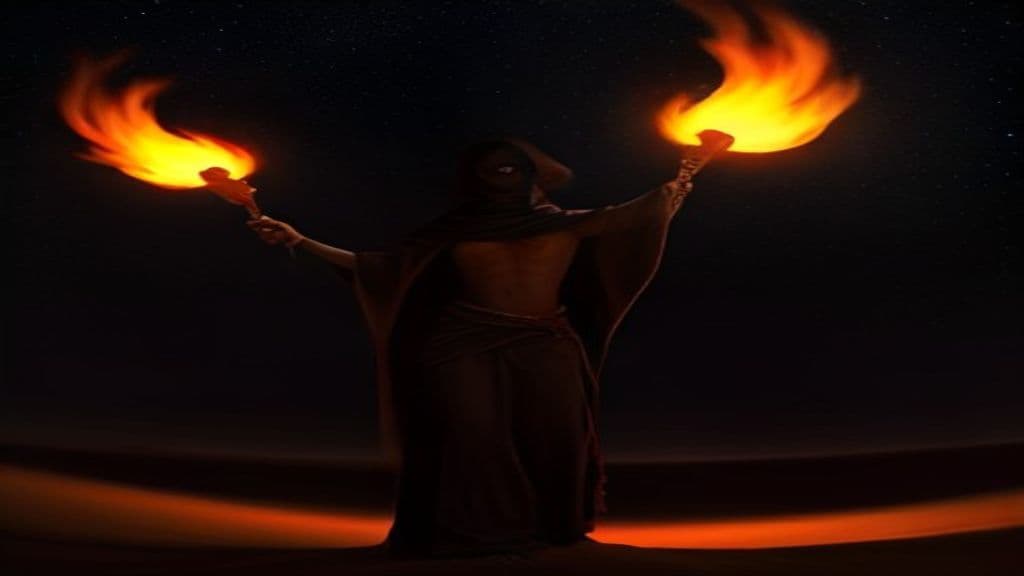
The primordial deceiver in Islamic theology; a jinn who refused God's command to bow before Adam and was expelled from heaven. The source of all temptation and whispered suggestion.
Djinn
The class of supernatural beings created from smokeless fire in Islamic cosmology — a parallel civilization to humanity, capable of belief or unbelief, with their own prophets, society, and judgment before God.
Abaddon
In Hebrew scripture Abaddon is primarily a noun meaning 'destruction' or a section/condition of the underworld paired with Sheol; in the New Testament Book of Revelation Abaddon is personified as an angelic figure (Greek Apollyon) described as the king of an army of locusts released from the abyss during the apocalypse.
Abadir
Abadir is a polysemous name attested in distinct cultural contexts: a legendary founding saint and clan ancestor in eastern Ethiopia (Sheikh Abadir Umar Al‑Rida / Aw Abadir), a term applied to cone‑shaped cult stones in Phoenician religious description, and a personal name of a martyr (Abadir/Apater) in the Coptic Synaxarium. The attestations are independent usages of the same name rather than a single supernatural being.
Abadiu of Antinoe
Abadiu of Antinoe was a fourth‑century bishop of Antinoe (Antinoopolis, in Roman Egypt) commemorated as a martyr and saint in the Coptic Orthodox Church, with a feast day on 26 December. Sources record that he was killed during a theological dispute with Arian opponents and reference him in collections of Egyptian martyrs.
Abagtha
Abagtha (Hebrew: אבגתא, ’Ǎḇaḡṯā) is a named human court official in the Hebrew Bible’s Book of Esther, listed among seven chamberlains who ministered before King Ahasuerus and were commanded to bring Queen Vashti before the king. He is attested only in Esther 1:10 and is presented as an institutional palace attendant rather than a supernatural being.
Abanoub
Abanoub is a 4th‑century Egyptian Christian child martyr venerated in the Coptic tradition. Remembered for his public confession of Christ, miraculous healings associated with his passion, and the translation and veneration of his relics, his feast is observed on July 31 (Epip 24) and his cult centers include Nehisa and Samanoud.
Abaskhiron the Soldier
A Coptic Orthodox martyr venerated for refusing imperial idolatry during the Diocletian persecution; reputedly healed by the Archangel Michael, preserved in monastery relics, and commemorated on 14 June (7 Paoni).
Abdel Messih El-Makari
Abdel Messih El-Makari (1892–1963) was a Coptic Orthodox monk and priest venerated as a 20th‑century Coptic saint. Associated with the Monastery of Saint Samuel the Confessor and the Monastery of Saint Macarius (Scetes/Wadi El‑Natrun), he is remembered for humility, asceticism, charity, and reported spiritual gifts such as prescience, discerning of spirits, and healing.
Abel
Abel is the second son of Adam and Eve in the Genesis narrative, a shepherd whose accepted offering and subsequent murder by his brother Cain form the biblical account of the first death. Later interpretive traditions expand his role, treating him as an archetypal righteous victim, a postmortem avenging or adjudicating figure, and in some systems (notably Mandaean) identifying him with an angelic lightbeing.
Abib and Apollo
Abib and Apollo are Christian ascetics and hagiographic saints of Akhmim (Upper Egypt) attested in Coptic sources and the Historia Monachorum. Remembered for extreme asceticism, monastic leadership, angelic encounters, and inclusion in the Coptic Synaxarion (feast day November 4).
Abiel
Abiel is attested in the supplied sources only as a male given name — borne by several historical American individuals and listed as two minor biblical figures. The provided materials contain no evidence presenting Abiel as a supernatural, mythological, or folkloric entity.
Abijah of Judah
Abijah (also Abijam or Abiah) is presented in the biblical and later interpretive traditions as a short-reigning human king of Judah from the Davidic line. He is portrayed as a dynastic successor whose military actions (notably the battle at Mount Zemaraim) and moral evaluation in rabbinic literature are interpreted theologically in relation to the Davidic covenant.
Abimelech
Abimelech is a Hebrew personal name and occasionally a regnal title attested in the Hebrew Bible and later traditions. It appears as the name/title of Philistine rulers in the patriarchal narratives (the "king of Gerar" who interacts with Abraham and Isaac) and as the personal name of Abimelech son of Jerubbaal (Gideon) in Judges, a dynastic usurper whose brief rule ends in violent death.
Community Record
- [1]Chort — Wikipedia. Wikipedia contributors, 'Chort,' Wikipedia, The Free Encyclopedia.wiki
- [2]Chort in the wild (archival photography). Archive.org collection entry 'Chort in the wild' (photography)other
- [3]Chort Closeshot (archival photography). Archive.org collection entry 'Chort Closeshot' (photography)other
- [4]Notes on Turkic Çor and Anatolian variants (compiled in research notes). Compiled research notes supplied to editor summarizing Turkic cognates Çor, Çorabaş and the exorcist role Çoraman.folk