Di Manes is a deity in Roman folklore, from Ancient Rome. The Di Manes (Latin: di Manes; funerary formula Dis Manibus) are a class of chthonic divine beings in ancient Roman religion identified with the dead. Treated commonly in the plural as a collective of ancestral or underworld spirits (part of the di inferi), they are objects of household and funerary cult, notably honored during the Parentalia and Feralia and invoked on tomb inscriptions.
The Di Manes emerge in Roman funerary and cult practice rather than a single mythic narrative. Epigraphic practice commonly invokes them in the funerary formula Dis Manibus on tombs and dedicatory inscriptions; literary and modern scholarly treatments place them within the broader category di inferi ('those who dwell below'). They are integrated into household- and locality-related divine networks (alongside Lares, Genii, and Penates) and figure centrally in family rites of remembrance such as Parentalia and Feralia. There is no single mythic origin in the supplied sources; the category develops as a ritual and linguistic way of addressing the divine dead.
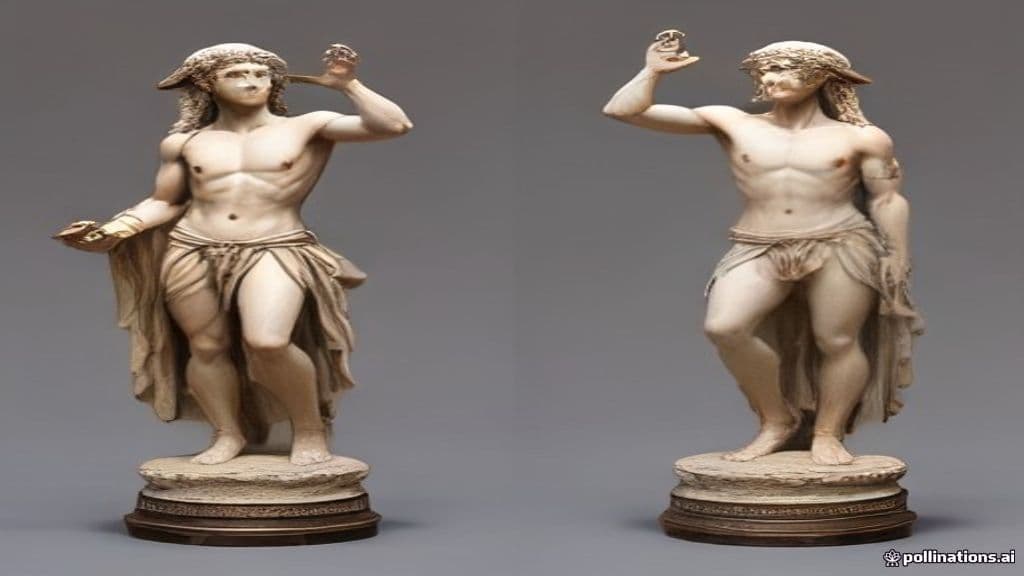
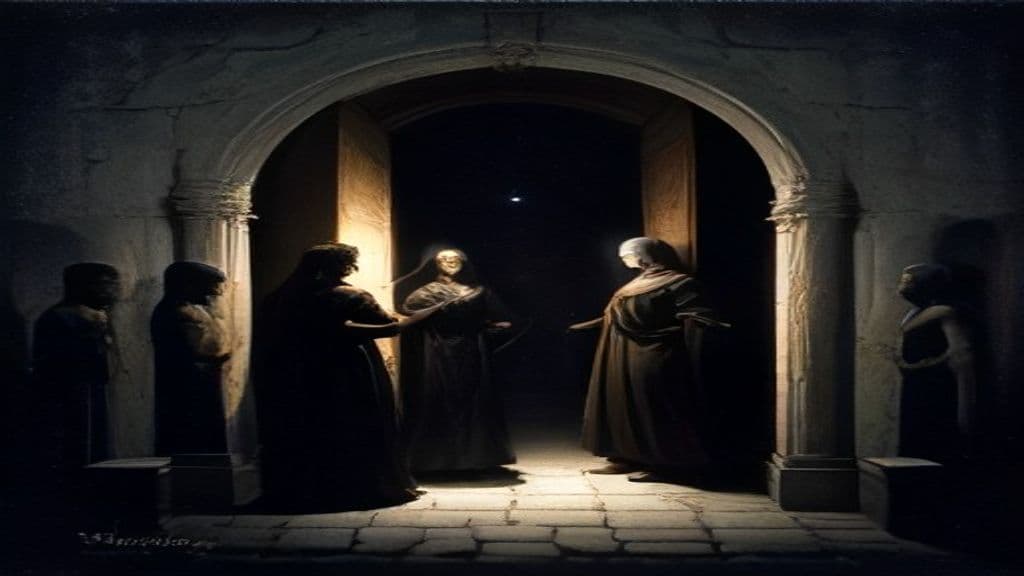
Primary sources in the supplied material do not provide a consistent or authoritative physical description. In the extant evidence the Manes are treated chiefly as cultic, chthonic presences and as the spirits of the dead; inscriptions and ritual contexts imply non-corporeal ancestral presences rather than standardized iconography. Popular/antiquarian etymological suggestions (e.g., manis/manus = 'kindly') have been offered to explain euphemistic naming, but these remain interpretive and do not supply reliable visual detail.
Sources describe the Manes functionally rather than as agents with enumerated supernatural powers: they are recipients of ritual honor (household offerings, funerary dedications) and belong to the underworld/divine-dead domain (di inferi). Their social role is to be propitiated in family and public rites (notably Parentalia and Feralia) and to maintain reciprocal obligations with the living through memory and cult. While other Roman categories of restless dead (e.g., Lemures, Larvae) are sometimes contrasted with the Manes in modern discussion, the supplied evidence emphasizes the Manes as propitiable, cult-integrated spirits; the temperament of individual Manes is therefore variable and sometimes ambiguous in secondary commentary.
Weaknesses
- conditionneglect of funerary cult (leads to problematic dead rather than a named weakness)
Wards
- ritualProper funerary and commemorative cult (Parentalia, Feralia, household offerings)
Lares
Lares are numerous tutelary guardian divinities in Roman religion, each tied to a bounded place or social domain (household, crossroads, roads, fields, sea, city). They are invoked and maintained through domestic and local cult to observe and protect what occurs within their jurisdiction.
Lemures
The malevolent restless dead of Roman religion — spirits of those who died without proper burial or with unresolved grievances, haunting their former homes until appeased.

Di inferi
A ritual-technical collective in Roman religion denoting the gods and powers 'below' (the underworld), the di inferi comprise chthonic deities, ancestral forces (often overlapping with the Manes), and other underworld entities who receive burnt offerings and are propitiated outside Rome's sacred boundary.
Abandinus
Abandinus is a locally attested Romano‑Celtic theonym known from a single inscribed bronze feather (votive object) dedicated at Godmanchester (the Roman fort Durovigutum) in Cambridgeshire. Scholars interpret him as a local god or male spirit tied to a specific place and possibly associated with a nearby spring or stream; this association is tentative and based on etymological readings of the name.
Abarbarea
Abarbarea is a name attested in classical Greek and Roman sources for freshwater nymphs (naiads). The name appears for at least two individual mythic figures — a naiad wife of Bucolion and a naiad counted among ancestors of the Tyrians — and Hesychius records plural forms that may indicate the name was also used as a class-name (Abarbareai / Abarbalaiai).
Abas
Abas (Ancient Greek: Ἄβας, gen.: Ἄβαντος) is not a single mythic being but a recurring personal name borne by multiple mortals and minor mythic figures in Greek epic and genealogical traditions — kings, founders, seers, warriors, attendants, a centaur, and a youth transformed by a goddess. The name is glossed in the sources as 'guileless' or 'good-hearted' and appears across Argive, Theban, Trojan, Euboean, and other local cycles.
Abellio
Abellio is a theonym attested in Roman‑period inscriptions from the Comminges area of the Pyrenees and reported as worshipped in the Garonne Valley of ancient Gallia Aquitania. Surviving evidence is limited to a small number of inscriptions; scholars have variously hypothesized solar or arboreal associations and compared the name to forms of Apollo or to Celtic Belenus, but the deity's precise role in local cosmology remains uncertain.
Abnoba
Abnoba is a Gaulish theonym and toponym attested in Roman-era sources and inscriptions: a localized deity associated with woods, springs and the sources of rivers (notably the Danube) and simultaneously the name applied to a mountain or mountain range in the Black Forest/Baar/Odenwald region. Roman altars equate her with Diana, reflecting syncretic cult practice in frontier provinces.
Aborigines (mythology)
A mytho-historical label used in Roman and general reference sources to denote the oldest inhabitants of a region (specifically central Italy in the cited Roman context). The term functions as an identity/category for original human populations rather than as a characterized supernatural being in the provided sources.
Abundantia
Abundantia is the Roman divine personification of abundance and material plenty, used primarily in imperial propaganda and public iconography to signify secure grain supplies, wealth, and the promise of a 'Golden Age' under the emperor. She also appears in later medieval European folklore as Domina Abundia / Dame Habonde, a household benefactor in accounts condemned by ecclesiastical writers.
Acamas
Acamas (Ancient Greek: Ἀκάμας) is a personal name recurrent in ancient Greek narrative traditions applied to multiple human characters (warriors, princes, suitors), once to a Cyclops, and once as a hound's name. Rather than a single supernatural entity, bearers of the name appear episodically across the Trojan War, Theseid, and Theban cycles as mortal actors whose deeds intersect with gods and fate.
Acantha
Acantha (Ancient Greek: Ἀκάνθα, 'thorn') is a late or secondary mythological figure known from modern retellings as a nymph transformed into the acanthus plant. The tale that she scratched Apollo and was changed into a spiny-leaved plant is not attested in surviving classical corpora and appears to be a modern compilation or invention rather than a firmly documented ancient myth.
Acerbas
Acerbas (also recorded as Sychaeus, Sycharbas, Zacherbas) is a figure in classical Greco‑Roman accounts of Phoenician/Tyrian tradition: a wealthy priest of Melqart (the Tyrian Hercules) whose concealed riches and murder by King Pygmalion precipitate Elissa/Dido's flight from Tyre and the foundation of Carthage. He is presented as a human priestly figure of high social rank rather than as a supernatural being.
Acestes
Acestes is a Roman/Greek founder-hero associated with the Sicilian city Segesta (Aegesta/Acesta). Presented as son of a Trojan woman and, in one tradition, the Sicilian river-god Crinisus (in animal form), he hospitably receives Aeneas and the Trojans, participates in the funeral games in Virgil's Aeneid (Book V), and functions as an eponymous culture-founder and local ruler.
Achaemenides
Achaemenides is a literary mortal figure introduced into Virgil's Aeneid as a marooned member of Odysseus' crew whom Aeneas rescues on Sicily. In Roman epic he functions as a chance survivor and eyewitness who helps link the Homeric tradition to the Trojan refugees and to illustrate Aeneas' magnanimity.
Community Record
- [1]Manes - Wikipedia. Wikipedia, 'Manes' entrywiki
- [2]Di inferi - Wikipedia. Wikipedia, 'Di inferi' entrywiki
- [3]Manes - NovaRoma (Ludi Cornelii example; epigraphy). NovaRoma, 'Manes' and Ludi Cornelii photo-tribute contextsfolk
- [4]Ludi Cornelii - Photo Tributes to Lentulus Alexander (example of private sacrifice to Di Manes). NovaRoma, Ludi Cornelii private-sacrifice examplefolk
- [5]The ancient Roman afterlife: di manes, belief, and the cult of the dead – Bryn Mawr Classical Review. Bryn Mawr Classical Review of scholarship on di Manes and conceptual issuesacademic
- [6]Is there a singular of 'manēs'?. Latin StackExchange discussion on singular/plural usage of manēsother
- [7]Alexander Ancient Art – A Roman Marble Funerary Plaque (etymology/antiquarian note). Alexander Ancient Art, funerary plaque description (notes on euphemistic name proposals)other
- [8]The Walking Dead of Ancient Rome - Scott McCulloch. Scott McCulloch, modern interpretive article discussing Manes, Lemures, Larvaeother