Gershom is a human ancestor in Jewish folklore, from Midian. Gershom (Hebrew: גֵּרְשֹׁם Gēršōm, "a sojourner there") is presented in the Hebrew Bible as the firstborn son of Moses and Zipporah. In biblical and later textual traditions his name functions as a genealogical marker connected to Levite lineages and debates over priestly service, but he is treated as a human ancestor rather than a supernatural being.
In the Hebrew Bible narrative summarized in the provided sources, Gershom is born to Moses and Zipporah while Moses is living in Midian after fleeing Egypt. The Bible and later summaries explicitly link the name's meaning — "a sojourner there" (Hebrew גר שם, ger sham) — to Moses' status in exile. Gershom appears in Exodus narratives (birth in Midian; Jethro bringing Zipporah and the sons to Moses) and in later genealogical lists and narrative references that connect his descendants to Levite and priestly roles.
The supplied sources do not provide any distinctive physical description of Gershom; he is represented as an ordinary human son of Moses with no detailed attributes of height, dress, or other features recorded in the cited material.
The provided materials do not attribute supernatural abilities to Gershom. Biblical and scholarly discussions record genealogical and priestly associations: he is the progenitor whose descendants are named in Levite clan lists, and a later figure called Jonathan son of Gershom is portrayed as performing priestly service (in the Micah/Judges account), a portrayal that has been the subject of textual and editorial scrutiny regarding the legitimacy of non-Aaronid priests. The Exodus night‑camp episode involving an attack until a circumcision is performed is described in the sources as ambiguous about the agent and target; it is reported without assigning special powers to Gershom himself.
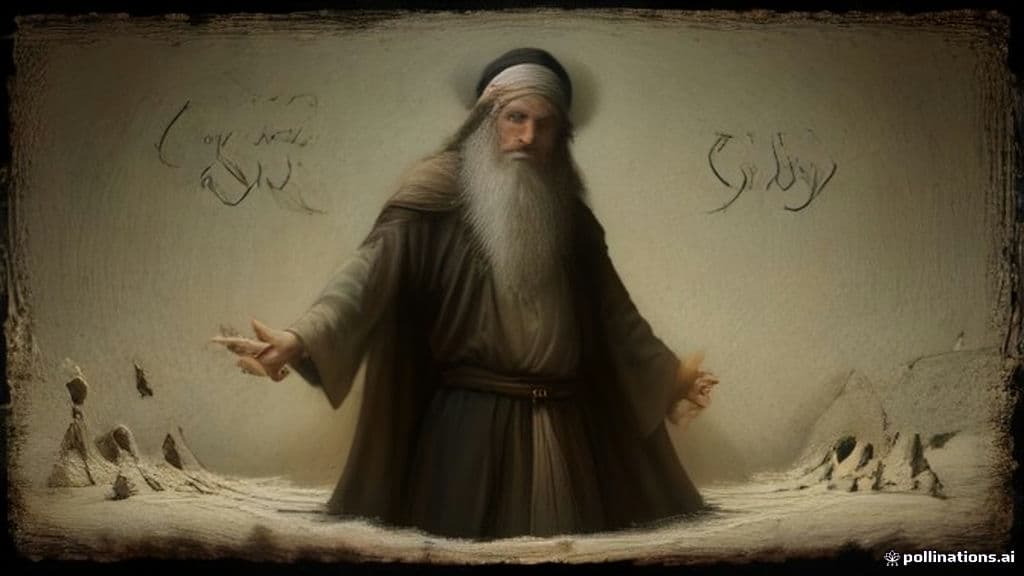
Moses
Moses is the central prophetic leader and lawgiver of the Israelite tradition who, according to the biblical narrative, leads the Exodus from Egypt, receives the Mosaic Law at Mount Sinai, and guides the community through the wilderness toward the Promised Land. He functions as mediator between God and Israel and is foundational in Jewish tradition and important across other Abrahamic faiths.
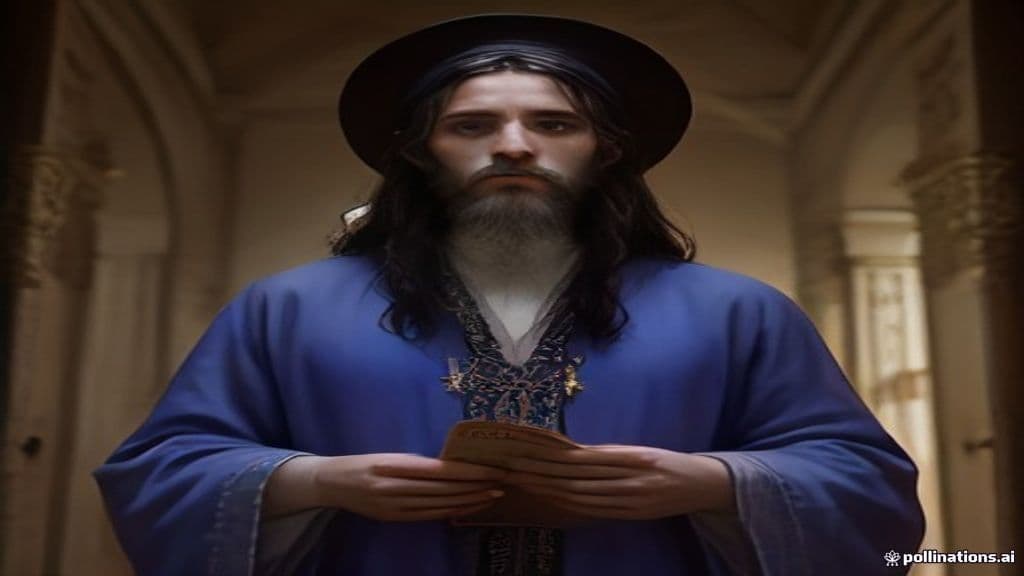
Aaron
Aaron is a central human figure in Israelite sacred literature: the elder brother of Moses, the first high priest (progenitor of the Aaronide priesthood), and a spokesman/prophet who mediates between Israel and God in Exodus–Deuteronomy narratives. His role in the texts establishes hereditary priestly authority, ritual functions (sacrifices, blessing, use of Urim and Thummim), and institutional norms for Israelite cultic life.
3-D Man
3-D Man is a Marvel Comics superhero identity associated with a 1950s-era origin in which the body of Chuck Chandler can materialize in three-dimensional existence when activated by his brother Hal via a pair of glasses. The mantle was later assumed by Delroy Garrett (formerly Triathlon) in modern continuity.
5 Ronin
5 Ronin is a 2011 Marvel Comics five-issue limited series that reimagines five Marvel superhero archetypes as rōnin (masterless samurai) in a fictionalized post‑Sekigahara feudal Japan. The work places Wolverine, Hulk, Punisher, Psylocke, and Deadpool analogues into period roles to explore displacement, revenge, and identity in an era of political upheaval.
A Elbereth Gilthoniel
An Elvish hymn in Sindarin addressed to Elbereth (Varda) from J. R. R. Tolkien's legendarium. Presented in The Lord of the Rings and later musical and dramatic adaptations, the hymn functions as devotional poetic language that evokes Elvish reverence for the star-kindler rather than an independent supernatural agent.
A.R.G.U.S.
A.R.G.U.S. is a fictional clandestine United States government agency in the DC Comics universe that investigates, contains, and manages superhuman, meta-human, and supernatural incidents and assets. Introduced in The New 52 continuity, it functions as an institutional actor providing intelligence, logistical support, covert task forces (notably Task Force X / the Suicide Squad), and a dedicated magic division across comics and media adaptations.
Aaron
Aaron is a central human figure in Israelite sacred literature: the elder brother of Moses, the first high priest (progenitor of the Aaronide priesthood), and a spokesman/prophet who mediates between Israel and God in Exodus–Deuteronomy narratives. His role in the texts establishes hereditary priestly authority, ritual functions (sacrifices, blessing, use of Urim and Thummim), and institutional norms for Israelite cultic life.
Abaddon
In Hebrew scripture Abaddon is primarily a noun meaning 'destruction' or a section/condition of the underworld paired with Sheol; in the New Testament Book of Revelation Abaddon is personified as an angelic figure (Greek Apollyon) described as the king of an army of locusts released from the abyss during the apocalypse.
Abadir
Abadir is a polysemous name attested in distinct cultural contexts: a legendary founding saint and clan ancestor in eastern Ethiopia (Sheikh Abadir Umar Al‑Rida / Aw Abadir), a term applied to cone‑shaped cult stones in Phoenician religious description, and a personal name of a martyr (Abadir/Apater) in the Coptic Synaxarium. The attestations are independent usages of the same name rather than a single supernatural being.
Abadiu of Antinoe
Abadiu of Antinoe was a fourth‑century bishop of Antinoe (Antinoopolis, in Roman Egypt) commemorated as a martyr and saint in the Coptic Orthodox Church, with a feast day on 26 December. Sources record that he was killed during a theological dispute with Arian opponents and reference him in collections of Egyptian martyrs.
Abagtha
Abagtha (Hebrew: אבגתא, ’Ǎḇaḡṯā) is a named human court official in the Hebrew Bible’s Book of Esther, listed among seven chamberlains who ministered before King Ahasuerus and were commanded to bring Queen Vashti before the king. He is attested only in Esther 1:10 and is presented as an institutional palace attendant rather than a supernatural being.
Abanoub
Abanoub is a 4th‑century Egyptian Christian child martyr venerated in the Coptic tradition. Remembered for his public confession of Christ, miraculous healings associated with his passion, and the translation and veneration of his relics, his feast is observed on July 31 (Epip 24) and his cult centers include Nehisa and Samanoud.
Abaskhiron the Soldier
A Coptic Orthodox martyr venerated for refusing imperial idolatry during the Diocletian persecution; reputedly healed by the Archangel Michael, preserved in monastery relics, and commemorated on 14 June (7 Paoni).
Abdel Messih El-Makari
Abdel Messih El-Makari (1892–1963) was a Coptic Orthodox monk and priest venerated as a 20th‑century Coptic saint. Associated with the Monastery of Saint Samuel the Confessor and the Monastery of Saint Macarius (Scetes/Wadi El‑Natrun), he is remembered for humility, asceticism, charity, and reported spiritual gifts such as prescience, discerning of spirits, and healing.
Community Record
- [1]Gershom — Wikipedia. Wikipedia contributors. "Gershom." Wikipedia, The Free Encyclopedia.wiki
- [2]Gershom — Wikidata entry Q21396821. Wikidata: Q21396821 (label: male given name "Gershom").other
- [3]Abe Lincoln and the muddy pig (archive item; name attestations). Archive.org item (contains use of the personal name Gershom in unrelated modern/historical contexts).other
- [4]To the emigrant farmer... (archive item; name attestations). Archive.org item (contains use of the personal name Gershom in unrelated modern/historical contexts).other