Moses is a prophet in Jewish folklore, from Egypt. Moses is the central prophetic leader and lawgiver of the Israelite tradition who, according to the biblical narrative, leads the Exodus from Egypt, receives the Mosaic Law at Mount Sinai, and guides the community through the wilderness toward the Promised Land. He functions as mediator between God and Israel and is foundational in Jewish tradition and important across other Abrahamic faiths.
In the biblical narrative Moses is born to Hebrew parents in Egypt during a period of Egyptian oppression; hidden and set adrift in the Nile in a basket, he is drawn out by Pharaoh’s daughter who names him Moses (Hebrew מֹשֶׁה, Mōše), connecting the name to the verb 'to draw out' (m-š-h) in Exodus. He is raised in the Egyptian court, later kills an Egyptian taskmaster and flees to Midian, where he encounters God at the burning bush (Mount Horeb/Sinai) and is commissioned to lead Israel out of Egypt. Modern scholarship, summarized in the sources, treats Moses primarily as a legendary or literary figure central to Israelite identity and law, while allowing for the possibility of a historical kernel (commonly proposed in the Late Bronze Age / thirteenth century BCE) rather than asserting a single established historical date.
The biblical texts summarized in the provided sources do not supply a consistent physical portrait of Moses; emphasis in the primary narrative is on his role and actions rather than on bodily description. Later visual traditions and receptions provide iconic imagery: medieval Latin translations and later Western art contributed motifs (e.g., the horned Moses tradition in medieval iconography discussed in later commentary), and Renaissance sculpture such as Michelangelo’s Moses depicts him as a seated, heroic, authoritative adult male — these are interpretive afterlives rather than original textual descriptions.
Moses’ capacities in the traditions are rooted in his divinely granted authority: he is the deliverer who leads the Exodus, the law-receiver who receives and transmits the Torah (including the Ten Commandments) and is portrayed as recording laws and ordinances, the prophet who speaks directly with God (notably at the burning bush and on Sinai), and the communal judge and leader who guides Israel through forty years in the wilderness. Scriptural episodes attributed to his leadership involve signs and wonders associated with divine agency (the plagues, the parting of the sea are part of the broader Exodus narrative summarized in the sources), and Aaron often functions as his spokesman in the narrative.
Weaknesses
- otherHuman mortality and dependence on divine mandate
- otherBiblical narrative constraints (Moses is barred from entering the Promised Land despite leadership role)
Wards
- otherNot applicable — Moses is a revered prophetic human figure, not a hostile supernatural being to be warded against; the provided sources do not document wards or protections directed at him.
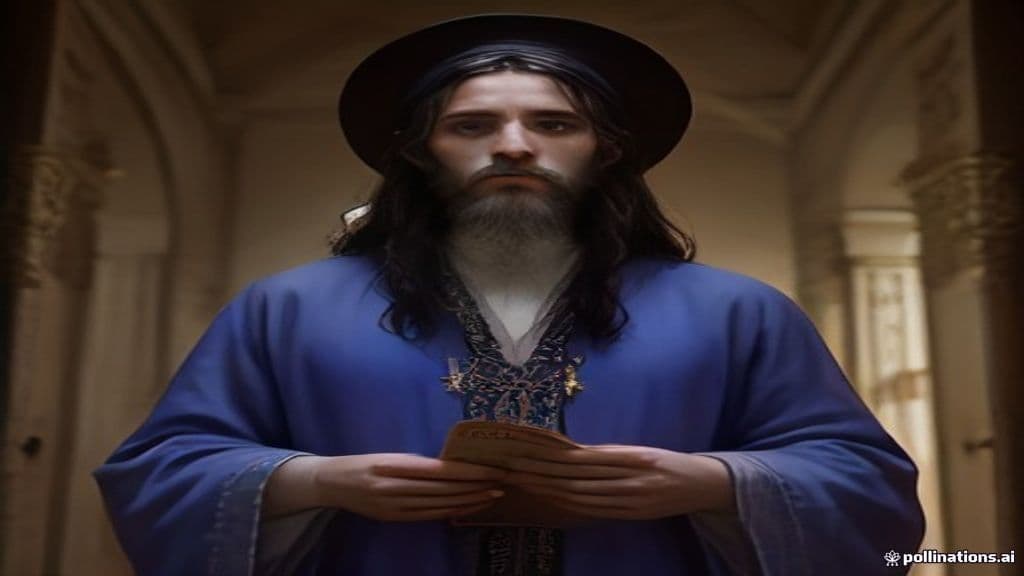
Aaron
Aaron is a central human figure in Israelite sacred literature: the elder brother of Moses, the first high priest (progenitor of the Aaronide priesthood), and a spokesman/prophet who mediates between Israel and God in Exodus–Deuteronomy narratives. His role in the texts establishes hereditary priestly authority, ritual functions (sacrifices, blessing, use of Urim and Thummim), and institutional norms for Israelite cultic life.
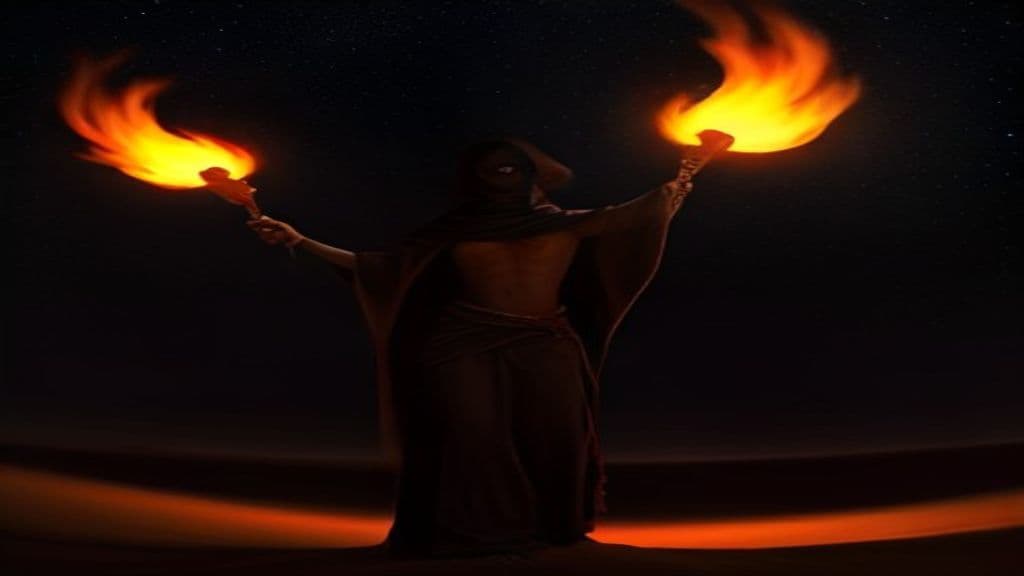
Djinn
The class of supernatural beings created from smokeless fire in Islamic cosmology — a parallel civilization to humanity, capable of belief or unbelief, with their own prophets, society, and judgment before God.
Aaron
Aaron is a central human figure in Israelite sacred literature: the elder brother of Moses, the first high priest (progenitor of the Aaronide priesthood), and a spokesman/prophet who mediates between Israel and God in Exodus–Deuteronomy narratives. His role in the texts establishes hereditary priestly authority, ritual functions (sacrifices, blessing, use of Urim and Thummim), and institutional norms for Israelite cultic life.
Ababil
Ababil (Arabic: أبابيل, romanized abābīl) are miraculous birds mentioned in the Qur'anic account of Surah Al‑Fil. In Islamic tradition they appear as a divinely sent avian host that defended the Kaaba by pelting an invading army with small clay stones; tradition places the event in the year traditionally given as 570 CE.
Abaddon
In Hebrew scripture Abaddon is primarily a noun meaning 'destruction' or a section/condition of the underworld paired with Sheol; in the New Testament Book of Revelation Abaddon is personified as an angelic figure (Greek Apollyon) described as the king of an army of locusts released from the abyss during the apocalypse.
Abadir
Abadir is a polysemous name attested in distinct cultural contexts: a legendary founding saint and clan ancestor in eastern Ethiopia (Sheikh Abadir Umar Al‑Rida / Aw Abadir), a term applied to cone‑shaped cult stones in Phoenician religious description, and a personal name of a martyr (Abadir/Apater) in the Coptic Synaxarium. The attestations are independent usages of the same name rather than a single supernatural being.
Abadiu of Antinoe
Abadiu of Antinoe was a fourth‑century bishop of Antinoe (Antinoopolis, in Roman Egypt) commemorated as a martyr and saint in the Coptic Orthodox Church, with a feast day on 26 December. Sources record that he was killed during a theological dispute with Arian opponents and reference him in collections of Egyptian martyrs.
Abagtha
Abagtha (Hebrew: אבגתא, ’Ǎḇaḡṯā) is a named human court official in the Hebrew Bible’s Book of Esther, listed among seven chamberlains who ministered before King Ahasuerus and were commanded to bring Queen Vashti before the king. He is attested only in Esther 1:10 and is presented as an institutional palace attendant rather than a supernatural being.
Abanoub
Abanoub is a 4th‑century Egyptian Christian child martyr venerated in the Coptic tradition. Remembered for his public confession of Christ, miraculous healings associated with his passion, and the translation and veneration of his relics, his feast is observed on July 31 (Epip 24) and his cult centers include Nehisa and Samanoud.
Abaskhiron the Soldier
A Coptic Orthodox martyr venerated for refusing imperial idolatry during the Diocletian persecution; reputedly healed by the Archangel Michael, preserved in monastery relics, and commemorated on 14 June (7 Paoni).
Abdel Messih El-Makari
Abdel Messih El-Makari (1892–1963) was a Coptic Orthodox monk and priest venerated as a 20th‑century Coptic saint. Associated with the Monastery of Saint Samuel the Confessor and the Monastery of Saint Macarius (Scetes/Wadi El‑Natrun), he is remembered for humility, asceticism, charity, and reported spiritual gifts such as prescience, discerning of spirits, and healing.
Abdiel
Abdiel (Hebrew עֲבְדִּיאֵל) is primarily a theophoric Hebrew personal name meaning "servant of El/servant of God," attested once in the Hebrew Bible (1 Chronicles 5:15). In later literature—most notably John Milton's Paradise Lost—Abdiel is reimagined as a faithful seraph who opposes Satan's revolt. The provided sources do not treat Abdiel as an autonomous folkloric spirit type or record rituals or wards associated with the name.
Abdul Qadir Gilani
A historical 11th–12th century Hanbali jurist, preacher, and Sufi shaykh who became the eponym and principal early figure of the Qadiriyya tariqa; venerated in Sunni Sufi traditions as an Awliya (saint) and often given exalted hagiographical ranks such as Muḥi al‑Dīn and Ghawth.
Abednego
Abednego is a human figure in the Book of Daniel (chapter 3), one of three Jewish youths (with Shadrach and Meshach) who refuse to bow to King Nebuchadnezzar II's image and are cast into a fiery furnace but preserved by divine intervention.
Community Record
- [1]Moses - Wikipedia. Wikipedia contributors, 'Moses,' Wikipedia, The Free Encyclopedia.wiki
- [2]Moses (Michelangelo) - Wikipedia. Wikipedia contributors, 'Moses (Michelangelo),' Wikipedia, The Free Encyclopedia.wiki
- [3]Moses - Wikiquote. Wikiquote contributors, 'Moses,' Wikiquote.wiki
- [4]Moses Mendelssohn | Jewish Museum Berlin (feature). Jewish Museum Berlin, 'Moses Mendelssohn — feature.'other
- [5]Moses Mendelssohn | Jewish Museum Berlin (topic). Jewish Museum Berlin, 'Moses Mendelssohn — topic.'other
- [6]Moses and Monotheism — Sigmund Freud (excerpts). Sigmund Freud, 'Moses and Monotheism' (sample questions/excerpts).literary
- [7]Moses and Monotheism — Sigmund Freud (excerpts, part 2). Sigmund Freud, 'Moses and Monotheism' (excerpt).literary
- [8]Archive: Was Moses God’s Slave? (video). Archive.org item: 'Was Moses God’s Slave?' (video).other
- [9]Archive: Our Community Our Money #17. Archive.org item: 'Our Community Our Money #17.'other
- [10]Thingiverse object (archival item). Archive.org item: 'My Customized hinged boxb (2891784).' (archival link included among materials.)other
- [11]Yeshua - the Prophet Like Moses (comparison). Hebrew4Christians, 'Yeshua - the Prophet Like Moses.'other
- [12]Moses and 'Horns' — Eloise Hart. Eloise Hart, 'Moses and Those "Horns".'other
- [13]Moses and Aaron — Martin Walsh. Martin Walsh, 'Moses and Aaron.'other