Islamic Supernatural Beings

160 documented Islamic supernatural beings from the Evil Eye grimoire, including 53 lesser and 36 ancient in power tier.

page 1 of 3

Ababil
Lesser

Ababil

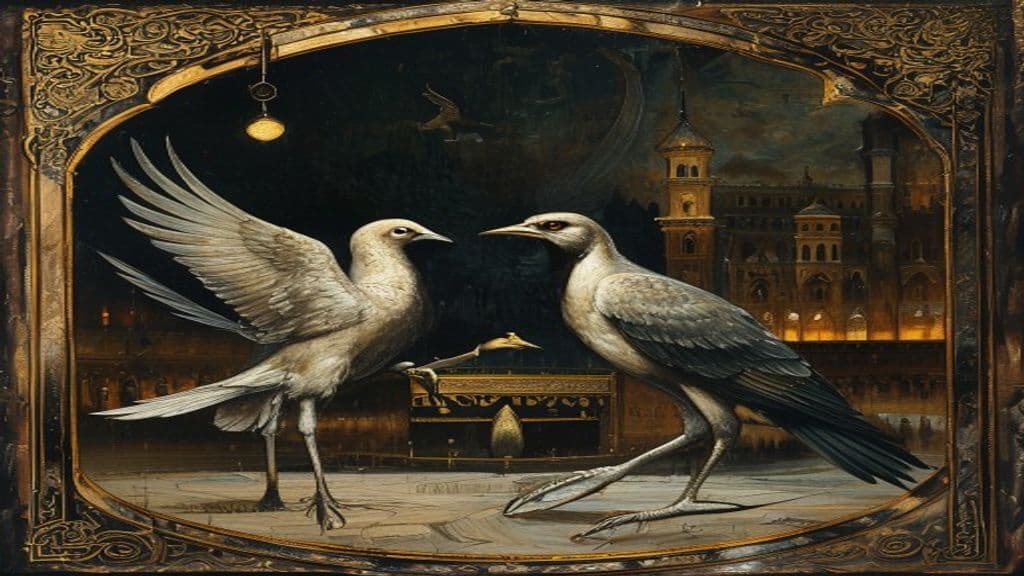
Ababil (Arabic: أبابيل, romanized abābīl) are miraculous birds mentioned in the Qur'anic account of Surah Al‑Fil. In Islamic tradition they appear as a divinely sent avian host that defended the Kaaba by pelting an invading army with small clay stones; tradition places the event in the year traditionally given as 570 CE.
Abadir
Lesser

Abadir

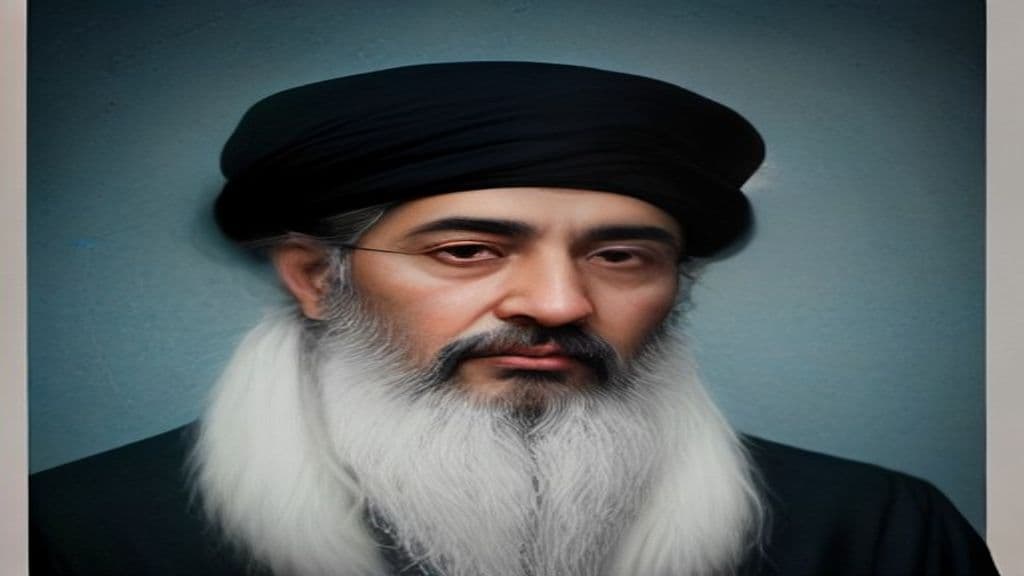
Abadir is a polysemous name attested in distinct cultural contexts: a legendary founding saint and clan ancestor in eastern Ethiopia (Sheikh Abadir Umar Al‑Rida / Aw Abadir), a term applied to cone‑shaped cult stones in Phoenician religious description, and a personal name of a martyr (Abadir/Apater) in the Coptic Synaxarium. The attestations are independent usages of the same name rather than a single supernatural being.

Abdul Qadir Gilani
Ancient

Abdul Qadir Gilani

A historical 11th–12th century Hanbali jurist, preacher, and Sufi shaykh who became the eponym and principal early figure of the Qadiriyya tariqa; venerated in Sunni Sufi traditions as an Awliya (saint) and often given exalted hagiographical ranks such as Muḥi al‑Dīn and Ghawth.

Abel
Lesser

Abel

Abel is the second son of Adam and Eve in the Genesis narrative, a shepherd whose accepted offering and subsequent murder by his brother Cain form the biblical account of the first death. Later interpretive traditions expand his role, treating him as an archetypal righteous victim, a postmortem avenging or adjudicating figure, and in some systems (notably Mandaean) identifying him with an angelic lightbeing.

Abraham (Ibrāhīm) in Islam
Ancient

Abraham (Ibrāhīm) in Islam

Ibrāhīm (Abraham) in Islam is a human prophet and messenger chosen by God, a paradigm of pure monotheism (hanīf), patriarchal ancestor to later peoples and prophets, and traditionally regarded as having helped establish the Kaʿbah with his son Ismāʿīl. He is called Khalīl Allāh ('Friend of God') and is central to rites commemorated in Hajj and Eid al‑Adha.

Abū Lahab
Lesser

Abū Lahab

Abū Lahab (ʿAbd al-ʿUzzā ibn ʿAbd al-Muṭṭalib) is a historical Meccan figure — a paternal uncle of the Prophet Muḥammad and a Quraysh leader who opposed the Prophet; he is singled out and condemned in Qurʾān 111 (Sūrat al-Masad) and functions in Islamic textual memory as an exemplar of divine punishment for opposition.

Adam (ʾĀdam)
Primordial

Adam (ʾĀdam)

In Islamic theology Adam (Arabic: آدم, ʾĀdam) is presented as the first human being and the first prophet (nabī), created by God from earth/clay, granted life by God's spirit, placed in a paradisal Garden, taught knowledge (the "Names"), tested by divine command, tempted by Iblīs, and ultimately sent to live and die on Earth while remaining eligible for repentance and forgiveness.

Ahmed al-Badawī
Lesser

Ahmed al-Badawī

Ahmed al-Badawī (Aḥmad al-Badawī, al-Sayyid al-Badawī) was a 13th-century Arab Sufi mystic and founder of the Badawiyyah order. Born in Fes to a Bedouin tribe and later settled in Tanta, Egypt, his tomb remains a major site of visitation and he is regarded as one of the most popular Sufi saints in Egypt (sources emphasize his historical sainthood and pilgrimage cult rather than detailed folkloric attributes).

Aicha Kandicha (Qandisa)
Greater

Aicha Kandicha (Qandisa)

Aicha Kandicha (also romanized Qandisa/Qandisha) is a female mythological figure in Moroccan folklore described as a jinn-like seductress associated with water. She appears as a beautiful woman with hoofed lower limbs who dwells at rivers, springs, lakes and the sea and is said to use sexual allure to seduce men, sometimes driving them mad or killing them.

Aicha Qandicha
Greater

Aicha Qandicha

Aicha Qandicha is a female seductress spirit in northern Moroccan folklore, often associated with bodies of water and implicated in harmful encounters with men. She appears both as a wild liminal monster and as a named spirit incorporated into local ritual systems (Hamadsha, Zār, Buffi Sufi orders).

Al-Abyad
Lesser

Al-Abyad

Al-Abyad (Arabic: al‑Abyad, "the White") appears in modern compilations and anecdotal references as a named jinn or epithet within Arabic/Islamic discourse on jinn. The corpus consists mainly of contemporary lists, forum posts, popular articles, and a polemical anecdote; no coherent classical origin myth or primary ritual tradition for Al-Abyad is attested in the supplied materials.

Al-Jānn
Ancient

Al-Jānn

Al-Jānn (jann) is a pre-Adamite, ancestral category invoked in Arabic-Islamic exegetical, hadithic, mystical, and folkloric materials to designate an earlier class of sentient beings—progenitors of later jinn—said to be created of fire, to have once inhabited and sometimes ruled the earth, and to stand in a liminal ontological position between angels and humans.

Al-Mi'raj
Minor Spirit

Al-Mi'raj

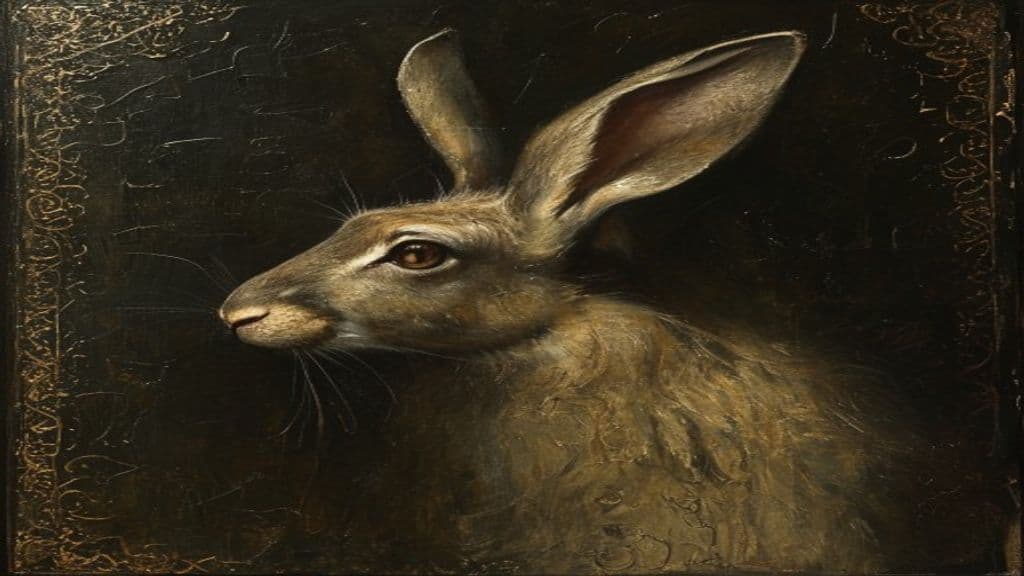
A mythical creature from medieval Arabic literature, described as a one-horned hare or rabbit. (Note: * Power tier: Given the lack of information on abilities and powers, it's too early to assign a power tier. However, considering its classification as a "mythical creature" in medieval Arabic literatu)

Al-Wakwak
Unknown

Al-Wakwak

Al-Wakwak is a geographic entity in medieval Arabic literature, possibly described as an island or group of islands. (Note: * Power tier should be Primordial (cosmic) given it's mentioned as a geographic entity in medieval Arabic literature. * Origin story section is missing, which would typically include how Al-Wakwak was)

Aladdin
Lesser

Aladdin

Aladdin is the human protagonist of a Middle Eastern folktale (ATU 561) who rises from poverty to wealth after acquiring a magical ring and a magical lamp that house spirit-agents. Although widely associated with The Thousand and One Nights, the tale entered that corpus via Antoine Galland from a story told by the Syrian storyteller Hanna Diyab rather than from the earliest Arabic Nights manuscripts.

Algol (Beta Persei)
Lesser

Algol (Beta Persei)

Algol (Beta Persei) is a bright, well-known multiple-star system in the constellation Perseus whose periodic dimming makes it the prototype of 'Algol-type' eclipsing variables; in several historical traditions the star was associated with a malign or monstrous figure (notably a Gorgon in Greek commentary and a ghoul-like figure in Arabic tradition), giving rise to the modern nickname "the Demon Star."

Allah
Primordial

Allah

Allah is the Arabic-language term for the singular monotheistic God of the Abrahamic tradition as used in Islamic theology and by Arabic-speaking Jews and Christians. Linguistically related to other West Semitic divine names, the term in Islamic usage functions as God's unique proper name (Lafẓ al-Jalālah) and denotes the transcendent creator and sovereign of the universe.

Alpha and Omega
Ancient

Alpha and Omega

A titulary formula and visual symbol formed from the first and last letters of the Greek alphabet (Α/α and Ω/ω), used in Christian scripture and art to denote God's or Christ's totality — 'the beginning and the end.' It functions as a theological appellation rather than an independent supernatural being.

Alulim
Ancient

Alulim

Alulim is the legendary antediluvian 'first king' of Eridu in Mesopotamian tradition, presented in king lists and mythic compositions as the initial ruler appointed by the gods. He functions etiologically to explain the origin of kingship and, in late ritual texts, is invoked in agricultural incantations associated with driving off field pests.

Al‑Ahmar
Lesser

Al‑Ahmar

Al‑Ahmar is an attested name in Arabic-language lists of notable jinn. Literally 'the Red', the name appears in compilations and occult rosters alongside other named jinn, but surviving sources provide no detailed independent folklore, powers, or rituals specific to this figure.

Al‑Kawthar
Minor Spirit

Al‑Kawthar

Al‑Kawthar (الكوثر) is a Qur'anic term and described heavenly bounty granted to the Prophet Muhammad, rendered in tradition both as 'abundant good' and as a river/pond/fount in Paradise. It functions as an eschatological topographical feature and theological gift rather than an autonomous supernatural agent.

Al‑Masih ad‑Dajjal
Greater

Al‑Masih ad‑Dajjal

An Islamic eschatological antagonist described in hadith and later apocalyptic literature as a false Messiah who will deceive many before the Day of Judgment. He is depicted variously as an individual man or as a devil in human form, performs counterfeit miracles, and is ultimately defeated by the return of ʿĪsā (Jesus).

Al‑Mu'min (The Believing Man from the People of the Pharaoh)
Lesser

Al‑Mu'min (The Believing Man from the People of the Pharaoh)

An anonymous human figure in the Qur'anic account of Moses (Sūra Ghāfir 40:28–30), described as 'a believing man from the people of the Pharaoh' who concealed his faith and intervened verbally to defend Moses before the Pharaoh. He is presented as a righteous insider who used social standing to argue against killing the prophet.

Al‑Yasa (Elisha)
Ancient

Al‑Yasa (Elisha)

Al‑Yasa (Elisha) is a prophetic figure attested in Abrahamic scriptural traditions. In the Hebrew Bible he is described as an Israelite prophet and 'wonder‑worker'; later traditions in Christianity and Islam also recognize him among the line of prophets.

Amir Arsalan-e Namdar (The Exalted Prince Arsalan)
Greater

Amir Arsalan-e Namdar (The Exalted Prince Arsalan)

A powerful, potentially benevolent figure in Persian mythology with magical abilities. (Note: 1. Power tier needs to be adjusted based on abilities described (as benevolent figure with magical abilities), could be Lesser or Minor Spirit instead of Greater. 2. Summary should mention specific my)

Amru bin Jabir Al-Jinni
Lesser

Amru bin Jabir Al-Jinni

Named in a single modern catalogue entry as "one of the companions of the jinn," Amru bin Jabir Al-Jinni is recorded only as an individual associated with the jinn class. No further narratives, attributes, or practices are attested in the provided source.

Anak
Lesser

Anak

Anak is a Hebrew Biblical eponymic ancestor associated with the Anakim, a clan or group remembered in Israelite tradition as unusually large and formidable inhabitants of the hill country around Hebron. In biblical narratives the Anakim are rhetorically linked to older mythic categories (Nephilim, Rephaim) but function primarily as remembered pre-Israelite people rather than a ritualized supernatural species.

Angel
Greater

Angel

A spiritual or heavenly being functioning primarily as a messenger and intermediary between a transcendent deity and humanity; angels also act as protectors, guides, and executors of divine will across several Abrahamic and adjacent traditions.

Angels (Malāk) in Islam
Ancient

Angels (Malāk) in Islam

Heavenly beings in Islamic doctrine created from light, part of the unseen (ghayb) and the divine order, who obey God and perform functions such as conveying revelation, recording deeds, and executing divine commands. Belief in angels is one of the six articles of faith in Islam and they occupy roles across cosmology, eschatology, and devotional teaching.

Anqa (ʿanqāʾ)
Greater

Anqa (ʿanqāʾ)

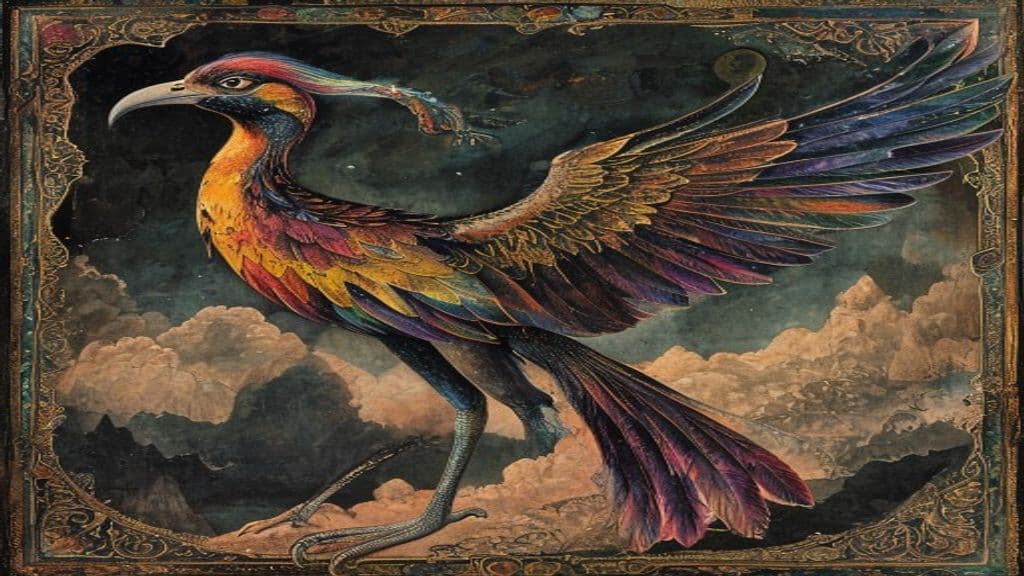
A singular, marvelous female bird of pre-Islamic and medieval Arab cosmography, the Anqa is described in medieval sources as a remote, extremely long‑lived composite bird associated with wisdom, liminal places (the setting sun, Mount Qaf), and ambivalent moral meanings that range from perfection to calamity.

Arash (Arash the Archer)
Lesser

Arash (Arash the Archer)

Arash (Āraš-e Kamāngīr) is a mytho-historical heroic archer in Iranian tradition whose single, divinely sanctioned shot determined the boundary between Iran and Turan. Accounts vary on details — flight distance, launch and landing points, and whether Arash dies in the act — but the core motif is a sacrificial arrow that fixes territorial order and royal glory (khwarrah).

Archangel
Ancient

Archangel

An archangel is a ranked heavenly messenger in Abrahamic and related religious literatures, understood in many traditions as a high‑level angelic agent charged with carrying out divine missions. The term and ranked office are framed by Greek etymology (archángelos, 'chief messenger') and by medieval Christian angelology (notably Pseudo‑Dionysius), while named figures such as Michael, Gabriel, and Raphael appear across Jewish, Christian, and Islamic texts and liturgies.

Archdemon (tradition)
Greater

Archdemon (tradition)

A high-ranking infernal or non‑human spiritual being that functions as a leader, king, or princely figure within hostile supernatural hierarchies. Appears across Christian/occult, Islamic/Middle Eastern, and Zoroastrian contexts as commanding subordinate demons, jinn, or evil spirits and acting in opposition to divine or benevolent spiritual authorities.

Aredvi Sura Anahita
Ancient

Aredvi Sura Anahita

Aredvi Sura Anahita is the Avestan Yazata of waters and fertility in ancient Iranian religion and Zoroastrianism, praised in the Aban (Aban Yasht) as the mighty, undefiled river and invoked in liturgical offerings to waters.

Artiya'il
Lesser

Artiya'il

Artiya'il (Arabic: رتائيل) is an angelic figure in Islamic lore attested in hadith-related accounts; in the cited narratives he appears to relieve human grief or anxiety, once appearing 'in the shape of a bird' to identify himself as the remover of anxiety.

Asif ibn Barkhiya
Greater

Asif ibn Barkhiya

A figure in Islamic scriptural and exegetical tradition presented as Solomon's (Sulayman) scribe or court official who, by means of privileged esoteric knowledge (specifically of part of the "Greatest Name of Allah"), effects a single Qur'anic miracle — bringing the Queen of Sheba's throne before Solomon in an instant. He is portrayed as a human mediator whose efficacious action is attributed to divine knowledge rather than innate supernatural ontological status.

Asiya bint Muzāḥim (Asiya)
Lesser

Asiya bint Muzāḥim (Asiya)

Asiya is the Qur'anic figure presented as the wife of the Pharaoh in the era of Moses who secretly embraced monotheism, adopted and preserved the infant Moses, and is venerated in Islamic tradition as an exemplary righteous woman promised a house in Paradise for her faith and steadfastness.

Asmodeus
Greater

Asmodeus

Asmodeus (Heb. Ashmedai/Ashmeday; Gr. Asmodaios; Arabic Sakhr in some accounts) is a named malignant spirit appearing in Near Eastern Jewish, Christian deuterocanonical, and later Islamic storytelling. Traditions portray him as a princely or kingly figure among malevolent spirits who intervenes in human affairs—notably hostile to marriages and in contest with King Solomon—and who can be driven off or bound by ritual fumigation and angelic agency.

Az (unattested as distinct demon)
Minor Spirit

Az (unattested as distinct demon)

No supplied sources attest a distinct folkloric or mythological entity named 'Az'. The available materials only provide general background on 'demons' as a category and on Zoroastrian daevas; any association of the name 'Az' with a specific supernatural being is not supported by the provided corpus.

Azazel
Ancient

Azazel

In earliest biblical usage Azazel is a ritual locus or destination in the Yom Kippur scapegoat rite to which communal sins are sent; in later Second Temple and subsequent Christian and Islamic receptions Azazel becomes personified as a fallen angel associated with rebellion and the transmission of forbidden knowledge to humans.

Azazil
Ancient

Azazil

Azazil (Arabic: ʿAzāzīl; also recorded as Ḥārith) is the pre-fall name or identity in Islamic tradition of the being later identified as Iblis. In exegetical and mystical literature he appears as a high-ranking celestial figure—variously described as leader of angels or as of jinnly origin—whose prideful refusal to obey God's command to prostrate before the newly created human results in his expulsion and permanent damnation as Iblis.

Azrael
Ancient

Azrael

Azrael is the canonical angel of death in Islamic tradition and appears earlier in apocryphal Christian literature; portrayed as a high‑ranking, God‑ordained psychopomp who removes and transports souls, keeps a register of human fates, and acts only under divine command. In some extra‑Quranic and exegetical accounts he is depicted with vast, awe‑inspiring physical attributes and in a few apocryphal Christian texts he is associated with punitive afterlife functions.

Bahamut
Ancient

Bahamut

In medieval Islamic cosmographical and tafsir traditions Bahamut is a vast aquatic creature—described as a giant fish or whale—that lies deep beneath the earth and functions as a structural support in a layered model of the cosmos, bearing a bull which in turn bears a gemstone slab and angel that shoulder the earth.

Barbad
Minor Spirit

Barbad

Barbad (Persian: باربد) was a celebrated late 6th–early 7th-century Persian musician-poet, music theorist and composer associated with the Sasanian court of Khosrow II. Preserved mainly through later Arabic and Persian literature and oral tradition, he functions in medieval and modern memory as the archetypal court minstrel of Sasanian musical culture.

Barqan
Greater

Barqan

Barqan is a named jinn-king appearing in modern compilations of Islamic/Arabic occult and folkloric name-sets. He is listed alongside other named jinn rulers (e.g., Mudhib, Maimun, al‑Ahmar) in secondary sources and appears as a narrative antagonist in at least one Arabian Nights synopsis.

Bearers of the Throne (ḥamlat al‑arsh)
Ancient

Bearers of the Throne (ḥamlat al‑arsh)

The ḥamlat al‑arsh are a class of angels in Islamic textual tradition whose primary role is to carry or support God’s Throne (al‑ʿArsh). Descriptions vary across transmissions, emphasizing their cosmic scale, proximity to the divine Throne, and symbolic features drawn from a range of hadith and exegetical reports.

Beast of the Earth (dābbat al-arḍ)
Greater

Beast of the Earth (dābbat al-arḍ)

An eschatological figure attested in the Qurʾān (Q 27:82) and elaborated in later Islamic tafsīr and apocalyptic traditions. The Qurʾān states God will produce a creature 'from the earth' that will speak to people when the Word is fulfilled; subsequent hadith and exegetical literature expand this brief mention into varied narratives about a speaking end‑time creature or sign.

Bhoota (ghost)
Lesser

Bhoota (ghost)

A bhoota (Sanskrit: भूत, bhūta) is a class of supernatural beings in South Asian traditions most commonly identified as the restless ghost of a deceased person. Depending on region and context a bhoota may be feared as a harmful, perturbing spirit or worshipped and integrated as a local protective spirit or demigod (notably in Tulu Nadu practices).

Bibi Seshanbe
Minor Spirit

Bibi Seshanbe

Persian holy angel associated with saving and curing people, particularly the poor and desperate. (Note: - The power_tier should be Greater, as Bibi Seshanbe is described as a "holy angel" which typically suggests deity-level abilities. - The summary mentions she is associated with saving and curing peop)

Biderafsh
Lesser

Biderafsh

Biderafsh is a Turanian heroic warrior and envoy attested in the Iran–Turan cycle of epic literature (notably the Shahnameh) who bears a name meaning 'with unfurled banner.' In the Goshtasp–Arjasp episode he delivers a threatening letter, fights in Arjasp's army, kills Zarir, and is in turn slain by the Iranian hero Esfandiar (attested in Shahnameh and earlier Middle Persian and Islamic-era sources).

Bonbibi
Greater

Bonbibi

Bonbibi is the Lady of the Forest venerated across Hindu and Muslim communities of the Sundarbans as a local guardian figure for people who work the mangrove (honey-collectors, woodcutters). Her cult functions pragmatically to regulate forest conduct, mediate encounters with tiger-associated spirits, and provide communal protection and meaning during crises.

Bonga/Bong
Primordial

Bonga/Bong

Mythological figure from Bengali mythology considered the progenitor of the Bengalis, with conflicting accounts in Hindu and Muslim literature. (Note: 1. Power tier: Primordial is likely an overestimation given the conflicting descriptions and lack of clear abilities. 2. Appearance: Should be stated as "No physical description provided" instead of ")

Burning Bush
Lesser

Burning Bush

A theophanic phenomenon in Judaeo‑Christian‑Islamic scriptural tradition in which a bramble (Hebrew seneh) appears aflame yet unconsumed and functions as the locus of divine speech that commissions Moses. Later devotional practice localizes and commemorates the site at Sinai/Horeb, especially at Saint Catherine's Monastery where a living bramble is venerated.

Cain and Abel
Lesser

Cain and Abel

Cain and Abel are the first two sons of Adam and Eve in the Hebrew Bible / Old Testament. The Genesis narrative presents them as the initial exemplars of human occupation (farmer vs. shepherd), sacrificial practice, and the first recorded instance of fratricide, followed by divine judgment and protection placed upon Cain.

Cassiel
Ancient

Cassiel

Cassiel is a high angelic figure attested across extracanonical Jewish, Christian, and Islamic mystical and magical texts, most commonly associated with the planet Saturn. Sources portray Cassiel as a guardian of heavenly palaces, an aide to higher angels (notably Gabriel), a named planetary intelligence in ritual magic, and in some attestations an angel connected with aspects of death.

Cherub
Ancient

Cherub

In Abrahamic religious literatures a cherub (Hebrew kərūḇ, pl. kərūḇīm; English cherub/cherubim) is a class of exalted celestial being associated with the divine presence, guardianship of sacred space, and service near God. Descriptions range from the composite, winged hybrid creatures of prophetic visions and Near Eastern art to later Western artistic renderings as chubby winged putti; their rank and appearance vary across Jewish, Christian, and Islamic traditions.

Dakkhin Rai
Greater

Dakkhin Rai

Dakkhin Rai is a locally venerated territorial sovereign of the Sundarbans (mangrove forests of West Bengal, India and Bangladesh), regarded as ruler of beasts and dangerous spirits and commonly associated with the tiger. Forest users propitiate him before entering the mangroves; he features in contested narratives alongside Bonbibi, Shah Jangali and Bara Khan Ghazi.

Dandan (dendan)
Lesser

Dandan (dendan)

A monstrous, enormous sea-fish from the One Thousand and One Nights tale "Abdullah the Fisherman and Abdullah the Merman," presented as the largest and most fell of sea creatures; its liver-fat is said to serve as an ointment enabling humans to survive underwater, while paradoxically the creature is described as vulnerable to certain human-related conditions.

Dara II
Ancient

Dara II

Dara II (also Darab II) is a mytho-historical king in Iran's national tradition, presented as the last monarch of the Kayanian dynasty and generally identified with the historical Darius III. He functions in literary and political traditions as a terminal dynastic figure whose person is used to legitimate later houses and to explain foundation traditions for cities such as Dara and Darabgerd.

Darab-nama (Persian tradition)
Minor Spirit

Darab-nama (Persian tradition)

Historical romance novel from 12th-century Persia, with possible references to supernatural entities in Persian folklore. (Note: - Power tier: Primordial (due to its historical significance and cultural impact) - Summary: Needs more specific information on supernatural entity references - Appearance: No information provided in )