Accounts vary by tradition. In Christian and Western occult writings, the archdemon is framed as a leader of demonic hosts—an infernal analogue to archangels and part of a ranked infernal court beneath a supreme evil figure (Source 1). In Zoroastrian dualism, seven archdemons are created by Ahriman as direct opposites to the seven Amesha Spenta (Source 1). In Islamic and Middle Eastern folkmagic, comparable figures appear as powerful jinn or ifrit—sometimes styled as kings of the jinn or members of an infernal council with jurisdictional roles and assigned days of the week (Source 1). Grimoires such as the Ars Goetia supply lists and ranks (kings, princes) used by occult practitioners to classify and address these beings (Source 1).
The sources do not give a uniform physical description for archdemons as a class. Rather, occult and grimoire material assigns them stately ranks and titles (king, prince, monarch) and lists named individuals (e.g., Bael, Paimon, Beleth, Purson, Asmodey, Zagan, Belial) without specifying consistent corporeal forms; some traditions treat particular named figures with their own iconographies, but the provided notes supply no canonical, class‑wide morphology (Source 1).
Archdemons are described primarily in terms of rank and function: they command subordinate demons or jinn, lead infernal hosts, and act as oppositional counterparts or adversaries to high benevolent entities (e.g., archangels in Christian accounts; Amesha Spenta in Zoroastrianism) (Source 1). In Middle Eastern legends and folkmagic, members of an infernal council have specialised roles—distracting worshippers during prayer, inciting lust, advocating illicit innovations, or serving as means of punishment in the hereafter. Occult and grimoire practices attribute jurisdictional and ritual potency to certain kings of the jinn, who may be assigned to days of the week and invoked or constrained in talismans (Source 1).
Weaknesses
- ritualInvocation of superior or opposing authorities (e.g., angelic names; God)
- ritualBinding by knowledge of names and ranks (use of talismans and sigils according to grimoire practice)
- conditionProcedural jurisdiction: requiring permission or correct day-of-week protocol in some Islamic/folkmagic contexts
Wards
- ritualTalismanic inscriptions of names (Ahmad al-Buni and related talismanic practice)
- ritualSummoning together with the angel responsible for the day (combining jinn-king name with the day's angelic name to compel obedience)
- conditionObservant prayer and correct religious practice (presented in Middle Eastern legends as a preventive measure against distraction by infernal council members)

Archdemon (tradition)
A high-ranking infernal or non‑human spiritual being that functions as a leader, king, or princely figure within hostile supernatural hierarchies. Appears across Christian/occult, Islamic/Middle Eastern, and Zoroastrian contexts as commanding subordinate demons, jinn, or evil spirits and acting in opposition to divine or benevolent spiritual authorities.
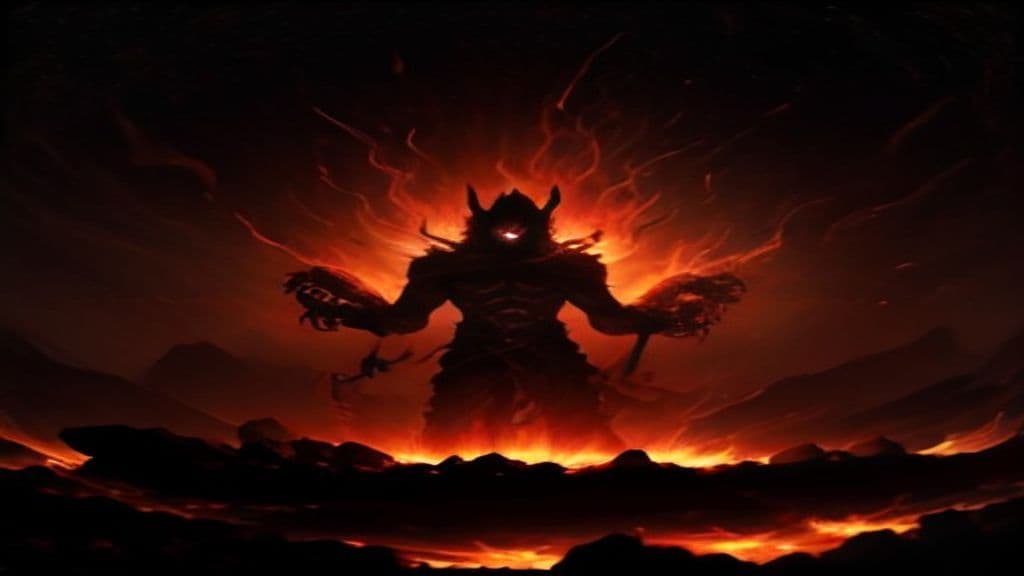
Ifrit
One of the most powerful classes of jinn in Islamic and pre-Islamic Arab tradition — a fire-born being of immense strength and cunning, capable of great works of engineering and terrible violence.
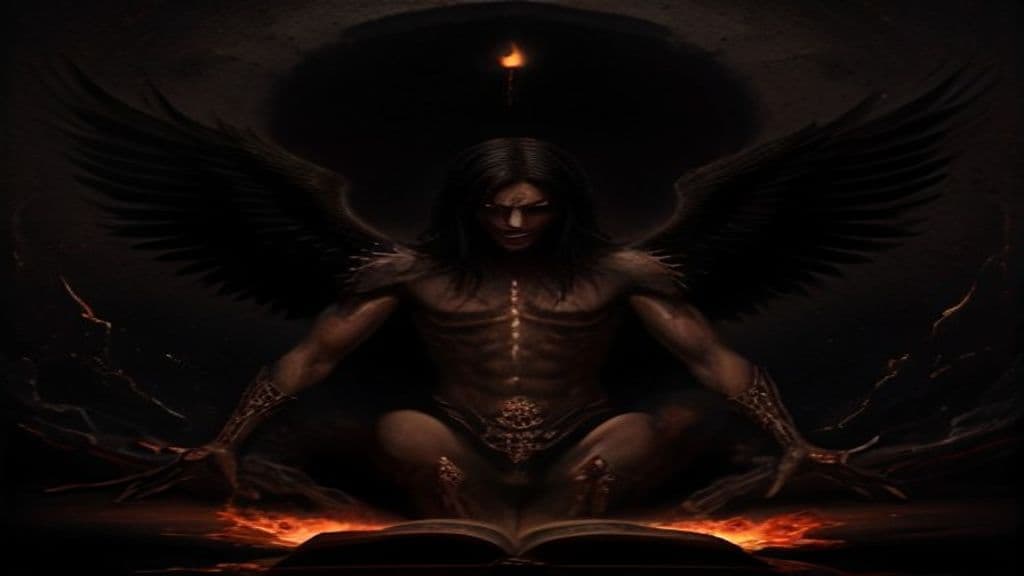
Iblis
The primordial deceiver in Islamic theology; a jinn who refused God's command to bow before Adam and was expelled from heaven. The source of all temptation and whispered suggestion.

Asmodeus
Asmodeus (Heb. Ashmedai/Ashmeday; Gr. Asmodaios; Arabic Sakhr in some accounts) is a named malignant spirit appearing in Near Eastern Jewish, Christian deuterocanonical, and later Islamic storytelling. Traditions portray him as a princely or kingly figure among malevolent spirits who intervenes in human affairs—notably hostile to marriages and in contest with King Solomon—and who can be driven off or bound by ritual fumigation and angelic agency.

Belial
In Hebrew Bible usage Belial is originally a pejorative term for worthlessness; in Second Temple (Dead Sea Scrolls) literature it is personified as the malign leader of the 'Sons of Darkness', an angelic/oppositional figure who commands hostile spirits and features in Qumran dualist eschatology.
57 Mnemosyne
57 Mnemosyne is a large main-belt asteroid (S-type) discovered in 1859 and named after the Greek Titaness Mnemosyne. It is a non-sentient astronomical body studied for its orbital and rotational properties and has been used in dynamical measurements related to Jupiter.
Aamon
Aamon (also Amon) is a named spirit in early modern Western grimoire tradition (Pseudomonarchia Daemonum; the Ars Goetia / Lesser Key of Solomon). He is presented as a high-ranking infernal officer (Marquis/Prince) who governs forty legions and is credited with knowledge of past and future and with affecting human relationships (reconciling or procuring feuds and favor).
Ababil
Ababil (Arabic: أبابيل, romanized abābīl) are miraculous birds mentioned in the Qur'anic account of Surah Al‑Fil. In Islamic tradition they appear as a divinely sent avian host that defended the Kaaba by pelting an invading army with small clay stones; tradition places the event in the year traditionally given as 570 CE.
Abaddon
In Hebrew scripture Abaddon is primarily a noun meaning 'destruction' or a section/condition of the underworld paired with Sheol; in the New Testament Book of Revelation Abaddon is personified as an angelic figure (Greek Apollyon) described as the king of an army of locusts released from the abyss during the apocalypse.
Abadir
Abadir is a polysemous name attested in distinct cultural contexts: a legendary founding saint and clan ancestor in eastern Ethiopia (Sheikh Abadir Umar Al‑Rida / Aw Abadir), a term applied to cone‑shaped cult stones in Phoenician religious description, and a personal name of a martyr (Abadir/Apater) in the Coptic Synaxarium. The attestations are independent usages of the same name rather than a single supernatural being.
Abadiu of Antinoe
Abadiu of Antinoe was a fourth‑century bishop of Antinoe (Antinoopolis, in Roman Egypt) commemorated as a martyr and saint in the Coptic Orthodox Church, with a feast day on 26 December. Sources record that he was killed during a theological dispute with Arian opponents and reference him in collections of Egyptian martyrs.
Abagtha
Abagtha (Hebrew: אבגתא, ’Ǎḇaḡṯā) is a named human court official in the Hebrew Bible’s Book of Esther, listed among seven chamberlains who ministered before King Ahasuerus and were commanded to bring Queen Vashti before the king. He is attested only in Esther 1:10 and is presented as an institutional palace attendant rather than a supernatural being.
Abanoub
Abanoub is a 4th‑century Egyptian Christian child martyr venerated in the Coptic tradition. Remembered for his public confession of Christ, miraculous healings associated with his passion, and the translation and veneration of his relics, his feast is observed on July 31 (Epip 24) and his cult centers include Nehisa and Samanoud.
Abaskhiron the Soldier
A Coptic Orthodox martyr venerated for refusing imperial idolatry during the Diocletian persecution; reputedly healed by the Archangel Michael, preserved in monastery relics, and commemorated on 14 June (7 Paoni).
Abdel Messih El-Makari
Abdel Messih El-Makari (1892–1963) was a Coptic Orthodox monk and priest venerated as a 20th‑century Coptic saint. Associated with the Monastery of Saint Samuel the Confessor and the Monastery of Saint Macarius (Scetes/Wadi El‑Natrun), he is remembered for humility, asceticism, charity, and reported spiritual gifts such as prescience, discerning of spirits, and healing.
Abdul Qadir Gilani
A historical 11th–12th century Hanbali jurist, preacher, and Sufi shaykh who became the eponym and principal early figure of the Qadiriyya tariqa; venerated in Sunni Sufi traditions as an Awliya (saint) and often given exalted hagiographical ranks such as Muḥi al‑Dīn and Ghawth.
Abel
Abel is the second son of Adam and Eve in the Genesis narrative, a shepherd whose accepted offering and subsequent murder by his brother Cain form the biblical account of the first death. Later interpretive traditions expand his role, treating him as an archetypal righteous victim, a postmortem avenging or adjudicating figure, and in some systems (notably Mandaean) identifying him with an angelic lightbeing.
Community Record
- [1]Archdemon. Wikipedia, 'Archdemon' (excerpted survey of traditions and grimoire material).wiki
- [2]archdemon (Wikidata). Wikidata item for 'archdemon'.wiki
- [3]Various media references to 'archdemon' in fiction and games. Examples of modern/media uses cited among provided sources (game transcript referencing an 'Archdemon').other
- [4]An Archdemon's Dilemma: How to Love Your Elf Bride — manga listings. Instances of the term 'Archdemon' in contemporary manga and media (listed among provided sources).other
- [5]Archive and music/creative files referencing 'Archdemon'. Additional media references included in source list supplied by user.other