Islamic Supernatural Beings

160 documented Islamic supernatural beings from the Evil Eye grimoire, including 53 lesser and 36 ancient in power tier.

page 3 of 3

Mellified Man
Primordial

Mellified Man

A medicinal substance created by steeping a human cadaver in honey. (Note: * Power tier should be Lesser (given it's a medicinal substance created by humans) rather than Primordial. * Abilities should reflect that Mellified Man has no supernatural or paranormal abilities, bu)
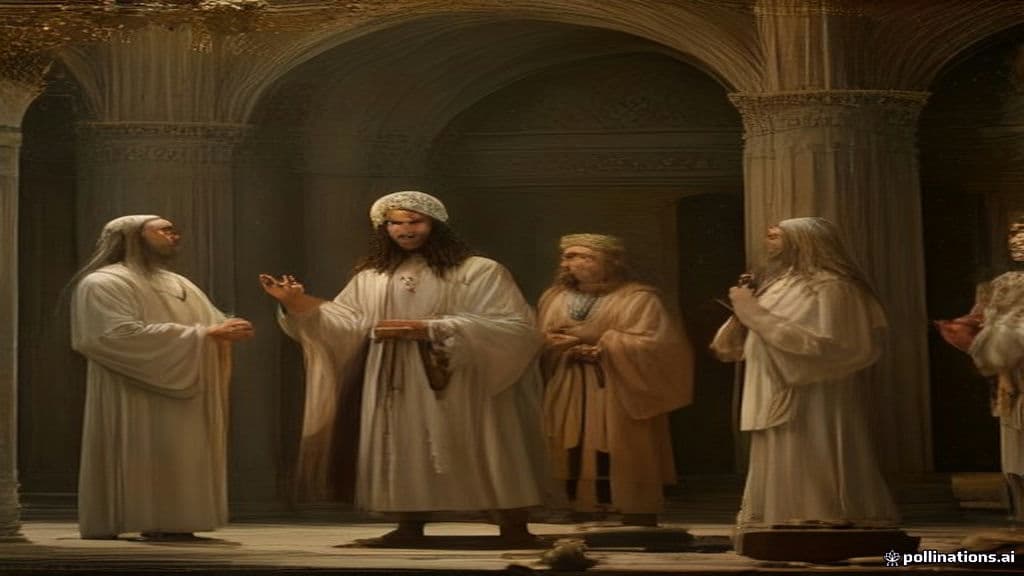
Messiah
Ancient

Messiah

A religiously defined human office or figure in Abrahamic religions, understood as an anointed leader designated to bring restoration, justice, or final consummation. Jewish, Christian, and Islamic traditions share the concept but differ on the figure's ontological status and the specific tasks he will perform.

Monotheism in pre-Islamic Arabia
Greater

Monotheism in pre-Islamic Arabia

Followers of Abrahamic faiths, such as Christianity and Judaism, who believed in a single all-powerful God in pre-Islamic Arabia. (Note: * Power tier: Lesser (not Greater) - monotheistic beliefs were not limited to powerful regional deities but had a relatively local presence in pre-Islamic Arabia. * Origin story: The exact timing is u)

Nasnas
Minor Spirit

Nasnas

A half-human djinn creature of Arab folklore — possessing only half a face, one arm, one leg, and half a torso — descended from the union of a shaitan and a human, moving by leaping and highly dangerous to encounter.

Nasreddin Hoca (Nasreddin Hodja)
Ancient

Nasreddin Hoca (Nasreddin Hodja)

Nasreddin Hoca is a legendary folk trickster and anecdotal persona prominent in Turkish and broader Islamic oral tradition. He functions as a comic teacher and social critic in hundreds of anecdotes and performances, using wit and ironic reversal to expose hypocrisy, instruct, or entertain rather than as a supernatural spirit or deity.

Noah
Lesser

Noah

Noah is the tenth antediluvian patriarch in Abrahamic traditions who, at God's command, builds an ark to preserve his family and representatives of land animals from a divinely sent Flood. After the waters recede he offers burnt offerings, receives a covenant from God (with the rainbow as its pledge), and becomes the progenitor of post‑diluvian humanity.

Pichal Peri
Lesser

Pichal Peri

Shared across North Indian and Pakistani folklore — a female spirit with reversed feet who lures lone travellers off roads at night. One of the most cross-cultural supernatural figures in the subcontinent, appearing in Hindu, Muslim, and Sikh communities alike.

Pocong
Lesser

Pocong

A revenant in Indonesian and Malay popular belief: the corpse wrapped in an Islamic burial shroud (kain kafan) that is said to animate when the burial knots remain tied. Pocong are described as unpredictable: some request prayers, others frighten or attack, and several local variants with distinct behaviors are attested in contemporary sources.

Qareen
Lesser

Qareen

The personal spirit companion assigned to every human being at birth in Islamic theology — a jinn double that knows all of a person's secrets and whispers toward sin throughout their life.

Qarinah (Qareena)
Lesser

Qarinah (Qareena)

A nocturnal female spirit-figure presented in comparative materials as a harmful attendant or 'demonic double' that afflicts sleepers; attested in fragmentary sources linking Arabic/Coptic folk notions of qarīn/qarīnah (Aqran) with talismanic protections in Upper Egyptian popular practice.

Queen of Sheba
Lesser

Queen of Sheba

A legendary royalwoman who appears across Hebrew, Christian, Jewish, Islamic, and Ethiopian Christian traditions as a powerful sovereign from 'Sheba' who visits King Solomon to test his wisdom and exchanges gifts and riddles. She is presented in primary accounts as a human monarch whose visit functions as a literary and theological focal point rather than as a supernatural being.

Qutrub
Minor Spirit

Qutrub

A qutrub (قُطْرُب) in Arabian folklore is described in secondary sources as a type of jinn or demon associated with graveyards and corpse‑eating; it is variously likened to an 'Arabian werewolf' or a ghoul and appears in Arabic literary and manuscript references.

Qāʾim Āl Muḥammad
Greater

Qāʾim Āl Muḥammad

An eschatological title in Shia Islam designating a future member of the Prophet Muḥammad's household who will 'rise against tyranny in the end of time and restore justice' and restore the religion. The epithet is often used interchangeably with the Mahdi in Shia literature and is attested as early as the eighth century.

Rakhsh (Persian Tradition)
Lesser

Rakhsh (Persian Tradition)

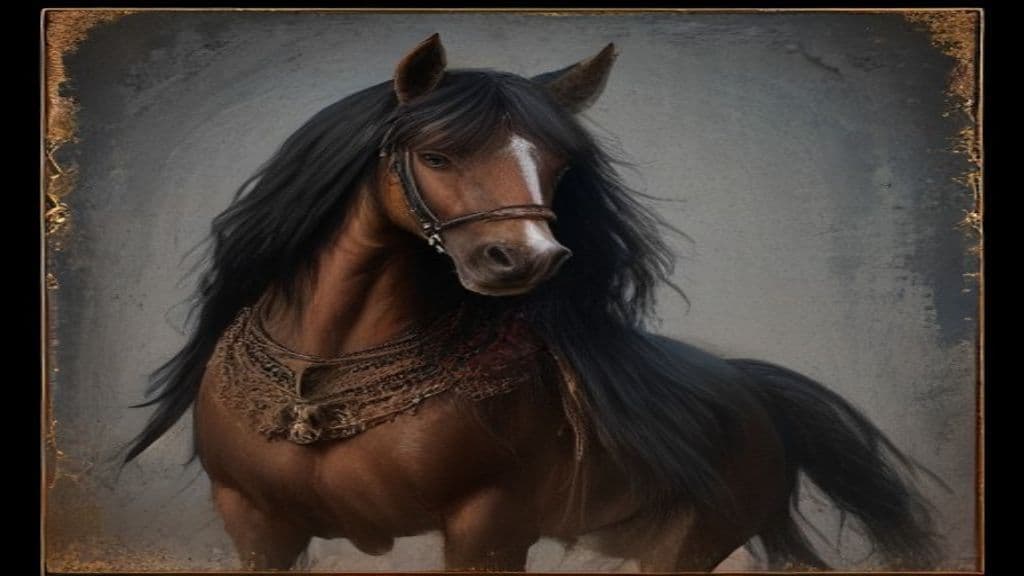
A mythological stallion and companion to the legendary hero Rostam in the Persian national epic Shahnameh. (Note: 1. Power tier: Based on Rakhsh's association with a legendary hero, it seems more likely to be Greater (deity-level) rather than Lesser. 2. Abilities: While we can infer that Rakhsh has strength and s)

Satan
Ancient

Satan

A central oppositional figure in Abrahamic traditions who functions variously as an accuser, tempter, tester, and rebel. In earliest Hebrew Bible contexts the term functions as a role within the divine council; in later Jewish, Christian, and Islamic developments the figure becomes a more fully personified adversary who incites humans to sin and leads hostile spirits.

Scheherazade
Minor Spirit

Scheherazade

Legendary human narrator and storyteller in the Persian tradition, known for recounting stories to save herself and others from execution. (Note: - Power tier: Primordial (Scheherazade's abilities are more akin to cosmic in scope, as she uses her storytelling to influence the fate of an entire kingdom and its people.) - No weaknesses listed (Ex)

Shaddād
Lesser

Shaddād

A legendary king in Arabian folklore, described as tyrannical. (Note: 1. The power tier should be Greater (deity-level abilities are implied by association with a lost city and connection to Qur'anic lore). 2. Add appearance description from source material, mentioning )

Shaitan
Lesser

Shaitan

A class of corrupted djinn who follow Iblis and dedicate themselves to leading humans astray — distinct from Iblis himself, the Shayatin are a species of evil djinn who whisper doubts and temptations into the minds of the living.

Shamharush
Ancient

Shamharush

Shamharush (also Shamhurish, Shamhurash, Sidi Chamharouch) is a longstanding jinn sovereign figure in Moroccan folk belief, described as one of the seven jinn kings and a supreme judicial ruler of the jinn. Associated with Thursday and Jupiter, he was historically venerated at a shrine near Aroumd in the High Atlas but his cult was later contested by Islamic scholars.

Shams al-Ma'arif
Primordial

Shams al-Ma'arif

A 13th-century grimoire attributed to Ahmad al-Buni, containing knowledge on Arabic magic and esoteric spirituality. (Note: - Power tier should be Ancient (deity-level) instead of Primordial (cosmic), as the abilities described do not imply cosmic powers. - The origin story should clarify that the authorship is disputed, r)

Shamshir-e Zomorrodnegār
Primordial

Shamshir-e Zomorrodnegār

A sacred sword in the Persian legend Shahnameh, capable of piercing the invulnerability of Fulad-zereh, a demonic entity created by a witch mother's charm. (Note: 1. Remove Power tier: Primordial as it is likely Greater (powerful regional) given its ability to counter a demonic entity. 2. Add sensory cues from Source 1: mention of King Solomon's ownership could)

Shaytan (Iblis)
Greater

Shaytan (Iblis)

In Islamic tradition Shaytan (also Iblis) is the archetypal rebellious tempter who opposes God's will and seeks to mislead humans. In Quranic and sermonic accounts he is the leader of devils who entices people to falsehood and sin; in some Sufi readings he is also interpreted symbolically as a metaphysical veil or principle of cosmic illusion.

Shayāṭīn
Greater

Shayāṭīn

In Islamic discourse, shayāṭīn (sing. shayṭān) are a class of malevolent unseen beings who incite humans and jinn to evil by whispering (waswasa) in hearts. Textual sources treat them as real agents of temptation and disturbance who operate under divine permission and whose exact ontological status is variously described in scripture, tafsîr, and later commentary.

Sheshe
Greater

Sheshe

The Sheshe is a malevolent being in Persian mythology that targets newborn babies on their 6th day of life, strangling them during the night. (Note: * Power tier: Incorrect, should be "Ancient" as it demonstrates deity-level powers to kill newborns. * Abilities: Should mention the Sheshe's supernatural nature and connection to infant mortality fea)

Shtriga
Greater

Shtriga

In Albanian folklore a shtriga (Albanian indefinite shtrigë; definite shtriga) is a malevolent, witch-like woman who nocturnally sucks the life or blood of infants and children, often leaving victims comatose or dead; she is said to transform into a flying insect after feeding and, in many accounts, only the shtriga herself can reverse the harm she causes.

Si'lah
Lesser

Si'lah

A female supernatural figure attested in Arabic poetic commentary, described in a scholion as "the most dangerous of the female demons called ghūl" and as an "enchantress of the Jinn." The term appears in classical poetry as a metaphor for perilous power, speed, or beguiling danger.

Sila (Si'la, Si'lat)
Lesser

Sila (Si'la, Si'lat)

A jinn-like, chiefly female shapeshifting spirit from Arabian folklore, the Sila (Si'la/Si'lat) is associated with desolate desert places where it misleads travellers, seduces men, and may intermarry with humans. Early sources equated it with the ghoul; later traditions treat it as the female counterpart of ghoul-type beings.

Simurgh (Simorgh, Seemorgh)
Greater

Simurgh (Simorgh, Seemorgh)

The Simurgh is a large benevolent mythical bird from Persian literature and tradition, associated with wisdom, healing, and the fostering of heroes (notably Zal). It appears in epic sources (Ferdowsi's Shahnameh) and is adopted in mystical-theosophical symbolism (e.g., Suhrawardi) and in visual art across regions influenced by Persian culture.

Speak, Bird, Speak Again
Minor Spirit

Speak, Bird, Speak Again

The book 'Speak, Bird, Speak Again' is a collection of Palestinian folk tales featuring stories that may include supernatural entities from Arabian tradition. (Note: 1. Remove "Hypothetical supernatural entity" as it implies the existence of an entity, which is not confirmed. 2. Change Power tier to Primordial (since it's a book featuring stories that may include )

Tahmina
Primordial

Tahmina

In Persian epic tradition, Tahmina is a human character in the Shahnameh, a 10th-century epic poem. She is Rostam's wife and Samanganshah's daughter, appearing in the story 'Rostam and Sohrab'. Tahmina serves as a figure illustrating themes relevant to 10th-century Persian society. (Note: 1. Power tier should be "Lesser" since Tahmina is a human character with no supernatural powers. 2. Origin story section is missing. 3. Appearance section needs to state that there is no physical desc)

The Book of the Thousand Nights and a Night
Primordial

The Book of the Thousand Nights and a Night

A collection of Middle Eastern and South Asian stories and folk tales compiled in Arabic during the Islamic Golden Age. (Note: - Power tier should be Greater, as there is no indication that the Book of the Thousand Nights and a Night has cosmic powers. - The summary mentions the collection reflecting the cultural context and )

The Magic Jinn
Primordial

The Magic Jinn

A magical jinn from Arabian tradition with the ability to grant wishes, but at a cost. (Note: 1. Power tier: Primordial is not plausible given that granting wishes and providing assistance are abilities typically attributed to lower-tier entities (Greater or Lesser). 2. Origin story: Since The)

Um as-Sibyan
Lesser

Um as-Sibyan

A name recorded in a single Wikidata entry as a 'female devil in Islam tradition.' Beyond this brief label, the supplied source set contains no primary or secondary Islamic texts detailing her nature, origins, appearance, or practices associated with her.

Virgin Mary (Marian devotion and apparitional tradition)
Lesser

Virgin Mary (Marian devotion and apparitional tradition)

A central historical and devotional figure — Mary of Nazareth — whose veneration across Christian communions and other religions has produced a widespread corpus of devotional practices, shrine cults, and reported apparitional phenomena. The sources treat her primarily as the first‑century Jewish mother of Jesus and as an object of liturgical and popular devotion rather than as a hostile supernatural monster.

Zafarnamah (Mustawfi)
Primordial

Zafarnamah (Mustawfi)

Persian epic poem written by Hamdallah Mustawfi, exploring Iranian history and culture. (Note: 1. Power tier should be Ancient (deity-level) does not fit; Primordial is typically reserved for entities related to the creation of the world or fundamental forces. 2. Appearance section is missing 3)

al-Burāq
Greater

al-Burāq

Al-Burāq is the supernatural prophetic mount in Islamic narrative tradition, described in hadith and later exegesis as the white, lightning‑swift steed that carried the Prophet Muḥammad on the Night Journey (Isrāʾ and Miʿrāj) from Mecca to al‑Masjid al‑Aqṣā and thence through the seven heavens. The creature appears in later local traditions tied to specific sacred places (the Rock in Jerusalem, tethering traditions at the Haram/Western Wall) and in visual art, which sometimes expands on the terse textual descriptions.

İn Cin
Lesser

İn Cin

İn Cin (also written İn jinn) is a Turkish folkloric phrase and folk concept used to indicate that a place is entirely abandoned; it refers to two kinds of unseen inhabitants—İn and jinn—believed to occupy forgotten or desolated locations and make them unfit for human habitation.

İye
Lesser

İye

İye are Turkic spiritual proprietors or tutelary spirits understood as the unseen 'owners' or guardians of particular places, natural phenomena, objects, animals, households, or concepts. They mediate human relations with domains of the world and respond to human conduct—offering blessing when respected and retribution when violated.

ʿAbd al‑Qādir al‑Jīlānī
Greater

ʿAbd al‑Qādir al‑Jīlānī

Historical Sunni Muslim preacher, Hanbali jurist, and Sufi shaykh who is the eponym and authoritative exemplar of the Qādiriyya Sufi order; remembered for his recorded discourses (majalis), juridical learning, and role as a transmitter of Sufi training and khirqa investiture. Active in Baghdad in the 12th century, his writings and shrine remain central to Qādirī devotional and institutional life.

Ḥabīb
Lesser

Ḥabīb

Ḥabīb (حبيب) is an angelic figure attested in Islamic Miʿrāj (Night Journey) literature, traditionally described as miraculously composed of both fire and ice and used in exegetical and Sufi writings as a theological sign of divine power to reconcile opposites.