
Sources do not give a single cosmogonic origin myth for the shtriga; rather, the figure is part of Albanian popular belief in which a woman may 'become' a shtriga through social circumstances such as childlessness, envy, or malicious intent. Linguistically the Albanian term is reported to derive from Latin strīga and is cognate with Italian strega, Romanian strigă and Polish strzyga, placing the shtriga within a wider European lexical and folkloric field of witch/striga-type beings. Ethnographic anecdotes (e.g., Edith Durham) supply localized images and practices but do not provide a unified origin narrative.
Typically described in human form as an old or middle-aged woman, often ugly or disfigured, with a crooked nose and eyes described as grey, pale green, or pale blue—referred to in Albanian as sybardha (literally 'white/pale eyes'). Her stare is said to be hateful and uncomfortable; people are warned to avoid looking directly into her eyes. After feeding she is commonly said to transform into a small flying creature, traditionally a moth, fly, or bee.
The shtriga is primarily portrayed as a nocturnal life-force or blood-sucker who creeps into sleeping infants' and children's rooms to suck their blood or vitality, leaving victims comatose or dead unless cured. After feeding she is said to transform into a flying insect and depart; folkloric motifs assert that only the shtriga herself can cure those she has drained (often by spitting into their mouths). She is also associated with an 'evil eye' (Albanian: syliga) whose gaze can harm or unsettle people. Socially, the shtriga functions as both an embodied witch-type person and a label applied to spiteful, envious, or childless women.
Weaknesses
- substancegarlic (hudhër)
- symbolcross (including pig-bone cross anecdote preventing exit from church on Easter, Edith Durham account)
- mantrarecitation of Ayatul Kursi (Qur'an 2:255) (Islamic tradition reported as repellent/curative)
- substanceholy water (used with a cross in Catholic accounts to destroy or repel)
Wards
- ritualsalt-and-words prophylaxis ('syt i dalçin syt i plaçin' / 'plast syri keq')
- substancegarlic placed in the house
- ritualblessing on first meeting ('t'rujt Zoti' and touching the child's nose)
- othersilver coin amulet soaked in shtriga's regurgitated blood and wrapped in cloth (Edith Durham anecdote)

Strigoi
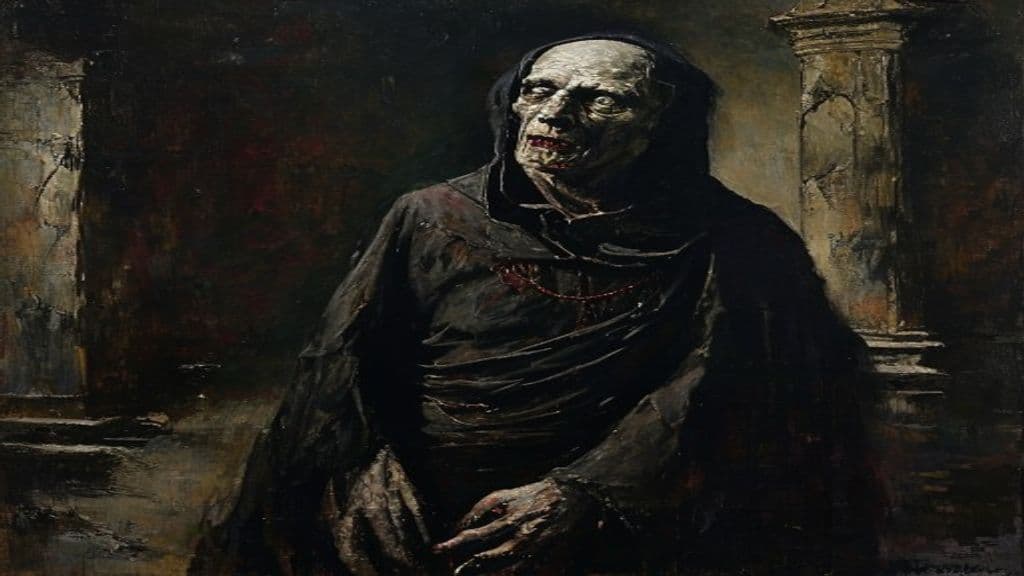
The vampire of Romanian folklore — either a living witch (strigoi viu) or an undead blood-drinker (strigoi mort). The source tradition from which the literary vampire emerged.
Vampire (tradition)
A class of revenant beings in southeastern and eastern European folk belief that subsist by feeding on the vital essence (generally blood) of the living. Recorded chiefly in early modern to modern oral traditions, these vampires are typically described as reanimated corpses whose presence explains unexplained illness, death, and post-mortem disturbances in their communities.
Ababil
Ababil (Arabic: أبابيل, romanized abābīl) are miraculous birds mentioned in the Qur'anic account of Surah Al‑Fil. In Islamic tradition they appear as a divinely sent avian host that defended the Kaaba by pelting an invading army with small clay stones; tradition places the event in the year traditionally given as 570 CE.
Abaddon
In Hebrew scripture Abaddon is primarily a noun meaning 'destruction' or a section/condition of the underworld paired with Sheol; in the New Testament Book of Revelation Abaddon is personified as an angelic figure (Greek Apollyon) described as the king of an army of locusts released from the abyss during the apocalypse.
Abadir
Abadir is a polysemous name attested in distinct cultural contexts: a legendary founding saint and clan ancestor in eastern Ethiopia (Sheikh Abadir Umar Al‑Rida / Aw Abadir), a term applied to cone‑shaped cult stones in Phoenician religious description, and a personal name of a martyr (Abadir/Apater) in the Coptic Synaxarium. The attestations are independent usages of the same name rather than a single supernatural being.
Abadiu of Antinoe
Abadiu of Antinoe was a fourth‑century bishop of Antinoe (Antinoopolis, in Roman Egypt) commemorated as a martyr and saint in the Coptic Orthodox Church, with a feast day on 26 December. Sources record that he was killed during a theological dispute with Arian opponents and reference him in collections of Egyptian martyrs.
Abagtha
Abagtha (Hebrew: אבגתא, ’Ǎḇaḡṯā) is a named human court official in the Hebrew Bible’s Book of Esther, listed among seven chamberlains who ministered before King Ahasuerus and were commanded to bring Queen Vashti before the king. He is attested only in Esther 1:10 and is presented as an institutional palace attendant rather than a supernatural being.
Abanoub
Abanoub is a 4th‑century Egyptian Christian child martyr venerated in the Coptic tradition. Remembered for his public confession of Christ, miraculous healings associated with his passion, and the translation and veneration of his relics, his feast is observed on July 31 (Epip 24) and his cult centers include Nehisa and Samanoud.
Abaskhiron the Soldier
A Coptic Orthodox martyr venerated for refusing imperial idolatry during the Diocletian persecution; reputedly healed by the Archangel Michael, preserved in monastery relics, and commemorated on 14 June (7 Paoni).
Abdel Messih El-Makari
Abdel Messih El-Makari (1892–1963) was a Coptic Orthodox monk and priest venerated as a 20th‑century Coptic saint. Associated with the Monastery of Saint Samuel the Confessor and the Monastery of Saint Macarius (Scetes/Wadi El‑Natrun), he is remembered for humility, asceticism, charity, and reported spiritual gifts such as prescience, discerning of spirits, and healing.
Abdul Qadir Gilani
A historical 11th–12th century Hanbali jurist, preacher, and Sufi shaykh who became the eponym and principal early figure of the Qadiriyya tariqa; venerated in Sunni Sufi traditions as an Awliya (saint) and often given exalted hagiographical ranks such as Muḥi al‑Dīn and Ghawth.
Abel
Abel is the second son of Adam and Eve in the Genesis narrative, a shepherd whose accepted offering and subsequent murder by his brother Cain form the biblical account of the first death. Later interpretive traditions expand his role, treating him as an archetypal righteous victim, a postmortem avenging or adjudicating figure, and in some systems (notably Mandaean) identifying him with an angelic lightbeing.
Abib and Apollo
Abib and Apollo are Christian ascetics and hagiographic saints of Akhmim (Upper Egypt) attested in Coptic sources and the Historia Monachorum. Remembered for extreme asceticism, monastic leadership, angelic encounters, and inclusion in the Coptic Synaxarion (feast day November 4).
Abiel
Abiel is attested in the supplied sources only as a male given name — borne by several historical American individuals and listed as two minor biblical figures. The provided materials contain no evidence presenting Abiel as a supernatural, mythological, or folkloric entity.
Community Record
- [1]Shtriga - Wikipedia. Wikipedia contributors. 'Shtriga.' Wikipedia, The Free Encyclopedia.wiki
- [2]Shtriga - Wikidata. Wikidata entry Q1622598.wiki
- [3]Archive: Supernatural S01E18 'Something Wicked' (episode summary referencing shtriga motif). Episode archive summary referencing a witch who feeds on children; used to note modern media variants aligning with folk motifs.other
- [4]Archive item: magjistarja 4, koha e mospërfilljes.. Audio archive referencing Albanian folk motifs (used as a modern media/archival example).other
- [5]Archive: Starling Tribune fan podcast (references to media portrayals). Fan-podcast archive referencing contemporary portrayals that adapt shtriga motifs.other