
Within the supplied material there is no mythic origin narrative for the Great Duke as an individual. Instead, the term is presented as an office or rank created by demonologists who organized denizens of Hell according to a hierarchical schema modeled on European monarchical and angelic orders (Source 1). No primary-language etymology or early origin text is given in the provided sources.
The provided sources do not give consistent or traditional physical descriptions for holders of the rank 'Great Duke.' The term is treated as a classificatory title rather than a distinct creature with a fixed iconography (Source 1). Modern fictional or commercial reuses in the corpus (e.g., a named daemon in a game context) may depict specific appearances, but those are creative adaptations and are not documented as traditional descriptions in the supplied materials (Sources 5–6).
Traditional sources in the supplied set do not ascribe specific powers or behaviors to 'Great Dukes' beyond their placement high in a demonological hierarchy; the rank indicates prominence and presumed authority within ordered infernal taxonomies but does not enumerate abilities in the available material (Source 1). A modern game entry (BlogNomic) attributes specific mechanical abilities to a named figure, 'Bune, Great Duke of Hell' (e.g., a summon cost and an ability to permanently unsummon other daemons by paying souls), but this is a contemporary fictional/game mechanic and not presented as a historical account (Sources 5–6).
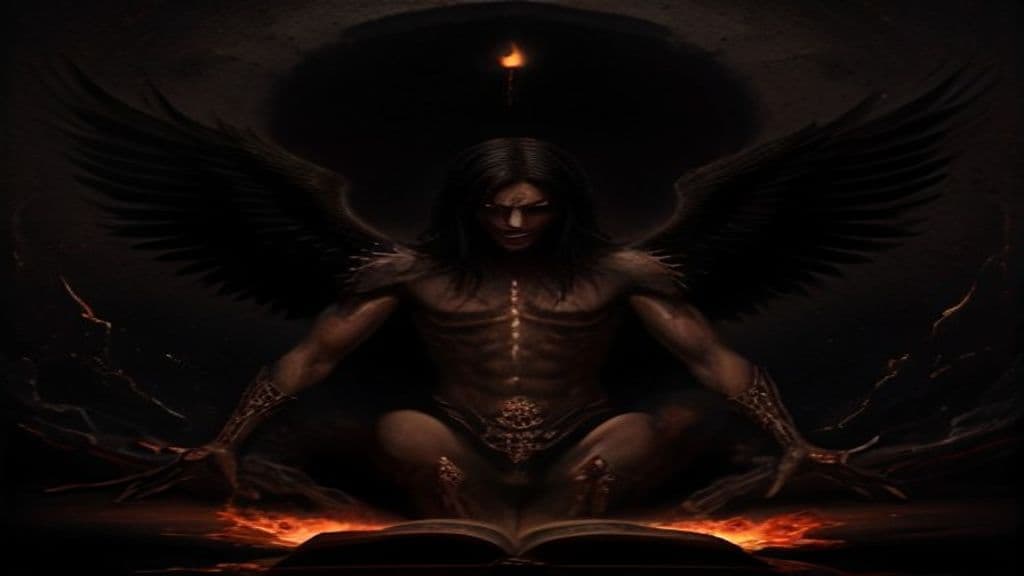
Iblis
The primordial deceiver in Islamic theology; a jinn who refused God's command to bow before Adam and was expelled from heaven. The source of all temptation and whispered suggestion.
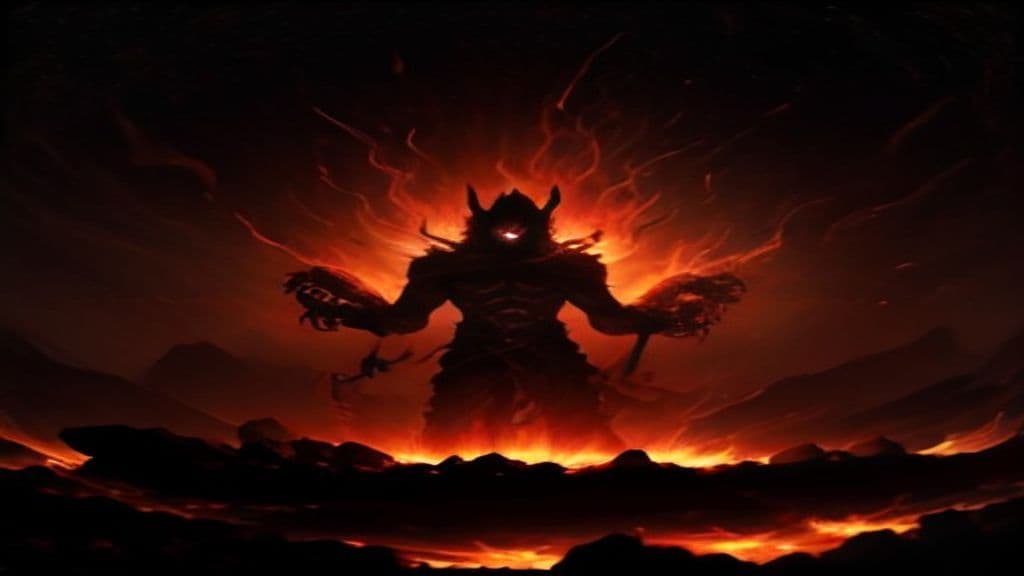
Ifrit
One of the most powerful classes of jinn in Islamic and pre-Islamic Arab tradition — a fire-born being of immense strength and cunning, capable of great works of engineering and terrible violence.

Marid
The most powerful class of jinn in Islamic tradition — beings of the sea, associated with the deep ocean, storms, and the granting of wishes at terrible cost. The classic genie of the Arabian Nights.
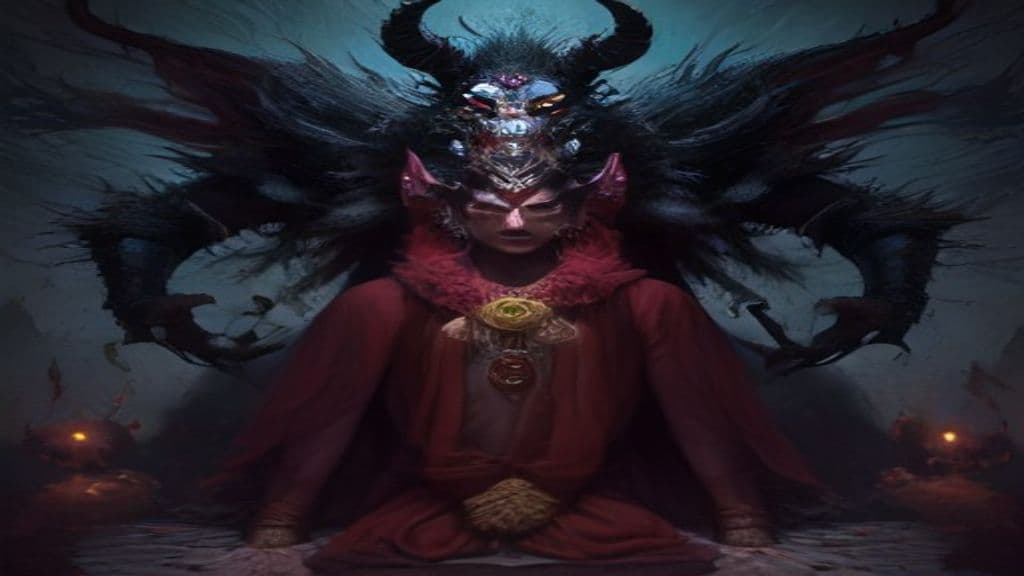
Rakshasa (Himalayan variants)
A Himalayan reception of the pan-Indian rakshasa motif: hostile or disruptive non‑human beings known from Sanskrit epic and Puranic literature, here noted where Himalayan sources and discussions intersect with the broader epic tradition. The supplied sources do not document distinct, well‑attested Himalayan folklore variants; the entry therefore presents primarily the epic/legendary profile as transmitted into Himalayan contexts in general references.
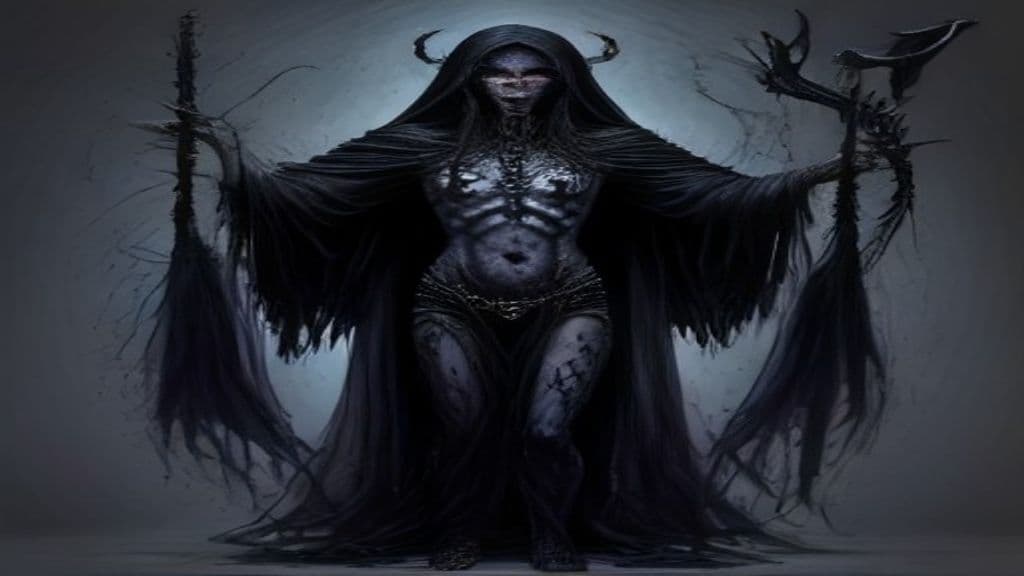
Ghoul
A ghoul is a demon-like or monstrous humanoid originating in pre-Islamic Arabian religion, traditionally associated with graveyards and the consumption of human flesh. The concept later entered broader folklore and has been widely reused and transformed in modern fiction and popular culture.
Abaddon
In Hebrew scripture Abaddon is primarily a noun meaning 'destruction' or a section/condition of the underworld paired with Sheol; in the New Testament Book of Revelation Abaddon is personified as an angelic figure (Greek Apollyon) described as the king of an army of locusts released from the abyss during the apocalypse.
Abadir
Abadir is a polysemous name attested in distinct cultural contexts: a legendary founding saint and clan ancestor in eastern Ethiopia (Sheikh Abadir Umar Al‑Rida / Aw Abadir), a term applied to cone‑shaped cult stones in Phoenician religious description, and a personal name of a martyr (Abadir/Apater) in the Coptic Synaxarium. The attestations are independent usages of the same name rather than a single supernatural being.
Abadiu of Antinoe
Abadiu of Antinoe was a fourth‑century bishop of Antinoe (Antinoopolis, in Roman Egypt) commemorated as a martyr and saint in the Coptic Orthodox Church, with a feast day on 26 December. Sources record that he was killed during a theological dispute with Arian opponents and reference him in collections of Egyptian martyrs.
Abagtha
Abagtha (Hebrew: אבגתא, ’Ǎḇaḡṯā) is a named human court official in the Hebrew Bible’s Book of Esther, listed among seven chamberlains who ministered before King Ahasuerus and were commanded to bring Queen Vashti before the king. He is attested only in Esther 1:10 and is presented as an institutional palace attendant rather than a supernatural being.
Abanoub
Abanoub is a 4th‑century Egyptian Christian child martyr venerated in the Coptic tradition. Remembered for his public confession of Christ, miraculous healings associated with his passion, and the translation and veneration of his relics, his feast is observed on July 31 (Epip 24) and his cult centers include Nehisa and Samanoud.
Abaskhiron the Soldier
A Coptic Orthodox martyr venerated for refusing imperial idolatry during the Diocletian persecution; reputedly healed by the Archangel Michael, preserved in monastery relics, and commemorated on 14 June (7 Paoni).
Abdel Messih El-Makari
Abdel Messih El-Makari (1892–1963) was a Coptic Orthodox monk and priest venerated as a 20th‑century Coptic saint. Associated with the Monastery of Saint Samuel the Confessor and the Monastery of Saint Macarius (Scetes/Wadi El‑Natrun), he is remembered for humility, asceticism, charity, and reported spiritual gifts such as prescience, discerning of spirits, and healing.
Abel
Abel is the second son of Adam and Eve in the Genesis narrative, a shepherd whose accepted offering and subsequent murder by his brother Cain form the biblical account of the first death. Later interpretive traditions expand his role, treating him as an archetypal righteous victim, a postmortem avenging or adjudicating figure, and in some systems (notably Mandaean) identifying him with an angelic lightbeing.
Abib and Apollo
Abib and Apollo are Christian ascetics and hagiographic saints of Akhmim (Upper Egypt) attested in Coptic sources and the Historia Monachorum. Remembered for extreme asceticism, monastic leadership, angelic encounters, and inclusion in the Coptic Synaxarion (feast day November 4).
Abiel
Abiel is attested in the supplied sources only as a male given name — borne by several historical American individuals and listed as two minor biblical figures. The provided materials contain no evidence presenting Abiel as a supernatural, mythological, or folkloric entity.
Abijah of Judah
Abijah (also Abijam or Abiah) is presented in the biblical and later interpretive traditions as a short-reigning human king of Judah from the Davidic line. He is portrayed as a dynastic successor whose military actions (notably the battle at Mount Zemaraim) and moral evaluation in rabbinic literature are interpreted theologically in relation to the Davidic covenant.
Abimelech
Abimelech is a Hebrew personal name and occasionally a regnal title attested in the Hebrew Bible and later traditions. It appears as the name/title of Philistine rulers in the patriarchal narratives (the "king of Gerar" who interacts with Abraham and Isaac) and as the personal name of Abimelech son of Jerubbaal (Gideon) in Judges, a dynastic usurper whose brief rule ends in violent death.
Community Record
- [1]Great Duke. Wikipedia, 'Great Duke' (accessed in provided corpus)wiki
- [2]Bune, Great Duke of Hell (Daemon Research) — BlogNomic (proposal). BlogNomic proposal: 'Bune, Great Duke of Hell. Summon Cost: 10 souls...' (as a game entry)other
- [3]Bune, Great Duke of Hell — BlogNomic (archive). BlogNomic archive entry expanding the game-mechanical description of Buneother
- [4]Great Duke of Hell: The New Windows Malware Attack - MiniTool. Modern cultural reuse of the phrase 'Great Duke' in naming (malware report included in corpus)other
- [5]Love Advice from the Great Duke of Hell — webtoon and related mentions. Example of modern/popular cultural reuse of the term in entertainment (webtoon mention)other