Hurrian primeval deities is a deity in Mesopotamian folklore, from Ancient Near East (Hurrian regions). A class of ancestral Hurrian gods conceived as an earlier generation of divinities resident in the underworld (timri eže). They function as ‘lower gods’ or ‘divine grandfathers’ associated with purification and with receiving transferred impurity and offerings; lists vary (commonly groups of seven or twelve, c. 5–15 and ~30 names in total) and cult practices show regional variation.
In Hurrian mythic-historical framing the primeval deities belong to an earlier divine generation predating the rise of Teshub. Ritual and literary evidence record that they were believed to have been driven or confined to the underworld in the course of the succession of gods; a purification ritual (KBo 10.45 + ABoT 2.30) states that after their confinement Teshub made birds the standard offering to them in place of cattle and sheep.
They are treated primarily as a collective category rather than individuated figures in the provided sources. Textual lists name around thirty individual members in variable groupings (commonly seven or twelve). Iconographically a group of twelve primeval deities is depicted at the Hittite rock sanctuary of Yazılıkaya; some scholarship infers the well-attested groups (seven, twelve) were male, but female members are also attested in textual lists (e.g., Apantu, Zulki). No consistent individualized physical attributes are attested in the supplied materials.
The sources emphasize functional roles: residence in the underworld (timri eže), participation in purification rites, and the reception of impurity and adversity transferred from the living world. They are recorded as recipients of offerings (notably birds after their confinement) and are associated with sacrificial pits and underworld cult loci (e.g., pits attested at Urkesh and Hattusa). Mythically they appear as an earlier generation allied at times with Kumarbi and linked with underworld rulers such as Allani and figures like Išḫara. The provided material does not ascribe specific thaumaturgic abilities beyond these ritual-functional roles.
Weaknesses
None recorded.
Wards
- ritualOfferings of birds
- ritualPit sacrifice (sacrificial pits at underworld loci)
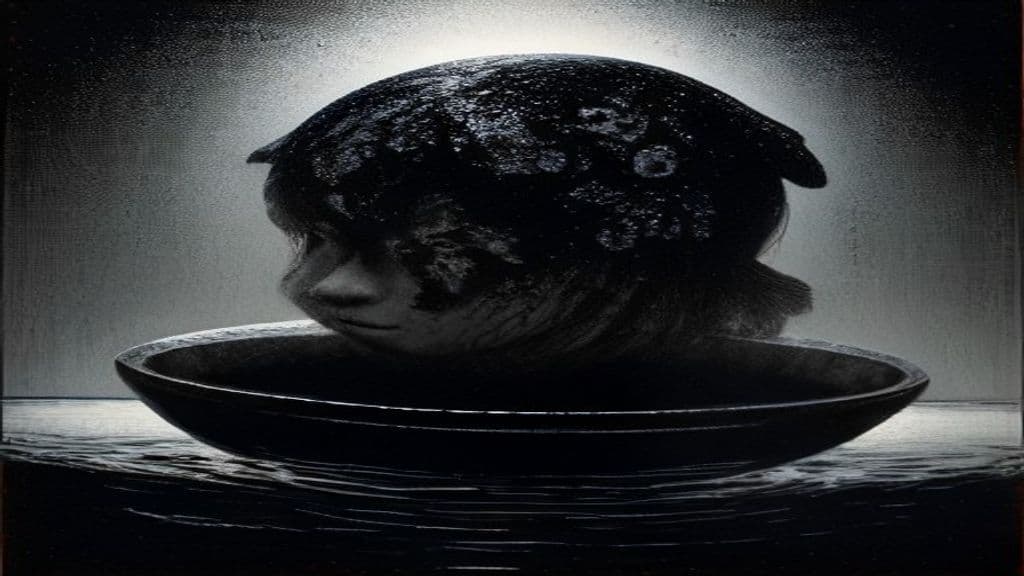
Kappa
A water-dwelling imp of Japanese folklore with a bowl of water on its head. Mischievous but bound by strict codes of politeness; dangerous near rivers.

Naga
Divine serpent beings of Hindu, Buddhist, and Jain cosmology — powerful guardians of water, earth, and underground treasures. Revered as deities in South and Southeast Asia.
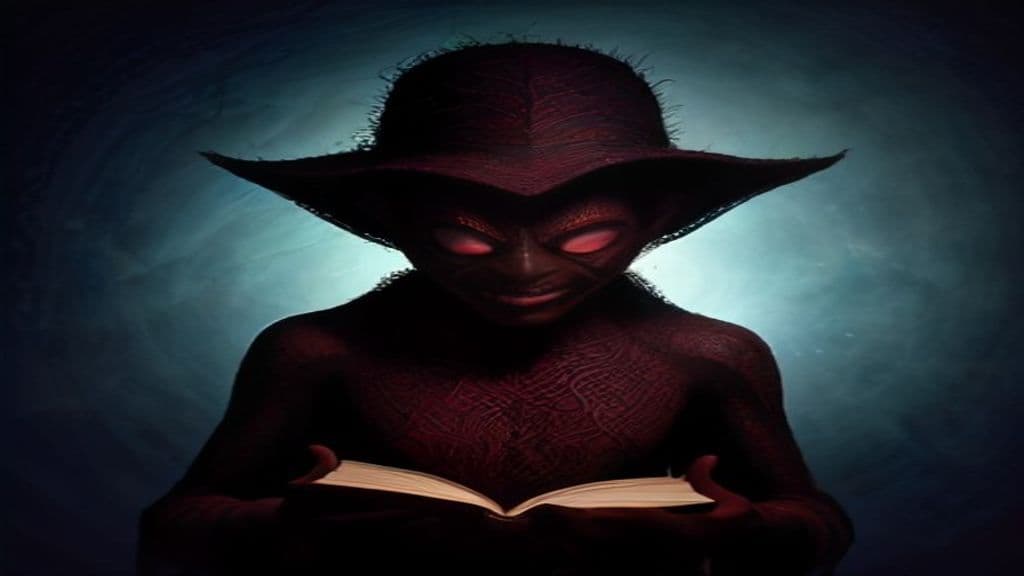
Anansi
The spider trickster god of Akan folklore — cunning, mischievous, and wise. Keeper of stories and teacher of human beings, brought through the slave trade into Caribbean and African-American tradition.
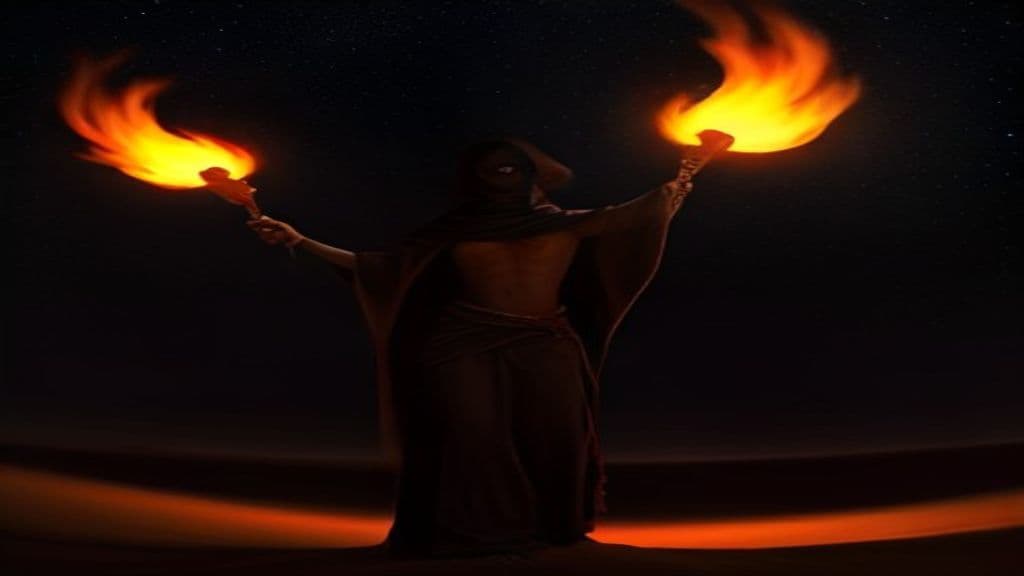
Djinn
The class of supernatural beings created from smokeless fire in Islamic cosmology — a parallel civilization to humanity, capable of belief or unbelief, with their own prophets, society, and judgment before God.

Jann
The weakest class of djinn in Islamic tradition, associated with desert winds and taking the form of snakes or whirlwinds, dwelling in empty wilderness and posing little threat to those who know the proper invocations.

Marid
The most powerful class of jinn in Islamic tradition — beings of the sea, associated with the deep ocean, storms, and the granting of wishes at terrible cost. The classic genie of the Arabian Nights.
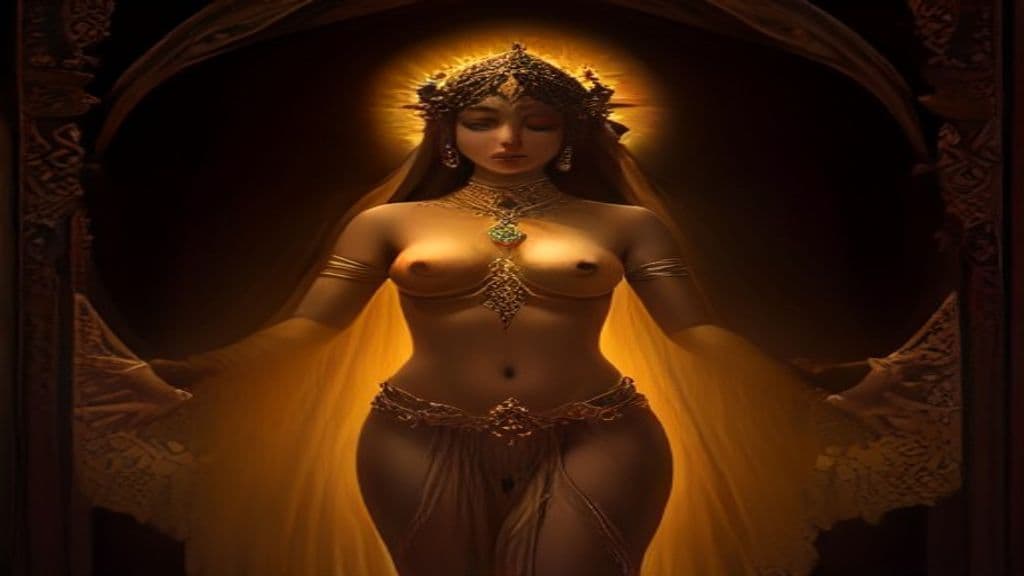
Apsara
Celestial dancers and water nymphs of Hindu cosmology — beautiful semi-divine beings who dance at the court of Indra and, by his command, descend to earth to distract sages from excessive asceticism.

Yaksha
Nature spirits of Hindu, Buddhist, and Jain cosmology — guardians of forests, treasures, and wilderness. Ambivalent beings, capable of great benevolence to the respectful and terrible harm to the greedy.
'Ain Samiya Goblet
Silver cup from the Middle Bronze Age I, discovered in a tomb at Ain Samiya. (Note: 1. Power tier should be "None", but add a note explaining that historical artifacts don't fit into the typical power tier classification. 2. Add a description of its appearance based on it being a sil)
*Perkʷūnos
*Perkʷūnos is the reconstructed Proto-Indo-European thunder‑god hypothesized by comparative linguistics and mythology. Scholarly reconstructions portray him as a storm or thunder figure associated with fructifying rain and as the combatant who fights a multi‑headed water‑serpent to release life‑giving waters; no direct attestations from the Proto‑Indo‑European period survive and the figure is inferred from later Indo‑European traditions.
*Péh₂usōn (reconstructed)
Péh₂usōn is a hypothetical Proto‑Indo‑European pastoral guardian reconstructed by comparative scholars from parallels in Greek and Vedic traditions. Proposed as a Graeco‑Aryan ancestor‑figure, the reconstruction describes a protector of flocks, roads, and travellers rather than an attested historical cultic personality.
57 Mnemosyne
57 Mnemosyne is a large main-belt asteroid (S-type) discovered in 1859 and named after the Greek Titaness Mnemosyne. It is a non-sentient astronomical body studied for its orbital and rotational properties and has been used in dynamical measurements related to Jupiter.
A Man Was Going Down the Road
Georgian tradition, possibly a reference to a novel title by Otar Chiladze (1973), lacking clear information on its supernatural nature or abilities. (Note: * Power tier should be set to Primordial, as there's no information on its supernatural nature or abilities; it simply appears to be a novel title without further context. * Summary: The summary is ac)
A'annepada
A'annepada (Sumerian cuneiform 𒀀𒀭𒉌𒅆𒊒𒁕; also romanized Aanépàdda) is attested as a historical ruler of the First Dynasty of Ur, flourishing c. 2350 BC. He is recorded in dedicatory and foundation inscriptions as king of Ur and as son of Mesannepada, credited with temple-building and dedication to deities such as Ninhursag and Inanna.
Abaddon
In Hebrew scripture Abaddon is primarily a noun meaning 'destruction' or a section/condition of the underworld paired with Sheol; in the New Testament Book of Revelation Abaddon is personified as an angelic figure (Greek Apollyon) described as the king of an army of locusts released from the abyss during the apocalypse.
Aban Yasht
The Aban Yasht is a hymn from the Persian tradition that praises Anahita, a goddess associated with water, fertility, and wisdom. It consists of 132 stanzas and is part of the 21 Yashts collection. (Note: - Power tier should be "Primordial" or possibly "Cosmic", given that it's a hymn of great spiritual significance and associated with a goddess. - The article incorrectly states that Anahita is associa)
Abath
No corroborated folkloric entity named "Abath" is documented in the provided sources. The string appears in the supplied material only as a surname/personal name in Aruban/Dutch-Caribbean archival records and as an unrelated taxonomic or encyclopedic hit; no mythic attributes, origin stories, rituals, or apotropaic practices for an entity called Abath are present in the documents reviewed.
Abatur
Abatur is an uthra (celestial emanation) in Mandaeism described as the 'father of the Uthras' and called the Ancient (ʿattīqā). He resides on the boundary between the World of Light and lower regions, functions as a judge who weighs souls (Abatur Muzania), and supplies instructions and materials to the demiurgic uthra Ptahil in accounts from the Diwan (Scroll) of Abatur.
Abatwa (Twa / Batwa)
Abatwa (also recorded as Twa, Batwa, Mutwa; singular forms Barhwa or Murhwa in some transcriptions) are indigenous hunter‑gatherer peoples of the Great Lakes region of Central Africa, historically identified as some of the earliest inhabitants of the area. The available sources treat them as human ethnic groups whose livelihoods, lands, and populations have been severely affected by conservation policies and modern violence.
Abellio
Abellio is a theonym attested in Roman‑period inscriptions from the Comminges area of the Pyrenees and reported as worshipped in the Garonne Valley of ancient Gallia Aquitania. Surviving evidence is limited to a small number of inscriptions; scholars have variously hypothesized solar or arboreal associations and compared the name to forms of Apollo or to Celtic Belenus, but the deity's precise role in local cosmology remains uncertain.
Community Record
- [1]Hurrian primeval deities. Wikipedia, article 'Hurrian primeval deities'.wiki
- [2]Hurrian primeval deities (Wikidata). Wikidata entry Q117468766.other