Other Supernatural Beings

842 documented Other supernatural beings from the Evil Eye grimoire, including 352 lesser and 181 minor spirit in power tier.

page 1 of 15

*Perkʷūnos
Ancient

*Perkʷūnos

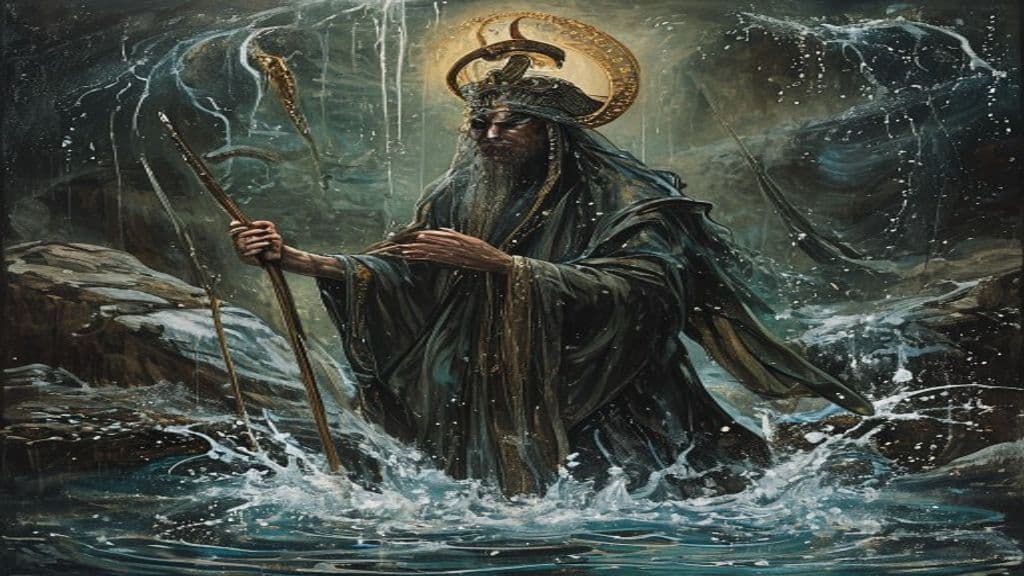
*Perkʷūnos is the reconstructed Proto-Indo-European thunder‑god hypothesized by comparative linguistics and mythology. Scholarly reconstructions portray him as a storm or thunder figure associated with fructifying rain and as the combatant who fights a multi‑headed water‑serpent to release life‑giving waters; no direct attestations from the Proto‑Indo‑European period survive and the figure is inferred from later Indo‑European traditions.

*Péh₂usōn (reconstructed)
Ancient

*Péh₂usōn (reconstructed)

Péh₂usōn is a hypothetical Proto‑Indo‑European pastoral guardian reconstructed by comparative scholars from parallels in Greek and Vedic traditions. Proposed as a Graeco‑Aryan ancestor‑figure, the reconstruction describes a protector of flocks, roads, and travellers rather than an attested historical cultic personality.

57 Mnemosyne
Minor Spirit

57 Mnemosyne

57 Mnemosyne is a large main-belt asteroid (S-type) discovered in 1859 and named after the Greek Titaness Mnemosyne. It is a non-sentient astronomical body studied for its orbital and rotational properties and has been used in dynamical measurements related to Jupiter.

Abaddon
Ancient

Abaddon

In Hebrew scripture Abaddon is primarily a noun meaning 'destruction' or a section/condition of the underworld paired with Sheol; in the New Testament Book of Revelation Abaddon is personified as an angelic figure (Greek Apollyon) described as the king of an army of locusts released from the abyss during the apocalypse.

Aban Yasht
Ancient

Aban Yasht

The Aban Yasht is a hymn from the Persian tradition that praises Anahita, a goddess associated with water, fertility, and wisdom. It consists of 132 stanzas and is part of the 21 Yashts collection. (Note: - Power tier should be "Primordial" or possibly "Cosmic", given that it's a hymn of great spiritual significance and associated with a goddess. - The article incorrectly states that Anahita is associa)

Abath
Minor Spirit

Abath

No corroborated folkloric entity named "Abath" is documented in the provided sources. The string appears in the supplied material only as a surname/personal name in Aruban/Dutch-Caribbean archival records and as an unrelated taxonomic or encyclopedic hit; no mythic attributes, origin stories, rituals, or apotropaic practices for an entity called Abath are present in the documents reviewed.

Abatur
Ancient

Abatur

Abatur is an uthra (celestial emanation) in Mandaeism described as the 'father of the Uthras' and called the Ancient (ʿattīqā). He resides on the boundary between the World of Light and lower regions, functions as a judge who weighs souls (Abatur Muzania), and supplies instructions and materials to the demiurgic uthra Ptahil in accounts from the Diwan (Scroll) of Abatur.

Abatwa (Twa / Batwa)
Minor Spirit

Abatwa (Twa / Batwa)

Abatwa (also recorded as Twa, Batwa, Mutwa; singular forms Barhwa or Murhwa in some transcriptions) are indigenous hunter‑gatherer peoples of the Great Lakes region of Central Africa, historically identified as some of the earliest inhabitants of the area. The available sources treat them as human ethnic groups whose livelihoods, lands, and populations have been severely affected by conservation policies and modern violence.

Abellio
Greater

Abellio

Abellio is a theonym attested in Roman‑period inscriptions from the Comminges area of the Pyrenees and reported as worshipped in the Garonne Valley of ancient Gallia Aquitania. Surviving evidence is limited to a small number of inscriptions; scholars have variously hypothesized solar or arboreal associations and compared the name to forms of Apollo or to Celtic Belenus, but the deity's precise role in local cosmology remains uncertain.

Abraham
Minor Spirit

Abraham

Abraham (originally Abram) is the foundational patriarchal ancestor in the Hebrew Bible whose life establishes a covenantal relationship between his family/people and God. He functions as an exemplar of faith, the progenitor of promised descendants, and a narrative anchor for claims of land, blessing, and communal identity in later religious traditions.
Abraun
Minor Spirit

Abraun

Abraun is an attested name in German-language plant-legend scholarship (Der abraun, ein beitrag zur pflanzensagenkunde, 1916) and a short database entry (Wikidata) labels it as a spirit from German mythology. Surviving accessible documentation is extremely limited: the principal academic treatment is a 1916 contribution to pflanzensagenkunde (plant-saga studies), but the excerpts available here contain only bibliographic metadata and do not record tales, descriptions, or rituals.

Abtin
Ancient

Abtin

Abtin (Persian: آبتین), attested also as Athwya, is a mythic ancestral figure in Iranian tradition described in Avestan and later epic literature as one of a small set of formative human-like figures involved in preparing the corporeal world and as the father of the epic hero-king Fereydun in the Shahnama.

Abundantia
Minor Spirit

Abundantia

Abundantia is the Roman divine personification of abundance and material plenty, used primarily in imperial propaganda and public iconography to signify secure grain supplies, wealth, and the promise of a 'Golden Age' under the emperor. She also appears in later medieval European folklore as Domina Abundia / Dame Habonde, a household benefactor in accounts condemned by ecclesiastical writers.

Abundia
Lesser

Abundia

Abundia is a sparsely attested name found in modern secondary sources as a beneficent, abundance-associated female supernatural figure; the name occurs in a Wikidata gloss as a "beneficent fairy who brings abundance" and is listed among goddesses in a modern Dutch lecture about historical witchcraft. No primary medieval or early-modern texts documenting her lore were provided in the sampled material.

Acessamenus
Lesser

Acessamenus

Acessamenus (Ancient Greek: Ἀκεσσάμενος, Akessamenos) is attested in Greek sources as a mortal king of Pieria and the eponymous founder of a Macedonian place called Akesamenai. He appears in Homeric genealogy as the father of Periboea, whose union with the river-god Axius links Acessamenus into the ancestry of the hero Asteropaios.

Achish
Lesser

Achish

Achish (Hebrew: אָכִישׁ, translit. ʾāḵīš) is a personal name or royal designation used in the Hebrew Bible for Philistine rulers associated with the city of Gath and is attested in extrabiblical West-Semitic and Akkadian inscriptions (rendered as ʾākayūš / Ikausu). Sources treat Achish as a human king (or a dynastic title) who interacts with Israelite figures such as David and appears in narratives concerning asylum, military service, and inter-polity politics.

Achuar nonhuman persons (including kuntiniu nukuri)
Lesser

Achuar nonhuman persons (including kuntiniu nukuri)

In Achuar cosmology many animals, plants, and other nonhuman beings are persons with human-like souls who communicate and form long-term, kin-like relationships with people. A specifically named class are the game guardians called kuntiniu nukuri ('game mothers'), whose relations with hunters shape hunting success and ethical obligations.

Achuhucanac
Ancient

Achuhucanac

Achuhucanac is a rain-associated deity attested in brief sources on the pre‑contact religion of the Guanche people of Tenerife. The name is reported to derive from a Guanche compound meaning “that is in the rain,” and at least one source identifies Achuhucanac with the supreme Guanche god Achamán.

Adam Kasia
Primordial

Adam Kasia

In Mandaeism, Adam Kasia ('the hidden Adam') is the primordial, luminous human principle representing the soul of the first man and, by extension, the soul present in every human. He is an archetypal heavenly Adam, attested in Mandaean liturgical and priestly texts and associated in sources with the prototypical priestly figure Shishlam and a hidden/radiant Eve (Hawa Kasia).

Adam Pagria
Primordial

Adam Pagria

In Mandaean cosmology Adam Pagria (Classical Mandaic: ࡀࡃࡀࡌ ࡐࡀࡂࡓࡉࡀ) is the primeval bodily man — the archetypal physical human body from which all human bodies derive. He is paired with Adam Kasia, the primeval soul, and is presented as the created, planetary-influenced material substrate that receives a World of Light soul via salvific agents.
Adamma
Ancient

Adamma

Adamma is an ancient north‑Syrian goddess attested in Eblaite palace records ca. 2400 BCE and later incorporated into Hurrian and Emar contexts. She functioned as a named cultic deity with an institutional priesthood, a month and festival bearing her name, and documented offerings from the royal palace.

Adathan and Yadathan
Ancient

Adathan and Yadathan

Adathan and Yadathan are a paired pair of uthras (high celestial beings) in Mandaeism who stand at the Gate of Life in the World of Light and are frequently invoked together in Mandaean liturgy. They are described in the Ginza Rabba and Qulasta as worshippers of Hayyi Rabbi and as guardians associated with the 'first river' (yardna qadmayya).

Adbar
Lesser

Adbar

Adbar is an Ethiopian belief concerning spirit possession that is discussed in scholarship and contemporary art alongside the wider regional phenomenon known as zār. These spirits are held to possess individuals (reported mostly among women), causing discomfort or illness; ritual practice aims to reconcile the spirit and the person rather than to eliminate the spirit.

Adranus (Adranos)
Lesser

Adranus (Adranos)

Adranus (also spelled Adranos) is a fire deity worshipped by the Sicels of ancient Sicily, attested as having island‑wide cult recognition with a principal sanctuary at the town called for him near Mount Etna. Classical summaries report a notable cultic presence of many sacred dogs associated with his temple.

Adrasteia
Ancient

Adrasteia

Adrasteia is an ancient Anatolian/Greek goddess associated with mountain-mother cults and later identified with the Greek notion of inescapable fate and retributive necessity. She appears in Phrygian contexts as a mountain goddess connected to Cybele, in Cretan myth as a nurse of the infant Zeus, and by the fifth century BC is often equated or associated with Nemesis and other personifications of necessity.

Adrestia (Adrasteia)
Ancient

Adrestia (Adrasteia)

Adrasteia (also Adrestia and multiple orthographic variants) is a figure in classical Greek tradition whose roles shift from a Phrygian mountain/mother-goddess probably associated with Cybele, to a Cretan nymph entrusted with nursing the infant Zeus, and by the fifth century BC identified with Nemesis as a deity/personification of divine retribution and balance.

Aedesia
Greater

Aedesia

Aedesia is a proper name attested in the supplied sources with three distinct referents: a fifth‑century Neoplatonic woman philosopher of Alexandria, a modern botanical genus (Aedesia O.Hoffm.) native to parts of West and Central Tropical Africa, and a reused toponym/moon name in a speculative fiction setting. None of the provided materials portray Aedesia as a supernatural being or attribute spiritlike powers to the name.

Aegesta
Lesser

Aegesta

Aegesta is an ancient place-name and eponym recorded in Greek and Roman sources as an alternate form of Segesta, an Elymian city in northwestern Sicily, and as a mythic personal name (Aegestus/Aegesta) tied to Trojan foundation legends rather than a supernatural being.

Aegimius
Lesser

Aegimius

Aegimius (Ancient Greek: Αἰγίμιος) is a legendary ancestral king and lawgiver of the Dorians in Greek tradition. He appears in mythic-historical narratives as the eponymous progenitor of Dorian subgroups, a military leader who enlisted Heracles' aid, and the adoptive guardian of Hyllas, linking the Dorians to the Heracleidae.

Aeon (Gnosticism)
Primordial

Aeon (Gnosticism)

In Gnostic religious systems an Aeon is a divine emanation or hypostasis that issues from the supreme divine source and together with other Aeons composes the Pleroma, the realm or fullness of divine reality. Aeons function as personified principles or powers (e.g., Nous, Sophia) that mediate between the ultimate One and lower levels of existence; their names, numbers, and relationships vary across Gnostic schools (Valentinian, Basilidian, Sethian, etc.).

Afaon fab Taliesin
Lesser

Afaon fab Taliesin

Afaon fab Taliesin is a medieval Welsh warrior-counsellor, named as a son of the bard Taliesin and recorded among Arthur’s retinue in Welsh tradition. He appears in the Welsh Triads and in the tale Breuddwyd Rhonabwy (The Dream of Rhonabwy) as a notable martial figure and proverb-speaker rather than as a supernatural being.

Afrasiab
Ancient

Afrasiab

Afrasiab is the legendary king and arch-enemy of Iran in Iranian epic and Zoroastrian-influenced tradition. Attested from the Avestan Fraŋrasyan through Middle Persian and the Shahnameh, he functions as a powerful Turanian ruler associated with sorcery, subterranean dwellings, and opposition to Iranian heroes and divine agencies.

Agaru
Minor Spirit

Agaru

Agaru (attested historically as Agarum) appears in the supplied sources as a Bronze Age Near Eastern toponym—often identified with Failaka Island—and as a modern personal or media name. The provided material contains no evidence that Agaru is a supernatural being in any traditional cosmology.

Agbọghọ Mmụọ Masquerade
Lesser

Agbọghọ Mmụọ Masquerade

An Igbo masquerade category—literally 'Maiden Spirits'—in which masked (traditionally male) dancers embody the spirits of deceased unmarried girls, performing idealized adolescent feminine comportment and beauty in annual dry‑season civic ceremonies and at funerals and initiation rites in the Nri–Awka region.

Agdistis
Ancient

Agdistis

Agdistis is a Phrygian-origin deity incorporated into Greek and Roman mythic tradition, described in ancient sources as born with both male and female sexual organs and closely associated with the Great Mother goddess (Cybele) and the Attis cycle. The figure functions as an origin-mythic cause for features of the Cybele/Attis cult (notably the existence of eunuch priests) and is tied to specific sacred sites around Pessinus and a Mount Agdistis/Agdus rock.

Aglais io (Peacock butterfly)
Minor Spirit

Aglais io (Peacock butterfly)

Aglais io is a biological butterfly species (the European peacock or peacock butterfly) documented in natural-history and cultural-archive sources. The entry records its appearance, life cycle, behaviour, habitat and cultural representation as described in the provided research materials; it is not presented as a supernatural being in those sources.

Aglibol
Ancient

Aglibol

Aglibol is the moon god of ancient Palmyra, attested in inscriptions and reliefs from the late Hellenistic through Roman Imperial periods. He appears in civic cult contexts, often paired with the solar deity Malakbel and included in Palmyrene triads and public sanctuary imagery such as the Sacred Garden.

Agrat bat Mahlat
Greater

Agrat bat Mahlat

Agrat bat Mahlat is a female night‑spirit attested in rabbinic, midrashic, and Kabbalistic literature, portrayed as “daughter of Mahlat” and counted among principal female powers associated with Samael. She leads or is accompanied by a retinue of destructive nocturnal spirits and appears in teachings warning against going out alone at certain nights.

Agricultural god (category)
Greater

Agricultural god (category)

A typological category for gods and goddesses whose primary tutelary responsibility is agriculture — broadly, the production, fertility, protection, or management of crops, livestock, and related processes. The supplied sources describe this as a category rather than detailing any single named deity.

Aguara
Greater

Aguara

Aguara is a mythological fox figure in Ava Guaraní and Chané oral traditions who functions primarily as a trickster and cultural agent; traditions describe him as both malignant and a cultural hero and associate him with the constellation Scorpius.

Ahura
Ancient

Ahura

Ahura is an Avestan term that designates a class of divinities in the Indo‑Iranian and Zoroastrian tradition, marking the sacred ‘lords’ who are to be reverenced and opposed to the rejected class of daevas. In Zoroastrian scripture the label functions as both a technical category and an honorific applied to high divine figures such as Ahura Mazda, Mithra, and Apam Napat.

Ahurani
Lesser

Ahurani

Ahurani (Avestan ahurani; pl. ahuranis) is a Zoroastrian divinity or class of divinities of the waters in the Avesta. In hymnic contexts (notably Yasna Haptanghaiti and Yasna 68) the ahurani(s) are invoked as companions of the ahura(s), bearers of health, fertility and other gifts, and the ritual recipients of libations (Ab‑Zohr).

Aiyanar
Lesser

Aiyanar

Aiyanar (Aiyaṉār, ஐயனார்) is a Tamil rural tutelary deity venerated chiefly in village contexts of Tamil Nadu and among Tamil communities in Sri Lanka. Portrayed as a martial guardian often mounted on a horse or elephant and accompanied by attendant spirits, he functions primarily to protect village boundaries, people, and livestock and has later been syncretized with the Sanskritic Sastha tradition.

Aji Saka
Greater

Aji Saka

Aji Saka is a legendary Javanese culture-hero and foundational figure credited in tradition with pacifying Java, founding a kingdom at Medang Kamulan, instituting the Saka calendrical era in Java, and composing the hanacaraka mnemonic poem tied to the origin of the Javanese script.

Alaksandu
Minor Spirit

Alaksandu

Alaksandu is attested in Hittite diplomatic texts as a historical king of Wilusa (commonly identified with Late Bronze Age Troy) who concluded a treaty with the Hittite king Muwatalli II ca. 1280 BCE. The name appears non-Anatolian and has been plausibly identified as a Hittite transcription of Greek Alexandros, a point used in scholarship to link a historical ruler with later Homeric Alexandros/Paris.

Alalu
Ancient

Alalu

Alalu (also Alala/Alal) is a primordial, ancestral god attested in Mesopotamian, Hurrian and Hittite sources. He appears in genealogical lists as an early progenitor of later sky-gods and in Hurrian myth (the Kumarbi Cycle) as a former 'king in heaven' overthrown and forced to flee to the underworld.

Alba Silvius
Lesser

Alba Silvius

Alba Silvius is a legendary king of Alba Longa in Roman foundational historiography, presented in regnal lists and chronicles as a member of the Silvian dynasty descended from Latinus. He is attested as reigning roughly 38–39 years and figures primarily as a genealogical and chronological link in the tradition that leads from Aeneas and Latinus toward the later Roman founders.

Albanian paganism (traditional/customary beliefs)
Greater

Albanian paganism (traditional/customary beliefs)

A persistent stratum of pre-Christian Albanian religious and cosmological notions—ancestor veneration, animism, and totemic identifications—embedded in oral tradition and customary law (the Kanun) and surviving particularly in mountainous, rural Albanian-speaking regions and diasporas.

Alberich
Primordial

Alberich

In Germanic heroic legend, Alberich is a dwarf associated with elven qualities and power. (Note: 1. Power tier: Reduce to Ancient as Alberich's abilities are not described beyond being a dwarf with elven qualities. 2. Origin story: Clarify that Alberich is mentioned in multiple Germanic texts, bu)

Alcinous
Lesser

Alcinous

Alcinous (Ancient Greek: Ἀλκίνοος, Alkínoos, "mighty mind") is a legendary human king of the Phaeacians in Greek epic tradition. He is portrayed as an ideal hospitable monarch who receives wandering heroes (notably Odysseus and the Argonauts), presides over feasts and games, adjudicates disputes, and provides ships, gifts, and safe passage. Variant genealogies and island-identifications appear across sources, but his role as a beneficent royal host is consistent.

Alector
Lesser

Alector

Alector (Ancient Greek: Ἀλέκτωρ) is a personal name borne by multiple mytho-historical figures in ancient Greek tradition. The name appears in several regional genealogies and foundation stories (Magnesia, Boeotia, Elis, Argos, Sparta) and functions as an eponymous ancestor or princely figure rather than a single supernatural being.

Alerion
Lesser

Alerion

Alerion is a legendary eagle-like bird attested in medieval bestiaries and later standardized as a heraldic charge. In bestiary tradition it is described as a singular, long-lived species with an extraordinary life cycle; in heraldry it appears as a stylized, disarmed bird used as an emblem (notably on the arms of Lorraine).

Alicanto
Lesser

Alicanto

A nocturnal, flightless bird-like being from Chilean Atacama desert folklore whose glowing wings indicate the presence of underground ores; it can guide a stealthy prospector to a mother lode or, if offended or detected, extinguish its light and mislead or endanger the seeker.

Allani
Ancient

Allani

Allani is a Hurrian goddess who rules the land of the dead and participates in determining mortal fates. She appears in Hurrian ritual life and was incorporated into neighboring Mesopotamian and Anatolian religious corpora under Akkadian forms such as Allatum/Allatu.

Allanzu
Lesser

Allanzu

Allanzu is a Hurrian youthful goddess, daughter of Ḫepat and Teshub, attested in Hurrian ritual lists and later worshiped by Hittites and Luwians (as Alasuwa). She functions primarily as a cultic daughter-figure within the household of Ḫepat and appears alongside family members in offerings and temple contexts.

Allat (Al-Lat)
Ancient

Allat (Al-Lat)

Allat (Al-Lat) is a pre-Islamic Arabian goddess attested across the Arabian Peninsula and in wider ancient Near Eastern onomastics. In the supplied sources she is recorded as one of the triad of goddesses worshipped in Arabia (with Al‑Uzza and Manat) and as a cult figure at sites such as al‑Ta'if where her cult-object was a cubic rock.

Allatum (Allani / Allatu)
Ancient

Allatum (Allani / Allatu)

Allani (Hurrian) or Allatu/Allatum (Akkadian/Mesopotamian) is a Near Eastern underworld goddess associated with rulership of the land of the dead and with determination of fate. She appears across Hurrian, Mesopotamian and Hittite/Anatolian contexts and is closely linked with other chthonic deities such as Išḫara and Ereshkigal.

Allen's swamp monkey
Minor Spirit

Allen's swamp monkey

A medium-sized Old World monkey (Allenopithecus nigroviridis) of swamp and riverine forests in the central Congo Basin. Treated in the available sources as a biological species with distinctive morphology, semiaquatic adaptations, and social, diurnal behavior rather than a supernatural or folkloric entity.

Allochrocebus
Minor Spirit

Allochrocebus

Allochrocebus is a zoological genus of Old World monkeys known as the terrestrial guenons, containing species such as L'Hoest's monkey, Preuss's monkey, and the sun-tailed monkey. The genus was split from Cercopithecus in recent taxonomic treatments and comprises ground-oriented guenon species native to Central and West African forests.

Aloja
Minor Spirit

Aloja

Aloja is listed in available sources as a named figure in Catalan legend; beyond a brief disambiguation listing, traditional folkloric details are absent in the consulted material. A contemporary commercial design note reinterprets Aloja as a Mediterranean/sea goddess with energetic yet tender character, but this is explicitly a modern creative description rather than documented folk belief.