Other Supernatural Beings

842 documented Other supernatural beings from the Evil Eye grimoire, including 352 lesser and 181 minor spirit in power tier.

page 3 of 15

Arevakhach’
Ancient

Arevakhach’

The Armenian eternity sign is an ancient national symbol representing the Armenians' spiritual and celestial connection. It appears as a geometric figure on khachkars and church walls, embodying the significance of faith and symbolism in Armenian tradition. (Note: - Power tier: Primordial (as it's described as an "ancient" national symbol, but there's no indication that it's deity-level) - Appearance: Not enough detail is provided; the source material only ment)

Arguimus
Minor Spirit

Arguimus

Arguimus is recorded in the provided sources as a fossil genus name applied to an extinct mammal; it appears in taxonomic/paleontological contexts rather than as a figure of folklore or mythology. The sources do not supply etymology, morphology, or specific stratigraphic and geographic details for the genus.

Arinniti (Sun goddess of Arinna)
Ancient

Arinniti (Sun goddess of Arinna)

The Sun goddess of Arinna, often called Arinniti, is the chief solar female deity of the Hittite state religion, venerated as the protector and tutelary goddess of the Hittite kingdom with her cult center at the sacred city of Arinna. She is described as the "Queen of all lands" and is closely associated with the Hittite weather god Tarḫunna.

Arquetu
Lesser

Arquetu

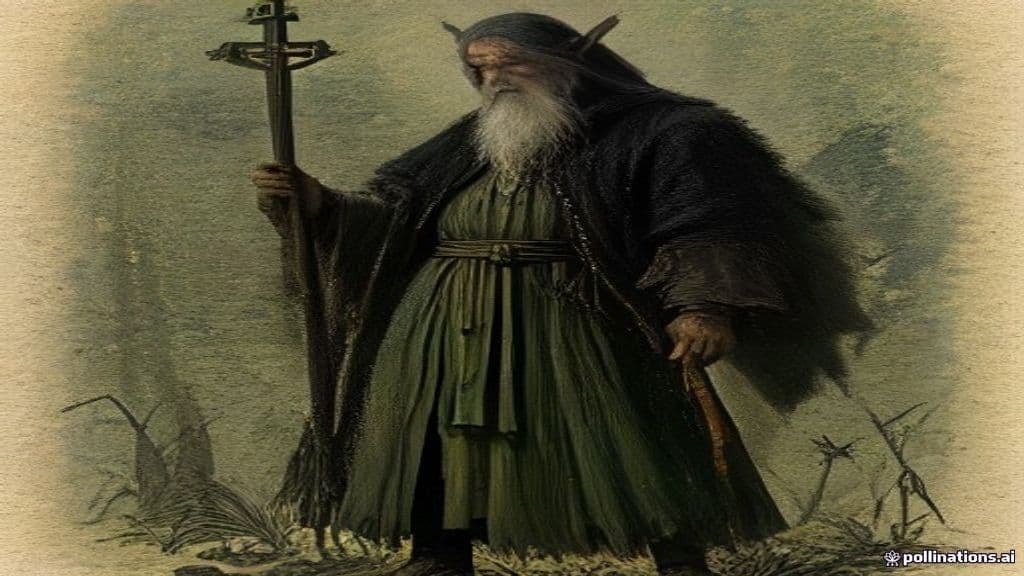
A Cantabrian popular-belief figure depicted as an old man marked with a green cross and seven keys on his forehead who intervenes in human economic affairs by lending money to prodigals and punishing repeat wastefulness with a curse of eternal poverty.

Aruna
Lesser

Aruna

Aruna is the Hittite term for the sea that functions both as a non-personified sacred presence (numen) and, in some texts, as a personified sea-deity. Attestations are regionally concentrated in southeastern Anatolia and Aruna appears in ritual, legal, and mythological contexts (notably the Telipinu composition CTH 322).

Arunachal macaque (Macaca munzala)
Minor Spirit

Arunachal macaque (Macaca munzala)

A biological species of high‑altitude macaque native to the Eastern Himalaya, treated in the sources as a natural history and conservation subject rather than a supernatural being. It is a compact, brown, short‑tailed macaque found in deep montane forests of Arunachal Pradesh, Bhutan and adjacent China, and is considered endangered.

Arvirargus
Ancient

Arvirargus

Arvirargus is a legendary British king presented in medieval chronicle tradition (notably Geoffrey of Monmouth) as a first‑century AD ruler who fought the Romans, married a Roman emperor's daughter in narrative, rebuilt cities, and was buried at Gloucester; modern scholarship treats Geoffrey's account as highly romanticised and of uncertain historicity, possibly echoing the historical Caratacus/Togodumnus.

Ash (Yuc)
Lesser

Ash (Yuc)

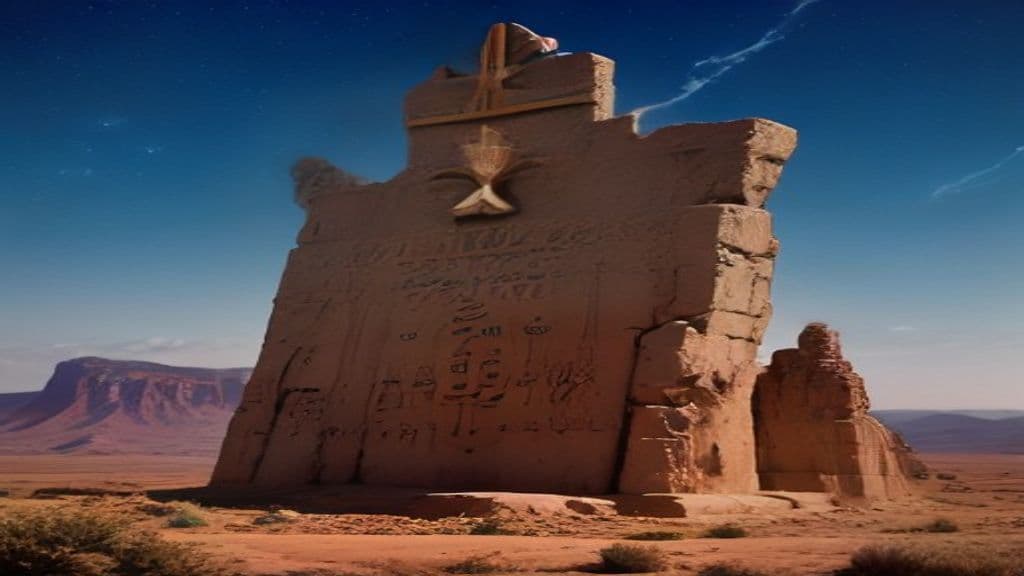
Ash (Tamazight Yuc) is an Amazigh sky god recorded in Egyptian sources and worshipped by Libyan and Tehenu tribes of the Western Desert. In Egyptian texts he is presented as a named deity connected with the vineyards of the western Nile Delta, oases, and as ‘Lord of the Tehenu,’ and is sometimes associated or equated with the god Set.

Ashaqlun
Lesser

Ashaqlun

Ashaqlun is recorded in a single source as a Manichean demon — a hostile spiritual being situated within Manichaean dualist cosmology. The available record supplies only the name and classification without further detail on attributes, appearance, or practices.

Ashi-magari
Minor Spirit

Ashi-magari

Ashi-magari (足まがり) is a ghostly phenomenon from Kagawa Prefecture, Shikoku, Japan, described as a soft, unseen thing that wraps around a person's legs at night and impedes walking. It is commonly presented in local accounts as a tactile obstruction rather than a visually manifest creature and is often attributed to tanuki trickery.

Ashiakle
Lesser

Ashiakle

Ashiakle is attested as a named entry in a biographical dictionary of goddesses; the supplied sources provide only the index occurrence and no descriptive material about the figure's attributes, myths, or rituals.

Ashina Mishe
Ancient

Ashina Mishe

Ashina Mishe (Chinese: 阿史那彌射; ?–662) was a mid-7th century member of the Ashina clan installed and recognized by the Tang court as a khagan and frontier protector-general over portions of the former Western Turkic territories. His career illustrates Tang imperial practices of using titled Turkic elites as intermediaries to administer and pacify western protectorates; his death in 662 following an intrafamilial rivalry weakened Tang influence in the region.

Asháninka
Minor Spirit

Asháninka

The Asháninka are an Arawakan-speaking Indigenous people of the central Amazon rainforests of Peru and parts of Acre in Brazil, organized in dispersed small residential groups with deep ancestral ties to riverine and interfluvial forest territories and a subsistence economy based on swidden agriculture, hunting, fishing and gathering.

Asteropeia
Minor Spirit

Asteropeia

Asteropeia is primarily a botanical genus of evergreen shrubs and small trees endemic to Madagascar (family Asteropeiaceae). Separately, a brief classical mythographic notice records a mortal woman named Asteropeia — a daughter who, with her sisters, murdered her father and was later commemorated by tomb-mounds in Arcadia. The sources treat these as distinct usages of the same name rather than a single supernatural entity.

Astrild
Minor Spirit

Astrild

Astrild is a late Nordic literary name or personification used for the classical Amor/Cupid in Swedish and broader Scandinavian poetry from the early modern period onward. The name, rendered in sources as deriving from Old Norse meaning 'love-fire,' appears in Baroque and Rococo poetic contexts and is not attested in pre-Christian Norse mythology.

Asvins
Ancient

Asvins

The Asvins (Ashvini Kumaras; Nāsatya and Daśra) are Vedic divine twin horsemen associated with dawn and twilight, invoked as youthful rescuers, healers, and ritual helpers who bring timely restoration and renewal.

Atargatis
Ancient

Atargatis

Atargatis (Greek Atargatis / Derceto) is the chief goddess of northern Syria in classical antiquity, worshipped as a civic mistress (baalat) and fertility deity who protects the city and people and functions as an ancestor/founder figure for ruling houses. Her cult shows continuity with Bronze‑ and Iron‑Age Levantine goddesses and appears in variable iconography ranging from fully anthropomorphic to ichthyomorphic (fish‑tailed) forms.

Ataroth
Minor Spirit

Ataroth

Ataroth is a toponym attested in Iron Age Levantine sources (Hebrew Bible and the Mesha Stele). The name labels several distinct towns east and west of the Jordan and functions in those texts as a marker of tribal allotment, territorial boundary, settlement, and cultic-political action.

Athirat (Asherah)
Ancient

Athirat (Asherah)

Athirat, also rendered Asherah (Ašerdu(š)/Ašertu(š) in Hittite), is a principal goddess of the ancient Northwest Semitic (Canaanite/Ugaritic) pantheon, attested in Ugaritic texts as the consort of ʾEl and associated in the sources with fertility, motherhood, sacred trees, and the sea (and in some summaries with sky).

Atikāya
Greater

Atikāya

Atikāya is a colossal rakṣasa prince in the Ramayana (Yuddha Kāṇḍa), son of Rāvaṇa and Dhanyamalinī, who fights in the Lanka war and is slain by Lakṣmaṇa after being struck with a Brahmāstra. Later retellings attribute to him an episode in which he catches Śiva's trident and is taught archery.

Atira asteroid
Minor Spirit

Atira asteroid

Atira asteroids are a scarce dynamical class of near‑Earth small bodies whose orbits lie entirely interior to Earth's orbit (aphelion < Earth's perihelion, 0.983 AU). Named after the archetype 163693 Atira, the class is observationally challenging because members appear close to the Sun on the sky and are typically detectable only in twilight or by space‑based surveys. Their significance is primarily taxonomic and operational within planetary science — affecting survey strategy, orbital tracking, and study of dynamical evolution among NEOs.

Atlantica
Minor Spirit

Atlantica

Atlantica is a scientific reconstruction of an ancient Proterozoic continental landmass that formed about 2.0 billion years ago from cratons now in West Africa and eastern South America; the name is also attested as a biological genus label and as a modern musical track title in the provided sources. The supplied materials contain no treatment of Atlantica as a supernatural or folkloric being.

Atlantid
Minor Spirit

Atlantid

A non‑folkloric label used in multiple modern contexts: an obsolete anthropological racial subtype (North‑Atlantid/Paleo Atlantid), a speculative/alternate‑history ethnonym, and a contemporary brand/name in projects, fiction, and scientific terminology. No traditional supernatural being called 'Atlantid' is attested in the supplied sources.

Attar (ʿAṯtar)
Lesser

Attar (ʿAṯtar)

ʿAṯtar (Attar) is an ancient Near Eastern masculine theonym attested among Aramaean contexts and discussed in comparative scholarship on West Semitic and Mesopotamian religions. Sources record a cultic formulation Attar-qamu, glossed 'Attar is the baetyl', linking the deity to a standing sacred stone as the locus of veneration.

Atticus O'Sullivan
Greater

Atticus O'Sullivan

A human-born, two-thousand-year-old druid protagonist of Kevin Hearne's urban-fantasy The Iron Druid Chronicles; he operates in the modern world as a powerful practitioner of druidic magic who runs an occult bookshop in Arizona and engages gods, vampires, shapeshifters, and other mythic beings.

Attis
Lesser

Attis

Attis is a mythic consort and semi-divine cult figure associated with the Anatolian Mother Goddess (Cybele / Agdistis). He functions as a vegetation-associated beloved whose self-castration, death, and ritual rebirth form the core myth enacted by his priests and festivals, especially around the vernal equinox in Phrygia, Greece and later Rome.

Aventinus
Lesser

Aventinus

Aventinus is a mytho-historical Roman figure presented in sources as a minor heroic/eponymous personage associated with the Aventine Hill and appearing in traditions surrounding Aeneas' Italian wars. He is variously described in brief accounts as a son of Hercules and the priestess Rhea (in Virgilian citation) and in alternate traditions as an early Latin/Alban king whose name explains the toponym Aventine.

Awarikus (Warikas)
Greater

Awarikus (Warikas)

Awarikus (also rendered Warikas) was a historical king of the Neo‑Hittite/Luwian polity Ḫiyawa (Adanawa/ancient Adana in Cilicia) who reigned in the mid–late 8th century BCE (c. 738–709 BCE). He is attested in Hieroglyphic Luwian, Phoenician, and Neo‑Assyrian (Akkadian) sources as a local ruler who entered vassalage and treaty relations with the Neo‑Assyrian Empire and undertook fortification and administrative projects within his realm.

Aya
Ancient

Aya

Aya is a Mesopotamian goddess associated with the dawn and worshiped as the consort of the sun god Shamash. She is principally attested in the city of Sippar, appears in royal inscriptions there, and was incorporated into Hurrian religion as the wife of the Hurrian sun Šimige.

Ayyur
Lesser

Ayyur

The string 'Ayyur' (also attested as Ayur, Ayoor) appears in the supplied sources only as a toponym and as part of bibliographic or archival titles; the provided materials contain no evidence that Ayyur is a mythological or supernatural entity.

Azatiwada
Lesser

Azatiwada

Azatiwada was a historical late-Hittite (Neo-Hittite) dynast — a local ruler of the Karatepe (Karatepe-Aslantas) fortress in Cilicia whose bilingual Phoenician–Luwian inscription (the Karatepe or Azatiwada inscription) records building works, dedications, and administrative/ritual formulae.

Aštabi
Ancient

Aštabi

Aštabi is an ancient Near Eastern deity attested in Eblaite, Hurrian, Ugaritic, and Hittite contexts. In later Hurrian and Hittite sources he functions as a war god and participant in divine assemblies and mythic combat; in the earliest Eblaite documents his precise original character is unresolved though he had named cult centers and cultic statues.

Baal Ḥamon
Ancient

Baal Ḥamon

Baal Ḥamon (Baal Hammon) is the chief god of ancient Carthage in the Punic religious framework, venerated as a male deity associated with weather, fertility of vegetation, and regarded as king among the gods. He is cultically paired with the principal female deity Tanit and is attested in archaeological and textual traditions as an authoritative lordly divine figure.

Baalshamin
Ancient

Baalshamin

Baalshamin (literally "Lord of Heaven[s]") is a Northwest Semitic theonym/title used across the Levant and adjacent regions to denote a supreme sky/heavenly lord. Depending on time and place it functions as an epithet of other deities (notably Hadad/Baal) or as a distinct civic/sky deity associated with weather, lightning, and sometimes solar aspects; attested in inscriptions from Ugarit, Phoenicia, Safaitic Arabia, Palmyra, Nabataea, and in treaty and stele texts.

Baba Marta
Lesser

Baba Marta

Baba Marta (Bulgarian: Баба Марта, 'Granny March') is a Bulgarian folkloric personification of the transition from winter to spring. Celebrated on March 1, she is pictured as a feisty grandmother whose mood is said to affect late-winter weather; communal customs (martenitsi) exchanged on her day symbolize health and good fortune.

Baboon
Lesser

Baboon

Baboon refers to primates of the genus Papio (family Cercopithecidae). The sources treat baboons as living Old World monkeys with distinct anatomy, complex social systems, omnivorous diets, and a primarily African (and partly Arabian) distribution.

Bacchis
Minor Spirit

Bacchis

Bacchis is not attested in the provided sources as a supernatural being; the name appears in historical, literary, and scientific contexts (the Bacchiadae clan of ancient Corinth, a modern biological genus, and titles/characters in classical drama collections). No folkloric cosmology, powers, appearance, or rituals for a spirit called Bacchis are documented in the supplied material.

Bachué
Primordial

Bachué

Bachué is a Muisca primordial mother figure presented in colonial-era chronicles and modern summaries as the mother of humanity. She emerges from the sacred Iguaque Lake with an infant who becomes her companion; after populating the earth they transform into snakes and return to the lagoon. She was worshipped at a temple near Iguaque (present-day Chíquiza) and is described as an ancestral, life-giving protectress who sometimes returned from the underworld to guide her people in the accounts cited.

Badang
Greater

Badang

Badang is a legendary Malay culture-hero and supernaturally empowered strongman who gains immense physical strength after capturing a water spirit. Told in Malay Annals–style tradition and later retellings, his tales link feats of strength to local place-myths (split rock, thrown palace stone, graves) and to values of service and loyalty in a pre‑modern court setting.

Baiame
Ancient

Baiame

Baiame is a principal creator/ancestral Sky Father in the Dreaming traditions of several south‑eastern Australian Aboriginal peoples. He is credited with shaping landscape, instituting law and ceremony (notably the first bora initiation), and returning to the sky while remaining present in sacred sites and rock art.

Bake-kujira
Greater

Bake-kujira

A skeletal whale yōkai from coastal western Japan, especially Shimane (Izumo) and the Oki region. Appearing offshore as a large white figure that is revealed to be a baleen whale's bare skeleton and attended by strange fish and birds, the bake-kujira is interpreted in sources as a vengeful or resentful whale-spirit that portends misfortune and prompted local placation practices.

Bakla
Minor Spirit

Bakla

Bakla is a Philippine social and gender category—commonly an assigned‑male‑at‑birth person who adopts a feminine gender expression and is often treated as a third gender. Historically some bakla served as indigenous ritual specialists (babaylan, katalonan), but the term itself denotes a social identity, not a supernatural being.

Balkan sworn virgins
Minor Spirit

Balkan sworn virgins

A culturally recognized gender role in parts of the western Balkans in which people assigned female at birth take an irrevocable vow of celibacy and are socially recognized to live as men, acquiring male privileges and responsibilities within patrilineal customary law.

Baltic Mythology
Primordial

Baltic Mythology

A complex pantheon of gods, spirits, and supernatural beings in ancient Baltic cultures. (Note: 1. Power tier: Change to "Ancient" as Primordial implies a cosmic entity, which is not supported by the source material. 2. Origin story: Specify that the connection with nature and inspiration from t)

Bandicoot
Minor Spirit

Bandicoot

A group of more than 20 species of small to medium-sized, largely nocturnal, omnivorous marsupials (order Peramelemorphia) endemic to the Australia–New Guinea region. The English name is an Anglicised borrowing ultimately from Telugu and was historically applied to unrelated Indian rodents before being transferred to Australasian marsupials.

Bandua
Lesser

Bandua

Bandua is a theonym attested in Roman‑period epigraphic sources from north‑west Iberia (Galaico‑Lusitanian area). The name appears with many localizing epithets and is reconstructed by scholars as a local tutelary or protective divine figure (or a set of closely related local figures) with occasional Roman syncretism to Mars.

Banjee
Minor Spirit

Banjee

Banjee is a social identity and performance category from urban LGBTQ+ ball culture—especially New York City voguing/ball scenes—denoting a person who embodies an urban, tough swagger and a street-presentational form of masculinity used as a judged category (e.g., 'banjee realness') in balls and related events.

Barbary corsairs
Greater

Barbary corsairs

Organized maritime raiders and state‑linked privateers operating from North African ports (notably Algiers, Tunis, Tripoli, and Salé) from medieval times into the 19th century; engaged in ship capture, coastal raids, and the seizure of captives for slave markets and ransom, and in some Muslim sources framed as a form of naval jihad.

Barbary lion
Lesser

Barbary lion

The Barbary lion was a historical North African population of Panthera leo (also called the North African, Atlas, or Egyptian lion) that inhabited the Maghreb and Atlas Mountains. Treated in sources as a zoological and conservation subject rather than a supernatural being, it is extinct in the wild and survives only in captive lineages claimed to descend from historic North African animals.

Barbary macaques (Gibraltar)
Lesser

Barbary macaques (Gibraltar)

A resident wild population of Barbary macaques (Macaca sylvanus) on the Rock of Gibraltar long associated with local identity, tourism, and formal human management. Treated in sources as biological animals—habituated to people, managed historically by the British Army and Gibraltar Regiment, and subject to legal protections and public-management practices.

Barbette Spaeth
None

Barbette Spaeth

American academic and associate professor at College of William and Mary, specializing in Roman mythology. (Note: 1. Add "None" to Power tier since Barbette Spaeth's abilities as a human academic are accurately described. 2. Remove "origin story" section, as it is unnecessary for a non-mythological figure like Ba)

Baron Munchausen
Minor Spirit

Baron Munchausen

A fictional literary persona created by Rudolf Erich Raspe (1785) and popularized in German by Gottfried August Bürger: an aristocratic raconteur whose first-person narratives recount outrageous, impossible adventures as satirical tall tales rather than literal supernatural events.

Barqash
Minor Spirit

Barqash

No folkloric descriptions of an entity named Barqash appear in the supplied sources. One provided source uses 'Barqash' as a toponym (an administrative district associated with Kufr Rakeb in Jordan); the other source (a Cairo travel-safety article) does not mention Barqash or any related spirit.

Basajaun
Ancient

Basajaun

A huge, hairy hominid in Basque mythology that protects flocks and teaches humans skills. (Note: * Power tier: should be "Greater" instead of "Ancient", as Basajaun's abilities suggest regional power but not deity-level. * Origin story: it is actually mentioned in the source that the origin story)

Batara Guru
Ancient

Batara Guru

Batara Guru is a supreme divine figure in multiple Indonesian mythological traditions (Indonesian Hinduism, Batak, Bugis, Javanese). He functions variously as a guru-aspect of Shiva, a creator or world-recoverer in Batak narrative fragments, an ancestor and progenitor in Bugis and Batak genealogies, and a high deity of the kahyangan in Javanese cosmology.

Bauchan
Lesser

Bauchan

A household-associated hobgoblin from Scottish Highland folklore, the bauchan is portrayed as ambivalently belligerent and helpful; in at least one recorded tale it accompanies a human household across the Atlantic and can shapeshift into a goat.

Bear Lake Monster
Lesser

Bear Lake Monster

A lake‑monster legend associated with Bear Lake on the Utah–Idaho border, attested in 19th‑century settler newspapers and later local reports. Descriptions and reports vary widely; the creature functions in sources as a local legendary animal, a subject of publicity and tourism, and an element of regional identity rather than a codified supernatural being.

Bedivere
Primordial

Bedivere

One-handed knight and marshal of King Arthur's Round Table, known for returning Excalibur to the Lady of the Lake. (Note: - Power tier should be Greater (powerful regional), as Bedivere is a human character with significant roles within the Arthurian court, but not necessarily on a cosmic or deity-level. - Appearance: Th)

Bee
Minor Spirit

Bee

The bee (Anthophila) is a group of winged insects within the order Hymenoptera, best known as pollinators and, in some species, producers of honey; the provided sources treat bees as biological organisms and as subjects of human husbandry (apiculture/meliponiculture) rather than as supernatural beings.

Beelzebub
Ancient

Beelzebub

Originally the name of a Philistine city-deity of Ekron recorded in the Hebrew Bible (2 Kings), Baʿal-zəḇūḇ was later used in Jewish polemic as a derisive title and appears in Christian texts as a designation for a principal demonic figure (rendered Beelzebul/Beelzebub) often called the 'prince of demons.' Over subsequent centuries the name is incorporated into medieval and early modern demonological hierarchies and literary depictions of infernal powers.