Other Supernatural Beings

842 documented Other supernatural beings from the Evil Eye grimoire, including 352 lesser and 181 minor spirit in power tier.

page 4 of 15

Befana
Lesser

Befana

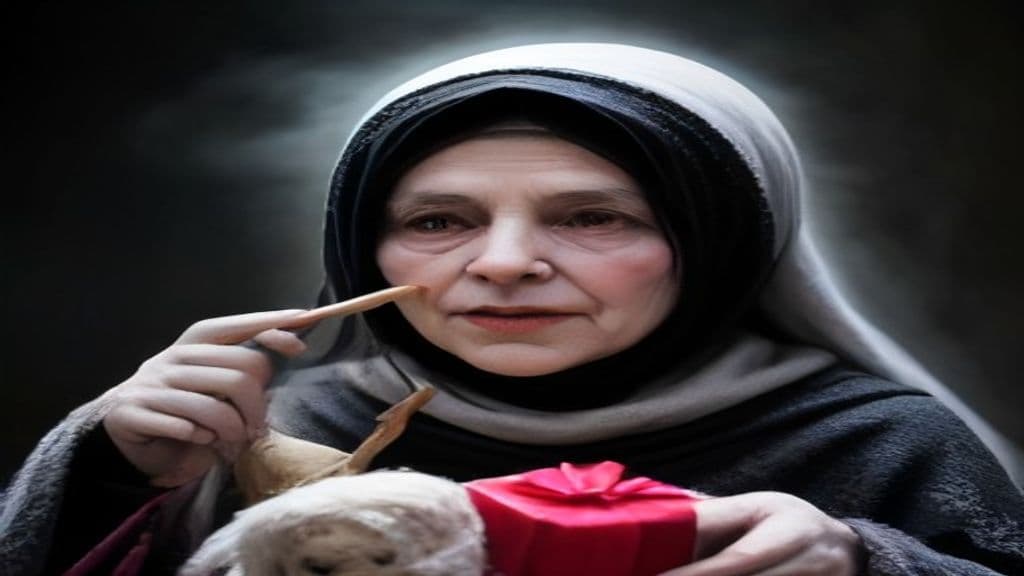
In Italian popular and folk culture, the Befana is a witch‑like old woman associated with the Feast of the Epiphany who, on Epiphany Eve (night of January 5), brings sweets to good children and coal to bad children. She is an ambivalent household/seasonal figure involved in domestic and communal Epiphany rituals such as mumming, effigy‑making and bonfires, and her origins are debated between liturgical personification and survivals of older household goddess offerings.
Belet Nagar
Ancient

Belet Nagar

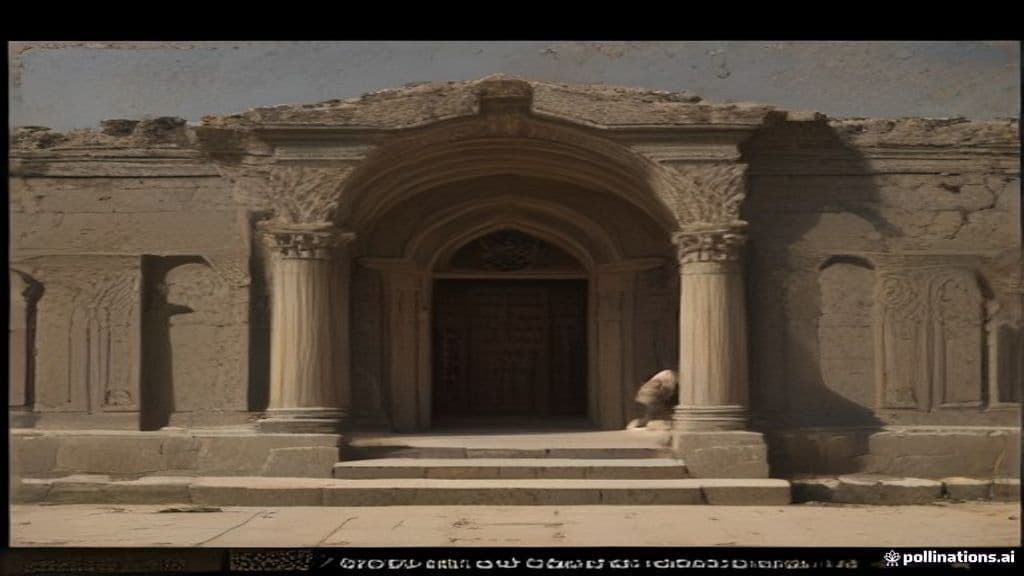
Belet Nagar is the tutelary goddess of the ancient Syrian city Nagar (Tell Brak). She functions as the city's divine patron in political and cultic contexts, connected to kingship, treaty-witnessing, and the ritual movement of her statue in civic festivals; many details of her character and identification with other goddesses remain uncertain in the sources.

Belet-ekalli (Ninegal)
Lesser

Belet-ekalli (Ninegal)

Belet-ekalli, also rendered Ninegal, is a Mesopotamian palace tutelary deity whose name means 'lady of the palace.' She appears in canonical god lists and in interstate treaty enumerations, indicating a recognized role in palace cult and state-level ritual contexts.

Bendis
Lesser

Bendis

Bendis is a Thracian female cult deity associated with hunting, lunar aspects, and Thracian revelry. Her cult was officially introduced into Attica in the mid-5th century BC, where she retained distinct rites and a shrine (the Bendideion) while sometimes being identified with Artemis.

Berchta (Perchta)
Greater

Berchta (Perchta)

Berchta (also Perchta/Percht) is an Alpine and Upper Germanic female supernatural figure tied to midwinter/Christmastide customs. In surviving folkloric and folkloristic sources she appears as a polyvalent mother-earth/seasonal figure who rewards industrious household behavior and punishes neglect, and who is associated with wintertime movements and textile work (spinning/distaff).

Bergsrå
Lesser

Bergsrå

A place-bound mountain spirit (a form of Scandinavian 'rå') thought to inhabit and preside over a mountain, often described as keeping a household or court within the mountain and known for luring or taking humans into the mountain (bergtagning).

Beroe
Lesser

Beroe

Beroe is a name applied to multiple unrelated referents in historical, mythological, and biological sources: an ancient Thracian city (modern Stara Zagora, Bulgaria), several minor figures in Greek mythology (e.g., a nymph named Beroe), and a genus of comb jellies (ctenophores) in the family Beroidae. The supplied sources do not present a single, coherent supernatural entity called Beroe within a living folk cosmology.

Berthold of Moosburg
Lesser

Berthold of Moosburg

Berthold of Moosburg (fl. 1316–1361) was a 14th‑century German Dominican theologian and scholastic commentator best known for his Expositio super Elementationem theologicam Procli, a lengthy commentary that seeks to reconcile Proclean Neoplatonism with Christian theological categories within Dominican scholasticism.

Bes
Greater

Bes

Bes is an ancient Egyptian household protective deity, commonly kept close to domestic life to guard mothers, children, and childbirth; he also defends households against snakes and malevolent spirits and is associated with music, dance, and sexual vitality.

Beset
Lesser

Beset

Beset is the feminine counterpart or female avatar of the household protector deity Bes in ancient Egyptian religion. Attested as a domestic protective figure, she is associated especially with mothers, children, and childbirth and is understood by sources as part of the Bes–Beset protective function opposing harmful influences.

Bethel (House of El)
Ancient

Bethel (House of El)

Bethel (Hebrew: Bēṯ ʾĒl, "House of El" or "House of God") is primarily a sacred place-name in the Hebrew Bible denoting a sanctuary, an anointed cult-stone (baetyl), and—in some interpretive traditions—a localized manifestation or hypostasis of the divine associated with that site.

Betobeto-san
Minor Spirit

Betobeto-san

A Japanese yōkai manifesting as the sound of footsteps that follow lone travelers at night. Traditionally regarded as non‑harmful: walkers are advised to step aside and address it politely to have the footsteps pass.

Bhoot (bhoota)
Lesser

Bhoot (bhoota)

A bhoot (also bhoota, bhoot, bhut) is the culturally specific term across parts of the Indian subcontinent for a perturbed, restless spirit generally understood to be the ghost of a deceased person. Sources describe bhoots as arising when a person's death or post-death circumstances prevent them from moving on — for example violent death, unresolved affairs, or failures in funerary rites — and the term appears frequently in modern South Asian media and discussions.

Bhārat Mātā
Minor Spirit

Bhārat Mātā

Bhārat Mātā (Bharat Mata, "Mother India") is the national personification of India represented as a sacralized maternal figure. She functions as an emblem of Indian nationalism and patriotic reverence in visual art, slogans, and public discourse rather than as a theistic deity with documented supernatural agency.

Bienaimé
Minor Spirit

Bienaimé

Bienaimé is a French-language family name attested in historical and contemporary records. Sources identify it solely as a surname borne by various individuals and as a string used in modern online personal handles; there is no evidence in the provided materials of any supernatural or folkloric character associated with the name.

Bieresel
Lesser

Bieresel

A German household/local spirit associated with beer, breweries, inns and cellars, the Bieresel alternates between helping by performing chores in exchange for a nightly portion of beer and causing mischief or harm when neglected; some regional variants in Thuringia and former German‑speaking Bohemia depict street‑roaming, aufhocken behavior.

Bigfoot (Sasquatch)
Lesser

Bigfoot (Sasquatch)

A North American folkloric large, hairy, bipedal humanoid reported chiefly from the forests of the Pacific Northwest. The figure functions as a 'wild man' type in regional and popular traditions and is documented primarily through sightings, footprint casts, media, and a subculture of enthusiasts rather than accepted biological evidence.

Bihram (Bihram Rabba)
Greater

Bihram (Bihram Rabba)

Bihram, often called Bihram Rabba ('Bihram the Great'), is an uthra (celestial being) in Mandaean cosmology who presides over the masbuta (baptism) and is invoked in Mandaean masbuta prayers; he also appears as an agent in mythic narratives such as the Book of John.

Billy Blind
Lesser

Billy Blind

Billy Blind is a named household spirit from English and Lowland Scottish ballad tradition who appears as an advising helper in Child ballads, providing information, revelation, and stratagems that enable protagonists to resolve enchantment, identity, and childbirth crises. Attestations are narrative (ballads) and later literary/television adaptations draw on his advising role.

Binot
Lesser

Binot

Binot is attested in the provided sources as a French personal and family name, notably borne by the early 16th-century navigator Binot Paulmier, sieur de Gonneville. The documentation consists of archival, bibliographic, and encyclopedic references; no source in the packet presents Binot as a supernatural or folkloric entity.

Bisan
Lesser

Bisan

A female Malay/Jakun nature spirit who presides over camphor-bearing trees. She signals the presence of camphor by cicada-like song, is jealous of those seeking the resource, and must be propitiated or confused to allow harvest.

Bishops (mammal)
Minor Spirit

Bishops (mammal)

Bishops is an extinct genus of Early Cretaceous mammal from Australia (type species Bishops whitmorei), named in honour of Dr Barry Bishop. Within the supplied corpus there is no documentation of a supernatural or folkloric entity called 'Bishops'; references to "Bishop" otherwise refer to people or ecclesiastical offices.

Bisterne Dragon
Lesser

Bisterne Dragon

A place‑bound legendary dragon from the New Forest (Hampshire, England) said to have laired on Burley Beacon and to have demanded milk from nearby Bisterne; slain in medieval pedigree tradition by a knight of the Berkeley family, its corpse is said to have formed a local hill (Boltons Bench).

Bixi
Lesser

Bixi

Bixi (Bi Xi) is a named figure in Chinese mythological lists—traditionally counted among the nine sons of the dragon—and is the canonical form for tortoise-bodied, dragon-crowned stone mounts that bear commemorative stelae. The form functions primarily as an architectural and commemorative sculptural motif used in funerary complexes, imperial mausoleums, and public commemorations from at least the late Han dynasty through the Ming and Qing.

Bizango
Lesser

Bizango

Bizango refers to secret societies in Haiti associated with Vodou practice and rural social governance. Sources portray them as local arbiters with contested reputations, variously remembered as community enforcers, makers of ritual objects, and — in folklore and some ethnographic accounts — practitioners of coercive or secretive magical acts.

Black Annis
Lesser

Black Annis

Black Annis is a Leicestershire bogeywoman in English folklore: a blue-faced, clawed hag said to haunt Dane Hills and a cave called Black Anny's Bower Close. Traditionally portrayed as a nocturnal predator of children and lambs who tans victims' skins to wear, she inspired local customs including an Easter Monday drag-hunt.

Black Dog (folklore)
Greater

Black Dog (folklore)

A class of supernatural canine apparition in British vernacular folklore, often associated with liminal places and regarded as an omen-bearing or guardian hound. Local named forms (Black Shuck, Barghest, Gurt Dog, Gallytrot) show a range from malign, death-portending hellhounds to benevolent guide-figures.

Black Knight (Dane Whitman) (tradition)
Lesser

Black Knight (Dane Whitman) (tradition)

A literary and cultural stock character archetype — the 'Black Knight' — defined by armored anonymity (absence of heraldry) and often coded as morally ambiguous or villainous; the term has been adapted across literature, film, comics, and other media rather than existing as a single supernatural being. The dossier treats the trope as a recurring narrative role rather than a mythic entity with a fixed cosmology.

Black cat
Minor Spirit

Black cat

A domestic cat with black fur that functions both as an ordinary companion animal and as a versatile folkloric symbol. In many traditions it is an omen of good or bad fortune, is associated with witches and seafaring luck, and has been repurposed in modern political and cultural symbolism.

Black horse
Minor Spirit

Black horse

A black horse is an equine whose hair coat is wholly black; in the provided sources this is a biological coat-color phenotype described in terms of genetics, breed occurrence, and identification rather than a supernatural being.

Black wolf
Minor Spirit

Black wolf

A melanistic colour variant of the gray wolf (Canis lupus) documented in zoological and regional observational sources. The term is used both for living black-coated wolves—whose coloration is now known to trace to a dog-origin mutation in some populations—and as a modern cultural label (titles, team names, etc.). The provided sources do not document a discrete supernatural being called “Black Wolf.”

Blanchefleur
Lesser

Blanchefleur

Blanchefleur is a recurring proper name and literary personage in High Medieval romance and later adaptations, functioning as an emblem of purity, idealized beauty, and floral/Marian imagery rather than a supernatural being. The name appears in multiple vernaculars (Old French, Norse, later modern retellings) attached to different human female characters—lovers, heroines, or hagiographic figures—whose roles vary by text.

Blenda
Lesser

Blenda

Blenda is the eponymous heroine of a Småland legend (Blendasägnen) who, according to local tradition, rallied the rural women of Värend to defeat a pillaging Danish force; the tale functions as an aetiological foundation for certain local social rights and ritual markers rather than describing a supernatural being.

Bloody Mary
Lesser

Bloody Mary

A mirror-associated apparition invoked by chanting a female name in dim or candlelit conditions. Originating in catoptromantic divination practices, the figure functions in modern youth-lore and urban legend as an ambiguous ghost/witch who may reveal future information or enact violent harm on participants.

Blue Ben (of Kilve)
Lesser

Blue Ben (of Kilve)

A local Somerset dragon-legend tied to the coastal landscape of Kilve. The tale explains coastal features and a fossil ichthyosaur skull by attributing them to the life and death of a fire-breathing dragon sometimes said to have been ridden by the Devil.

Blue Men of the Minch
Lesser

Blue Men of the Minch

A localized class of Scottish sea‑spirits said to inhabit the Minch between the northern Outer Hebrides and the mainland; humanoid, blue‑coloured beings who interact with sailors — sometimes playfully, sometimes by raising storms, demanding tribute, or attempting to capsize vessels. Traditional tales record a verbal poetic challenge by which mariners may avert disaster.

Blue Stone (Russia)
Primordial

Blue Stone (Russia)

A type of sacred stone in Slavic tradition, held significant spiritual significance and venerated through simple rituals. (Note: - Power tier should be Lesser (since they don't have major hallows and are venerated in a simpler way). - Abilities: "Venerated through simple rituals" is vague; clarify that these rituals include pou)

Bluebeard
Lesser

Bluebeard

Bluebeard (French: Barbe bleue) is a literary folktale character best known from Charles Perrault's 1697 version: a wealthy, powerful nobleman who marries repeatedly and secretly murders his wives, hiding their bodies in a locked chamber. He functions as a cultural archetype and cautionary exemplar about secrecy, patriarchal power, and the dangers facing women in marriage rather than as a supernatural being.

Bochica
Greater

Bochica

Bochica is a central culture-hero of the Muisca peoples of the central Andean highlands (Altiplano Cundiboyacense) who functions as a teacher and founder figure tied to sacred places (notably Sugamuxi) and to landscape-transforming myths such as the creation of the Tequendama waterfall.

Bogatyr
Greater

Bogatyr

A bogatyr is the stock heroic figure of East Slavic (primarily Russian and Ukrainian) epic-poetic tradition (bylinas): an elite, exceptional warrior associated with the princely court (notably the Kievan court of Vladimir in many tales) who defends the land and people. Bogatyrs are literary/folk-epic archetypes rather than a class of supernatural beings, though some individual figures are mythic or giant-like.

Bogeyman
Lesser

Bogeyman

A folkloric, non‑canonical monster figure invoked across cultures as a disciplinary device to frighten children into compliant behaviour; presented in sources as a flexible category rather than a single, systematized being and often used figuratively as a personification of terror.

Bogle
Lesser

Bogle

A Northumbrian, Cumbrian and Scots folkloric being reputed to perplex and frighten humans. Bogles are a polyvalent category in northern-British tradition, applied to scarecrows, household troublemakers and other uncanny creatures whose chief orientation is mischief rather than systematic harm.

Boitatá
Greater

Boitatá

Boitatá is a supernatural guardian creature from Brazilian folklore, originating in Tupi–Guarani tradition and preserved in wider Brazilian popular tradition. Commonly rendered as a fiery serpent that protects forests and fields by punishing people who burn, cut, or otherwise destroy nature, the legend also appears in brief variants that liken it to a will-o'-the-wisp or (less commonly) a bull-like creature.

Bolas
Lesser

Bolas

Bolas are a physical throwing weapon consisting of weights connected by cords, used historically and traditionally to entangle the legs of animals (and occasionally humans) at a distance. They appear in multiple regional traditions—notably in southern South America among Tehuelche and gauchos, in Mapuche and Inca military contexts, and in Inuit bird-hunting practice—under a variety of local names and constructions.

Bolti
Minor Spirit

Bolti

Bolti (attested variant boulti) is a commercial/vernacular name applied to the Nile tilapia (a cichlid fish). In the available sources it is attested as a name for a food/aquaculture species, not as a supernatural being.

Boobrie
Greater

Boobrie

A shapeshifting, water-associated supernatural creature from Scottish (particularly Argyllshire/west coast) tradition, the boobrie manifests as a gigantic water-bird, a colossal water-bull, a water-horse, or (rarely) a large blood‑sucking insect and is typically held to prey on livestock and otters in sea‑lochs and adjacent heathered ground.

Bora people
Minor Spirit

Bora people

The Bora are an indigenous Amazonian people living in the upper Amazon basin (Peru, Colombia, Brazil). They speak the Bora language, maintain an animist worldview in which spirit presences permeate the environment, and have a deep ethnoecological knowledge of rainforest plants. Historical disruptions (notably the rubber boom) and contemporary pressures such as illegal logging have strongly affected their population and settlements.

Borysthenis
Lesser

Borysthenis

Borysthenis (Ancient Greek Βορυσθενίς) is a theonym recorded in Greek discourse with two distinct usages: (1) as the name of one of a localized triad of Muses described as daughters of Apollo (sisters Apollonis and Cephisso), and (2) as an epithet applied to the Scythian earth-and-water goddess Api, indicating her status as 'daughter of the god of the Borysthenēs (Dnipro) river.'

Božalość
Lesser

Božalość

Božalość is a Wendish (Lusatian Sorb) omen-figure described in ethnographic sources as a messenger or harbinger whose audible lamentation announces imminent death or other calamity for particular people, households, or communities. The name is commonly rendered in German sources as "Gottesklage" ("God's Lament").

Bran
Minor Spirit

Bran

In the provided sources, 'Bran' refers to the outer layers of cereal grains (a botanical/agronomic material) and separately as the name of a commune in Brașov County, Romania. There are no folkloric or supernatural descriptions of an entity named 'Bran' in the supplied materials.

Brasilestes stardusti
Minor Spirit

Brasilestes stardusti

Brasilestes stardusti is an extinct genus and species of tribosphenic mammal described from Late Cretaceous (Campanian–Maastrichtian) fossil material from the Adamantina Formation in northwest São Paulo state, Brazil. The species is noted for being relatively large for Mesozoic mammals (size estimated from remains) and the specific epithet honors musician David Bowie.

Briseus
Lesser

Briseus

Briseus (Ancient Greek: Βρισεύς or Βρίσης) is a mortal figure in the Trojan War tradition, known primarily as the father of Briseis, a woman taken captive by the Greeks. He appears in Homeric tradition and later commentators, who variably place him in Pedasus or identify him as a priest of Lyrnessus; a later pseudo-historical source (Dictys Cretensis) reports that he hanged himself after losing his daughter.

Buckriders
Lesser

Buckriders

A South-Eastern Dutch and North-Eastern Belgian tradition describing groups—treated variously as alleged witches and criminal bands—said to have entered pacts with an infernal master and to have 'ridden' bucks/goats by night to commit raids. The motif appears in 18th-century trials and in local folklore linking goat-riding and diabolic Sabbath imagery.

Budeia
Lesser

Budeia

Budeia is a lexical/onomastic term attested in two distinct registers: (1) an ancient Greek mytho-genealogical figure and an epithet of Athena meaning 'oxen-yoker', and (2) a modern Norwegian occupational noun (budeia) denoting the woman who tends the summer farm dairy. The term consistently occupies an agricultural/labor semantic field in both traditions rather than functioning as a singular supernatural entity.

Burkut
Ancient

Burkut

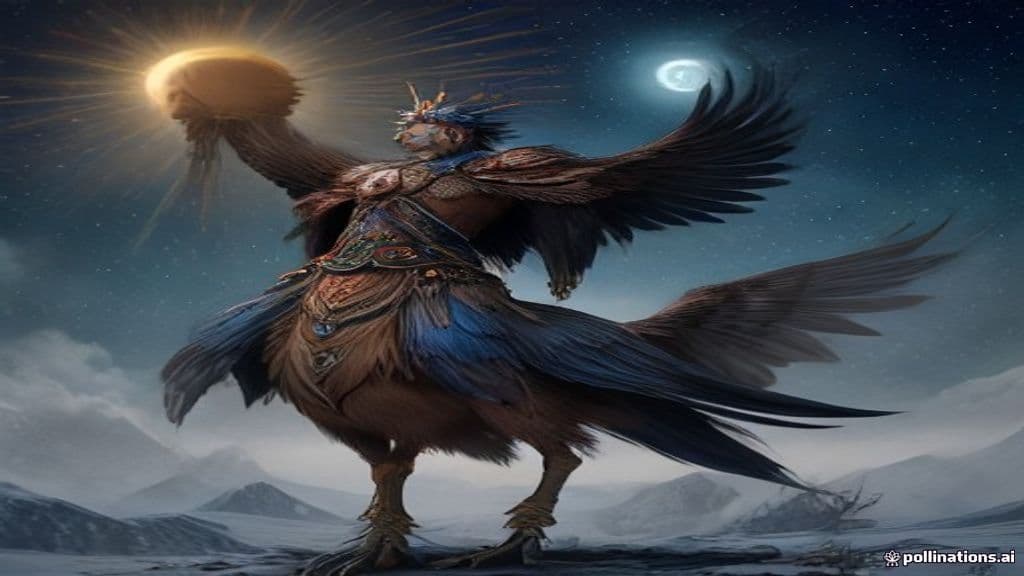
Burkut (also Bürküt, Merküt) is a sacred eagle figure in Turkic mythic cosmology associated with the sun, rulership, and protective authority. Treated as an emblematic or quasi-divine bird rather than a mundane animal, it appears in shamanic rites, world-tree iconography, folk performance, and modern heraldic motifs.

Busang
Lesser

Busang

Busang is not attested as a supernatural being in the supplied sources; rather it is a polyvalent proper name found as a toponym (places in Borneo), a lect name (Busang Kayan), a mining prospect label (Busang deposit in the Bre‑X scandal), and as a personal name. No mythological origin, appearance, powers, or ritual practices directed at a supernatural Busang are recorded in the provided material.

Bà Chúa Xứ (Lady of the Realm)
Greater

Bà Chúa Xứ (Lady of the Realm)

Bà Chúa Xứ, also called Chúa Xứ Thánh Mẫu, is a localized tutelary and prosperity goddess in Vietnamese folk religion centered at Vĩnh Tế village at the foot of Sam Mountain, An Giang province. She is worshipped as a protector of business, health, and the Vietnamese border and attracts pilgrimages and a major three-day festival beginning on the 23rd day of the fourth lunar month.

Büreah (Buri)
Lesser

Büreah (Buri)

Entry for Büreah (also rendered Buri). The supplied source documents do not contain any information about a Himalayan supernatural entity by this name; therefore no factual claims about the entity can be supported from the provided materials.

Bāṇasura
Greater

Bāṇasura

Bāṇasura (Bana, Bāṇāsura) is an asura-king of Śoṇitapura in Hindu Purāṇic narratives: a mighty ruler and ardent devotee of Śiva whose penances and boons grant him great protection and power. He is best known from the Bhagavata Purāṇa cycle concerning Uṣā and Aniruddha, which culminates in a divine confrontation between Śiva (protecting Bāṇa) and Kṛṣṇa (rescuing Aniruddha) and ends with Bāṇa's defeat, maiming, repentance, and reconciliation.

Cacodemon
Lesser

Cacodemon

A term originating in Ancient Greek (κακοδαίμων, kakodaimōn) denoting an "evil spirit" — the morally malign subset of daimōn — later reused in literature, psychiatry (cacodemonia), occult fragments, and popular culture where it appears as a videogame monster. Sources present the cacodemon both as a moralized spirit-type in classical-language summaries and as various modern imaginative creatures rather than a single fixed biological species.