Other Supernatural Beings

842 documented Other supernatural beings from the Evil Eye grimoire, including 352 lesser and 181 minor spirit in power tier.

page 5 of 15

Caelia
Minor Spirit

Caelia

Caelia is a literary name used by early modern and later authors for two distinct female figures: a fairy-queen in Richard Johnson's romance Tom a Lincoln who rules an island of women, and an allegorical personification of a heavenly, maternal spirit in Edmund Spenser's The Faerie Queene who rules the House of Holiness and aids the Redcrosse Knight. The name also appears in early modern song broadsides as a beloved figure and exists independently as a Roman gens name.

Caeneus
Greater

Caeneus

Caeneus is a heroic Lapith of Thessaly in Greek myth, originally born Caenis (female) and transformed by Poseidon into an invulnerable man. Celebrated among the generation of pre-classical heroes, Caeneus is famed for martial prowess and for his death during the Centauromachy, when Centaurs battered him into the earth.

Calafia
Lesser

Calafia

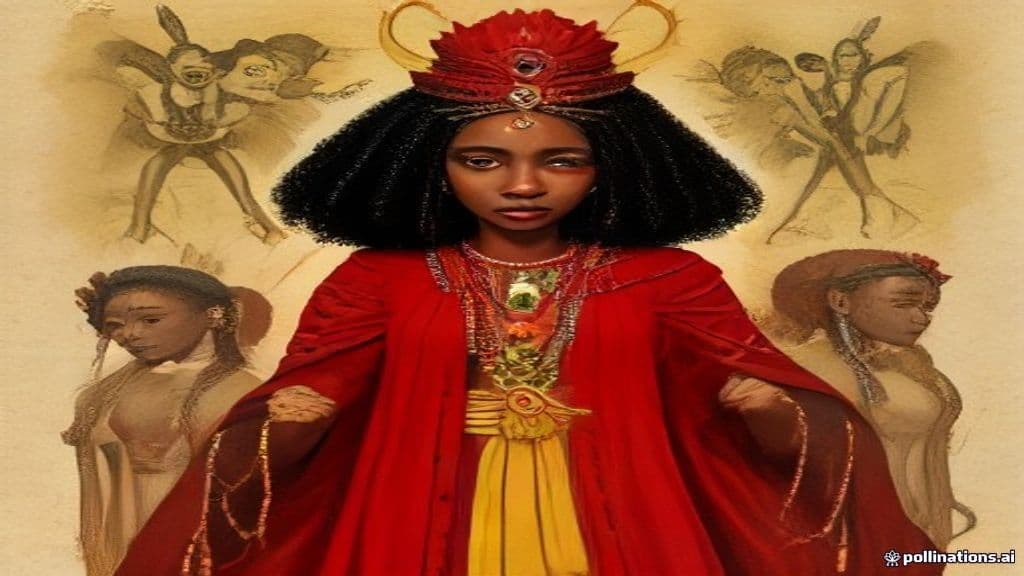
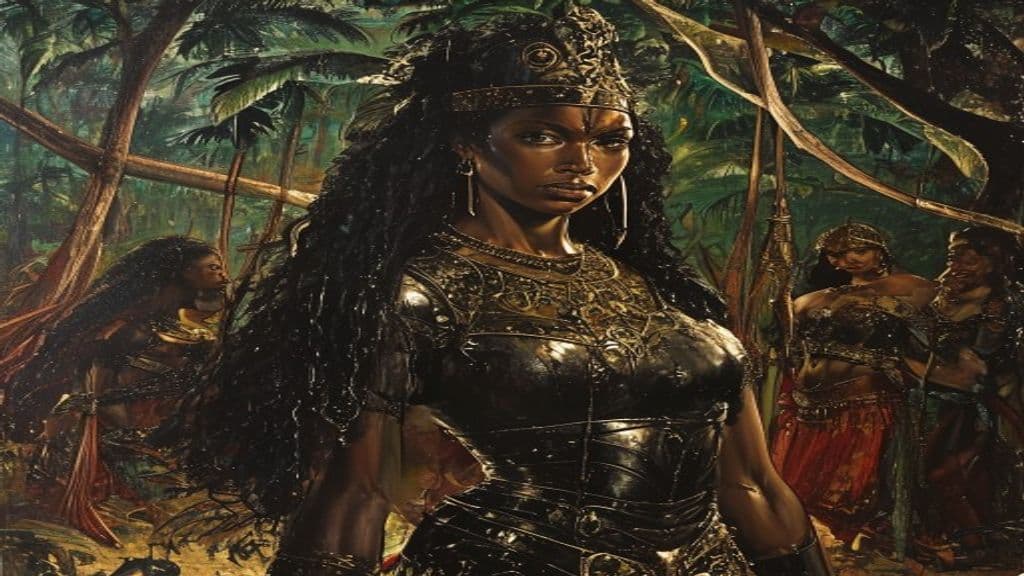
Calafia (also Califia) is a fictional queen introduced in Garci Rodríguez de Montalvo’s early 16th‑century chivalric romance Las sergas de Esplandián (c. 1510). In the narrative she is ruler of a mythical Island of California, portrayed as a regal Black woman who commands women warriors and griffins and is later captured, converted to Christianity, and integrated into the chivalric plot.

Calcu (Kalku)
Lesser

Calcu (Kalku)

In Mapuche tradition, the calcu (also spelled kalku) is a sorcerer or witch who works with black magic and negative powers, presented in sources as the oppositional counterpart to the culturally sanctioned, benevolent shaman (machi).

Calon Arang
Greater

Calon Arang

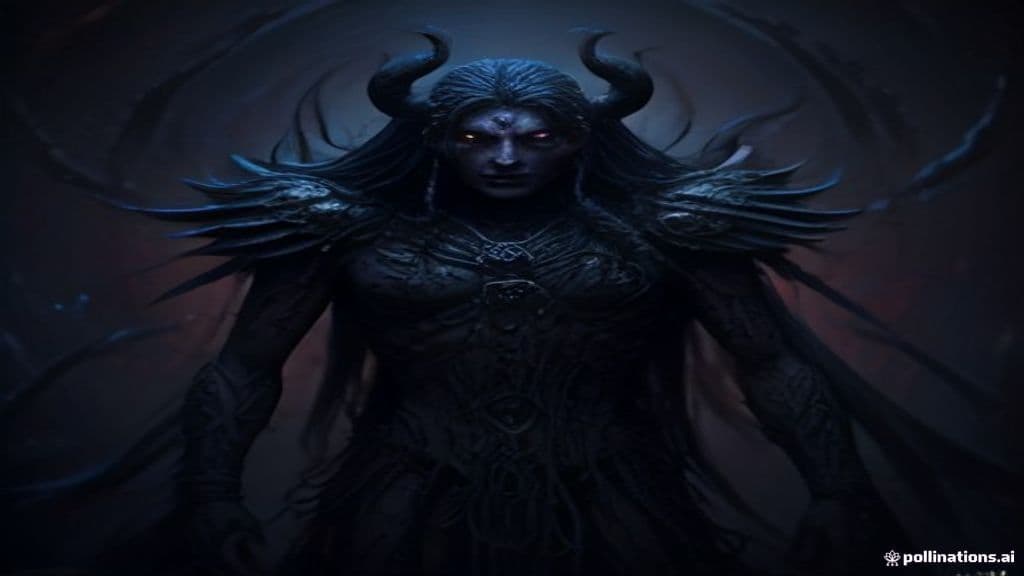
Calon Arang is a witch figure in Javanese and Balinese folklore, traditionally portrayed as a master of black magic whose cemetery ceremony—including the sacrifice of a young girl to the goddess Durga—brings flood and an incurable plague to the village of Girah. In the tale a royal ritual specialist (Mpu Bharadah) and his disciple (Mpu Bahula) neutralize her by recovering her magic scroll and confronting her in ritual contest.

Cantabrian brown bear
Minor Spirit

Cantabrian brown bear

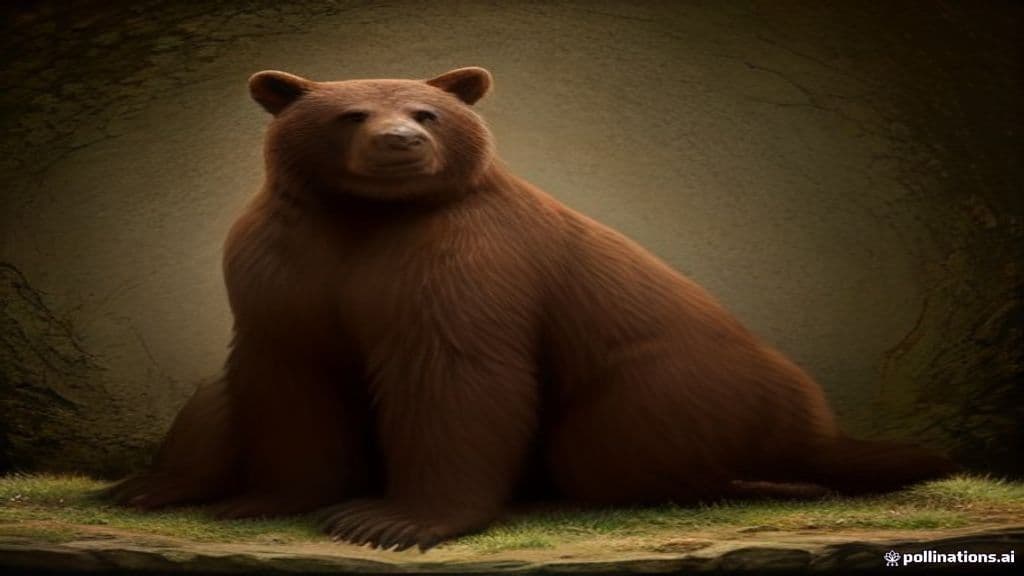
A remnant population of the Eurasian brown bear (Ursus arctos arctos) confined to the Cantabrian Mountains of northern Spain, treated in scientific and conservation contexts as a distinct local population with significant ecological and conservation importance.

Canterbury Panther
Lesser

Canterbury Panther

A New Zealand urban-legend of a large black panther or "Canterbury Cat" said to roam the Canterbury Region. Reported sporadically from before the 1970s into the 21st century, the phenomenon is treated in sources as modern phantom-cat sightings subject to civic investigation and scientific demystification.

Cap-o'-Rushes
Lesser

Cap-o'-Rushes

Cap-o'-Rushes is the title and heroine of an English folktale collected by Joseph Jacobs. The story is classed among international folktale types (principally ATU 510B) and opens with the 'Love Like Salt' motif; it tells of a daughter who disguises herself in a garment of rushes, works as a kitchen maid, attends secret balls, causes recognition by hiding a ring in a dish, and engineers reconciliation by ordering a saltless wedding feast so her father remembers his earlier words.

Capon
Minor Spirit

Capon

A capon is a castrated or chemically sterilized male chicken fattened for food. The term and its documented attributes are agricultural and culinary; sources do not describe a supernatural or folkloric entity by this name.

Carbuncle (heraldry)
Minor Spirit

Carbuncle (heraldry)

A heraldic charge consisting of eight radii or spokes: four forming a common cross and four forming a saltire. The term 'carbuncle' also names a deep-red cabochon gemstone (usually almandine garnet) and, separately, a folkloric legendary creature in South American tradition associated with gemstones; however, in the sources provided the heraldic sense is a visual emblem rather than a supernatural being.

Catalina Lercaro
Minor Spirit

Catalina Lercaro

Catalina Lercaro is the legendary specter associated with a 16th‑century member of the Genoese Lercaro family who allegedly died by suicide in the family mansion (Casa Lercaro) in San Cristóbal de La Laguna, Tenerife. Tradition holds her ghost walks through the rooms of the mansion (now the Museum of History and Anthropology of Tenerife) and she is widely regarded in local lore as the Canary Islands' most famous ghost.

Cath Palug
Greater

Cath Palug

A monstrous, unusually large cat from Welsh myth later adapted into continental medieval romance (Anglo‑Norman/Old French) as Chapalu/Capalu. Associated with islands, lakes, bogs, and shoreline liminal zones, it functions as a localized animal horror that confronts named heroes (Welsh Cai/Kay; continental sources often transfer the opponent to King Arthur).

Cayster (Caystrus / Küçük Menderes)
Lesser

Cayster (Caystrus / Küçük Menderes)

Cayster is primarily attested as a geographic river in western Anatolia (modern Küçük Menderes) that flows westward to the Aegean near Pamucak beach by Selçuk. In one cataloging entry the name is also labeled as a “river god of Asia Minor,” indicating at least a classificatory or personifying tradition, but the available sources supply no mythic narratives, cultic details, or iconography for a deity figure.

Caystrus
Lesser

Caystrus

Caystrus is the ancient name of a river in western Asia Minor (modern Küçük Menderes) and the personified river-god associated with that watercourse in local ancient summaries. Attested in geographic and mythological reference summaries, Caystrus functions as a local river-deity tied to place and to civic genealogy (a son described as an autochthon is said to give the name of Ephesus).

Caïssa
Minor Spirit

Caïssa

Caïssa is a literary personification and poetic invention associated with the game of chess, originating in Renaissance and later European poetry. Presented as a dryad- or nymph-like figure (Vida's Schacchia; Jones's Caïssa), she functions in literature and modern chess commentary as an emblematic patron or metaphor for luck and inspiration in the game rather than a claimed folk spirit.

Celtic Sacred Trees
Greater

Celtic Sacred Trees

In Celtic tradition, sacred trees are imbued with spiritual significance and serve as symbols, conduits for medicinal properties, or abodes for nature spirits. (Note: 1. Power tier is uncertain; the source material does not explicitly describe the trees' power level. 2. Abilities should be more specific; instead of stating they "possess symbolic significance and se)

Cercopes
Lesser

Cercopes

The Cercopes (Greek Κέρκωπες, 'tailed ones') are a pair (or more) of mischievous trickster woodland figures in Greek myth, proverbial as liars, thieves, and comic rascals. Best known for stealing Heracles' weapons during his servitude to Omphale and being bound and humiliated by him, they appear across literary fragments and vase imagery and are variously explained as primordial offspring, human tricksters, or etiological figures for monkeys.

Ceridwen
Greater

Ceridwen

Ceridwen is an enchantress in medieval Welsh legend, keeper of a cauldron whose brew produces awen (poetic inspiration). In the Tale of Taliesin she brews a potion intended for her son; when her servant Gwion Bach gains the first drops the resulting pursuit, shapeshifting sequence, swallowing and rebirth produce the poet Taliesin. Later sources and modern writers sometimes recast her as a goddess of transformation and rebirth.

Chamrosh
Lesser

Chamrosh

Supernatural bird entity inhabiting the summit of Mount Alborz in Persian mythology. (Note: 1. Remove "Origin story" section since no origin story is provided in the source material. 2. Add a statement about the lack of specific abilities or behaviors under the "Abilities" section to clarify)

Changeling
Lesser

Changeling

A changeling is a human-like substitute left by nonhuman beings (fairies, trolls, demons, etc.) after they abduct a human—most often an infant. Found throughout much of European folklore, the changeling functions as an uncanny domestic replacement whose presence explains sickness, developmental difference, or sudden loss.

Chaos gods (tradition)
Primordial

Chaos gods (tradition)

A class of mythic figures or modern fictional entities associated with primordial or elemental chaos. In comparative mythology they denote personifications of cosmic disorder; in modern fictional settings (notably Warhammer 40,000 fandom) the term is used for emergent intelligences formed from concentrated collective emotion or psychic energy.

Charon
Lesser

Charon

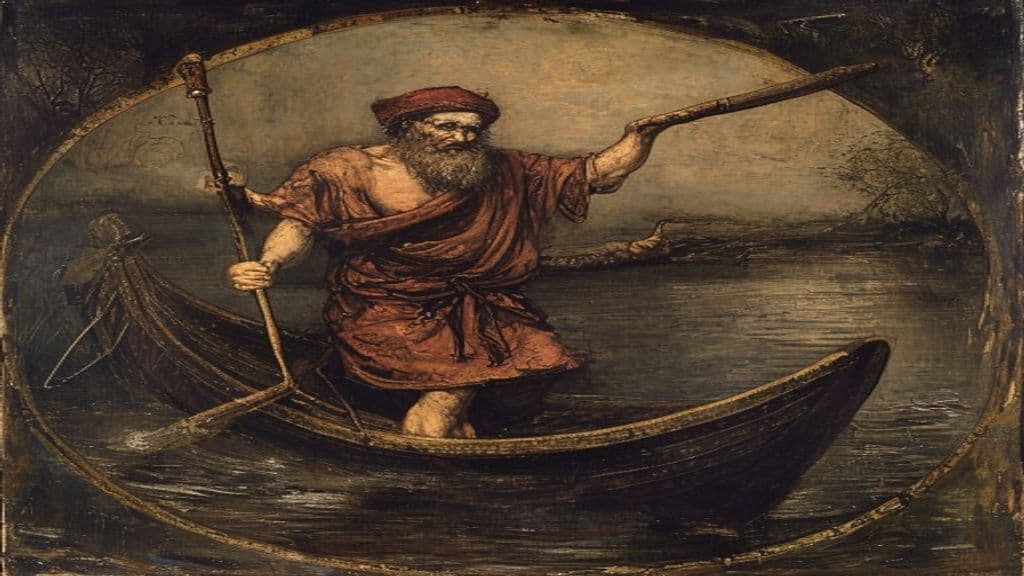
Charon (Χάρων) is the ferryman of the Greek underworld who conveys the souls of the dead across the boundary river (variously Acheron or Styx). He functions as an underworld attendant and psychopomp whose service typically requires funeral rites and payment (Charon's obol).

Charon's Obol
Primordial

Charon's Obol

In Roman tradition, Charon's obol is a payment or bribe given to Charon, the ferryman of the dead, to ensure safe passage across the afterlife. (Note: - Power tier should be Lesser, as it's a payment or bribe, not a cosmic entity. - Remove mention of supernatural powers, as the text states it serves as a payment for Charon's services. - Add that the)

Chenghuangshen (City God)
Greater

Chenghuangshen (City God)

Chenghuangshen (城隍神), commonly called the City God, is a tutelary deity in Chinese folk religion tied to a specific settlement. Historically associated with a city's walls and moat, the deity functions as protector of local affairs and as a local official in the postmortem ordering of souls for that place.

Cherchen (Chercheny)
Minor Spirit

Cherchen (Chercheny)

No folkloric entity named 'Cherchen' or 'chercheny' is described in the supplied sources. The term appears only as the toponym for the oasis town Qiemo (Cherchen) in Xinjiang and as a travel-route waypoint in 19th–20th century European travel literature and Cold War-era documents.

Chervona Ruta
Minor Spirit

Chervona Ruta

Chervona Ruta (Ukrainian: Червона рута, lit. 'Red Rue') is a Ukrainian cultural motif that refers both to a plant of ambiguous identification (variously associated with the rue genus Ruta or with rhododendron) and to a hugely popular song written by Volodymyr Ivasiuk in 1968 which spawned recordings, covers, and a namesake music festival.

Chibados
Lesser

Chibados

Chibados are a historically attested third‑gender social and ritual role found among the Ndongo and neighboring Angolan cultures: male‑assigned people who lived and presented as women and who served as institutionalized diviners, ritual specialists, and political actors in precolonial court contexts.

Chibafruime
Lesser

Chibafruime

Chibafruime (also spelled Chibrafruime) is recorded in colonial and modern summaries as a minor Muisca deity identified as a god of war. Surviving references are sparse and derive largely from later compilers and brief encyclopedia entries; tales mentioning the figure have been noted in several Muisca localities.

Chibchacum
Greater

Chibchacum

Chibchacum is the Muisca rain-and-thunder god who, according to recorded myth, sent great rains and floods and was punished by the culture-hero Bochica; earthquakes are explained as Chibchacum shifting the heavy burden he was forced to bear.

Chicham spirit-soul traditions (Arutam, Nungüi)
Greater

Chicham spirit-soul traditions (Arutam, Nungüi)

Cluster of interrelated spirit and soul concepts in Chicham (Jivaro) cosmologies, most notably the personal protective soul arutam and the garden/mother spirit Nungüi; beliefs govern protection, sickness, agricultural fertility, shamanic practice, and socially regulated rituals such as killing to renew souls.

Chindi (Navajo)
Lesser

Chindi (Navajo)

In Navajo tradition, a chindi is the negative energy or miasma left behind after a person dies. (Note: 1. Power tier should be revised as Primordial, since it's described as "everything that was negative about the person's life" and its effects are not limited to a specific region. 2. Sensory cues shou)

Chirimachus
Lesser

Chirimachus

Chirimachus (Ancient Greek: Χειρίμαχον) is a minor figure in Greek mythic genealogy: a Mycenaean prince, son of King Electryon and Anaxo, named among his brothers and reported to have been killed by the sons of Pterelaus during a dynastic conflict over the descendants of Perseus.

Chislobog
Greater

Chislobog

Chislobog (Числобог) is a figure of modern Slavic reconstructionist and Ynglist/Slavic‑Aryan writings presented as a deity of numbers, cyclic time and cosmic ordering; scholarly and reference sources mark the figure as a 20th‑century invention or drawn from contested/forged sources (Book of Veles, Prillwitz idols).

Chiyou
Greater

Chiyou

Chiyou (蚩尤) is a polyvalent figure in Chinese and related ethnolinguistic traditions: a legendary tribal leader of the Nine Li (九黎) people, a formidable martial/numinous power associated with storms and metal/weaponry, and an ancestor or ritual deity in some southern ethnic cults (notably Miao/Hmong). He is best known as the principal antagonist of the Yellow Emperor in the Battle of Zhuolu narrative and as an incorporated figure in later ritual and material culture.

Chonchon
Greater

Chonchon

A Mapuche legendary being described as the detached, flying head of a sorcerer or person who has entered into sorcery. The chonchon is associated with kalku (evil sorcerers), nocturnal covens, and functions as an omen-bearing, predatory extension of illicit witchcraft in southern Chile and Argentina.

Chthonic deities
Ancient

Chthonic deities

A classificatory term from ancient Greek religion (χθόνιος, khthónios) for gods, spirits, and divine aspects associated with the earth beneath the living surface and the underworld; the label marks subterranean, funerary, or fertility-oriented cult and ritual practice rather than a single uniform species of being.

Chthonius (Χθόνιος / Chthonios)
Lesser

Chthonius (Χθόνιος / Chthonios)

Chthonius is an Ancient Greek name and epithet meaning "belonging to the earth/the underworld." It is applied to multiple distinct mythic figures — several mortal or semi-divine personages (a Spartos, a son of Aegyptus, a founder-son of Poseidon and Syme, a Centaur, a Giant) — and used as a chthonic epithet for major gods; in modern taxonomy it names a genus of pseudoscorpions.

Chupacabra
Lesser

Chupacabra

A contemporary legendary creature or cryptid from parts of the Americas, blamed for unexplained livestock deaths and associated with vampiric puncturing of necks. The figure circulates largely through modern rumor, tabloid reportage, and popular culture rather than as part of an older ritual cosmology.

Church Grim
Lesser

Church Grim

A site-bound guardian spirit in English, Scottish and Nordic/Scandinavian folklore that watches over an individual Christian church and its churchyard, defending the consecrated ground from profanation and hostile spirits. Forms and origin accounts vary by region, including a large black dog in English tradition, the bound spirit of an animal (often a lamb) in Scandinavian accounts, and in some Scottish strands the spirit of the most recently buried person acting as a temporary watcher.

Chía
Ancient

Chía

Chía is the Moon deity of the pre‑Columbian Muisca (Chibcha‑speaking) peoples of the central highlands of present‑day Colombia. She was the focus of an institutionalized cult with a dedicated Moon Temple at the town of Chía and calendar‑based ceremonies conducted by the chyquys (priests of the sacred calendar).

Chōchinbi
Lesser

Chōchinbi

Chōchinbi (提灯火, "paper-lantern fire") are regionally reported Japanese atmospheric spirit-lights treated as a variety of onibi. Tales describe them as lantern-like floating flames seen near footpaths, rice fields, riverbanks, and graveyards, sometimes vanishing when approached and sometimes associated with animal yōkai or resentful human spirits.

Cinderella
Ancient

Cinderella

A widespread folktale protagonist and narrative archetype: a young woman who endures neglect or obscurity and is unexpectedly elevated to recognition and higher social status, typically by marriage. The motif appears in many cultures and historical periods and functions as a moral and social narrative about identity, tokens of recognition, and social mobility rather than as a supernatural being.

Cinna
Minor Spirit

Cinna

Cinna is a proper name applied across multiple unrelated referents in classical history, geography, biological taxonomy, and modern culture. The provided sources treat Cinna as a Roman family name and individual Romans, an ancient town in Galatia, a genus of grasses, and various modern literary, musical, and vernacular uses rather than as a singular mythological or supernatural being.

Classical elements
Primordial

Classical elements

A conceptual classificatory system in ancient natural philosophy that reduces material diversity to a small set of basic constituents (typically earth, water, air, fire, sometimes aether). Used to explain the properties, changes, and motions of natural bodies and to ground medical and alchemical practice.

Cleolla
Minor Spirit

Cleolla

Cleolla (Κλεόλλα, also spelled Cleola) is a mortal figure in Greek mythic genealogies, presented as a member of the house of Pelops and variously placed as wife, mother, or grandmother in competing accounts of the ancestry of Agamemnon, Menelaus, and Anaxibia.

Cleonymus
Minor Spirit

Cleonymus

Cleonymus (Kleonymos) is attested in the provided sources only as a Greek personal name borne by several historical figures (Athenian general; a Spartan youth; a Spartan Agiad general; a tyrant of Phlius) and as a modern taxonomic genus name for a group of wasps. The supplied materials contain no evidence that Cleonymus is a supernatural or mythological entity.

Clotenus
Minor Spirit

Clotenus

Clotenus is a legendary/pseudohistorical king of the Britons attested in Geoffrey of Monmouth's tradition and in later medieval compilations of British king‑lists. He appears as a named ruler in succession lists (dated to 209 BC in Geoffrey's chronology) and occasionally as a regional king (e.g., described as 'king of Cornwall' in one later compilation).

Clymenus
Lesser

Clymenus

Clymenus (Ancient Greek Κλύμενος, Klúmenos, lit. "famous, infamous") is a recurring personal name in Greek myth applied to multiple mortal figures — kings, princes, an Argonaut, and a suitor — and in one minor late attestation appears as a title or epithet of Hades. The name functions primarily within genealogical, foundation, and local heroic narratives rather than as a single coherent supernatural being.

Clytia
Lesser

Clytia

Clytia (also Clytie) is primarily an Oceanid of Greek myth famed for unrequited love for the sun-god Helios and a narrative metamorphosis; the name also appears for several other mortal or semi‑divine women in classical genealogies. Separately, Clytia is a modern scientific genus of cnidarians (e.g., Clytia hemisphaerica) used in developmental biology.

Coblynau
Lesser

Coblynau

Coblynau (singular coblyn) are small gnome-like mine and quarry spirits from Welsh folklore. They are reported in folkloric summaries as haunting underground workings, making knocking sounds, and—according to some miners' tales—occasionally indicating locations of ore or riches.

Cocijo
Ancient

Cocijo

Cocijo is the Zapotec rain, thunder and lightning deity and the personified sacred force of storms and fertility in pre‑Columbian Oaxaca. The Zapotec word cocijo means "lightning" and names both the meteorological phenomenon and this primary divine figure, who is credited in Zapotec tradition with creative acts and who received ritual offerings including bloodletting and human sacrifice.

Collared mangabey
Minor Spirit

Collared mangabey

The collared mangabey (Cercocebus torquatus) is a real species of Old World monkey native to parts of West and Central Africa. Documented in biological and conservation literature, it is treated as a non-supernatural, arboreal primate of conservation concern rather than a folkloric entity.

Colonel Tomb
Greater

Colonel Tomb

A Vietnam War–era U.S. naval aviation legend of a single, named North Vietnamese ace credited in American oral and print accounts with numerous kills. The figure is a wartime myth/personification rather than a documented individual; the tale arose from intelligence interpretation, aircraft victory markings, and combat storytelling.

Common Chimpanzee (Pan troglodytes)
Greater

Common Chimpanzee (Pan troglodytes)

The common chimpanzee (Pan troglodytes) is a medium-sized great ape native to the forests and savannas of equatorial Africa. Treated in the provided sources as a biological species rather than a mythic being, it is an omnivorous, highly social primate and one of humans' closest living relatives, closely related to the bonobo (Pan paniscus).

Comodon
Minor Spirit

Comodon

Comodon is the scientific genus name applied to an extinct mammal known from a mandible (USNM 2703) from Quarry 9 at Como Bluff, Wyoming, in the Late Jurassic Morrison Formation. The name was erected as a replacement for the preoccupied Phascolodon and is used within paleontological nomenclature rather than as a mythic or folkloric being.

Conomor
Minor Spirit

Conomor

Conomor is a mid-6th-century Breton/Cornish ruler who in historical sources appears as a violent, ambitious political actor and in later Breton hagiography and folklore becomes a stock villain—an excommunicated count/king accused of murdering rivals, wives and children and opposed by saints such as Samson and Gildas.

Consus
Lesser

Consus

Consus is a chthonic Roman deity associated with the safeguarding of grain, subterranean storage (silos, bins) and the hidden seed; his cult included earth-covered altars and public festivals (Consualia) featuring equestrian games and rites tied to harvest and settlement ceremonies.

Cooties
Lesser

Cooties

Cooties is a fictitious childhood "disease" or contagion from childlore and playground play. Functioning as a social tag and game mechanic rather than a biological or supernatural being, it marks someone as undesirable or other and is negotiated through rituals such as the playful "cootie shot."

Coria
Minor Spirit

Coria

Coria is not attested in the provided sources as a mythological or supernatural being. The term appears in the supplied material primarily as a toponym (place-name) in Iberia and Roman Britain and as a modern surname; no documentary evidence in these sources describes a spirit, deity, or monster named 'Coria.'

Coronus
Lesser

Coronus

Coronus (Ancient Greek: Κόρωνος, Koronos) is a personal name in Greek mythic genealogies applied to one or more mortal/heroic figures associated with the Thessalian Lapiths. He is attested as a king of the Lapiths and as an ancestor (notably father of Leonteus) in epic and mythographic lists; some sources list a Coronus among various Argonaut rosters, a variant attribution rather than a unanimous identification.