Other Supernatural Beings

842 documented Other supernatural beings from the Evil Eye grimoire, including 352 lesser and 181 minor spirit in power tier.

page 6 of 15

Corsairs of Umbar
Lesser

Corsairs of Umbar

A fictional human seafaring military faction in J. R. R. Tolkien's legendarium. Based at the port of Umbar in southern Harad, their ships serve as the fleet allied with the Dark Lord Sauron and they act as naval antagonists to northern realms such as Gondor.
Corybas
Greater

Corybas

Corybas (Κόρυβας, Korubas) is a mythological eponymous figure tied to the Cybelene/Phrygian cult world and to the ecstatic ritual performers called the Corybantes (Korybantes). Attested as a son of Iasion and the goddess Cybele, the name also denotes the collective ritual daimones or dancing priests associated with the Korybantic dance and Samothracian mysteries.

Cowroid
Lesser

Cowroid

A cowroid (also spelled cauroid) is a prehistoric and ancient Egyptian seal‑amulet that imitates the cowrie shell. Treated as a protective amulet, cowroids were incorporated into women's dress (notably girdles) and funerary assemblages from Pre‑dynastic contexts through multiple Dynastic periods, and sometimes bear divine imagery (for example Taweret).

Creator being
Primordial

Creator being

A creator being (creator deity) is the divine agent ascribed responsibility for the origin of the Earth, world, or universe within a religious or mythological system. In some traditions the creator is identical with the single God; in others a secondary creative agent is distinguished from a more transcendent ultimate being.

Cressida
Minor Spirit

Cressida

Cressida is a literary character from medieval and Renaissance retellings of the Trojan War, appearing in works from the Roman de Troie tradition through Boccaccio, Chaucer, and Shakespeare. She is portrayed as Troilus's lover who is exchanged to the Greeks and later becomes associated with an affair with Diomedes; later authors vary in their moral judgments of her.

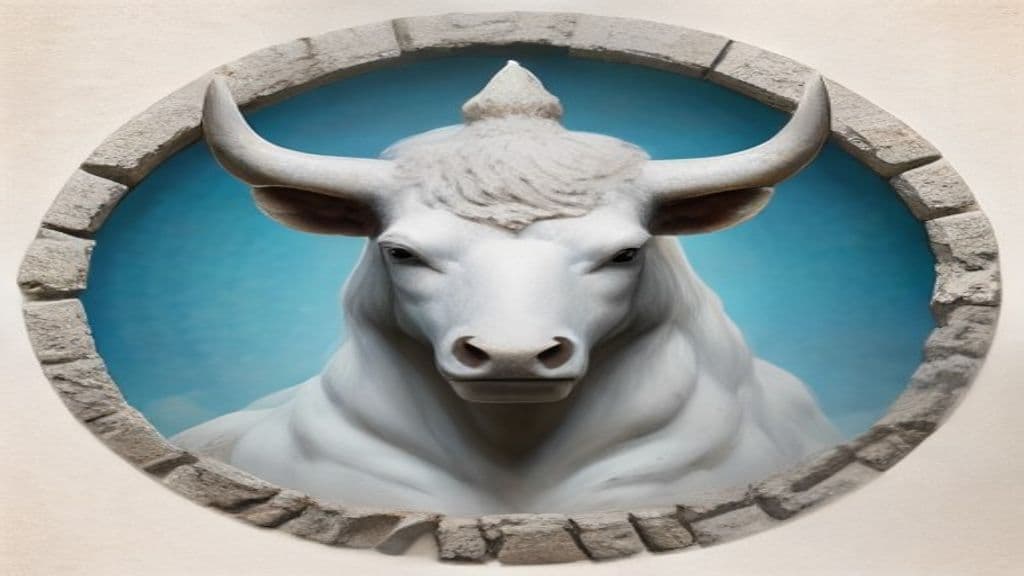
Cretan Bull
Lesser

Cretan Bull

A singular extraordinary bull from Greek myth tied to King Minos of Crete; sent by Poseidon as a divine sign and later implicated in the birth of the Minotaur and in destructive rampages that heroes such as Heracles and Theseus are said to have ended by capture and/or sacrifice. Narrative details vary between traditions about its movements and the exact sequence of events.

Cretheus
Lesser

Cretheus

Cretheus (Ancient Greek: Κρηθεύς) is a mortal king and eponymous founder in Greek mythic genealogical tradition, recorded as the founder-king of Iolcus and an ancestor in the Aeolid family whose descendants include Aeson and Jason. He functions primarily as a dynastic and narrative node rather than as a supernatural figure.

Creusa
Lesser

Creusa

Creusa (Ancient Greek: Κρέουσα, Kréousa, lit. 'princess') is a personal name borne by multiple female figures in Greek myth and local genealogies, including a naiad, princesses of Athens and Corinth, an Amazon depicted on a Cumaean vase, and Trojan-period wives and mothers. The name functions as an individual proper name across varied narratives rather than denoting a single mythic class.

Crom Dubh
Lesser

Crom Dubh

Crom Dubh is a fluid mythological and folkloric figure from Irish tradition, variously represented as a remnant cultic god, a pagan chieftain or robber, a servant-figure, and the focal figure of seasonal first-fruits rites (Crom Dubh Sunday). In later narratives he is frequently framed as an antagonist subdued or reinterpreted by St. Patrick.

Crone
Lesser

Crone

A folkloric character-type of an older woman whose age and gender define her social and symbolic role. The crone appears ambivalently across traditions as a malicious hag, a stern tester or guardian, or a venerated wise woman and keeper of remedies and lore.

Cruel Coppinger
Lesser

Cruel Coppinger

Cruel Coppinger is a semi-legendary Cornish figure—remembered as a foreign, fearsome smuggler/wrecker whose biographical fragments were elaborated into a dramatic folk narrative. Collected in 19th-century sources (notably Rev. R. S. Hawker's account published in All the Year Round) the tale blends probable historical persons (members of the Coppinger family) with folklore motifs of seizure, wrecking, illicit wealth, and a mysterious maritime disappearance.

Curetes
Minor Spirit

Curetes

The Curetes (Greek Κουρῆτες, Kouretes) are a named group of ritual attendants or minor divine retainers associated with Aegean and Anatolian mother-goddess cults—primarily Rhea and Cybele. They are attested in ancient sources and modern reference works as dancing servants or ritual personnel whose name also survives in urban toponymy (e.g., Kouretes/Curetes Street at Ephesos).

Cyanippus
Lesser

Cyanippus

Cyanippus (Greek: Κυάνιππος) is a personal name attested for at least three distinct mortal men in Greek mythic traditions: an Argive/Achaean warrior-king connected to the Trojan Horse cycle, a Thessalian hunter whose dogs kill his wife, and a Syracusan who omitted worship of Dionysus and whose divinely induced crime leads to oracle-driven expiation. He is presented as human rather than as a supernatural being.

Cybele
Ancient

Cybele

An Anatolian mother goddess (Phrygian Matar Kubileya) whose cult centers on mountains, city protection, fertility, and wild nature; adopted and reinterpreted by Greek and Roman religion where she became associated with ecstatic rites, a eunuch priesthood (the Galli), and the Roman Magna Mater cult.

Cynanthropy
Lesser

Cynanthropy

Cynanthropy is a cross-disciplinary category covering (a) a psychiatric delusion in which a person believes themself to be a dog, (b) folkloric or anthropological accounts of people who change form between human and dog (human–canine therianthropy), and (c) descriptions of canine-headed peoples or mixed human–canine races in comparative literature.

Căpcăun
Lesser

Căpcăun

A monstrous antagonist in Romanian folktales, the căpcăun is typically depicted as a dog-headed ogre who kidnaps and eats people (especially children and young women). It functions narratively as an embodiment of evil alongside other Romanian monsters such as the zmeu and balaur.

Dagon (Dagan)
Ancient

Dagon (Dagan)

Dagon (also Dagan) is an ancient Near Eastern deity attested across inland Syria and the middle Euphrates, with principal temples at Tuttul and Terqa. In inland contexts he functions as a senior, paternal god — a source of prosperity and royal legitimacy — and was syncretized with Mesopotamian and Hurrian senior gods in later theological lists. Later Biblical and medieval receptions reinterpreted the name (including an incorrect fish-association) and the theonym has been reused in modern literature and media.

Dai (Daini / Dai witch) — Assamese (unconfirmed)
Minor Spirit

Dai (Daini / Dai witch) — Assamese (unconfirmed)

No reliable information about an Assamese supernatural entity called Dai (also cited as Daini or 'Dai witch') is present in the provided sources. The available materials include general disambiguation and unrelated archive items that do not describe such a folk entity, so details about its nature, attributes, or cultural role cannot be documented from these sources.

Daikokuten
Greater

Daikokuten

Daikokuten (大黒天) is a syncretic Japanese deity of fortune, wealth, and household/professional prosperity. Originating from the Buddhist/Hindu figure Mahākāla and transformed within Chinese and Japanese religious contexts, Daikokuten functions as a protector of monastic kitchens and, in Japan, as a beneficent patron of farmers, cooks and occupations tied to money.

Daji
Greater

Daji

Daji (妲己, Dájǐ) is a figure in Chinese narrative and popular religious-cultural materials who blurs human and spirit categories: historically remembered as the favorite consort of King Di Xin of Shang but in later legend and fiction identified as a fox‑spirit (often a nine‑tailed or thousand‑year fox) that possessed or impersonated the woman and precipitated moral and political decline.

Damarwulan
Lesser

Damarwulan

Damarwulan is a Javanese legendary human hero central to a cycle of courtly-epic narratives and stage traditions (wayang klitik, Langendriyan, ketoprak). The figure—whose name is glossed as "radiance of the moon"—is portrayed as a princely warrior who defeats the Blambangan king Menak Jingga, suffers apparent death and is restored by a hermit, and is ultimately crowned in the Majapahit court. The story is especially associated with East Java and the Serat Damar Wulan manuscript tradition.

Danu
Ancient

Danu

Danu is a reconstructed Irish mother goddess name associated with the Tuatha Dé Danann — the name Tuatha Dé Danann is glossed as 'the peoples of the goddess Danu'. The name is also linked in comparative material to a pan‑Indo‑European river/goddess motif and to cognate deities in other traditions, though primary medieval Irish texts do not preserve a detailed mythology or iconography for her.

Danuvius
Minor Spirit

Danuvius

Danuvius is a Latin toponym that appears in two distinct referents in the supplied sources: (1) a Latin name for the Danube and an ancient Roman river-deitypersonification; and (2) a modern paleontological genus name, Danuvius guggenmosi, applied to an ~11.6-million-year-old fossil ape discovered in southern Germany. The sources treat these as separate uses of the same Latin/place-rooted name rather than a single folkloric being.

Dara II
Ancient

Dara II

Dara II (also Darab II) is a mytho-historical king in Iran's national tradition, presented as the last monarch of the Kayanian dynasty and generally identified with the historical Darius III. He functions in literary and political traditions as a terminal dynastic figure whose person is used to legitimate later houses and to explain foundation traditions for cities such as Dara and Darabgerd.

Darakh
Minor Spirit

Darakh

Darakh is not documented in the supplied sources as a supernatural being; the string 'Darakh' appears in the materials as a place-name in Nepal, a modern surname, a lexical item in a constructed language, and as a name used in fictional/fantasy settings. No folkloric cosmology, powers, appearance, or rituals for a spirit called Darakh are attested in the provided corpus.

Datu Daya
Lesser

Datu Daya

Datu Daya is a legendary lord and eponymous founder-figure of Kandaya (now Daanbantayan) on the northern tip of Cebu Island, Philippines. Remembered in local oral tradition as the ruler of the first settlers who established a defended community, he is commemorated in the annual Haladaya chants and dances.

Dawn deities
Greater

Dawn deities

A cross-cultural category of divine figures associated with dawn, morning, or the morning star; these figures personify the transition from night to day and may be integrated into local pantheons or syncretized with solar deities in some traditions.

Dayak Bahau
Lesser

Dayak Bahau

Dayak Bahau (Bahau, Kayan Mekam) is an ethnic / sub-ethnic group of the Apo Kayan (Apokayan) family in Borneo, documented in sources as inhabitants of parts of East Kalimantan (notably West Kutai Regency) with living ritual traditions such as Hudoq and locally specific practices like Apang Aruq. The supplied materials do not describe a supernatural being named 'Dayak Bahau.'

De Divinatione
Primordial

De Divinatione

An abstract concept in Roman tradition related to prophecy and divination, described in De Divinatione by Cicero. (Note: * Power tier: The text does not support Primordial power, which typically refers to entities that are cosmic or universal in scope. A more accurate classification would be Ancient (deity-level), as it)

Death deity
Ancient

Death deity

A category of divine beings associated with death, the dead, or the world/realm of the dead. As a class, such figures occupy central roles in many mythologies and religions, functioning as rulers of the underworld, psychopomps, guardians against chaos, or antagonists in dualistic systems.

Death god (class)
Ancient

Death god (class)

A death-associated divine or semi-divine being identified across cultures as personifying death, overseeing the dead, or governing the underworld. Treated variably as an autonomous sovereign in polytheistic systems and as a role carried out by agents (angels/demons) or subordinate functions under divine sovereignty in some monotheistic texts.

Deathbed phenomena
Minor Spirit

Deathbed phenomena

A cluster of perceptual and experiential events reported around the time of dying, encompassing visual apparitions, sounds, sensed presences, and occasionally veridical elements; interpreted variously as spiritual contact or as neurophysiological/psychological phenomena.

Deity (category)
Ancient

Deity (category)

A deity is a supernatural, non-human being or principle credited with authority or power over aspects of the universe, life, or human experience and often the object of reverence or worship. The term covers a wide range of beings from an ultimate transcendent creator to localized gods within pantheons and can also denote impersonal divine principles in some traditions.

Demetrius I Soter
Greater

Demetrius I Soter

Demetrius I Soter (Greek: Δημήτριος Α΄ ὁ Σωτήρ, c.185–150 BC) was a Hellenistic king of the Seleucid dynasty who reigned from November 162 BC to June 150 BC. A former Roman hostage who returned to Antioch, he seized the throne, suppressed rivals (notably Timarchus), intervened in Judean affairs, issued royal coinage, and was ultimately defeated and killed during the invasion of the claimant Alexander Balas.

Demon (tradition)
Lesser

Demon (tradition)

A broadly attested category of harmful or malevolent supernatural beings found across many cultures, used to explain illness, death, misfortune, temptation, and social disruption. The concept is historically flexible, ranging from neutral intermediary spirits in ancient contexts to negatively valenced agents in many later religious traditions, and is the object of ritual responses such as exorcism or magical conjuration in some traditions.

Demonassa
Minor Spirit

Demonassa

Demonassa (Ancient Greek: Δημώνασσα) is not a supernatural being in the supplied sources but a personal name attested to several mortal women in Greek mythographic and literary traditions and later reused in biological taxonomy. Attestations include multiple mythic genealogical figures, a rhetorical anecdote of a Cypriot lawgiver, and later literary stock-character uses (notably Corinthian sexualized roles). The same lexical form is also applied in modern zoological nomenclature (a beetle genus and insect species epithets).

Demons in Mandaeism
Greater

Demons in Mandaeism

In Mandaean cosmology, 'demons' are the hostile inhabitants of the World of Darkness, a structured underworld of kings, paired rulers, guards and lesser spirits that oppose the beings of Light. They appear throughout Mandaean scriptures (notably the Right Ginza and Diwan Abatur) as named personages, consorts, matarta (gate) guards, devourers and other functionaries encountered in mythic descent narratives.

Dev (Dēw / Div)
Greater

Dev (Dēw / Div)

A class of hostile supernatural beings in Persian and wider Middle Eastern/Iranian-related lore; in Persian popular tradition labeled monstrous creatures or fiends, and in Zoroastrian scripture (as Avestan daeva) explicitly framed as 'gods that are (to be) rejected.'

Devana (Dziewanna)
Lesser

Devana (Dziewanna)

Devana (Polish Dziewanna; Latin Dzewana / Zevana / Zievonia) is a Western Slavic female sacred figure associated with wild nature, forests, hunting and, by medieval interpretatio, the Roman Diana. She appears in fragmentarily attested village seasonal rites—notably effigy processions and drowning on Laetare/White Sunday—and in later folkloric reports tying her to huntress imagery and the plant name for Verbascum (mullein).

Dhū Samawī
Ancient

Dhū Samawī

Dhū Samawī (Dhū Samuī, Dhu Samawi) is a pre-Islamic South Arabian deity attested in the Kingdom of Saba context and worshipped as a sky or heavenly god. He is described as 'He of the Heavenly' or 'The Heavenly One' and was called Malik al-Dhū Samāwī ('Lord of the Heavens'). His cult is attested especially in the city of Najran and in inscriptions that record cultic offerings, confession, penance, and fines.

Diana monkey
Minor Spirit

Diana monkey

The Diana monkey (Cercopithecus diana) is an Old World monkey native to West African primary forests. Treated in the supplied sources as a biological species of conservation concern, it is notable for a white crescent browband, complex vocal alarm system, frugivorous diet, and sociable group structure.

Dido (Elissa)
Lesser

Dido (Elissa)

Dido (also Elissa or Elishat/Elisha) is the legendary founder and first queen of the Phoenician settlement that became Carthage in Greek and Roman literary tradition. Her tale—flight from Tyre, clever acquisition of land by an oxhide trick, foundation of Byrsa, and death on a funeral pyre—appears in Hellenistic historiography and Roman epic and is used etiologically to explain Carthage's origins.

Dingir
Minor Spirit

Dingir

Dingir (Sumerian DIĜIR, 𒀭) is a Sumerian cuneiform sign and word that functions as an ideogram for sky/heaven and as a logogram/determinative for divinity (god/goddess). It is a written/symbolic category in Sumerian and later Mesopotamian orthographies rather than an agentive supernatural being.

Dingonek
Lesser

Dingonek

A large aquatic or semi-aquatic 'beast' reported in early 20th-century European hunter accounts from the Lake Victoria region. Described by eyewitness John Alfred Jordan (as recorded by Edgar Beecher Bronson) as a 4.3–4.6 m scaled, leopard-marked reptilian with a broad fin-like tail and large fangs; colonial-era commentators and later compendia treat it as a cryptid associated in some reports with local ritual practice.

Donbettyr
Ancient

Donbettyr

Donbettyr (Iron Ossetic: Донбеттыр) is the Ossetian water divinity described as the god of all waters and the protector of fish and fishermen. He appears in the Nart saga as an aquatic lord whose daughters — sea-nymph–like figures — are ancestral mothers of major Nart heroes (including Uryzmaeg, Satanaya, Xaemyts, and Batraz). He is often compared in the sources to the Scythian namesake and to the Greek sea-god Poseidon.

Dorylas
Minor Spirit

Dorylas

Dorylas is attested in modern sources primarily as a Latinized taxonomic epithet for a butterfly species (Polyommatus (Plebicula) dorylas, the Turquoise Blue) and as a male given name borne by modern individuals (e.g., Bishop Dorylas Moreau). The name is not documented in the supplied sources as a traditional supernatural being or folkloric entity.

Dracs
Lesser

Dracs

The string "Dracs" appears in multiple unrelated modern contexts; only a single provided literary source uses it to denote lethal, man-shaped scaled draconic creatures in an alternate-historical fantasy setting. Other occurrences are proper names (a Catalan literary collective, a sports team, track titles) or technical acronyms and do not document a unified folkloric entity.

Draugr
Lesser

Draugr

In Nordic folklore the draugr (plural draugar; anglicized draug) is an archaic term for a malevolent revenant — a dead person who returns and remains active in the world of the living. Accounts emphasize variability: traits, behaviours, and descriptions change between stories and across regions, especially in early medieval Icelandic sagas and surviving Norwegian folklore.

Drude
Lesser

Drude

A female nocturnal spirit in German folklore associated with causing nightmares and the sensation of being pressed in sleep (Alpdruck). Treated as a kind of alp or witch-hag in southern German and alpine traditions, with household apotropaics and local counter-practices recorded.

Drudwyn
Lesser

Drudwyn

A fabulous wild boar figure attested in Arthurian/Welsh tradition; the sources provided identify the well-known monster Twrch Trwyth as a 'fabulous wild boar' whose hunt is narrated in the Welsh prose romance Culhwch and Olwen. The name 'Drudwyn' appears in the query but is not attested in the supplied source excerpts.

Drúedain
Lesser

Drúedain

The Drúedain are a fictional ancient people (a race of Men) in J. R. R. Tolkien's legendarium: a small, secretive, wood-dwelling group portrayed as remnants of an older human type, associated with wild places and woodwose/wild-man folklore. They appear in the First Age (some entering Beleriand) and survive in the Third Age chiefly in the Drúadan Forest and on the cape of Andrast, noted for woodcraft and enmity with Orcs.

Dushara
Ancient

Dushara

Dushara is a principal pre-Islamic Nabataean deity, venerated as a city and mountain-linked patron god (notably of Petra and Hegra). Represented commonly by aniconic stone symbols, he was the focus of petitionary cult practice (notably animal sacrifice) and was syncretized by classical authors with Greco‑Roman gods.

Dwarves (Middle-earth)
Ancient

Dwarves (Middle-earth)

A distinct, long-lived mortal people of J. R. R. Tolkien's legendarium, created by the Vala Aulë, famed for subterranean dwelling, exceptional craft and masonry, and martial stubbornness. They play a persistent cultural and historical role across the Ages of Middle-earth, notably as miners, smiths, and builders of great halls and treasures.

Dyaus
Ancient

Dyaus

Dyaus (Dyáus; Dyauspitr/Dyauṣpitṛ́) is the Rigvedic daylight‑sky deity and archetypal 'Sky Father' whose union with the earth goddess Prithvi forms the prime parental pair in Vedic cosmology. He functions as a progenitor and sovereignty figure in hymns of the Rigveda and is cognate with the Proto‑Indo‑European daylight‑sky father (cf. Zeus, Jupiter).

Dying God (motif)
Ancient

Dying God (motif)

A comparative-mythology motif in which one or more deities die, are destroyed, or depart permanently from the world; used by scholars and popular writers to explain mythic themes of change, loss, fertility cycles, or cultural transition rather than denoting a single named being.

Dyēus
Ancient

Dyēus

Dyēus (reconstructed *Dyēus, extended *Dyēus ph₂tḗr) is the Proto-Indo-European scholarly reconstruction of a daylight-sky personification and sky‑father. In comparative accounts it functions as the bright daytime sky, seat of the gods, and a sovereign ordering principle inferred from descendant traditions (e.g., Vedic Dyauṣ, Greek Zeus, Roman Jupiter).

Dúnedain
Lesser

Dúnedain

The Dúnedain are a lineage of Men in J. R. R. Tolkien's legendarium descended from the Edain and the Númenóreans. They are renowned for their long lifespans (in earlier generations), martial skill, keen senses, and historical role as rulers of Númenor and later as the kingdoms and rangers of Arnor and Gondor; the name in Sindarin literally means 'Men of the West.'

Dʰéǵʰōm (Dheghom)
Primordial

Dʰéǵʰōm (Dheghom)

Dʰéǵʰōm (also reconstructed in some publications as *Pl̥th₂éwih₂) is the scholarly reconstruction of a Proto‑Indo‑European earth‑goddess — a personified, sacred principle of the ground and terrestrial world inferred by comparative linguistics and mythology rather than directly attested in any primary text.

Earth Mother
Primordial

Earth Mother

An archetypal mother-goddess category personifying the earth, nature, fertility, and life-giving forces; presented in comparative sources as a generative, sustaining cosmological figure often paired with a complementary sky/father principle and invoked in both ancient mythic frameworks and contemporary political-environmental discourse.

Earth goddess
Ancient

Earth goddess

A deity or personification of the Earth associated with chthonic, fertility, and terrestrial attributes. Earth goddesses function across cultures as sources of life and material sustenance and are often linked to underworld or maternal roles within cosmologies.