Other Supernatural Beings

842 documented Other supernatural beings from the Evil Eye grimoire, including 352 lesser and 181 minor spirit in power tier.

page 2 of 15

Alraune
Lesser

Alraune

Alraune is the German folkloric figure identified with the humanoid-shaped mandrake (Mandragora officinarum) and the eponymous female character in Hanns Heinz Ewers's 1911 novel. In folklore the mandrake/Alraune is associated with love philtres, fertility, and a medieval gallows-origin legend; in literature the name labels a woman artificially conceived from a criminal's semen, whose emotional life and actions dramatize the folk moral about such origins.

Altamaha-ha
Lesser

Altamaha-ha

The Altamaha-ha (also called "Altie") is a named legendary creature from coastal Georgia folklore, localized to the mouth of the Altamaha River, nearby marshes, streams, and abandoned rice fields around Darien and McIntosh County. Sources describe it as a place-linked water-associated creature that figures in local storytelling, tourist displays, and contemporary popular culture rather than as a widely attested pan-cultural spirit.

Altgermanische Religionsgeschichte

Altgermanische Religionsgeschichte

A historical survey of Germanic religious history, providing an overview of the pantheon of gods and goddesses. (Note: - Power tier is not applicable to historical surveys - The article should reflect that it's a historical survey, not an entity with abilities or appearance - Consider adding information on the signifi)

Al‑Qaum
Ancient

Al‑Qaum

Al‑Qaum (Arabic: القوم) is a major Nabataean deity associated with war, the night, and the protection of caravans and clans. Attested in numerous inscriptions and later compared by commentators to Greek/Roman war gods, he functioned as a protector of travelers and as a guardian of souls during nocturnal journeys.
Amahuaca
Minor Spirit

Amahuaca

Amahuaca refers to an Indigenous people of the southeastern Amazon Basin (Peru and Brazil) and their Panoan language. The provided sources treat Amahuaca as a human ethnolinguistic group with documented history, language materials, and shamanic practices; there is no evidence in these sources that Amahuaca denotes a supernatural entity.

Amamit
Lesser

Amamit

Amamit is a female planetary figure in Mandaean cosmology associated with the planet Venus (Libat/Ishtar) and counted among the entourage of Ruha in the World of Darkness; she is attested in Mandaean texts with a role in eschatological decline.

Amaracus
Minor Spirit

Amaracus

In Greek myth, Amaracus (Ancient Greek Ἀμάρακος, Amarakos) is a young Cypriot prince and royal perfumer who is transformed into the marjoram plant (amarakon). The tale is an etiological metamorphosis that links the aromatic herb Origanum majorana to Aphrodite and to Cypriot cultic and utilitarian uses such as bridal wreaths, aphrodisiac lore, and folk medicine.

Amarillodon
Lesser

Amarillodon

No folkloric or supernatural entity named "Amarillodon" is documented in the supplied sources. The name components that resemble "Amarillodon" occur in paleontological and geological contexts (e.g., the Mata Amarilla Formation and the taxonomic suffix -don), and the available materials treat these as scientific labels rather than names for beings in a belief tradition.

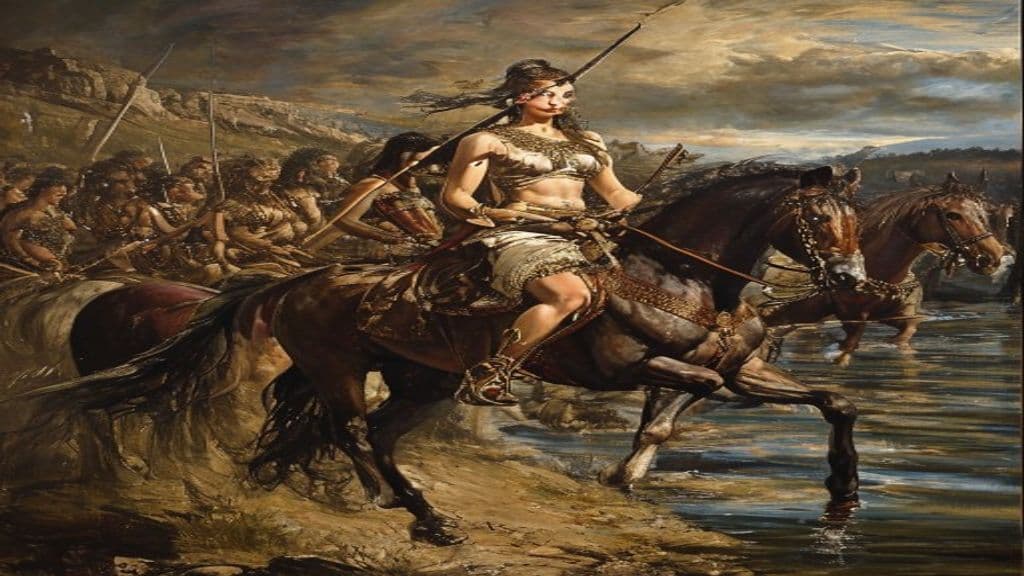
Amazons
Lesser

Amazons

A society of women-warriors in ancient Greek myth and legend, depicted as skilled horsemen and archers who inhabit the periphery of the Greek world and act as recurring opponents and counterparts to Greek heroes. Treated by ancient authors as a past people and by modern scholars as a mythic construct possibly inspired by Eurasian female warrior burials.

Amemasu
Ancient

Amemasu

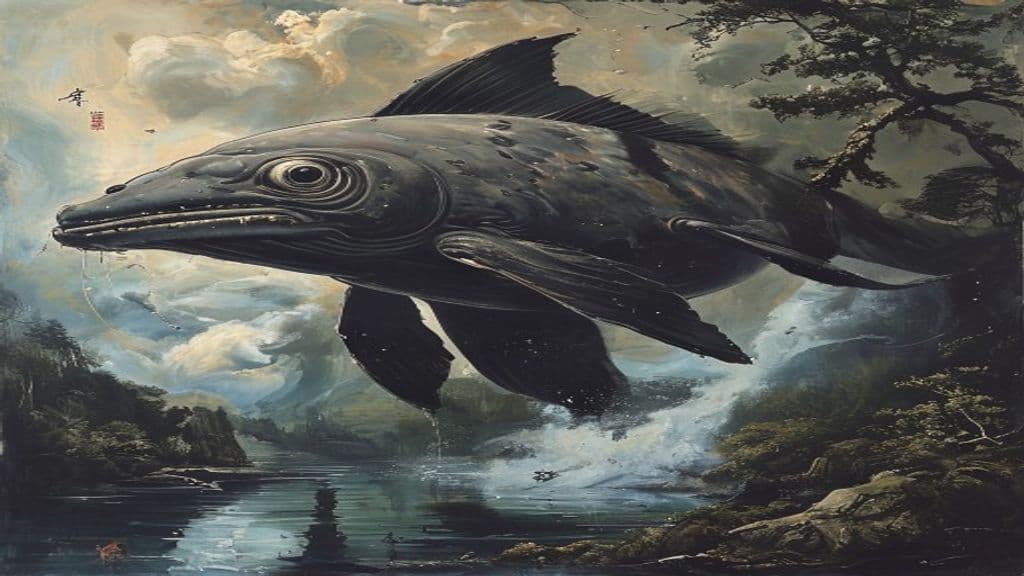
Amemasu (雨鱒, アメマス), sometimes Ō-amemasu (大アメマス), is a giant fish- or whale-like lake-being in Ainu-related and regional Japanese folklore. Tales attribute to it dangerous behaviors (capsizing boats, drowning people), landscape-changing effects (blocking lakes, causing floods), and a cosmological role in which very large individuals can affect earthquakes by 'holding up' the earth.

Amenhotep I (tradition)
Greater

Amenhotep I (tradition)

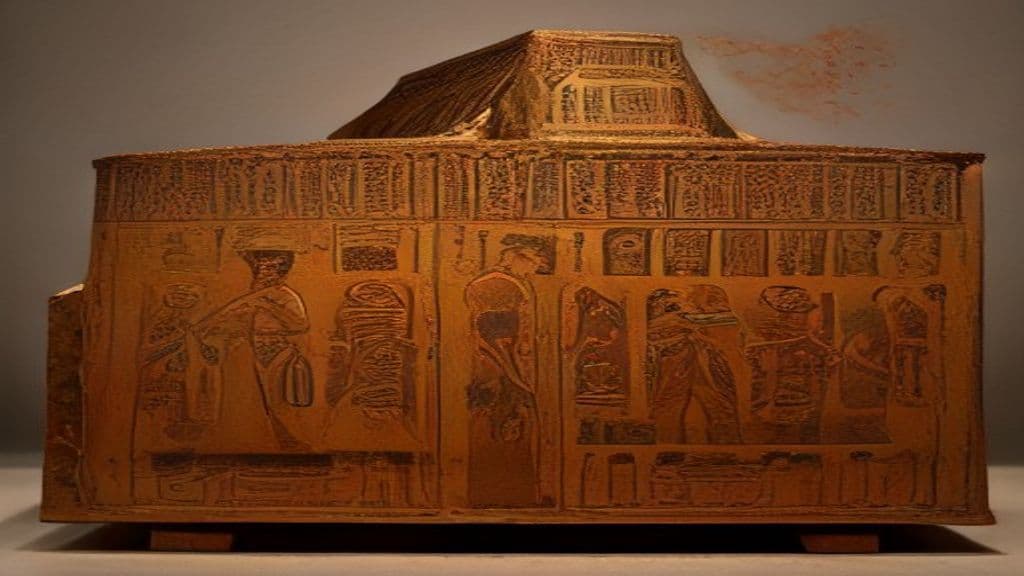
Amenhotep I was a historical pharaoh of Egypt's Eighteenth Dynasty who, after his death, was deified and venerated locally as a patron figure of the Theban necropolis and the artisan community of Deir el-Medina. In later funerary contexts his image appears among protective iconography on coffins and in temple decoration, functioning as a local funerary patron rather than a volatile supernatural aggressor.

Ameonna
Lesser

Ameonna

Ameonna (雨女, "rain woman") is a figure in Japanese folklore treated as a yōkai associated with rain. Sources depict her both as a rain-calling supernatural being (sometimes helpful in drought) and as a folk label for an unlucky person whom rain seems to follow; a key pictorial source is Toriyama Sekien's Konjaku Hyakki Shūi.

Amesemi
Ancient

Amesemi

Amesemi is a Kushite (Meroitic/Nubian) protective goddess, attested in temple reliefs and inscriptions from sites such as Musawwarat es Sufra, Naqa, and Amara from the late 3rd century BCE onward. She functions as the consort of the lion/war god Apedemak and appears in royal and state cult contexts where she is petitioned for life and receives offerings.

Ammarik
Ancient

Ammarik

Ammarik (also Ammarig, Hammarigu; later Armaruk/‘lord of Armaruk’) is an ancient Eblaite deity most likely representing a deified mountain attested in third-millennium BCE Eblaite texts and later Hurrian and Hittite sources. He appears in Eblaite offering lists and an incantation context allied with weather cults and apotropaic ritual action.

Amnisos
Lesser

Amnisos

Amnisos is a north-Cretan river, Bronze Age coastal settlement/port for Knossos, and in literary registers the river's divine personification (a river‑god). Attested in Mycenaean Linear B, classical literature, and archaeological remains (including a Late Minoan villa and submerged shorelines), Amnisos functions as hydrological feature, cultic locus (linked to the cave sanctuary of Eileithyia and to nymphs called the Amnisiades), and administrative place in the ritual economy of Knossos.

Amoghapāśa
Lesser

Amoghapāśa

Amoghapāśa is recorded in the supplied sources as a named manifestation or form of the bodhisattva Avalokiteśvara/Lokeśvara attested in Mahāyāna and Vajrayāna contexts. The evidence in the provided material is archival and bibliographic (sūtra/dhāraṇī/maṇḍala filenames and database entries) rather than descriptive narrative or doctrinal exposition.

Amphicrates
Lesser

Amphicrates

Amphicrates (Ancient Greek Ἀμφικράτης) is a personal name borne by several historical figures in ancient Greek sources, attested as at least an early king of Samos, an Athenian sophist/rhetorician of the Asiatic school, and in prosopographic indexes as an artisan (sculptor) and other minor historical persons. The supplied sources treat Amphicrates as human individuals preserved in fragmentary literary and documentary records rather than as a supernatural being.

Amphilochus
Lesser

Amphilochus

Amphilochus (Amphilochos, Amphílokhos) is a classical Greek personal name attested for multiple mythological figures; in modern usage the name also labels a genus of amphipod crustaceans and a Jovian asteroid. The provided sources do not supply narrative details, supernatural attributes, or ritual material for any specific mythological figure named Amphilochus.

Amphilochus I of Argos
Lesser

Amphilochus I of Argos

An Argive heroic ancestral figure and seer from Greek mythic-historical tradition, counted among the Epigoni, credited in various accounts with founding oracles and settlements (notably Amphilochia and an 'Amphilochian Argos'), and associated in divergent traditions with a death at the hands of Apollo or a lethal contest with the seer Mopsus.

Amphinome
Lesser

Amphinome

Amphinome is an ancient Greek proper name attested for multiple distinct female figures in myth — chiefly a Nereid (sea-nymph) and several mortal women (including a wife of Aeson and one of the Peliades). The name is also reused in modern taxonomic and creative contexts (annelid genus, butterfly species, and contemporary fantasy), but these are later reuses rather than continuations of a single mythic being.

Ampycus (Ampyx)
Lesser

Ampycus (Ampyx)

Ampycus (also Ampyx/Ampyce) is a name borne by several related mortal figures in Greek myth: chiefly a father of seers (notably Mopsus), and in variant traditions a local eponym, a priest of Demeter, and a Lapith warrior. He functions as a genealogical marker and occasional ritual or martial actor within heroic-age narratives rather than as an independent supernatural being.

Anat
Ancient

Anat

Anat is a Bronze Age Levantine goddess best known from Ugaritic texts, associated primarily with warfare and hunting. She is a major divine figure in the Ugaritic pantheon who regularly received offerings, appears as an active agent in mythic narratives (notably the Baal Cycle), and was attested across the Levant, into Egypt, Cyprus, Hurrian ritual contexts, and later in Suhum.

Anath (Anat, Anatu)
Ancient

Anath (Anat, Anatu)

Anath (also Anat, Anatu, classically Anath) is a Bronze Age Levantine goddess associated with warfare and hunting, best known from the Ugaritic texts. Scholars commonly trace her origin to Amorite culture of upper Mesopotamia and identify a forerunner, the goddess Ḫanat, in Mari and a city in Suhum.

Anaxibia
Minor Spirit

Anaxibia

Anaxibia (Ancient Greek: Ἀναξίβια) is a personal name used for multiple distinct figures in Classical Greek mythic genealogies — chiefly mortal women who serve as wives and mothers in heroic-age lineages, and in one attestation a naiad associated with a river. The name also appears in modern biological nomenclature as a reused classical label.

Anchimayen
Lesser

Anchimayen

Anchimayen is a small, childlike luminous creature in Mapuche mythology described as a servant or familiar kept by a kalku (Mapuche sorcerer). It is said to take the form of small children and to transform into flying fireballs that emit bright light; some sources also describe a later conception as a fuego fatuo (will-o'-the-wisp)-type being that can frighten travelers.

Ancient Egyptian deities (nṯr / nṯrt)
Ancient

Ancient Egyptian deities (nṯr / nṯrt)

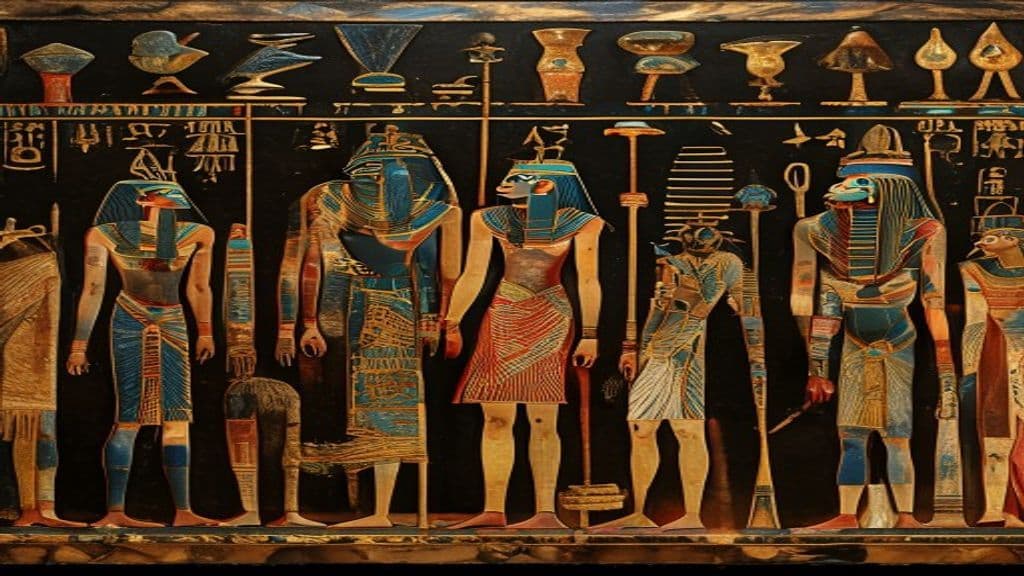
In ancient Egyptian religion the beings called nṯr (masculine) and nṯrt (feminine) encompass a wide, fluid range of gods and divine figures — from state-level creators like Ra and Amun to local personifications, animal-headed figures, and certain deceased humans elevated by ritual. Deities embody natural forces, maintain cosmic order (maat), and are engaged through temple cults and ritual performance.

Ancient Kings of Finland
Greater

Ancient Kings of Finland

In early literary sources, the Ancient Kings of Finland are described as hypothetical or mythical monarchic systems associated with ancient Finland. (Note: 1. Power tier: Lower to Primordial (given the lack of specific abilities and behaviors) 2. Abilities and behaviors are described as 'generally vague', so this section should be reworded or removed 3. )

Andjety
Ancient

Andjety

Andjety is an ancient Egyptian regional deity of the ninth nome (Andjet/Busiris) associated with kingship, funerary renewal, and local underworld functions; he appears in Pyramid and Coffin Texts and is often syncretized with Osiris in temple imagery and royal ritual.

Andraemon
Lesser

Andraemon

Andraemon (Ancient Greek: Ἀνδραίμων, Andraímon) is a personal name borne by several mortal figures in Greek myth and genealogical tradition. The name appears across variant accounts as husbands, fathers, kings, colonists, and a suitor; it functions within heroic genealogies and local foundation stories rather than as a supernatural being.

Andragius
Minor Spirit

Andragius

Andragius (also attested Androgius) is a legendary king of the Britons recorded in Geoffrey of Monmouth’s pseudo‑historical regnal lists and later compilations. He appears as a node in a constructed sequence of rulers—not described as a supernatural being—and is principally attested by name, genealogical relationships, and position in succession.

Angolan talapoin
Minor Spirit

Angolan talapoin

The Angolan talapoin (Miopithecus talapoin), also called the southern talapoin, is a real species of small Old World monkey in the family Cercopithecidae. The provided sources describe it in biological and ecological terms rather than as a mythic or supernatural being.

Anguila peluda
Lesser

Anguila peluda

A Canary Islands (Tenerife, Anaga massif) popular-legend creature described as an enormous eel-like animal with a head covered in hair; locals historically regarded it as malign and believed it to be a demon in disguise that required exorcism, after which it disappeared or died.

Anguiped
Lesser

Anguiped

The anguiped is an iconographic/divine motif in the Graeco‑Roman world depicting a human upper body with serpentine lower limbs (literally 'snake‑foot'). It functions as a pictorial property or amuletic emblem—found on magical amulets, gems, and in public art—rather than as a single named personal being.

Anguish of Ireland
Ancient

Anguish of Ireland

A mythological character in King Arthur's stories, described as a king and enemy of Arthur. (Note: - Power tier should be Greater (Anguish is a regional power in the context of King Arthur's stories, not a deity-level Ancient being) - Abilities description is partially accurate; Anguish does acknow)

Annapoorna
Minor Spirit

Annapoorna

No documentary evidence in the supplied sources identifies Annapoorna/Annapurna as a supernatural entity. The name appears in the provided material as a Himalayan massif and as the name-label of an Odia-language author; no folkloric description, abilities, rituals, or related beings are attested in the available corpus.

Annona
Minor Spirit

Annona

Annona is a botanical genus of tropical trees and shrubs in the family Annonaceae, known for edible syncarp fruits (custard-apple, soursop, cherimoya, pawpaw) and for containing neurotoxic acetogenins in some species. The supplied sources document Annona as a plant genus and do not support treatment of Annona as a mythological or supernatural being.

Anthropomorphic Personification
Lesser

Anthropomorphic Personification

A representational class in which abstractions, forces, objects, animals, or collective entities are depicted as persons with human form, agency, and social roles. Treated variably as rhetorical/metaphorical devices, ritual actors, civic symbols, or — in some modern fictions — as ontologically manifested beings.

Antianeira
Lesser

Antianeira

Antianeira (Ancient Greek: Ἀντιάνειρα, lit. 'a match for men') is a personal name borne by several mortal women in Greek mythic tradition. The name appears in variant genealogical and heroic contexts: as a possible mother of the Argonaut Idmon (in a tradition naming Apollo as father), as mother of the Argonauts Eurytus and Echion in other listings, and as an Amazon (also spelled Antianara) who in some accounts succeeds Penthesilea as queen and fights at Troy.

Anties
Minor Spirit

Anties

Anties is not a documented supernatural being in the supplied sources; the string appears primarily as a personal name (Antie) in Dutch and early American records and as a lexical element in modern titles and technical names. No coherent folkloric characteristics, rituals, or cosmology are attested in the provided material.

Anu
Ancient

Anu

Anu (Sumerian An; Akkadian Anu/Anum) is the divine personification of the sky in ancient Mesopotamian religion, traditionally ranked at the top of god‑lists as the source of heavenly authority (anûtu/anuti) and the fount of legitimate rule for gods and kings. Though supreme in genealogies and astronomical schema, many periods portray him as a relatively passive or figurehead deity whose active cultic role is limited until a late Seleucid reinvention in Uruk.

Anush (Anush Uthra)
Greater

Anush (Anush Uthra)

Anush, or Anush Uthra, is an uthra — a lightworld being in Mandaean religion — portrayed in Mandaean scriptures as a soteriological figure who taught John the Baptist and is said to have performed miracles in Jerusalem analogous to those ascribed to Jesus. He is frequently invoked in the Qolasta liturgical formula alongside Hibil and Šitil and is associated with the Mshunia Kushta, described as his shkina (dwelling).

Anushawan
Primordial

Anushawan

In Armenian legendary history, Anushawan is a semi-mythological figure and grandson of the legendary king Ara the Handsome. (Note: 1. Power tier should be Lesser (local spirit) since there's no indication that Anushawan is a cosmic being or deity-level. 2. Add specific information about sensory cues, wards, and weaknesses from so)

Anzar
Minor Spirit

Anzar

Anzar is a lexical item attested in the provided sources as a personal name, Iranian toponym element, and as a single machine-readable entry labeling it an "Amazigh (Berber) deity" on Wikidata. The supplied materials do not contain corroborated folkloric, ethnographic, or mythic descriptions of Anzar as a supernatural being.

Aobōzu
Lesser

Aobōzu

Aobōzu (青坊主, "blue priest") is a Japanese yōkai whose depiction and behavior vary by locality. Appearing as a priestly humanoid with blue coloration or as a priest-faced apparition, it functions in regional legends as a frightening presence that can kidnap, threaten, or haunt people—especially children and schoolchildren—and is sometimes identified as a disguised animal or a mountain deity.

Aonghus mac Úmhór
Lesser

Aonghus mac Úmhór

Aonghus mac Úmhór (older orthography Aengus mac Umor) is a legendary Irish king portrayed in early tradition as ruler of the Fir Bolg of Connacht and eponymous founder associated with settlements on the western coast and the Aran Islands, notably the fortress Dún Aonghasa on Inishmore.

Apa Qaghan
Lesser

Apa Qaghan

Apa Qaghan (阿波可汗, Ābō Kèhán) is an historical Ashina prince and mid-6th century claimant to the Göktürk khaganate. Sources portray him as a political and military actor involved in the succession disputes after Taspar Qaghan's death, ruling contested steppe territories and engaging with both western Turkic allies and Sui China.

Apaliunas
Lesser

Apaliunas

Apaliunas is a deity attested in Hittite-language material as the protective god associated with the city of Wilusa. He is named among the gods who guarantee a Late Bronze Age treaty (c. 1280 BCE) between Alaksandu of Wilusa and the Hittite king Muwatalli II. Some scholars propose Apaliunas is an Anatolian reflex of an early form of the name Apollo, but that identification is interpretive and debated.

Apedemak
Ancient

Apedemak

Apedemak is an indigenous Meroitic/Kushite deity primarily associated with martial power, royal legitimation, and aspects of fertility and life. He is attested in temple reliefs and hymnic material at southern Meroitic cult centres such as Musawwarat es‑Sufra, Naqa and Meroe, where he appears in diverse leonine and occasionally syncretic forms.

Aphareus
Lesser

Aphareus

Aphareus (Ancient Greek: Ἀφαρεύς) is an ancient Greek anthroponym attested for several distinct figures in myth and history (a Messenian king, a Centaur, a Greek warrior at Troy, and an Athenian rhetor/tragedian) and separately as a modern taxonomic genus of fish. The name does not denote a single autonomous supernatural being in the supplied sources but is used across multiple narrative registers.

Apollo
Ancient

Apollo

Olympian deity of ancient Greek religion associated with prophecy, healing, music, archery, purification, and civic order. Principal patron of the Delphic oracle, protector of youth and flocks, and ambivalently both healer and bringer of plague.

Apollo Archetype
Ancient

Apollo Archetype

A concept in Greek tradition representing a particular aspect of human personality that values clear definitions, mastery of skills, and harmony. (Note: - Power tier seems too high given the described abilities (Ancient=deity-level); Lesser or Greater might be more plausible. - No description of wards; add relevant information from source material if )

Apollo of Veii (Aplu)
Minor Spirit

Apollo of Veii (Aplu)

A life-size late Archaic Etruscan terracotta cult statue of the deity Aplu (Etruscan Apollo) created for the acroterial program of the Portonaccio sanctuary at Veii, ca. 510–500 BCE; intended as an architectural cult image and narrative participant in a roofline group depicting Apollo and Heracles.

Appu (Hurrian)
Minor Spirit

Appu (Hurrian)

Appu is the central figure of a fragmentary myth preserved in Hittite archives as CTH 360 and conventionally regarded by scholars as reflecting a Hurrian tale. The text survives in Hittite-language form, is incomplete, and provides few concrete details about the character beyond its role as the story's protagonist.

Aradia
Lesser

Aradia

Aradia is a name and motif appearing in late-19th-century folklorist literature (notably Charles G. Leland's Aradia, or the Gospel of the Witches) and in Italian, Sardinian, and adjacent regional folklore where cognate names (Arada, Araja, Erodiade/Irodiada) are attached to a nocturnal female host associated with Diana/Herodias. Sources portray Aradia variously as a messianic teacher of witchcraft (Leland) and as part of a tradition of night-flying female spirits and regional fairy-queen figures (folklore surveys).

Aranzaḫ
Greater

Aranzaḫ

Aranzaḫ is the Hurrian divine personification of the river Tigris, treated in Hurrian religion as a numen and river-god who appears in the Kumarbi Cycle and as an ally-protector in the tale of Gurparanzaḫ. The figure is attested in Hurrian theophoric names and is discussed in scholarship in relation to later regional cultic references to the Tigris source.

Archilycus
Minor Spirit

Archilycus

Archilycus (Ancient Greek Ἀρχίλυκος, Archílykos; Latinized Areilycus in some lists) is a mythic mortal attested only in genealogical and cataloguing traditions of ancient Greece. He is recorded as a member of a Boeotian noble lineage and as the father of leaders who took part in the Trojan expedition; he is not presented as a deity, monster, or active narrative character in surviving sources.

Archon (Gnosticism)
Ancient

Archon (Gnosticism)

In Gnostic traditions, an archon (Greek ἄρχων, árchōn) is a cosmic ruler or architect of the visible, material cosmos. Archons function as intermediate powers that construct, govern, and limit the created world and are frequently depicted as obstacles to the soul's return to higher spiritual realms.

Arctus
Minor Spirit

Arctus

Arctus is a polyvalent name rooted in the Greek word for 'bear' (Arktos) that appears across astronomical nomenclature (the Great Bear/Arctic), classical mythographic name-lists (personal names such as a centaur or a Hora), taxonomy (species and genus names), and modern/fictitious proper names. The provided sources do not support treating Arctus as a single coherent supernatural being within a specific folkloric tradition.

Arensnuphis
Ancient

Arensnuphis

Arensnuphis (Egyptian Iryhemesnefer, 'the good companion') is a deity originating in the Kingdom of Kush who was incorporated into Egyptian temple contexts in the Ptolemaic Period. He is attested at Musawwarat el-Sufra (3rd century BC) and later worshipped at Philae and Dendur, where he is described as a companion of Isis and syncretized with the Egyptian gods Anhur and Shu.

Areop-Enap
Primordial

Areop-Enap

Areop-Enap is the primordial 'old spider' creator in Nauruan indigenous cosmology who, from a beginning of darkness and sea, fashions the world by spinning web-thread, arranging creatures, and transforming elements inside a cosmic clam.