
Kimaris appears as a named member of the ranked roster of spirits in Renaissance and early modern demonological and necromantic catalogs. The Ars Goetia (Lemegeton) and Johann Weyer's Pseudomonarchia Daemonum list him as a marquis who serves with legions and performs practical tasks for evokers; Thomas Rudd's compilations (Harley MS 6482) include Cimeries among spirits attributed to Solomonic operative frameworks and connect a variant name Cimeriel to angelic nomenclature in Enochian tables. A Coptic manuscript (London oriental mss 6796) preserves a compound form Akathama Chamaris in which the figure is addressed as a godlike helping spirit rather than an explicitly evil demon. A modern speculative etymology (Wade Baskin) links the name to the classical ethnonym 'Cimmerians,' but this derivation is presented as conjectural in secondary literature.
In the principal grimoire tradition summarized in the sources, Kimaris is described concisely as a 'godly warrior riding a black horse' (Ars Goetia/Pseudomonarchia Daemonum summary). The supplied materials do not record further consistent iconographic details (such as facial features, armor specifics, or weapons) across manuscripts; variant name-forms in other manuscripts (e.g., Tuvries in the Munich handbook) preserve martial associations but do not add reliable additional physical description in the provided summaries.
Across the Ars Goetia and related goetic catalogs Kimaris is credited with locating lost or hidden treasures, teaching the trivium (grammar, logic, rhetoric), and 'making a man into a warrior of his own likeness' (i.e., imparting martial skill or forming warriors). The Ars Goetia and Pseudomonarchia attribute to him the rank of marquis and command of legions (twenty legions in some accounts). A Munich necromantic manuscript (Clm 849) records a closely related form named Tuvries who is given thirty legions and an additional power to cause quick crossings of seas and rivers. Thomas Rudd's lists connect Cimeries to Solomonic operative usage, while a Coptic attestation (London oriental mss 6796) frames Akathama Chamaris as a godlike helping spirit rather than an overtly malevolent being.
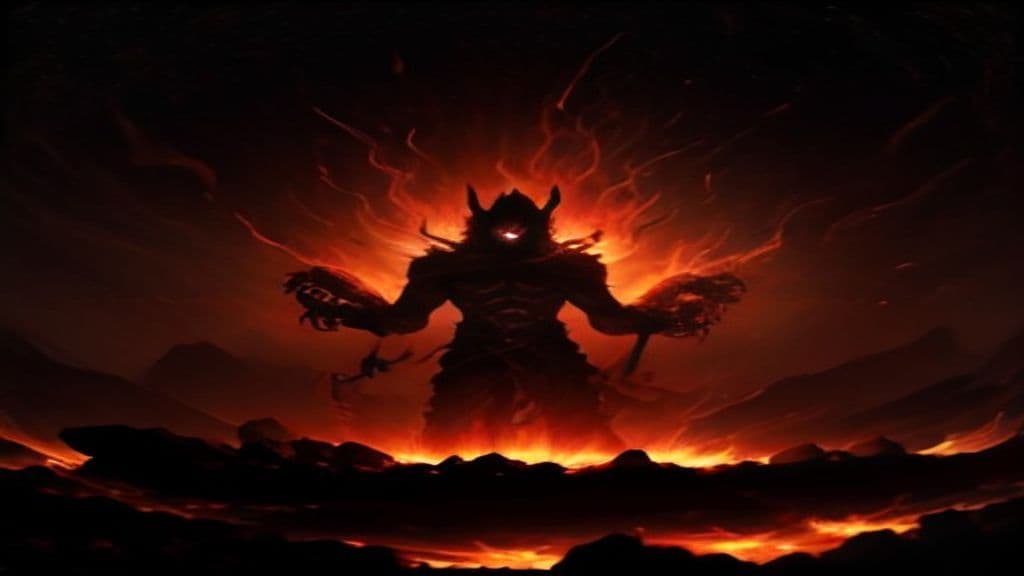
Ifrit
One of the most powerful classes of jinn in Islamic and pre-Islamic Arab tradition — a fire-born being of immense strength and cunning, capable of great works of engineering and terrible violence.
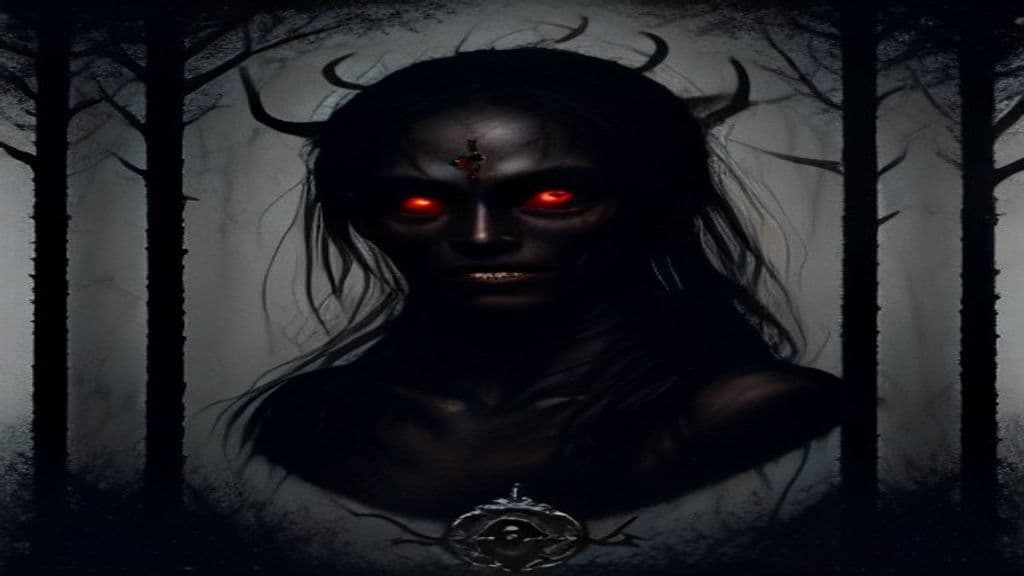
Pishacha
Flesh-eating spirits of Hindu mythology that haunt cremation grounds and are associated with disease, madness, and possession. The lowest class of demon in the Vedic hierarchy.
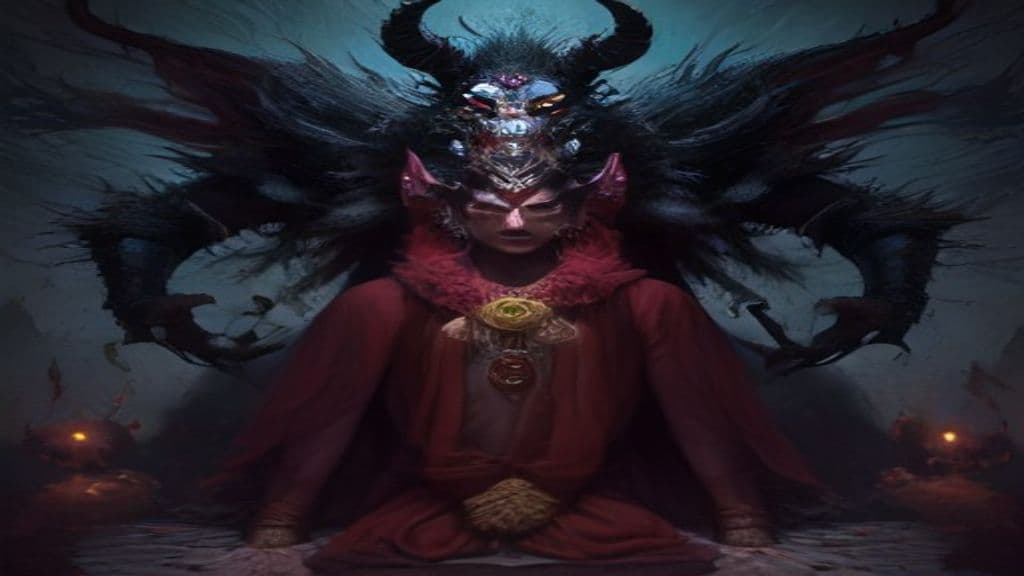
Rakshasa (Himalayan variants)
A Himalayan reception of the pan-Indian rakshasa motif: hostile or disruptive non‑human beings known from Sanskrit epic and Puranic literature, here noted where Himalayan sources and discussions intersect with the broader epic tradition. The supplied sources do not document distinct, well‑attested Himalayan folklore variants; the entry therefore presents primarily the epic/legendary profile as transmitted into Himalayan contexts in general references.
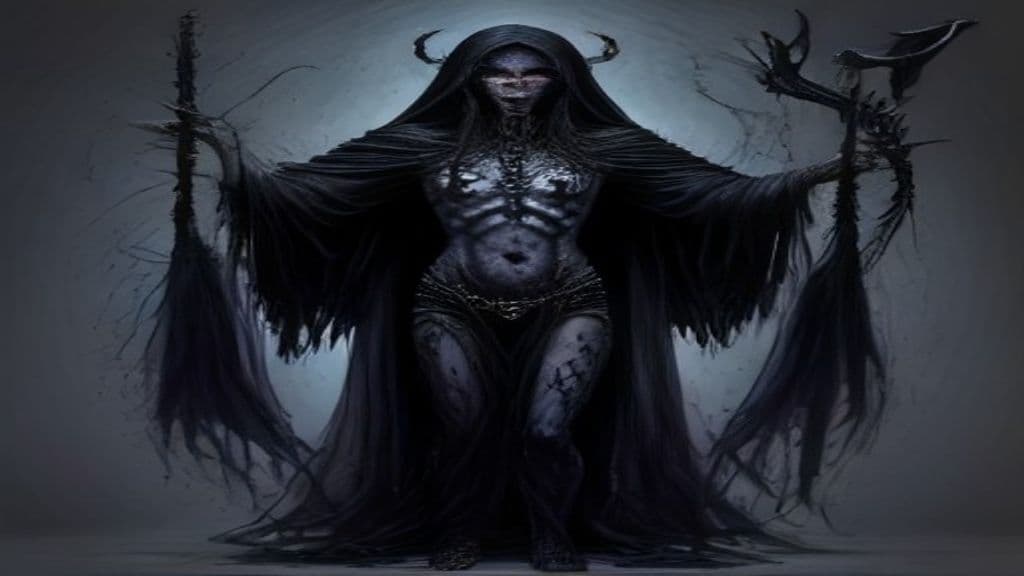
Ghoul
A ghoul is a demon-like or monstrous humanoid originating in pre-Islamic Arabian religion, traditionally associated with graveyards and the consumption of human flesh. The concept later entered broader folklore and has been widely reused and transformed in modern fiction and popular culture.

Lamia
In ancient Greek mythology, Lamia is described as a child-eating monster who, in later tradition, came to be regarded as a type of night-haunting spirit or 'daimon'. The supplied sources do not provide a full physical description or detailed mythic genealogy, and some modern fictional portrayals recast her with serpentine features which are not attested in the provided classical summary.
57 Mnemosyne
57 Mnemosyne is a large main-belt asteroid (S-type) discovered in 1859 and named after the Greek Titaness Mnemosyne. It is a non-sentient astronomical body studied for its orbital and rotational properties and has been used in dynamical measurements related to Jupiter.
Aamon
Aamon (also Amon) is a named spirit in early modern Western grimoire tradition (Pseudomonarchia Daemonum; the Ars Goetia / Lesser Key of Solomon). He is presented as a high-ranking infernal officer (Marquis/Prince) who governs forty legions and is credited with knowledge of past and future and with affecting human relationships (reconciling or procuring feuds and favor).
Abaddon
In Hebrew scripture Abaddon is primarily a noun meaning 'destruction' or a section/condition of the underworld paired with Sheol; in the New Testament Book of Revelation Abaddon is personified as an angelic figure (Greek Apollyon) described as the king of an army of locusts released from the abyss during the apocalypse.
Abadir
Abadir is a polysemous name attested in distinct cultural contexts: a legendary founding saint and clan ancestor in eastern Ethiopia (Sheikh Abadir Umar Al‑Rida / Aw Abadir), a term applied to cone‑shaped cult stones in Phoenician religious description, and a personal name of a martyr (Abadir/Apater) in the Coptic Synaxarium. The attestations are independent usages of the same name rather than a single supernatural being.
Abadiu of Antinoe
Abadiu of Antinoe was a fourth‑century bishop of Antinoe (Antinoopolis, in Roman Egypt) commemorated as a martyr and saint in the Coptic Orthodox Church, with a feast day on 26 December. Sources record that he was killed during a theological dispute with Arian opponents and reference him in collections of Egyptian martyrs.
Abagtha
Abagtha (Hebrew: אבגתא, ’Ǎḇaḡṯā) is a named human court official in the Hebrew Bible’s Book of Esther, listed among seven chamberlains who ministered before King Ahasuerus and were commanded to bring Queen Vashti before the king. He is attested only in Esther 1:10 and is presented as an institutional palace attendant rather than a supernatural being.
Abanoub
Abanoub is a 4th‑century Egyptian Christian child martyr venerated in the Coptic tradition. Remembered for his public confession of Christ, miraculous healings associated with his passion, and the translation and veneration of his relics, his feast is observed on July 31 (Epip 24) and his cult centers include Nehisa and Samanoud.
Abaskhiron the Soldier
A Coptic Orthodox martyr venerated for refusing imperial idolatry during the Diocletian persecution; reputedly healed by the Archangel Michael, preserved in monastery relics, and commemorated on 14 June (7 Paoni).
Abdel Messih El-Makari
Abdel Messih El-Makari (1892–1963) was a Coptic Orthodox monk and priest venerated as a 20th‑century Coptic saint. Associated with the Monastery of Saint Samuel the Confessor and the Monastery of Saint Macarius (Scetes/Wadi El‑Natrun), he is remembered for humility, asceticism, charity, and reported spiritual gifts such as prescience, discerning of spirits, and healing.
Abel
Abel is the second son of Adam and Eve in the Genesis narrative, a shepherd whose accepted offering and subsequent murder by his brother Cain form the biblical account of the first death. Later interpretive traditions expand his role, treating him as an archetypal righteous victim, a postmortem avenging or adjudicating figure, and in some systems (notably Mandaean) identifying him with an angelic lightbeing.
Abib and Apollo
Abib and Apollo are Christian ascetics and hagiographic saints of Akhmim (Upper Egypt) attested in Coptic sources and the Historia Monachorum. Remembered for extreme asceticism, monastic leadership, angelic encounters, and inclusion in the Coptic Synaxarion (feast day November 4).
Abiel
Abiel is attested in the supplied sources only as a male given name — borne by several historical American individuals and listed as two minor biblical figures. The provided materials contain no evidence presenting Abiel as a supernatural, mythological, or folkloric entity.
Community Record
- [1]Kimaris — Wikipedia. Wikipedia: 'Kimaris' article summarizing Ars Goetia, Pseudomonarchia, Munich Clm 849 and London oriental mss 6796 attestationswiki
- [2]Weyer, Johann. Pseudomonarchia Daemonum (summary citation in secondary sources). Referenced in summaries of Pseudomonarchia Daemonum entries for Cimeries / Kimarisother
- [3]Munich Handbook of Necromancy (Clm 849) — Tuvries entry (manuscript summary). Munich Clm 849 ('Tuvries') cited in secondary summaries as variant manuscript tradition with 30 legions and sea-crossing power (summarized in Wikipedia entry)other
- [4]London Oriental MSS 6796 (Coptic) — Akathama Chamaris (manuscript summary). London oriental mss 6796 cited in secondary summaries as containing the compound 'Akathama Chamaris' addressed as a godlike helping spirit (summarized in Wikipedia entry)other
- [5]Archive.org: 'The Lesser Key of Solomon' recordings and related materials. Archive recording and materials referencing the Lesser Key of Solomon and its demon catalog entries (includes Cimeries/Kimaris references as summarized)other
- [6]Archive.org: 'History of Demons' Marathon recordings (includes Kimaris among cataloged spirits). Recorded summaries referencing grimoire demon lists including Kimaris/Cimeriesother
- [7]Wade Baskin, Dictionary of Satanism (etymological speculation). Secondary-source note reporting Wade Baskin's speculative derivation of 'Cimeries' from the ethnonym 'Cimmerians' (reported in Wikipedia summary)other