
In classical and Hellenistic poetic cosmology the term Lucifer (Latin, 'light-bringer') and Greek cognates (Phosphoros, Eosphoros) name and personify the morning aspect of the planet Venus, a brilliant celestial body that heralds dawn. In Isaiah 14:12 the Hebrew phrase הֵילֵל בֶּן־שָׁחַר (Helel ben Shachar, 'shining one, son of the morning/dawn') is used poetically in a taunt against the king of Babylon; the Latin Vulgate translates that phrase as lucifer. Subsequent Jewish and Christian exegesis and later theological tradition reinterpreted the Isaiah image within a wider mythic motif of a high heavenly figure who attempts to ascend and is cast down, leading to identification of the name with a cosmic rebellious opponent (the Devil) in later Christian writings. Comparative scholarship notes parallels in Canaanite and Babylonian morning-star myths where a stellar deity aspires to the highest seat and is brought low.
In the primary classical register Lucifer is the brilliant morning star (planet Venus) visible at dawn and, in poetic accounts, sometimes presiding over the marshaling of the stars. Ancient authors (Ovid, Hyginus) describe the star's exceptional brightness and personify it in youthful, luminous terms; the Isaiah text uses shining radiance as its central image rather than an anthropomorphic portrait. Later Christian exegetical tradition reads the Isaiah taunt as describing a formerly exalted heavenly figure cast down from high station, but the supplied sources emphasize that this is an interpretive development layered on a poetic/astronomical image rather than an explicit physical description in the prophetic text.
As an astronomical/personified figure, Lucifer's 'ability' is observational and poetic: to appear as the morning star and to herald dawn; classical poetry grants it precedence among stars and a luminous prominence. As a literary and theological motif, the figure is associated with prideful striving to ascend to the highest seat and a consequent fall — a behavioral schema rather than enumerated supernatural powers in the cited materials. Later Christian tradition treats the reinterpreted figure as associated with opposition to God (the Devil) and moral exempla of hubris, but the sources provided do not catalogue specific supernatural faculties or magic powers tied to the name.
Weaknesses
- otherNo specific weaknesses documented in the provided sources; the material reports a fall from high station as the narrative consequence of pride rather than describing concrete vulnerabilities.
Wards
- otherThe provided sources do not record rituals, charms, or warding measures directed specifically at Lucifer; no protection practices are documented in the cited material.
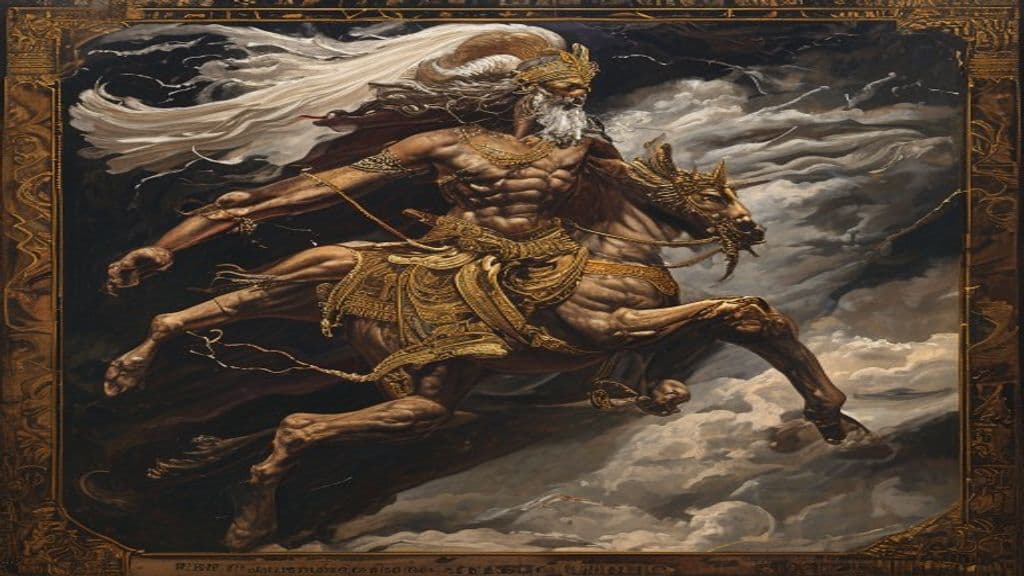
Baal
Baal (bāʿal) is a Northwest Semitic title meaning 'owner' or 'lord' that served as a theonym in the ancient Levant; in Ugaritic and Canaanite texts it appears as the name/title of a prominent storm and fertility god (often rendered Baʿal Haddu) who features centrally in the Baal Cycle and in regional cults tied to rain, fertility, and kingship. In later monotheistic literatures the term becomes a polemical label for rival or foreign deities and is reinterpreted in various receptions.

Ifrit
One of the most powerful classes of jinn in Islamic and pre-Islamic Arab tradition — a fire-born being of immense strength and cunning, capable of great works of engineering and terrible violence.

Iblis
The primordial deceiver in Islamic theology; a jinn who refused God's command to bow before Adam and was expelled from heaven. The source of all temptation and whispered suggestion.

Apsara
Celestial dancers and water nymphs of Hindu cosmology — beautiful semi-divine beings who dance at the court of Indra and, by his command, descend to earth to distract sages from excessive asceticism.

Naga
Divine serpent beings of Hindu, Buddhist, and Jain cosmology — powerful guardians of water, earth, and underground treasures. Revered as deities in South and Southeast Asia.
*Péh₂usōn (reconstructed)
Péh₂usōn is a hypothetical Proto‑Indo‑European pastoral guardian reconstructed by comparative scholars from parallels in Greek and Vedic traditions. Proposed as a Graeco‑Aryan ancestor‑figure, the reconstruction describes a protector of flocks, roads, and travellers rather than an attested historical cultic personality.
Aba (disambiguation / name-form)
Aba is a polyvalent name-form attested across many unrelated contexts (place names, personal names, animal names, and brief mythological listings). The provided sources do not support a single, coherent supernatural entity called "Aba" and offer no descriptive or ritual material for such a being.
Abaddon
In Hebrew scripture Abaddon is primarily a noun meaning 'destruction' or a section/condition of the underworld paired with Sheol; in the New Testament Book of Revelation Abaddon is personified as an angelic figure (Greek Apollyon) described as the king of an army of locusts released from the abyss during the apocalypse.
Abadir
Abadir is a polysemous name attested in distinct cultural contexts: a legendary founding saint and clan ancestor in eastern Ethiopia (Sheikh Abadir Umar Al‑Rida / Aw Abadir), a term applied to cone‑shaped cult stones in Phoenician religious description, and a personal name of a martyr (Abadir/Apater) in the Coptic Synaxarium. The attestations are independent usages of the same name rather than a single supernatural being.
Abadiu of Antinoe
Abadiu of Antinoe was a fourth‑century bishop of Antinoe (Antinoopolis, in Roman Egypt) commemorated as a martyr and saint in the Coptic Orthodox Church, with a feast day on 26 December. Sources record that he was killed during a theological dispute with Arian opponents and reference him in collections of Egyptian martyrs.
Abagtha
Abagtha (Hebrew: אבגתא, ’Ǎḇaḡṯā) is a named human court official in the Hebrew Bible’s Book of Esther, listed among seven chamberlains who ministered before King Ahasuerus and were commanded to bring Queen Vashti before the king. He is attested only in Esther 1:10 and is presented as an institutional palace attendant rather than a supernatural being.
Abandinus
Abandinus is a locally attested Romano‑Celtic theonym known from a single inscribed bronze feather (votive object) dedicated at Godmanchester (the Roman fort Durovigutum) in Cambridgeshire. Scholars interpret him as a local god or male spirit tied to a specific place and possibly associated with a nearby spring or stream; this association is tentative and based on etymological readings of the name.
Abanoub
Abanoub is a 4th‑century Egyptian Christian child martyr venerated in the Coptic tradition. Remembered for his public confession of Christ, miraculous healings associated with his passion, and the translation and veneration of his relics, his feast is observed on July 31 (Epip 24) and his cult centers include Nehisa and Samanoud.
Abarbarea
Abarbarea is a name attested in classical Greek and Roman sources for freshwater nymphs (naiads). The name appears for at least two individual mythic figures — a naiad wife of Bucolion and a naiad counted among ancestors of the Tyrians — and Hesychius records plural forms that may indicate the name was also used as a class-name (Abarbareai / Abarbalaiai).
Abas
Abas (Ancient Greek: Ἄβας, gen.: Ἄβαντος) is not a single mythic being but a recurring personal name borne by multiple mortals and minor mythic figures in Greek epic and genealogical traditions — kings, founders, seers, warriors, attendants, a centaur, and a youth transformed by a goddess. The name is glossed in the sources as 'guileless' or 'good-hearted' and appears across Argive, Theban, Trojan, Euboean, and other local cycles.
Abaskhiron the Soldier
A Coptic Orthodox martyr venerated for refusing imperial idolatry during the Diocletian persecution; reputedly healed by the Archangel Michael, preserved in monastery relics, and commemorated on 14 June (7 Paoni).
Abdel Messih El-Makari
Abdel Messih El-Makari (1892–1963) was a Coptic Orthodox monk and priest venerated as a 20th‑century Coptic saint. Associated with the Monastery of Saint Samuel the Confessor and the Monastery of Saint Macarius (Scetes/Wadi El‑Natrun), he is remembered for humility, asceticism, charity, and reported spiritual gifts such as prescience, discerning of spirits, and healing.
Community Record
- [1]Lucifer - Wikipedia. Wikipedia article 'Lucifer' (summarizes linguistic, biblical, and later theological uses of the term)wiki
- [2]Wikidata: Lucifer (taxon) note. Wikidata entry noting a homonymous crustacean genus (lexical homonym, not a supernatural relation)other
- [3]Ovid (as cited in notes) — personification of Lucifer. Quoted in the assembled notes: 'the Stellae took flight, in marshaled order set by Lucifer who left his station last' (classical poetic personification of the morning star).literary
- [4]Hyginus (as cited in notes). Summarized in the notes: Hyginus describes the star of Venus (Luciferus) and remarks on its exceptional brightness.literary
- [5]Isaiah 14:12 linguistic context (Helel ben Shachar) — summarized in sources. Notes summarize the Hebrew phrase הֵילֵל בֶּן־שָׁחַר (Helel ben Shachar) used in Isaiah 14:12 and the Vulgate's translation as lucifer; in the prophetic context the address functions as a taunt directed at the king of Babylon.literary
- [6]Comparative myth notes (Canaanite/Babylonian parallels). Summarized in the provided material: scholarly reconstructions suggest a Canaanite morning-star deity who attempted Ba'al's throne and then descended to rule the underworld; Babylonian motifs of a celestial figure striving and being cast down are noted as comparative parallels.academic