
The primary written source for the Peel Castle story is an 18th‑century account by George Waldron, who records that an apparition called in their language the Mauthe Doog haunted Peel Castle and was frequently seen in the guard‑chamber. Waldron's narrative describes how soldiers grew accustomed to its nightly presence until a single incident involving a drunken watchman who took the keys alone ended with the man 'ghastly frightened' and dying three days later; after this event Waldron records the passage the dog used was sealed and an alternative route built. The tale was later popularized and adapted in 19th‑century literature (e.g. Sir Walter Scott) and expanded in 20th‑century folkloric collections (notably William Walter Gill), which preserved additional local sightings and variant details.
In Waldron's classic account the Moddey Dhoo appears 'in the shape of a large black spaniel with curled shaggy hair' and lies by the guardroom fire. Later collectors and modern reports record a range of sizes and variants: ordinary dog‑sized manifestations, accounts describing a creature nearly the size of a calf, and local versions that include a headless form noted in William Walter Gill's collection. Eye descriptions vary among sources, from 'bright' or 'coal‑like' eyes in modern witness reports to later borrowings such as 'eyes like pewter plates' found in some retellings.
Waldron portrays the Moddey Dhoo as a recurrent, place‑bound apparition with a regular schedule—emerging at dusk from a particular passage and returning there at dawn—and as largely non‑interventionist in routine sightings (soldiers observed it lying by the fire). The narrative records a single traumatic encounter in which a watchman, after seizing the keys alone while drunk, returned 'ghastly frightened' and died three days later; Waldron does not ascribe a specific supernatural causation beyond the account's sequence of events. Later modern reports expand behavioral notes to include roadside or lane sightings and lurking at corners near farmsteads, but these come from later folkloric collection rather than Waldron's original castle account.
Weaknesses
- conditionsealing or denial of access to its passage
Wards
- otherarchitectural avoidance (sealing the passage and constructing an alternative route)
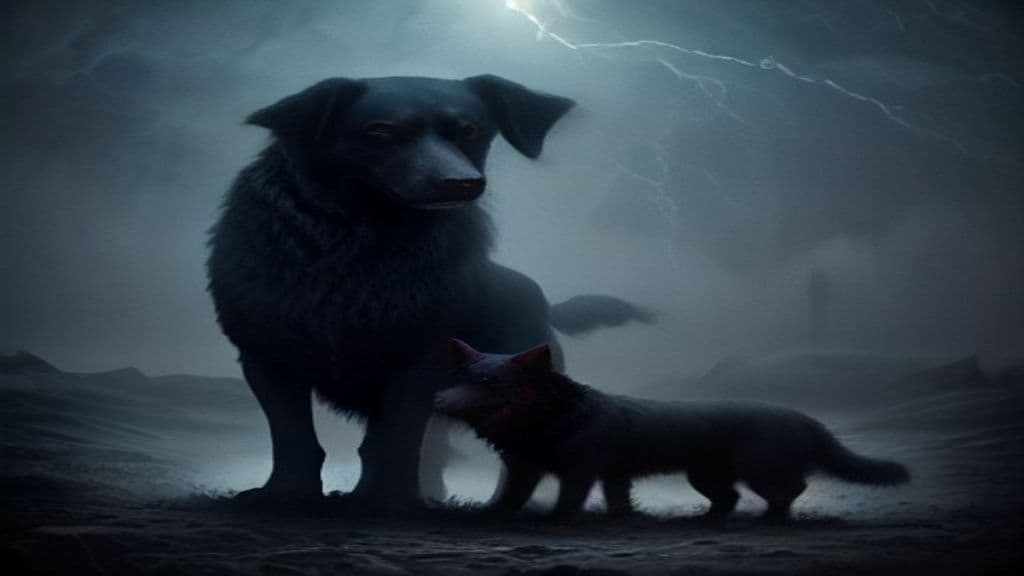
Black Shuck
A spectral black dog of East Anglian legend, with glowing red or green eyes. Its appearance is an omen of death. Its howl has been heard on clifftops during storms for centuries.
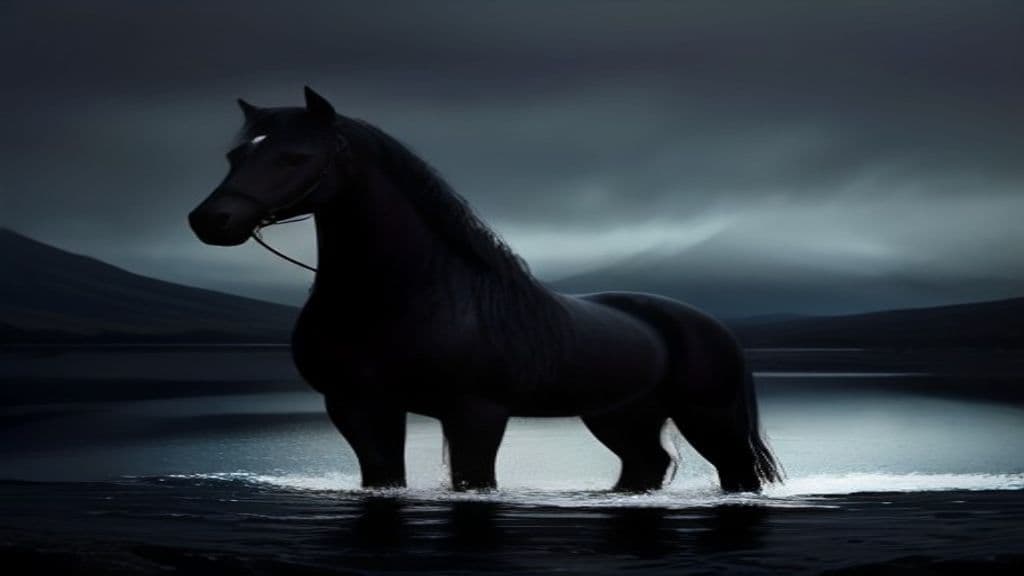
Kelpie
A Scottish shape-shifting water horse that appears as a beautiful tame horse near lochs and rivers, then drowns and devours any rider foolish enough to mount it.
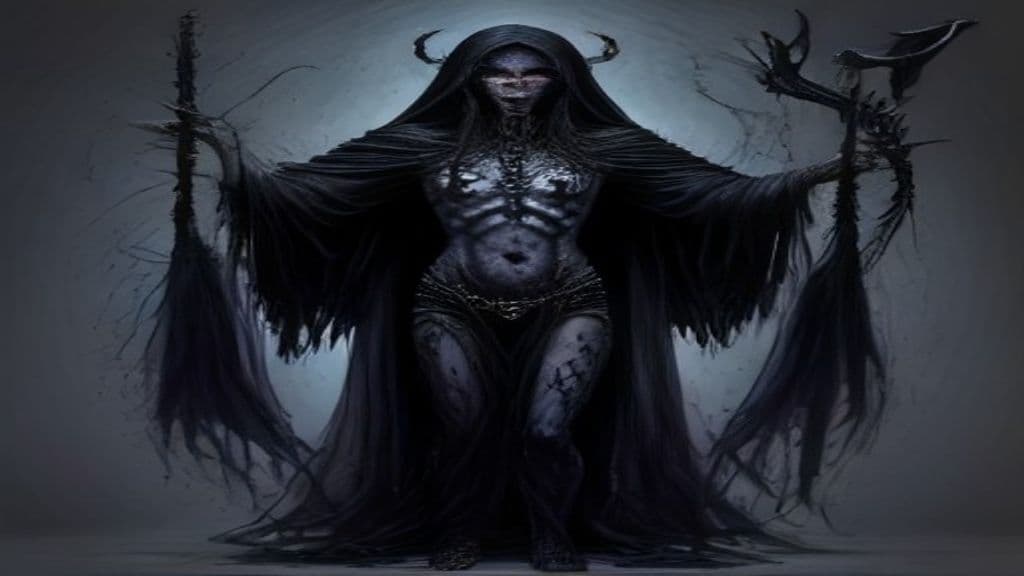
Ghoul
A ghoul is a demon-like or monstrous humanoid originating in pre-Islamic Arabian religion, traditionally associated with graveyards and the consumption of human flesh. The concept later entered broader folklore and has been widely reused and transformed in modern fiction and popular culture.
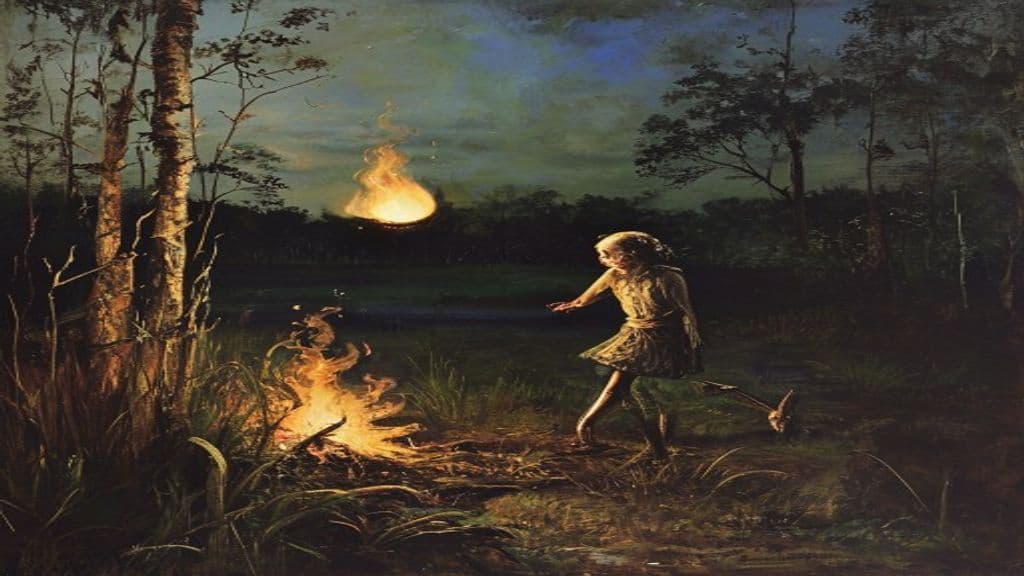
Will-o'-the-wisp
An atmospheric 'ghost light' — a small, mobile, lamp-like light seen at night over marshes, bogs, wet ground, or graveyards. In many cultures the phenomenon is interpreted as a supernatural being or manifestation (wandering nature-spirit, soul of the dead, transformed witch, or treasure-indicator); modern science offers chemiluminescent explanations for some occurrences.
Abandinus
Abandinus is a locally attested Romano‑Celtic theonym known from a single inscribed bronze feather (votive object) dedicated at Godmanchester (the Roman fort Durovigutum) in Cambridgeshire. Scholars interpret him as a local god or male spirit tied to a specific place and possibly associated with a nearby spring or stream; this association is tentative and based on etymological readings of the name.
Abarta (Ábartach)
Abarta (also Ábartach) is a figure of Irish myth who, in surviving accounts, tricks Fionn mac Cumhaill's warriors by giving them a supernatural grey horse that bears them into the Otherworld. Sources variably identify him as a member of the Tuatha Dé Danann or as a Fomorian; after the incident he is compelled to release the captured warriors and is refused entry to the Fianna.
Abcán (Abhcán)
Abcán (modern spelling Abhcán) is a named dwarf poet and musician of the Tuatha Dé Danann in Irish myth. He appears in a small number of narratives as a musician whose art has soporific power and as the ferryman who brings the goddess Ruad from the Otherworld to the human world.
Abdiel
Abdiel (Hebrew עֲבְדִּיאֵל) is primarily a theophoric Hebrew personal name meaning "servant of El/servant of God," attested once in the Hebrew Bible (1 Chronicles 5:15). In later literature—most notably John Milton's Paradise Lost—Abdiel is reimagined as a faithful seraph who opposes Satan's revolt. The provided sources do not treat Abdiel as an autonomous folkloric spirit type or record rituals or wards associated with the name.
Abhean
Abhean is a named poet of the Tuatha Dé Danann in medieval Irish literature, described as a poet in particular of Lugh and recorded as having been killed by Óengus before Midir in a poem by Fland Mainistreach preserved in the Lebor Gabála Érenn.
Abiel
Abiel is attested in the supplied sources only as a male given name — borne by several historical American individuals and listed as two minor biblical figures. The provided materials contain no evidence presenting Abiel as a supernatural, mythological, or folkloric entity.
Abigail
Abigail is a female figure in the Hebrew Bible portrayed in 1 Samuel 25 as the intelligent and beautiful wife of Nabal who intervenes to prevent David from committing violence; later tradition regards her as one of the Tanakh's seven female prophets and as a model of beauty and wisdom.
Abnoba
Abnoba is a Gaulish theonym and toponym attested in Roman-era sources and inscriptions: a localized deity associated with woods, springs and the sources of rivers (notably the Danube) and simultaneously the name applied to a mountain or mountain range in the Black Forest/Baar/Odenwald region. Roman altars equate her with Diana, reflecting syncretic cult practice in frontier provinces.
Accolon
Accolon is a mortal knight of the Arthurian court, presented in the Post-Vulgate Merlin tradition and Malory's Le Morte d'Arthur as Morgan le Fay's paramour and instrument in a plot to supplant King Arthur; his tale centers on enchanted weapons (Excalibur and its scabbard), love-manipulation, and a tragic duel with Arthur.
Achall
Achall is an eponymous mortal woman in the Ulster Cycle of early Irish literature whose grief-induced death is given as the origin of the hill-name Achall (identified with the modern Hill of Skryne). She appears as a genealogical and etiological figure tied to Tara and later legendary events at the hill, rather than as a recurring supernatural agent.
Achtland
Achtland is a figure from Irish tradition who, according to the surviving account, was a mortal woman famed for rejecting mortal suitors who married a member of the Tuatha Dé Danann and crossed into the síde to become immortal as his wife.
Adar Llwch Gwin
Legendary large, intelligent birds from Welsh tradition said to understand human speech and obey their master's commands; best known for tearing their master Drudwas ap Tryffin to pieces when bound by a literal order in an Arthurian battle narrative. The term later came to be applied to raptors and metaphorically to brave men in medieval Welsh poetry.
Community Record
- [1]Moddey Dhoo (Wikipedia). Wikipedia entry 'Moddey Dhoo' summarising George Waldron and later sourceswiki
- [2]Wikidata: Moddey Dhoo. Wikidata short description for Moddey Dhoowiki
- [3]Peel Castle: Moddey Dhoo And Other Manx Tales Of Terror (Spooky Isles summary). Modern summary of the Peel Castle tradition and variantsother
- [4]Archive: The iron wolf and other stories (listing). Archive listing referencing collected tales including the Moddey Dhooother
- [5]Peel Castle Official Guide (Craine, 1969) (archive listing). Guide material referencing castle lore and local traditionother
- [6]Transceltic: Manx castle haunted by the phantom hound 'Moddey Dhoo'. Popular retelling summarising Waldron and later folkloristsother