
The sources describe shapeshifting not as a single origin narrative but as a recurring motif appearing in the oldest forms of totemism and shamanism and in early written epics such as the Epic of Gilgamesh and the Iliad. Rather than arising from one culture or myth, the ability to change form is attested across diverse traditions and historical periods and is used in ritual, mythic, and literary contexts.
There is no single, consistent physical description for shape-shifters as a class in the supplied sources. Appearance varies by tradition and example: individual instances may present as changelings (substituted children), jinns (spiritual beings of Islamic tradition), kitsune (fox-spirits that assume human form), vampires, werewolves (human–animal alternation), or mythic deities like Loki and Vertumnus who assume many guises. The motif covers both wholly other-than-human forms and near-human disguises depending on the culture and narrative.
The core ability reported in the sources is "the ability to physically transform oneself through unnatural means." Shapeshifting appears in early ritual contexts (totemism and shamanism), in epic and literary works (for example characters in the Epic of Gilgamesh and the Iliad), and in diverse folkloric beings and deities: changelings, jinns, kitsune, vampires, werewolves, and figures such as Loki and Vertumnus are cited as examples. In modern usage the motif functions as a literary device across fantasy, children's literature, and popular media. Specific mechanics, purposes, and behaviors of transformation vary by tradition and by the specific named being.

Jann
The weakest class of djinn in Islamic tradition, associated with desert winds and taking the form of snakes or whirlwinds, dwelling in empty wilderness and posing little threat to those who know the proper invocations.

Kitsune
Fox spirits of Japanese mythology — intelligent, long-lived beings who gain additional tails (up to nine) as they age and grow in power. They serve as messengers of the god Inari and as powerful tricksters.

Jinn
A class of supernatural beings from pre-Islamic Arabian religion later integrated into Islamic theology; jinn are created, morally accountable entities distinct from humans and angels, often unseen but capable of taking visible forms and interacting with people in varied ways.
Kitsune
Fox spirits of Japanese mythology — intelligent, long-lived beings who gain additional tails (up to nine) as they age and grow in power. They serve as messengers of the god Inari and as powerful tricksters.
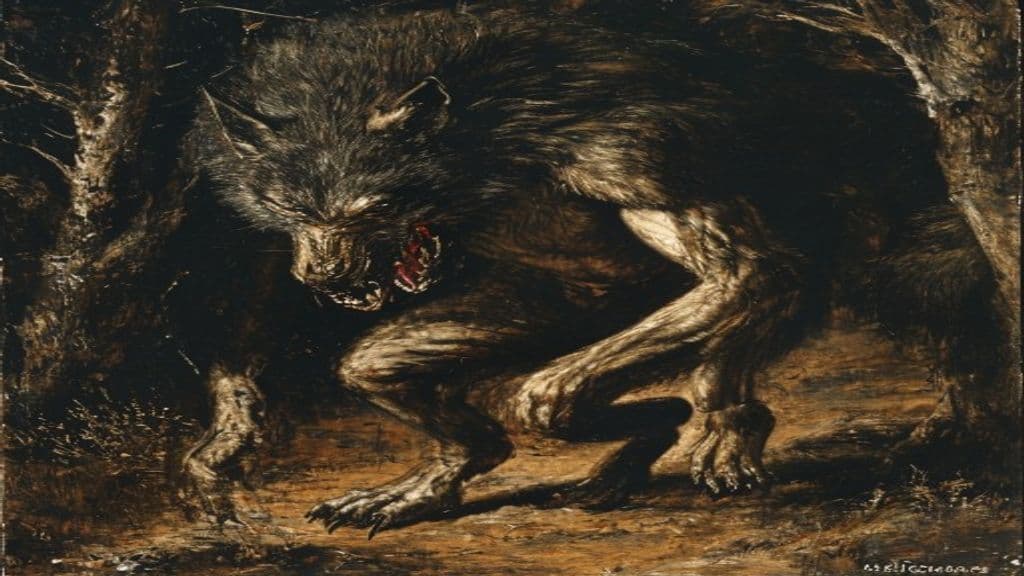
Werewolf
A figure of European folklore of a human who can change into a wolf or wolf–human hybrid, variously portrayed as voluntary shapeshifter, cursed afflicted person, or clinical delusion (lycanthropy). Belief in werewolves was entwined with medieval and early modern witchcraft accusations and persisted into Gothic and popular fiction.
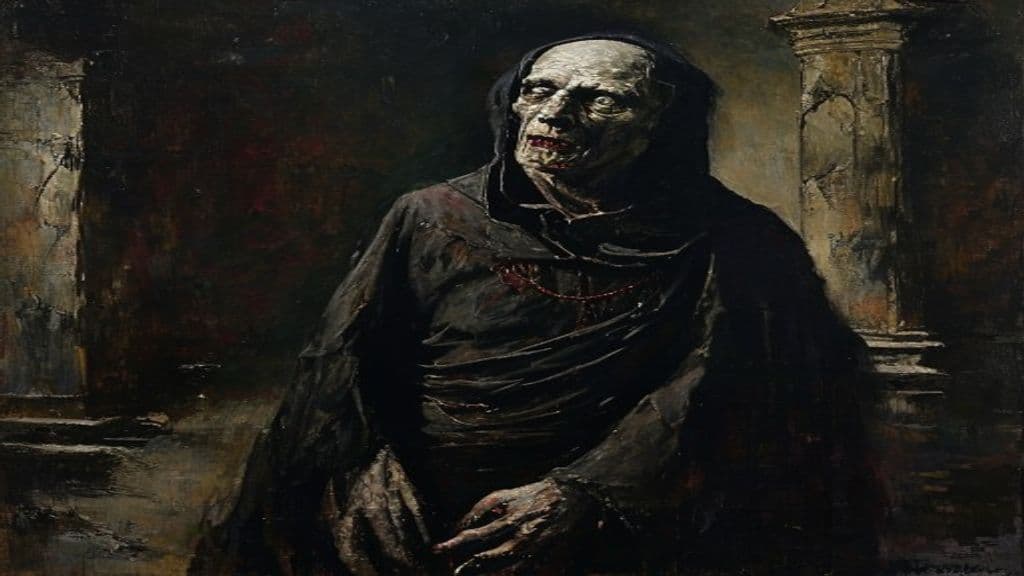
Vampire (tradition)
A class of revenant beings in southeastern and eastern European folk belief that subsist by feeding on the vital essence (generally blood) of the living. Recorded chiefly in early modern to modern oral traditions, these vampires are typically described as reanimated corpses whose presence explains unexplained illness, death, and post-mortem disturbances in their communities.

Loki
A complex figure in Old Norse myth: son of a jötunn and the female figure Laufey, resident among the Æsir, a shape‑changing trickster whose cunning alternately aids and undermines the gods and who is bound for his role in Baldr's death before breaking free to fight at Ragnarök.
'Ain Samiya Goblet
Silver cup from the Middle Bronze Age I, discovered in a tomb at Ain Samiya. (Note: 1. Power tier should be "None", but add a note explaining that historical artifacts don't fit into the typical power tier classification. 2. Add a description of its appearance based on it being a sil)
*Péh₂usōn (reconstructed)
Péh₂usōn is a hypothetical Proto‑Indo‑European pastoral guardian reconstructed by comparative scholars from parallels in Greek and Vedic traditions. Proposed as a Graeco‑Aryan ancestor‑figure, the reconstruction describes a protector of flocks, roads, and travellers rather than an attested historical cultic personality.
A'annepada
A'annepada (Sumerian cuneiform 𒀀𒀭𒉌𒅆𒊒𒁕; also romanized Aanépàdda) is attested as a historical ruler of the First Dynasty of Ur, flourishing c. 2350 BC. He is recorded in dedicatory and foundation inscriptions as king of Ur and as son of Mesannepada, credited with temple-building and dedication to deities such as Ninhursag and Inanna.
Aba (disambiguation / name-form)
Aba is a polyvalent name-form attested across many unrelated contexts (place names, personal names, animal names, and brief mythological listings). The provided sources do not support a single, coherent supernatural entity called "Aba" and offer no descriptive or ritual material for such a being.
Abarbarea
Abarbarea is a name attested in classical Greek and Roman sources for freshwater nymphs (naiads). The name appears for at least two individual mythic figures — a naiad wife of Bucolion and a naiad counted among ancestors of the Tyrians — and Hesychius records plural forms that may indicate the name was also used as a class-name (Abarbareai / Abarbalaiai).
Abas
Abas (Ancient Greek: Ἄβας, gen.: Ἄβαντος) is not a single mythic being but a recurring personal name borne by multiple mortals and minor mythic figures in Greek epic and genealogical traditions — kings, founders, seers, warriors, attendants, a centaur, and a youth transformed by a goddess. The name is glossed in the sources as 'guileless' or 'good-hearted' and appears across Argive, Theban, Trojan, Euboean, and other local cycles.
Abderus
Abderus (Ancient Greek: Ἄβδηρος, romanized Ábdēros) is a mortal heroic figure in Greek myth closely associated with Heracles, remembered as the youth left in charge of the Mares of Diomedes who was killed by them. He functions as an eponymous local/divine-hero ancestor for the city of Abdera and received funerary commemoration and athletic agones at his tomb.
Abomination of Desolation
An apocalyptic prophetic phrase originating in the Book of Daniel designating a profaning thing or act that renders the Jerusalem Temple cult desolate; later reused in the Synoptic Gospels as an eschatological sign prompting urgent flight. The term denotes ritual/cultic impurity (Hebrew shiqquts) and is variously interpreted as pagan offerings or altar, a foreign cult statue, or (in some New Testament readings) an acting agent.
Absyrtus
Absyrtus (Ancient Greek: Ἄψυρτος) is a Colchian prince in the Greek Argonautic cycle, son of King Aeëtes and brother or half-brother of Medea. He appears in variant traditions either as a companion taken by Medea during her flight with Jason and murdered/dismembered to delay pursuit, or as a pursuer sent by Aeëtes who is overtaken and slain by Jason; his death functions as a key narrative device in the escape from Colchis.
Abu
Abu is a poorly understood Mesopotamian god attested in modern reference summaries. Secondary literature tentatively links him with vegetation and snakes and records that he was often paired with a deity written gu2-la2, but primary details about his cult, iconography, and myths are lacking in the cited sources.
Abzû
Abzû (Sumerian abzû; Akkadian Apsû) is the primordial freshwater abyss in Sumerian–Akkadian cosmology: the deep fresh waters that underlie and surround the earth, source of springs, rivers and ritual holy waters, and a creative principle whose mingling with the salt sea (Tiamat) figures in Mesopotamian cosmogony.
Abī-simtī
Abī-simtī (also rendered Abi-simti, Abisimti) is a named woman attested in third-millennium BCE Mesopotamian documentary and literary texts. She appears in administrative account records as a provider of animals and donor to temple cults and in Sumerian love-song literature as the named beloved/consort addressed by a royal speaker.
Community Record
- [1]Shapeshifting (Wikipedia). Wikipedia contributors. "Shapeshifting." Wikipedia, The Free Encyclopedia.wiki
- [2]Wikidata item Q96091686 (Shape-Shifters episode). Wikidata. "Q96091686."other
- [3]UNICUTT TV TIPP Acanto 5.12.2009 The Shape Shifters @ Dance Couture (archive listing). Archive.org. "The Shape Shifters @ Dance Couture" listing.other
- [4]Wanted Pedo Est Une Association De Malfaiteurs (archive listing). Archive.org. "Wanted Pedo Est Une Association De Malfaiteurs" listing.other
- [5]The Wonderful Dog Suit (archive listing). Archive.org. "The Wonderful Dog Suit" listing.other