
Ancient
Nuckelavee
The most terrifying creature of Orcadian folklore — a skinless, horse-headed demon of the sea whose breath spreads plague and whose presence causes crops to wither. It cannot cross fresh water.
A record of the unseen, drawn from world folklore.
7724 entities · page 101 of 129
The most terrifying creature of Orcadian folklore — a skinless, horse-headed demon of the sea whose breath spreads plague and whose presence causes crops to wither. It cannot cross fresh water.

In Inuit mythology, Nujalik is named in the sources as the goddess of hunting on land. The available references provide only this basic identification and do not record myths, attributes, or rituals associated with the figure.

A Japanese yōkai, typically depicted as a woman whose head detaches (or becomes free-moving on a string-like neck) at night to fly about and prey on human blood. Considered a variant of the broader rokurokubi category and attested in classical kaidan, Edo-period yōkai literature, and modern reference collections.

One of the lesser-known canoes that played a significant role in the migration to New Zealand. (Note: 1. Power tier should be "Local Spirit" instead of "Minor Spirit", as it is a waka that played a role in the migration to New Zealand. 2. The abilities section needs to be revised, as there are no supe)

Nuliajuk is an Inuit sea-being presented in the supplied sources as a powerful female ruler of marine animals and of the undersea realm; communities and shamans must seek her aid or appeasement when marine resources are scarce. She is treated in the materials as a sea goddess figure connected in English-language accounts with the broader Sedna tradition.

Sacred numbers with significant power and repeated appearances in Egyptian mythology, including 2, 3, 4, and 7. (Note: * Power tier: Downgrade to Ancient (deity-level), as the source material doesn't imply cosmic power but rather reverence for these numbers. * Abilities: Add a sentence that explicitly states that thes)

The concept of Numbers holds symbolic significance across various contexts within Germanic paganism, appearing in both mythology and the lunar calendar, and is considered a fundamental aspect of ancient Germanic folklore. (Note: - Power tier should be "Primordial" as cosmic-level significance is implied (e.g., appearing throughout surviving attestations of ancient Germanic folklore). - Abilities: add that these numbers are us)
Numushda is a Mesopotamian tutelary deity of the city of Kazallu, associated with wild nature, violence, flooding and — in late sources — meteorological/astral influence. He appears in hymns, god lists, offering lists, and mythic narratives (notably The Marriage of Martu) and was worshipped in a temple called kun4-sa-tu (é-kun4-sa-tu) at Kazallu.

Nungal (also attested Manungal, possibly equated with Bēlet-balāṭi in some sources) is a Mesopotamian goddess who personifies and governs the institution of prison. She is attested in hymnic and cultic contexts from southern Mesopotamia (Ur III period) and is sometimes linked with underworld associations.

A Philippine localized nature spirit described as a small, elderly mound-dweller tied to anthills, termite mounds, and other specific landscape features; considered an ancestral/guardian presence that punishes those who disturb its territory and is placated through ritual etiquette, offerings, and traditional healer intervention.

Nur-Adad was a historical king of the southern Mesopotamian city-state of Larsa in the early second millennium BCE, attested in king lists, regnal chronologies, and inscriptional evidence such as inscribed construction bricks found at Eridu. Modern scholarship dates his reign to approximately 1866–1850 BCE (Middle Chronology) and treats him as a political actor within Mesopotamian dynastic and literary records.

A Japanese yōkai associated with seas, rivers, and shorelines, portrayed variably as a wet-haired woman, a snake-bodied female, or an ubume-like figure who lures victims with a childlike bundle. Regional tales alternate between depictions of a reclusive, territorial being and a predatory lure often linked with the ushi-oni.

A yōkai from Japanese folklore that manifests as a wall-like obstruction on paths at night, preventing or misdirecting travelers. Recorded primarily from Kyūshū (notably Fukuoka and Ōita), the nurikabe functions as a folk explanation for travelers losing their bearings, with local variants attributing the effect to trickster animals such as tanuki or weasels.

Nuska (also Nusku) is a Mesopotamian deity chiefly attested as the sukkal (vizier/attendant) of the god Enlil. He functions as Enlil's doorkeeper, counselor, and mediator, and is associated with fire, lamps, and nocturnal protection against demons such as Lamashtu and gallu.

Nut (Ancient Egyptian: Nwt; Coptic: Ⲛⲉ) is the ancient Egyptian goddess who personifies the sky, stars, and cosmos and is associated with motherhood and astronomical symbolism. She is commonly depicted as a star-covered woman arched over the earth, forming the vault of heaven.

A mortal figure from Hawaiian mythology known for building an ark to escape a Great Flood, but mistakenly attributing his safety to the moon rather than Kāne's intervention. (Note: - Power tier should be Minor Spirit (Nuʻu is a mortal figure, not a spirit) - Appearance: Add "Unknown" - Abilities: Specify that Nuʻu's ingenuity and resourcefulness are demonstrated in building an a)

Mythological deity associated with the Zambezi River, revered by local communities for its protective and providential nature. (Note: 1. Power tier: Based on the source material, Nyami Nyami seems to be a deity-level entity (Ancient), not Greater. 2. Abilities: The draft should specify that its protective and providential nature is )

Nyctimus (Ancient Greek: Νύκτιμος, Nyktimos) is a mythological Arcadian prince and a son of King Lycaon, attested in classical genealogies as a successor to Lycaon's kingship. He is presented in sources as a human royal figure whose narrative functions address themes of familial impiety, divine retribution, succession (ultimogeniture), and local eponymy rather than as a supernatural being.

Nyi Roro Kidul is a supernatural female figure in Sundanese and Javanese tradition identified as the Queen of the Southern Sea off the coast of Java. She functions as a regionally significant sea sovereign connected in local narratives and place‑based traditions (for example Pelabuhan Ratu) and appears in contemporary poetic and popular media.

Nyikaya is a female river spirit in Shilluk (Silluk) cosmology who is described as the mother of the culture-hero Nyikang and as the river-dwelling recipient of the king's spirit at death. She is depicted in the sources as a hybrid figure — described explicitly as “half-woman, half-crocodile” — and functions in Shilluk ritual and ideology as the maternal river-spirit who must be petitioned to restore or accept the royal spirit during succession rites.

In ancient Greek folklore a nymph is a minor female nature deity who personifies and inhabits particular natural features (springs, trees, mountains). Nymphs are divine yet not immortal and are typically depicted as maidens with localized powers such as healing, divination, and shapeshifting.

Nyyrikki is a figure in Finnish and Karelian forest-hunting tradition described as a child of the forest deities Tapio and Mielikki who 'gives' small game (notably squirrels) to hunters. He appears in runic songs and hunting spells across regional oral traditions under multiple name-forms and genders, invoked to release or hand over prey.

Nzambi a Mpungu is the supreme creator sky-deity in traditional Bakongo (Kongo) spirituality, described as the eternal Sky Father and associated with the sun and fire. He occupies the highest place in Kongo theogony, has a female counterpart Nzambici (the Sky Mother and moon goddess), and after Portuguese contact was often equated with the Christian Creator God.

A shape-shifting water spirit of Scandinavian lakes and rivers who plays enchanting violin music to lure the unwary to drown, often appearing as a beautiful man or white horse.

No information about the Finnish water-spirit Näkkä/Näkki is present in the supplied source documents. The materials provided concern unrelated subjects (an Ottoman miniaturist, legal case parties with the surname 'Nakka', and a Wikidata family-name entry) and do not contain folkloric details about this entity.

This entry is intended for the Finnish term näky / näkyi, often rendered in English as a 'nightmare spirit.' The three supplied sources do not contain information about this entity; the summary below records what the provided materials are and notes the absence of relevant folkloric content in them. Additional specialized folklore or ethnographic sources are required to document traditional beliefs about näky.
The corpse-gnawing dragon coiled around the roots of Yggdrasil, ceaselessly chewing the World Tree — and destined to survive Ragnarök and carry the dead on its wings.

A class of freshwater-associated humanoid spirits from Germanic and Nordic folklore, variously called nixie, nix, neck, Nøkk, Näcken, or nykur. They are consistently tied to rivers, streams, reeds and other inland waters and are commonly described as humanoid and often shapeshifting.
Nøkken (variants: nixie, nixy, nix, neck, nicker, Nykken) is a class of water-associated humanoid spirits in Germanic folklore. They are localized freshwater spirits tied to ponds, rivers, and similar places and are commonly described in referenced sources as often shapeshifting water-spirits rather than a single unified mythic figure.

A concept in Chinese and comparative folklore of a dead person—often referenced as a female in English-language discussions—who returns after an unjust, cruel, or unnatural death or after being denied proper funerary rites, remaining an 'unhappy' or vengeful spirit that may afflict the living.

Nüwa is a primordial mother-goddess and culture-hero in Chinese traditional cosmology who creates humanity in some traditions and repairs the cosmos after catastrophic disruption. She appears across Chinese folk religion, Taoist and Confucian discourse, and in mythic texts such as the Huainanzi, Songs of Chu, and Liezi, often paired with the culture-hero Fuxi.

Nāgas are a class/race of semi-divine, serpentine beings in South and Southeast Asian religious and folkloric systems. Associated with the underworld (Patala / Naga-loka), water, and hidden treasures, nāgas appear as cobra-like snakes, half-human/half-snake figures, or human figures with serpent hoods; they can be benevolent protectors or dangerous, venomous beings depending on context.

Nāgas are a class of divine or semi-divine serpent beings in South Asian tradition, occupying a liminal space between human and snake, associated with water and the netherworld (Patala). They appear in varied forms from ordinary snakes to half-human, half-serpent figures and have a long ritual history across South Asia.

Nāgas are serpent-associated nonhuman beings in South Asian religious literature. In the Mahāvaṃsa and related scholarship they appear as salient 'snake-beings' who act as otherworldly agents, sometimes depicted as devoted worshippers of the Buddha and elsewhere as hoarders of relics.

In Hawaiian mythology, Nāmaka is a sea goddess and an older sister to the volcano goddess Pele-honua-mea. She is associated with the natural elements of water and earth. (Note: * Power tier should be Greater, not Ancient, since her domain is tied to a powerful regional aspect (sea) rather than a cosmic or deity-level one. * Summary needs to include the fact that she is a sea)
Oba is principally attested in the provided sources as a West African royal title (Yoruba and Bini) meaning 'ruler' and as a widespread modern proper name and toponym. The corpus contains no sustained folkloric account of an independent supernatural being called 'Oba'; references to ritual or religious function concern human office-holders rather than a nonhuman spirit.

Obalufon Alayemore (Ọbalùfọ̀n II, Alayemore) is a historical Ooni of Ile Ife who was deified after death and is venerated in the Yoruba religious-cultural corpus as an oríṣa and patron of art, weaving, and bronze/brass casting. He appears in royal succession lists as the third Ooni of Ife and is associated with material-culture representations such as brass heads and masks.

A supernatural being in Central African tradition with dual capacities for evil and good, capable of causing harm or sickness but also bringing positive change. (Note: 1. Power tier should be Primordial since it has dual capacities for evil and good, implying a much more powerful entity. 2. Sensory cues are missing from the draft. 3. The source material does not exp)

Obariyon is attested in modern reference works as a yōkai associated with local folklore of Niigata Prefecture, Japan. The supplied sources provide no traditional descriptions, origin myths, abilities, rituals, iconography, or warding practices for Obariyon. The name has also been used as a contemporary professional wrestling persona in event listings, which do not supply folkloric information.

Obatala is a high-ranking primordial orisha in the Yoruba religious framework, widely described as the sculptor of humankind who molds human bodies and is regarded as father of humanity and owner of all heads. He is associated with wisdom, coolness of thought, and senior or royal status among the orisha; some traditions connect him to the founding of Ife.

A supernatural entity from Ashanti folklore that inhabits the bodies of humans, emitting a phosphorescent light and exhibiting vampiric/witch-like qualities. (Note: - Power tier: Lesser (inhabiting human bodies, not cosmic/Primordial) - Abilities: Remove "exhibiting supernatural powers" as it's not mentioned in the source material - Weaknesses: Add information ab)

A system of divination used in the Yoruba tradition and its derivatives, involving palm nuts or coconut pieces to communicate with ancestors and deities. (Note: 1. Remove "Greater" power tier as Obi divination is a system of divination, not an entity with supernatural abilities. 2. Add sensory cues related to the use of palm or kola nuts/coconut pieces (e.g.,)

A monstrous entity sent by witches to commit heinous crimes against humanity, described as a massive animal. (Note: - Power tier: Primordial (given its cosmic-level impact on human society) - Origin story: Needs to be added from source material - Sensory cues: Unknown is not sufficient; needs to be revised or more )

Oboroguruma (朧車, "hazy cart") is a yōkai in Japanese folklore described as a ghostly ox cart with a face. Legend reports that on misty, moonlit nights in Kyoto one can hear squeaking like an ox cart and, if they step outside, find the Oboroguruma parked outside their home.

In Greek myth the Oceanids (Ancient Greek: Ὠκεανίδες, Ōkeanídes) are a vast class of nymphs, described as daughters of the Titans Oceanus and Tethys. They are dispersed spirits associated with watery places and related functions—often linked with springs, companionship of goddesses, and care of youths—and include a few individually significant figures within their large poetic roster.

Oceanus (Greek: Ὠκεανός) is a primordial Titan in ancient Greek cosmology who personifies the great river that encircles the world and is named as father of the river gods (potamoi) and the Oceanids. He functions as a cosmological boundary-stream and genealogical progenitor in multiple Greek traditions and appears in literary theogonies and Greco-Roman art.

Malevolent entity from Georgian mythology with a unique physical feature and violent tendencies towards humans. (Note: 1. Power tier should be Ancient (deity-level) as it's unclear if Ochokochi is considered cosmic in Georgian mythology. 2. Add sensory cues based on the source material description of his physical appe)

Ocyrhoe (Anc. Greek Ὠκυρόη / Ὠκυρρόη) is a name applied to at least five distinct female figures in Greek myth — variously Oceanid, naiad, or the prophetic daughter of the centaur Chiron. The bearers are water-associated nymphs who serve etiological, maternal, and narrative roles (mothers of eponymous rivers and heroes, objects of divine pursuit, or punished prophets).

Od İyesi is the Turkic and Mongolic guardian spirit (iye) of fire and hearth. Conceived as the 'possessor' or master of the element fire, it appears in male and female personifications (e.g., Od Ana, Od Ata/Od Khan) and as household-specific forms (Ocak iyesi — hearth spirit, Soba iyesi — stove spirit).
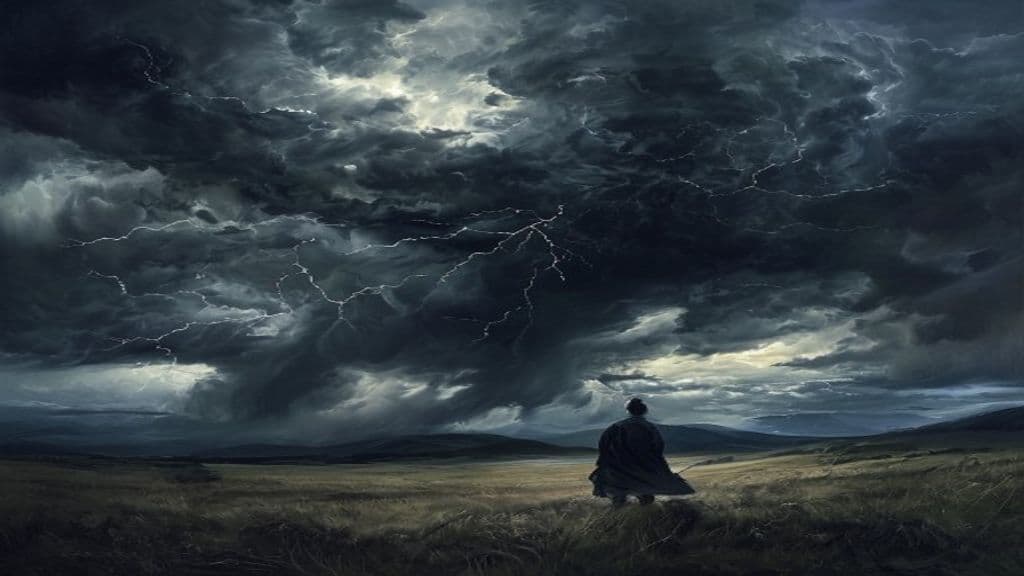
A Greater supernatural entity associated with thunderstorms, personifying storm clouds in Basque mythology. (Note: - The origin story summary should specify that it's the personification of storm clouds, not just associated with them. - Power tier: There is no clear indication in the source material that Odei's ab)

Odigitria is primarily an iconographic epithet and toponym found in Byzantine and modern contexts: a Marian title (Panagia Odigitria / Hodegetria) denoting a specific type of Virgin Mary image regarded as a guide or pointer to Christ, and a place-name applied to churches, monasteries, settlements, and an archaeological Minoan cemetery in southern Crete.
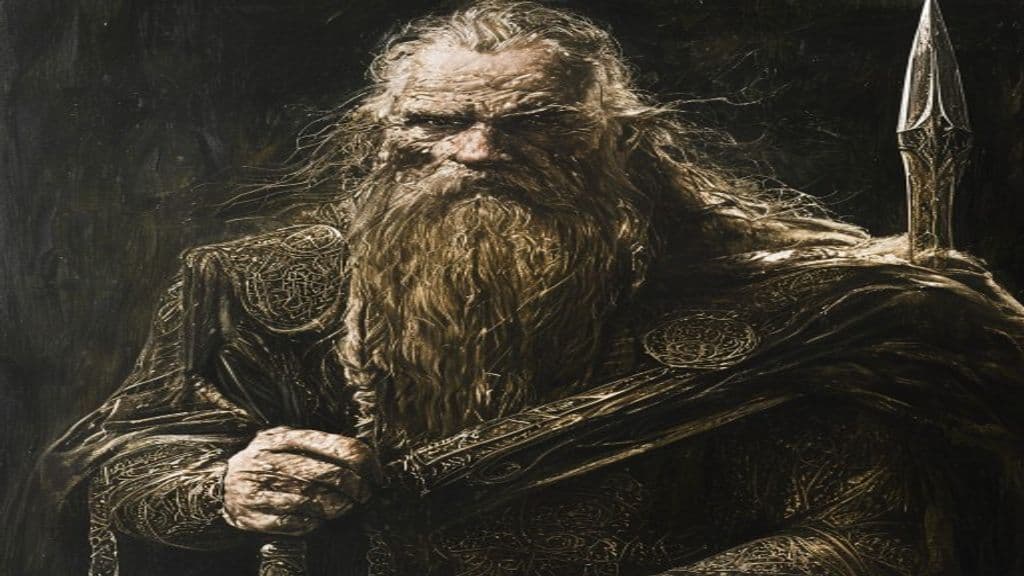
Odin (Old Norse: Óðinn) is the chief god of the Norse (Æsir) pantheon, a multifaceted deity associated with wisdom obtained by sacrifice, poetic inspiration, death and warfare, and rulership over the hall Valhöll where chosen slain warriors (einherjar) dwell. He appears throughout Germanic tradition from Roman-era accounts through the Viking Age and in later folklore as leader of the Wild Hunt.

Odysseus is a legendary mortal king of Ithaca from ancient Greek epic tradition, best known as the protagonist of Homer's Odyssey. Celebrated for his intellect, craft (mêtis), and long nostos (homecoming), he functions as an exemplar of heroic cunning rather than a supernatural being.

Divine king and Oriṣa in the Yoruba religion, progenitor of the Ife Empire. (Note: - Power tier is uncertain; source material does not provide clear information on Odùduwà's abilities or power level. - Appearance should be included for completeness. - Abilities need to be rewritten,)

Oeceus (also Oiceus; Ancient Greek: Οἰκιάδαο) is a mytho-historical king of Olenus recorded in Greek genealogical tradition. He is attested as the father of Dexamenus and an ancestor of Dexamenus’s children (Theronice, Theraephone, Eurypylus, and Deianira/Mnesimache/Hippolyte).
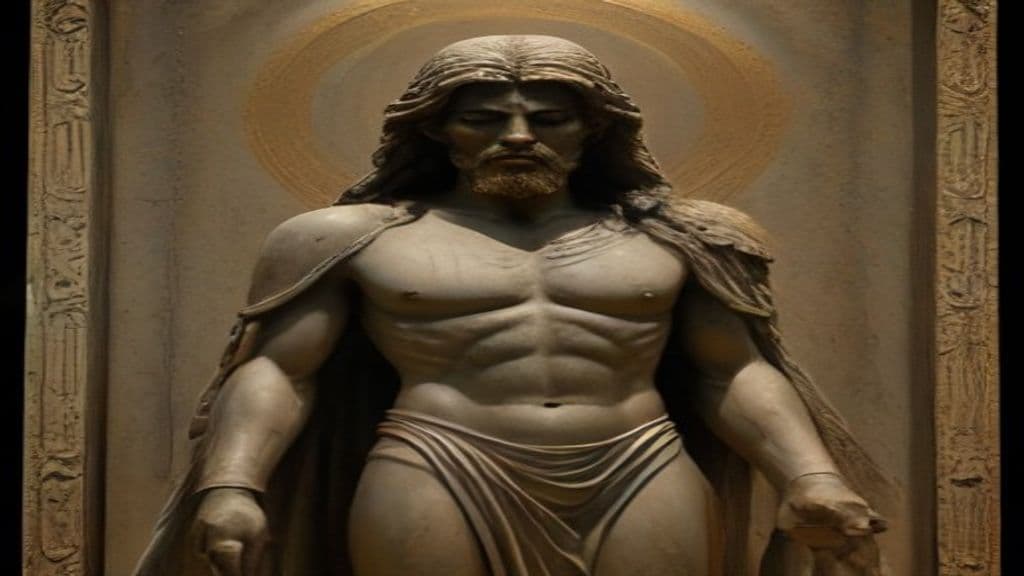
Oecles (also Oicles, Oicleus, Oecleus) is a mortal figure in Greek heroic genealogies, an Argive noble presented chiefly as the father of the seer Amphiaraus and as one of the companions of Heracles in the campaign against Troy. He functions mainly as an ancestral/associative figure within Argive mythic networks; sources vary on his parentage and on details of his wife's parentage.

Oeneus is a mytho-historical king of Calydon in Greek tradition, remembered as a dynastic patriarch who hosted gods and heroes, received the vine from Dionysus, presided over harvest sacrifices, and whose familial and ritual actions precipitated major episodes such as the Calydonian boar hunt and subsequent dynastic struggles.

Oenomaus (Ancient Greek Οἰνόμαος, Oinómaos) is a mythic king of Pisa in Elis who, traditionally a son of Ares in some accounts, challenges suitors of his daughter Hippodamia to lethal chariot races. His death at the hands of Pelops and the ensuing curse and commemorative traditions link him etiologically to the foundation-memory of the Olympic Games and to the doom on Pelops' descendants.
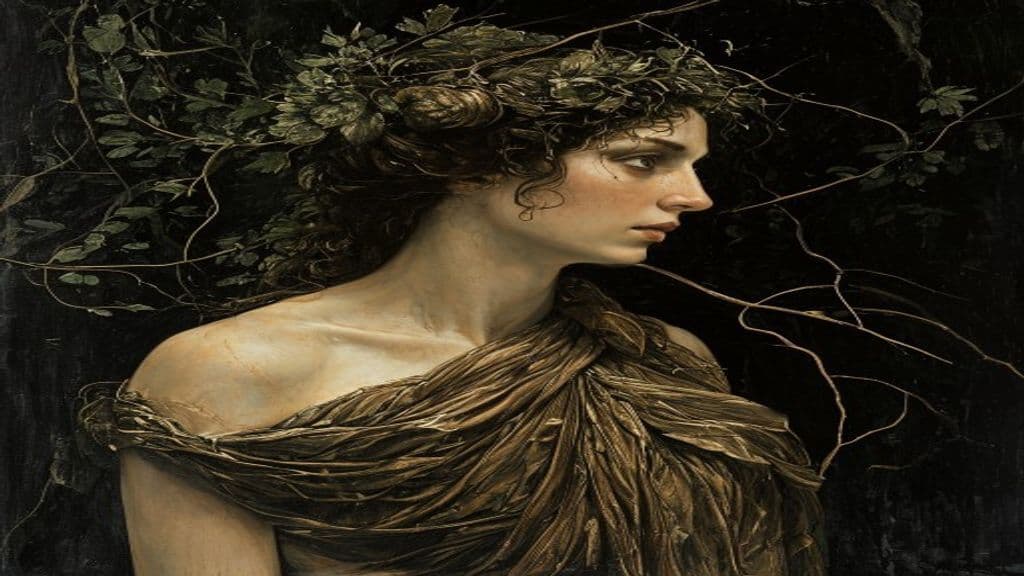
A named mountain nymph of Mount Ida in Greek myth, Oenone is best known as the first wife of Paris of Troy. Associated with prophecy (taught by Rhea) and herbal healing, her narrative centers on love, betrayal, and varying accounts of revenge and suicide following Paris's abandonment.

Oenotrus (Ancient Greek: Οἴνωτρος, Oínōtros) is a mythic human figure in Greek tradition, the youngest son of Lycaon of Arcadia, credited—along with his brother Peucetius—with an early migration from Arcadia to the Italian peninsula and as the eponymous founder of Oenotria (southern Italy/Calabria). Classical sources present him as an ancestral/colonizing founder rather than a supernatural being.