Entity Index

A record of the unseen, drawn from world folklore.

7685 entities · page 51 of 129

Demogorgon
Ancient

Demogorgon

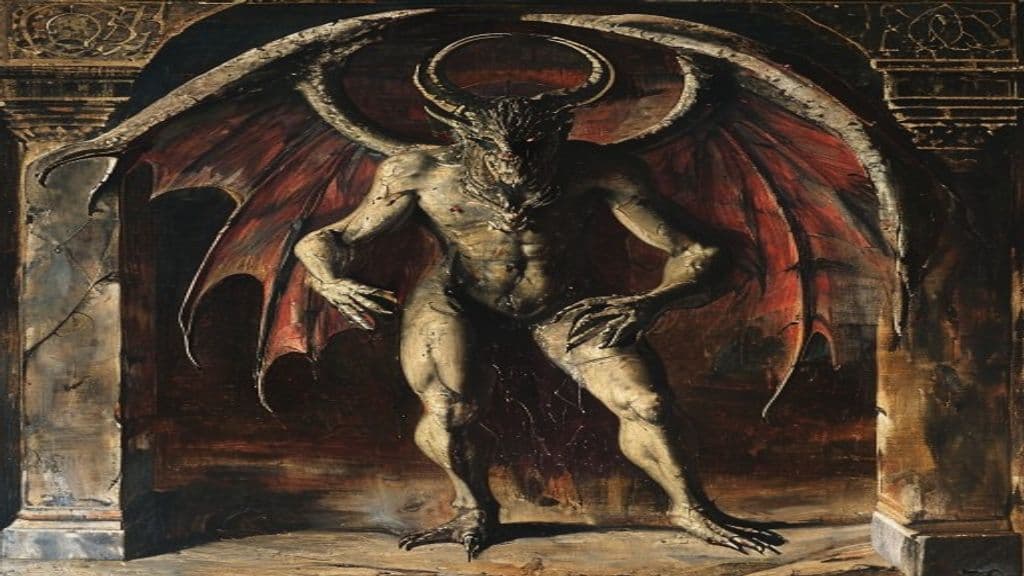
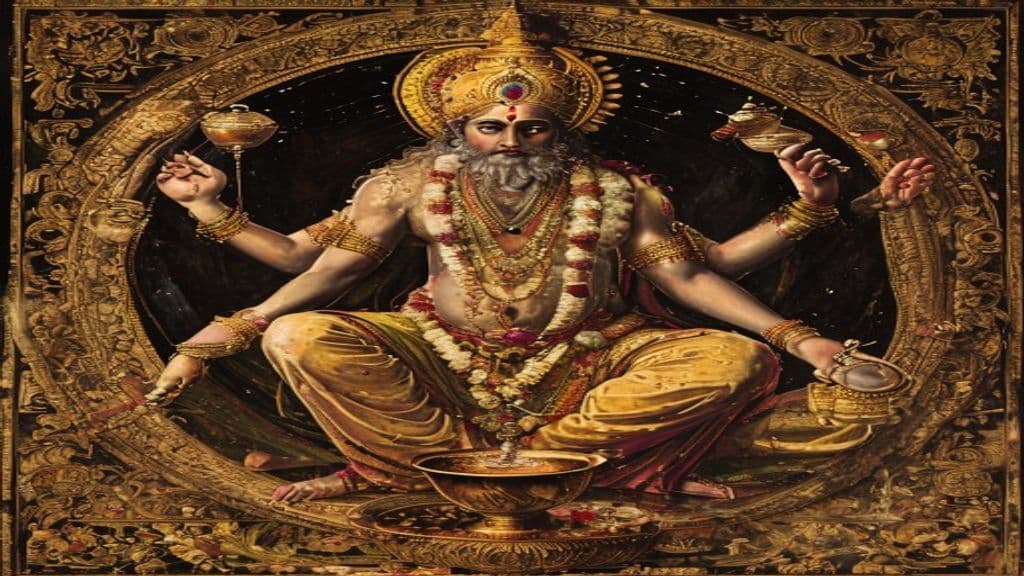
A name that emerged in Latin medieval commentary and was later taken up in Renaissance and early modern literature and demonology as a powerful, primordial subterranean or infernal figure associated with fate and accountability. Modern popular culture reuses the name for monsters, but those visualizations are distinct from the medieval and Renaissance textual tradition.
Demoleon
Lesser

Demoleon

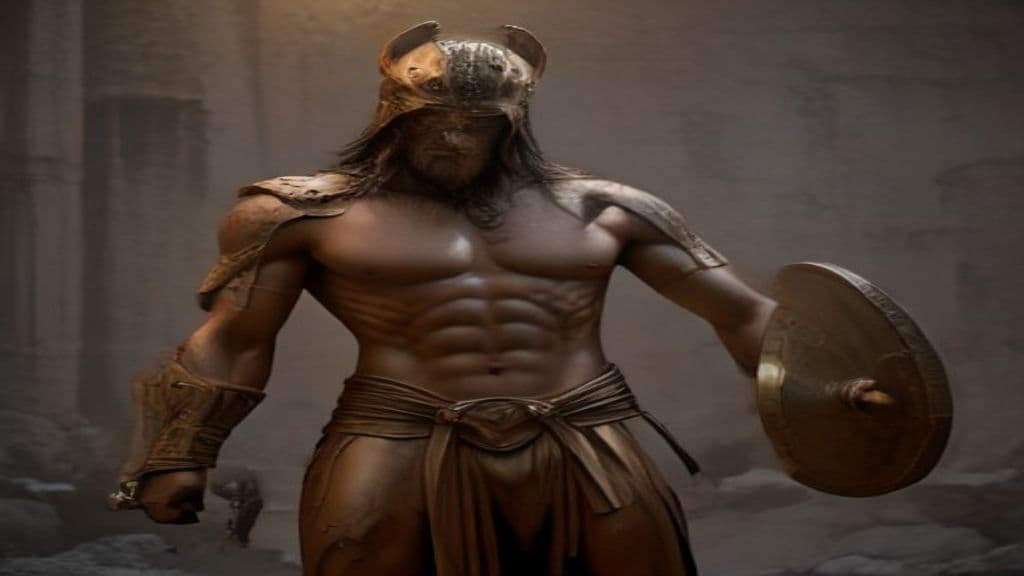
Demoleon (Ancient Greek Δημολέων) is a mortal Trojan warrior of the Homeric tradition, named as a son of Antenor and Theano. He is portrayed as a valiant, defensive fighter who is killed by Achilles during the Trojan War; later tradition links his family to postwar foundation legends (e.g., Patavium).

Demolition Team
Minor Spirit

Demolition Team

The Demolition Team is a fictional mercenary crew in the DC Comics universe, assembled to perform large-scale destructive operations using specialized heavy-equipment. Introduced in Green Lantern #176 (May 1984), they operate as hired specialists who clash with superheroes and law enforcement in urban settings.

Demon (tradition)
Lesser

Demon (tradition)

A broadly attested category of harmful or malevolent supernatural beings found across many cultures, used to explain illness, death, misfortune, temptation, and social disruption. The concept is historically flexible, ranging from neutral intermediary spirits in ancient contexts to negatively valenced agents in many later religious traditions, and is the object of ritual responses such as exorcism or magical conjuration in some traditions.

Demon Cat
Lesser

Demon Cat

The Demon Cat (also called the D.C.) is a legendary ghostly feline in Washington, D.C. folklore said to haunt government buildings—most notably the United States Capitol and the White House. Tales describe ordinary cat-sized sightings that allegedly swell to enormous proportions and appear as omens before major political events; skeptical accounts attribute sightings to misperception or occupational prank culture among guards.

Demon Lord Dante
Ancient

Demon Lord Dante

Demon Lord Dante (魔王ダンテ, Maō Dante) is a fictional primordial demon-leader from Go Nagai's manga/anime property. In the narratives Dante is an ancient combatant against autonomous 'gods', sealed in the past and later reborn or reawakened, alternating between human incarnations and fused demonic forms.

Demonassa
Minor Spirit

Demonassa

Demonassa (Ancient Greek: Δημώνασσα) is not a supernatural being in the supplied sources but a personal name attested to several mortal women in Greek mythographic and literary traditions and later reused in biological taxonomy. Attestations include multiple mythic genealogical figures, a rhetorical anecdote of a Cypriot lawgiver, and later literary stock-character uses (notably Corinthian sexualized roles). The same lexical form is also applied in modern zoological nomenclature (a beetle genus and insect species epithets).

Demonice
Lesser

Demonice

Demonice (Ancient Greek: Δημονίκη, romanized Dēmoníkē) is the personal name of two mortal women recorded in Greek mythographic and prosopographical sources: one a daughter in a Pleuronian genealogy and the other a maiden of Ephesus associated with an anecdote about Brennus. The sources treat Demonice as named human/legendary figures rather than a class of supernatural beings.

Demonice of Aetolia
Lesser

Demonice of Aetolia

Demonice (Ancient Greek: Δημονίκη, also attested as Δημοδίκη / Demodoce) is a mythic Aetolian princess in Greek genealogical tradition. She is presented as a mortal daughter of King Agenor of Pleuron who consorted with the god Ares and bore sons whose names serve as eponyms for local rivers, cities, and peoples of Aetolia and neighbouring regions.

Demons in Mandaeism
Greater

Demons in Mandaeism

In Mandaean cosmology, 'demons' are the hostile inhabitants of the World of Darkness, a structured underworld of kings, paired rulers, guards and lesser spirits that oppose the beings of Light. They appear throughout Mandaean scriptures (notably the Right Ginza and Diwan Abatur) as named personages, consorts, matarta (gate) guards, devourers and other functionaries encountered in mythic descent narratives.

Demophon of Athens
Lesser

Demophon of Athens

Demophon (Δημοφῶν / Δημοφόων) is a legendary Athenian hero and king of the heroic age whose narrative links the Theseus-cycle, the post‑Trojan War returns, and foundation stories for Athenian institutions. He appears in varied traditions as a Trojan War veteran, host to the Heracleidae, founder of the court of the Ephetae after an accidental homicide, and as party to the Phyllis/Acamas cycle of tragic return.

Demoptolemus
Minor Spirit

Demoptolemus

Demoptolemus (Ancient Greek: Δημοπτόλεμος) is a mortal figure named among the suitors of Penelope in the Homeric epic tradition. He is listed as one of the suitors present in Odysseus’s hall and is reported in the narrative tradition to have been killed during Odysseus’s slaughter of the suitors (Odyssey Book XXII).

Denethor II
Lesser

Denethor II

Denethor II is the twenty-sixth Ruling Steward of Gondor in J. R. R. Tolkien's legendarium: a human political leader of great will and foresight whose secret use of a palantír and ensuing despair lead to his tragic self-destruction during the War of the Ring.

Deoha
Lesser

Deoha

Deoha is the name of a river — a tributary of the Ramganga — that rises in the Shivalik Hills and flows through Uttarakhand into the plains of Uttar Pradesh, where it is known by the name Deoha and further downstream as the Garra. The supplied sources contain no documentation of a supernatural household guardian or offended spirit called Deoha or Deoha‑Rooh.

Deor
Minor Spirit

Deor

A poet and subject of an Old English poem found in the Exeter Book, reflecting on misfortune attributed to him. (Note: 1. Power tier should be Primordial, as it's an Old English poem and subject, not a supernatural entity with defined abilities. 2. Add description of Deor's reflection on misfortune from Source 1 as se)

Dercetis
Lesser

Dercetis

Dercetis is a Boeotian naiad (freshwater nymph) known from Roman-era retellings of Greek myth. In Statius' Thebaid (as summarized in modern references) she is portrayed as sexually aggressive toward a youth named Lapithaon, producing a son, Alatreus, who later appears among the martial generation associated with the war of the Seven against Thebes.

Deriades
Lesser

Deriades

Deriades (Ancient Greek: Δηριάδης) is a mythic Indian king in Nonnus of Panopolis’s late antique epic the Dionysiaca. He is the principal human antagonist to the god Dionysus during the poem’s account of the Indian campaign, a mighty mortal ruler of divine parentage who commands vast armies and ultimately is driven into the river Hydaspes.

Dero
Lesser

Dero

Dero refers to two distinct referents in the provided material: (1) an ancient Greek Nereid, Δηρὼ, listed among the fifty sea-nymph daughters of Nereus and Doris; and (2) a modern twentieth-century fringe/pulp concept (often written "dero" or rendered as "detrimental robots") describing small, malicious subterranean beings or machine-users from Richard Sharpe Shaver's mythos and later fringe literature.

Destroying angel
Ancient

Destroying angel

A divinely commissioned heavenly agent in the Hebrew Bible and later Jewish traditions sent by God to execute judgment, death, or punishment. The figure functions as an instrument of divine justice (mal'āḵīm / memitim / mashḥit) and appears in narrative episodes of plague, wartime slaughter, and in rabbinic and Enochic writings connected to postmortem or eschatological punishment.

Deucalion
Lesser

Deucalion

Deucalion (Ancient Greek: Δευκαλίων) is a mortal culture-hero in Greek myth who survives a divinely-sent primeval flood and, with his wife Pyrrha, re-populates the world by throwing stones that become humans. He is portrayed as a king, founder of cities and temples, and son of Prometheus in many traditions.

Deucalion of Crete
Greater

Deucalion of Crete

Deucalion of Crete is a mytho-historical Cretan king in Greek tradition, named among the Argonauts and the Calydonian Hunters and placed in genealogies as a son (often eldest) of Minos. He functions as a heroic/dynastic figure within the Age of Heroes rather than as a divine or supernatural being.

Deutsche Mythology
Ancient

Deutsche Mythology

A collection of mythological narratives representing the collective myths, legends, and beliefs of ancient Germanic cultures. (Note: 1. Power tier: Primordial (Deutsche Mythology as a collective mythological narratives does not have supernatural abilities and behaviors attributed to it; rather, it contains those of individual Germa)

Dev (Dēw / Div)
Greater

Dev (Dēw / Div)

A class of hostile supernatural beings in Persian and wider Middle Eastern/Iranian-related lore; in Persian popular tradition labeled monstrous creatures or fiends, and in Zoroastrian scripture (as Avestan daeva) explicitly framed as 'gods that are (to be) rejected.'

Deva (Buddhism)
Ancient

Deva (Buddhism)

In Buddhist cosmology a deva is a class of celestial being or heavenly rebirth occupying higher planes than humans; devas are longer‑lived, more powerful, and generally happier than humans but remain impermanent and subject to karma. The category spans formless meditative beings through subtle form devas to sensual gods, and maps onto the three dhātus (Ārūpyadhātu, Rūpadhātu, Kāmadhātu).

Devala
Ancient

Devala

Devala is a Vedic/Hindu rṣi and ancestral founder-figure in Devanga community tradition and also appears in Pāli/Buddhist literature as an ascetic seer (Asita Devala). In Hindu Devanga Purāṇa accounts he is the mythic originator and teacher of weaving and the eponymous ancestor of the Devanga weaver community; in Buddhist suttas he functions as an interlocutor and seer in doctrinal exempla.

Devana (Dziewanna)
Lesser

Devana (Dziewanna)

Devana (Polish Dziewanna; Latin Dzewana / Zevana / Zievonia) is a Western Slavic female sacred figure associated with wild nature, forests, hunting and, by medieval interpretatio, the Roman Diana. She appears in fragmentarily attested village seasonal rites—notably effigy processions and drowning on Laetare/White Sunday—and in later folkloric reports tying her to huntress imagery and the plant name for Verbascum (mullein).

Devaraja
Ancient

Devaraja

Devaraja (Sanskrit: deva-rāja) is a religious-political concept of sacred kingship in ancient and medieval India and Southeast Asia in which a living monarch is ritually invested as a divine or deified ruler and thereby linked institutionally to a temple cult and specific deities (notably Shiva or Vishnu). It functions as an office and state ideology that sacralizes royal authority and integrates the kingdom with a cosmic order.

Devata
Lesser

Devata

Devata denotes a class of divine or godlike beings in South and Southeast Asian Hindu and Buddhist traditions. The term covers specialized, often localized presences (village, household, forest, directional guardians) and in some contexts overlaps with the broader category deva; devatas are integrated into lived ritual practice across India, Sri Lanka, Bali, and neighboring regions.

Devi
Ancient

Devi

Devi (Sanskrit: Devī) is the general term for goddess in Indian religious thought, signifying the divine feminine or Shakti; in different texts and traditions she appears as individual goddesses (e.g., Parvati, Lakshmi, Saraswati) or as the supreme reality (notably in Shaktism and certain Upanishads). Sources treat Devi both as a class/category of female divinities and as a philosophical identification with ultimate reality.

Devil
Ancient

Devil

A cross-cultural mythic personification of evil and hostile forces, used in religious, literary, and popular contexts to explain temptation, moral corruption, disease, death, and misfortune. Its exact cosmological status varies by tradition, ranging from an independent principle of evil to a created being that became evil or a symbolic embodiment of human wickedness.

Devil Dinosaur
Greater

Devil Dinosaur

Devil Dinosaur is a red-skinned, Tyrannosaurus-like prehistoric creature from Marvel Comics, native to the alternate-Earth 'Dinosaur World' (Earth-78411). Created by Jack Kirby, he forms a close partnership with Moon-Boy and later befriends Moon Girl in modern stories; he appears both in his home continuity and occasionally in Earth-616 and crossover narratives.

Devil Hulk
Greater

Devil Hulk

An internal, personified alternate personality within Bruce Banner's mind in Marvel Comics that embodies his deepest resentment, self-hatred, and desire for a punitive father-figure; chiefly active in Banner's mental landscape but, when dominant, capable of manifesting physically with destructive gamma-augmented powers.

Devil horse
Lesser

Devil horse

A polyvalent folkloric and cultural label applied to horses or horse-shaped phenomena interpreted as malevolent, uncanny, or diabolically influenced in disparate literary, toponymic, and cinematic sources. The term appears in place-name folklore, fiction, film titles, and as an epithet attached to ordinary horses, but the sources do not present a single, coherent supernatural taxonomy for a discrete species called "Devil horse."

Devil's Grandmother
Greater

Devil's Grandmother

A named folkloric figure in Northern European (especially German-speaking) tradition who appears in fairy tales and proverbs as the Devil's grandmother (Teufels Großmutter / Teufels Mutter) or regional variants (die alte Frick, alte Fuik). She is ambivalent in function: in some tale cycles a helpful elder who intervenes for mortals, in other regional lore a fearsome sorceress who presides over witch-sabbaths and commands dangerous supernatural entourage.

Devil-Slayer (Eric Simon Payne)
Lesser

Devil-Slayer (Eric Simon Payne)

A fictional American comic-book vigilante who is a former cult member turned occult monster-hunter; a human practitioner who combines trained martial and marksmanship skills with a mystically created "shadow cloak" that permits limited dimensional travel and other paranormal effects.

Devils Tower (Lakota Tradition)
Minor Spirit

Devils Tower (Lakota Tradition)

A spiritual site with significant cultural and historical importance to the Lakota people, considered a 'bear lodge' for vision quests. (Note: * Power tier: should be Primordial (cosmic in scope), as it's a significant and culturally important site for the Lakota people. * Summary: while accurate, it could be more detailed to reflect the cul)

Dewi Danu
Ancient

Dewi Danu

Dewi Danu is the Balinese Hindu water goddess central to the island's Agama Tirta / Agama Tirtha ritual system. She is particularly associated with the crater lake near the peak of Mount Batur and the Ulun Danu Batur temple, where seasonal offerings are made to secure and give thanks for irrigation water that sustains terraced rice agriculture.

Dewi Lanjar
Greater

Dewi Lanjar

Dewi Lanjar is a Javanese/Indonesian female sea spirit often called the Queen of the Northern Sea and closely associated with the coast of Pekalongan (Pantai Utara). In local legend she is a transformed princess who commands jinn, has a recognized palace on the Pekalongan shore, and is paired cosmologically with Nyai Roro Kidul, the Queen of the Southern Sea.

Dewi Ratih
Greater

Dewi Ratih

Dewi Ratih is a Hindu-derived lunar goddess worshipped in Java and Bali, revered for her beauty and associated with the Moon and the explanation of lunar eclipses. She is honored in recurring Balinese full-moon (purnama) ceremonies that celebrate the Moon's beauty alongside the lunar god Chandra.

Dewi Sri
Ancient

Dewi Sri

Dewi Sri (also Shridevi, Nyai Pohaci Sanghyang Asri in Sundanese contexts) is the indigenous rice-and-fertility goddess of parts of the Indonesian archipelago (Java, Bali, Lombok and surrounding islands). She is a living cultic presence in village ritual life believed to preside over rice, household and communal prosperity, and the prevention of famine; in Hindu-influenced contexts she is often equated or syncretized with the Sanskritic goddess Sri/Lakshmi.

Dexamene
Lesser

Dexamene

Dexamene (Greek: Δεξαμένη) is one of the fifty Nereids, the sea-nymph daughters of the sea-god Nereus and the Oceanid Doris in Greek myth. She is named in genealogical lists of the Nereids but has no individually attested myths or distinct cult practices in the cited sources.

Dexamenus
Lesser

Dexamenus

Dexamenus (Ancient Greek Δεξάμενος) is a name applied to multiple mytho-historical mortal figures in Greek tradition—chiefly local kings or eponymous ancestors associated with Olenus and Ambracia—best known from tales in which Heracles rescues a daughter from the centaur Eurytion. The name literally means 'hospitable' or 'receiver' and functions as a host-figure and genealogical anchor in regional heroic narratives.
Dexiua (Dexiva)
Lesser

Dexiua (Dexiva)

Dexiua (also rendered Dexiva) is an ancient local Celtic goddess attested in inscriptions found at Castellar. She is known from epigraphic evidence and is otherwise unattested in surviving mythological narratives or ritual descriptions in the provided sources.

Dexiva
Lesser

Dexiva

Dexiva (attested Dexiua, Dexsiua) is a local Celtic theonym attested in inscriptions from the oppidum of Castellar (modern Cadenet, southeastern France). Her cult in the Roman period is attested by votive inscriptions and offerings; she appears as an eponym for the local tribal designation Dexivates and is sometimes invoked alongside other deities (Mars; the Caudellenses).

Deïmachus
Lesser

Deïmachus

Deïmachus (Greek: Δηῖμαχος/Δηϊμάχης) is a personal name borne by several mortal men in Greek myth. Bearers of the name appear as regional princes or kings and as companions of major heroes (notably Heracles), occurring across genealogical and epic narratives rather than representing a single supernatural entity.

Dhadu Monara
Primordial

Dhadu Monara

In Sri Lankan folklore, Dhadu Monara is a legendary pre-historic aircraft associated with King Ravana's reign. The Department of Archaeology has rejected the story as fiction due to lack of evidence. (Note: 1. Power tier should be Ancient, not Primordial, as it's described as a mode of transportation used by King Ravana, implying deity-level abilities. 2. The Department of Archaeology has rejected the st)

Dhampir
Lesser

Dhampir

A figure from Balkan folk belief described as the offspring of a vampire and a human. Dhampirs occupy an intermediate social and ontological position — generally living among humans while inheriting certain capacities or markers associated with vampire-kind, and in many traditions are associated with the role of specialist vampire-hunters.

Dhanvantari
Ancient

Dhanvantari

Dhanvantari is the divine physician in Hindu tradition, identified as an avatar of Viṣṇu who emerges from the Samudra Manthana bearing the pot of amṛta and is credited in Purāṇic and later accounts with promulgating and systematizing Āyurveda. He appears both as a cosmic being born from the churning of the Ocean of Milk and in later Purāṇic narratives as a terrestrial king/teacher who transmits medical knowledge.

Dhanyamalini
Lesser

Dhanyamalini

Dhanyamalini (also Dhanyamala, Dhanyamali, Dhanyamālinī) is named in Ramayana tradition as one of Rāvaṇa's wives — frequently listed among his many junior wives — and is cited in some recensions as the mother of notable sons such as Atikāya and, in other versions, Narantaka, Devantaka, and Trishira. The extant sources provided record her relational and genealogical role within Rāvaṇa's household but do not attribute independent deeds or supernatural functions to her.

Dharmanātha
Ancient

Dharmanātha

Dharmanātha is the fifteenth Tirthankara of Jainism's present age (Avasarpini). Sources state he attained siddhahood (liberation by destroying all karma) and is portrayed in tradition as a supreme spiritual teacher who establishes the ford (tīrtha) across saṃsāra.

Dharmapāla
Greater

Dharmapāla

In Buddhist traditions, a dharmapāla is a protective deity or guardian whose role is to defend the Dharma (the Buddha's teaching) and to avert obstacles to spiritual practice. Appearing across Mahāyāna and Vajrayāna contexts (notably Tibetan, Chinese, and Japanese), dharmapālas range from local worldly guardians to wrathful enlightened emanations invoked in tantric ritual.

Dharmathakur
Lesser

Dharmathakur

Dharmathakur (also Dharmaraj or Dharma) is a locally venerated village deity of the Rarh region of West Bengal associated in local practice with death, justice, and fertility. His cult centers on communal worship (notably the Dharmer gajan), non‑figurative stone images and terracotta horse votives, and shows layered syncretism between popular agrarian forms and later Brahminical textualization.

✦
Ancient

Dhu'l‑Qarnayn

A Qur'anic figure (Surah al‑Kahf 18:83–101) presented as a powerful, God‑guided travelling ruler who journeys to the limits of the inhabited world and erects a barrier that restrains Gog and Magog until the eschatological hour.

✦
Lesser

Dhu'l‑Suwayqatayn

An eschatological human figure named in Islamic hadith literature, described as an Abyssinian man with 'two thin legs' who will dismantle the Kaʿba and remove its treasure as a sign of the Last Days.

Dhuʾl-Khalasa
Lesser

Dhuʾl-Khalasa

Dhuʾl-Khalasa (al-Khalasa) is attested in early Islamic literature as a pre-Islamic southern Arabian cult-centre and/or idol—described variously as a deity, the shrine/house associated with that deity, or the name of its worshippers. Islamic-era sources portray it as a regional “Southern Kaʿba” used for communal ritual and divination and record its demolition on the Prophet’s order shortly after the Islamic conquest.

Dhū Samawī
Ancient

Dhū Samawī

Dhū Samawī (Dhū Samuī, Dhu Samawi) is a pre-Islamic South Arabian deity attested in the Kingdom of Saba context and worshipped as a sky or heavenly god. He is described as 'He of the Heavenly' or 'The Heavenly One' and was called Malik al-Dhū Samāwī ('Lord of the Heavens'). His cult is attested especially in the city of Najran and in inscriptions that record cultic offerings, confession, penance, and fines.

Dhūmāvatī
Ancient

Dhūmāvatī

Dhūmāvatī (Dhumavati) is one of the ten Mahavidyas in Tantric Shakta traditions, a fearsome aspect of the Great Goddess associated with widowhood, inauspiciousness, cremation grounds, and desolation. She is represented as an old crone figure and figures in Tantric iconographic and devotional material as the embodiment of loss and marginality.

Di Penates
Minor Spirit

Di Penates

In ancient Roman religion the Di Penates are household divinities (dii familiares) associated with the storeroom and the material basis of family life; they are invoked in domestic rituals and also appear as public sacred objects (Penates Publici) connected to Rome's civic cult and foundation myth. They function as guardians of household provisions and as intimate protectors of household continuity rather than as distant, high gods.

Di inferi
Ancient

Di inferi

A ritual-technical collective in Roman religion denoting the gods and powers 'below' (the underworld), the di inferi comprise chthonic deities, ancestral forces (often overlapping with the Manes), and other underworld entities who receive burnt offerings and are propitiated outside Rome's sacred boundary.

Di sma undar jordi
Lesser

Di sma undar jordi

Di sma undar jordi are a Gotlandic class of small, subterranean 'hidden people' (Gutnish: Di sma undar jordi; Swedish: de små under jorden) who act as caretakers of farms, people, and animals so long as they are not angered. They belong to the regional underjordiska/vættir-like tradition and are normally invisible except under a peculiar viewing condition recorded in local tales.