Entity Index

A record of the unseen, drawn from world folklore.

7685 entities · page 49 of 129

Dames blanches
Lesser

Dames blanches

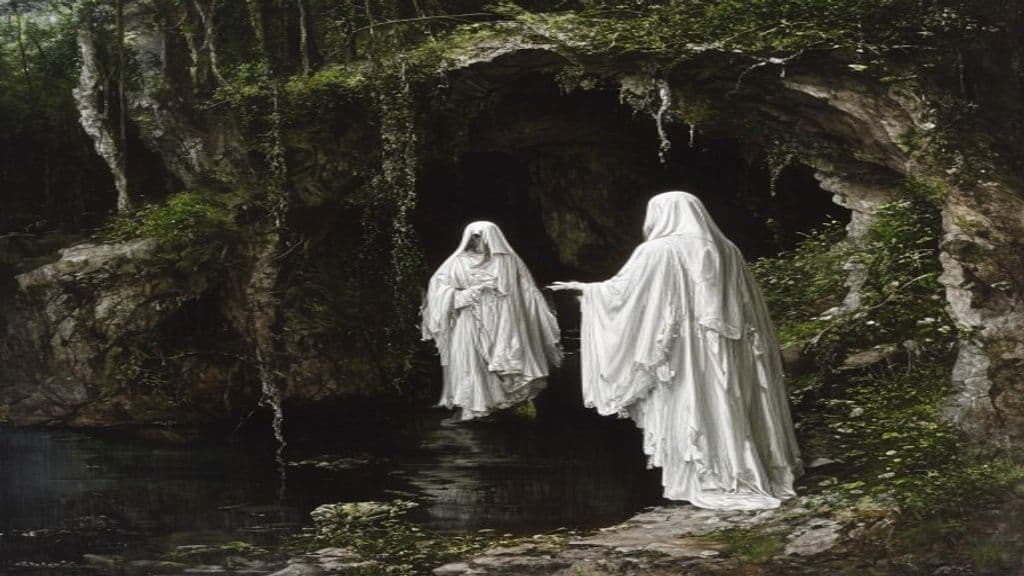
Female supernatural figures in French regional folklore, the Dames blanches ("white ladies") are liminal spirit-beings associated with bridges, ravines, caves, rivers and other narrow places. They demand deference from passersby (dance, kneeling) or act as nocturnal washerwomen omens of death in related traditions, with responses to them grounded in behavioral avoidance or compliance rather than formal rites.

Damgalnuna (Damkina)
Lesser

Damgalnuna (Damkina)

Damgalnuna, commonly called Damkina, is a Mesopotamian goddess attested as the consort of the god Enki/Ea. She is associated in surviving summaries with ritual purification and with interceding on behalf of human supplicants; she appears in multiple myths and had cult centers such as Eridu and Malgium.

Damian Wayne
Lesser

Damian Wayne

Damian Wayne is a modern fictional character from American comic books (DC Comics), introduced as the biological son of Bruce Wayne and Talia al Ghul and established as the fifth character to assume the Robin identity. He functions as a legacy figure who embodies tension between the Wayne/Bat tradition and the al Ghul/League of Assassins lineage across main-continuity and Elseworlds stories.

Damno
Lesser

Damno

Damno is a figure in Greek mythographic genealogies identified as an Egyptian princess, daughter of King Belus, who in some accounts marries Agenor and is mother to Isaia (Isaie) and Melia. She functions primarily as a dynastic link in origin myths rather than as an independently active mythic character.

Damona
Lesser

Damona

Damona is a Romano-Celtic healing goddess attested in Latin votive inscriptions from Roman-period Gaul. She is a sanctuary deity of curative mineral and thermal springs, invoked for health, fertility, and therapeutic incubation; archaeologically she is known from sanctuary contexts and a fragmentary cult statue.

Damu
Greater

Damu

Damu is a Mesopotamian deity attested from the Ur III period onward whose character shifts over time from an early 'dying/vegetation' figure to a later, better-documented role as a healing god associated with medicine-goddesses and cult centers such as Isin.

Damyanti
Ancient

Damyanti

A Dayan witch of approximately 800 years — named for Damayanti of the Mahabharata, her power has grown to command weather, disease, and the spirits of the dead across an entire district.

Damysus (Damysos)
Lesser

Damysus (Damysos)

Damysus (also spelled Damysos) is named in the supplied sources as one of the Giants (Gigantes) of Greek mythology and is specifically described as "the fastest of all the Giants." No further narrative, genealogical, or iconographic details are provided in the cited material.

Dan (king)
Minor Spirit

Dan (king)

No folkloric or supernatural entity called 'Dan (king)' is documented in the supplied sources. The term appears in reference works as a label that can denote historical or legendary kings of Denmark, biblical figures, or various personal and place names, but not as a distinct spirit, deity, or monster in the provided materials.

Dan Turpin
Lesser

Dan Turpin

Dan Turpin is a fictional human police inspector created by Jack Kirby for DC Comics, best known as a tough, streetwise member and later lieutenant of the Metropolis Special Crimes Unit who becomes involved in storylines that intersect ordinary law enforcement with cosmic-level events.

Danaids
Lesser

Danaids

The Danaids are the fifty mortal daughters of Danaus in Greek myth who, at their father's command, murdered their husbands on their wedding night (all but Hypermnestra) and were thereafter condemned in the afterlife to an eternal, futile labor of carrying water in sieves or perforated vessels.

Danais
Minor Spirit

Danais

Danais is an individuated naiad (freshwater nymph) of a well or fountain at Pisa in Elis in Greek myth. She is attested in classical summary sources as a lover or consort of Pelops and in some traditions named as the mother of Chrysippus.

Danand
Lesser

Danand

Danand (also Donann) is an Irish mythological ancestress attested in medieval genealogical texts as the mother whose offspring give their name to the Tuatha Dé Danand. She functions primarily as an eponymous mother-figure in manuscript traditions and is sometimes conflated with other maternal sovereignty goddesses in later compilations.

Danaus
Lesser

Danaus

Danaus is a mythic founding-king figure in ancient Greek tradition, remembered as the eponymous ancestor of the Danaids and as a culture-hero whose migration from Egypt/Libya to Argos explains local institutions, place-names, and cultic associations in archaic and classical lore.

Danava
Greater

Danava

In Hindu tradition the danavas are a legendary race of asuras, descended from the sage Kashyapa and his wife Danu. Presented variously across Vedic, epic, and Puranic sources, they are frequently cast as kinsmen and antagonists of the devas, with portrayals ranging from ambivalent actors in early Vedic material to oppositional forces in later literature.

Danaë
Lesser

Danaë

Danaë is an Argive princess of Greek myth, daughter of King Acrisius, who becomes the mother of the hero Perseus after Zeus visits her in the form of 'golden rain'. Her narrative illustrates oracle-driven fate, exposure and survival motifs, and later founding traditions linking Greek heroic genealogies to Italic locales.

Danaïdes
Lesser

Danaïdes

In ancient Greek myth the Danaïdes are the fifty daughters of Danaus, king of Libya, who—at their father's command—all but one killed their husbands on their wedding night and were punished in the underworld with the eternal, futile labor of carrying water in sieves or perforated vessels. They function as a collective genealogical and moral exemplar in Argive tradition and appear in various literary, cultic, and artistic contexts.

Dandan (dendan)
Lesser

Dandan (dendan)

A monstrous, enormous sea-fish from the One Thousand and One Nights tale "Abdullah the Fisherman and Abdullah the Merman," presented as the largest and most fell of sea creatures; its liver-fat is said to serve as an ointment enabling humans to survive underwater, while paradoxically the creature is described as vulnerable to certain human-related conditions.

Dando's Dogs
Lesser

Dando's Dogs

Dando's Dogs are an English folkloric pack of spectral hounds tied to the tale of a sinful huntsman named Dando. They are classed among English 'black dog' apparitions and described as taking part in the Wild Hunt; tradition reports their sounds on early Sunday mornings as they pursue game or search for their master after his abduction.

Daniel (angel)
Greater

Daniel (angel)

Daniel is an angelic figure attested in two distinct textual contexts: as the seventh of the 20 Watcher leaders among the 200 angels in the Book of Enoch tradition who taught the 'signs of the sun' to humans, and as a named entry among the 72 holy angels of the Shemhamphorae in Francis Barrett's The Magus.

Dantalion
Greater

Dantalion

Dantalion is a named spirit appearing in grimoire-derived occult tradition (the Ars Goetia corpus), described in modern occult encyclopedias as a high-ranking Duke who commands legions and is reputed to teach arts and sciences and to know and influence human thoughts.

Dante (Devil May Cry)
Greater

Dante (Devil May Cry)

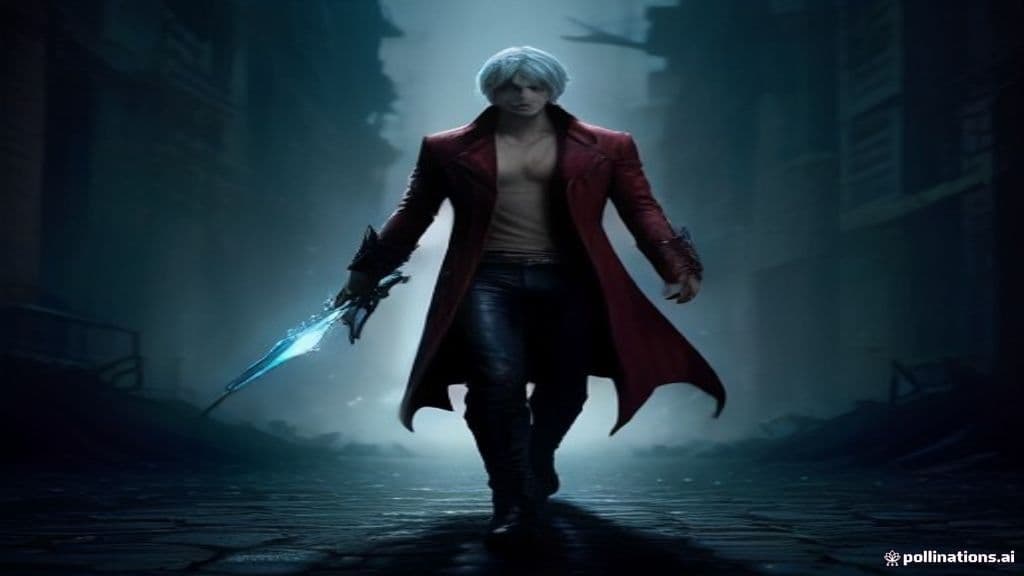
Dante is the fictional protagonist of Capcom's Devil May Cry video game franchise and related media. Portrayed as a stylish demon-hunting action hero, he appears across multiple game installments (including a prequel depicting a younger Dante) and in animated/adapted works.

Dante's Satan
Ancient

Dante's Satan

In Dante Alighieri's Inferno (Canto XXXIV) Satan is the immobilized, diminished former angel who occupies the lowest point of Hell (the Ninth Circle, Judecca). He is the poetic embodiment of pride and the ultimate traitor, frozen in the central ice while eternally chewing the three chief traitors.

Danu
Ancient

Danu

Danu is a reconstructed Irish mother goddess name associated with the Tuatha Dé Danann — the name Tuatha Dé Danann is glossed as 'the peoples of the goddess Danu'. The name is also linked in comparative material to a pan‑Indo‑European river/goddess motif and to cognate deities in other traditions, though primary medieval Irish texts do not preserve a detailed mythology or iconography for her.

Danuvius
Minor Spirit

Danuvius

Danuvius is a Latin toponym that appears in two distinct referents in the supplied sources: (1) a Latin name for the Danube and an ancient Roman river-deitypersonification; and (2) a modern paleontological genus name, Danuvius guggenmosi, applied to an ~11.6-million-year-old fossil ape discovered in southern Germany. The sources treat these as separate uses of the same Latin/place-rooted name rather than a single folkloric being.

Danzaburou-danuki
Greater

Danzaburou-danuki

Danzaburou-danuki is a localized Sado Island manifestation of the bake-danuki: a shapeshifting tanuki spirit famed in Aikawa and surrounding locales for illusions, trickery, occasional benefaction, and a folkloric status as leader of the island's tanuki who was said to have been deified locally as Futatsuiwa Daimyoujin.

Daode Tianzun
Ancient

Daode Tianzun

Daode Tianzun (道德天尊, 'Heavenly Venerable of the Way and its Virtue') is one of the highest deities in Taoist cosmology, a member of the Three Pure Ones and the transcendent personification of the Dao (Way) and De (virtue). Closely identified with Laozi and commonly titled Taishang Laojun, he functions as a supreme heavenly teacher, object of worship, and ruler of the Taiqing (Great Pure Heaven).

Daolghas
Minor Spirit

Daolghas

Member of the Fianna, a band of warriors in Irish mythology, with supernatural abilities. (Note: * Power tier: Inconsistent with abilities described; should be Primordial or Ancient due to its cosmic/deity-level powers. * Abilities: Not entirely accurate; it's specifically stated that Daolghas ca)

Daoud
Minor Spirit

Daoud

Daoud is attested in the provided sources as a male personal name (given name and surname) used across Middle Eastern, North African, and South Asian contexts. The supplied material contains no evidence treating Daoud as a supernatural being within folklore or the Greyhawk setting; all mentions are biographical or documentary.

Daphne
Lesser

Daphne

Daphne (Ancient Greek Δάφνη) is a mythic woman or nymph in Greek tradition who, pursued by Apollo, is transformed by a deity into the laurel tree (Laurus nobilis). The story explains the sacred status of the laurel and its ritual use as Apollo's emblem and as the victor's wreath at the Pythian Games.

Daphnis
Lesser

Daphnis

Daphnis is a legendary pastoral youth in Greek literary tradition, presented as a Sicilian cowherd and an etiological figure for pastoral song. Various ancient authors portray him as beloved or taught by gods and nymphs; his love-affairs, suffering (blinding, petrifaction, or death), and posthumous cultic commemoration at a spring make him a liminal bridge between humans, nature-spirits, and the divine.

Dara II
Ancient

Dara II

Dara II (also Darab II) is a mytho-historical king in Iran's national tradition, presented as the last monarch of the Kayanian dynasty and generally identified with the historical Darius III. He functions in literary and political traditions as a terminal dynastic figure whose person is used to legitimate later houses and to explain foundation traditions for cities such as Dara and Darabgerd.

Darab-nama (Persian tradition)
Minor Spirit

Darab-nama (Persian tradition)

Historical romance novel from 12th-century Persia, with possible references to supernatural entities in Persian folklore. (Note: - Power tier: Primordial (due to its historical significance and cultural impact) - Summary: Needs more specific information on supernatural entity references - Appearance: No information provided in )

Daragang Magayon
Lesser

Daragang Magayon

Daragang Magayon is the heroine of a Bicol legend in the Philippines whose tragic life and death are the etiological explanation for the naming and formation of Mt. Mayon. Presented as a mortal maiden of extraordinary beauty, her story functions as a foundational regional myth and a cultural archetype of idealized beauty and tragic love.

Darak
Lesser

Darak

No attested supernatural being named 'Darak' appears in the provided sources. The term 'Darak' is documented as a toponym (places in Cameroon and Iran), as the Tagalog common name for rice bran used in traditional Philippine medicine, and as a personal or fictional proper name in varied modern sources. There is no corroborated ethnographic or mythological description of Darak as a spirit, deity, or monster in the consulted materials.

Darakh
Minor Spirit

Darakh

Darakh is not documented in the supplied sources as a supernatural being; the string 'Darakh' appears in the materials as a place-name in Nepal, a modern surname, a lexical item in a constructed language, and as a name used in fictional/fantasy settings. No folkloric cosmology, powers, appearance, or rituals for a spirit called Darakh are attested in the provided corpus.

Daramulum
Greater

Daramulum

Daramulum is a southeastern Australian Aboriginal sky-hero and ancestral figure associated with the major creator Baiame and with an emu-wife. He is embedded in rock‑art, sky knowledge (constellation identification), and initiation ritual practice, notably as a presence voiced through the bullroarer.

Darda'il
Ancient

Darda'il

In the cited Islamic tradition, Darda'il (Arabic: دردائيل, glossed 'Journeyers of God') are angels who travel the earth searching out assemblies where people remember God's name. The name is also attested as that of an angel invoked in exorcism; the figure appears in modern cultural references alongside other named angels.

Dardan (Shannara)
Minor Spirit

Dardan (Shannara)

In the supplied Shannara source fragments, Dardan is attested only as the personal name of one of the king's guards who was killed by a changeling. The name also exists in real-world onomastic and ethnonymic sources, but those uses are not connected to the fictional character in the provided materials.

Dardanians (Trojan)
Lesser

Dardanians (Trojan)

A named human people or subgroup in the Homeric Trojan tradition, repeatedly distinguished from the Trojans in epic formulae (e.g., the Iliad). Later Roman poets and classical writers used the ethnonym in genealogical and territorial discourse (Dardania, Dardanus).

Dardanus (son of Zeus)
Ancient

Dardanus (son of Zeus)

Dardanus is a mythic progenitor and eponymous founder in Greek tradition, named as a son of Zeus and the Pleiad Electra and presented as ancestor of the Trojan royal line and the namesake of places on the Asian shore of the Hellespont.

Darika
Greater

Darika

Darika is a legendary asura-like antagonist in the Bhadrakali/Bhagavathi narrative cycle of Kerala whose exceptional boon made him invulnerable to death by any man; his subsequent tyranny and defeat by the goddess Bhadrakali are ritually reenacted in the temple theatre Mudiyettu.

Dark Agnes de Chastillon
Lesser

Dark Agnes de Chastillon

Dark Agnes de Chastillon is a fictional 16th‑century French swordswoman created by Robert E. Howard. She appears as the protagonist of two complete historical‑adventure stories and one partial draft, and is portrayed as a red‑haired, short‑tempered martial heroine who operates as a human adventurer rather than a supernatural being.

Dark Lord
Greater

Dark Lord

A literary and media archetype representing the supreme antagonist: a centralized embodiment of evil, darkness, or death who commands lesser agents and opposes heroic protagonists. Treated in sources as a narrative trope rather than a discrete folkloric being.

Dark Urge
Lesser

Dark Urge

A player-selectable Origin character concept in the 2023 video game Baldur’s Gate 3: an amnesiac mortal identified as a Bhaalspawn whose narrative revolves around compulsions toward violence and the player's choices to resist or embrace that influence.

Darkhawk
Greater

Darkhawk

Darkhawk is an alien-manufactured android battle-suit stored in a dimension called Null Space whose operation is enabled when a human wearer activates a mysterious amulet and swaps places with the android; the human mind then controls the android body. The construct functions as a technologically explained, extra-dimensional combat shell within Marvel Comics continuity, most famously occupied by Christopher "Chris" Powell.

Darkseid
Ancient

Darkseid

Darkseid (born Uxas) is a fictional cosmic tyrant in DC Comics’ Fourth World mythos: ruler of Apokolips who seeks the Anti-Life Equation to compel the thoughts and emotions of sentient beings. He commands Apokoliptian forces and works through intermediaries; heroes and allied cosmic forces repeatedly oppose and sometimes defeat his schemes.

Darkspawn
Greater

Darkspawn

A fictional collective of monstrous, corrupted humanoid creatures from the Dragon Age setting (Thedas). They act as a spreading, subterranean threat tied to periodic calamities called Blights and propagate a supernatural disease called the Taint that can transform other beings.

Darkstars
Greater

Darkstars

The Darkstars are a fictional intergalactic policing corps created in DC Comics, founded by the Controllers (an offshoot of the Guardians of the Universe) via the Network for the Establishment and Maintenance of Order (NEMO). They operate as a technologically outfitted enforcement arm that uses powered exo-mantles to establish order across the cosmos and figure in storylines about institutional authority and decline.

Darna
Greater

Darna

Darna is a Filipino comic-book superheroine: the mortal girl Narda transforms into a transcendent warrior by means of a magical stone and the spoken name, acting as a protector and avenger against criminals and supernatural foes. Created in the post‑war era, Darna functions as a national popular‑culture icon that adapts folkloric amulet motifs into a modern heroine archetype.

Daruka
Ancient

Daruka

Supernatural charioteer in the Hindu tradition, associated with Arjuna in the Mahabharat. (Note: * Summary: Replace "Supernatural charioteer" with "Charioteer" since there's no evidence of supernatural abilities. * Power tier: Lower to Greater, as Daruka's abilities are not on the same level as d)

Daseatas
Lesser

Daseatas

Daseatas is a mythic Arcadian prince attested in ancient genealogical lists as one of the many sons of King Lycaon and is reputed as the eponymous founder of the Arcadian city called Dasea. He is known only from brief classical attestations summarized in modern reference works (notably Pausanias and Dionysius of Halicarnassus as cited in modern summaries).

Dasharatha
Lesser

Dasharatha

Dasharatha is the king of Kosala and ruler of Ayodhya in the Ramayana tradition, father of Rama, Bharata, Lakshmana, and Shatrughna. His life in the epic ties royal duty, Vedic ritual (notably the Puthrakamesti yagnam), oath-keeping, and karmic consequence together, culminating in Rama's exile and Dasharatha's death from grief.

Dashavatara
Ancient

Dashavatara

Dashavatara (Sanskrit: daśāvatāra) names a canonical set of ten principal incarnations of the Hindu god Vishnu, each a full descent (avatara) taken to restore cosmic order (dharma) at moments of great disorder. The list and order of the ten vary by Purānic and sectarian traditions; the concept functions across mythology, temple cult, and devotional practice.

Datsue-ba
Lesser

Datsue-ba

A supernatural old-woman ogress figure in Japanese Buddhist underworld imagery who sits by the Sanzu River and strips the deceased of their garments (or, in some accounts, their skin) as part of post-mortem judgement. She functions as a liminal, procedural agent within Ten Kings / Six Realms iconography rather than as a creator or cosmic force.

Dattatreya
Ancient

Dattatreya

Dattatreya is a Hindu divine figure venerated as a paradigmatic sannyasi (renunciant), a lord of yoga, and a composite incarnation of the Trimurti (Brahma, Vishnu, Shiva). He functions both as an object of devotion and as an archetypal guru whose life and attributed texts inform monastic and yogic lineages, especially in regional traditions across the Deccan and the Himalaya.

Datu Daya
Lesser

Datu Daya

Datu Daya is a legendary lord and eponymous founder-figure of Kandaya (now Daanbantayan) on the northern tip of Cebu Island, Philippines. Remembered in local oral tradition as the ruler of the first settlers who established a defended community, he is commemorated in the annual Haladaya chants and dances.

Datuk Keramat
Lesser

Datuk Keramat

Datuk Keramat denotes a class of locally venerated shrine-presences—respected ancestral or saintly figures associated with keramat (sacred graves/shrines)—forming a syncretic cult in parts of Malaysia and Singapore. Shrines are typically yellow, often sited under trees or at junctions, and receive offerings (food, joss sticks, paper money) from Malay and Chinese devotees seeking protection, wealth, or favors.

Daughter of the Moon Goddess (Xingyin)
Greater

Daughter of the Moon Goddess (Xingyin)

A literary protagonist reimagining of the daughter of Chang'e in Sue Lynn Tan's novel Daughter of the Moon Goddess. Within the book's cosmology she is the child of the Moon Goddess Chang'e and the archer Houyi, raised on the moon and later hidden within the Celestial Court where her coming-of-age magic draws courtly attention.

Daughters of Danaus
Lesser

Daughters of Danaus

A collective of fifty royal daughters of Danaus in Greek mythology who flee forced marriages and, save one (Hypermnestra), obey their father's command to kill their husbands; later mythic tradition depicts them as condemned to an eternal, futile labor of carrying water in sieves or perforated vessels.