Entity Index

A record of the unseen, drawn from world folklore.

7685 entities · page 47 of 129

Crom Dubh
Lesser

Crom Dubh

Crom Dubh is a fluid mythological and folkloric figure from Irish tradition, variously represented as a remnant cultic god, a pagan chieftain or robber, a servant-figure, and the focal figure of seasonal first-fruits rites (Crom Dubh Sunday). In later narratives he is frequently framed as an antagonist subdued or reinterpreted by St. Patrick.

Cromm Cruac (Robin of Sherwood)
Ancient

Cromm Cruac (Robin of Sherwood)

Cromm Cruac is a reworking of the Irish figure Crom Cruach used in the British television series Robin of Sherwood as a named pagan locus of power. Historically attested in Christian sources as a pre‑Christian Irish deity whose worship Christian writers claim involved offerings, the television series presents 'Cromm Cruac' (episode title, 17 May 1986) as a place — associated in the episode with a lake — whose powers can be invoked in the drama.
Crommyonian Sow
Lesser

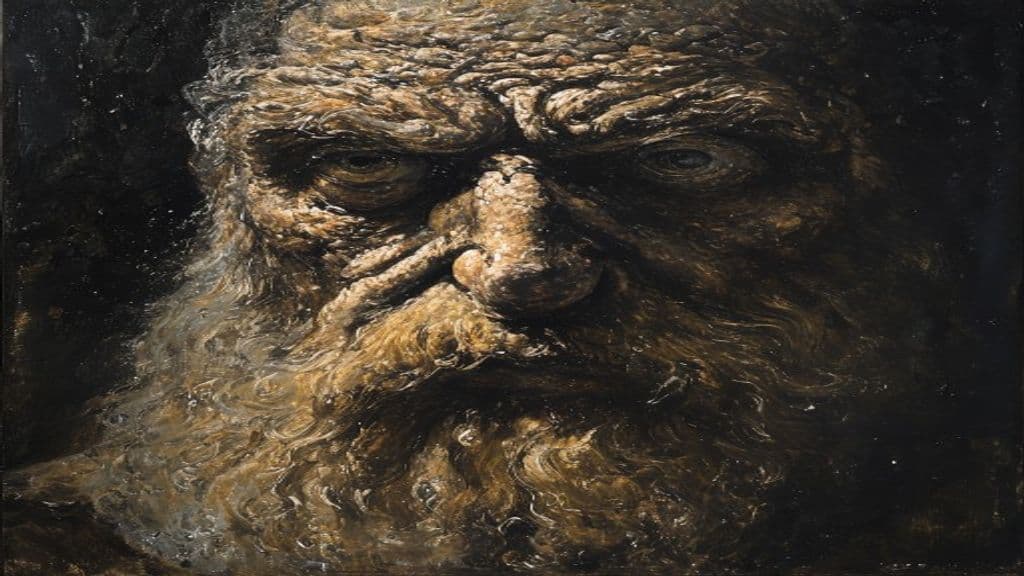
Crommyonian Sow

A monstrous wild pig from Greek heroic legend that terrorized the region around Crommyon on the Isthmus between Megara and Corinth. The creature — also called Phaea in some accounts — is slain by the culture-hero Theseus and appears in variant traditions as either an extraordinary beast or as a human outlaw nicknamed 'Sow.'

Crone
Lesser

Crone

A folkloric character-type of an older woman whose age and gender define her social and symbolic role. The crone appears ambivalently across traditions as a malicious hag, a stern tester or guardian, or a venerated wise woman and keeper of remedies and lore.

Cronopio dentiacutus
Minor Spirit

Cronopio dentiacutus

Cronopio dentiacutus is an extinct small insectivorous mammal species from the early Late Cretaceous of Patagonia (La Buitrera, Argentina). Described from partial skull and jaw material, it is named after Julio Cortázar’s fictional 'cronopios' and the Latin dentiacutus ('sharp-toothed'), and is placed among South American meridiolestidan/dryolestoid mammals.

Cronus
Ancient

Cronus

A principal Titan in ancient Greek myth, Cronus (Κρόνος) is the youngest leader of the Titans who overthrew his father Uranus, ruled in the mythic Golden Age, devoured his newborn children to avert a prophecy, and was later overthrown by his son Zeus and confined to Tartarus. He is associated in some traditions with the harvest and is later equated with the Roman Saturn.

Crotopus (Κρότωπος)
Lesser

Crotopus (Κρότωπος)

Crotopus is a legendary king of Argos in Greek mythic-historical tradition. He is depicted as a mortal ruler whose condemnation and execution of his daughter Psamathe for bearing Apollo's child provokes divine retribution (a plague on Argos) and leads to oracle-prescribed rites and, in some accounts, the king's exile and founding of a new city, Tripodiscium.

Croydon Cat Killer
Lesser

Croydon Cat Killer

A contemporary social and media label applied to an alleged perpetrator (or perpetrators) blamed for a large series of cat mutilations first reported in Croydon, South London, from 2014 onward. The term functioned as a focal agent in community fear, media coverage and police investigation, and was later reinterpreted by forensic reviews as more likely the result of vehicle trauma and wildlife scavenging.

Cruel Coppinger
Lesser

Cruel Coppinger

Cruel Coppinger is a semi-legendary Cornish figure—remembered as a foreign, fearsome smuggler/wrecker whose biographical fragments were elaborated into a dramatic folk narrative. Collected in 19th-century sources (notably Rev. R. S. Hawker's account published in All the Year Round) the tale blends probable historical persons (members of the Coppinger family) with folklore motifs of seizure, wrecking, illicit wealth, and a mysterious maritime disappearance.

Cruinniuc
Minor Spirit

Cruinniuc

Cruinniuc is a mortal figure in the Ulster Cycle of Irish mythology, described as a wealthy widower and cattle-owner of Ulster whose boast at a festival precipitates the events in which his pregnant wife, later revealed as Macha, is forced to race the king's chariot, gives birth to twins at the finish, and curses the men of Ulster.

Cryptid
Lesser

Cryptid

A contemporary classificatory label for animals or other beings whose present existence is disputed or unsubstantiated by mainstream science; used in folklore, eyewitness reports, and popular culture. The term functions as a category rather than a single mythic being and is central to the subculture of cryptozoology and to popular media treatments.

Ctesippus
Lesser

Ctesippus

Ctesippus (Greek Κτήσιππος, Ktēsippos) is an ancient Greek personal name attested for several distinct mortal figures in literary and mythographic sources: one or more sons of Heracles in genealogical lists, a wealthy and disorderly suitor of Penelope in the Odyssey, and a named minor interlocutor or symposium participant in Platonic dialogues. The attestations show recurring onomastic use rather than a single supernatural entity.

Ctesius (Κτήσιος)
Lesser

Ctesius (Κτήσιος)

Ctesius (Ancient Greek: Κτήσιος, 'belonging to property, acquisition') is a name applied in ancient Greek sources to multiple related referents: a mortal king of Syra (father of Eumaeus), a Homeric suitor of Penelope, a minor household divinity, and an epithet of Zeus indicating his proprietorial/household function. As Zeus Ctesius the name marks the god's manifestation within the private domestic sphere and the safeguarding of property and the oikos.

Cthulhu
Ancient

Cthulhu

A fictional cosmic entity created by H. P. Lovecraft and introduced in the 1928 story "The Call of Cthulhu." Presented in Lovecraft's fiction as one of the Great Old Ones: an immensely ancient, non‑human being that lies sleeping in the submerged city of R'lyeh and exerts a subconscious influence on humanity while inspiring cult worship.

Ctimene
Lesser

Ctimene

Ctimene (Ancient Greek Κτιμένη, romanized Ktiménē) is an Ithacan princess in Homeric genealogy — the daughter of Laertes and Anticlea, younger sister of Odysseus, and wife of Eurylochus. She appears in the Odyssey as a member of Odysseus’s household whose marriage and upbringing help situate social, kinship, and dowry practices in the epic world (Odyssey 15.361–379).

Ctimenus
Lesser

Ctimenus

Ctimenus (Ancient Greek: Κτιμένου) is attested in Greek mythographic records as a human genealogical figure — named as the father of the Argonaut Eurydamas and associated with Ctimene in Dolopian Thessaly. He is not described as a supernatural being; extant sources record only his genealogical role and note an alternative tradition giving Eurydamas different parentage.

Cuchavira
Lesser

Cuchavira

Cuchavira is the rainbow deity of the Muisca (of the Altiplano Cundiboyacense) associated with the appearance of the rainbow after storms. The figure functions as a protective and intercessory presence—thanked with offerings when sunlight returns after destructive rains—and is linked in mythic accounts with Bochica, Chibchacum, and the supreme being Chiminigagua.

Cuegle
Lesser

Cuegle

The cuegle is a monstrous figure from Cantabrian (northern Spain) folklore: a small, bipedal humanoid with grotesque features that attacks people and livestock and is reputed to steal babies from cradles. Household protection recorded in sources is placing oak or holly leaves in the cradle, which the creature is said to find repulsive.

Culhwch
Lesser

Culhwch

Culhwch is a mortal heroic figure of medieval Welsh narrative tradition, protagonist of the tale Culhwch and Olwen. A noble-born youth and cousin of Arthur, his story centres on a quest to win Olwen by completing a series of impossible tasks (anoethau) with the aid of Arthur and his warriors.

Culsu
Lesser

Culsu

Culsu is an attested name listed among Etruscan deities and legendary figures in modern compilations. Available sources provide only nominal attestation (the name and a modern label of 'goddess'); no independent ancient narratives, functions, iconography, or rituals are recorded in the supplied materials.

Cult of Dionysus
Ancient

Cult of Dionysus

A cult associated with the Greek god Dionysus, patron deity of wine, fertility, theater, and ecstasy. (Note: 1. Factual claim: The article states that Dionysus's original name 'Dionysus' (Διόνυσος) is derived from Linear B tablets as 𐀇𐀺𐀝𐀰 (di-wo-nu-so). However, the source material does not support this )

Cundī
Greater

Cundī

Cundī is a female Mahāyāna Buddhist deity and buddha‑mother invoked across Indian‑origin and East Asian Buddhist practice. She is primarily venerated through the Cundī dhāraṇī — a ritual mantra — together with a prescribed mudra and related ritual implements; recitation is credited with purifying karma, protecting practitioners, and hastening progress to buddhahood.

Cunizza da Romano
Minor Spirit

Cunizza da Romano

Cunizza da Romano (c.1198–1279) is a historical Italian noblewoman of the da Romano family who appears as a named soul in Dante Alighieri’s Divine Comedy (Paradiso Canto IX), located among the blessed of the heaven of Venus and presented as an exemplum of lives shaped by love.

Cunomaglus
Ancient

Cunomaglus

Cunomaglus is a Celtic epithet applied to the Greco‑Roman god Apollo at a Romano‑British sanctuary in Nettleton Shrub, Wiltshire. The name, translated as 'Hound Lord', appears on a votive inscription and marks a localized aspect of Apollo associated in the sources with hunting and possibly healing.

Cupid
Ancient

Cupid

Cupid (Latin: Cupīdō or Amor) is the Roman god of desire, erotic love, attraction, and affection, depicted in classical and later Western art and literature as a youthful, often winged figure whose arrows inspire love or aversion.

Curetes
Minor Spirit

Curetes

The Curetes (Greek Κουρῆτες, Kouretes) are a named group of ritual attendants or minor divine retainers associated with Aegean and Anatolian mother-goddess cults—primarily Rhea and Cybele. They are attested in ancient sources and modern reference works as dancing servants or ritual personnel whose name also survives in urban toponymy (e.g., Kouretes/Curetes Street at Ephesos).

Curupira
Lesser

Curupira

A Tupi–Guarani–area forest spirit who protects woods and wildlife by misleading, punishing, or rewarding humans according to their behavior; widely attested across Brazil and neighboring regions with many regional variants.

Cusco Quechua
Minor Spirit

Cusco Quechua

Cusco Quechua (Qusqu qhichwa simi / Qusqu runasimi) is a regional variety of Southern Quechua spoken in the city and Department of Cusco, Peru. It is part of the Southern Quechua grouping (including Puno and Bolivian varieties) and is the variety used and promoted by the Academia Mayor de la Lengua Quechua in Cusco; sources note debates over vowel analysis and orthography and list the variety as vulnerable in language-vitality metadata.

Cuélebre
Lesser

Cuélebre

A legendary long‑lived reptilian guardian from Asturian and Cantabrian folklore, depicted as a giant winged serpent or dragon that inhabits caves and watery liminal places, guards treasure, and is sometimes said to hold xanas (fairy‑like beings) captive. Folktales attribute to it senescent physical changes, a miraculous healing byproduct, and specific folkloric countermeasures.

Cyane
Lesser

Cyane

Cyane (Ancient Greek Κυάνη, Kuánē, 'dark blue') is a Sicilian water-nymph (naiad) associated with a spring or pool near Syracuse. In myth she attempts to block Hades' abduction of Persephone, pleads by citing her own consensual relationship with the river-god Anapus, and—after failing—dissolves into the waters of her pool; the spring is thereafter sacred and named for her.

Cyanippus
Lesser

Cyanippus

Cyanippus (Greek: Κυάνιππος) is a personal name attested for at least three distinct mortal men in Greek mythic traditions: an Argive/Achaean warrior-king connected to the Trojan Horse cycle, a Thessalian hunter whose dogs kill his wife, and a Syracusan who omitted worship of Dionysus and whose divinely induced crime leads to oracle-driven expiation. He is presented as human rather than as a supernatural being.

Cybele
Ancient

Cybele

An Anatolian mother goddess (Phrygian Matar Kubileya) whose cult centers on mountains, city protection, fertility, and wild nature; adopted and reinterpreted by Greek and Roman religion where she became associated with ecstatic rites, a eunuch priesthood (the Galli), and the Roman Magna Mater cult.

Cybernary
Lesser

Cybernary

Cybernary is a fictional comic-book character and the title of a WildStorm series; presented as a cybernetically enhanced human whose body and systems carry or host other consciousnesses. Originating in 1990s American comics, Cybernary functions as a cybernetic anti‑heroine and narrative construct within post‑apocalyptic / cyberpunk superhero fiction.

Cyborg
Minor Spirit

Cyborg

A cyborg is an organism that incorporates technological, feedback-capable components into its body so that biological functions are restored or capacities enhanced. The term originated in 1960 and is used across medical, theoretical, and fictional contexts to describe hybrids that blur boundaries between living beings and machines.

Cyborg Superman
Greater

Cyborg Superman

A fictional comic-book supervillain identity in the DC Comics universe: a technomorphic hybrid that blends organic (including Kryptonian-derived tissue in some incarnations) and cybernetic components. Most famously embodied by Hank Henshaw, the role functions as an impostor/replacement of Superman and as a transhuman antagonist operating on terrestrial and cosmic scales.

Cychreides
Lesser

Cychreides

Cychreides (Greek Κυχρείδης) is a serpent- or dragon-like monster of Greek myth associated with the island of Salamis and, in some variants, with the goddess Demeter. Traditions differ: it is variously portrayed as a terrorizing beast slain or driven off by humans, a serpent kept by Demeter (including as one of the pair that drew her chariot), or as an epithet applied to the hot‑tempered Cychreus himself.

Cychreus
Lesser

Cychreus

Cychreus is a legendary local hero and king of Salamis in Greek tradition, son of Poseidon and the nymph Salamis, variably portrayed as slayer, keeper, or figurative ‘dragon’ in traditions that connect him to cult practice and Athenian political uses.

Cyclopean Masonry (Greek Tradition)
Primordial

Cyclopean Masonry (Greek Tradition)

In Greek tradition, Cyclopean masonry is an architectural style characterized by massive limestone boulders roughly fitted together without mortar, associated with the mythical one-eyed giants. (Note: * Power tier: Primordial seems too high for an architectural style; consider Lesser or Greater. * Appearance: While massive structures can be imposing, unease or foreboding is more subjective interpre)

Cyclopes
Ancient

Cyclopes

In Greek myth, the Cyclopes are one-eyed giant beings appearing in several related roles: Hesiodic primordial smith-craftsmen (Brontes, Steropes, Arges) who forged divine weapons; Homeric cave-dwelling pastoral giants exemplified by Polyphemus who act outside polis norms; and a traditional class of superhuman masons credited with monumental "Cyclopean" walls.

Cyclops
Greater

Cyclops

In ancient Greek tradition the Cyclopes are one‑eyed giant beings appearing in multiple, sometimes contradictory strands: Hesiodic primordial artisan brothers who forge the gods' arms; Homeric solitary, cave‑dwelling shepherd‑monsters such as Polyphemus; and a legendary explanation for monumental ‘Cyclopean’ masonry.

Cycnus (son of Ares)
Minor Spirit

Cycnus (son of Ares)

Cycnus (Ancient Greek Κύκνος) is one of several mythic personages named ‘Cycnus’ whose narratives culminate in transformation into a swan; the son of Ares is one attested bearer of that name within the wider Greek motif of human/divine metamorphosis into the bird and occasional stellar aetiology linking the figure to the constellation Cygnus.

Cycnus of Aetolia
Lesser

Cycnus of Aetolia

Cycnus (Kyknos) of Aetolia is a mythic Aetolian prince, traditionally described as a son of Apollo by Hyrie/Thyrie and situated in Calydonian/ Aetolian narrative cycles. He appears in sources as a semi-divine youth, variously cast as a princely figure involved in erotic episodes (traditionally the beloved of Phylius in some retellings) and as a combatant referenced in heroic/martial catalogues and poetic metamorphosis traditions.

Cycnus of Kolonai
Greater

Cycnus of Kolonai

Cycnus (Ancient Greek Kyknos/Kyknōs) is a heroic-age king of Kolonai in the southern Troad, presented in Greek epic-cycle and local tradition as a son of Poseidon who fought on the Trojan side and was slain by Achilles in accounts outside the Iliad.

Cydon
Minor Spirit

Cydon

Cydon (Greek Κύδων) is a personal name used for multiple mortal figures in ancient Greek myth and epic: an eponymous founder associated with Cydonia in Crete, several warriors appearing in war-cycles (including the Seven against Thebes and the Lemnian massacre), an ally in Virgil's Aeneid, and even the name of a horse in epic catalogue. The name functions onomastically rather than designating a single supernatural being or class.

Cydonians
Lesser

Cydonians

Historically, the Cydonians (from Kydonia/Cydonia) are the inhabitants of the ancient city of Kydonia at the site of modern Chania on Crete, attested in classical Greek geographic and literary sources as one of the island's local peoples. In modern popular culture and fringe speculation the name has been repurposed to label imagined Martian inhabitants or game factions; these are distinct, later usages separate from the ancient ethnonym.

Cydragora
Lesser

Cydragora

Cydragora (also attested Cyndragora) is an alternate personal name used in Greek mythic genealogies for the woman more commonly called Anaxibia, here identified in some traditions as a daughter of Atreus who married Strophius of Phocis and was mother of Pylades. The figure is presented as a mortal mythic woman whose primary role is dynastic and genealogical rather than supernatural.

Cyhyraeth
Minor Spirit

Cyhyraeth

A Welsh spirit whose groaning, sighing wail presages the death of a family member — heard but never seen, specifically associated with the families of Welsh descent.

Cyledr Wyllt
Lesser

Cyledr Wyllt

Cyledr Wyllt (Cyledr the Wild) is a human warrior figure from the early Welsh Arthurian tale Culhwch and Olwen who goes mad after being forced to eat his father's heart by the captor Gwyn ap Nudd. Though madness marks him as 'Wyllt,' he remains capable as a warrior and later helps Arthur recover a pair of shears from the monstrous boar Twrch Trwyth.

Cyllarus
Lesser

Cyllarus

Cyllarus is a named centaur from Greco-Roman myth, attested in Ovid's Metamorphoses (Book XII) as a handsome and valiant warrior who fought in the centaur–Lapith battle and was fatally wounded by a spear, dying in the arms of his wife Hylonome.

Cyllen
Lesser

Cyllen

Cyllen (also attested as Cyllene in place-name forms) is an eponymous figure in Greek mythographic and topographic tradition credited with giving his name to Mount Cyllene in Arcadia. He appears in genealogical lists of Arcadian heroes and functions primarily as an etiological ancestor in local myth rather than as a richly characterized deity or monster.

Cyllene (nymph)
Minor Spirit

Cyllene (nymph)

Cyllene (also Kyllini, Kyllene) is a place-bound nymph from Greek tradition associated with Mount Kyllini in the Peloponnese. In the supplied sources she functions primarily as an eponymic, landscape-linked figure rather than as a named actor in preserved myths or cult narratives.

Cymatolege
Lesser

Cymatolege

Cymatolege is attested in the supplied sources as one of the Nereids, the fifty sea-nymph daughters of Nereus and Doris in Greek mythology. The supplied materials contain no individual myths, etymology, or distinct attributes for Cymatolege; the same name is also used in a separate, non-mythological context as a genus of cyanobacteria.

Cymelus
Lesser

Cymelus

Cymelus (Latin/Cymelos; Greek Kymelos) is a named Lapith warrior who appears in accounts of King Pirithous's wedding and the ensuing battle between Lapiths and Centaurs. In Ovid's Metamorphoses and later mythographic summaries he is recorded as being killed when the centaur Nessus hurled a spear that struck his groin.

Cymidei Cymeinfoll
Greater

Cymidei Cymeinfoll

A giantess from the Second Branch of the Mabinogi who lived under a lake in Ireland, gave birth to a fully formed and armed warrior every six weeks, and with her husband kept the Cauldron of Regeneration used to restore the dead (who returned mute). They appear as guests at Matholwch's court, survive an attempted killing, and later give the cauldron to Bendigeidfran.

Cymo
Lesser

Cymo

Cymo is recorded in modern reference lists as a named member of the Nereids, the class of sea-nymphs in Greek mythology. The available sources supply only the name and its categorization; no independent ancient attestations, narratives, or descriptive details for Cymo are provided in the supplied material.

Cymodoce
Minor Spirit

Cymodoce

Cymodoce (Ancient Greek Κυμοδόκη, romanized Kymodokê) is one of the fifty Nereids, sea-nymph daughters of Nereus and the Oceanid Doris in Greek mythology. She is attested mainly in name-lists and brief literary mentions and functions as part of the collective of sea-nymphs rather than as an individually featured mythic figure.

Cymothoe
Lesser

Cymothoe

Cymothoe (Ancient Greek: Κυμοθόη, Kymothoê) is one of the fifty Nereids in Greek mythology, a daughter of Nereus and Doris. Etymologically glossed in modern reference as 'wave‑swift' and described in some summaries as associated with gentle, quiet waves, she appears in literary and artistic sources as a named sea‑nymph who can aid mortals at sea (notably in the Aeneid tradition assisting Aeneas).

Cynanthropy
Lesser

Cynanthropy

Cynanthropy is a cross-disciplinary category covering (a) a psychiatric delusion in which a person believes themself to be a dog, (b) folkloric or anthropological accounts of people who change form between human and dog (human–canine therianthropy), and (c) descriptions of canine-headed peoples or mixed human–canine races in comparative literature.

Cynocephalics
Greater

Cynocephalics

In Egyptian tradition, cynocephalics are human beings with dog's heads. (Note: 1. The power tier should be Primordial, given the fact that cynocephalics are described as a widely attested mythical phenomenon existing in many different forms and contexts. 2. Add an origin story b)

Cynon ap Clydno
Ancient

Cynon ap Clydno

Cynon ap Clydno is a named heroic figure of medieval Welsh tradition: a warrior commemorated in the North‑Brittonic poem Y Gododdin and a courtly attendant of King Arthur in the Mabinogion tale often called "Owain, or the Lady of the Fountain." He functions as a martial exemplar, a teller of a failed questing episode that prompts subsequent action by Owain, and as one of Arthur's Three Counsellor Knights and an ardent lover of Morvydd in the surviving sources.