Entity Index

A record of the unseen, drawn from world folklore.

7684 entities · page 45 of 129

Coloniatherium cilinskii
Minor Spirit

Coloniatherium cilinskii

Coloniatherium cilinskii is an extinct genus and species of meridiolestid mammal from the Late Cretaceous La Colonia Formation of north-central Chubut Province, Argentina. Described from jaw fragments, isolated teeth, and petrosals, it is regarded as a large mesungulatid interpreted as part of a distinctive endemic South American Mesozoic mammal radiation.

Colt Pixie
Lesser

Colt Pixie

A regional variety of pixie from Southern and South West English folklore (notably the New Forest and Dorset) that appears as a scruffy pale horse or pony and is said to lead travellers and livestock astray, often compared to a Will‑o'‑the‑wisp and associated with the trickster figure Puck.

Columba (Colmcille)
Lesser

Columba (Colmcille)

Columba (Colmcille) is an early medieval Irish abbot, missionary and monastic founder venerated as a Christian saint who led the Hiberno-Scottish mission and founded Iona Abbey. Sources depict him as a historical, sanctified human leader — teacher, manuscript owner/copyist, and political actor — rather than a nonhuman spirit.

Columbina
Lesser

Columbina

Columbina (also Colombina/Colombine) is a theatrical stock character of the commedia dell'arte tradition: a clever comic servant, often cast as a love interest and foil within romantic and social plots. She is a non-supernatural dramatic persona enacted by actors across centuries of performance, illustration, and adaptation.

Comaetho
Minor Spirit

Comaetho

Comaetho (Ancient Greek: Κομαιθώ, Komaithṓ, 'bright-haired') is a personal name borne by several distinct figures in Greek myth — a Taphian princess whose plucking of a golden protective hair undid her father's invincibility, a Patraean priestess whose sexual transgression in Artemis' temple led to divine demand for sacrifice, and a spring-nymph associated with the river-god Cydnus. The name and narratives function within Greek mythic genealogy and moral/etiological storytelling rather than denoting a recurring supernatural class.

Cometes
Lesser

Cometes

Cometes (Ancient Greek: Κομήτης) is primarily a Greek personal name borne by several otherwise unrelated mythic figures in classical sources. The term also recurs in modern scientific, commercial, and artistic contexts (taxonomic genera, species names, product names, and usages referring to comets), but there is no single folkloric or spirit-class entity called Cometes in the provided sources.

Commander Kraken
Lesser

Commander Kraken

Commander Kraken is a fictional Marvel Comics character: a self-styled modern-day pirate and maritime criminal antagonist who fought heroes such as Namor and Iron Man, was revealed as a member of Hydra (head of its naval division in one issue), and after his death appears among the dead as a member of Pluto's jury in an underworld storyline.

Commander Steel
Greater

Commander Steel

Commander Steel is a comic-book character published by DC Comics: Henry Heywood, a World War II-era soldier surgically augmented with mechanized steel devices to grant enhanced strength, durability, and related physical abilities. The identity becomes a legacy mantle carried by his descendants (including Hank Heywood Jr. and Nate/Hank Heywood III) and appears across multiple comic continuity events and team affiliations.

Commissioner James W. "Jim" Gordon Sr.
Minor Spirit

Commissioner James W. "Jim" Gordon Sr.

Commissioner James W. "Jim" Gordon Sr. is a recurring human character in DC Comics, serving as the police commissioner of Gotham City and acting as Batman's principal contact within the Gotham City Police Department. He functions as an institutional intermediary who anchors vigilante action to civic law enforcement across multiple continuities and media adaptations.

Common Chimpanzee (Pan troglodytes)
Greater

Common Chimpanzee (Pan troglodytes)

The common chimpanzee (Pan troglodytes) is a medium-sized great ape native to the forests and savannas of equatorial Africa. Treated in the provided sources as a biological species rather than a mythic being, it is an omnivorous, highly social primate and one of humans' closest living relatives, closely related to the bonobo (Pan paniscus).

Comodon
Minor Spirit

Comodon

Comodon is the scientific genus name applied to an extinct mammal known from a mandible (USNM 2703) from Quarry 9 at Como Bluff, Wyoming, in the Late Jurassic Morrison Formation. The name was erected as a replacement for the preoccupied Phascolodon and is used within paleontological nomenclature rather than as a mythic or folkloric being.

Companions of Saint Nicholas
Lesser

Companions of Saint Nicholas

A family of regionally variable folkloric figures who accompany Saint Nicholas across territories formerly in the Holy Roman Empire and culturally influenced areas. Acting as a punitive or corrective foil to the gift-giving saint, these companions threaten, punish, or carry away disobedient children in seasonal performances and visits around Saint Nicholas Day (December 6). Individual regional forms range from cloak‑and‑staff servant types to goat- or devil-like figures.

Companions of the Hall
Lesser

Companions of the Hall

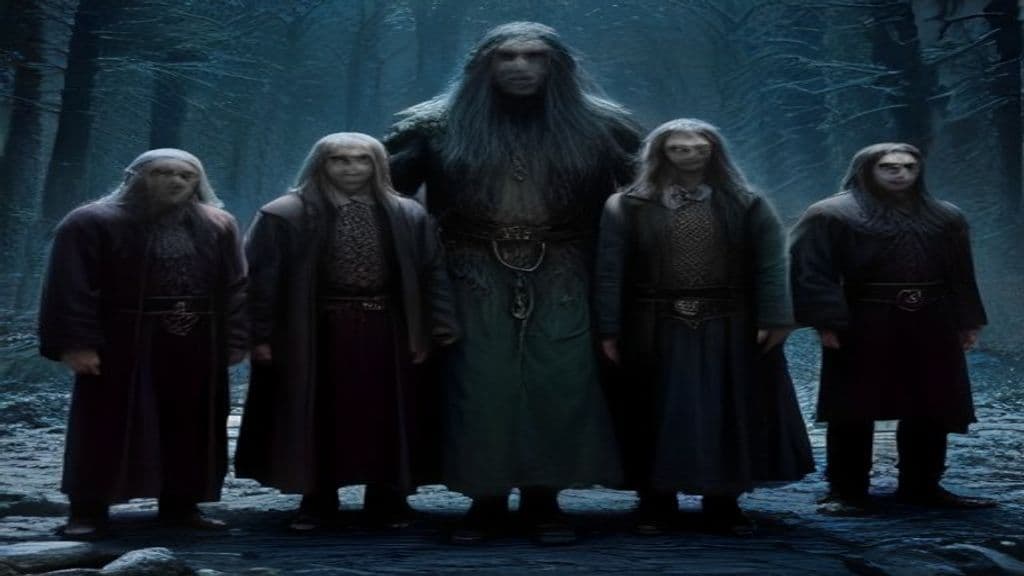
The Companions of the Hall are a fictional adventuring party originating in R. A. Salvatore's Legend of Drizzt novels set in the Forgotten Realms. The core group—Drizzt Do'Urden, Bruenor Battlehammer, Catti-brie, Wulfgar, and Regis—functions as a recurring found-family ensemble associated particularly with Mithral Hall and Icewind Dale.

Company of Seven
Lesser

Company of Seven

The term "Company of Seven" appears in the supplied sources only as an entry title reference on a Wikipedia page listing characters from the Greyhawk Dungeons & Dragons campaign setting. No descriptive lore, appearance, abilities, rituals, or cultural context for a supernatural or folkloric entity by this name are present in the provided materials.

Company of the Ring
Greater

Company of the Ring

A fictional constituted questing body in J. R. R. Tolkien's Middle-earth, formed to escort the Ring-bearer and destroy the One Ring. Composed of nine members drawn from diverse Free Peoples, it functions as a communal, multi-cultural alliance opposed to Sauron's Nine Riders.

Computer Warrior (Eagle comic)
Lesser

Computer Warrior (Eagle comic)

A fictional comic-strip character-type from the British Eagle comic (1985–1994): a human youth who, after access to a special activation code/device, can enter an alternate videogame realm called the Nightmare Zone and undertake game-based trials with real-world stakes. The role functions as a narrative champion/contestant and can be institutionalized within the strip's internal polity (e.g., the Computer Warlord).

Comus (Miltonic / Classical tradition)
Lesser

Comus (Miltonic / Classical tradition)

Comus is the personification of revelry and nocturnal dalliances in Greek antiquity and a later Renaissance/early modern dramatic tempter in John Milton's 1634 masque. In classical sources he appears as a minor Dionysian spirit associated with drinking-processions (komoi); Milton reimagines him as an embodied licentious figure who uses enchantment and temptation to test chastity.

Conaire Mór
Greater

Conaire Mór

Conaire Mór is a legendary prehistoric High King of Ireland in medieval Irish saga and historical tradition (not an otherworldly being). His accession, long reign, binding geasa (taboos) imposed by the otherworldly figure Nemglan, and catastrophic death at Dá Derga's Hostel are narrated in Togail Bruidne Dá Derga and related texts; he is remembered as the eponymous ancestor of the Síl Conairi.

Conall Cernach
Lesser

Conall Cernach

Conall Cernach is a legendary human warrior of the Ulster Cycle in Irish tradition, famed as an exceptional Ulster champion noted for prodigious martial feats, trophy-taking, striking appearance, and rivalry with other heroes such as Cú Chulainn and Cet mac Mágach.

Conan Meriadoc
Lesser

Conan Meriadoc

Conan Meriadoc is a legendary ancestral founder and early medieval royal leader credited in Welsh and Breton tradition with founding Brittany (Llydaw). Presented in medieval literary and genealogical sources as a historicized king or prince associated with Magnus Maximus/Macsen Wledig, he functions primarily as a dynastic progenitor and a figure in brittonic prophetic expectation rather than as a supernatural spirit.

Conan the Barbarian
Lesser

Conan the Barbarian

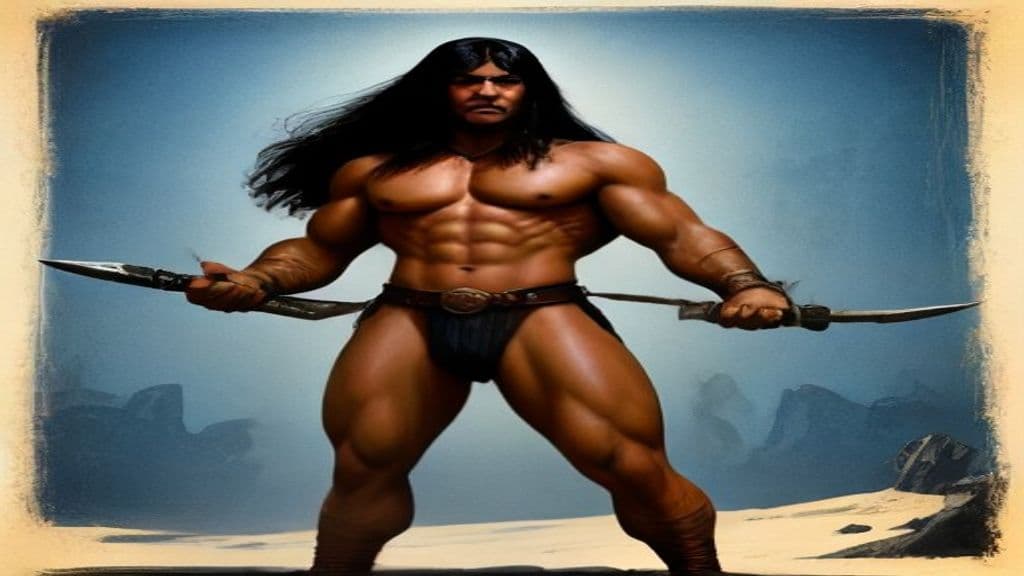
Conan the Barbarian (also Conan the Cimmerian) is a fictional sword-and-sorcery heroic protagonist created by American author Robert E. Howard. Set in Howard's constructed Hyborian Age, Conan is portrayed as an extraordinary human warrior—renowned for strength, endurance, martial skill, and rugged individualism—whose adventures against human and supernatural foes form a cycle of pulp fantasy narratives and later adaptations in comics, film, and other media.

Conand
Lesser

Conand

Conand is attested in the provided sources only as a named leader of the Fomorians in Irish mythology. Beyond this single index-level attestation, no descriptive, narrative, ritual, linguistic, or ethnographic details about Conand appear in the supplied materials.

Conchobar mac Nessa
Lesser

Conchobar mac Nessa

Conchobar mac Nessa is the legendary king of Ulster in the Irish Ulster Cycle, ruling from Emain Macha (Navan Fort). Presented in medieval saga material as a central dynastic and martial ruler, his decisions drive key episodes such as the Deirdre narrative and actions surrounding the Táin Bó Cúailnge.

Concordia
Lesser

Concordia

Concordia is the Roman personification and goddess who embodies agreement and harmony, especially within marriage and in broader civic society. The name also appears in later secular toponyms and institutions derived from the same lexical root, but those are distinct from the mythological figure.

Condatis
Lesser

Condatis

Condatis is a local Celtic deity attested in Roman Britain, known from a small group of Latin votive inscriptions in which he is consistently identified with the Roman god Mars (inscriptions read 'Mars Condatis'). The name derives from the Celtic word condate, 'confluence', and the deity is associated with river‑junctions and related sacred geography; some scholars have proposed a link with healing waters, but direct ritual details are not preserved.

Conganchnes mac Dedad
Greater

Conganchnes mac Dedad

A legendary martial antagonist from the Ulster Cycle whose defining trait is a horn-like, weapon-resistant skin. He appears in death-tale narratives as an avenger who ravages Ulster until killed by a stratagem that combines sleep-magic and heated spits driven into his soles and shins.

Congorilla
Greater

Congorilla

Congorilla is a DC Comics superhero identity formed when adventurer William "Congo Bill" Glenmorgan transfers his consciousness into the body of a legendary golden gorilla using a magic ring. Portrayed across mid-20th-century adventure strips and later superhero continuity, Congorilla functions as a protector of the African jungle and its gorillas and as an allied hero within broader DC teams.

Conn Cétchathach (Conn of the Hundred Battles)
Ancient

Conn Cétchathach (Conn of the Hundred Battles)

Conn Cétchathach is a legendary High King of Ireland in medieval Irish literature, presented as a quasi-historical warrior-king and dynastic ancestor whose reign and visionary encounters at Tara legitimize kingship and connect the ruling order to the otherworld.

Connla
Lesser

Connla

Connla (also Conlaoch) is a human heroic figure of the Irish Ulster Cycle, presented as the son of Cú Chulainn and Aífe. Raised in Scotland and trained in martial arts, he comes to Ulster under three geasa, refuses to reveal his name, and is mortally wounded by Cú Chulainn with the gae bolga in the tale Aided Óenfhir Aífe.

Conomor
Minor Spirit

Conomor

Conomor is a mid-6th-century Breton/Cornish ruler who in historical sources appears as a violent, ambitious political actor and in later Breton hagiography and folklore becomes a stock villain—an excommunicated count/king accused of murdering rivals, wives and children and opposed by saints such as Samson and Gildas.

Consorts of Ganesha
Lesser

Consorts of Ganesha

A set of personified feminine figures—most commonly Buddhi (intellect), Siddhi (attainment/success), Riddhi (prosperity), and the Aṣṭa‑siddhi (eight supernatural attainments)—that appear in Hindu iconography and Purāṇic and tantric texts as attendant shaktis or emanations of the deity Ganesha. They function primarily as symbolic embodiments of faculties, powers, and attainments rather than as ordinary human spouses, and their presence and identity vary by regional, sectarian, and textual context.

Consus
Lesser

Consus

Consus is a chthonic Roman deity associated with the safeguarding of grain, subterranean storage (silos, bins) and the hidden seed; his cult included earth-covered altars and public festivals (Consualia) featuring equestrian games and rites tied to harvest and settlement ceremonies.

Cooperating God and Devil (Slavic creation myth)
Primordial

Cooperating God and Devil (Slavic creation myth)

In Slavic creation myths, the God and Devil cooperate to create the world, exemplifying a dualistic motif where opposing forces work together for balance. (Note: 1. Power tier: Incorrect, the source material does not specify that the God and Devil have primordial power. 2. Origin story: Needs rewording to reflect that there are multiple versions of Slavic crea)

Cooties
Lesser

Cooties

Cooties is a fictitious childhood "disease" or contagion from childlore and playground play. Functioning as a social tag and game mechanic rather than a biological or supernatural being, it marks someone as undesirable or other and is negotiated through rituals such as the playful "cootie shot."

Copreus
Lesser

Copreus

Copreus (Ancient Greek Κοπρεύς, Kopreus) is a mortal herald in Greek mythology who served King Eurystheus and announced the Labours imposed on Heracles. In some traditions he is a son of Pelops and, after killing Iphitus, fled to Mycenae where Eurystheus purified him and appointed him herald.

Coraline
Lesser

Coraline

Coraline is the child protagonist of Neil Gaiman's 2002 British fantasy‑horror novella and its film adaptation. She is a living, human girl who discovers a parallel 'Other World' behind a bricked door in the house where her family moves and uses wit, courage, and a protective charm to confront its antagonist, the Beldam (the Other Mother).

Coraniaid
Greater

Coraniaid

A legendary race described in medieval Welsh sources (notably the tale Lludd and Llefelys) as a plague/oppressive people in Britain whose defining trait is extraordinarily acute hearing. They are overcome in the tale by a biological concoction advised by Llefelys and by tactics that muffle speech.

Cordelia of Britain
Lesser

Cordelia of Britain

Cordelia is a legendary British queen from the Matter of Britain (notably recounted in Geoffrey of Monmouth's tradition) remembered as the youngest daughter of King Leir who refuses flattering speech, goes into exile in Gaul, returns with an army to restore her father, rules as queen, and is ultimately captured and dies; later literary adaptations (notably Shakespeare's King Lear) rework these events for dramatic effect.

Corellon Larethian
Greater

Corellon Larethian

Corellon Larethian is the chief deity of the elven pantheon (the Seldarine) in Dungeons & Dragons settings, portrayed as the creator and preserver of the elven race and patron of magic, the arts, and warfare. Corellon appears across multiple editions and campaign worlds as an organized divine power with priests, mythic history, and edition-dependent aspects such as gender fluidity.

Coresus
Lesser

Coresus

Coresus is a name borne by two mortal figures in Greek mythic tradition: an autochthonous founder associated with the sanctuary of the Ephesian Artemis, and a priest of Dionysus at Calydon whose unrequited love and prayer to the god bring a lethal frenzy on the city and culminate in his self-sacrifice. Both roles are attested in summaries of Pausanias' accounts preserved in modern reference works.

Coria
Minor Spirit

Coria

Coria is not attested in the provided sources as a mythological or supernatural being. The term appears in the supplied material primarily as a toponym (place-name) in Iberia and Roman Britain and as a modern surname; no documentary evidence in these sources describes a spirit, deity, or monster named 'Coria.'

Coriakin
Greater

Coriakin

Coriakin is a single fictional character from C. S. Lewis's Narnia cycle, portrayed as a former star consigned by Aslan to rule and instruct the Duffers (Dufflepuds) on an island. He appears as a penitent wizardly steward who uses magic to guide his charges toward wisdom.

Corineus
Lesser

Corineus

Corineus is a legendary human culture-hero and founding ruler associated with Cornwall in medieval British pseudo-history. Presented most fully in Geoffrey of Monmouth’s accounts and later medieval redactions, he is famed as a prodigious warrior who wrestled and killed the chief giant (Gogmagog/Goemagog) and so secured Cornwall for Brutus’s settlers.

Corinthus
Lesser

Corinthus

Corinthus (Greek: Κόρινθος, Korinthos) is a personal-name-bearing figure (or several eponymous figures) in Greek mythographic tradition associated with the city and region of Corinth. The name functions primarily as an eponymous founder, local ruler, or genealogical ancestor in variant local accounts rather than as a supernatural being.

Cormac Cond Longas
Minor Spirit

Cormac Cond Longas

Cormac Cond Longas is a human aristocratic warrior-prince in the Ulster Cycle of Irish mythology. He is known as an exiled son of Conchobar mac Nessa, fostered by Fergus mac Róich, who fights in the Táin Bó Cuailnge and is later asked to become king of Ulster before dying after breaking his geasa.

Cormac FitzGeoffrey
Minor Spirit

Cormac FitzGeoffrey

Cormac FitzGeoffrey is a fictional literary character created by Robert E. Howard, depicted as a half-Norman, half-Gael knight active during the Third Crusade. He appears in Howard's historical-adventure stories published in pulp magazines in the early 1930s and is later referenced and adapted in other media.

Cormac mac Airt
Lesser

Cormac mac Airt

Cormac mac Airt is a legendary High King of Ireland in medieval Irish annals and saga tradition, presented as an archetypal wise and just monarch, lawgiver, and patron of Tara. He functions as a focal character for gnomic literature (notably Tecosca Cormaic) and as a didactic exemplar of ideal kingship in Irish literary-historical cycles.

Cormoran
Lesser

Cormoran

Cormoran is a giant of Cornish folklore associated with St. Michael's Mount. In local tales he is credited etiologically with building the Mount and blamed for raiding cattle and people; he appears in chapbook versions of 'Jack the Giant Killer' and regional Cornish narratives such as the Tom the Tinkeard cycle.

Corn Spirit
Lesser

Corn Spirit

A vegetation or field spirit associated with cereal crops (especially maize/corn and grain) that embodies plant fertility, seasonal death-and-rebirth, and the continued productivity of fields. Appears in various forms across Indigenous North American and European peasant traditions and is sustained by ritual housing, vows, and harvest rites.

Cornelius Stirk
Lesser

Cornelius Stirk

Cornelius Stirk is a fictional human antagonist in the DC Comics Batman continuity: a recidivist serial killer and inmate of Arkham Asylum/Blackgate Penitentiary whose pathology includes a hypnotic/telepathic aura that makes victims perceive him as a trusted face and induces fear or hallucinations. In-universe he is treated as a psychiatric case controlled by medication, restraint, and incarceration.

Cornflower Wraith
Lesser

Cornflower Wraith

A Slavic field spirit associated with midday who enforces proper conduct in cultivated grain. Described as a young woman in azure with cornflowers in her hair, she punishes workers who trample crops or use sharp tools at the wrong time, often by inducing sleep followed by pain or by causing broken limbs.

Cornish Mythological Entities
Lesser

Cornish Mythological Entities

In Cornish mythology, a collection of supernatural entities are found in folk traditions developed in Cornwall and other Celtic-speaking regions. These entities share characteristics with gods, goddesses, spirits, and lesser supernatural beings from Welsh and Breton mythologies. (Note: 1. Summary: The summary should mention that Cornish mythological entities are not a distinct category, but rather are similar to gods, goddesses, spirits, and lesser supernatural beings from other Cel)

Cornucopia (Roman Tradition)
Primordial

Cornucopia (Roman Tradition)

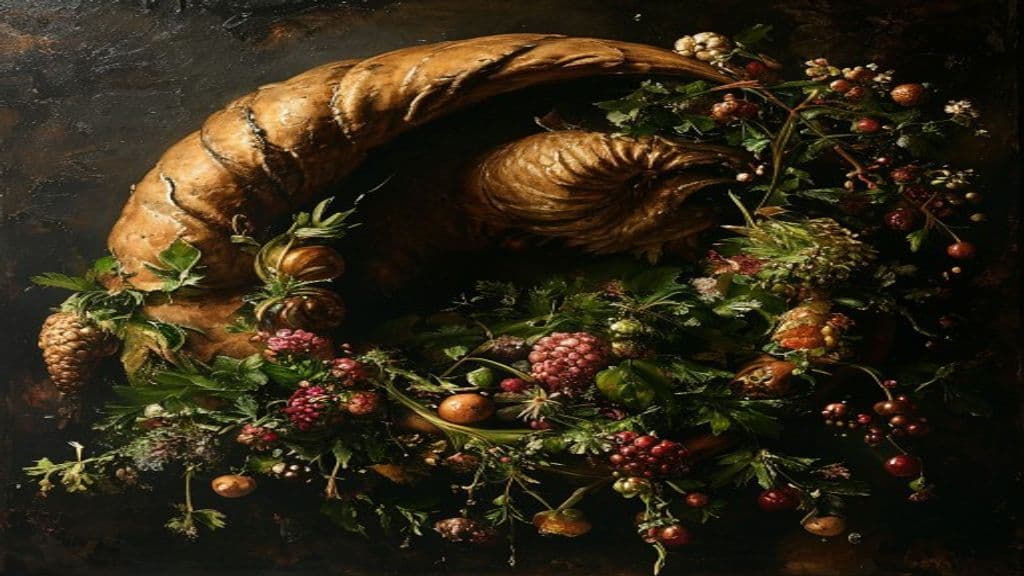
In Roman tradition, the Cornucopia is a symbol of abundance and nourishment, often depicted as a horn-shaped container overflowing with produce. (Note: 1. Power tier should be Primordial does not seem correct as Cornucopia is described as a symbol, not an entity with cosmic powers. 2. Origin story should mention Roman tradition or clarify that it ori)

Corocotta
Lesser

Corocotta

Corocotta is a name attested in two related registers: a Cantabrian legendary/historical human figure remembered as a guerrilla leader or bandit active during the late 1st century BC, and a classical natural-history term for an exotic canid/felid‑like beast (often equated with the spotted hyena) described in Greco‑Roman literature. The two usages overlap by name but represent distinct traditions—local oral memory of resistance and wider Roman wonder‑literature about exotic animals.

Corona Australis
Greater

Corona Australis

A constellation in the Southern Celestial Hemisphere associated with various cultural interpretations. (Note: 1. Power tier should be "Primordial" as Corona Australis is an astronomical object and not a deity-level entity. 2. Abilities are not mentioned in the source material; delete this section entirely. 3.)

Coronis
Lesser

Coronis

Coronis (Ancient Greek Κορωνίς, romanized Koronis) is a name borne by several women in Greek myth; most prominently a Thessalian princess who was a lover of the god Apollo and the mother of Asclepius. Her story in surviving accounts concerns her pregnancy by Apollo, reports of her unfaithfulness, and her death in narratives that also explain the survival and birth of Asclepius.

Coronus
Lesser

Coronus

Coronus (Ancient Greek: Κόρωνος, Koronos) is a personal name in Greek mythic genealogies applied to one or more mortal/heroic figures associated with the Thessalian Lapiths. He is attested as a king of the Lapiths and as an ancestor (notably father of Leonteus) in epic and mythographic lists; some sources list a Coronus among various Argonaut rosters, a variant attribution rather than a unanimous identification.

Corson
Lesser

Corson

Corson is attested in the supplied sources only as 'one of the four principal kings that have power on the seventy-two demons.' No further descriptive, cultural, ritual, or iconographic information is provided in those sources.

Corum Jhaelen Irsei
Greater

Corum Jhaelen Irsei

Corum Jhaelen Irsei is a fictional fantasy hero created by Michael Moorcock, an incarnation of the author's recurring metaphysical archetype the Eternal Champion. A Vadhagh prince known as the Prince in the Scarlet Robe, Corum appears in a prehistoric, mythic setting where he intervenes to restore or maintain the cosmic Balance between Law and Chaos and wields artifact powers that let him perceive and interact with other planes.

Corviconodon
Minor Spirit

Corviconodon

Corviconodon is referenced in the supplied corpus as a taxonomic name candidate interpreted within a paleontological framework (Eutriconodonta/Triconodonta). The provided sources do not document Corviconodon as a supernatural being, mythic figure, or part of ritual tradition; instead they discuss related eutriconodont genera, dental morphology, and taxonomic practice for Mesozoic mammals.