Entity Index

A record of the unseen, drawn from world folklore.

7673 entities · page 43 of 128

Chthonius (Χθόνιος / Chthonios)
Lesser

Chthonius (Χθόνιος / Chthonios)

Chthonius is an Ancient Greek name and epithet meaning "belonging to the earth/the underworld." It is applied to multiple distinct mythic figures — several mortal or semi-divine personages (a Spartos, a son of Aegyptus, a founder-son of Poseidon and Syme, a Centaur, a Giant) — and used as a chthonic epithet for major gods; in modern taxonomy it names a genus of pseudoscorpions.

Chuchunya (Yeti / Abominable Snowman)
Lesser

Chuchunya (Yeti / Abominable Snowman)

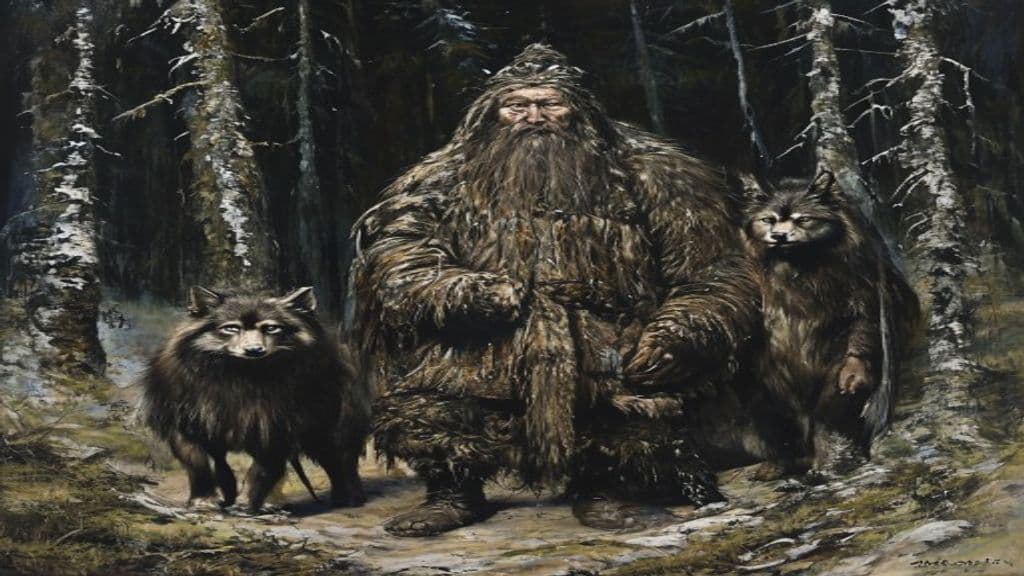
A large, hairy, humanoid creature reported in modern legend and cryptozoology as inhabiting the Himalayan mountains; presented in contemporary sources as a mythical humanoid or cryptid rather than a well‑documented indigenous cosmological being. Much alleged evidence consists of anecdotal sightings, disputed recordings, photographs, and footprint casts, some of which have been judged hoaxes.

Chud
Ancient

Chud

The Chud (Russian: Чудь) are an ancient, mythic people in Russian and several Finno‑Ugric oral traditions. Presented as a pre‑modern population, they appear in legends as a displaced, assimilated, or subterranean society whose disappearance and former condition help explain features of landscape and cosmology in regional folklore.

Chudail (Churel)
Greater

Chudail (Churel)

A female revenant figure in North Indian and broader South Asian popular imagination: a vengeful female spirit said to return after traumatic or unjust death to haunt, possess, or exact revenge on the living. The figure functions in folklore and cinema as a locus for anxieties about gendered violence and transgressive femininity.

Chuhaister
Greater

Chuhaister

Chuhaister (Ukrainian: Чугайстер) is a forest tutelary figure specific to the Ukrainian Carpathians. Portrayed both as an individual-like personage and as a limited-number type (accounts speak of one, or three, four, or seven Chuhaisters), he is an ambivalent forest man who hunts other wild spirits (notably mavkas), is associated with wind and storm phenomena, and interacts with humans—often as a solitary guardian of deep woods and high mountain wilds.

Chukwu
Primordial

Chukwu

Chukwu is the supreme creative reality in traditional Igbo religion (Odinani), the source of all existence from which personal chi and lesser alusi derive. Chukwu functions as the ultimate authority, creator, and sustaining principle whose will is mediated in practice through intermediaries such as chi, alusi, diviners and the Arochukwu oracle.

Chullachaqui
Lesser

Chullachaqui

A legendary forest being of the Peruvian and Brazilian Amazon described as a small forest creature or 'demon' notable for having one or both feet deformed; traditionally invoked in lore about people becoming lost or frightened in the jungle.

Chuma (Chuma-kik)
Minor Spirit

Chuma (Chuma-kik)

No reliable evidence in the provided sources identifies a supernatural entity called 'Chuma' or 'Chuma-kik' in Armenian tradition. The available materials mention the string 'Chuma' in unrelated contexts (personal names, place names, a Slavic word for plague) but supply no folkloric data linking it to Armenian spirits or monsters.

Chupacabra
Lesser

Chupacabra

A contemporary legendary creature or cryptid from parts of the Americas, blamed for unexplained livestock deaths and associated with vampiric puncturing of necks. The figure circulates largely through modern rumor, tabloid reportage, and popular culture rather than as part of an older ritual cosmology.

Chur (pseudo-deity)
Lesser

Chur (pseudo-deity)

Chur (Чур) is a term attested in Russian linguistic and folkloric usage that 19th‑century scholars reconstructed as a boundary patron or household protector. Its status as an actual worshipped god is disputed; surviving evidence is primarily formulaic speech, lexicographic entries, and a few literary citations rather than clear ritual or iconographic attestations.

Churail
Lesser

Churail

The term "churail" appears in contemporary Pakistani media and Urdu-language fiction titles; the supplied sources document modern uses of the word (a 2020 Pakistani web series titled Churails and Urdu fiction collections using "churail" in their titles) but do not provide folkloric descriptions, origins, or ritual practices for a supernatural being by that name.

Church Grim
Lesser

Church Grim

A site-bound guardian spirit in English, Scottish and Nordic/Scandinavian folklore that watches over an individual Christian church and its churchyard, defending the consecrated ground from profanation and hostile spirits. Forms and origin accounts vary by region, including a large black dog in English tradition, the bound spirit of an animal (often a lamb) in Scandinavian accounts, and in some Scottish strands the spirit of the most recently buried person acting as a temporary watcher.

Churel (Chudail)
Greater

Churel (Chudail)

A South Asian female revenant or vengeful ghost associated with women who die cruelly or unpurified; often said to target male relatives and sometimes described as latching onto trees, producing a tree‑attached tree‑spirit variant in local tales.

Chut
Greater

Chut

Household spirit in Belarusian mythology associated with domestic spaces and activities, responsible for bringing prosperity and success through offerings, but capable of cruel revenge if neglected. (Note: 1. Power tier: Lowered to Lesser, as it seems more consistent with "regional" or local influence rather than deity-level abilities. 2. Appearance: A note should be added that no physical description i)

Chuvash dragon (Verechelen / Vĕreśĕlen)
Greater

Chuvash dragon (Verechelen / Vĕreśĕlen)

A serpentine supernatural being from Chuvash legend, described in sources as a large snake-like creature that can have wings, breathe fire, shapeshift, and in some variants possess multiple heads. The creatures are embedded in Volga-Bulgar regional legend and appear in place-based tales tied to sites such as Bilär and Alabuğa.

Chveneburi
Minor Spirit

Chveneburi

In the provided sources, Chveneburi (Çveneburi) is not a documented household spirit but an ethno-cultural label used by and for Georgians in Turkey, including Muslim immigrant Georgians. The materials treat the term as denoting a social community and a periodical title rather than a supernatural being.

Chyavana
Greater

Chyavana

Chyavana (Sanskrit च्यवन / Cyavana) is a Vedic/Puranic rishi of the Bhrigu lineage famed for great ascetic (tapas) and mantra potency, for being miraculously rejuvenated by the twin physicians the Āśvins (with treatments later named chyavanaprasham/Kayakalpa), and for episodes in which his ascetic power affects gods, sacrificial entitlement, and human communities.
Chía
Ancient

Chía

Chía is the Moon deity of the pre‑Columbian Muisca (Chibcha‑speaking) peoples of the central highlands of present‑day Colombia. She was the focus of an institutionalized cult with a dedicated Moon Temple at the town of Chía and calendar‑based ceremonies conducted by the chyquys (priests of the sacred calendar).
Chông Tị (Four Immortals)
Primordial

Chông Tị (Four Immortals)

One of the Four Immortals in Vietnamese mythology, associated with immortality and appearing on a golden dragon. (Note: - Power tier: Greater (not Primordial) - Chông Tị is associated with longevity and appears on a divine entity (golden dragon), but not cosmic in scope. - Abilities: Remove "His immortality implies ext)

Chōchin'obake
Lesser

Chōchin'obake

A Japanese yōkai depicted as an animate or transformed paper/silk lantern (chōchin). Best known from Edo-period and later pictorial, theatrical, and popular-culture imagery, it functions as a stock visual character of an object-turned-obake rather than as a widely attested regional oral spirit.

Chōchinbi
Lesser

Chōchinbi

Chōchinbi (提灯火, "paper-lantern fire") are regionally reported Japanese atmospheric spirit-lights treated as a variety of onibi. Tales describe them as lantern-like floating flames seen near footpaths, rice fields, riverbanks, and graveyards, sometimes vanishing when approached and sometimes associated with animal yōkai or resentful human spirits.

Chūjō-hime
Minor Spirit

Chūjō-hime

Chūjō-hime is a legendary aristocratic woman in Japanese Pure Land devotional tradition who becomes a nun and exemplary holy woman credited in later hagiography with the miraculous weaving of the Taima Mandala; she functions as a model of filial piety, female salvation, and as a focal figure for relics, embroideries, and etoki preaching.

Ciacco
Minor Spirit

Ciacco

Ciacco is a named damned soul who appears in Dante Alighieri's Divine Comedy (Inferno, Canto VI) among the gluttonous; he converses with Dante and, within the poem, offers a prophetic speech about Florentine political strife. The figure is later reused in medieval and Renaissance literature (notably Boccaccio's Decameron) as a stock gluttonous character.

Ciampolo
Minor Spirit

Ciampolo

Ciampolo is a damned human soul appearing in Dante Alighieri's Inferno (Canto XXII), placed among the grafters in the fifth ditch of the eighth circle (Malebolge). He is depicted as hauled from boiling pitch by the Malebranche devils, speaks to Dante and Virgil identifying fellow sinners, and ultimately deceives the devils to return to the pitch.

Cichol Gricenchos
Lesser

Cichol Gricenchos

Cichol Gricenchos is the earliest-mentioned leader of the Fomorians in the medieval Irish pseudo-historical tradition. He is portrayed as the leader of a pre-Partholón population in Ireland who subsisted by fishing and fowling and who was defeated by Partholón at the Battle of Mag Itha.

Cicolluis
Lesser

Cicolluis

Cicolluis (Latin Cicolluis, Cicollus; reconstructed Gaulish *Cicolluos) is the tutelary god of the Lingones in eastern Gaul attested in Roman‑period votive inscriptions, commonly identified with the Roman god Mars (inscriptional formula Mars Cicolluis). He is regularly paired with an earth goddess, Litavis, and is interpreted by scholars as a local territorial protector with possible fertility or chthonic associations when read alongside Litavis.

Cicones
Lesser

Cicones

The Cicones (Greek Κίκονες, Latinized Cicones or Ciconians) are a Homeric Thracian tribe associated with the town of Ismarus (Ismara) on the south coast of Thrace. In epic sources they appear as a martial human people who repel Odysseus' raiders after the sack of Ismarus (Odyssey Book IX) and are listed among allies in the Iliad; they are treated as a human ethnic/political group rather than as supernatural beings.

Cigau
Lesser

Cigau

The Cigau is a name used locally in Sumatra for a reported mid-sized feline cryptid, described in contemporary popular and cryptozoology sources as a golden, short-tailed cat seen near Bangko and Mount Kerinci. Sources treat it as a disputed physical animal rather than a figure of indigenous cosmology.

Cigfa
Lesser

Cigfa

Cigfa (Middle Welsh: Kigua) is a mortal woman in the medieval Welsh Mabinogi cycles, known as the wife of Pryderi of Dyfed. A minor narrative figure in the Third Branch (Manawydan fab Llyr), she remains with Manawydan during the enchantment of Dyfed and functions as a domestic and relational character whose presence highlights Manawydan's virtues.

Ciguapa
Lesser

Ciguapa

The ciguapa is a nocturnal humanoid figure from Dominican and neighboring Caribbean folklore, most often depicted as a wild, preternatural woman of the mountain forests and rivers. Tales present her variously as a seductive siren-like being who lures men, a mischievous nature spirit, a jealous and sorrowful literary figure, or—in some variants—a violent or cannibalistic creature; she functions in oral and literary traditions as a cautionary forest figure and a marker in shifting cultural narratives.

Cihuacōātl
Ancient

Cihuacōātl

Cihuacōātl is an Aztec (Mexica) motherhood and fertility deity associated with midwifery, childbirth, and the spirits of women who die in labor. She functions both as a mythic creator/mother figure who assisted Quetzalcoatl in the formation of the present human race and as a civic-symbol embodied by a high governmental office (cihuacoatl) in Aztec polity.

Cihuateteo
Greater

Cihuateteo

In Aztec tradition, the Cihuateteo (Cihuātēteoh; sing. Cihuātēotl) are the spirits of women who died in childbirth. They occupy an honored cosmic role—guiding the sun toward the west—and, on five calendar days, were believed to descend to the earth as dangerous nocturnal spirits who must be propitiated.

Cikavac
Lesser

Cikavac

Cikavac is a creature of Serbian folklore described as a winged bird kept by an owner through a specific acquisition ritual; in tradition it brings honey and milk taken from others to its owner, fulfills wishes, and enables understanding of animal speech.

Cilix
Lesser

Cilix

Cilix is a figure from Greek myth presented as a Phoenician prince and eponymous founder whose settlement in Asia Minor explains the place-name Cilicia. In modern usage the name is also applied to a genus of insects and to an impact structure on Jupiter's moon Europa, but those are scientific reuses of the name.

Cimbres Marian apparition (Nossa Senhora das Graças)
Minor Spirit

Cimbres Marian apparition (Nossa Senhora das Graças)

A series of reported Marian apparitions near the village of Cimbres, Pesqueira, Pernambuco, Brazil, in 1936–1937 in which two adolescent seers claimed to receive warnings, injunctions to penance and prayer, and devotional prescriptions; the events are associated with a miraculous spring at a rocky inselberg and later diocesan recognition of their supernatural character.

Cindaku
Lesser

Cindaku

No folkloric or ethnographic evidence for a supernatural entity named "Cindaku" appears in the supplied sources. The only attestation of the string "Cindaku" in the provided material is a commercial 3D model listing using the name for a fictional cybernetic soldier character, not a traditional mythic being.

Cinderella
Ancient

Cinderella

A widespread folktale protagonist and narrative archetype: a young woman who endures neglect or obscurity and is unexpectedly elevated to recognition and higher social status, typically by marriage. The motif appears in many cultures and historical periods and functions as a moral and social narrative about identity, tokens of recognition, and social mobility rather than as a supernatural being.

Cinderella's stepsisters
Lesser

Cinderella's stepsisters

Human antagonists in the Cinderella tale-cycle: the stepdaughters of the heroine's stepmother who persecute and compete with the heroine for status and marriage. They function as social and moral foils, varying across Perrault, Grimm, Chinese (Ye Xian) and pantomime traditions in name, appearance, and narrative fate.

Cingris
Primordial

Cingris

Semi-historical and mythological Pharaoh in Celtic tradition. (Note: - Power tier: Lesser (based on being described as a "mythological Pharaoh" and not having deity-level abilities) - Abilities: Inconsistencies in draft article - should mention that no explicit descrip)

Cinna
Minor Spirit

Cinna

Cinna is a proper name applied across multiple unrelated referents in classical history, geography, biological taxonomy, and modern culture. The provided sources treat Cinna as a Roman family name and individual Romans, an ancient town in Galatia, a genus of grasses, and various modern literary, musical, and vernacular uses rather than as a singular mythological or supernatural being.

Cintāmaṇi
Primordial

Cintāmaṇi

A wish-fulfilling jewel in Hindu and Mahayana Buddhist traditions, described as a pearl-like object. (Note: 1. Power tier: "Primordial" may be too strong; the source describes it as a "wish-fulfilling jewel", which suggests deity-level power (Ancient) rather than cosmic. 2. Origin story: None provided, shou)

Cintāmaṇicakra (Nyoirin Kannon / Ruyi-lun Guanyin)
Greater

Cintāmaṇicakra (Nyoirin Kannon / Ruyi-lun Guanyin)

Cintāmaṇicakra is a bodhisattva-manifestation of Avalokiteśvara (Guanyin), identified with the wish-fulfilling jewel (cintāmaṇi) and wheel (cakra). In Mahāyāna sources the figure functions as one of six Avalokiteśvara forms tied to deliverance across the six realms (especially the deva realm) and is invoked through a dhāraṇī for karmic purification, protection, and fulfillment of aspirations.

Cintēteo
Greater

Cintēteo

The Cintēteo are a quartet of Aztec maize deities, each personifying a different colour/variety of corn (white, red, yellow, black). They appear in lists of Aztec gods and are attested in ritual contexts where priests impersonated the maize gods.

Cinyras
Lesser

Cinyras

Cinyras is a mythic human king and eponymous founder-figure in Greek and Roman literary traditions, chiefly associated with Cyprus (notably Paphos). He functions as a legendary ancestor, founder of priestly lines connected to the cult of Aphrodite Paphia, and the tragic protagonist of the Myrrha–Adonis cycle; classical authors also link him with musical skill and eastern (Phoenician/Cilician/Byblian) cultural connections.

Cipactli
Primordial

Cipactli

Cipactli is a primeval chthonic monster from central Mexican (Aztec/Mexica and related Mesoamerican) mythic cosmology, depicted as a composite crocodilian/fish/toad whose body serves as raw material for creation. The name also denotes the first day-sign of the 13 × 20 tonalpohualli divinatory calendar and carries associations with beginnings, dynastic foundation, and life-force (tonalli).

Cipactonal
Ancient

Cipactonal

Cipactonal is a primordial calendrical and astrological figure in central Mexican (Aztec) sources, presented as one half of the first human couple with Oxomoco and associated with responsibility for the calendar, divination, and the transmission of calendrical knowledge in pictorial codices and annals.

Cipitío
Lesser

Cipitío

Cipitío is a perennial childlike spirit of Salvadoran and Central American oral tradition: a mischievous, trickster child who wanders rural landscapes, courts or teases people, and functions as a pedagogical folk figure rather than an overtly malevolent being.

Ciqui Ollco
Minor Spirit

Ciqui Ollco

Ciqui Ollco is not documented in the supplied sources as a supernatural being; the materials reference historical Inca royals (notably Topa Inca Yupanqui and Mama Ocllo Coya). Any supernatural characterization of 'Ciqui Ollco' is unsupported by the provided research notes.

Circe
Greater

Circe

Circe is a figure of Greek myth known as a practitioner of potent pharmacological and ritual arts who occupies a liminal status between goddess, nymph, and witch. She is famed for her knowledge of herbs and potions, her ability to transform humans into animals in narrative episodes, and for performing ritual purification in at least one classical source.

Circle of Eight (tradition)
Minor Spirit

Circle of Eight (tradition)

No folkloric or mythic entity called 'Circle of Eight' is documented in the supplied sources. The phrase appears only in modern, secular, and creative contexts (a film title, a gaming campaign milieu, organizational/event names, and miscellaneous web uses) and not as a traditional supernatural being.

Circus of Strange
Lesser

Circus of Strange

The Circus of Strange is a fictional, carnival-themed criminal troupe appearing in DC Comics, organized and led by the villain Professor Pyg. Introduced in Batman and Robin #1 (August 2009), the group stages violent, theatrical assaults in Gotham City and creates brainwashed minions called Dollotrons.

Ciriatto
Lesser

Ciriatto

Ciriatto is one of the Malebranche, a named demon-guard in Dante Alighieri’s Inferno who appears in Cantos XXI–XXIII as an enforcer over the fifth bolgia of the Eighth Circle (Malebolge). His Italian name denotes porcine qualities and the poem characterizes him with a single descriptive epithet meaning 'tusky.'

Cisseus
Minor Spirit

Cisseus

Cisseus is a personal name borne by several distinct human figures in ancient Greek and Roman mythic traditions. Bearers of the name appear as kings, fathers, warriors, and members of dynastic genealogies across Homeric, tragic, mythographic, and Roman epic sources rather than as a single supernatural being.

Cissonius
Ancient

Cissonius

Cissonius is a native surname or epithet attached to the Roman god Mercurius (Mercury) in the Gallo‑Roman epigraphic record of the imperial period. Attested in Latin votive inscriptions chiefly from Germania Superior (the Rhineland and Swiss plateau) with outliers in Gallia Belgica, Germania Inferior, and Raetia, the name appears both as Mercurius Cissonius and alone as deus Cissonius, indicating a localized cult identity within the syncretic Roman‑Gaulish religious landscape.

Cisus
Lesser

Cisus

Cisus is a brief figure in the Greek mythological genealogies identified in the sources as a son of Temenus and as a king of Argos. Attestations provided are minimal and consist principally of short encyclopedic entries noting his parentage and royal title.

Citizen V
Lesser

Citizen V

Citizen V is a legacy codename used by multiple fictional characters in Marvel Comics, originating in the Golden Age (1942) as a World War II–era resistance figure and subsequently reused by different individuals across decades. The mantle is tied to the V-Battalion organization and later appears in modern team contexts such as the Thunderbolts.

Citlālicue
Ancient

Citlālicue

Citlālicue is an Aztec (Nahua) creator goddess associated with the stars and the Milky Way. She is commonly paired with the male creator Citlalatonac and has a calendrical role as liege of days landing on the 13th in the tōnalpōhualli.

Cizin (Kisin)
Ancient

Cizin (Kisin)

Cizin (also spelled Kisin and attested under many related names such as Ah Puch, Yum Cimil, Hun-Came) is an important Maya death deity associated in the sources with death and earthquakes. Scholars have labeled this death figure ‘God A’ and link him to a broader set of Maya death gods attested across regional traditions.

Clanis
Minor Spirit

Clanis

Clanis is a taxonomic genus of moths in the family Sphingidae, erected by Jacob Hübner in 1819 and used to group related hawkmoth species (for example Clanis bilineata). The name also appears in non-biological contexts (a Martian channel system Clanis Valles and various personal names), but the provided sources do not treat Clanis as a folkloric or supernatural entity.

Classical elements
Primordial

Classical elements

A conceptual classificatory system in ancient natural philosophy that reduces material diversity to a small set of basic constituents (typically earth, water, air, fire, sometimes aether). Used to explain the properties, changes, and motions of natural bodies and to ground medical and alchemical practice.