Entity Index

A record of the unseen, drawn from world folklore.

7697 entities · page 68 of 129

Goranchacha
Ancient

Goranchacha

Goranchacha is a legendary Muisca culture-hero portrayed as a miraculous son of the Sun who functioned as prophet, priest, and autocratic cacique of the northern Muisca. Colonial-era narratives describe him as instituting solar worship, commanding large-scale temple labor, enforcing harsh punishments, and prophesying the coming of foreign conquerors.

Gorazeh
Lesser

Gorazeh

A name for which no attested description, function, or ritual context is present in the single supplied source (an excerpt referencing Davāzdah Rokh in the Shahnameh). The available material does not establish Gorazeh as a supernatural being or provide any attributes.

Gordāfarīd
Lesser

Gordāfarīd

Gordāfarīd (Persian: گردآفريد) is a human heroine in Ferdowsi’s Shāhnāmeh (The Book of Kings). A warrior of the White Fortress (Dezh-e Sepid), she dons armour, sallies forth to challenge the Turanian commander Sohrab, delays the enemy advance, is defeated in single combat, and is spared by Sohrab; modern scholarship and performers treat her as a lasting symbol of female courage and prudence in Persian epic.

Gorge
Lesser

Gorge

The term 'Gorge' appears in the sources primarily as (1) a geomorphological feature — a deep ravine or canyon formed by river erosion — and (2) as a personal name (Ancient Greek: Γόργη) in Greek myth, notably listed among genealogical figures such as one of the Danaïdes. The available materials do not support a coherent single supernatural entity named 'Gorge.'

Gorgin
Lesser

Gorgin

Gorgin is a human heroic figure in Ferdowsi's Persian epic the Shahnameh, active during the reigns of Kay Kavus and Kay Khosrow and described in sources as a son of Milad. Scholarship highlights his role in the Bijan episode, where analyses portray him as duplicitous and motivated by jealousy.

Gorgo
Lesser

Gorgo

Gorgo is a polyvalent Greek mythic name applied to several related usages: a member of the gorgon/gorgoneion monstrous vocabulary (frightful phantom/monster), a goatish monster variant called Gorgo Aix associated with Titanomachy narrative, and a personal name borne by various mortal figures (e.g., a woman of Aegyptus, a Spartan queen). The term circulates between monstrous imagery, apotropaic iconography, and onomastic use, and was later reused in modern popular culture for monsters and namesakes.

Gorgo, Queen of Sparta
Minor Spirit

Gorgo, Queen of Sparta

Gorgo was a historical Spartan princess and queen, daughter of King Cleomenes I and wife of King Leonidas I, known from classical historiography and later cultural reception as an emblematic figure of the Spartan woman and for her participation in Spartan political life.

Gorgons
Greater

Gorgons

In classical Greek myth a trio of monstrous sisters—Stheno, Euryale, and Medusa—daughters of Phorcys and Ceto, famed for a petrifying gaze; Medusa is mortal and slain by Perseus while her sisters are described as immortal. The name has been widely reused in modern culture for characters, bands, and projects.

Gorgophone (Perseid / Danaid)
Minor Spirit

Gorgophone (Perseid / Danaid)

Gorgophone (Ancient Greek: Γοργοφόνη, 'Gorgon‑slayer') is a personal name borne by at least two mythological women in ancient Greek tradition: a daughter of Perseus (a Perseid) associated with royal genealogies of Messenia and Sparta, and a Libyan princess counted among the fifty Danaïdes who married and murdered Proteus. The name functions genealogically and onomastically within heroic family cycles rather than as a distinct supernatural being.

Gorgophonus
Minor Spirit

Gorgophonus

Gorgophonus (Ancient Greek: Γοργοφόνον, 'Gorgon-killing') is a mortal Mycenaean prince in the Perseid genealogical cycle. He is recorded as one of the sons of King Electryon and Anaxo and is named among those killed by the sons of Pterelaus in the dynastic conflict that precedes Amphitryon's exile and the circumstances of Heracles' birth.

Gorgyra
Lesser

Gorgyra

Gorgyra is a name attested in modern reference summaries for a nymph associated with the Greek underworld (Hades). In these materials she is presented as an underworld resident who, in some accounts summarized by modern sources, is identified with or treated as an alternate name for Orphne and Styx and is said to have consorted with the river-god Acheron and to be mother of Ascalaphus. The name has also been reused in modern taxonomy and cultural works (butterfly genus, music projects, videogame personae).

Gorgythion
Lesser

Gorgythion

Gorgythion is a minor Trojan prince in Homer’s Iliad, a son of King Priam by Castianeira of Aisyme, remembered chiefly for a poetically rendered death-simile (the poppy image) in Book VIII. The personal name was later reused in modern biological taxonomy for a genus of Pyrginae skippers.

Gorilla-Man
Lesser

Gorilla-Man

Gorilla-Man is a recurring Marvel Comics construct: multiple distinct human individuals who become or inhabit gorilla-bodied humanoids (not a spirit). Incarnations range from heroic/ally (Kenneth Hale) to criminal/antagonist (Dr. Arthur Nagan, Franz Radzik), with origins described as mystical curse, surgical transplant, or technological mind-transfer.

Gorlois
Minor Spirit

Gorlois

Gorlois (Welsh: Gwrlais) is a historical-legendary ruler of Cornwall in the Arthurian tradition, husband of Igraine and defender of Tintagel whose death the night Uther Pendragon, by Merlin's enchantment, gains access to Igraine, leads to Arthur's conception. He is treated as a mortal regional lord in primary narratives though later dramatists sometimes depict him briefly as a condemning ghost.

Gormshuil Mhòr na Maighe
Ancient

Gormshuil Mhòr na Maighe

A powerful, Gaelic Scottish woman of supernatural reputation associated with witchcraft and mysterious sea events. (Note: - Power tier: Should be Primordial (cosmic) rather than Ancient (deity-level), given her association with "mysterious sea events" and control over a significant historical event. - Weaknesses: Not men)

Gorr the God Butcher
Greater

Gorr the God Butcher

A Marvel Comics supervillain — a mortal who, after awakening the All-Black Necrosword, wages a multitemporal campaign to kill gods across past, present, and future. Portrayed in the Marvel Cinematic Universe film Thor: Love and Thunder.

Goryeo Supernatural Ancestor
Primordial

Goryeo Supernatural Ancestor

A supernatural entity credited with uniting the Korean Peninsula and founding the Goryeo dynasty. (Note: 1. Remove "Primordial" power tier as it implies cosmic-level abilities, which is not supported by the source material that only mentions unification. 2. Add a statement about unknown weaknesses and wa)

Goryō (御霊)
Greater

Goryō (御霊)

In Japanese belief, goryō are spirits of the dead—specifically honorificly framed spirits of persons who died unjustly, prematurely, or in political disgrace—whose unrest was thought to produce calamities until they were ritually and politically appeased and often enshrined as kami.

Goshtasp (Vishtaspa)
Ancient

Goshtasp (Vishtaspa)

A legendary/semi-legendary Iranian king who, in Zoroastrian tradition, is presented as the royal patron and early follower of the prophet Zoroaster (Avestan: Vishtaspa), and who in Ferdowsi's Shahnameh appears as a Kayanian monarch and the father of the epic hero Esfandiyār.

Gostaham
Lesser

Gostaham

Gostaham is a personal name applied to multiple heroic figures in the Persian epic tradition of the Shahnameh. Two principal bearers appear in different episodes: Gostaham son of Nowzar (installed as a local ruler in Turan and among heroes who disappear/die in snow during Kay Khosrow's ascent) and Gostaham son of Gazhdaham (a martial companion of Bizhan active in the Davazdah Rokh combats and, in one tradition, castellan of the border fortress Dez-e Sepid).

Gotama Buddha (Siddhartha Gautama)
Ancient

Gotama Buddha (Siddhartha Gautama)

Siddhartha Gautama, commonly called Gotama or the Buddha, is presented in these sources as a historical religious teacher from the Sakya clan who attained full awakening (nirvana) and founded the Buddhist sangha; he is treated both as a human exemplar shaped by historical circumstances and, in devotional accounts, as the fully awakened Buddha situated among a sequence of past buddhas.

Goudarz
Greater

Goudarz

Goudarz (Persian: گودرز) is a heroic figure from the Iranian national epic tradition, primarily the Shahnameh. Presented as a veteran warrior, counselor, and progenitor of a notable family, he appears across the epic's heroic age as a military leader and elder statesman who participates in key episodes such as the retrieval of Kay Khosrow and the Davazdah Rokh.

Grafton Monster
Lesser

Grafton Monster

A modern local cryptid from Grafton, Taylor County, West Virginia, first publicized after a cluster of roadside sightings in June 1964. Commonly described in secondary sources as a very tall (7–9 ft), pale, smooth-skinned, apparently headless biped that produced an unusual sound and became a local media sensation and later tourist/entertainment motif.

Grahana

Grahana

In Hindu tradition, a Grahana refers to an eclipse, a celestial event of significant importance in Hindu cosmology. (Note: 1. Summary: While accurate, it could be more concise and clear. 2. Power tier: Primordial (as a celestial phenomenon with significant importance in Hindu cosmology) 3. Abilities: Note the absence of s)

Gramadevata
Lesser

Gramadevata

A gramadevata (Sanskrit: grāmadevatā) is the tutelary or guardian deity of a specific locality—most commonly a village—in South Asian Hindu practice. Gramadevatas function as territorial, communal divinities responsible for the wellbeing, boundaries and fortune of the settlement; they are propitiated in local shrines and festivals and may be benevolent when honored or feared as causes of calamity if neglected.

Grani
Lesser

Grani

Grani is the named horse of the hero Sigurðr (Sigurd) in the Old Norse Völsunga saga. Presented as descended from Odin's steed Sleipnir, Grani is an exceptional, singular heroic mount attested in the saga narrative and in later Norse iconography and kennings.

Granmar
Ancient

Granmar

Granmar is a legendary-historical king of Södermanland in Old Norse literary tradition. He appears in Snorri Sturluson's Heimskringla and in Eddaic and saga material (notably the Helgi Hundingsbane poems and the Volsunga saga) as a political actor whose marriage alliances, feasting, and military resistance intersect with wider heroic cycles; in Heimskringla he is ultimately burned to death in a treacherous hall-burning arranged by King Ingjald.

Granny Weatherwax
Greater

Granny Weatherwax

Esmerelda "Esme" Weatherwax, commonly called Granny Weatherwax or Mistress Weatherwax, is a human witch and the leading figure among the Ramtops witches in Terry Pratchett's Discworld novels. She is a practicing herbalist and folk-psychologist ('headology') who serves as a pragmatic guardian of the Kingdom of Lancre and its people.

Grant
Lesser

Grant

The Grant (also attested as Gyant) is a creature attested in Gervase of Tilbury's Otia Imperialia (medieval Latin) described as a kind of demon resembling a yearling colt that runs through towns as a warning of fire. Later commentators have debated its identification, comparing it to horse-like bogies or suggesting it may reflect a hare omen, but the sole medieval description is equid-like and portentous.

Grass snake (Natrix natrix)
Lesser

Grass snake (Natrix natrix)

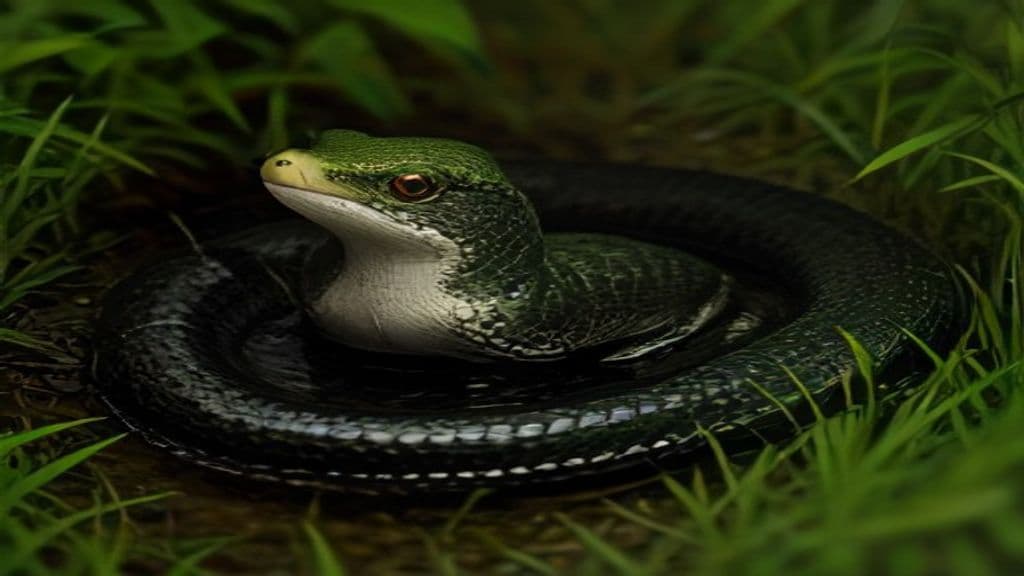
A Eurasian semi‑aquatic, non‑venomous colubrid snake (primarily Natrix natrix and closely related taxa) commonly found near water, compost heaps and field edges. Treated in the provided sources as a biological species with well‑documented natural history rather than a mythic or supernatural being.

Gration
Lesser

Gration

Gration (Greek: Γρατίων) is attested in modern reference databases as a named member of the Giants (Gigantes) of Greek mythology. The supplied sources give only a brief indexical identification and no ancient narrative, description, or ritual material for this figure.

Gravekeeper (modern usage)
Minor Spirit

Gravekeeper (modern usage)

A modern English-language title or name used in diverse contemporary media (music production credits, videogame title, and tabletop/fantasy character name) rather than a coherently documented traditional folkloric entity. The supplied sources show the term functioning as branding or a character title with grave-related connotations but do not record a folk belief, origin myth, or ritual tradition tied to a specific culture.

Grayven
Ancient

Grayven

Grayven is a DC Comics supervillain and New God, described as a son of Darkseid who functions as a warlike, planet‑destroying commander in multiple comic crossover storylines. He appears across DC continuity (comics and animated adaptations) as an antagonistic, near‑immortal combatant whose arcs include being banished, incapacitated, killed, and later resurrected in continuity relaunches.

Great Duke
Lesser

Great Duke

A classificatory title used in Christian demonological systems to denote a high-ranking demon, analogous to earthly and angelic offices. The term functions as a rank within hierarchical taxonomies of infernal beings rather than a single, individuated monster in the provided sources.

Great Spirit
Ancient

Great Spirit

A supreme, often-immanent life force or creator-being present in the traditional spiritual beliefs of many Indigenous peoples of what is today Canada and the United States; concepts and names vary by nation and may refer to a single creator, a pervasive sacred power, or a collective of mysterious sacred forces.

Great comet
Minor Spirit

Great comet

A great comet is an exceptionally bright comet that becomes easily observable to the naked eye and enters popular awareness; the term is descriptive and astronomical rather than a mythic spirit. It is defined by observational impact (brightness and conspicuous tail) rather than by any supernatural ontology in the supplied sources.

Greater spot-nosed monkey
Minor Spirit

Greater spot-nosed monkey

The greater spot-nosed monkey (Cercopithecus nictitans) is a small Old World guenon native to West Africa, typically found in forest–savannah transition zones. Described in zoological and natural-history sources, it is notable for its prominent white nose, small size among Old World monkeys, and complex vocal behaviour including combinatorial alarm calls.

Greek City-State Patron Gods
Primordial

Greek City-State Patron Gods

Patron deities of ancient Greek city-states, associated with the foundation myths and governance of their respective cities. (Note: 1. Power tier should be Ancient, not Primordial, as city-state patron gods are associated with deities-level abilities. 2. Add sensory cues: The presence of a patron deity is often signified by the lo)

Greek Gods
Greater

Greek Gods

A pantheon of all-powerful, immortal beings with human-like personalities and flaws that inhabit Mount Olympus, the highest peak in Greece. (Note: * Power tier: Primordial (not Greater), as they are considered to be born from Chaos, which is at the root of the universe. * Origin story: The source material doesn't mention the birth of the gods fr)

Greek Hero Cult
Greater

Greek Hero Cult

In ancient Greek religion, a hero (heros) is a being that occupies an intermediate plane between mortals and gods. They are venerated for their fame during life or unusual manner of death. (Note: 1. Power tier should be Primordial, as they are "more than human" and occupy an intermediate plane between mortals and gods. 2. Appearance is stated as abstract presence, not a physical description; t)

Greek Heroic Age
Ancient

Greek Heroic Age

A mythological era in ancient Greece, characterized by superhuman heroes and exceptional individuals who embody the values of their time. (Note: - Power tier: The text states they are "superhuman but not divine", implying a level below Ancient (deity-level). Therefore, it should be revised to Primordial=cosmic is out of scope for this entity, )

Greek Mythology
Ancient

Greek Mythology

A collective body of myths and stories that convey the cultural and religious beliefs of ancient Greeks. (Note: - Power tier: Incorrect (Ancient refers to a deity-level power tier, but the article mentions gods, goddesses, and heroes which have varying levels of powers) - Appearance: Not present in source mater)

Greek Mythology Retellings
Primordial

Greek Mythology Retellings

A genre of storytelling that reimagines and reinterprets Greek mythology in contemporary or futuristic settings, often incorporating feminist themes. (Note: - Power tier should be Lesser (local spirit) as it is a narrative construct and not a being that can influence cosmic events. - Appearance: add "They may take on the form of written works, such as nov)

Greek Primordial Deities
Primordial

Greek Primordial Deities

The Greek primordial deities are the first generation of divine, often non-anthropomorphic personifications of fundamental forces, places, and structural elements of the cosmos (e.g., Chaos, Gaia, Tartarus, Eros, Nyx, Erebus). Presented most fully in Hesiod's Theogony and later summaries, they serve as ontological principles that generate later gods, monsters, and the order of the world and were generally not the objects of active cult in the provided sources.

Greek and Roman Mythological Figures
Primordial (cosmic)

Greek and Roman Mythological Figures

A collection of gods, goddesses, and mythological figures from ancient Greek and Roman mythology. (Note: - Power tier: Incorrectly classified as Primordial (cosmic). Greek gods are typically considered deities-level (Ancient). - Abilities: While they do possess supernatural abilities, the specific claims)

Greek water deities
Ancient

Greek water deities

A class of divine and semi‑divine beings in ancient Greek religion and mythology associated with seas, rivers, springs, and liminal watery places. The category ranges from primordial water powers through an Olympian sea‑god to localized nymphs, heroized mortals, trickster elder sea‑figures, and monstrous progeny, reflecting how the Greeks sacralized maritime and freshwater spaces.

Green Arrow
Lesser

Green Arrow

Green Arrow is a fictional, non‑superpowered costumed crime‑fighter (Oliver Jonas Queen) appearing in American comic books published by DC Comics. Portrayed as an expert archer and vigilante who uses specialty arrows, gadgets, and vehicles, he operates in urban settings (Star City, Seattle) and frequently teams with other superheroes.

Green Goblin
Greater

Green Goblin

The Green Goblin is a fictional costumed supervillain persona in American comic-book fiction (Marvel Comics), a recurring archenemy of Spider-Man adopted by multiple human characters and characterized by Halloween-themed gadgetry, a flying Goblin Glider, and an association with chemically induced insanity in its original incarnation.

Green Knight
Greater

Green Knight

A late-medieval Arthurian figure who functions as a supernatural challenger and tester of knightly virtue. In key narratives he appears at King Arthur’s court to issue a beheading challenge and is revealed in some versions to be the enchanted lord Bertilak de Hautdesert (or Bredbeddle in other variants).

Green Lantern
Greater

Green Lantern

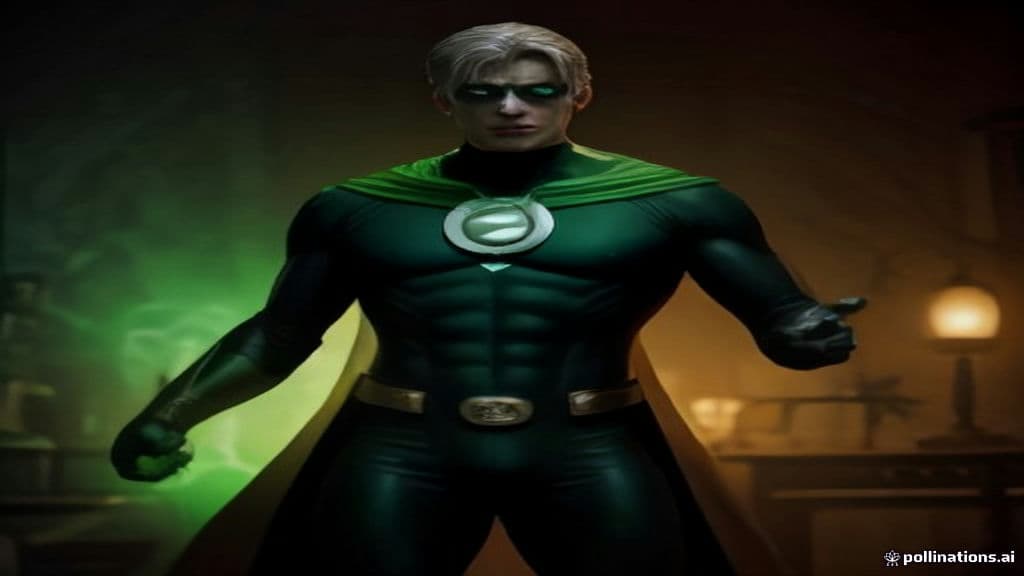
Green Lantern is a title used by multiple superhero characters in DC Comics. The name denotes either the original mystical ring‑wielding hero (Alan Scott) of the Golden Age or members of the later Green Lantern Corps, an interstellar law‑enforcement body empowered by power rings linked to willpower and imagination.

Green Tara
Ancient

Green Tara

Green Tara (Tārā, Ārya Tārā, Jetsün Dölma) is a central female buddha/bodhisattva figure in Mahāyāna and especially Vajrayāna Buddhism, venerated as a liberator who grants swift assistance, removes obstacles, and functions as a meditation deity (yidam) embodied in green form.

Green monkey
Lesser

Green monkey

A biological species of Old World monkey (Chlorocebus sabaeus) native to parts of West Africa and introduced to several Atlantic islands and Caribbean locations. Descriptions in the provided sources are zoological — covering appearance, behavior, distribution, and social structure — with no material treating it as a supernatural entity.

Greenbrier Ghost (Elva Zona Heaster Shue)
Minor Spirit

Greenbrier Ghost (Elva Zona Heaster Shue)

A locally famous Appalachian case in which the spirit of Elva Zona Heaster Shue is reported to have communicated to her mother the circumstances of her own 1897 death, prompting an exhumation and autopsy that produced medico-legal evidence and a subsequent murder conviction.

Gremlin
Minor Spirit

Gremlin

A modern machine-age folkloric creature, first attested in Royal Air Force slang in the 1920s, invoked by airmen to personify and explain inexplicable mechanical malfunctions in aircraft and other machinery. Gremlins function socially as scapegoats that reduce interpersonal blame and bolster morale in high-stress technical settings; later popularized in fiction by authors such as Roald Dahl.

Gremory
Lesser

Gremory

Gremory (also attested as Gemory in the supplied corpus) is named in at least one modern reference as a demon listed in demonological grimoires. The supplied materials identify the name within the Western grimoire tradition but do not provide further primary grimoire details in this dossier.

Grendel
Greater

Grendel

A hostile supernatural figure from the Old English epic Beowulf who raids King Hroðgar’s mead‑hall Heorot. Presented as a night‑dwelling, exiled being variously classified with Germanic eotenas/þyrs and described in the poem as descended from the Biblical Cain; his defeat by Beowulf restores communal order.

Grendel's mother
Greater

Grendel's mother

A principal antagonist in the Old English epic Beowulf, presented as the mother of Grendel and a member of the poem's category of Cain-descended “monsters.” She attacks Heorot in vengeance for her son and is slain by Beowulf in her underwater lair.

Grey Gargoyle (Paul Pierre Duval)
Greater

Grey Gargoyle (Paul Pierre Duval)

A Marvel Comics supervillain whose right hand was permanently transformed into living stone by an industrial chemical accident; he can transmute touched matter to stone temporarily and can convert his whole body into living stone, acting as a recurring antagonist to superheroes such as Thor. He has at times been amplified by cosmic events (e.g., becoming Mokk during Fear Itself) and has been reverted or contained through a variety of tactical and magical interventions.

Grey Hulk
Greater

Grey Hulk

A distinct persona/alter of Bruce Banner within mainstream American comic-book continuity and adaptations, identified by grey skin in many iterations and a temperament that differs from other Hulk personae. The Grey Hulk is an internal, emergent identity that manifests during Banner's transformations rather than an external spirit or traditional folkloric being.

Grey wolf (mythology)
Lesser

Grey wolf (mythology)

The Grey wolf is both the biological species Canis lupus and a mythic/symbolic animal in several Eurasian traditions. In Turkic, Mongolian, and broader Altaic contexts it is described as a sacred animal and national symbol; in other Eurasian mythic corpora wolves also appear as powerful mythic figures (e.g., Norse Fenrir) though those are distinct literary entities.