Entity Index

A record of the unseen, drawn from world folklore.

7694 entities · page 66 of 129

Gegants from Tarragona
Minor Spirit

Gegants from Tarragona

No information on the gegants of Tarragona is present in the provided source. The supplied material concerns the city of Terrassa and does not describe gegants, their appearance, history, rituals, or cultural role in Tarragona.

Gegants i Nans de l'Arboç
Lesser

Gegants i Nans de l'Arboç

Gegants i Nans de l'Arboç are processional giants and dwarfs — large, human-form effigies used in public parades and festivals in the town of l'Arboç. They are civic, ceremonial objects created and carried by people for communal celebration rather than autonomous supernatural beings.

Gegants vells de Cervera
Minor Spirit

Gegants vells de Cervera

The Gegants vells de Cervera are processional giants — large anthropomorphic parade figures from the town of Cervera in Catalonia, Spain. They belong to the Catalan tradition of gegants used in civic and ceremonial processions and are presented in sources as cultural artifacts rather than animate supernatural beings.

Geira

Geira

In Slavic tradition, Geira was a Wendish princess attested by Old Norse sagas who ruled over territory near the border of Germania and married a young Óláfr Tryggvasonr. (Note: * Power tier: Not provided in source material, but can be inferred as Primordial given the lack of detailed information and Geira's significance in Old Norse sagas. * Summary: Inaccurate; correct summ)

Geist
Lesser

Geist

A German-language term with overlapping senses: a ghostly or haunting presence, an immaterial religious spirit (e.g., the Holy Spirit), and an intellectual or cultural animating principle (mind, Weltgeist, Zeitgeist). Its precise meaning depends on context and historical usage.

Gelanor
Lesser

Gelanor

Gelanor is a name attested in two distinct contexts in the supplied sources: (1) as an alternate personal name for Pelasgus, an Inachid king of Argos in Greek mytho-historical tradition; and (2) as the Latinized scientific name of a genus of arachnids. Neither source presents Gelanor as a supernatural being.

Gelede (Gẹlẹdẹ)
Lesser

Gelede (Gẹlẹdẹ)

Gelede is a Yoruba public masquerade spectacle and the ritual institution that honors and manages the spiritual power of 'Mothers' (senior women, female ancestors and deities). As a multi-media performance of carved and painted headdresses, masks, dance and music, Gelede functions to celebrate fertility and motherhood, educate the community, and placate potentially dangerous female powers.

Gello
Lesser

Gello

A child-strangling demoness of Greek and Byzantine tradition, the spirit of a young woman who died before marriage, now preying on pregnant women and newborns.

Gelonians (Geloni)
Ancient

Gelonians (Geloni)

The Gelonians (Geloni) are described in Herodotus and later summaries as a settled, urbanized people of the forest‑steppe north of the Black Sea who inhabited the city of Gelonus. In Herodotus' ethnographic account they are distinguished from neighbouring nomads by agriculture, crafts, wooden temples, and a triennial Bacchic/Dionysian festival; archaeological verification of some claims (e.g., sanctuaries) is noted as lacking in the supplied sources.

Gemory (Gremory)
Greater

Gemory (Gremory)

Gemory (also Gremory, Gamori, Gomory, and variants) is a named Goetic spirit catalogued in medieval and early modern European grimoires. Described as a crowned woman riding a camel, she is attributed powers over hidden treasures, knowledge of past/present/future, and procuring love; her rank and legion counts vary between sources.

Genderuwo
Greater

Genderuwo

Genderuwo is a Javanese/Indonesian supernatural humanoid spirit, commonly depicted in modern sources as a large, hairy, muscular creature with reddish or black skin and bulging eyes; it is described as able to appear, disappear, and assume human form. It is treated in regional folklore and popular culture as one member among many named hantu (supernatural beings) in the Malay–Indonesian mythic landscape.

General Ironfist
Lesser

General Ironfist

“General Ironfist” is not a single folkloric or mythic being but a recurring modern fictional epithet or proper name applied to disparate martial characters across games, pulp fiction, comics, and novels. The label signals martial authority, toughness, or fighting prowess in English-language popular media rather than a unified supernatural tradition.

General Sinui
Minor Spirit

General Sinui

A legendary figure in Korean tradition who attempted to cheat death, but failed. (Note: 1. Power tier: Incorrectly classified as Minor Spirit. Given that General Sinui is a legendary figure who defied death, it's likely he should be categorized as a Greater (powerful regional) or at leas)

Genevieve of Brabant
Lesser

Genevieve of Brabant

Genevieve of Brabant (Genoveva, Genoveffa) is a legendary/hagiographic medieval European heroine: a chaste wife falsely accused of adultery who survives execution, lives in exile with her child nourished by a roe deer, and is later vindicated and restored to honour. The tale functions as a moral exemplum and became popular in early modern drama, opera and puppet theatre.

Gengen-Wer
Primordial

Gengen-Wer

Gengen-Wer (also Negeg-Wer) is an Egyptian mythological avian figure presented in secondary summaries as a celestial goose associated with the origin of life; sources describe it either as bearing or guarding a cosmic egg from which creation emerged and note a minor textual appearance in Chapter 59 of the Book of the Dead.

Genius (genii)
Ancient

Genius (genii)

In Roman tradition, the genius is the guiding, tutelary spirit associated with an individual, a family (gens), or a place (genius loci). Originally a numinous presence tied to birth, generation, and lineage, the term later developed a secondary meaning of exceptional personal inspiration or talent.

Genius Loci
Greater

Genius Loci

In classical Roman religion the genius loci is the protective, guiding spirit inherent to a particular place. It functions as the object of local cult and sacrifice intended to secure the well-being and continuity of houses, neighborhoods, and by extension political territory.

Georgian Mythology (Overview)
Minor Spirit

Georgian Mythology (Overview)

A general overview of Georgian mythology, its history, and cultural context. No specific supernatural entity is mentioned. (Note: - Remove the entire article as it does not refer to a specific supernatural entity - Power tier should be "Primordial" or left blank since there is no specific entity mentioned)

Geraestus the Cyclops
Lesser

Geraestus the Cyclops

Geraestus (Geraistos) is a named member of the Cyclopes in Greek tradition whose tomb near Athens is cited in mythic histories. He is chiefly attested as the occupant/identifier of a grave that functions as the location for an extreme ritual (the sacrificial slaying of the daughters of Hyacinth) ordered by an oracle during a famine and pestilence in the generation of Aegeus and the Minos conflict. The name also appears as a toponym in Homeric itineraries.

Geraint
Minor Spirit

Geraint

Geraint is a personal name borne by overlapping human figures in Welsh and Brittonic tradition: a valiant warrior celebrated in early medieval poetry, the protagonist of the Arthurian romance Geraint and Enid, and a king of Dumnonia attested in a saints' vita. The name links heroic, courtly, and hagiographic registers rather than a supernatural taxonomy.

Geraint son of Erbin
Lesser

Geraint son of Erbin

Geraint son of Erbin (Middle Welsh: Geraint uab Erbin / Geraint mab Erbin) is a medieval Welsh legendary hero celebrated in early Middle Welsh englynion for his deeds at the Battle of Llongborth and later as the protagonist of the prose romance "Geraint and Enid," an adaptation of Chrétien de Troyes' Erec and Enide. He functions in the Welsh literary tradition as a martial exemplar situated in the heroic past rather than as a supernatural being.

German
Lesser

German

German is a South Slavic male vegetation and weather spirit recorded in eastern Serbia and northern Bulgaria. Known primarily through ritual effigies and rites performed by girls and young women, he is associated in folk belief with bringing rain and hail and with a symbolic death-and-revival cycle tied to agricultural fertility.

Germanic Dragon
Primordial

Germanic Dragon

A large, serpentine creature from Germanic mythology that hoards gold and shares characteristics with cosmic beings. (Note: 1. Power tier should be Ancient instead of Primordial, as the source describes them sharing characteristics with "other dragons in European mythology", implying a level below cosmic. 2. Remove "venomo)

Germanic Heroic Age
Minor Spirit

Germanic Heroic Age

A cultural and historical period in Germanic societies, reflected in their poetry and stories, which often expressed the values and customs of the time. (Note: 1. "Minor Spirit" is an incorrect power tier; no mythological beings are associated with this entity. 2. Remove mention of appearance and abilities as they do not apply to a historical/cultural period)

Geryon
Greater

Geryon

Geryon is a monstrous, martial figure from Greek heroic-age mythology who dwells on the far-western island Erytheia and guards a valuable herd of red cattle; he is best known as the opponent slain by Heracles in the Tenth Labour. Classical sources present multiple, conflicting physical descriptions; later reception (notably Dante) recasts the name as an allegorical composite monster.

Geshtinanna
Lesser

Geshtinanna

Geshtinanna is a Sumerian goddess functioning as the underworld's chief scribe and a specialist in scribal arts and dream interpretation; mythically she is the sister of Dumuzi and participates in his death‑and‑return cycle, once residing in the netherworld for part of the year in his stead.

Gevurah
Ancient

Gevurah

Gevurah (Hebrew: גְּבוּרָה, Găḇūrā) is the fifth sephirah on the Kabbalistic Tree of Life, an emanation representing the divine principles of judgment, limitation, and disciplined strength. It functions as a structural attribute within Jewish mystical cosmology rather than an individual personal spirit.

Ghatotkacha
Greater

Ghatotkacha

Ghatotkacha (Sanskrit: घटोत्कच, IAST: Ghaṭotkaca) is a singular mytho-heroic figure in the Indian epic Mahabharata, born to the Pandava Bhima and the rakshasi Hidimbi. He is portrayed as a powerful rakshasa-warrior allied to the Pandavas, famed for night-effective magic, illusions, great size, and a climactic death that cost the Kaurava side a large-scale loss.

Ghoshayatra Parva
Primordial

Ghoshayatra Parva

Episode from the Hindu epic Mahabharata where Kauravas are captured by gandharvas and released by the Pandavas. (Note: - Power tier: Ancient (deity-level abilities would fit better with the described events in the source material) - Appearance: Should be added as per source material does not describe but one can infer)

Ghost
Lesser

Ghost

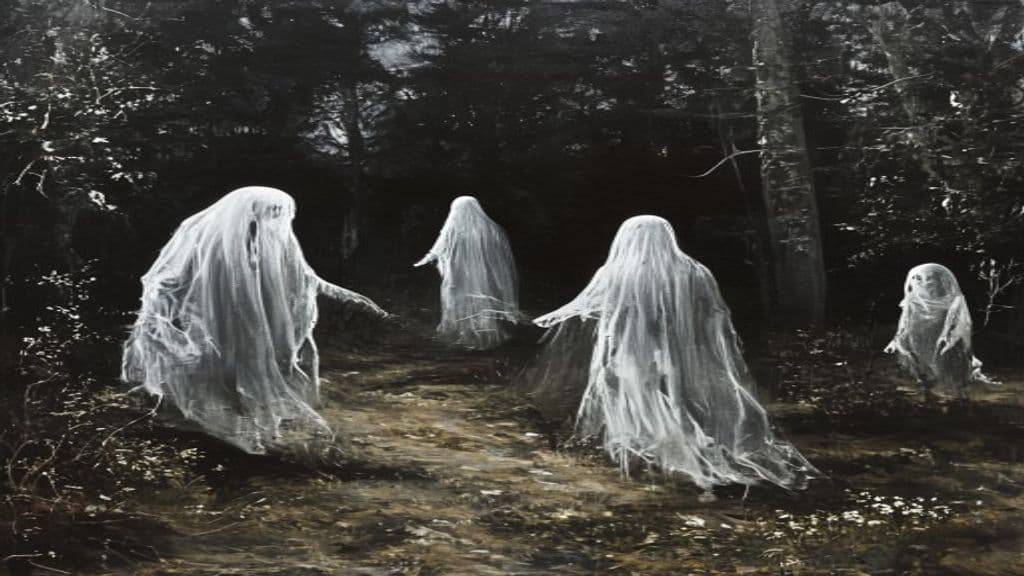
A ghost is, in folklore, the soul or spirit of a dead person or non-human animal believed by some to be able to appear to the living. The concept functions across many cultures as an afterlife manifestation tied to ancestor belief, animism, and rituals intended to rest or manage the dead, while modern scientific accounts treat reported phenomena as lacking proof and often propose physiological or environmental explanations.

Ghost Child (toyol, urn)
Lesser

Ghost Child (toyol, urn)

A named supernatural figure appearing in the 2013 Singaporean horror film Ghost Child (Chinese: 鬼仔), identified in the film as a toyol kept within an urn that brings malicious domestic disturbances to a household. The film is the only supplied source that presents this discrete spirit as an agent in a folk-derived domestic narrative.

Ghost Rider
Greater

Ghost Rider

Ghost Rider is a Marvel Comics mantle borne by multiple human hosts who transform into a flaming-skulled, skeletal superhuman bonded to a supernatural agency variously described as a demon (Zarathos), a Spirit of Vengeance, or an incarnation of Death/Judgment. The figure functions in-universe as an avenger/antihero who enacts retributive justice and is associated with hellfire and a supernatural vehicle (motorcycle or, in some incarnations, a muscle car).

Ghost Ship (Phantom Ship)
Minor Spirit

Ghost Ship (Phantom Ship)

A ghost ship (or phantom ship) denotes either a physical vessel found adrift with no living crew or a spectral vessel apparition reported in maritime folklore. The motif functions across maritime cultures as omen, memory of catastrophe, and a narrative way to confront unexplained loss at sea.

Ghost Shirt (Lakota Tradition)
Greater

Ghost Shirt (Lakota Tradition)

A spiritualized object imbued with powers to protect its wearer from harm or possession by malevolent spirits. (Note: 1. Power tier: Primordial (given its association with spiritual visions from the founder, it's reasonable to assume a higher power level) 2. Abilities: The source material doesn't explicitly mention p)

Ghost Sickness (Navajo Tradition)
Lesser

Ghost Sickness (Navajo Tradition)

A cultural and psychological concept describing a state of being consumed by grief or preoccupation with the deceased. (Note: - Power tier: Primordial (Ghost Sickness is not an entity with concrete abilities, but rather a psychological state that affects individuals) - Appearance: No description needed, as it's a psychologic)

Ghost Train
Lesser

Ghost Train

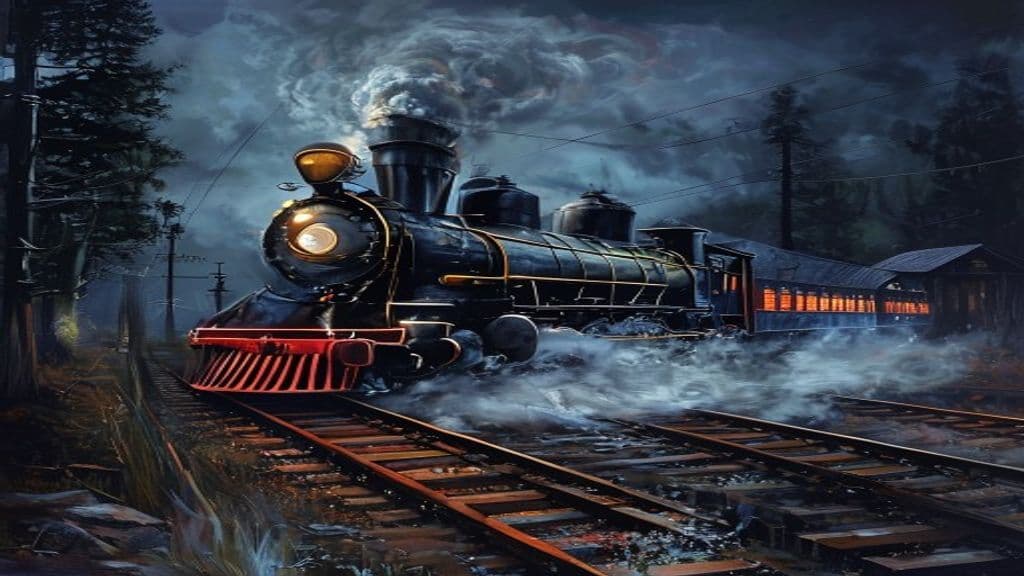
A folkloric apparition whose visible form is an entire train or rail vehicle rather than a single disembodied human spirit. Reported in multiple regions where railways have been significant, it appears variously as omen, commemorative phantom, or an imitation created by animal tricksters in local tales.

Ghost of Kyiv
Lesser

Ghost of Kyiv

A modern wartime legend and morale symbol that emerged in the first 30 hours of the Russian invasion of Ukraine (24 February 2022). Presented as a mythical MiG-29 ace credited in social media with multiple shoot-downs, the persona was later acknowledged by Ukrainian officials as a constructed 'superhero-legend' embodying collective pilot spirit rather than a verified individual or literal supernatural being.

Ghoul
Lesser

Ghoul

A ghoul is a demon-like or monstrous humanoid originating in pre-Islamic Arabian religion, traditionally associated with graveyards and the consumption of human flesh. The concept later entered broader folklore and has been widely reused and transformed in modern fiction and popular culture.

Ghul (Ghoul)
Lesser

Ghul (Ghoul)

A demon-like monstrous humanoid from Arabian folklore, traditionally associated with graveyards and the consumption of human flesh; described in scholarship as originating in pre-Islamic Arabian religion.

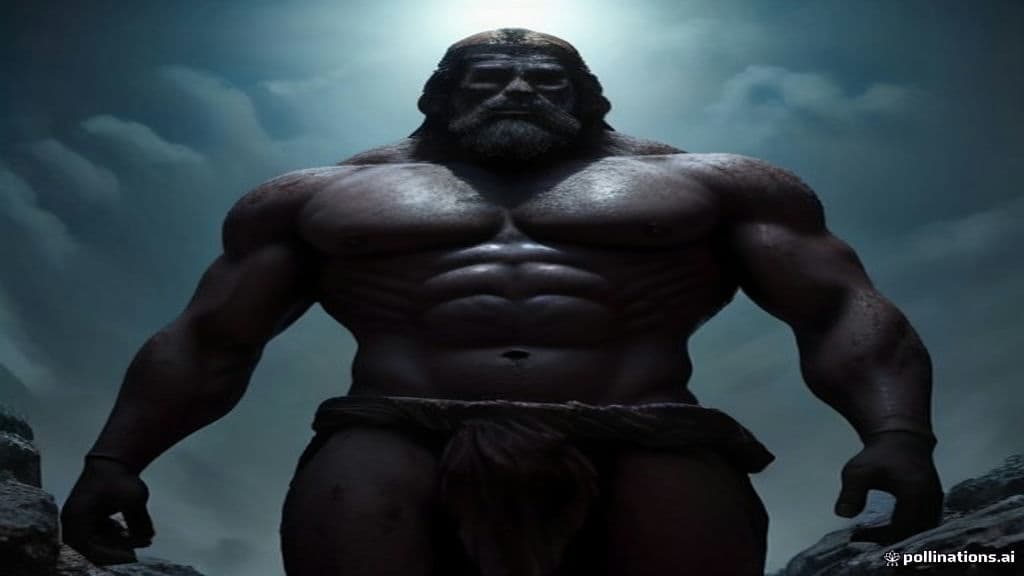
Giant
Greater

Giant

A recurring figure-type in myth, legend, and folktale characterized chiefly by humanoid form combined with prodigious size and strength. Giants function variably as monsters, culture-heroes, ancestral figures, or etiological agents that explain landscape features and large ancient remains.

Giant frog
Minor Spirit

Giant frog

The English label "giant frog" in the supplied sources is ambiguous: it names several very large real-world frog species (Blyth's river frog, Cyclorana australis, and the Goliath frog) and also appears as a short Wikidata classification linking the phrase to the category of youkai in Japanese mythology. The materials do not supply a single, unified folkloric entity or narrative for a specific giant-frog youkai.

Giants of Ath
Minor Spirit

Giants of Ath

No attested folkloric entity called 'Giants of Ath' appears in the supplied sources. The name 'Ath' appears only as a Belgian place-name; other references to 'giants' in the sources are modern metaphorical or sports uses and not traditional beings.

Giants of Lier
Lesser

Giants of Lier

A toponymic and historiographic label rather than a documented supernatural being in the supplied sources. The phrase reflects the broader European folkloric practice of attributing large prehistoric megaliths (e.g., hunebedden, 'Giants' graves') to 'giants'; a Wikidata metadata entry links the phrase to Lier (Belgium) but no primary folkloric narratives or ritual practices specific to 'Giants of Lier' are provided in the consulted material.

Giants of Valls
Minor Spirit

Giants of Valls

Large processional effigies associated with the city of Valls in Catalonia, described in available sources as 'processional giants' appearing in the town's traditional festivals and civic customs.

Giants of the Montbau neighborhood
Lesser

Giants of the Montbau neighborhood

A minimal attestation in a single catalog entry names a class of beings as the "giants of the Montbau neighborhood." Beyond this label, the source provides no descriptive, ritual, or contextual detail; the classification here is based solely on that one brief entry.

Giasone
Lesser

Giasone

Giasone is the Italian form of the mythic Greek hero Jason, presented in a 17th-century Italian opera (Cavalli's Giasone) and in retellings of the Jason and Medea cycle. He is a mortal leader of the Argonauts whose success in the quest for the Golden Fleece depends on martial courage and the active intervention of supernatural agents—most notably Medea's sorcery and chthonic powers.

Gibborim
Lesser

Gibborim

A Hebrew term (plural of gibbor) meaning "mighty ones," used in the Hebrew Bible to denote exceptional martial valor (e.g., David's mighty men) and, in later interpretation, applied to legendary or antediluvian "men of renown" sometimes associated with giants or Nephilim. The concept spans ordinary elite warriors to interpretive traditions of larger‑than‑life ancient figures.

Gibil (Girra)
Greater

Gibil (Girra)

Gibil (Akkadian Girra) is a Mesopotamian deity personifying fire in its constructive (furnaces, metallurgy, ritual purification) and destructive (lightning-set conflagrations, burning fields) aspects. He is attested in city cults (Shuruppak, Eridu, Nippur) and invoked in ritual and incantation literature (Maqlû, Šurpu, namburbi) for purification and counter-magic purposes.

Gideon Stargrave
Minor Spirit

Gideon Stargrave

Gideon Stargrave is a fictional comics character created by Grant Morrison in 1978 who functions as a pulp‑style 1970s spy archetype and as a metafictional persona adopted by other characters (notably King Mob) within Morrison's The Invisibles. The character exists as a literary construct and metatextual device rather than a supernatural being.

Gidim / Eṭemmu (Mesopotamian ghost)
Lesser

Gidim / Eṭemmu (Mesopotamian ghost)

The gidim (Sumerian) or eṭemmu (Akkadian) is the shade or continuing personal spirit of a deceased person in Mesopotamian religion. Created at death and received into the ordered netherworld (Irkalla) by the Anunnaki court, these spirits depend on funerary offerings and are implicated in a Mesopotamian causal world where neglect can produce illness and misfortune among the living.

Gigan
Greater

Gigan

Gigan is a fictional kaiju from Toho's Godzilla franchise: a constructed, weaponized, avian-appearing monster presented in Showa continuity as an extraterrestrial creature transformed into a cyborg by the Nebulans and in Millennium continuity as an ancient bioweapon created by the Xilliens. He serves as an alien-deployed combatant and recurring antagonist in films, television, and related media.

Gigantes
Ancient

Gigantes

In Greek myth the Gigantes (Gigantes) are a race associated with great strength and aggression who wage war against the Olympian gods in the Gigantomachy. Classical summaries (via Hesiod as reported in standard reference summaries) present them as offspring of Gaia born from the blood of Uranus after his castration by Cronus and as cosmological antagonists whose defeat helps establish Olympian order.

Gigantius
Minor Spirit

Gigantius

Gigantius is the Maastricht stadsreus (city giant), a constructed processional figure used in civic parades and festivals in Maastricht, Netherlands, maintained and presented by a local Reuzengilde/Foundation rather than described as a supernatural being.

Gil-galad
Ancient

Gil-galad

Gil-galad is a fictional Elven king in J. R. R. Tolkien's Middle-earth legendarium, described as the last High King of the Noldor who founded a realm in Lindon, co-led the Last Alliance with Elendil against Sauron at the end of the Second Age, and died in the final hand-to-hand confrontation with Sauron.

Gilgamesh
Ancient

Gilgamesh

Gilgamesh is a semi-divine legendary king of the Sumerian city of Uruk who features as the protagonist of a pan‑Mesopotamian epic tradition. Portrayed in literary sources as a demigod of superhuman strength, he is both a historical monarch recorded in king lists and a later object of cultic veneration.

Gingerbread Man
Minor Spirit

Gingerbread Man

A cultural motif that exists both as a human‑shaped gingerbread biscuit and as an anthropomorphic figure in European fairy‑tale and modern media: in tales a baked gingerbread cookie 'comes to life', speaks, runs from pursuers, and in the canonical story is ultimately eaten by a fox. The figure functions as a seasonal culinary object and as a narrative character rather than a systematic spirit-type in traditional cosmologies.

Ginnungagap
Primordial

Ginnungagap

In Old Norse myth, Ginnungagap is the primordial void or gaping chasm that existed before creation; positioned between the cold north (Niflheim) and the fiery south (Múspellheim), it is the liminal space where ice and sparks met and from which the primordial beings and the ordered world emerged.

Girra (Gibil)
Ancient

Girra (Gibil)

Girra (Sumerian Gibil) is the Mesopotamian god/personification of fire, attested in offering lists and temple contexts from the Early Dynastic period through the Kassite period and later Assyrian and Uruk sources. He embodies both the purificatory and destructive aspects of fire and functions within temple ritual and purification practice; his emblem is a torch.

Girtablilu (Scorpion-man)
Lesser

Girtablilu (Scorpion-man)

A hybrid human–scorpion figure attested in Akkadian-language mythic texts; the supplied source states that scorpion-men feature in several ancient Mesopotamian myths, including the Enûma Elish and the Standard Babylonian Epic of Gilgamesh.

Girtablullu
Lesser

Girtablullu

Girtablullu is an Akkadian-era hybrid monster described in secondary sources as a 'scorpion-man' (human head and arms with a scorpion body). It is attested in modern summaries of Mesopotamian mythic lists and is noted in secondary material as both one of the hybrid monstrous personages in Akkadian literature and as an apotropaic creature associated with the sun/justice god Utu/Shamash.