Entity Index

A record of the unseen, drawn from world folklore.

7685 entities · page 64 of 129

Fárbauti
Lesser

Fárbauti

Fárbauti is a jötunn named in Old Norse sources as the father of Loki. He appears chiefly in genealogical attestations and as a poetic name-element (kenning) rather than as an active character in surviving narratives; some scholars have proposed interpretive readings of his name that link him to striking or lightning imagery.

Fänggen
Greater

Fänggen

Fänggen (sing. Fängge/Fangga/Fanggin) are forest-dwelling members of the 'wild folk' in German-speaking Alpine folklore. They are described variously as anthropomorphic tree-personifications (wood-mothers), giant hairy wild women, or—in other regional variants—as smaller, powerful wood-dwellers (Waldfänken/Fankerl). Their lives are traditionally understood as bound to particular large or old trees; when a tree dies or is felled the corresponding Fangga likewise dies or disappears.

Fénius Farsaid
Lesser

Fénius Farsaid

Fénius Farsaid is a legendary ancestral king and culture-hero in medieval Irish tradition credited in literary sources with organizing or inventing learned forms of speech and script (notably the Goidelic tongue and Ogham) and placed in the Tower of Babel narrative as an ancestor of the Gaels.

Fëanor
Ancient

Fëanor

Fëanor is a singular fictional Elf of the Noldor in J. R. R. Tolkien's legendarium, famed as the foremost craftsman and leader whose creation of the Silmarils, and the oath he and his sons swore over them, precipitated exile, kinslaying, and long-lasting calamities among the Elves.

Fódla
Ancient

Fódla

Fódla (also Fótla; modern Fódhla, Fodhla, Fóla) is an Irish tutelary goddess and land-personification of Ireland, one member of the triadic sovereignty figures Ériu, Banba, and Fódla within the Tuatha Dé Danann corpus. She appears in Milesian arrival narratives and in lists of rulers where her name is attached to the land and to queenship functions.

Fúamnach (Fuamnach)
Greater

Fúamnach (Fuamnach)

Fúamnach is a named female member of the Tuatha Dé Danann in the medieval Irish tale Tochmarc Étaíne (The Wooing of Étaín). Presented as Midir's first wife and a learned sorceress fostered to the filidh Bresal Etarlám, she uses transmutative spells and wind-magic in a jealous campaign against Étaín and is ultimately tracked down and beheaded by Aengus (Mac Óc), who also kills her fosterfather.

Făt‑Frumos
Lesser

Făt‑Frumos

Făt‑Frumos is the archetypal heroic youth in Romanian folktales: a princely, handsome knight-hero who undertakes superhuman trials, travels between the human world and the tarâmul celălalt, and restores order by defeating monstrous foes.

G'nort Esplanade G'neesmacher
Greater

G'nort Esplanade G'neesmacher

G'nort is a fictional anthropomorphic-dog alien from DC Comics who served at times as a Green Lantern and a Darkstar and has appeared as a comic-relief but valorous supporting character across multiple storylines. Created by Keith Giffen and J. M. DeMatteis, he first appeared in Justice League International #10 (February 1988) and recurs in tales involving Corps-level conflicts and Justice League teams.

Gaap
Greater

Gaap

Gaap is a named spirit from early modern and medieval European demonological grimoires presented as a high-ranking office-holder in hierarchical occult catalogs. Across texts he appears as a prince or president who commands legions, has jurisdictional (cardinal) associations, and is ascribed powers ranging from teaching and invisibility to love-working and medical/sexual interventions.

Gabe Jones
Minor Spirit

Gabe Jones

Gabe Jones is a fictional human character from Marvel Comics, introduced as an African-American member of the World War II-era squad the Howling Commandos who later serves as a S.H.I.E.L.D. agent in the shared Marvel continuity and appears across comics, film, animation, and games.

Gabija
Lesser

Gabija

Gabija is the Lithuanian household fire spirit and protector of the hearth and family. Treated as a living presence in the home, she is cared for through routine domestic practices (feeding, covering embers, providing water) and is held responsible in folklore for wandering or destructive fires when offended or neglected.

Gabriel
Greater

Gabriel

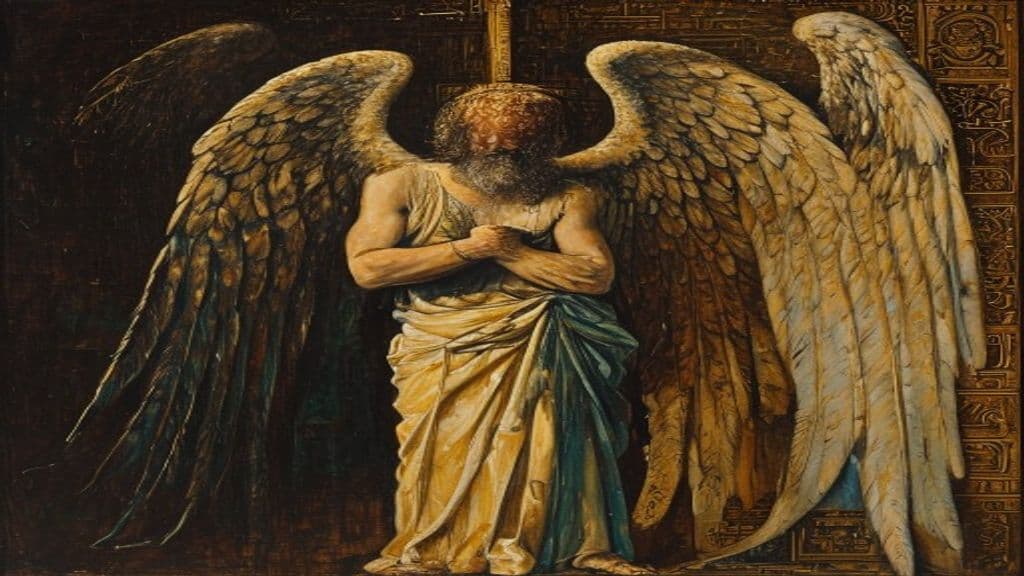
A principal heavenly messenger in Jewish, Christian, and Islamic literatures, Gabriel is portrayed as an archangel who reveals and explains divine messages, announces births and divine intent, and executes certain divine judgments in apocalyptic texts.

Gabuthelon
Lesser

Gabuthelon

Gabuthelon is a non‑canonical named heavenly being attested in the Greek Apocalypse of Ezra (Revelation of Esdras). The figure appears in a roster of nine angels whose names were "revealed to Esdras" and who are said to "govern at the end of the world." No independent biography, iconography, or ritual material for Gabuthelon is preserved in the cited sources.

Gadrel
Lesser

Gadrel

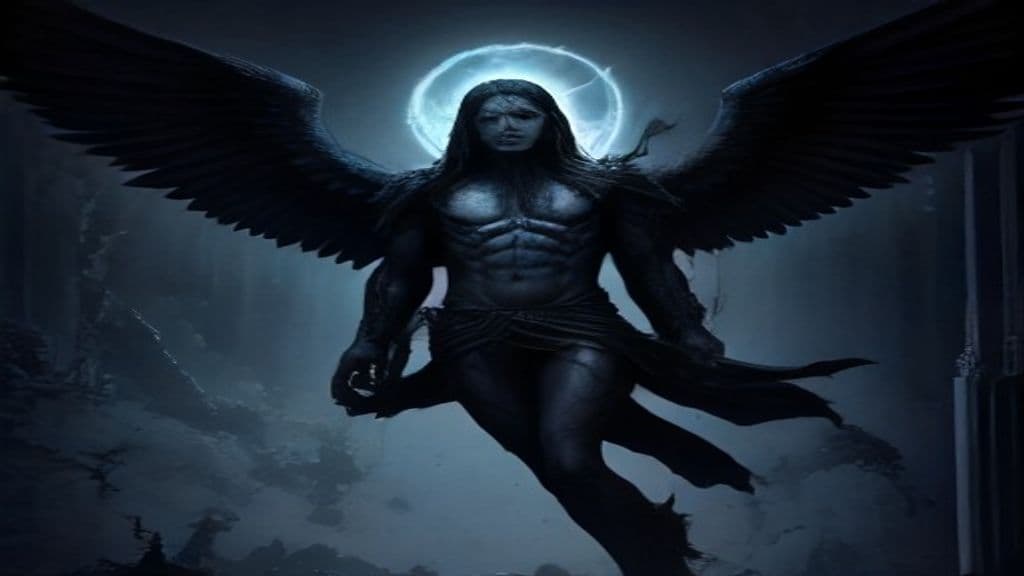
Gadrel (also rendered Gadr’el) is a name that appears in modern secondary and popular accounts as an adversarial celestial figure—sometimes described as a fallen angel, an 'angel of death,' or equated with Satan/Lucifer in contemporary polemical commentary. The available sources are modern, speculative, and non-uniform; no stable pre-modern canonical tradition for Gadrel is documented in the supplied material.

Gagana
Greater

Gagana

Gagana is a miraculous bird of Russian folklore said to live on the mythic island Buyan. Described as guardian of the Alatyr alongside the snake Garafena, she performs miracles and can aid petitioners if properly invoked.

Gagoze
Lesser

Gagoze

Gagoze is a Japanese yōkai traditionally associated with Gangō-ji temple in Nara. In classical sources and pictorial collections it is treated as an oni-like, temple-associated spirit that appears at night and was implicated in a Heian-period tale of nocturnal killings at the temple's bell tower.

Gaheris
Lesser

Gaheris

Gaheris is a literary figure of the Arthurian romance tradition: a Knight of the Round Table, son of King Lot and Queen Morgause, and a brother of Gawain. Presented in continental French poetry, the Vulgate/Lancelot-Grail cycle, and Thomas Malory's Le Morte d'Arthur, his martial deeds, a notorious act of matricide in Malory, and his death during Lancelot's rescue of Guinevere are depicted as contributing to the political unraveling of Arthur's court.

Gaia
Primordial

Gaia

Gaia is the ancient Greek personification of the Earth and a protogenos who arises after Chaos. She functions as the maternal foundation of the cosmos, producing principal elements (mountains, sea), primordial beings (Uranus, Titans, Cyclopes, Hecatoncheires), and acting as advisor and agent in key theogonic events.

Gaizkiñ (Basque Tradition)
Primordial

Gaizkiñ (Basque Tradition)

In Basque mythology, Gaizkiñ is a malevolent entity believed to cause diseases and harm humans physically. (Note: * Power tier: Primordial seems too high given the limited scope of abilities (causing diseases and physical harm). A Greater power tier might be more fitting. * No sensory cues or weaknesses mentioned)

Gaja (Hindu tradition)
Greater

Gaja (Hindu tradition)

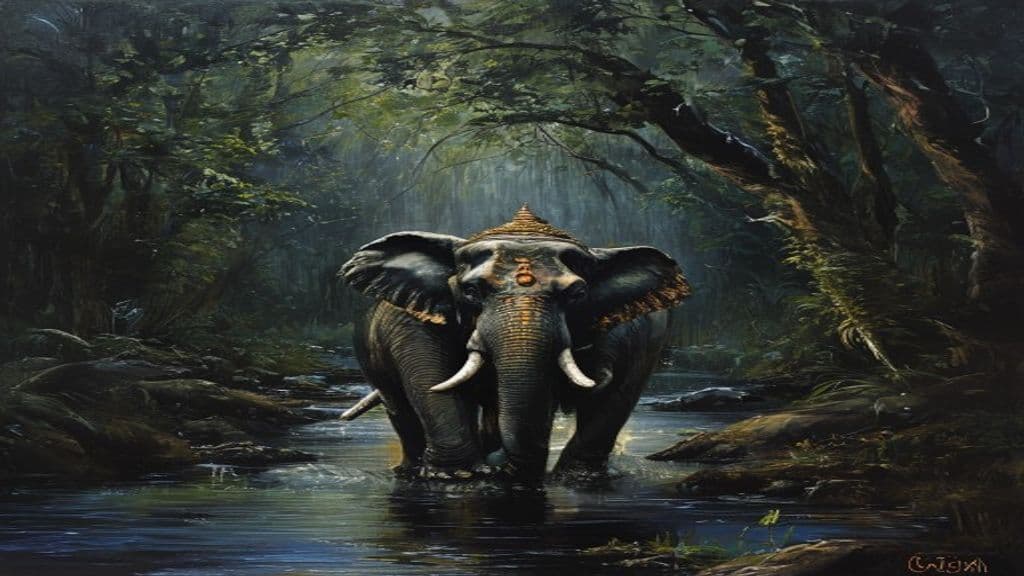
In Hinduism, the Gaja is an elephant with cultural and symbolic significance, appearing in various scriptures. (Note: - Power tier should be Primordial (as it's an animal referenced in multiple scriptures and holds cultural significance) - No specific physical description is mentioned, so Appearance section should be)

Gaki (hungry ghosts)
Lesser

Gaki (hungry ghosts)

Gaki is the Japanese term often used in secondary literature for beings corresponding to the Sanskrit preta, commonly translated as 'hungry ghosts.' The supplied source material for this entry contains no substantive primary descriptions and therefore records questions and absences as well as the minimal, well-attested identification as a named category.

Galactus
Greater

Galactus

Galactus is a fictional cosmic entity from Marvel Comics, conceived as a god-like, quasi-cosmic figure whose compulsive need to consume planets shapes events on a universal scale. Created by Stan Lee and Jack Kirby, he first appears in Fantastic Four #48–50 (1966) and functions within the Marvel fictional cosmology as a force beyond ordinary morality.

Galadriel
Ancient

Galadriel

Galadriel is a fictional Elven ruler in J. R. R. Tolkien's legendarium: a royal Elf of both the Noldor and the Teleri, famed as the 'mightiest and fairest of all the Elves that remained in Middle-earth.' She appears across the First, Second, and Third Ages as a leader of her people, keeper of one of the Three Rings (Nenya), and a moral tester confronted with the temptation of the One Ring.

Galahad
Minor Spirit

Galahad

Galahad is a human knight of the Arthurian Round Table introduced in the 13th‑century Lancelot–Grail (Vulgate) cycle, portrayed as the divinely chosen achiever of the Holy Grail and an exemplar of spiritual perfection and chastity who ascends to heaven after completing the Grail Quest.

Galaxaura
Minor Spirit

Galaxaura

Galaxaura is a minor named attendant of Persephone recorded in modern mythographic summaries of Greek myth. She is listed among the companions or maidens present at the abduction of Persephone but has no independent myths, cult, or attributes in the provided sources.

Galehaut
Lesser

Galehaut

Galehaut is a literary figure of the medieval Arthurian cycle: a sovereign prince and great knight-commander of the Distant Isles (Sorelois/Surluse) who first opposes King Arthur, then surrenders and becomes a close companion of Lancelot. In the Prose Lancelot and related romances he functions as an exemplar of chivalric magnanimity and tragic devotion; some redactions describe him as the son of a 'Fair Giantess' (a half‑giant) while later literature repurposes his name as a mediator of illicit love.

Galla demons
Lesser

Galla demons

Galla are presented in the supplied sources as members of the broader Mesopotamian conception of non-divine, nonhuman spirits associated with the unseen world and the underworld; the provided materials do not contain a dedicated primary text about Galla, so specific attributes remain uncertain and must be inferred from related Mesopotamian spirit categories (e.g., udug/utukku, Pazuzu).

Galli
Lesser

Galli

The galli are ritual specialists associated with the Phrygian goddess Cybele (Magna Mater) and her consort Attis who, in Hellenistic and Roman contexts, performed ecstatic mourning rites, adopted feminine presentation, and in some accounts underwent castration. They functioned as liminal performers of sacred ecstasy and mediators of the goddess’s power within an officially recognized foreign cult in Rome from the early 3rd century BCE onward.

Gallû (gallu)
Lesser

Gallû (gallu)

In the supplied sources, gallû (gallu) are identified as underworld spirit‑beings of Sumerian and ancient Mesopotamian religion, commonly labeled in English as demons or devils of the Mesopotamian Underworld. The name has been reused in modern fantasy role‑playing material, which adapts the term with additional fictional traits.

Galtxagorri (Galtzagorris)
Minor Spirit

Galtxagorri (Galtzagorris)

Galtxagorri (also spelled Galtzagorris in the cited tourism material) are described in the supplied source as tiny elfin beings from Basque mythology who are presented in a local Zarautz tourism experience where they are hidden around the town's historic monuments for families to find.

Gamarala
Minor Spirit

Gamarala

No information about a village guardian spirit named Gamarala is present in the supplied source. The single available source concerns an unrelated Sri Lankan cricketer and contains no material on this entity.

Gamayun
Greater

Gamayun

Gamayun (Russian: Гамаю́н) is a prophetic, wisdom-bearing bird of Russian folklore, normally depicted as a large bird with a woman's head that "spreads divine messages and prophecies" and "knows everything of all creation, gods, heroes, and man." She is placed in the mythic geography on an island in the east near paradise and is presented as a symbol of wisdom rather than a hostile creature.

Gambo (cryptid)
Lesser

Gambo (cryptid)

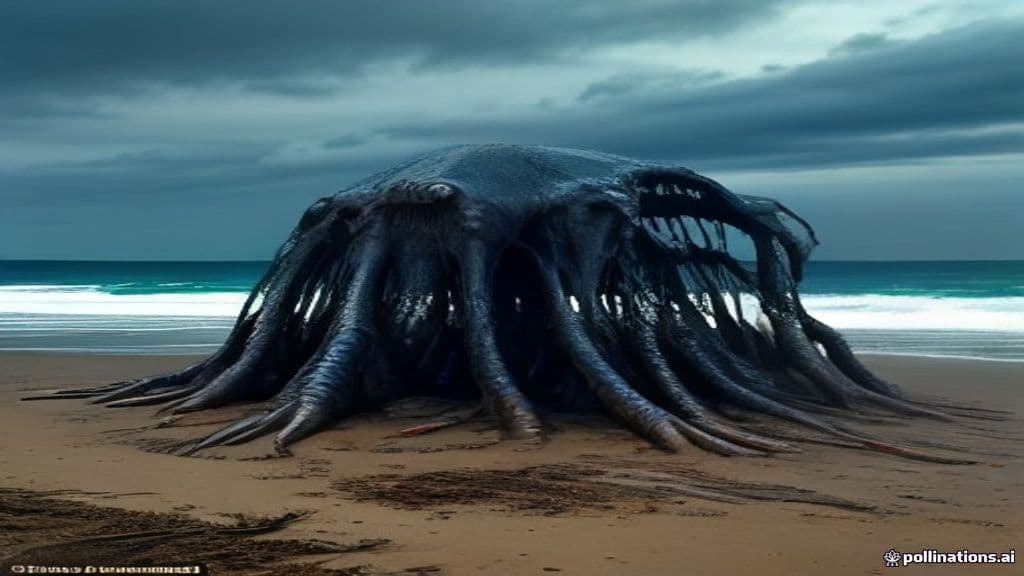
Gambo is the name applied in modern cryptozoological and popular accounts to a carcass discovered on Bungalow Beach, The Gambia, in 1983; treated in sources as a globster or candidate sea‑serpent and discussed within the 'prehistoric survivor' paradigm of cryptozoology.

Gamigin
Greater

Gamigin

Gamigin (also Samigina, Gamygin/Gamygyn) is a Goetic spirit attested in late-medieval to early-modern demonological grimoires (notably The Lesser Key of Solomon and Johann Weyer's Pseudomonarchia Daemonum). Described as a marquis who commands legions, he is reported to teach liberal arts and to compel certain souls (drowned and those in purgatory) into airy bodies to answer questions; in Thomas Rudd's tradition he is opposed by the Shemhamphorasch angel Ieuiah.

Gamma Corps
Greater

Gamma Corps

Fictional Marvel Comics gamma-irradiated supersoldiers assembled as military units. Two distinct iterations appear in Hulk-related storylines: the original Gamma Corps (World War Hulk tie-in) and a later Gamma Corps: Black roster tied to Dark Reign-era plots.

Gamora
Greater

Gamora

Gamora is a fictional character created by Jim Starlin for Marvel Comics (first appearing in Strange Tales #180, June 1975). In Marvel continuity she is presented as the adopted daughter of Thanos, an elite warrior and assassin described as one of the last members of her species and who appears across numerous cosmic storylines and film adaptations.

Gana
Lesser

Gana

In Hindu religious-literary sources, the gaṇa (Sanskrit: गण, gaṇa) denotes a constituted company or troop of supernatural beings who function as the attendants/retinue of the god Śiva and are said to reside on Mount Kailash. The term also functions as a general lexical category in Sanskrit and Pali for a flock, troop, tribe, or assembly and appears across Vedic, epic, Purāṇic, Tamil, and Buddhist texts.

Gancanagh
Lesser

Gancanagh

A male member of the Irish little people traditionally portrayed as a seductive, fairylike 'love-talker' who courts and harms human women; depicted variously as a leprechaun-like little man and in poetic sources as an incubus-like handsome seducer.

Gandalf
Greater

Gandalf

Gandalf is a central protagonist in J. R. R. Tolkien's legendarium (The Hobbit; The Lord of the Rings). Within that fictional cosmology he is one of the Istari — incarnated Maiar spirits — sent to Middle-earth to oppose Sauron; he functions primarily as a guiding counselor who also acts directly in exceptional combat or magical need and bears the Elven Ring Narya.

Gandharva
Lesser

Gandharva

A class of non-human celestial or semi-celestial beings in Indic religions associated principally with music, song, dance, fertility, and an escort/guardian role for liminal arrivals (such as Soma or beings). In Hinduism they are minor deities and musicians of the devas; in Buddhist cosmology they are a low rank of devas and the term (gandhabba in Pāli/commentary) is also used doctrinally for a sentient intermediate state between death and rebirth.

Ganesha
Ancient

Ganesha

Ganesha (Gaṇeśa), also called Ganapati or Vinayaka, is a widely revered Hindu deity identified by an elephant head who functions as remover of obstacles, patron of arts and learning, and god of beginnings; he is son of Shiva and Parvati and head of the gaṇas in many traditional accounts.

Gann mac Dela
Lesser

Gann mac Dela

Gann mac Dela is a legendary early Irish figure — one of the five sons of Dela of the Fir Bolg — portrayed in medieval pseudo‑historical sources as a founder king who, with his brothers, divided Ireland and briefly served as joint High King. He is presented as a dynastic/ancestral ruler within the Fir Bolg cycle rather than as an independent supernatural being.

Ganthet
Ancient

Ganthet

Ganthet is one of the Guardians of the Universe, an ancient, non‑human member of the custodial order that founded and manages the Green Lantern Corps and its power system. Unlike many Guardians, he is repeatedly depicted as emotionally open and empathetic, acting as mentor, technician, and occasional dissident (notably co‑founding the Blue Lantern Corps with Sayd and at times renouncing or being separated from full Guardian rank).

Ganymede
Lesser

Ganymede

Ganymede is a figure in Greek myth — a Trojan prince and exceptionally beautiful youth who is taken into the service of the gods, traditionally as cupbearer to Zeus/Jupiter. Classical sources portray him as a mortal son of Tros who is elevated into the divine household and sometimes granted immortal status.

Gaoh
Greater

Gaoh

Gaoh (Ga-oh, Gǎ-oh) is a powerful wind spirit and giant in Haudenosaunee-related mythologies (Haudenosaunee, Wendat, Seneca) who personifies and controls the winds of the four cardinal directions and the seasons. He is depicted as subordinate to a higher divine authority (the Great Spirit or Adekagagwaa) and alternately benevolent and violent, responsible for storms and seasonal change.

Gaokerena
Primordial

Gaokerena

In Persian and Zoroastrian legends, Gaokerena is a mythic Haoma plant with extraordinary healing properties that grant immortality to resurrected bodies when eaten. (Note: - Power tier should be Ancient (deity-level) as it is a mythic Haoma plant with extraordinary healing properties and grants immortality, indicating a higher level of power. - Abilities need clarificat)

Garamas
Lesser

Garamas

Garamas (Ancient Greek Γαράμας) is a mythic eponymous ancestor named in Greek-language accounts to explain the ethnonym Garamantes and the city Garama in Libya. Presented in Hellenic mythographic tradition as a founder or first-born figure, he appears in genealogical and poetic fragments rather than as a described supernatural agent.

Gareth
Minor Spirit

Gareth

Gareth is a literary knight of King Arthur's Round Table, traditionally presented as a younger son of King Lot and nephew of King Arthur. In medieval Arthurian romances (notably Thomas Malory's Le Morte d'Arthur and continental Vulgate/Post-Vulgate material) he functions as an exemplar of chivalric virtues—humility, martial skill, generosity—and as a narrative figure whose death helps precipitate the collapse of Arthur's realm.

Garokk
Greater

Garokk

Garokk is a long-lived, apotheosized figure of the Savage Land in Marvel Comics: a petrified, stone-like being worshipped by the Sun People who has exhibited matter-and-energy-altering powers, near-immortality, and periodic resurrections across multiple storylines.

Garshasp-nama (Persian tradition)
Greater

Garshasp-nama (Persian tradition)

A Persian epic poem featuring semi-divine characters and legendary figures, part of the cultural and literary traditions of the time. (Note: 1. Factual claims: The draft lacks specific information on the semi-divine characters' appearance, sensory cues, wards, and weaknesses. 2. Power tier: Given that the main hero, Garshasp, and his famil)

Garshāsp
Greater

Garshāsp

Garshāsp (Avestan Kərəsāspa / Middle Persian Kirsāsp) is an ancient Iranian heroic figure: a monster-slaying king and champion in Avestan texts and later Persian epics who is also portrayed in Zoroastrian eschatology as a resurrected savior destined to slay the apocalyptic monster Dahāg.

Garsivaz
Minor Spirit

Garsivaz

Garsivaz is a human courtier in the Persian epic tradition, presented in Ferdowsi's Shahnameh as a brother of Afrasiab of Turan whose counsel leads to the killing of Siyâvash; later illustrated manuscript traditions expand his role in reception to include capture and disclosure of Afrasiab's location.

Garuda
Ancient

Garuda

Garuda is a divine, eagle-like being in South Asian traditions best known as the vahana (mount) of the god Vishnu. In Vedic, Purānic and later texts he appears as a powerful, solar-associated bird-personage who is both an individual mythic personality (son of the sage Kaśyapa and Vinatā) and an archetype invoked in temple iconography and theological metaphor.

Gashadokuro
Greater

Gashadokuro

A fifteen-times-human-height skeletal yokai formed from the bones of those who starved to death or died on battlefields, their unburied remains fused together into a hungry colossus.

Gate guardian
Lesser

Gate guardian

A gate guardian is a withdrawn piece of equipment (commonly aircraft, armoured vehicles, artillery, or locomotives) mounted as a static display at the main entrance of military bases, museums, clubs, or civic sites to symbolically mark, commemorate, and advertise the identity or history of the place. The term is primarily a modern, secular, institutional practice; a distinct scholarly usage applies the label to protective threshold figures in ancient contexts.

Gatsi and Gaim (Georgian Deities)
Ancient

Gatsi and Gaim (Georgian Deities)

Pre-Christian Georgian deities associated with the chief idol Armazi, believed to govern all mysteries. (Note: 1. Power tier should be Primordial (as they are associated with the chief idol Armazi). 2. Specific abilities mentioned in the sources include governing all mysteries, but no further specifics are pro)

Gatumdug
Ancient

Gatumdug

Gatumdug (also rendered Gatumdag in some queries) is a Mesopotamian tutelary goddess of the city of Lagash, closely associated with that city's kings. She is attested in temple-building activity and in literary compositions tied to Lagash and Girsu in the period of classical Sumerian royal inscriptions.

Gaueko
Primordial

Gaueko

The spirit of the night, governing human activity and regulating nocturnal behavior in Basque mythology. (Note: 1. Power tier: Lower to Greater (Gaueko's abilities don't quite match Primordial-level powers, but his influence on nocturnal behavior and punishment suggest he's at least more powerful than a Lesser )

Gaut
Minor Spirit

Gaut

Mythical ancestor and national god with significant cultural and symbolic significance in Germanic tradition, associated with the Geats and Goths. (Note: * Power tier should be Primordial, given that Gaut is described as a mythical ancestor and national god, suggesting a higher level of power and influence. * Abilities section should be removed or revi)

Gautama Buddha (Siddhartha Gautama)
Ancient

Gautama Buddha (Siddhartha Gautama)

Siddhartha Gautama, most commonly called the Buddha, is presented in the supplied sources as a historical awakened teacher who founded Buddhism by attaining nirvana and teaching a monastic path. His life narrative—birth in Lumbini, renunciation, enlightenment at Bodh Gaya, teaching across the Indo‑Gangetic Plain, and parinirvana at Kushinagar—serves as the canonical model and institutional origin for Buddhist doctrine and the sangha.