Entity Index

A record of the unseen, drawn from world folklore.

7685 entities · page 63 of 129

Forbush Man
Lesser

Forbush Man

Forbush Man is a satirical comic-book character and mascot created by Stan Lee for Marvel's parody imprint (Not Brand Echh). Presented as the alter-ego Irving Forbush, he is a deliberately inept 'wannabe superhero' whose comic role is parody and editorial in-joke rather than a supernatural agent; later alternate-continuity appearances sometimes grant him story-specific abilities.

Forese Donati
Minor Spirit

Forese Donati

Forese Donati is a historical Florentine who appears as an individualized penitent soul in Dante Alighieri's Purgatorio (Canto 23). In the poem he is encountered on the sixth terrace of Purgatory, where he converses with the pilgrim Dante about personal history, other souls, and the efficacy of intercessory prayer.

Forest Bull
Lesser

Forest Bull

A marvelous bovine attested in ancient natural-history and medieval bestiary traditions, the Forest Bull (Aethiopian or Ethiopian Forest Bull) is described by classical authors as an extraordinary, dangerous breed of cattle reported from Ethiopia and depicted with hyperbolic size, strength, and near-invulnerability.

Forneus
Greater

Forneus

Forneus is a named spirit in the grimoire tradition of The Lesser Key of Solomon (the Ars Goetia), described there as a Great Marquis of Hell who commands twenty-nine legions and is said to teach rhetoric and languages while making men beloved and giving them a good name. Sources depict him as able to take many forms — described as a great sea monster but said to mainly prefer human form — and note that he is "partly of the Order of Thrones, and partly of that of Angels."

Fornjót
Ancient

Fornjót

Fornjót is a jötunn in Norse genealogical-mythic material, presented as the father of personified elemental powers (Hlér/sea, Logi/fire, Kári/wind) and as an ancestral figure connected to the Yngling royal dynasty and mythic northern lands such as Finnland and Kvenland.

Fornjótr
Ancient

Fornjótr

Fornjótr (Old Norse Fornjótr) is an Old Norse mythic jötunn presented in medieval sources as the father of the personified forces Hlér (sea), Logi (fire) and Kári (wind). In saga and genealogical material he is also portrayed in some manuscripts as a legendary ruler of northern lands (Finnland/Kvenland) and appears as an ancestral figure in certain royal genealogies.

Forseti
Ancient

Forseti

Forseti is an Old Norse/Germanic deity associated in medieval sources with justice, reconciliation, and the settling of disputes; he is presented in Snorri Sturluson's Prose Edda as son of Baldr and Nanna and as lord of the hall Glitnir. Continental medieval accounts identify a related Frisian figure, Fosite, connected with a sacred spring and island cult.

Fortuna
Ancient

Fortuna

Fortuna is the Roman divine personification of fortune, chance, and the capricious turning of events. Worshiped in multiple local and functional aspects, she could bestow prosperity or withdraw it; her action was read both as arbitrary caprice and as connected to civic virtue.

Foruhal
Lesser

Foruhal

The provided source material only links the name Foruhal to the corpus surrounding the Shahnameh (specifically a page referencing Davāzdah Rokh) but contains no description, role, or contextual information about Foruhal. No attributes, stories, or cultural placement are given in the supplied excerpt.

Fossegrim
Greater

Fossegrim

A water spirit or troll in Scandinavian folklore, associated with music and enchantment. (Note: 1. Power tier: Lowered from Greater to Lesser, as it's described as a local spirit. 2. Origins story: Clarify that it's rooted in Scandinavian cultural values, but more specifically mention the Old No)

Founding of Rome
Lesser

Founding of Rome

The collective process of gradual union and formation of settlements on hilltops in ancient Rome. (Note: - Power tier: Primordial (not Lesser, as it's a historical process rather than a supernatural entity) - Abilities: Remove "The exact nature of this process is unclear" and replace with something accur)

Foundling-Bird (Fundevogel)
Minor Spirit

Foundling-Bird (Fundevogel)

Fundevogel (Foundling-Bird) is a proper-name character and origin-motif from the Brothers Grimm tale “Fundevogel,” describing a human boy found in a bird's nest and raised by a forester. Within the ATU 313A transformation‑chase context, the character participates in a sequence of metamorphoses used to evade pursuers rather than representing a distinct supernatural race.

Four Heavenly Kings
Greater

Four Heavenly Kings

A quartet of Buddhist devas who guard the world by the four cardinal directions, serve Śakra in the Cāturmahārājika heaven, and vow to protect the Buddha, the Dharma, and the Buddha's followers. They are standard protective figures in East Asian Buddhist temple complexes and are included among larger groups of dharmapalas in Chinese practice.

Four Holy Beasts
Ancient

Four Holy Beasts

A set of four sacred animals in Chinese and broader East Asian cultural and astronomical tradition, mapped to the four cardinal directions and used as auspicious, protective, and cosmological symbols in literature, architecture, and material culture.

Four Horsemen of the Apocalypse
Ancient

Four Horsemen of the Apocalypse

Figures appearing in Revelation 6 (New Testament) traditionally dated to c. AD 95, summoned when the Lamb opens the first four of seven seals. Four riders on white, red, black, and pale horses function in the vision as divinely-commissioned agents who bring large-scale calamities (commonly rendered in later commentary as conquest, war, famine, and death).

Four Immortals
Primordial

Four Immortals

Chief figures in the pantheon of genii worshiped by the Vietnamese people, associated with natural elements and supernatural powers. (Note: 1. Power tier: Lower than Primordial based on abilities described (deity-level but not cosmic). 2. Appearance: Remove statement as no specific physical description is provided in source material. 3. A)

Four Kumaras
Primordial

Four Kumaras

A quartet of eternally youthful, mind-born sages created by Brahma who roam the cosmos as celibate rishis and exemplars of renunciation and devotion. Named Sanaka, Sanandana, Sanatana and Sanatkumara, they function as primordial teachers and mahajanas in Purāṇic and Bhagavata traditions.

Four Perils (Sì Xiōng)
Greater

Four Perils (Sì Xiōng)

The Four Perils (四凶; Sì Xiōng) are a set of four malevolent figures in ancient Chinese literature—Hundun, Qiongqi, Taowu, and Taotie—recorded variously as monstrous creatures inhabiting mythic mountains, moral exemplars of vice, or eponymous lineal ancestors used in historiographic critique. Accounts differ across sources, so each name functions simultaneously as a beast in mytho-geography and as a symbol of disorder or vice in moral-historical texts.

Four Symbols (Sì Xiàng)
Ancient

Four Symbols (Sì Xiàng)

A set of four mythological creatures in Chinese cosmology—Azure Dragon, Vermilion Bird, White Tiger, and Black Tortoise‑Snake—serving as celestial asterisms and directional guardians integrated into ritual, astrological, and state symbolism.

Fox spirit
Greater

Fox spirit

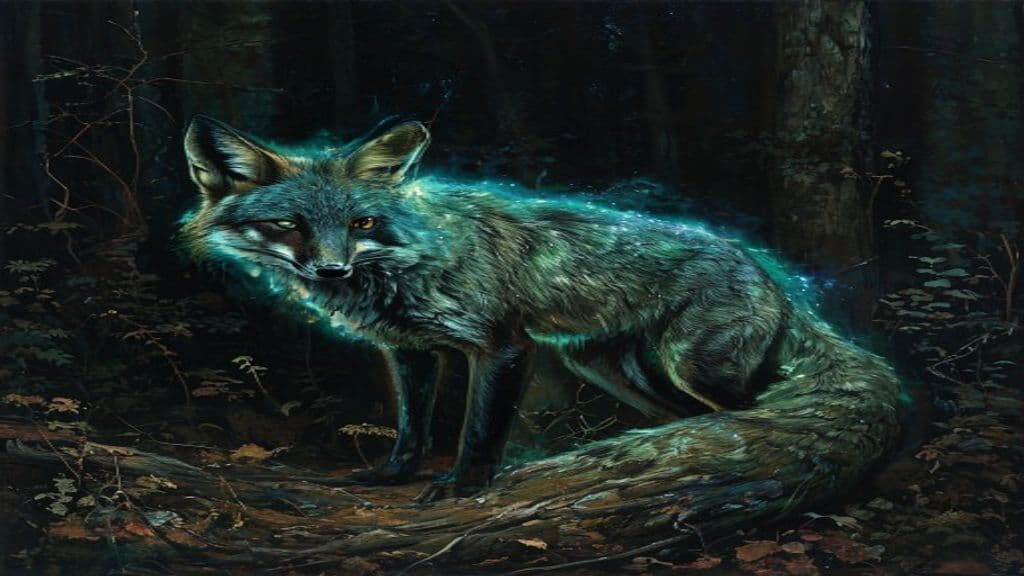
A widespread class of mythical beings associated with foxes (often represented by red-fox imagery in many traditions) characterized by cunning, shapeshifting, trickery, and ambiguous moral roles; prominently attested in East Asian folklore and present in modern literature and media as romantic, vengeful, or matchmaking figures.

Foxfire
Minor Spirit

Foxfire

A natural bioluminescent glow produced by certain fungi on decaying wood, historically observed and variously mythologized as "fairy fire" or likened to will-o'-the-wisp; treated in the provided sources as a biological/phenomenal phenomenon rather than an intentional spirit.

Francesca da Rimini
Minor Spirit

Francesca da Rimini

Francesca da Rimini was a late 13th‑century Italian noblewoman whose adulterous affair with Paolo Malatesta and subsequent murder by her husband Giovanni Malatesta became a lasting literary and artistic theme; most famously she appears as a speaking soul among the lustful in Dante Alighieri's Inferno (Canto V).

Frank Tower
Lesser

Frank Tower

Frank Tower is a 20th‑century urban‑legend figure alleged to have survived multiple major ship sinkings (Titanic, Empress of Ireland, Lusitania). Sources treat the story as a tall tale circulated in novelty and popular‑culture outlets; documentary research finds no evidence that a single person named Frank Tower was aboard and survived all three disasters.

Frankenstein (the creature / creation)
Lesser

Frankenstein (the creature / creation)

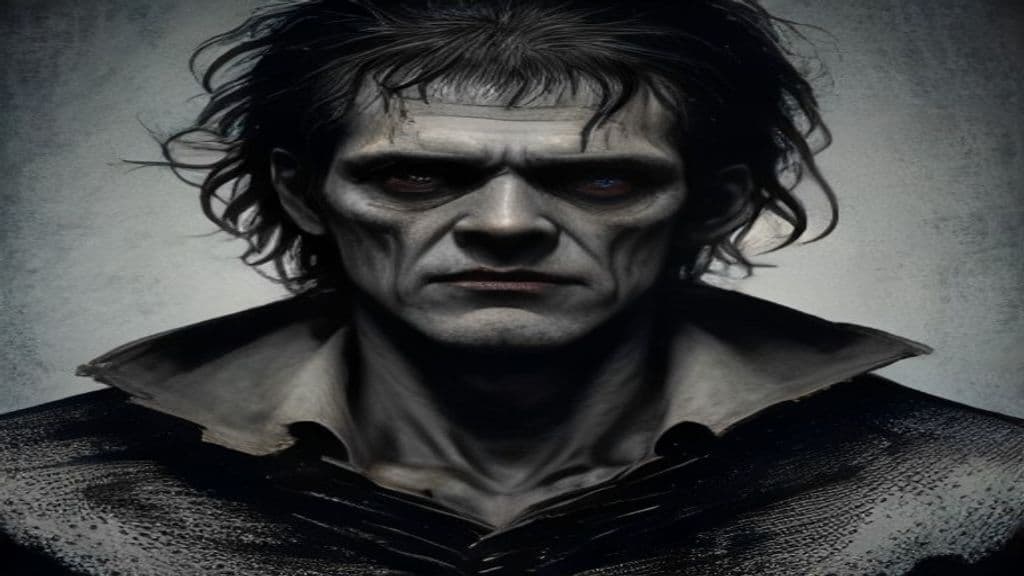
A sapient humanoid created by Victor Frankenstein in Mary Shelley's 1818 novel by assembling human remains and animating them through an unorthodox scientific experiment. In the original text the family name 'Frankenstein' refers to the creator, but cultural usage often applies the name to the created being itself.

Frankish Paganism
Minor Spirit

Frankish Paganism

A polytheistic tradition that evolved among the Franks until the 7th century, influenced by Germanic and Greco-Roman components. (Note: - Remove "Minor Spirit" power tier (inconsistent with polytheistic tradition and influence from Greco-Roman components) - Summary should include Frankish paganism's decline and eventual replacement by)

Frau Holle
Greater

Frau Holle

Frau Holle (also Hulda, Holda, Holla, Perchta/Berchta and regional variants) is a persistent Germanic folkloric female figure associated with household arts (spinning and linen-making), nocturnal spirit-processions of women, and a winter/snow motif (the Grimm tale of shaking featherbeds). She appears across medieval canonical texts and later folklore, where she functions as a domestic protector/teacher, a leader of nocturnal female companies, and an agent of moral reward and punishment.

Fravashi
Greater

Fravashi

Avestan fravashi (frauuaši / fravashi) is the Zoroastrian immaterial personal principle associated with individuals and with groups (ancestors/heroic worthies); treated in the Avesta (notably Yasht 13, the Frawardin Yasht) as cosmic assistants in creation, ongoing sustainers of natural and celestial order, and guardians who are invoked in cult and year‑end rites.

Freawaru
Lesser

Freawaru

Freawaru is a legendary human royal woman in Old English and Scandinavian traditions, presented in Beowulf as the daughter of King Hroðgar and Queen Wealhþeow and married to Ingeld as a freoðuwebbe (peace-weaver) intended to settle a blood-feud. Scandinavian prose (Gesta Danorum) preserves a cognate episode in which an old warrior (Starkad) incites renewed vengeance, reversing the marriage's peacemaking purpose.

Freedom Beast
Greater

Freedom Beast

Freedom Beast (Dominic Mndawe) is a fictional comic-book superhero published by DC Comics. A South African activist-turned-powered figure, he gains animal-themed abilities from an elixir and an ancient helmet and operates in narratives that link political resistance (apartheid-era origins) with animal protection and superheroic alliances.

Fresno nightcrawler
Lesser

Fresno nightcrawler

A contemporary American cryptid and internet-era urban-legend originating from CCTV footage in Fresno, California (2007). Described in footage and fandom as very long-legged, white, semi-humanoid figures often seen in pairs; treated in media and fan communities as a viral 'cute' cryptid rather than a being embedded in a traditional cosmology.

Freybug
Lesser

Freybug

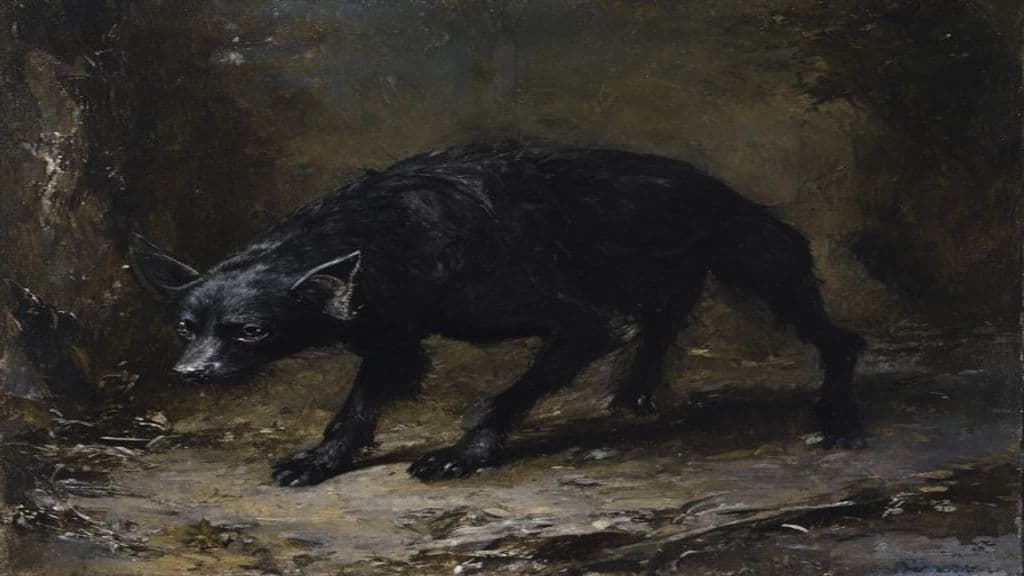
The Freybug (also Fray‑bug) is a named monstrous Black Dog from English folklore, recorded in association with Norfolk. Cited in early modern letters and later antiquarian commentary, it is described chiefly as a large black canine apparition that wanders country roads and terrifies travellers.

Freyja
Ancient

Freyja

Freyja is a major Vanir goddess in Norse mythology associated with love, beauty, fertility, gold, war, and the seiðr form of magic. She rules the field Fólkvangr and the hall Sessrúmnir, where she receives half of those slain in battle, and is attested across the Poetic Edda, the Prose Edda, skaldic poetry, and later Scandinavian folklore.

Freyr
Ancient

Freyr

Freyr is a major Vanir deity in Old Norse myth associated with kingship, fertility, prosperity, fair weather, peace, and good harvests; he is attested in medieval Icelandic sources (Snorri) and continental reports (Adam of Bremen) and figures in myths of courtship, possession of magical artifacts, and eschatological death at Ragnarök.

Friar Rush
Greater

Friar Rush

A popular narrative figure from late medieval and early modern northern Europe: a supernatural intruder who assumes the guise of a friar, infiltrates a monastery, and causes mischief, vice, and disorder until expelled by ecclesiastical ritual. The tale circulated in Low German, High German, Scandinavian, Dutch and English print from the late 15th century onward.

Frigg
Ancient

Frigg

Frigg is an Old Norse goddess of the Æsir, foremost among the pantheon as Odin's wife, associated with marriage, motherhood and foresight. She dwells in Fensalir and is attested across North and West Germanic traditions (Old Norse Frigg; Old English Frīg; Old High German Frīja; Lombardic Frea). Her name survives in the weekday Friday and persisted in Scandinavian folklore after Christianization.

Frijjō (Hypothetical Love Goddess)
Primordial

Frijjō (Hypothetical Love Goddess)

Reconstructed epithet of a hypothetical Common Germanic love goddess, spouse of Wōdanaz. (Note: - Power tier: should be "Ancient" instead of "Primordial", as a love goddess is more likely to be on a deity-level power tier. - Sensory cues: no information provided in source material - Weaknesses a)

Froslass
Minor Spirit

Froslass

Froslass is a fictional creature-species from the Pokémon franchise, presented in the provided sources as part of Generation IV (the Sinnoh set introduced in the 2006 Nintendo DS games Pokémon Diamond and Pearl). The sources treat it as a designed franchise species appearing in game and fan-media contexts rather than as an entity from a real-world spiritual tradition.

Fráech
Lesser

Fráech

Fráech is a Connacht hero of the Ulster Cycle in early Irish narrative tradition, portrayed as a handsome warrior of semi-divine kinship whose adventures include a love-quest, the slaying of a river-monster, otherworldly healing by Sidhe maidens, and long-range cattle-and-family recovery episodes. He is commemorated in place-name lore (Carnd Fraich / Sid Fraich) and appears in prose and metrical sources of medieval Ireland.

Frédégonde
Lesser

Frédégonde

Frédégonde (also Fredegonde, Fredegund, Fredegundis) is a historical and legendary Merovingian queen of the 6th century, remembered in later French historiography and literature as a ruthless court figure associated with intrigue and alleged crimes. She functions in cultural memory as an archetype of royal female ambition and has been adapted repeatedly in novels, plays, operettas and opera from the 18th century through modern revivals.

Fuath
Lesser

Fuath

Fuath are a class of malevolent, uncanny spirits in Scottish Highland and Irish Gaelic folklore, especially associated with water (streams, mills, lochs) but not confined to it. The term functions both as a label for particular water-spirits in local tales and as a broader category of hostile spectres or goblins in Gaelic tradition.

Fufluns
Ancient

Fufluns

Fufluns is an Etruscan deity of plant life, wine, health, happiness, and growth, often equated with Greek Dionysos and Roman Liber. He is named as the son of Semla and Tinia, worshipped at Populonia (Fufluna/Pupluna), and is mentioned twice among the 16 gods on the Liver of Piacenza, where he appears as the ninth of the sixteen.

Fukurokuju
Greater

Fukurokuju

Fukurokuju is a beneficent, long-lived deity in Japanese popular religion, counted among the Seven Lucky Gods (Shichifukujin) and associated primarily with wisdom, longevity, and good fortune. His figure reflects syncretic assimilation of Chinese Taoist star-deity material (notably the Southern Polestar and the Three Star Gods tradition) into a distinct Japanese auspicious deity.

Fukusuke
Minor Spirit

Fukusuke

Fukusuke (福助) is a traditional Japanese talismanic doll depicting a kneeling man with a large head and topknot, historically enshrined in Edo-period tea houses and brothels and today commonly displayed in businesses as a symbol intended to bring good luck, prosperity, and honor.

Fulad-zereh
Primordial

Fulad-zereh

A huge horned demon from the Persian story of Amir Arsalan, associated with aerial wanderings and predatory behavior. (Note: 1. Power tier: Lower to "Ancient" or "Greater" as Primordial is typically reserved for entities with cosmic-level powers, which Fulad-zereh's abilities do not suggest. 2. Appearance: Add that it has a)

Fulgora
Minor Spirit

Fulgora

Fulgora is a genus of large fulgorid planthoppers (true bugs) native to Central and South America. Treated in the supplied sources as a biological taxon rather than a supernatural being, it includes the well-known type species Fulgora laternaria.

Fulla
Lesser

Fulla

Fulla (Old Norse Fulla; Old High German Volla/Folla) is a named goddess (ásynja) in the Germanic tradition, attested as Frigg's trusted attendant and confidante in Old Norse sources and as a named singer in the Old High German Merseburg horse-healing charm.

Funayūrei
Lesser

Funayūrei

Funayūrei (船幽霊 / 舟幽霊) are Japanese yūrei—spirits of the dead—associated with boats and maritime settings. Traditions describe them as the restless or vengeful dead who manifest around vessels and coastal waters and who may attempt to drown living sailors or cause shipwrecks.

Furaribi
Lesser

Furaribi

A Japanese yōkai appearing in classical pictorial yōkai compendia as fire-associated, bird-like apparitions; some scholars interpret certain representations as visualizations of restless dead not given memorial rites. A Toyama Prefecture local tale links related nocturnal ghost-lights (buraribi / Sayuri-bi) to a specific vengeful spirit whose invocation produces an apparition.

Furcas
Lesser

Furcas

Furcas (also spelled Forcas) is a named infernal officer in the Western grimoire/Goetic tradition described as a Knight who commands twenty legions of spirits and teaches various intellectual and divinatory arts. He is typically depicted as an old bearded man riding a pale horse and bearing a sharp weapon.

Furfur
Greater

Furfur

Furfur is a named infernal officer in Western grimoire tradition described as a Great Earl of Hell who rules twenty-six legions of demons, is capable of causing love and weather phenomena, and who may be compelled to answer questions in ritual magic but is said to be deceitful even under compulsion.

Furies (Erinyes / Eumenides)
Ancient

Furies (Erinyes / Eumenides)

Chthonic goddesses of vengeance in classical Greek religion and myth who personify retributive justice, especially punishing false oaths and certain moral-legal transgressions; later identified with Roman Furiae/Dirae.

Furutsubaki-no-rei
Lesser

Furutsubaki-no-rei

An old-camellia spirit (古椿の霊) in Japanese folklore said to develop from aged camellia trees. Attested in multiple regional tales, it appears as a beautiful woman or as a grotesque tree, emits a mournful night-cry that can serve as an omen, and in rare accounts entices victims who may disappear or be transformed.

Fusang
Ancient

Fusang

Fusang is a mytho-geographical concept in early Chinese literature functioning both as a cosmological eastern world-tree (the Tree of the Sun) and as a flexible toponym for a remote island or eastern land. In cosmological texts it is paired with a western counterpart (Ruomu) and houses ten solar birds; in narrative registers it appears in legendary voyage accounts (e.g., Xu Fu) and in a reported fifth-century travel account attributed to Hui Shen (recorded in the Book of Liang).

Fushimi Tokiwa
Lesser

Fushimi Tokiwa

A named representation that links the historical/legendary woman Tokiwa Gozen with snow imagery (variants: Fushimi no Yuki, Yuki no Tokiwa). Sources present the figure in an ambiguous space between a human/legendary mother and the broader yuki-onna (snow-woman) motif, but do not establish Fushimi Tokiwa as a distinct supernatural species with defined powers or rituals.

Futakuchi-onna
Lesser

Futakuchi-onna

Futakuchi-onna (二口女, ふたくちおんな; "two-mouthed woman") is a Japanese yōkai characterized in folktales by an otherwise ordinary woman who bears a second, functional mouth on the back of her head beneath her hair. Stories commonly present the second mouth as a supernatural condition associated in narrative causation with stinginess, neglect, or injury.

Futsu-no-mitama
Greater

Futsu-no-mitama

A named sacred sword or charm in Japanese mythic and popular-culture references, presented in modern secondary sources as the weapon used by the kami Takemikazuchi to "quell the lands" and later associated in some summaries with transfer to Emperor Jimmu. In contemporary media it is frequently adapted as a named piece of equipment or charm that grants combat power or symbolic authority.

Fuxi
Primordial

Fuxi

Fuxi (伏羲 / Fu Hsi) is a primordial culture-hero in Chinese myth credited in traditional accounts with establishing social institutions (marriage, family), teaching technologies (hunting, fishing, cooking, music), and originating systems of knowledge such as divination and the eight trigrams (ba gua). Frequently paired with Nüwa, he occupies a foundational role in prehistoric cosmology and ritual memory rather than a narrowly historical figure.

Fuṭrus
Lesser

Fuṭrus

Fuṭrus (فطرس) is a fallen angel figure in legends associated with Ali ibn al‑Husayn (Zayn al‑Abidin). In the narrative he dawdles in carrying out a divine command, is punished by having his wings broken and being cast on an island, and is later forgiven and restored following an encounter involving the Prophet Muḥammad, the angel Gabriel, and the newborn Ali ibn al‑Husayn.

Fylgja
Lesser

Fylgja

A supernatural accompanying spirit in Old Norse tradition tied to a person's or family's fate and fortune. The fylgja appears most often as a female human figure or as an animal, commonly in dreams, and functions as an omen-bearing presence connected to destiny rather than an agent that alters fate.

Fáfnir
Greater

Fáfnir

In Old Norse heroic legend Fáfnir is a kin-figure who, after killing his father Hreiðmarr over a cursed hoard, withdraws into the wilderness and takes the hamr of a worm/dragon to brood over treasure; he is slain by the hero Sigurð (Sigurd).