Entity Index

A record of the unseen, drawn from world folklore.

7685 entities · page 62 of 129

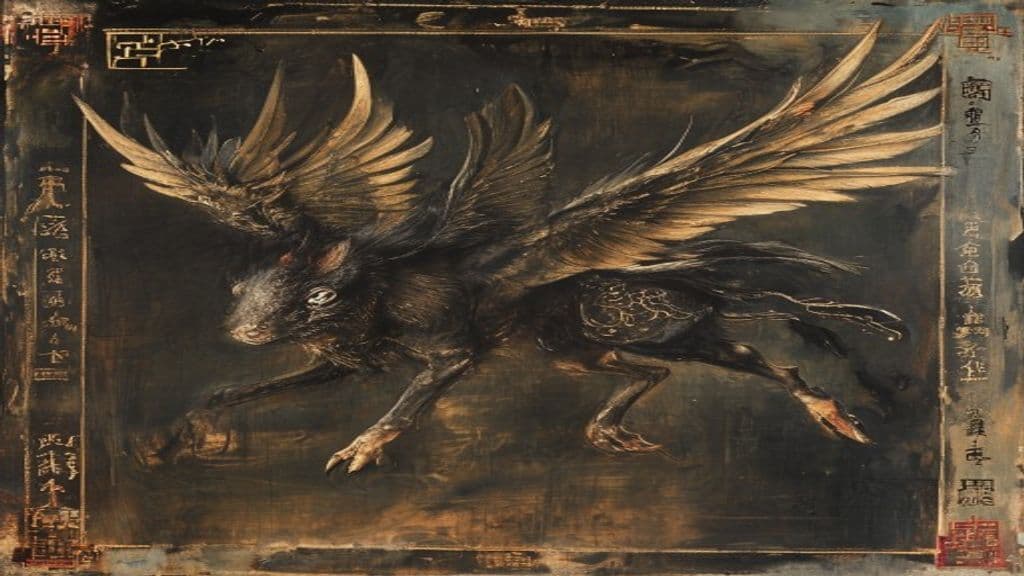
Fengli
Lesser

Fengli

Fengli is a legendary or mythified flying mammal of Chinese tradition whose descriptions were collated in encyclopedic and materia medica works such as the Taiping Yulan and the Bencao gangmu. Surviving modern summaries treat it as a marvelous fauna entry within literate compilations rather than as a well-documented zoological species.

Fenixmännlein
Lesser

Fenixmännlein

A class of small subterranean earth‑sprites or dwarf‑like beings from Silesian and Lusatian German folklore. They dwell beneath hills and in caves, bake and perform domestic crafts, sometimes exchange human infants for changelings, and are credited with steering a ship on subterranean waters that can abduct people.

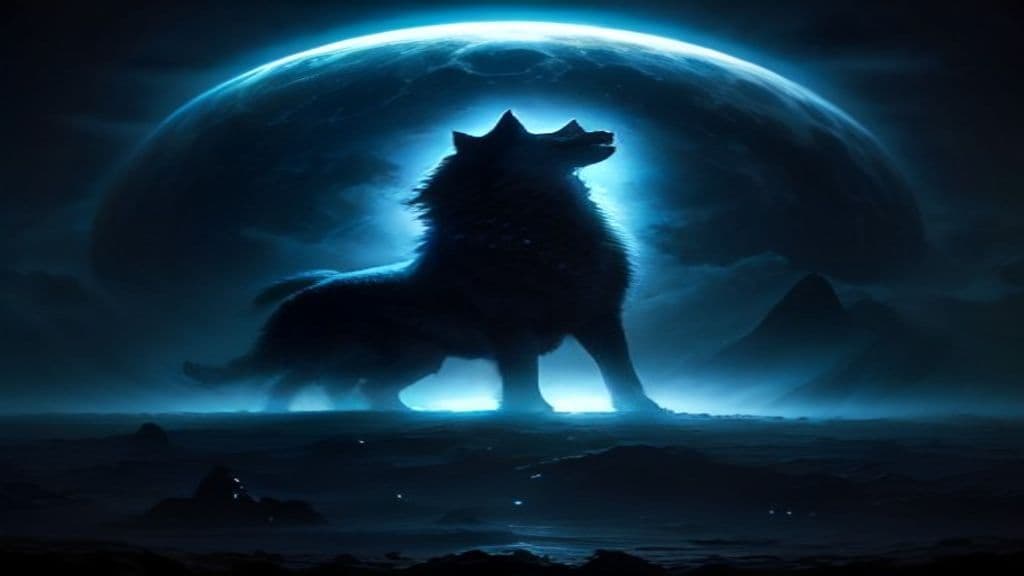
Fenrir
Primordial

Fenrir

The monstrous wolf son of Loki, bound by the gods with a magical ribbon until Ragnarök — when he will break free and swallow Odin, and the world.

Fenrisúlfr (Fenrir)
Ancient

Fenrisúlfr (Fenrir)

Fenrisúlfr, commonly called Fenrir or Fenris, is a singular monstrous wolf in Norse myth who is bound up with the eschatological events of Ragnarök; sources describe him as a world-altering agent who is foretold to kill the chief god Odin and take part in the destruction of the present order.

Feronia
Ancient

Feronia

Feronia is an ancient Italic goddess of central Italy associated with fertility, the wild/nature, and certain civic-economic functions such as trade. Originating with Sabine and Faliscan practice and later incorporated into Roman religious listings, she possessed sanctuaries and a visible cult presence in the archaic and Republican periods.

Fetch (folklore)
Lesser

Fetch (folklore)

In the provided sources, the Fetch is described as a doppelgänger or double of a living person in Irish folklore — an apparition corresponding to a particular individual. The available materials supply only this brief definitional statement and do not expand on cosmology, rituals, or narrative roles.

Fetket
Minor Spirit

Fetket

Fetket is a minor ancient Egyptian deity attested in modern secondary compilations as an attendant of the sun god Ra, described in some sources with the functional label 'butler' or 'cupbearer' to Ra. Surviving references record the name and this occupational role but provide no primary-text evidence, iconography, or ritual material in the supplied sources.

Feuermann
Lesser

Feuermann

A German-language folkloric luminous apparition described as a "fire man" or "fiery ghost," known in regional dialects by several synonymous names that emphasize burning, glowing, or flickering qualities. The Feuermann is presented in the supplied sources primarily as a named class of luminous phenomenon rather than through detailed narratives, rituals, or functions.

Fext
Greater

Fext

A Fext is an undead revenant figure recorded in modern summaries of Central European/Slavic popular tradition associated with the Thirty Years' War; it is chiefly noted for practical invulnerability to ordinary weapons, with a single folkloric vulnerability to bullets made of glass.

Fiacha Cennfinnán
Lesser

Fiacha Cennfinnán

Fiacha Cennfinnán (modern spelling Fiacha Ceannfhionnán, 'Fiacha of the little white head') is a legendary Fir Bolg figure recorded in medieval Irish regnal lists and annals as a High King of Ireland who overthrew his great‑uncle Sengann, ruled for five years, and was later overthrown and killed by Rinnal, son of Genann.

Fiacha mac Delbaíth
Ancient

Fiacha mac Delbaíth

Fiacha mac Delbaíth is a legendary figure of early Irish tradition presented as a member of the Tuatha Dé Danann who served as a High King of Ireland. Medieval compilations record his accession, a ten-year reign, and his death in battle as part of the narrative sequence of prehistoric rulers.

Fictitious Kings in Korean Genealogies
Minor Spirit

Fictitious Kings in Korean Genealogies

Entities appearing in 15th-16th century genealogies of Cheongju Han, Haengju Gi, and Taewon Seonu descent groups. (Note: - Power tier is Minor Spirit (but no description of abilities implies they might be lower still) - Origin story lacks clear indication that association with Jizi is an "Early Modern fabrication", inst)

Ficus Ruminalis
Ancient

Ficus Ruminalis

In ancient Roman mythology, the Ficus Ruminalis is a wild fig tree associated with mythological events and protected by deities. (Note: * Power tier should be adjusted from Ancient to Lesser (due to lack of deity-level powers or abilities) * Origin story should be rephrased to clarify the Ficus Ruminalis is not an entity in itself, bu)

Fides
Minor Spirit

Fides

Fides is the Roman personification and goddess of trust, faithfulness, and good faith (bona fides). Treated both as an ethical virtue and a divine presence, she was cultivated in public religion through ceremonies and temples to uphold social and legal trust.

Fiere Margriet (Proud Margaret)
Minor Spirit

Fiere Margriet (Proud Margaret)

Fiere Margriet (Proud Margaret) is a locally venerated legendary woman of Leuven (Louvain), remembered in civic folklore and Christian cultic practice. Sources describe her as a young woman murdered by thieves whose corpse, according to the legend, did not sink when dumped in the Dijle; she is commemorated by a shrine and relics in St. Peter's Church and by public statuary and place‑names in Leuven.

Fiery Flying Serpent
Primordial

Fiery Flying Serpent

A metaphorical creature representing the Assyrian kingdom's power and destruction, used in Jewish tradition. (Note: * Power tier should be Greater, not Primordial, as it's a symbolic representation of a powerful regional entity (the Assyrian kingdom) rather than a cosmic or primordial force. * Abilities section nee)

Fiery Serpent (Slavic)
Primordial

Fiery Serpent (Slavic)

A supernatural entity from Slavic folklore, described as a manifestation of fire in the sky or air. (Note: 1. Power tier should be adjusted from Primordial to Ancient, as it appears to be a deity-level entity rather than a cosmic one. 2. Add sensory cues for sounds associated with the entity (e.g., roaring)

Figment
Minor Spirit

Figment

Figment is a fictional mascot character created by The Walt Disney Company to personify imagination for the Imagination! pavilion at Epcot. Introduced with the pavilion's Journey Into Imagination attraction, he functions as a narrative device and transmedia corporate character rather than a traditional folkloric or supernatural entity.

Filippo Argenti
Lesser

Filippo Argenti

Filippo Argenti is a historical 13th-century Florentine nobleman (Adimari family, Black Guelphs) who appears as a named damned soul in Dante Alighieri’s Divine Comedy (Inferno, Canto VIII), located among the wrathful in the river Styx. In Dante’s poem he functions as a recognizable moral exemplum of wrath: he accosts the pilgrim and is subsequently attacked by other wrathful souls.

Fimafeng
Lesser

Fimafeng

Fimafeng is a named serving-man in the hall of the sea-god Ægir in the Norse poem Lokasenna. He is praised for his skillful service at a divine feast and is suddenly slain by Loki, an act that provokes the gods to drive Loki out of the hall.

Fin Fang Foom
Greater

Fin Fang Foom

Fin Fang Foom is a Marvel Comics extraterrestrial dragon-like monster (a Makluan) created by Stan Lee and Jack Kirby. In-universe he is an alien of great size and power who arrived on ancient Earth, has been awakened and contained multiple times, and whose portrayals range from invader/weapon to a reformed/rehabilitated being.

Fingolfin
Greater

Fingolfin

Fingolfin is a named Elven king of the Noldor in J. R. R. Tolkien's legendarium. Son of Finwë, he led the greatest host of the Noldor that fled Aman, became High King of the Noldor in Middle-earth after Maedhros renounced his claim, maintained a long siege of Angband, and finally rode alone to challenge Morgoth, wounding him before being slain.

Finn (Frisian)
Lesser

Finn (Frisian)

Finn is a named legendary Frisian king of the heroic age attested in Old English poetry (Widsith, the Finnesburg Fragment) and in the episode preserved within Beowulf. He appears in narratives of inter-ethnic warfare, hospitality, and the uneasy settlements that follow slaughter, sometimes portrayed as ruling honorably over surviving enemy retainers and in other variants as slain in the conflict.

Finnic Incantations
Greater

Finnic Incantations

A collection of traditional magical formulas and spells used to effect change in the world, primarily found in Finnish folklore. (Note: - Power tier should be revised to Primordial as the described abilities suggest a profound impact on the world, implying they are not just "powerful regional" but rather have a more fundamental effect)

Finnish Mythology
Greater

Finnish Mythology

Collective term for the folklore of Finnish paganism, sharing a rich cultural heritage with Estonian, Baltic, Slavic, and Norse mythologies. (Note: 1. Power tier: According to the source, Finnish mythology shares features with Norse mythology, which is considered Ancient (deity-level) in power tier. Greater may be an overestimation. 2. Appearance)

Finwë and Míriel
Ancient

Finwë and Míriel

Principal Elven figures in J. R. R. Tolkien's legendarium: Finwë, first King of the Noldor, and his first wife Míriel, famed for creative craft. Their personal choices — Míriel's voluntary relinquishment of embodied life and Finwë's remarriage and later murder — provoke adjudication by the Valar and have far-reaching legal and historical consequences in the history of the Eldar.

Fir Bolg
Lesser

Fir Bolg

In medieval Irish myth the Fir Bolg are presented as a people — the fourth group to settle and rule Ireland in the traditional sequence of successive populations; in modern fantasy they have been re‑appropriated as a race of large, forest‑dwelling humanoids (often rendered 'Firbolg') in role‑playing games.

Fire-breathing monster
Greater

Fire-breathing monster

A cross-cultural mythic category of monster defined by the ability to expel flame (or fire-like phenomenon) from the mouth or nostrils. Appears in multiple traditions (e.g., Greco-Roman, Hebrew/Biblical, Anglo‑Saxon, Japanese, Philippine, Native American, West African, Mapuche) and in modern fantasy as a recurring trope.

Firebird (Slavic folklore)
Greater

Firebird (Slavic folklore)

A marvelous luminous bird from Slavic folktales, the Firebird (zhar-ptitsa) is a glowing, often fire‑colored bird whose appearance initiates quests and whose possession brings both wonder and misfortune. It functions as a coveted wonder and a dangerous omen within tale cycles.

Firedrake
Lesser

Firedrake

A term in English tradition for dragon-shaped manifestations of fire observed in the sky; used both as an Old English poetic word for dragon (fyrdraca) and, from the Renaissance onward, to describe luminous aerial phenomena such as meteors or ignis fatuus. Sources treat firedrakes variously as mythic dragons, atmospheric luminous vapors, or morally charged apparitions (e.g., the Devil in dragon form).

First Humans in Slavic Mythology
Primordial

First Humans in Slavic Mythology

Central concept in the narrative of human creation, reflecting a worldview that values ancestry and tradition. (Note: 1. Power tier should be changed to Lesser or Minor Spirit (there's no indication that they have primordial power). 2. Summary is accurate but could be more specific about what makes them central to th)

Fish
Lesser

Fish

Fish are aquatic, gill-bearing vertebrate animals and a widespread biological class whose members also function as cultural symbols, food resources, and religious iconography in the provided sources. The corpus treats fish primarily as natural animals and cultural referents rather than as autonomous supernatural beings.

Fish-man of Liérganes (El hombre pez)
Lesser

Fish-man of Liérganes (El hombre pez)

A Cantabrian popular‑tradition account of an amphibious, human‑shaped being identified with a missing man (Francisco de la Vega Casar) who was captured at sea, exhibited to clerics, returned to his village of Liérganes, lived in altered condition for years, and ultimately went back to the sea. The story is known primarily from Benito Jerónimo Feijoo's reporting of contemporary testimonies and later encyclopedic summaries.

Fisher King
Greater

Fisher King

A figure in the Arthurian Grail cycle who serves as the hereditary guardian of the Holy Grail and whose bodily wound is symbolically linked to the barrenness of his realm. He is often depicted as incapacitated and 'fishing' while awaiting a questing hero whose question or deed will heal him and restore the land.

Five Poisons (五毒, wǔ dú)
Lesser

Five Poisons (五毒, wǔ dú)

A culturally defined set of five hazardous animals in Chinese (and related Vietnamese) folk belief associated with the Dragon Boat Festival/Duanwu (the fifth day of the fifth lunar month). The term names a seasonal cluster of perceived dangers (snakes, scorpions, centipedes, toads, spiders) and denotes traditional prophylactic and talismanic responses; in modern usage the phrase is also repurposed as a political metaphor for five perceived threats to state security.

Five Tathāgatas
Lesser

Five Tathāgatas

A canonical group of five principal celestial Buddhas in Mahāyāna and Vajrayāna Buddhism, treated as inseparable co-equals and used as meditative foci and mandalic deities in tantric initiation and practice.

Five Wisdom Kings
Greater

Five Wisdom Kings

A class of wrathful, mantric protector-deities in East Asian Mahāyāna (notably Japanese) Buddhism, identified with the Sanskrit Vidyārāja and Japanese Myō-ō and described in sources as guardians of the cosmic Buddha Dainichi (Vairocana) and of esoteric teachings.

Fjalar (rooster)
Minor Spirit

Fjalar (rooster)

Fjalar (Old Norse: Fjalarr) is a named red rooster in the Poetic Edda (Völuspá) whose crowing is portrayed as heralding the onset of Ragnarök. The figure appears as a portentous, performative signal in the eschatological sequence, with no cultic rituals or protective practices attested in the supplied sources.

Fjalar and Galar
Minor Spirit

Fjalar and Galar

Fjalar and Galar are two named dwarf brothers in Old Norse myth who murdered the wise being Kvasir and transformed his blood into the mead of poetry; they also killed the jötunn Gilling and his wife, an act that led Suttungr to take possession of the mead. Their actions set in motion the canonical mythic sequence recorded in Skáldskaparmál/Prose Edda linking dwarfs, giants, gods, and the origin of poetic inspiration.

Fjölvar
Lesser

Fjölvar

Fjölvar is a named supernatural companion attested once in the Poetic Edda poem Hárbardsljóð: Odin (in disguise as Hárbarð) says he spent five winters with Fjölvar on the isle Algrœn, where they fought, proved perils, and "indulged in love." Scholarly commentary infers a jötunn classification by analogy with the þulur name‑form Fjölvör, but the primary attestation is brief and gives no physical description or explicit powers.

Fjörgyn
Lesser

Fjörgyn / Fjörgynn

Fjörgyn (feminine) and Fjörgynn (masculine) are Old Norse name-forms functioning as earth/land personifications and as genealogical names in Norse myth: Fjörgyn is attested as the mother of Thor and poetic synonym for 'earth', while Fjörgynn is named as the father of the goddess Frigg. Their attestations are brief and primarily poetic or genealogical, and scholars have proposed (but not definitively proven) that the two forms reflect related or complementary divine concepts.

Flame Emperor (Yan Emperor / Yandi)
Ancient

Flame Emperor (Yan Emperor / Yandi)

A legendary pre‑dynastic Chinese ruler later remembered and venerated in some traditions as a fire‑associated ancestral figure or deity. He appears in early Chinese origin myths and is paired with other foundational legendary rulers such as the Yellow Emperor in accounts of archaic conflicts.

Flash Bomba
Greater

Flash Bomba

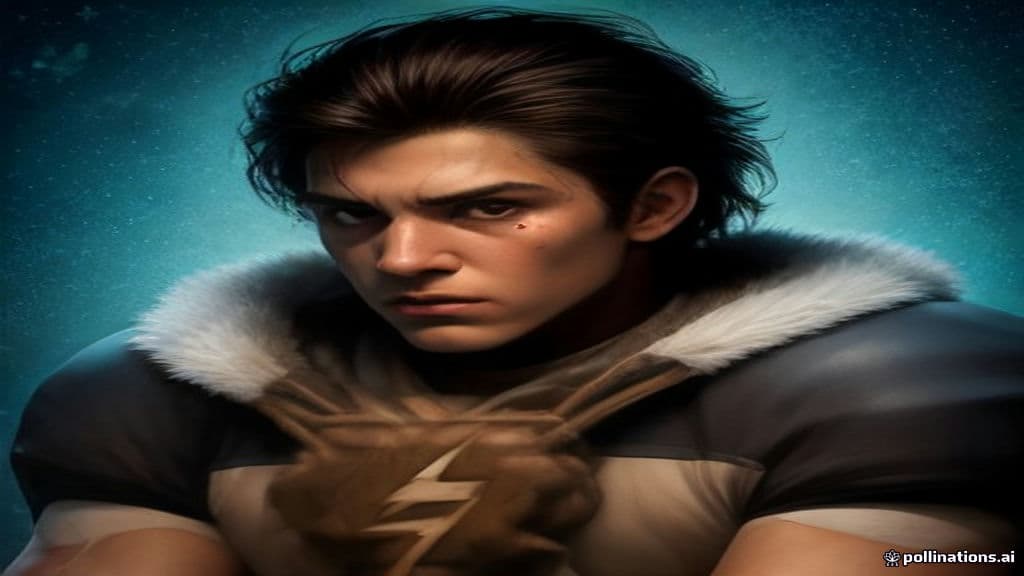
Flash Bomba is a Filipino comic-book superhero created by Mars Ravelo. A disabled man named Paul Lester Sison gains superhuman abilities after defeating a Tikbalang and receiving its magic hair (an agimat/anting-anting), then uses those powers to fight crime in komiks and a 2009 television adaptation.

Flash Thompson
Lesser

Flash Thompson

Eugene "Flash" Thompson is a fictional human character from American comic books published by Marvel Comics. Introduced as a star high-school football player and bully of Peter Parker, he later serves in the U.S. Army, loses both legs in the Iraq War, and becomes host to the alien Venom symbiote, operating for a time as the costumed figure Agent Venom (and later Agent Anti‑Venom) in Marvel storylines.

Flatwoods Monster
Lesser

Flatwoods Monster

A creature reported in Flatwoods, Braxton County, West Virginia, on September 12, 1952, seen on the ground after witnesses observed a bright light cross the night sky. Treated in sources as an anomalous terrestrial/extra‑terrestrial apparition recorded in mid‑20th‑century American popular anomalistics and later reinterpreted by investigators with natural explanations (meteor + barn owl + perceptual factors).

Flauros
Greater

Flauros

Flauros (also attested as Haures / Hauras in variant spellings) is a named high-ranking spirit in Western grimoires, notably the Ars Goetia (Lesser Key of Solomon). Described as a 'Great Duke' who initially appears as a leopard and later assumes a human form with flaming eyes, he is invoked for truthful revelation about past, present, and future and for destructive aid against enemies, but must be constrained by ritual to prevent deception.

Flidais
Greater

Flidais

Flidais (also Flidas; modern Fliodhas/Fliodhais) is a named female figure in medieval Irish narrative tradition associated with a prodigious herd and exceptional milking; she appears in Ulster-Cycle and related cattle-raid tales as a woman of high status whose favored cow and herd can provision large numbers of people.

Flogdrake
Greater

Flogdrake

A Scandinavian firedrake or "fly‑dragon" associated with evening streaks of light in the sky and with tunnelling mountain lairs that hide ore and treasure. Primarily attested in Swedish folklore, it participates in a pan‑European motif of fiery serpents and is sometimes linked with household or earth spirits in nearby traditions.

Flora
Lesser

Flora

Flora is the Roman divine personification associated with flowers, spring, and vegetative fertility. She functioned as a named cultic figure within Roman religion, attested in sources that link her to a priestly office and to temple dedication(s), and her name later supplied the Latin root for the modern term 'flora' denoting plant-life.

Floronic Man (Jason Woodrue)
Greater

Floronic Man (Jason Woodrue)

A singular DC Comics character, Jason Woodrue is a botanist who becomes a plant–human hybrid called the Floronic Man. Across continuities he functions variously as a villain, occasional antihero, and a contested agent of the Green/Parliament of Trees, employing botanical science and plant-based powers in conflicts with heroes such as the Atom, Batman, and Swamp Thing.

Flying Crustacean
Lesser

Flying Crustacean

A cryptozoological report of a transparent, shrimp- or crayfish-shaped crustacean observed to leave the water and travel briefly through the air off Palawan, Philippines, in early 20th-century field notes by Dean C. Worcester. The phenomenon is also cataloged as a narrative motif in motif-indexing resources.

Flying Dutchman
Minor Spirit

Flying Dutchman

A legendary phantom vessel in maritime folklore, said to be unable to make port and condemned to sail the oceans forever. Appearing to sailors as a full-rigged ship—sometimes ghostly-luminous, sometimes dark—its sighting functions as an omen of doom and is tied in many versions to a past crime or penance.

Flying Spaghetti Monster
Greater

Flying Spaghetti Monster

The Flying Spaghetti Monster (FSM) is the satirical creator-deity of the Church of the Flying Spaghetti Monster (Pastafarianism), originated by Bobby Henderson in 2005 to parody and critique the introduction of intelligent design into public-school science. It functions as both a mock-religious deity in movement literature and a cultural/internet symbol used in public and media debates over religion and science education.

Focalor
Greater

Focalor

Focalor is a named spirit from the Ars Goetia corpus, described in modern goetic compilations as a ducal-ranked spirit with authority over winds and seas who can drown men and sink ships; like other Goetic spirits he is represented as commandable by a conjurer.

Fodbgen
Lesser

Fodbgen

Fodbgen (also Odbgen; modern Irish Foidhbhgen) is a legendary High King of Ireland from the Fir Bolg branch of the Dela. Medieval regnal lists record that he overthrew his cousin Rinnal, ruled for four years, and fell at Magh Muirthemne to Eochaid mac Erc; brief notices associate his reign with an etiological note about knots in trees and an unusual climatic formula.

Folklore, legends and myths in Dombey and Son
Minor Spirit

Folklore, legends and myths in Dombey and Son

Literary influences from Greek folklore and mythology on the novel 'Dombey and Son' by Charles Dickens. (Note: 1. Summary: "Literary influences" is too vague; rephrase to specifically mention "Greek folklore and mythology". 2. Power tier: This entity doesn't exist in the source material; there's no indication )

Fomorians
Ancient

Fomorians

A distinct supernatural race in early Irish myth who function as recurring antagonists to successive settler and divine groups in Ireland. They are frequently associated with hostile, chaotic forces of nature (sea, darkness, blight) and appear in origin‑war narratives as opponents of the Tuatha Dé Danann and earlier settler groups.

Fontus (Fons)
Lesser

Fontus (Fons)

Fontus (Latin Fons, pl. Fontes) is a deity in ancient Roman religion associated with wells, springs, and fountains. He is honored in the calendar festival Fontinalia (October 13), appears in ritual inscriptions (including Mithraic dedications as Fons Perennis), and is named in Roman religious records such as an Arval Brothers expiatory sacrifice.

Foras
Greater

Foras

Foras (also Forrasis, Forcas) is a named non‑human intelligible being listed in early modern Latin grimoires. Described as a 'Mighty President' who rules twenty‑nine legions, he is presented as a teacher of logic and ethics, a revealer of the virtues of herbs and precious stones, a disposer of treasure‑finding and recovery of lost things, and a grantor of talents such as eloquence, wit, invisibility, and longevity.

Forbidden Fruit (Jewish Tradition)
Primordial

Forbidden Fruit (Jewish Tradition)

In the Jewish tradition, a specific type of fruit from the Tree of Knowledge of Good and Evil that holds symbolic significance due to its association with Adam and Eve's disobedience. (Note: 1. Power tier should be Lesser or Minor Spirit at most, as the forbidden fruit is a symbolic object with no supernatural abilities. 2. Sensory cues are not mentioned, but its absence can be noted (e.g)