Entity Index

A record of the unseen, drawn from world folklore.

7704 entities · page 69 of 129

Gremlin
Minor Spirit

Gremlin

A modern machine-age folkloric creature, first attested in Royal Air Force slang in the 1920s, invoked by airmen to personify and explain inexplicable mechanical malfunctions in aircraft and other machinery. Gremlins function socially as scapegoats that reduce interpersonal blame and bolster morale in high-stress technical settings; later popularized in fiction by authors such as Roald Dahl.
Gremory
Lesser

Gremory

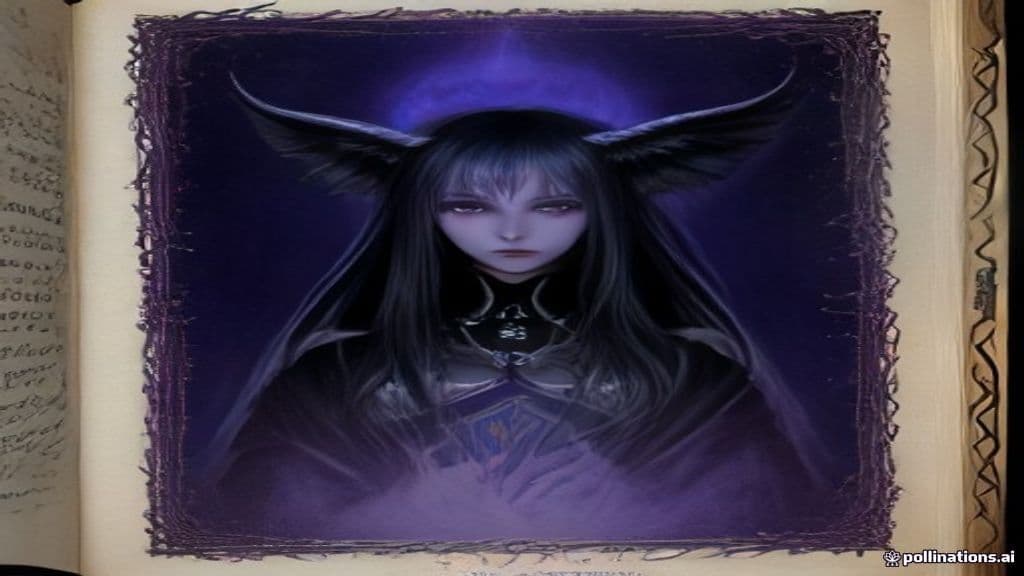
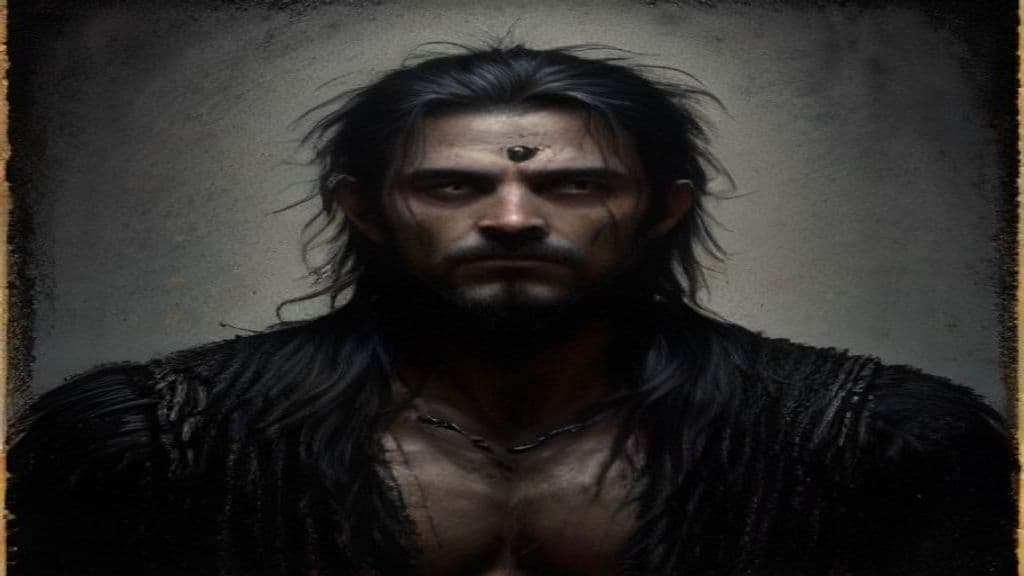
Gremory (also attested as Gemory in the supplied corpus) is named in at least one modern reference as a demon listed in demonological grimoires. The supplied materials identify the name within the Western grimoire tradition but do not provide further primary grimoire details in this dossier.

Grendel
Greater

Grendel

A hostile supernatural figure from the Old English epic Beowulf who raids King Hroðgar’s mead‑hall Heorot. Presented as a night‑dwelling, exiled being variously classified with Germanic eotenas/þyrs and described in the poem as descended from the Biblical Cain; his defeat by Beowulf restores communal order.

Grendel's mother
Greater

Grendel's mother

A principal antagonist in the Old English epic Beowulf, presented as the mother of Grendel and a member of the poem's category of Cain-descended “monsters.” She attacks Heorot in vengeance for her son and is slain by Beowulf in her underwater lair.

Grey Gargoyle (Paul Pierre Duval)
Greater

Grey Gargoyle (Paul Pierre Duval)

A Marvel Comics supervillain whose right hand was permanently transformed into living stone by an industrial chemical accident; he can transmute touched matter to stone temporarily and can convert his whole body into living stone, acting as a recurring antagonist to superheroes such as Thor. He has at times been amplified by cosmic events (e.g., becoming Mokk during Fear Itself) and has been reverted or contained through a variety of tactical and magical interventions.

Grey Hulk
Greater

Grey Hulk

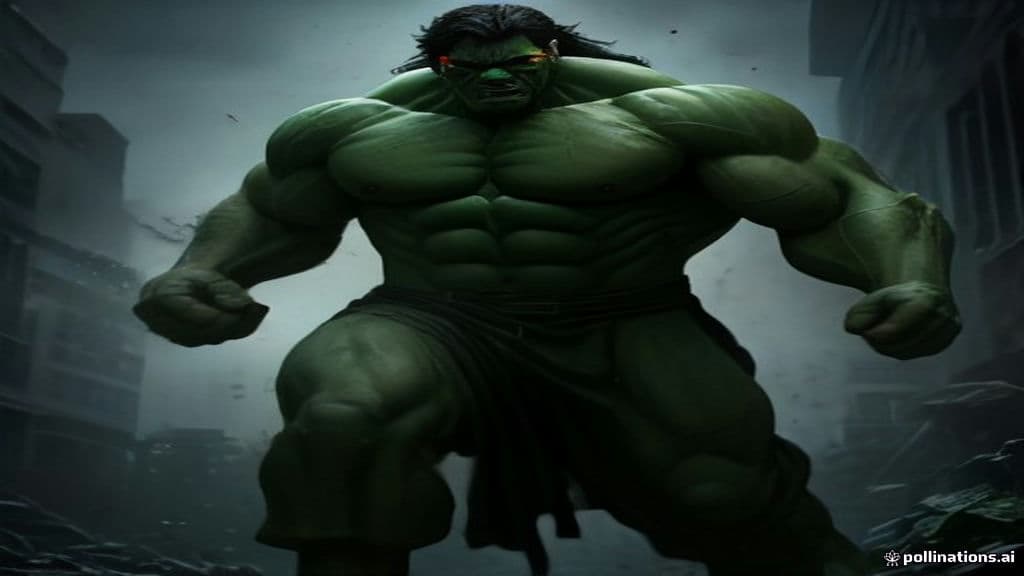
A distinct persona/alter of Bruce Banner within mainstream American comic-book continuity and adaptations, identified by grey skin in many iterations and a temperament that differs from other Hulk personae. The Grey Hulk is an internal, emergent identity that manifests during Banner's transformations rather than an external spirit or traditional folkloric being.

Grey wolf (mythology)
Lesser

Grey wolf (mythology)

The Grey wolf is both the biological species Canis lupus and a mythic/symbolic animal in several Eurasian traditions. In Turkic, Mongolian, and broader Altaic contexts it is described as a sacred animal and national symbol; in other Eurasian mythic corpora wolves also appear as powerful mythic figures (e.g., Norse Fenrir) though those are distinct literary entities.

Griffin
Greater

Griffin

The griffin (also griffon, gryphon) is a composite legendary creature combining the body, tail, and hind legs of a lion with the head, wings, and often taloned forelegs of an eagle. In classical and medieval Eurasian traditions it functions chiefly as a majestic guardian figure associated with rulership and the protection of treasure, and appears widely across artistic vocabularies rather than as a single codified religious being.

Griflet
Lesser

Griflet

Griflet is a human narrative figure of the Arthurian literary tradition, appearing across medieval romances and later retellings as a loyal young squire who rises to become a knight of the Round Table. He is a recurring martial attendant of King Arthur, notable in sources for battlefield service, frequent captures and rescues, and variant fates at the end of the cycle.

Grim Reaper
Minor Spirit

Grim Reaper

A Western cultural personification of death depicted as a hooded, often skeletal figure bearing a scythe. The Grim Reaper functions primarily as a symbolic emblem in art, literature, and popular media to represent death, mortality, and the process of dying rather than a discrete ritual agent in a documented traditional religion.

Gringolet
Lesser

Gringolet

Gringolet is the named war-horse of Sir Gawain in Arthurian literature, depicted as an extraordinary mounted companion used in questing and battle. Across multiple medieval sources the steed functions as a marker of Gawain's chivalric identity, a partner in martial action, and occasionally bears hints of supernatural provenance.

Grivet
Minor Spirit

Grivet

The grivet (Chlorocebus aethiops) is an Old World monkey species native to parts of northeastern Africa. The provided sources treat it as a biological taxon with ecological, behavioral, and historical-cultural associations (not as a supernatural being).

Groot
Greater

Groot

Groot is a fictional extraterrestrial tree-like sentient being (a Flora colossus) originating from Planet X in Marvel Comics. Introduced in 1960 as an invader, later reinterpretations recast Groot as a heroic figure and long-time companion of Rocket Raccoon within Marvel continuity and its adaptations.

Grootslang
Ancient

Grootslang

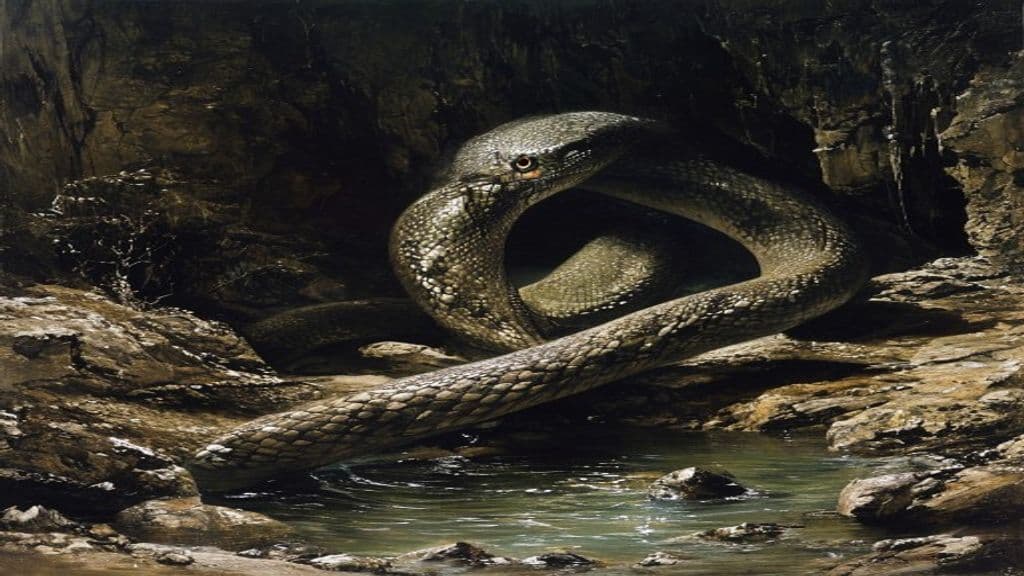
A legendary enormous serpent from South Africa (literally 'big snake' in Afrikaans/Dutch) said to dwell in deep caves and river pools of the Richtersveld and Orange River region; traditionally represented as an ancient guardian of hoarded diamonds and other riches and as an explanation for dangerous places and disappearances.

Gryneus
Lesser

Gryneus

Gryneus is a polysemous name attested in modern biological taxonomy (Callophrys gryneus, the juniper/olive hairstreak), as an epithet of the classical god Apollo in data records, as the name of a centaur slain in the Lapith–centaur fight in a mythic source, and as the Latinized surname of an early modern theologian (Ioannes/ Johann Iacobus Grynaeus). The supplied sources do not present Gryneus as a single supernatural entity within a living folk cosmology.

Guahaioque
Lesser

Guahaioque

Guahaioque is recorded in available sources as a minor deity of the Muisca people, described as the god of evil, stealing, lies, and death. The Muysccubun name is given as meaning "figure of the deceased." The documentary attestation is brief and does not include myths, iconography, or ritual detail.

Guajona
Lesser

Guajona

The Guajona (also called Lumia) is a nocturnal, hag-like creature from Cantabrian (and related Asturian) folklore said to enter homes and suck the blood of sleeping people—especially children—leaving victims pale and weak without necessarily killing them.

Gualicho
Lesser

Gualicho

Gualicho (also spelled gualichu or walichu in place-names) is a Patagonian/Tehuelche folk term used to name a harmful supernatural influence or curse attached to places, events, or people. The term appears in regional toponymy and modern popular sources and was adopted as the genus name for a newly described theropod, but the supplied materials are primarily toponymic and paleontological references rather than detailed ethnography.

Gualichu
Lesser

Gualichu

Gualichu (also rendered gualicho) is a harmful, non-worshipped spiritual force in Mapuche and Tehuelche-related folklore blamed for disease, calamity, and general misfortune. The term also extends to mean an evil spell or jinx and survives in regional speech as a noun and verb.

Guan Gong (Guan Yu / Guan Di)
Greater

Guan Gong (Guan Yu / Guan Di)

Guan Gong is the honorific cult form of the historical late Eastern Han general Guan Yu (courtesy name Yunchang), a prominent follower of Liu Bei whose memory was transformed through literature and popular religion into a widely venerated 'Warrior Saint' figure with temples, images, and cultural presence across China and overseas Chinese communities.

Guanyin
Ancient

Guanyin

Guanyin (Guān Yīn, short for Guanshiyin/Guanshiyin 觀世音) is the Chinese manifestation of the bodhisattva Avalokiteśvara associated with compassion. Venerated across Buddhist, Taoist, and Chinese popular-religion contexts, Guanyin is petitioned through temple devotion, recitation, and festivals as a merciful intercessor who 'perceives the sounds of the world.'

Guardian angel
Greater

Guardian angel

A guardian angel is a class of heavenly ministering spirit assigned to a particular person, group, or nation to watch over, guide, intercede for, and protect that charge. Found across Judaic, Christian, Zoroastrian, and later esoteric sources, the guardian angel functions as an intermediary carrying out divine behests and as a personal tutelary presence.

Guardian of the Gate
Lesser

Guardian of the Gate

A title used in L. Frank Baum’s The Wonderful Wizard of Oz for the civic sentry who controls access to the Emerald City; the phrase is also reused independently in modern fantasy and gaming to name protectors of liminal thresholds (underworld gates, planar portals) but these uses are distinct from Baum’s fictional office.

Guardians of the Directions (Dikpāla / Lokapāla)
Greater

Guardians of the Directions (Dikpāla / Lokapāla)

A class of deities or divine offices that guard and sacralize spatial directions in South Asian and some Southeast Asian religious cosmologies. Appearing in Hinduism, Jainism and Vajrayāna Buddhism (and in regional systems such as Meitei and Javanese/Balinese traditions), they are represented in temple architecture and invoked as protectors of sacred space and the dharma.

Gubran
Greater

Gubran

Gubran is an uthra (a heavenly guardian or angelic being) in Mandaeism, attested in the Mandaean Book of John and the Right Ginza as a named celestial agent who participates in a rebellion with Nbaṭ and is appointed to watch over the north and the city of Ur. He is associated with a female consort named Guban and rides a heavenly steed called Paraheil.

Gudrun / Kriemhild
Lesser

Gudrun / Kriemhild

Gudrun (Old Norse Guðrún) — called Kriemhild in the Middle High German tradition — is a legendary human heroine/anti-heroine of Germanic epic cycles whose marriages, rivalries, and acts of vengeance drive the ruin of royal houses in the Norse and Continental (Nibelungenlied) traditions.

Gudula (Saint Gudula of Brabant)
Lesser

Gudula (Saint Gudula of Brabant)

Gudula is a Merovingian-era Christian saint venerated in the Low Countries and parts of Germany, remembered as a pious noblewoman noted for charity, devotion, and a localized relic cult centered on Moorsel and Brussels. In iconography she is often shown bearing a lantern or candle in a hagiographic motif where a demon attempts to extinguish her light.

Guegue (siren)
Lesser

Guegue (siren)

Guegue is a contemporary urban-legend spirit in the Democratic Republic of the Congo, represented in popular discourse as a supernatural seducer invoked in rumors about singers and pastors. The label is used to explain alleged sexual seduction, immoral influence, or occult affiliation surrounding public figures rather than as a documented traditional spirit with fixed ritual forms.

Gugalanna
Lesser

Gugalanna

Gugalanna is a named figure in Sumerian religion associated with the Mesopotamian underworld, attested as the first husband of Ereshkigal and as the deceased whose funeral occasion motivates the poem Inanna's Descent into the Underworld. Modern scholarship sometimes links the name to administrative titles or equates the figure with Ennugi or with the Bull of Heaven motif from the Gilgamesh cycle, though these identifications are interpretive.

Gui (wandering ghost)
Lesser

Gui (wandering ghost)

Gui (鬼), often rendered 'wandering ghost' or you hun ye gui (wandering spirits), are human-derived spirits in Chinese/Taoist popular religion that remain unsettled after death—commonly through violent or unhappy death or neglect by descendants—and are addressed through ancestor rites, Ghost Festival observances, and specialist ritual interventions.

Guinevere
Lesser

Guinevere

Guinevere is a named human royal figure in the Arthurian literary tradition: an early-medieval princess who becomes Queen of Britain as the wife of King Arthur. In medieval and later romance she functions as a central human agent whose relationships (notably with Arthur, Lancelot, and Mordred) and narrative experiences (abduction, adultery, rescue) drive major plot consequences for the kingdom.

Guiron le Courtois
Minor Spirit

Guiron le Courtois

Guiron le Courtois is a literary knight-errant from the Old French Arthurian prose-romance tradition, central to the Palamedes/Guiron compilation of the 13th century and later manuscript and printed continuations. He functions in the narrative cosmos as an exemplar of courtly conduct whose adventures, loyalties, and lineage are narrated within the wider Round Table milieu.

Gul (Ghoul)
Lesser

Gul (Ghoul)

A folkloric Persian/Turkic monstrous being (Persian غول, Turkish ğul) described in etymological and lexical sources as an 'imaginary sylvan demon' that devours men and animals; the term also entered European languages and later literary usage as 'ghoul'/'goule'.

Gul-e-Siyah (Black Flower)
Lesser

Gul-e-Siyah (Black Flower)

No documented information about a supernatural entity named Gul-e-Siyah (Black Flower) appears in the supplied source materials. The provided archives and media synopsis do not mention a Persian lesser female ghost or any being by this name; thus no verified descriptive or ritual material can be supplied from these sources.

Gula
Ancient

Gula

Gula is an ancient Mesopotamian goddess chiefly associated with healing and medicine, venerated as a divine physician with temples and cults attested at cities such as Isin and Nippur. She is commonly depicted seated on a shrine with a dog at her side, an animal attribute repeatedly linked to her healing role.

Gulyabani
Lesser

Gulyabani

A Turkish folkloric figure described in modern sources as a large, ghoul-like nocturnal outsider associated with desolate places and with frightening people at night. Attested mainly in media descriptions (film entries and brief encyclopedia-style notes), the figure is represented both as a humongous bearded ghoul and, in at least one art-film description, as a restless spirit of a lonely place.

Gumiho (Nine‑tailed fox)
Greater

Gumiho (Nine‑tailed fox)

A fox‑spirit in Korean storytelling derived from wider East Asian nine‑tailed‑fox motifs. Traditionally depicted as a shapeshifting fox that can take human form (commonly female in many stories), the gumiho appears across older folktales and numerous contemporary Korean media where it functions variously as trickster, predator, or sympathetic protagonist.

Guneus
Lesser

Guneus

Guneus (Ancient Greek Γουνεὺς) is a mortal heroic-age chieftain and eponymous ancestor attested in Homeric epic and later Greek genealogical tradition. In the Iliad Catalogue of Ships he leads contingents (the Enienes and Perrhaebi) to Troy; other sources record variant parentage and a postwar settlement in Libya.

Gunther
Minor Spirit

Gunther

Gunther is a historical early 5th-century king of the Burgundians (Gundaharius/Gundahar) who was later absorbed into medieval Germanic heroic tradition as a legendary king (Middle High German Gunther, Old Norse Gunnarr). He functions in literature as a royal leader whose historical downfall and role in courtly-martial narratives link him to cycles involving Siegfried/Sigurd, Brunhild, Hagen, and Attila/Etzel.

Gunungsin (War Gods)
Primordial

Gunungsin (War Gods)

Korean deities associated with war and conflict, possibly connected to the Jakjaegeon myth. (Note: 1. Power tier should be Primordial only if it's supported by source material; based on the provided sources, the power level is unspecified. 2. Abilities are unknown or unspecified in source material,)

Gunura
Lesser

Gunura

Gunura is a Mesopotamian healing goddess attested from the Ur III through Neo-Babylonian periods, a member of the household of the medicine-goddess Ninisina and associated with other medical deities such as Gula and Nintinugga.

Gupna (Gufna)
Greater

Gupna (Gufna)

In Mandaean cosmology, the gupna or gufna is described in secondary sources as an uthra — a personified, heavenly grapevine that resides in the World of Light. References are brief and present the figure as a sacralized vine elevated into the register of luminous beings rather than as a terrestrial plant.

Guruguru Medaman (Amanojaku)
Lesser

Guruguru Medaman (Amanojaku)

Guruguru Medaman is identified in the supplied sources with the Amanojaku — a demon-like, contrarian being in Japanese folklore classed among wicked ogre-gods (akukijin), small ogres (ko-oni), and yōkai. The name also appears as a media character title in an archived audiovisual clip, but the supplied material contains no detailed traditional narratives, rituals, or specific physical descriptions for this named form.

Guruvayurappan
Greater

Guruvayurappan

Guruvayurappan is the local form of the Hindu god Vishnu worshipped at the Guruvayur Temple in Kerala, identified specifically with Krishna in his child form (Guruvayur Unnikkannan). The murti is the temple's living presiding deity in local tradition and is portrayed in devotional narratives as responsive to devotees and capable of intervening in their lives.

Gurzil
Ancient

Gurzil

Gurzil is an ancient Berber (Amazigh) sacred figure attested in late‑antique and medieval sources and in archaeological remains from Tripolitania. Best known from Corippus’s mid‑6th‑century poem Iohannis as a war‑associated cult image carried into battle by the Laguatan, and attested archaeologically at the site commonly identified as Ghirza.

Gusainji Maharaj
Primordial

Gusainji Maharaj

A revered figure in Hindu tradition, venerated by both Hindus and Muslims. (Note: 1. Power tier should be Lowered from Primordial to Ancient, as no cosmic or deity-level abilities are mentioned. 2. No specific weaknesses, wards, or sensory cues can be determined from the source mat)

Gusion
Greater

Gusion

Gusion is a named spirit recorded in the grimoire tradition of the Ars Goetia (Lesser Key of Solomon), presented there and in later compilations as a high-ranking demon who commands subordinate spirits and is queried by practitioners for information about temporal matters.

Guy
Lesser

Guy

Guy is primarily an English-language lexical item: a male given name and surname, a colloquial/slang term for a man, several place-names in North America, technical terms (e.g., guy-wire, sailing guy), and a modern cultural object in the form of "The Guy," the effigy burned on Guy Fawkes Night. The supplied sources do not describe Guy as a supernatural being or part of a traditional cosmology.

Gwenhwyfach
Minor Spirit

Gwenhwyfach

Gwenhwyfach is a figure in medieval Welsh Arthurian tradition, named as a sister and antagonist of Gwenhwyfar (Guinevere). Her surviving attestations are fragmentary: she appears in the tale Culhwch and Olwen and is cited in two Welsh Triads as whose quarrel with her sister precipitated the Strife of Camlann.

Gwion Gwion
Minor Spirit

Gwion Gwion

A regional tradition/style of painted anthropomorphic rock art from the north‑west Kimberley region of Western Australia, characterized by finely rendered human figures with ornamentation. The tradition (also known by local names such as Kiro Kiro/Giro Giro) is archaeologically significant and the subject of debate over age and authorship.

Gwisin
Lesser

Gwisin

In Korean folklore, gwisin are spirits or ghosts that are humans who have died. Sources describe the term as a class of departed-human spirit, noted as similar to yogoe or mamul and explicitly contrasted with non-human beings such as dokkaebi.

Gwragedd Annwn
Lesser

Gwragedd Annwn

In Welsh tradition the Gwragedd Annwn are female Otherworld fairies tied to freshwater—lakes and rivers—counted among the Tylwyth Teg. Depicted as beautiful women (often dressed in green) who live beneath lakes, they herd enchanted white cattle and occasionally cross into the human world.

Gwyllgi
Lesser

Gwyllgi

The 'Dog of Darkness' of Welsh folklore — a monstrous black hound with baleful red or yellow eyes that haunts lonely roads at night, its appearance an omen of death.

Gyas
Lesser

Gyas

Gyas is a named mortal captain in Virgil's Aeneid, portrayed as one of Aeneas's seafaring leaders and a competitor in the funeral‑games boat race (Book 5). He is remembered for ordering his helmsman Menoetes to steer tightly and then casting him overboard when the order was not followed; later he is briefly reported to have beheaded Ufens (Book 12.460).

Gyges (of Lydia; Ring of Gyges tradition)
Lesser

Gyges (of Lydia; Ring of Gyges tradition)

Gyges is a named human figure from Greek classical tradition: a founder/early king of Lydia (Gyges of Lydia) and the protagonist of the 'Ring of Gyges' moral thought-experiment. He is treated in historiography (notably Herodotus) as a political actor whose story is later used in philosophical discussion about invisibility, secrecy, and justice.

Gytrash
Lesser

Gytrash

A regional English folk spirit or spectre, the Gytrash is a shape‑changing roadside apparition from northern England—chiefly the West Riding of Yorkshire—most commonly reported in the form of animals (horses, mules, dogs, even an 'evil cow') that appear to travelers on lonely roads and may either mislead or guide them. The creature appears in dialect scholarship and 19th‑century Brontë family notes and fiction.

Géant (REJECT — not attested as a discrete supernatural entity)
Minor Spirit

Géant (REJECT — not attested as a discrete supernatural entity)

The term 'Géant' in the provided sources is a French common noun meaning 'giant' and is attested chiefly as a descriptor used in place-names, festival puppets, commercial brands, and technical acronyms. The supplied materials do not document a cohesive folkloric supernatural being named 'Géant' with defined mythic origin, appearance, powers, or ritual practices; therefore this entry records the absence of evidence for a discrete legendary entity under this name in the provided sources.

Gün Ana
Ancient

Gün Ana

Gün Ana (literally 'Sun Mother') is the Turkic personification of the Sun attested in Kazakh, Kyrgyz, and related Turkic traditions as a maternal, life-giving sky-being associated with fertility, warmth, health, and protection of the vulnerable; she is placed cosmologically in the upper heavens and figures in creation accounts involving solar light.

Gütel
Lesser

Gütel

A variable household and folk spirit from German regional belief-forms that appears as a domestic sprite, hay-loft manikin, little earth-being, or the soul of an unbaptized child; its character ranges from helpful household attendant to mischievous or harmful tormenter depending on locality.

Gādhi
Ancient

Gādhi

A sage in Hinduism, father of Vishvamitra and associated with ancient knowledge. (Note: 1. Power tier: Primordial (not Ancient) - as there are no supernatural abilities attributed to Gādhi. 2. Appearance: add information about Gādhi's physical appearance or description in Hindu texts. 3.)