Entity Index

A record of the unseen, drawn from world folklore.

7715 entities · page 71 of 129

Hantu Raya
Greater

Hantu Raya

A Malay spirit-familiar (hantu) described as a "great" or potent double that serves and substitutes for a human master, especially associated in sources with practitioners of black magic. It performs labor, provides alibis, and requires regular offerings to be kept under control.

Hantu Tetek
Lesser

Hantu Tetek

Hantu Tetek is named in Malay-language sources as a local hantu (ghost/spirit) variant within the broad family of female revenant or vampiric spirits found in Malay-region folklore. The available source treats it as one of many hantu types but provides no detailed, attested description specific to Hantu Tetek itself.

Hantu Tinggi
Ancient

Hantu Tinggi

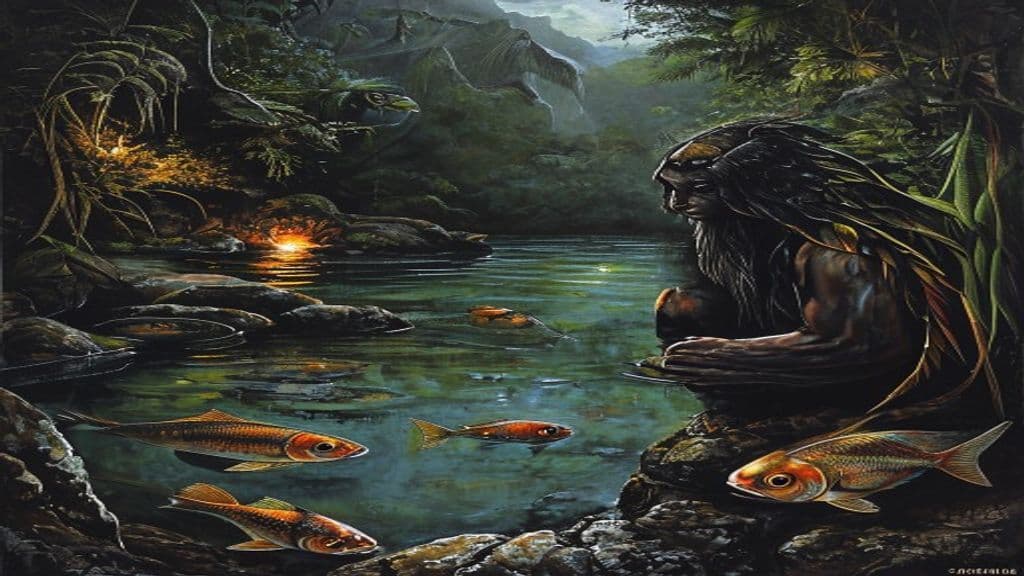
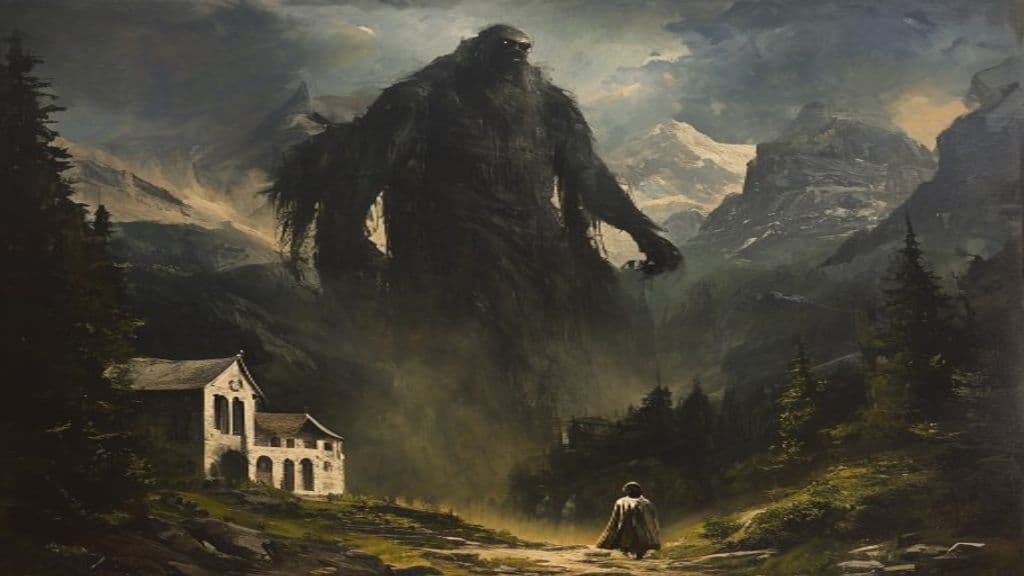
A Malay spirit-type characterized by extraordinary height, Hantu Tinggi is an ancient forest/swamp-associated unseen being in Malay-speaking areas of Malaysia. Folklore describes it as similar to Hantu Raya or Genderuwo but vastly larger; protective practice reported in sources centers on Qur'anic recitation and seeking traditional or Islamic healers.

Hanuman
Greater

Hanuman

Hanuman is a divine vanara (monkey‑like being) in Hindu literature, foremost companion and devoted servant (Rama-dūta) of Lord Rama in the Ramayana. Revered in later Bhakti traditions, he is worshipped as a protector and exemplar of devotion, strength, and service.

Hanuman langur
Minor Spirit

Hanuman langur

A biological primate species (Semnopithecus entellus) widely distributed across India and parts of Pakistan, commonly called the Hanuman langur or sacred langur and culturally associated with the Hindu deity Hanuman. Sources treat it as an animal of ecological, ethological, and cultural interest rather than a supernatural being.

Haoma
Ancient

Haoma

Divine plant in Zoroastrianism and Persian culture with significant spiritual importance, originating from Indo-Iranian religion. (Note: * Power tier should be Primordial, as Haoma is considered a divine being with significant spiritual importance, rather than deity-level (Ancient). * Origin story: The etymology of the word 'Haoma' is )

Hapi
Ancient

Hapi

Hapi (Ancient Egyptian ḥꜥpj, often rendered Hapy) is the personified deity of the annual Nile inundation in Ancient Egyptian religion; he is the divine agent of the life-giving flood that deposits fertile silt and enables agriculture. He was ritually celebrated as the source of fertility and abundance tied to the river's cyclical renewal.

Happy Hunting Ground (Lakota Tradition)
Minor Spirit

Happy Hunting Ground (Lakota Tradition)

In the Lakota tradition, the Happy Hunting Ground is a peaceful afterlife realm where the spirits of the deceased live out their lives in happiness and abundance. (Note: - Power tier: Primordial (not Minor Spirit, as it's a cosmic realm) - Summary: Inaccurate - the article describes the Happy Hunting Ground as a peaceful afterlife realm, but doesn't mention its abunda)
Hapy (Son of Horus)
Minor Spirit

Hapy (Son of Horus)

Hapy is one of the four sons of Horus in ancient Egyptian funerary religion, most commonly associated with guarding the lungs of the deceased. He appears in mortuary contexts as a protective presence embodied on canopic-lid iconography and in amulets and small statuettes, often shown with a baboon head from the late New Kingdom onward.

Haqueta de foc
Lesser

Haqueta de foc

The Haqueta de foc is recorded in a Valencian source with the brief description 'a little mare.' The available entry is a single-line record and provides no further contextual information about the being's role, powers, or stories.

Harana (Elopement)
Primordial

Harana (Elopement)

In Hindu tradition, a 'Harana' is an act of elopement or abduction, often against the will of the person being taken. (Note: - Power tier: Primordial (this seems too high given the description; consider Lesser or Minor Spirit) - Abilities: Consider adding that Harana's "powers" are more related to social and cultural influe)

Hare of Inaba
Minor Spirit

Hare of Inaba

A mythic white hare (Inaba no Shirousagi) from the Izumo cycle of ancient Japanese myth, best known from the Kojiki narrative in which it interacts with the deity Ōnamuchi-no-kami; the hare functions as an anthropomorphic plot figure whose trickery, injury, and subsequent healing help reveal aspects of the deity's character and destiny.

Harendotes
Greater

Harendotes

Harendotes is a local epithet/manifestation of the Egyptian god Horus, attested in Greek transliteration as meaning 'Horus-avenger-of-his-father.' He is documented as the dedicatee of a temple on Philae and appears in coronation/baptismal relief imagery and in late Pharaonic to Roman-period documentary and onomastic records.

Haridra Ganapati
Greater

Haridra Ganapati

Haridra Ganapati (Sanskrit: हरिद्रा-गणपति, Haridrā-gaṇapati, "turmeric Ganesha") is an iconographic and sectarian form of the Hindu deity Ganesha. Attested in classical iconographic treatises and in Ganapatya sectarian literature, this turmeric‑coloured form functions as a focus of Tantric sadhana, devotional worship for worldly welfare and protection, and — in the claims of the Haridra Ganapatya sect — as a supreme tutelary figure whose worship grants both worldly boons and moksha.

Harihara
Ancient

Harihara

Harihara is a syncretic divine form combining the Hindu deities Vishnu (Hari) and Shiva (Hara), used as an iconographic and philosophical expression of their essential unity (Brahman). It appears primarily in textual references (Puranas, Harivamsha) and in temple sculpture from early medieval South and Southeast Asia.

Harionago
Lesser

Harionago

Harionago (針女子), also called Harionna (針女), is a frightening female supernatural figure from regional Japanese folklore, described as a beautiful woman whose extremely long, barbed hair is under her control and used to ensnare and attack young men on roads in Ehime Prefecture, Shikoku.

Harlequin
Lesser

Harlequin

Harlequin is primarily a theatrical stock character (Italian Arlecchino) in commedia dell'arte: a nimble, comic servant and trickster. The theatrical persona derives its name, motifs, and some iconography from medieval Old French folkloric figures called herlequin/hellequin, a masked leader associated with nocturnal processions (the Mesnée d'Hellequin or Wild Hunt).

Harmodius and Aristogeiton
Minor Spirit

Harmodius and Aristogeiton

Harmodius and Aristogeiton were two historical Athenians, celebrated as the Tyrannicides after they assassinated Hipparchus in 514 BC. Remembered and commemorated by later Athenian democrats, they function in civic memory as exemplars of resistance to tyranny rather than supernatural beings.

Harmonia
Ancient

Harmonia

Harmonia is the ancient Greek goddess who personifies harmony, concord, and the principle of fitting or joining that underwrites civic and cosmic order. She appears in myth chiefly as the wife of Cadmus, mother of important Theban figures, and as the legendary source or eponym of a famed cursed heirloom (the Necklace or peplos) whose misfortunes affect later generations.

Harpalion
Minor Spirit

Harpalion

Harpalion is a personal name borne by several mortal men in Greek mythic tradition. Attestations identify individuals called Harpalion as ordinary human actors — a Lemnian wine-grower and two warriors who fought and died in the Trojan War — without any supernatural attributes in the cited sources.

Harpalyce (daughter of Clymenus)
Lesser

Harpalyce (daughter of Clymenus)

Harpalyce, identified in the supplied sources as 'Harpalyce (mythology),' is one of several women in Greek myth who bear the name Harpalyce. In the materials provided she is attested only as a named figure in reference works and disambiguation lists and is not described with any narrative, cultic role, or supernatural attributes.

Harpies
Lesser

Harpies

Harpies are winged, half-human/half-bird beings from Greek (and later Roman-identified) myth, commonly portrayed as swift personifications of storm winds and as agents of theft or vengeance in epic and heroic narratives.

Harpina
Lesser

Harpina

Harpina is a local Naiad-nymph of the Eleian/Pisatis tradition tied to a spring or stream near Pisa in Elis. In genealogical myth she is daughter of the river-god Asopus (and Metope) and mother, by Ares, of King Oenomaus; her name is given to a nearby town (Harpina/Harpinna) and the stream Harpinates. She is attested in literary topography and as a figure in a Phliasians' sculptural dedication at Olympia.

Harpocrates (Horus the Child)
Lesser

Harpocrates (Horus the Child)

Harpocrates is the Hellenistic form of the Egyptian Har-pa-khered (Heru-pa-khered), the infant aspect of Horus representing the newborn sun; in Ptolemaic Alexandria he was adapted into a minor god associated with silence, secrets, confidentiality, and the protection of reputations.

Harpy
Greater

Harpy

In Greek and Roman myth, a harpy is a hybrid bird-human creature and personification of storm-winds that acts as an agent of divine punishment — snatching food, fouling victuals, and carrying off or tormenting wrongdoers, sometimes delivering them to chthonic justice.

Harsomtus
Lesser

Harsomtus

Harsomtus (also Harsomptus, Somtus) is an ancient Egyptian child-deity associated with fertility, birth and the solar-primordial creative principle. Worshiped in local temple contexts (notably Dendera and Edfu) and venerated in mammisi (birth-houses), he functions as a youthful or infant form of the Horus/Ra divine line and is integrated into regional triads and family-group theology.

Harut and Marut
Greater

Harut and Marut

A pair of figures named in the Qur'an (Surah 2:102) and elaborated in classical Islamic exegesis as heavenly beings associated with Babylon and the transmission of sorcery; their status (angels, kings, or men) and culpability are debated across commentaries. They function etiologically to explain the origin of illicit magic and as exemplars of divine testing or temptation.

Hashihime
Greater

Hashihime

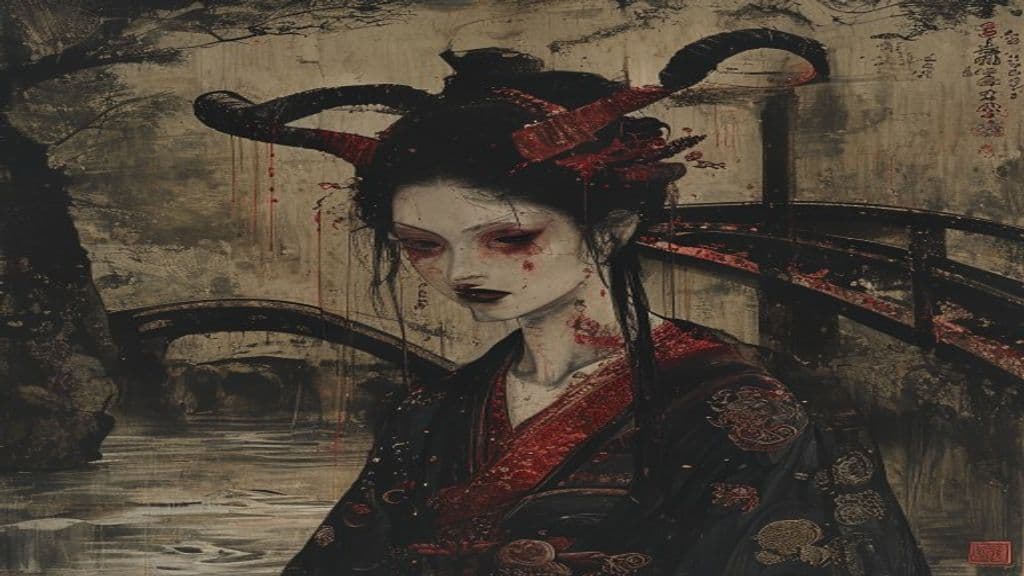
Hashihime (橋姫, "Bridge Maiden/Princess") is a Japanese literary and folkloric figure variously depicted as a poetic emblem of lonely waiting at bridges and, in later tales and drama, as a woman who through ritual transforms into a violent, bridge-associated vengeful spirit.

Hashmal
Lesser

Hashmal

In the supplied Jewish textual materials, Hashmal (Hebrew חַשְׁמַל; pl. Hashmallim) appears both as a luminous element in Ezekiel's prophetic theophany and as the name of an angelic rank in later Jewish angelology, described in secondary sources as administrative officers of Heaven.

Hasinaw-uk-kamuy
Greater

Hasinaw-uk-kamuy

Hasinaw-uk-kamuy is an Ainu kamuy (deity/spirit) associated with the hunt, hunting tools and success in subsistence activities; she is invoked by hunters and fishermen and is also associated in sources with aid in childbearing.

Hasshaku-sama
Lesser

Hasshaku-sama

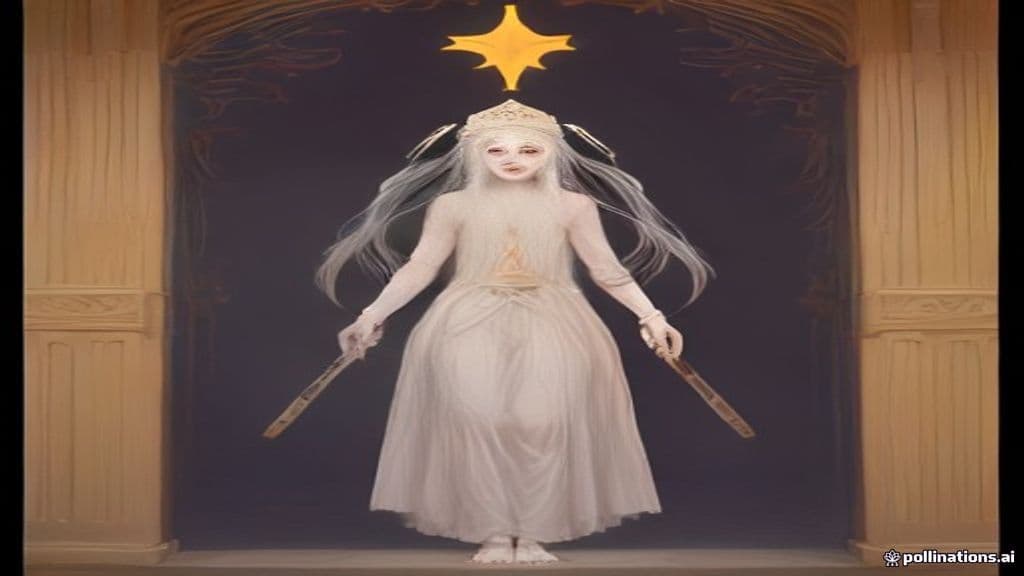
Hasshaku-sama (八尺様) is a contemporary Japanese urban-legend figure depicted as a very tall, pale womanlike spirit associated with isolated rural zones; circulating since the late 2000s in internet folklore, she is said to target children and young people and is warded in stories by sealed rooms, talismans, salt, and boundary Jizō statues.

Hat Man
Lesser

Hat Man

A modern popular-paranormal variant of the 'shadow person' phenomenon: described in sources as a humanoid, shadow-like figure discussed in paranormal communities and occasionally linked in contemporary notes to drug- or sleep-related experiences.

Hata no Kawakatsu
Greater

Hata no Kawakatsu

Hata no Kawakatsu (秦河勝 / Hada no Kōkatsu) is a semi-legendary Asuka-period courtier and leader of the Hata clan attested in classical chronicles. In the Nihon Shoki he appears as a high-ranking official who received a Buddha image from Prince Shōtoku, founded Hachioka-dera (Kōryū-ji), escorted foreign envoys, and suppressed the popular cult of Tokoyo-no-Kami. Later medieval traditions expand his biography with legendary accretions (e.g., claimed descent or identification with Qin imperial lineage, enshrinement as Ōsake Daimyōjin, and association with performing-arts ancestry).

Hathor
Ancient

Hathor

Hathor (Ancient Egyptian ḥwt-ḥr, 'House of Horus') is a major polyvalent goddess of ancient Egypt associated with the sky, maternal and royal motherhood, music, joy, fertility, and the Eye of Ra; she appears in multiple local manifestations and assisted the deceased into the afterlife.

Hatif
Lesser

Hatif

Hatif (Arabic: هَاتِف, hātif) is an auditory phenomenon in Arabic and Bedouin traditions described as a voice heard without discovering the body that made it. Sources record multiple, sometimes conflicting explanations: an unseen communicator such as a jinn, the voice of the dead near graves, or a psychological hallucination arising from loneliness.

Hatme
Lesser

Hatme

A highly fragmentary attestation: one metadata entry (Wikidata) labels Hatme as a "Spirit of the Prophet Muhammad," while the remainder of the provided corpus uses the lexeme "hatme/hatme yapmak" in non-ethnographic contexts (ritual-event names, building names, course tags, forum posts). No corroborating ethnographic description of a folkloric being is present in the supplied materials.

Hauhet
Ancient

Hauhet

Hauhet is the feminine personification of endlessness or eternity in the Egyptian Ogdoad of Hermopolis (Khmun). She functions as the feminine counterpart to the male deity Heh and represents the boundless, pre-creation watery chaos (Nu) rather than acting as a localized, interventionist deity.

Haumea
Ancient

Haumea

Haumea is a Hawaiian goddess associated with fertility and childbirth, described in the available sources as a matronal progenitor who is mother to several important deities. Some accounts identify her with the earth-goddess Papa and, in certain traditions, as wife of Wākea; modern astronomy has adopted her name for a trans-Neptunian dwarf planet because of thematic parallels between her many offspring and the object's collisional family.

Haumia-tiketike
Greater

Haumia-tiketike

A god in Māori mythology associated with wild and uncultivated vegetative food. (Note: 1. Origin story: "He represents the wild and uncultivated aspects of Māori cuisine" is not supported by source material. 2. Abilities: The article implies Haumia-tiketike's role is more passive, but t)

Hauras
Minor Spirit

Hauras

Hauras is a name attested in modern cultural metadata and appears in secondary compilations connected to the Ars Goetia name-lists. The available sources do not provide historical folkloric descriptions, powers, or rituals for Hauras; its documented uses are primarily as a contemporary artist/track name and an entry-string in name-lists derived from goetic compilations.

Hauron (Haurun / Horon / Hawran)
Ancient

Hauron (Haurun / Horon / Hawran)

Hauron (also Haurun, Horon, Hawran) is an ancient Near Eastern deity attested in Egyptian sources (worshiped at Giza) and identified by scholarship as the Egyptian form of a West Semitic god worshiped in Canaan and at Ugarit. In Egypt his name was closely associated with Harmachis and could be used as a designation of the Great Sphinx of Giza.

Hauwahine
Greater

Hauwahine

A guardian spirit in Hawaiian mythology, watching over multiple fishponds. (Note: * Power tier should be Lesser (since it's a local spirit guarding specific locations) * Origin story: Add that Hauwahine is specifically associated with Kawainui, Pā'eo, and Kaʻelepulu fishponds. * Ap)

Havea Hikuleʻo
Ancient

Havea Hikuleʻo

Havea Hikuleʻo is a goddess in Tongan myth identified as the presiding deity of Pulotu and credited in tradition with producing several volcanic islands by throwing stones down from the sky. She is attested in pre‑Christian Tongan religion and remembered in material culture such as goddess figurines.

Hawaiian hawk (ʻio)
Lesser

Hawaiian hawk (ʻio)

The Hawaiian hawk, called ʻio (Buteo solitarius), is an endemic raptor of Hawaiʻi and a culturally significant bird mentioned in the Kumulipo and used as a royal emblem ('ʻiolani'). Sources treat it as a native animal species with symbolic importance rather than as an explicitly supernatural being.

Hawaiian hoary bat (ʻŌpeʻapeʻa)
Lesser

Hawaiian hoary bat (ʻŌpeʻapeʻa)

An endemic vespertilionid bat of the Hawaiian Islands (Lasiurus semotus) known in Hawaiian as ʻōpeʻapeʻa ('half‑leaf'). It is treated in scientific and conservation literature as the only extant native terrestrial mammal of Hawaiʻi, with nocturnal insectivorous habits and a solitary roosting ecology. Conservation documents frame protections and management measures rather than any traditional ritual or supernatural role.

Hawaiʻiloa
Greater

Hawaiʻiloa

Hawaiʻiloa is a legendary Hawaiian ancestral voyager and culture-hero credited in 19th‑century sources with discovering and giving his name to the island of Hawaiʻi. Presented as an expert fisherman, navigator, and founder-figure, he functions in oral-traditional narrative as an exemplar of star-based voyaging and as an eponymous progenitor for island place-names.

Hawk's Eye
Lesser

Hawk's Eye

Hawk's Eye is a named antagonist from the Sailor Moon SuperS-era antagonists and appears in the Sailor Moon Eternal adaptation. Presented as a humanoid member of the Dead Moon Circus ensemble, Hawk's Eye fights the Sailor Guardians, uses disguise/deception in the manga, and is defeated in combat by Super Sailor Jupiter in the supplied summaries.

Hawkeye
Minor Spirit

Hawkeye

Hawkeye is a polyvalent English-language cultural label applied to multiple non-supernatural referents including literary and comic-book characters (notably Natty Bumppo and Marvel's Clint Barton and Kate Bishop), regional nicknames and place-names in the United States (e.g., Iowa, 'Hawkeye State'), and various commercial or artistic uses. The supplied sources treat Hawkeye as a modern/pop-cultural name rather than a spirit or mythic being.

Hawkeye Collins and Amy Adams
Minor Spirit

Hawkeye Collins and Amy Adams

A paired duo of fictional twelve-year-old child detectives who appear as protagonists in the children's puzzle-mystery book series Can You Solve the Mystery? (originally published 1983–1985) credited to the pseudonym M. Masters. The books invite readers to solve short investigative puzzles by using narrated clues and a sketch attributed to 'Hawkeye' Collins, with mirror-printed solutions provided at the back.

Hawkgirl (Kendra Saunders)
Greater

Hawkgirl (Kendra Saunders)

Kendra Saunders is a DC Comics character who assumes the mantle Hawkgirl within the Hawk legacy. Introduced in 1999 as a modern incarnation in a long cycle of Hawkman/Hawkgirl identities, she is portrayed as a winged, melee‑focused superheroine whose flight and gear are commonly associated with the fictional material Nth metal.

Haya
Minor Spirit

Haya

Haya is attested as a theonym in ancient Mesopotamian religion. Some modern scholars have characterized Haya as a grain or agricultural deity on etymological grounds, a reading that other scholars treat as tentative or unreliable given the limited evidence.

Hayagrīva
Ancient

Hayagrīva

Hayagrīva (Sanskrit: हयग्रीव, IAST hayagrīva, lit. 'horse-necked one') is an avatāra of the Hindu preserver deity Viṣṇu, depicted with a human body and a horse head. In Vaishnava traditions he is chiefly venerated as the divine patron and restorer of sacred knowledge (the Vedas) and as a bestower of learning and intelligence; in some epic passages he also appears in a martial, cosmic form to vanquish demonic forces.

Hayk

Hayk

Legendary patriarch and founder of the Armenian nation, considered an ancestral figure without supernatural powers. (Note: 1. Power tier should be set to "Primordial" since Hayk is considered an ancestral figure and a central part of Armenian mythology, implying a cosmic or foundational significance. 2. Sensory cues and w)

Haymon
Lesser

Haymon

A giant from Germanic folklore associated with the founding of Stift Wilten, a premonstratensian abbey. (Note: 1. The power tier should be Primordial, as it is described as a "giant" from Germanic folklore and associated with founding an abbey, implying a significant level of cosmic influence. 2. Add origin st)

Hayyi Rabbi
Primordial

Hayyi Rabbi

Hayyi Rabbi (Hiia Rbia, "The Great Life") is the supreme, singular divine Principle in Mandaean religion — the First Life and ultimate source of the Worlds of Light from which emanations, souls, and salvific guidance proceed. In Mandaean cosmology Hayyi is transcendent yet the origin of the Great Mana (over-soul) and presides as sovereign over lesser emanations who may act under delegation (e.g., Ptahil) in the formation of the material world.

Haʼ Kʼin Xook
Lesser

Haʼ Kʼin Xook

Haʼ Kʼin Xook was an historical ajaw (ruler) of Piedras Negras in the Classic Maya period who reigned from 14 February 767 AD to 24 March 780 AD. He is known from monument inscriptions and stelae (noted for an accession monument and an image of the king dispersing incense) and is treated in the sources as a political-ritual figure rather than a supernatural being.

Haṃsa (Hamsa)
Greater

Haṃsa (Hamsa)

The haṃsa is a paradigmatic aquatic migratory bird in South Asian religious and philosophical literature, functioning both as an observed Anatidae-like bird (variously rendered as swan, goose, or flamingo) and as a metaphysical symbol of the soul, discriminative awareness, and liberation (moksha). It appears across Vedic hymns, Buddhist Jataka tales, Puranic and later Hindu iconography as a sacred, white bird and as the vahana (vehicle) of several deities.

Headless Ghost
Lesser

Headless Ghost

An apparition motif in modern folklore and popular media in which a once-living person manifests in the world of the living without a head. Attestations in the supplied sources include localized English hauntings (e.g., Faringdon churchyard, a Wiltshire lane), a claimed photograph, and a 1959 fictional film in which the spirit's head is reunited with its body.

Headless Priest
Lesser

Headless Priest

A restless apparition in Central American and Philippine popular belief: the decapitated Catholic cleric who returns as a night-haunting spirit tied to specific local histories, churches, roads, or buried goods. Stories function as moral warnings about sacrilege, clerical guilt, and improper handling of sacred matters.

Headless Rider (Kubinashi Rider)
Lesser

Headless Rider (Kubinashi Rider)

A modern urban-legend revenant of a motorcyclist who suffered a decapitating accident and is said to reappear along the route or at the time of death, often riding a motorcycle without a head. The cycle adapts older headless‑rider motifs to motorized roadways and functions as a contemporary cautionary and liminal apparition.