Entity Index

A record of the unseen, drawn from world folklore.

7724 entities · page 73 of 129

Heramba
Ancient

Heramba

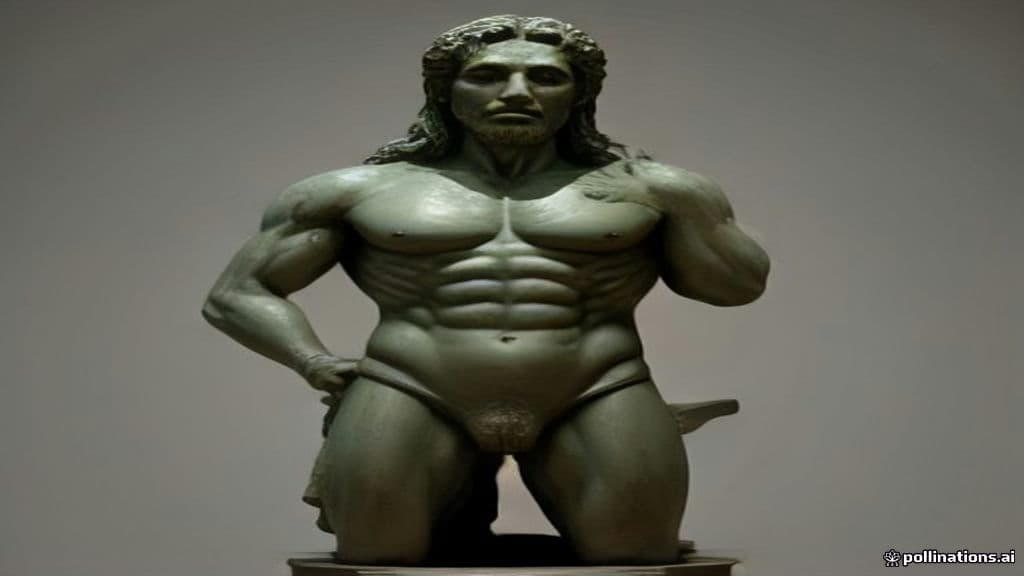
Heramba is a named iconographic form of the Hindu god Ganesha, venerated especially within Tantric streams as a protector of the weak who bestows fearlessness and victory. He is classically depicted with five elephant heads and multiple arms, often riding a lion and sometimes accompanied by Ganesha's rat vahana.

Herambasuta
Lesser

Herambasuta

Herambasuta (Devanagari: हेरम्बसुत, IAST: Heraṃbasuta) is attested in medieval Indian sources as a human Tantric yogi and leader associated with a vamachara (left‑hand) Ganapatya current who headed a cult of Ucchiṣṭa Gaṇapati. He is described in the tenth‑century Śaṅkaravijaya (attributed to Ānandagiri) as expounding an unorthodox, transgressive form of Ganapati worship later characterized by some scholars as Kaula‑like.

Hercle
Greater

Hercle

Hercle is an Etruscan divine hero—an immortal of the Etruscan pantheon, presented as son of Tinia and Uni—portrayed with Heracles-type attributes but invested with distinct local roles as a liminal protector, master of animals, and an oracular cult figure in Etruria.

Hercules
Ancient

Hercules

Hercules (Latin: Hercules) is the Roman reception of the Greek divine hero Heracles: a semi-divine, divinized heroic figure son of Jupiter and the mortal Alcmena who was widely venerated across Italy. Represented in cult, votive art, and literature, he functions as a protector and martial champion whose identity was adapted through Etruscan and local Italic contexts.

Hercules's Dog (discoverer of Tyrian purple)
Lesser

Hercules's Dog (discoverer of Tyrian purple)

A narrative animal actor in a Graeco‑Roman origin myth: Hercules's dog bites a sea‑snail (porphúra/murex) on a Phoenician beach, staining its mouth purple and triggering the discovery/origin story for Tyrian purple. The episode is attested in literary tradition and represented in later art (notably Rubens).

✦
Greater

Heremod

Heremod is a legendary early king attested in Old English poetry (Beowulf), medieval genealogies, and later Latin historiography. Presented as a human ruler whose pride, violence, and failure of kingship lead to banishment and death, he functions as a cautionary exemplar within Germanic/Nordic heroic-historical tradition.

Herensuge
Primordial

Herensuge

A mythical dragon in Basque mythology with seven heads and serpent-like appearance. (Note: - Remove "Primordial" as Power tier and replace with Lesser or Greater depending on further research (no specific mention of its powers in source material). - Add information about sensory cues, weakn)

Herja (Valkyrie)
Greater

Herja (Valkyrie)

In Norse mythology, Herja is a valkyrie who chooses warriors for battle and takes them to Valhalla. As such, she holds divine authority over the battlefield. (Note: * Power tier: Primordial (Herja's association with Valhalla and her role as a chooser of warriors suggests she may be a cosmic or even divine entity, rather than simply "Greater") * Weaknesses: The so)

Hermes
Ancient

Hermes

Hermes is an Olympian god in ancient Greek religion who functions as the herald of the gods, an intermediary between mortal and divine realms, and a psychopomp guiding souls to the afterlife. He is associated with travel, boundaries, commerce, thieves, oratory, and liminality; in Hellenistic contexts he is syncretized with Egyptian Thoth as Hermes Trismegistus.

Hermus / Hermos
Lesser

Hermus / Hermos

Hermus (Greek Ἕρμος, Hermos/Hermus) is a proper name appearing for several distinct figures in ancient Greek sources: a river-god identified with the river Hermus (modern Gediz in Lydia), an Aegyptid prince slain in the Danaids cycle, and a nobleman left by Theseus at the foundation of Pythopolis whose name became attached to a local place called the "House of Hermes."

Herne the Hunter
Lesser

Herne the Hunter

Herne the Hunter is a place-bound ghost of English folklore associated with Windsor Forest and the Great Park in Berkshire, tied to a specific oak known as Herne's Oak. Sources describe him as a horned, mounted spectral figure who rattles chains, torments cattle, and blasts or withers trees; many later details derive from 19th–20th century literary elaboration.

Hero City Kids Force
Lesser

Hero City Kids Force

Hero City Kids Force is a Philippine animated short-form television series produced by ABS-CBN in collaboration with Monaural Studio and Tres Puntos Studio. The series follows child-focused adventures in which the superheroes Darna, Captain Barbell, and Lastikman team with their playmates (Maya, Andres, and Nono, aka "The McCoolits") to confront the supervillain Dr. Sternberg/Steinberg and his sidekick Cyborgana.

Herobrine
Lesser

Herobrine

A modern internet-born urban legend and creepypasta from the Minecraft community: an uncanny, player-like presence (a Steve-like avatar with solid white eyes) alleged to appear in single-player worlds and to alter the environment. Herobrine is a community-created motif used in stories, videos, and mods rather than an official game entity.

Herodias (tradition)
Greater

Herodias (tradition)

A medieval European folkloric persona derived from the historical Herodian princess Herodias; in later popular summaries her name was repurposed as that of a leader or exemplar of nocturnal spirit-assemblies and night-rides. Sources link the name in medieval belief to figures who preside over witch-processions, while a modern secondary retelling describes her as a spirit condemned to wander the sky and 'permitted only to rest in treetops.'

Heroes United
Minor Spirit

Heroes United

Heroes United is a modern media title/brand used for multiple animated crossover productions and unrelated creative or civic projects. Most prominently it denotes a short series of Marvel Animation direct-to-video/streaming feature animations pairing established superheroes, and a Cartoon Network crossover special between Ben 10 and Generator Rex.

Heroides (Roman tradition)
Primordial

Heroides (Roman tradition)

A collection of epistolary poems by Ovid presenting letters from mythological heroines to their lovers. (Note: - Power tier: Change to "Ancient" (they are literary creations by Ovid, not cosmic entities) - Appearance: Clarify that they exist solely as written words on paper in the collection of poems, but also)

Herrauðr
Lesser

Herrauðr

Herrauðr is a legendary medieval Scandinavian noble — variously an earl of Götaland or a king of Sweden — best known as the father of Þóra Borgarhjǫrtr whose possession of a lindworm prompts heroic action by Ragnar Lodbrok. He appears across fornaldarsögur, the Tale of Ragnar's Sons, Gesta Danorum and related texts as a dynastic/royal figure rather than a supernatural being.

Hersilia
Lesser

Hersilia

In Roman foundational tradition, Hersilia is a legendary woman who mediates between Romans and the abducted Sabine families during the early history of Rome; in some literary accounts she is later said to have been apotheosized and identified as Hora Quirini, linking her to the cultic sphere of Romulus/Quirinus.

Heru-Behdeti
Ancient

Heru-Behdeti

Heru-Behdeti is a named manifestation of the ancient Egyptian sky-and-solar-falcon god Horus (Heru). Treated within the tradition as one facet of a multi-layered deity, this form participates in the broader Horus associations with kingship, protection, healing, and the sun/sky and was worshipped throughout Egyptian history.

Heru‑ra‑ha
Ancient

Heru‑ra‑ha

Heru‑ra‑ha is a composite, twofold deity in the modern religion of Thelema, composed of the active solar aspect Ra‑Hoor‑Khuit and the passive child‑aspect Hoor‑pa‑kraat (Harpocrates). Presented in Thelemic doctrine as the principal godform or Lord of the New Aeon (the Aeon begun in 1904), Heru‑ra‑ha functions as an aeonic, revelatory presence central to The Book of the Law and later Thelemic liturgy.

Heryshaf
Ancient

Heryshaf

Heryshaf (ḥrj š f), also spelled Hershef, is an ancient Egyptian ram-associated deity centered at Heracleopolis Magna. He is attested as a creator and fertility god 'born from the primordial waters,' titled 'Ruler of the Riverbanks,' and was syncretized with major gods such as Ra and Osiris and, in Greek interpretatio, with Dionysus or Heracles.

Hesat
Greater

Hesat

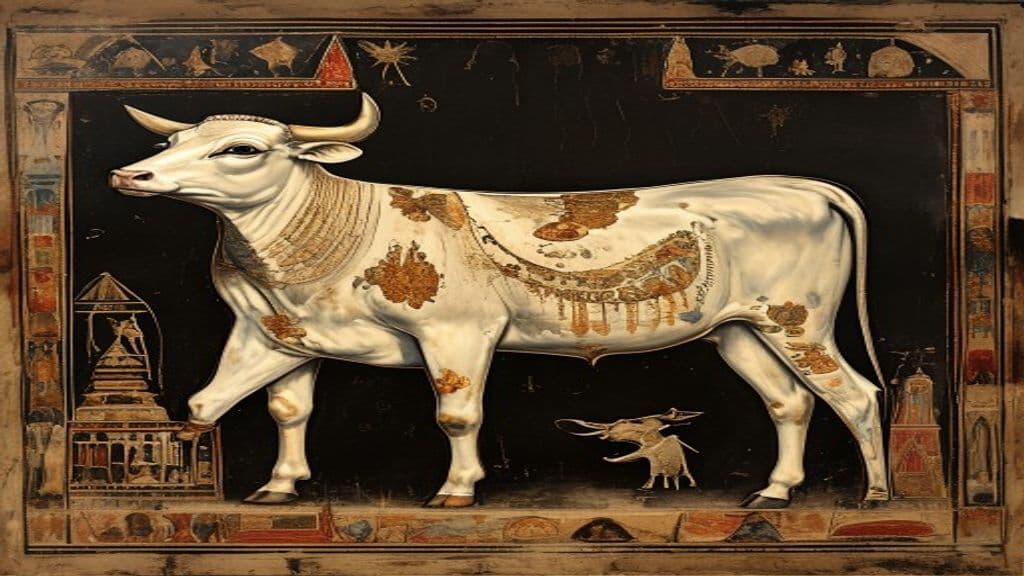
An ancient Egyptian bovine goddess who embodies a nurturing, lactating mother‑figure. Hesat provides milk (called 'the beer of Hesat'), nurses the pharaoh and sacred bull deities, and appears in funerary texts as a regenerating nurse and mother-figure linked to royal ideology and bull cults.

Heshana Qaghan (Ashina Daman)
Ancient

Heshana Qaghan (Ashina Daman)

Heshana Qaghan (personal name Ashina Daman) was a historical khagan of the Western Turkic Khaganate active in the early 7th century CE. Sources record him as a ruler whose heavy taxation and the massacre of numerous Tiele chieftains provoked rebellion, leading to his displacement, diplomatic submission to the Sui court (including marriage to a Chinese princess in 611), and eventual delivery to Eastern Turk emissaries to be executed by 619.

Hesione
Lesser

Hesione

Hesione is a mortal Trojan princess in Greek myth who was exposed to a sea‑monster as an oracularly required sacrifice for her father Laomedon’s offense against the gods; rescued by Heracles, she is given in marriage to Telamon, ransoms her brother with her veil (after which he is called Priam), and in later tradition becomes a diplomatic pawn whose non‑return is cited among factors leading to Paris's taking of Helen.

Hesperides
Lesser

Hesperides

The Hesperides are a group of Greek mythic nymphs who tend the sacred garden of Hera at the western edge of the world. Associated with evening and the west, they guard trees bearing golden apples and are linked in myth to major episodes such as Heracles' eleventh labour and the origin of the Apple of Discord.

Hesperus
Minor Spirit

Hesperus

Hesperus is the Greek personification of the Evening Star—the planet Venus as seen after sunset. Treated in mythic genealogies as a child of Dawn and related to other celestial personifications, Hesperus figures in literary and philosophical discussion about the identity of the evening and morning appearances of Venus.

Hestia
Ancient

Hestia

Hestia is the ancient Greek goddess and personification of the hearth, domestic fire, home, and household life. As an immovable, virginal Olympian she presides over the private household hearth and the public prytaneum hearth, receiving the first portion of offerings and symbolizing domestic and civic continuity.

Heyókȟa (Heyoka)
Lesser

Heyókȟa (Heyoka)

A sacred contrarian figure and ceremonial role in Lakota and Dakota (Sioux) traditions, the heyókȟa functions as a sanctioned 'sacred clown' whose deliberate inversion of social norms, satire, and ritualized shame help heal emotional pain and test communal values. Cosmologically the role is tied to visions of the thunder beings (Wakíŋyaŋ) and is sometimes represented in myth as a thunder or lightning spirit.

Hibagon
Lesser

Hibagon

The Hibagon is a regional cryptid reported around Mount Hiba in Hiroshima Prefecture, Japan, described as a large, bipedal, hairy humanoid. Reported since the 1970s, it is presented in sources as a local analogue to North American Bigfoot and the Himalayan Yeti and treated primarily as a cryptozoological/folkloric curiosity rather than a being embedded in traditional religious cosmology.

Hibil (Hibil Ziwa)
Ancient

Hibil (Hibil Ziwa)

Hibil Ziwa is a luminous uthra (lightworld being) in Mandaean religion who serves as a salvific agent. Created by Manda d‑Hayyi, he is sent into the World of Darkness to confront and bind hostile powers, retrieve dangerous elements, and secure the return of souls to the World of Light; he is also reflected as a human archetype cognate with Abel.

Hiderigami (Hanba)
Ancient

Hiderigami (Hanba)

Hiderigami (Japanese) / Hanba (Chinese, 旱魃) is a drought‑associated supernatural being in East Asian tradition. Treated variously as a goddess, spirit/ghost, monster, and later vampire‑like or shape‑changing entity, it is chiefly known for causing severe drought and drying up waters in affected places.

Hidimba
Greater

Hidimba

Hiḍimba is a powerful demon king in the Indic epic Mahābhārata who dwells in the forest, preys on humans (including cannibalistic behavior), and is slain in single combat by the Pandava Bhīma. In regional tradition the cultic attention shifts to his sister Hiḍimbī (Hiḍimbā Devī) and their son Ghaṭotkaccha, whose shrines and festival roles are prominent in Himachal Pradesh.

Hidimbi (Hiḍimbī / Haḍimbā)
Greater

Hidimbi (Hiḍimbī / Haḍimbā)

Hiḍimbī (Hiḍimbā) is a rākṣasī (female rakshasa) figure in the Mahābhārata who encounters Bhīma, changes form to a beautiful maiden, marries him and bears Ghaṭotkaca. In Himalayan (Himachal Pradesh) regional religion the figure is worshipped as the local goddess Haḍimbā, patron of a temple in Manali; scholarship treats the cult as older than or independent of its epic identification.

Hiiden Hirvi
Minor Spirit

Hiiden Hirvi

Mythical moose from Finnish tradition that must be hunted by skiing. (Note: - Power tier: Greater (given its classification as a mythical entity that requires special skills to hunt, it's likely more powerful than a Minor Spirit) - Weaknesses: specify what the source material)

Hiisi
Primordial

Hiisi

A term in Finnic mythologies referring to both sacred localities and associated mythological entities. (Note: - Power tier: Downgrade to Lesser (local spirit) as there's no indication of Primordial-level power. - Summary: Update to clarify that Hiisi refers both to sacred locations and associated entities, bu)

Hikairo
Minor Spirit

Hikairo

Hikairo is attested in the provided sources as a personal and group name within Māori contexts (used for individuals and iwi/hapū identifiers such as Ngāti Hikairo), rather than as a documented supernatural being. References show historical and contemporary usages tied to leadership, ceremonial roles, and local guardianship projects.

Hildebrand
Lesser

Hildebrand

Hildebrand is a named heroic human figure in the Germanic Dietrich/Theodoric cycle, presented in medieval Old High German, Middle High German, and Old Norse poems and sagas as a warrior, armourer, and fatherly companion to Dietrich von Bern. The traditions centre on martial skill, mentorship, loyalty, and tragic kin-conflicts (notably a duel with his son).

Hildeburh
Minor Spirit

Hildeburh

Hildeburh is a human literary character in the Old English heroic-material cycle (the Finnsburg episode as preserved in Beowulf and related fragmentary material). In the narrative she functions as a freothuwebbe or 'peace-weaver'—a marriage-link between royal houses—whose story exemplifies marriage-as-peace-weaving, kin-feud, and funerary response after battle.

Hilkiah
Minor Spirit

Hilkiah

Hilkiah (Hebrew: Ḥilqiyyā(hu), "my portion is Yahweh") is attested in biblical and epigraphic sources as a kohen (priest) and, in the biblical narrative, the High Priest of the Jerusalem Temple during King Josiah's reign. He is chiefly remembered for finding the 'Book of the Law' in the Temple and delivering it to royal officials, an act that precipitated Josiah's religious reforms.

Himegami
Lesser

Himegami

Himegami (比売神) is a general term in Shinto for a female kami; it can refer either to an independently identified goddess or to a feminine relational role (for example, the wife, daughter, or other important relation) of a male kami enshrined at the same shrine. The term functions as a classificatory title within Shinto practice rather than denoting a single uniform mythic individual.

Hina
Ancient

Hina

Hina is an onomastic category in Polynesian traditions naming a number of related female divine figures—often sovereign goddesses or queens—who are variously associated with domains such as the moon and, in specific local tales, natural forces like rain or fire. Rather than a single pan‑Polynesian personage, Hina functions as a flexible role filled by distinct local figures (e.g., Sina, Hanaiakamalama).

Hindu Mythological Wars
Lesser

Hindu Mythological Wars

Ancient Indian conflicts involving both mortal warriors and supernatural beings, often with divine or magical weapons. (Note: 1. Power tier should be Ancient, not Lesser (as they involve deities and supernatural beings). 2. Appearance description is missing from the source material. 3. Sensory cues, weaknesses, and wards are)

Hindu Mythology
Primordial

Hindu Mythology

A collection of myths and legends in Hindu tradition, encompassing a wide range of supernatural entities, gods, goddesses, and beings. (Note: - Power tier: Downgrade to Ancient (deity-level) based on the source material describing the collection of myths associated with gods and goddesses. - Appearance: Add "often anthropomorphic" is a broa)

Hindu deities (Deva/Devi)
Ancient

Hindu deities

Hindu deities (Deva/Devi) are the diverse gods and goddesses recognized across Hindu traditions, ranging from Vedic forces of nature to later personalized major gods and goddesses. They function as patrons of rites, embodiments of moral and cosmic principles, and focal points for temple cults, festivals, and devotional traditions while often also being interpreted as aspects of a single Ultimate Reality (Brahman).

Hindu god
Ancient

Hindu god

Hindu gods (Deva/Devi/Ishvara/Bhagavān and related terms) are the diverse gods and goddesses venerated within Hinduism; they occupy flexible roles within a broad cosmology and are approached in multiple theological models (polytheistic, monotheistic, monistic, pantheistic, etc.). Specific deities in the sources include Mitra (an Aditya invoked in the Rigveda and Mitanni inscription) and Ganesha (the elephant-headed patron of beginnings and intellectuals) (Sources 1, 6, 8).

Hine-nui-te-pō
Ancient

Hine-nui-te-pō

Hine-nui-te-pō is a Māori atua (supernatural being) of night and death who, having once been Hine-tītama, descended to Rarohenga and functions as guardian who receives and shepherds human wairua (souls) into the first level of the underworld, preparing them for the next stage of their journey.

Hineahuone
Primordial

Hineahuone

First woman created by Tāne from clay, becomes his partner and gives birth to Hinetītama. (Note: 1. The source material only describes Hineahuone as being "made" or "created", but does not explicitly state that she was crafted from clay from the earth, implying primordial power. 2. The descriptio)

Hinzelmann
Lesser

Hinzelmann

Hinzelmann is a northern German household spirit (kobold-type) attached to the noble household of Hudemühlen, known from a 1704 account summarized by the Grimms. He performs domestic tasks, gives advice, and brings good luck while tolerated, but can punish, play tricks, and be vindictive if insulted or driven off.

Hipermestra
Lesser

Hipermestra

Hipermestra is the operatic/theatrical adaptation of the classical heroine Hypermnestra as staged in 17th-century Italian and Spanish court festivals (festa teatrale, opera, zarzuela). The name denotes a dramatic protagonist used in courtly spectacle and allegory rather than an independently described supernatural being.

Hippalcimus
Minor Spirit

Hippalcimus

Hippalcimus (Ancient Greek: Ἱππάλκιμον) is a mythological human figure from Greek tradition, attested in genealogical notices and in catalogues of the Argonauts. Sources record variant filiations and name-forms but do not attribute individual exploits or supernatural traits to him.

Hippalcus
Lesser

Hippalcus

Hippalcus (also attested as Hippalcmus) is a minor figure in Greek mythic genealogies recorded as a son of Pelops. Available sources preserve him only as a genealogical link within the Pelopid family and do not provide narratives, cultic associations, or supernatural attributes.

Hippasus (Ἵππασος)
Lesser

Hippasus (Ἵππασος)

Hippasus is primarily attested as a historical/legendary Pythagorean figure (c. 530–c. 450 BC) associated in later tradition with revealing mathematical discoveries (irrational numbers or geometric constructions) and a cluster of legendary punishments; the same Greek name also appears for several otherwise ordinary mythic characters (centaur, Trojan prince, Thessalian warrior, son of Ceyx) in epic catalogues.

Hippe
Lesser

Hippe

Hippe is a mythic woman in Greek tradition, described as a daughter of Chiron who possessed prophetic gifts and was transformed into a mare and placed among the stars as a constellation associated with the Horse (Pegasus/The Horse). Sources preserve variant names and narratives (Hippe/Melanippe/Euippe/Ocyrhoe) that converge on themes of prophetic speech, disclosure of forbidden divine knowledge, and metamorphosis as aetiology for a star‑figure.

Hippeia
Ancient

Hippeia

Hippeia (Ἱππεία) is a Greek name applied both to a mortal woman in heroic genealogies and to a cultic epithet of the goddess Athena meaning 'of horses' or 'equestrian'. As an epithet (Hippeia Athena) the name marks Athena's association with horses and chariotry; as a proper name it appears in mythic genealogies (wife of Elatus).

Hippo (term; zoological and toponymic usages)
Lesser

Hippo (term; zoological and toponymic usages)

Hippo is not presented in the provided sources as a single supernatural entity. The term appears primarily as (1) an English short form for the hippopotamus (the large semiaquatic mammal), (2) an ancient North African place-name (Hippo Regius, Hippo Diarrhytus), and (3) an epithet indicating origin or episcopal see (e.g., Augustine of Hippo). Modern technical and popular-culture uses also occur.

Hippocoon
Lesser

Hippocoon

Hippocoon is a personal name in Greek myth borne by several distinct mortal figures — most prominently a Spartan king who usurped the throne from Tyndareus and was killed by Heracles, but also minor genealogical figures, a Thracian kinsman in Iliadic tradition, and an archer in Virgil's Aeneid. The name (Ancient Greek Ἱπποκόων) recurs across heroic, royal, and epic-competition narratives rather than designating a single supernatural entity.

Hippocoon of Sparta
Lesser

Hippocoon of Sparta

Hippocoon (Hippocoön) is a legendary king of Sparta in the Greek mythic tradition, remembered for a dynastic quarrel in which he expelled relatives (including Tyndareus), refused purification to Heracles, and was later slain when Heracles campaigned against him and his sons.

Hippocorystes
Minor Spirit

Hippocorystes

Hippocorystes (Ancient Greek: Ἱπποκορυστὴς) is a personal name attested in Greek myth that labels at least two distinct mortal princes: one of the sons of King Hippocoön of Sparta (one of the Hippocoöntids) and one of the sons of Aegyptus in the Danaid cycle. The name functions genealogically to populate kinship networks that drive cycles of usurpation, revenge, and marital tragedy in the heroic age.

Hippodamia (wife of Pirithous)
Lesser

Hippodamia (wife of Pirithous)

Hippodamia is a named mortal woman attested in modern mythographic listings as the wife of Pirithous within Greek heroic legend. The supplied sources list her among several mythic figures called Hippodamia but provide no independent narrative, description, or cultic material for this particular wife of Pirithous.

Hippodamia of Pisa
Lesser

Hippodamia of Pisa

Hippodamia of Pisa is a mortal princess of Greek myth, daughter of King Oenomaus of Pisa and wife of Pelops. Her marriage by chariot-contest forms the pivot of the Pelops–Oenomaus cycle and makes her ancestress of the Atreid line (including Atreus and Thyestes); she is also associated in sources with cult-memory at Olympia/Pisa.