Entity Index

A record of the unseen, drawn from world folklore.

7724 entities · page 74 of 129

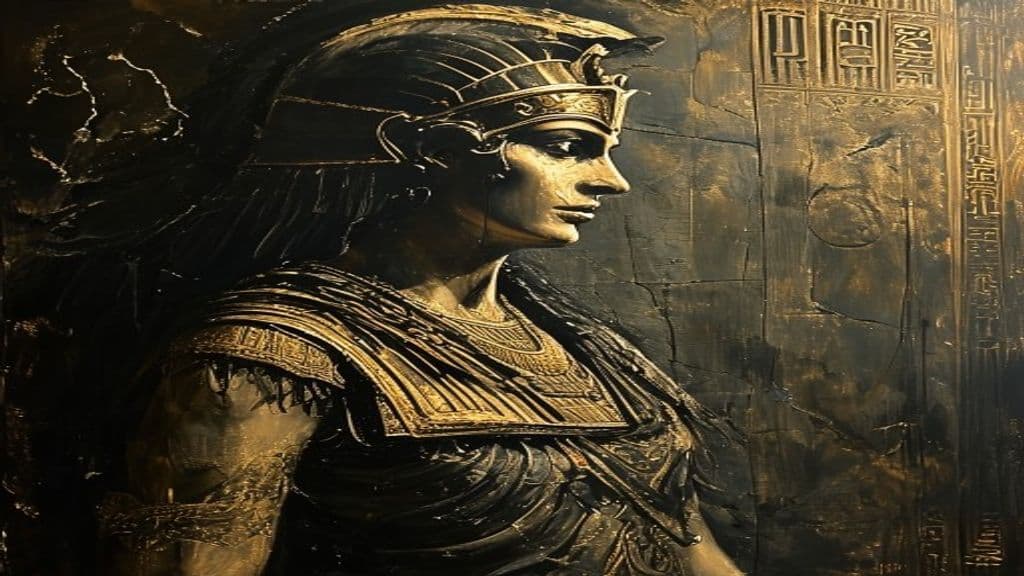
Hippolyta
Lesser

Hippolyta

Hippolyta is a figure of Greek myth traditionally described as queen of the Amazons, daughter of Ares and Otrera, and a participant in heroic-cycle narratives involving Heracles and Theseus. In classical sources she is a royal human/divine-adjacent personage associated with a distinctive war-belt (zoster); later literature and modern popular culture adapt her as a dramatic or superheroic figure.

Hippolyte (Hippolyta)
Greater

Hippolyte (Hippolyta)

Hippolyte (also rendered Hippolyta) is an Amazonian queen in Greek mythology, described as a daughter of Ares and Otrera and sister of Antiope and Melanippe. She is best known as the holder of a notable martial girdle (zoster) that becomes the object of one of Heracles' labors and which figures in narratives involving Theseus.
Hippolytos (Hippolytus)
Lesser

Hippolytos (Hippolytus)

Hippolytos is a mythic human figure of Greek tragic tradition: the chaste prince and son of Theseus whose rejection of sexual passion and women provokes Phaedra's false accusation and divine retribution (notably Aphrodite's vengeance and Poseidon's punishment) as dramatized in Euripides' Hippolytus and represented in ancient art.

Hippolytus
Lesser

Hippolytus

Hippolytus is a mythic mortal figure of Greek tragedy and myth, best known as the chaste son of Theseus whose rejection of sexual advances and devotion to chastity bring about a family tragedy treated most famously in Euripides' play Hippolytus (produced 428 BC). He functions as a tragic exemplar exploring tensions between human piety, sexual honor, and divine intervention within the Athenian dramatic and mythic tradition.

Hippomedon
Lesser

Hippomedon

Hippomedon (Ancient Greek: Ἰππομέδων) is a personal name borne by multiple mortal figures in Greek myth and epic cycles, including one of the Seven against Thebes and several minor warriors associated with the Trojan War; the name is also transmitted in medieval romance under forms such as Ipomedon/Ipomadon.

Hipponous
Lesser

Hipponous

Hipponous (Ancient Greek: Ἱππόνοος) is an anthroponym attested in Greek mythic genealogies and epic narrative for multiple distinct mortal figures (fathers, warriors, princes) rather than a single supernatural being. Attestations include an Olenian father of Capaneus and Periboea, a son of Priam in the Trojan roster, an Achaean warrior killed by Hector, a genealogical father of Polyphonte, a figure who obeyed an oracle of Apollo by self-immolation with his father, and the birth-name of the hero later known as Bellerophon.

Hippostratus
Minor Spirit

Hippostratus

Hippostratus (Ancient Greek Ἱππόστρατος, Hippostratos/Hippostratus) was a historical Indo-Greek king who ruled parts of central and north-western Punjab and Pushkalavati in the late 1st century BC. Known from numismatic evidence, he bore the epithet Soter and in some issues Basileos Megas, resisted Indo-Scythian incursions under Azes I, and is regarded as the last western Indo-Greek king.

Hippothoe
Lesser

Hippothoe

Hippothoe (Ancient Greek: Ἱπποθόη, 'swift as a mare') is a name borne by multiple distinct female figures in Greek myth: a Nereid (sea‑nymph), a Danaid (Libyan princess), a granddaughter of Perseus abducted by Poseidon and mother of Taphius, a daughter of Pelias (Peliad), and an Amazon warrior who fought at Troy.

Hippothoon
Ancient

Hippothoon

Hippothoon (Ancient Greek Ἱπποθόων, romanized Hippothóōn), also called Hippothous, is a mythic human-figure and ancestral hero of Eleusis in Attica. Presented as a son of Poseidon and Alope and a successor-king of Cercyon, he is the eponym of the Athenian phyle Hippothoontis and received local cultic honors in the historical period.

Hippothous
Lesser

Hippothous

Hippothous (Ancient Greek: Ἱππόθοος, romanized Hippóthoos, lit. 'swift-riding') is not a single supernatural being but a personal name borne by multiple mortal figures in Greek myth and literature, who appear as princes, warriors, hunters, and kings across traditions such as the Danaid cycle, the Calydonian boar hunt, the Trojan War, Arcadian and Athenian genealogies, and Hellenistic romance.

Hippotion
Minor Spirit

Hippotion

Hippotion is a scientific genus of sphinx or hawk moths (family Sphingidae) erected by Jacob Hübner in 1819. The genus groups several species of moths found across multiple regions and is treated in entomological, natural-history, and pest-management sources rather than folkloric tradition.

Hira (mythical monster)
Greater

Hira (mythical monster)

A legendary buffalo-like creature from West African tradition, known for its incredible force and brutality. It is a feared entity among hunting and fishing communities along the Niger River. (Note: 1. Origin story should be included in the article based on the source material (mentioning the Songhai people, Bozo people, and M. A. Dupuis Yakouba's collection). 2. Power tier may need reevaluation;)

Hiraṇyagarbha
Primordial

Hiraṇyagarbha

Hiraṇyagarbha (Sanskrit: हिरण्यगर्भ, 'golden womb') is a Vedic and later Hindu cosmological concept: a primordial golden seed or 'cosmic egg/womb' from which the manifested universe is said to originate. It is presented variously as an impersonal formative principle, the 'Soul of the Universe' in Upanishadic language, and in Purāṇic and exegetical contexts as the first-born or creator (identified with Prajāpati or Brahmā).

Hiro-Kala
Greater

Hiro-Kala

Hiro-Kala is a fictional Marvel Comics supervillain: the son of the Hulk and Caiera and twin brother of Skaar. In Marvel narratives he masters Sakaar's Old Power, combines it with the Power Cosmic into a 'New Power', and performs planetary-scale acts including attempting to seize K’ai’s Worldmind and move a planet toward Earth.

Hiroim
Greater

Hiroim

Hiroim is a fictional Marvel Comics character portrayed as a member of the Shadow People who trained as a Shadow Priest tied to the Sakaaran story of the Sakaarson. He serves as a gladiator and a member of the Warbound; after Caiera's death he inherits her ability to manipulate the Oldpower and later absorbs the Shadow Priests' powers following Sakaar's destruction, accompanying the Hulk to Earth.

Hirpi Sorani
Primordial

Hirpi Sorani

Infernal fire god in ancient Etruscan and Roman pantheon, associated with volcanic fires and solar forces. (Note: 1. Power tier should be Ancient (deity-level) instead of Primordial. 2. No physical description is provided in the source material; delete or rephrase "Appearance" section accordingly. 3. Since specif)

Hiscilla
Lesser

Hiscilla

Hiscilla (Greek Ἴσχυλλα, Ischylla) is a minor figure of Greek myth: a Phthian princess named in genealogical lists as a daughter of Myrmidon and in some traditions mother by Triopas of Phorbas, Iphimedeia, and possibly Erysichthon. She functions primarily as a node in heroic-age descent narratives rather than as an independent supernatural agent.

Historiola (Greek tradition)
Primordial

Historiola (Greek tradition)

A narrative tool used for magical purposes, providing a paradigm for desired action. (Note: - Power tier: Downgrade to Ancient (deity-level), as it does not interact with humans and its abilities seem more akin to a tool or concept rather than an entity with primordial powers. - Appearance: )

Hito-gitsune
Minor Spirit

Hito-gitsune

A household-associated small carnivore spirit from western Japan (Chūgoku region) that attaches to certain families, providing wealth in belief but causing illness, behavioral change, social stigma, and transmission across households. It is represented in regional traditions as a marten/fox/weasel‑like possessing spirit rather than a singular individualized deity.

Hitogami (Arahitogami)
Minor Spirit

Hitogami (Arahitogami)

Hitogami, often rendered Arahitogami (現人神), is a term in Shinto denoting a kami who is a human being — a divinity identified with or embodied in a human. The term is attested in classical Japanese sources such as the Nihon Shoki and is treated in modern reference works as a category of Shinto deity.

Hitorigami
Primordial

Hitorigami

Hitorigami (独神) are a class of solitary-origin kami in Shinto cosmogony who 'came into being alone' rather than as male–female pairs. They are primordial, often hidden deities named in early texts (e.g., the Kojiki) and include figures such as Ame‑no‑Minakanushi and Kuni‑no‑Tokotachi.

Hitotsume-kozō
Lesser

Hitotsume-kozō

A class of Japanese yōkai depicted as a bald child or young monk with a single central eye; typically a mischievous, comparatively harmless apparition that startles people and appears in Edo-period picture-books, local tales, and calendar-based folk practices.

Hitotsume-nyūdō
Lesser

Hitotsume-nyūdō

A Japanese yōkai appearing as a one‑eyed ōnyūdō (large monk). Found in roadside and procession narratives, it is variously explained as an autonomous monkish spirit, a transformed or admonishing monk figure from Mount Hiei, or as a kitsune/tanuki disguise in local traditions.

Hiyang Athouba
Lesser

Hiyang Athouba

A Meitei folkloric phenomenon in which a human corpse is said to transform into a demon-like, monstrous or vampire-like being. Described in folktales as arising from unattended or improperly tended deaths and usually reverted by daybreak or ended by proper funerary action.

Hiʻiaka
Minor Spirit

Hiʻiaka

In Hawaiian religion, Hiʻiaka is a minor goddess and daughter of Haumea and Kāne. She is associated with the natural world and has sacred connections. (Note: * Power tier should be Minor Spirit (correct) * Origin story needs to be more specific, as the source only mentions parentage but not her role in ancient Hawaiian cosmology * Appearance and Abilities )

Hoaki
Minor Spirit

Hoaki

The supplied sources do not document Hoaki as a folkloric supernatural being. Most occurrences of the string "Hoaki" in the corpus are modern commercial or publishing names (e.g., Hoaki Books, imprint hoaki); one fragmentary Hocąk (Ho-Chunk) language text contains the sequence "Hoaki" but is unglossed and too incomplete to establish a mythic referent.

Hob
Lesser

Hob

A household and local helpful spirit in northern English / northern Britain folklore, the hob is a capricious but essentially kindly presence associated with farms, households, and named local sites (e.g., 'hob-holes'). Hobs assist with domestic labour and healing when kept on good terms, but may withdraw their help if offended by particular actions (notably the gift of clothing).

Hobbit
Lesser

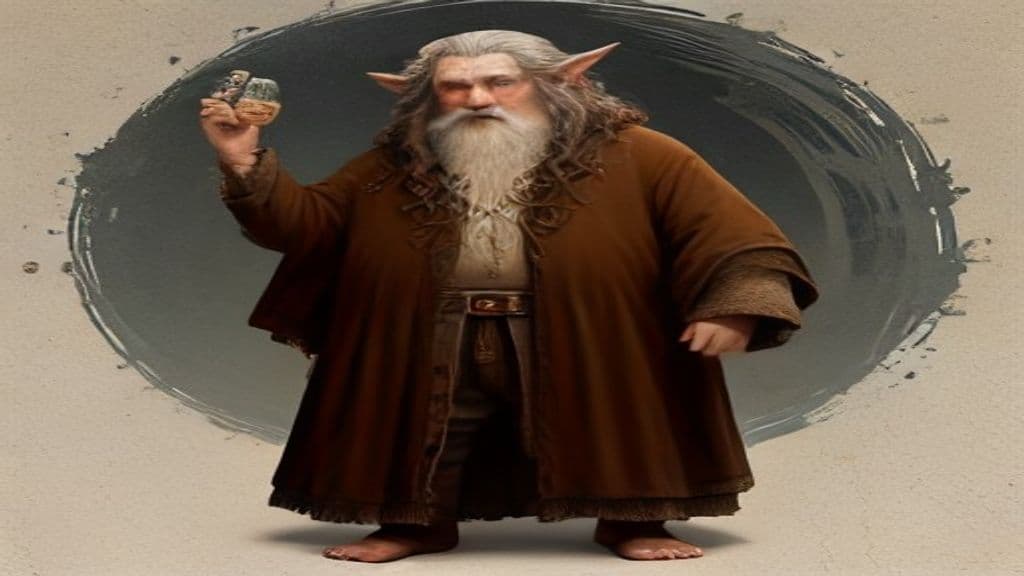
Hobbit

A fictional, short-statured race of people created by J. R. R. Tolkien in his Middle-earth legendarium; rural, domestic, and culturally anachronistic within the imagined past, noted for homely underground dwellings and ordinary courage in extraordinary circumstances.

Hobgoblin
Lesser

Hobgoblin

A household spirit from English folklore that traditionally performs domestic chores for a family in return for simple food but is also prone to practical jokes and mischief; accounts vary regionally and over time, and Christian influence is reported to have shifted popular descriptions toward greater mischief.

Hod (Kabbalah)
Lesser

Hod (Kabbalah)

Hod (Hebrew הוֹד, Hōḏ) is the eighth sephira on the Kabbalistic Tree of Life, traditionally rendered as 'majesty, splendour, glory'. In classical and later Kabbalistic schemata it functions as an abstract divine emanation or attribute concerned with form, order, and the structuring of intellect; later occult writers add correspondences such as Mercury and tarot links.

Hoderi (Umisachi-hiko)
Ancient

Hoderi (Umisachi-hiko)

Hoderi, also called Umisachi-hiko in some accounts, is a figure from the Kojiki and Nihon Shoki presented as a kami of the sea’s bounty and an enchanted fisherman. Son of Ninigi and Konohanasakuya-hime, he is associated with a magic fishing hook, a quarrel with his brother Hoori over exchanged sacred gifts, and is recorded as ancestor of the Hayato people.

Hodites
Lesser

Hodites

Hodites is a proper name attested in ancient Greek mythic sources and modern secondary summaries for a small number of distinct individuals: a centaur named among those at the wedding of Pirithous and Hippodamia (killed by Mopsus), a named combatant slain by Clymenus in the Perseus–Phineus conflict, and an alternative reading in a genealogical list where Diodorus Siculus (in citation) uses the name for one of the sons of Heracles and Deianeira. The name functions as an onomastic item in lists and episodes rather than as a recurring supernatural class.

Hodja Nasreddin’s evil twin (Ayna-Adam / Leylek) — Unverified
Lesser

Hodja Nasreddin’s evil twin (Ayna-Adam / Leylek) — Unverified

The supplied source contains no attested information about an evil twin of Hodja Nasreddin called Ayna-Adam or Leylek. The only material provided is a brief personal portrait of Hodja Nasreddin; therefore the existence, attributes, and rituals regarding an alleged evil twin are unverified in this source.

Hojir
Lesser

Hojir

Hojir (هُژیر) is a human heroic figure in the Persian epic Shahnameh: castellan of Dez-e Sepid, son of Goudarz, and participant in key Iran–Turan conflicts (notably the Rostam–Sohrab episode and the Davazdah Rokh). He is presented as a martial nobleman of a notable heroic family; no consistent supernatural attributes or cultic practices are attested in the supplied sources.

Holy Guardian Angel
Greater

Holy Guardian Angel

In Christian theological and devotional contexts, the Holy Guardian Angel is an individually assigned angelic being appointed to protect and guide a particular person, group, or nation. The idea is embedded in the Christian angelic worldview and is commemorated liturgically (Memorial of the Holy Guardian Angels, 2 October).

Holy Living Creatures
Greater

Holy Living Creatures

A class of heavenly attendants appearing in Jewish and Christian throne-vision literature (notably Ezekiel and Revelation) who perpetually worship and stand before the divine presence; later traditions (merkabah, Zohar, patristic exegesis) adapt and symbolically associate them with four archetypal forms.

Holy Spirit (Christianity)
Primordial

Holy Spirit (Christianity)

In mainstream Trinitarian Christianity the Holy Spirit (Holy Ghost) is the third Person of the Trinity, the distinct divine Person who is the Lord and Giver of Life, present at creation, active in prophecy and inspiration, and pouring out divine presence on the Church (e.g., Pentecost). Broader Abrahamic language (Hebrew ruach, Greek pneuma) underlies Christian pneumatology and informs liturgical invocation (baptismal formula, prayer, benediction).

Holy Wisdom (Hagia Sophia / Sancta Sapientia)
Ancient

Holy Wisdom (Hagia Sophia / Sancta Sapientia)

Holy Wisdom (Greek Ἁγία Σοφία, Latin Sancta Sapientia) is a theological personification of divine Wisdom in Jewish and Christian scripture and later patristic and liturgical tradition. Treated as an active, quasi-personal attribute of God, Wisdom is invoked in liturgy, celebrated in church dedications, and identified variously with the Logos (dominant patristic view), the Holy Spirit (minor patristic view), or — in later Russian Sophiology — a feminine principle associated with the Theotokos.

Homay

Homay

Legendary figure from Persian tradition, daughter of Kay Bahman, central character in the epic poem Homāy-nāmeh. (Note: - Power tier: Not specified - Appearance: Missing - Abilities: Missing - Sensory cues: Missing - Weaknesses: Missing - Wards: Missing)

Homer (tradition)
Lesser

Homer (tradition)

Homer is the traditional name given to the poet or poets credited with composing the Iliad and the Odyssey. Treated in ancient and later writings as an authorial identity that can be a historical individual, a rhapsodal role, or a legendary figure, Homer functions as a foundational cultural and educational authority in Greek literary tradition.

Hone-onna
Greater

Hone-onna

Hone-onna (骨女, "bone woman") are a class of yōkai in Japanese folklore identified as women who died while still attached to living lovers and who return at night to reunite with those lovers. To the beloved they appear as beautiful young women, while their true form is a decaying skeleton; their nocturnal visits are said to drain the life force of the living partner unless the deception is revealed or religious protections are maintained.

Honey Island Swamp monster
Lesser

Honey Island Swamp monster

A regional Louisiana cryptid reported from Honey Island Swamp in St. Tammany Parish, commonly described as a large, bipedal, hair-covered humanoid. The figure exists primarily in local legend, tourism, and popular-culture accounts rather than as a scientifically verified animal.

Hongatar
Lesser

Hongatar

A Finnish haltija (localized spirit) associated with the bear: presented in runic songs as the mother or progenitor of the bear, and named for the honka pine used to hang bear skulls during peijaiset (bear funeral/feast). She is an invited guest of those rites and forms part of a family/network of tree-linked female haltijas in Finnish/Karelian oral tradition.

Hopleus
Lesser

Hopleus

Hopleus (Ancient Greek: Ὁπλεύς) is a Greek personal name borne by multiple mortal figures in myth and epic: an Arcadian son of Lycaon, a Thessalian son of Poseidon and Canace, a Lapith listed among spearmen on Heracles' shield, and a soldier in the army of the Seven against Thebes. He is a human/heroic name appearing across genealogical lists and narrative cycles rather than a single supernatural type.

Horae
Ancient

Horae

The Horae are Greek divine personifications of natural portions of time—originally the seasons—who regulate growth, ripening, and the periodicities of nature, and who later came to embody right order, justice, and civic stability. They appear in variable groupings (commonly triads) with both rural agricultural cults and urban juridical cults and act as attendants and guardians within the divine household.

Horagalles
Ancient

Horagalles

A Sámi sky and thunder figure who produces thunder and lightning, controls weather, oceans and lakes, and whose rainbow is described as his bow. He functions as a protector of Sámi people and herds and a punisher of hostile mountain/rock spirits; in some eastern Sámi traditions the cognate Tiermes/Tiirmes has expanded cosmogonic or eschatological roles.

Horned Serpent
Greater

Horned Serpent

A recurring mythic serpent-being attested across multiple cultures, typically depicted as a large horned snake associated with water, storms, fertility/regeneration, and sacred crystalline or iridescent bodily accoutrements that serve as ritual power-objects.

Horouta
Greater

Horouta

A legendary canoe in Māori tradition, significant to the Polynesian migration to New Zealand. (Note: * Power tier should be Lesser (it's a historical canoe, not a deity-level entity) * Abilities section is incomplete and inaccurate; instead of supernatural abilities, describe its significance in the )

Horsemsu
Ancient

Horsemsu

Horsemsu is attested in a modern database entry (Wikidata) as an Egyptian deity. The supplied sources beyond that single label provide no additional attested information about its functions, attributes, iconography, or cult.

Hortdan
Lesser

Hortdan

A Turkic folkloric figure denoting a troubled soul of the dead that rises from the grave; in older accounts a mournful grave-apparition, and in later popular retellings sometimes recast as a vampire- or zombie-like undead.

Horus
Ancient

Horus

Horus (Ancient Egyptian ḥr.w) is a major Egyptian deity associated with the sky, the sun and moon, kingship, protection, and healing. He appears in multiple local and chronological manifestations (e.g., Horus the Elder, Horus the Younger) and serves as the divine model of the living pharaoh and avenger/heir of Osiris.

Horus Name
Primordial

Horus Name

Title or crest used by ancient Egyptian rulers, symbolizing divine connection and royal identity. (Note: - Power tier should be Ancient (deity-level) as it represents a connection to a deity and is used by rulers, not just regional spirits. - Summary: While accurate, could be rephrased for clarity: "Titl)

✦
Lesser

Hothbrodd

Hothbrodd (Old Norse Höddbroddr, Hǫðbroddr) is a legendary human king or prince in the Norse Helgi/Volsung cycle, presented across Poetic Edda poems, the Volsunga saga and Saxo's Gesta Danorum as a dynastic rival whose betrothal to the valkyrie Sigrún precipitates war and who is slain by the hero Helgi Hundingsbane.

Hoturapa
Greater

Hoturapa

A Māori chief from Hawaiki who is tricked by Kupe, leading to consequences. (Note: - Power tier should be Lesser or Minor Spirit, as there's no indication that Hoturapa has deity-level abilities. - Sensory cues are missing and should be added based on the source material (e.g., perh)

Hoturoa
Greater

Hoturoa

In Māori tradition, Hoturoa is a founding ancestor and leader of the Tainui canoe during its migration to New Zealand around 1400. He holds significant cultural and spiritual importance as a figure of historical and genealogical significance. (Note: - Power tier should be Primordial, as Hoturoa's historical and cultural significance far exceeds regional or local spirit levels. - Origin story: Add that his origins are unclear and not explicitly st)

Hou Yi
Greater

Hou Yi

Hou Yi (后羿) is a mythic Chinese culture‑hero famed as an extraordinary archer who, by commission of a sky/imperial authority in variant traditions, shot down multiple suns and slew dangerous monsters. He is associated with receiving an immortality elixir, the tragic separation from his wife Chang'e (linked to the Mid‑Autumn Festival), and with variable portrayals ranging from mortal tribal leader to semi‑divine xian or legendary king.

Houmān
Lesser

Houmān

Houmān (هومان) is a legendary human warrior-chief in the Persian epic tradition, best known from Ferdowsi's Shahnameh as a leading Turanian commander of the Viseh clan, famed for bravery, loyalty, and chivalry. He appears in the Rostam and Sohrab episode and in later Iran–Turan wars and is reported killed by Bizhan in the Davazdah Rokh episode.

Houri
Greater

Houri

In the Islamic textual tradition, a houri (Arabic: ḥūri(yy)a) is a paradisiacal companion described in the Qurʾān and elaborated in hadith and tafsīr as part of the rewards of the afterlife. Sources present houris variously as a specially created class of beings resident in Jannah or (in some interpretations) as transformed inhabitants of Paradise; descriptions range from brief Qurʾānic epithets to detailed hadith imagery.

House of Goudarz
Greater

House of Goudarz

In Persian mythology, the House of Goudarz is an important family descended from Kave the Blacksmith, embodying noble values and ideals. (Note: - Power tier: Lowered from Greater to Lesser, as there's no indication that they possess deity-level abilities. - Abilities: Specify that the abilities are actually related to their noble values and i)

House of Nowzar
Greater

House of Nowzar

Important Iranian clan in Shahnameh and Persian mythology, ruling Iran for seven years. (Note: 1. The summary should mention that the House of Nowzar ruled for seven years after Nowzar's death, not just "ruling Iran for seven years". 2. Power tier should be Primordial or Ancient, as they are an)