
In Turkic folk frameworks the term Hortdan (Turkish Hortlak; Azerbaijani Xortdan; Tuva Hortan/Aza-Hortan) derives from the verb hortlamak, 'to get out' and specifically 'get out of the grave.' Sources frame the entity as the troubled soul of the dead that returns from burial, most commonly connected to violent deaths: it is said to appear where the souls of murdered people departed or where human blood has been shed and is frequently encountered above the graves of the slain. Ethnographic and summary accounts preserved in the cited material emphasize that the figure originally functioned as a grave-bound, restless-dead apparition tied to disturbed burials and sites of violence, and that later oral and popular retellings transformed some portrayals into more aggressive vampire- or zombie-like forms.
Accounts in the available sources do not provide a stable corporeal description. Older traditional descriptions present the Hortdan as a ghostly manifestation: an apparition seen wandering or sitting above graves and emitting mournful sounds, implying a non-corporeal, sorrowful presence rather than a fleshy body. Later popular and genre-influenced descriptions, summarized in the sources, recast Hortdans as reanimated corpses or vampire-like beings with a hunger for blood and flesh; these later tellings emphasize a predatory, fleshy undead form but do not offer consistent visual detail such as clothing or coloration in the cited material.
The sources indicate variation over time and place. Traditional portrayals center on a spirit of the dead haunting sites of violent death rather than attacking the living. Later and derivative accounts attribute more active supernatural powers: the ability to transform into animals, to become invisible, and a propensity to drain the vitality of victims via blood loss; some summaries explicitly call Hortdans 'immortal vampires' or 'reanimated corpses with a hunger for human flesh.' The research notes stress that these aggressive, vampiric attributes appear in later oral/popular transformations and are not uniformly attested across all regional variants. A Tuva variant (Hortan/Aza-Hortan) is described in the sources as more poltergeist-like, indicating behavioral diversity among local forms.
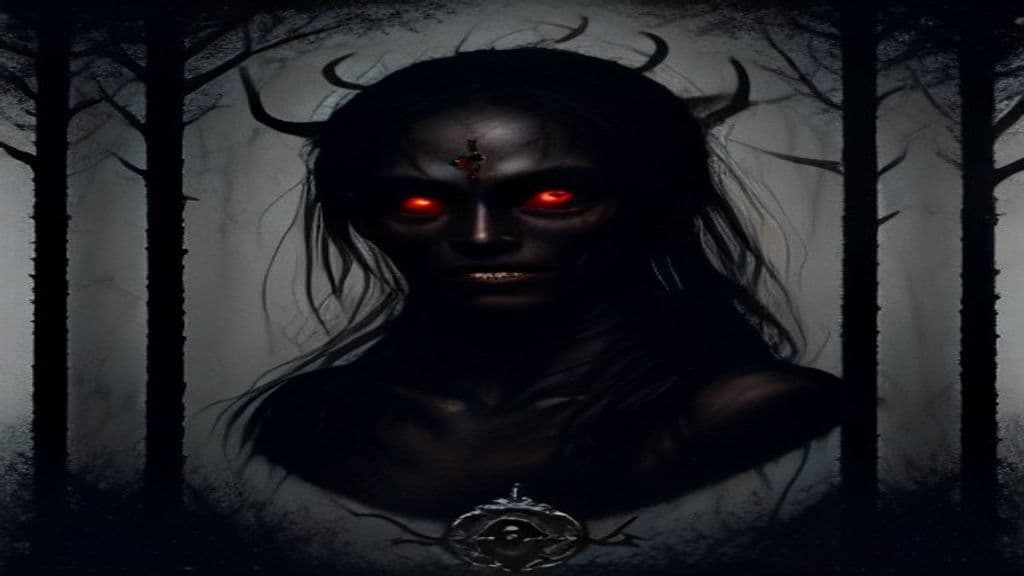
Pishacha
Flesh-eating spirits of Hindu mythology that haunt cremation grounds and are associated with disease, madness, and possession. The lowest class of demon in the Vedic hierarchy.
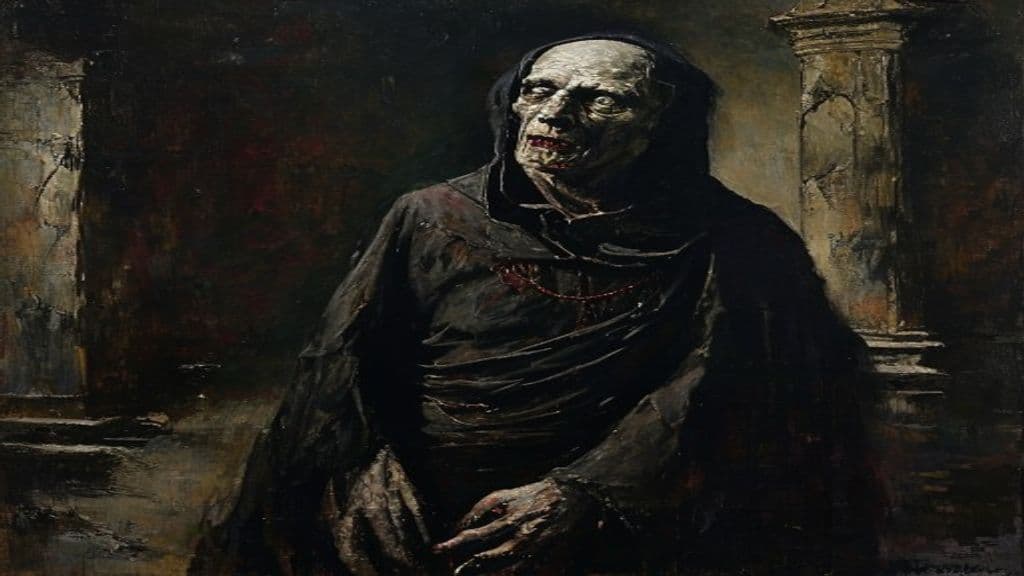
Vampire (tradition)
A class of revenant beings in southeastern and eastern European folk belief that subsist by feeding on the vital essence (generally blood) of the living. Recorded chiefly in early modern to modern oral traditions, these vampires are typically described as reanimated corpses whose presence explains unexplained illness, death, and post-mortem disturbances in their communities.
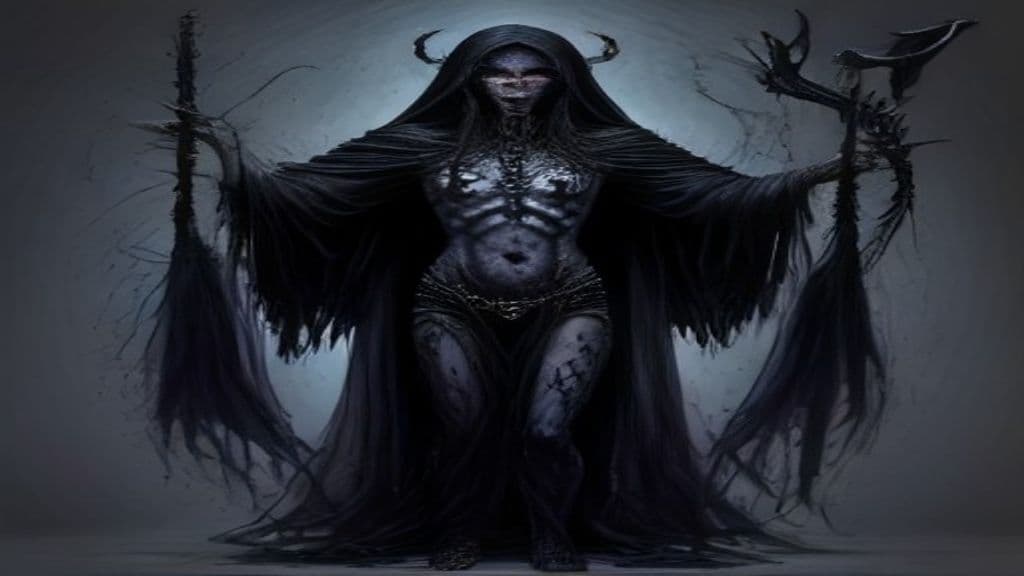
Ghoul
A ghoul is a demon-like or monstrous humanoid originating in pre-Islamic Arabian religion, traditionally associated with graveyards and the consumption of human flesh. The concept later entered broader folklore and has been widely reused and transformed in modern fiction and popular culture.
A Man Was Going Down the Road
Georgian tradition, possibly a reference to a novel title by Otar Chiladze (1973), lacking clear information on its supernatural nature or abilities. (Note: * Power tier should be set to Primordial, as there's no information on its supernatural nature or abilities; it simply appears to be a novel title without further context. * Summary: The summary is ac)
Abaasy
Abaasy (Abaahy, Abasy; Yakut: Абаасы, Abaası) are beings of the Sakha (Yakut) underworld, depicted in sources as destructive underworld spirits or demons associated with the long deceased. They inhabit the lower cosmic layer, serve an underworld ruler, are blamed for disease and madness, and may be appeased by blood sacrifice.
Abzar İyesi
A Turkic iyesi (possessive/guardian spirit) of the courtyard, outbuildings, and farmstead grounds; ambivalent in nature, it protects its domain but may harm livestock and cause mischief, often appearing in animal forms.
Adgilis Deda
Protective spirit and deity of fertility in pre-Christian Georgian pantheon, revered by mountaineers of northeast Georgia. (Note: 1. Power tier should be Ancient (deity-level) instead of Primordial. 2. Add sensory_cues that reflect Adgilis Deda's association with fertility, such as blooming flowers or lush vegetation. 3. List Wa)
Aiy (Aiy-auk)
Aiy (also rendered Aiy-auk) is a name mentioned in relation to Siberian contexts in the queryer's sources, but the provided documents do not contain usable folkloric descriptions or ethnographic data about the entity. This entry records what the supplied materials do and do not establish and points to the research gap.
Ak Ana
Ak Ana (also Ağ Ana, Ak Ene) is the primordial water-mother of Turkic and some Siberian (Khanty, Mansi) traditions: a holy maternal creator principle associated with the pre-earth expanse of water, fertility of the land, and the threshold to the spirit world.
Al (Alı)
No folkloric or ethnographic evidence for a supernatural entity named "Al" or "Alı" is present in the supplied source set. The available materials are modern biographical, political, linguistic, and religious texts that do not describe a Turkish spirit, demon, or other supernatural being by this name.
Al (Georgian Tradition)
In Georgian tradition, Al is a supernatural entity that interferes with human reproduction, acting as a demon of childbirth. (Note: - Power tier should be "Ancient" (Al is a demon of childbirth, but not cosmic-level) - Abilities need to specify that Als can cause spontaneous abortions, stillbirths, and infant mortality, as stated )
Alaz
Alaz is the Turkic god of fire associated with hearths, flame, and the Great Fire (Ulugh Od). He is described as a powerful fire-being who sends protector-spirits (İye) to household hearths and can cause destructive fires when angered; fire under his authority is also a purifying force.
Albastı (Al Basty)
Albastı (also attested as Al Basty) is presented in the provided sources as an ancient female spirit associated with nightmares and night‑time disturbance in Caucasian folkloric contexts. Sources group her among 'dark queens of the night' and other ruthless, otherworldly beings that fill nightmares and overlap conceptually with karabasan/kabus‑type phenomena.
Alp Er Tunga
Alp Er Tunga is a legendary heroic ruler of Turan in early Turkic tradition, remembered as an ideal warrior-king and ancestral figure invoked in medieval dynastic genealogies. He also appears in Iranian epic tradition under the cognate name Afrosiyab/Afrasiab, where the figure is framed differently.
Ama (Mother of Waters)
No documentation for a Siberian supernatural figure called 'Ama' or 'Mother of Waters' was found in the supplied sources. The reviewed materials either list unrelated senses of the string 'Ama' or are unrelated recordings titled 'AMA.'
Community Record
- [1]Hortdan. Wikipedia contributors, 'Hortdan,' Wikipedia, The Free Encyclopedia.wiki
- [2]Hortdan (Wikidata). Wikidata entry Q6662567 for Hortdan.wiki
- [3]Upiór. Wikipedia contributors, 'Upiór,' Wikipedia, The Free Encyclopedia.wiki
- [4]TOP 11 Scariest Creatures in Turkic Mythology. ulukayin.org, 'Eleven Scariest Creatures in Turkish and Altaic Myths.'folk
- [5]Vampire | Historic Legends | Stories Preschool. StoriesPreschool.com, 'Vampire | Historic Legends'.other
- [6]Deities or Vampires? Hecate and other Blood-Drinking Spirits of Ancient Times. Ancient-Origins.net, 'Deities or Vampires? Hecate and other Blood-Drinking Spirits of Ancient Times.'other
- [7]Skin Horse comic (2013-12-31). Skin Horse webcomic strip, 2013-12-31.other