Entity Index

A record of the unseen, drawn from world folklore.

7716 entities · page 72 of 129

Healfdene (Halfdan)
Lesser

Healfdene (Halfdan)

Healfdene (Old English) / Halfdan (Old Norse) is a legendary human king of the Scylding/Skjöldung lineage appearing in Old English and Old Norse sources. He functions as an ancestral ruler whose descendants (notably Hrothgar/Hróarr and Halga/Helgi) and the feuds around his succession structure later narrative events such as Beowulf and several Norse sagas.
Heardred
Lesser

Heardred

Heardred is a youthful Geatish prince who briefly becomes king of the Geats in the Old English epic Beowulf and related narrative traditions. He succeeds Hygelac after the latter's death, grants asylum to exiled Swedish princes, and is killed when King Onela of Sweden attacks to settle dynastic scores, leaving Beowulf to succeed him.
Heavenly Executioner Chiwoo
Lesser

Heavenly Executioner Chiwoo

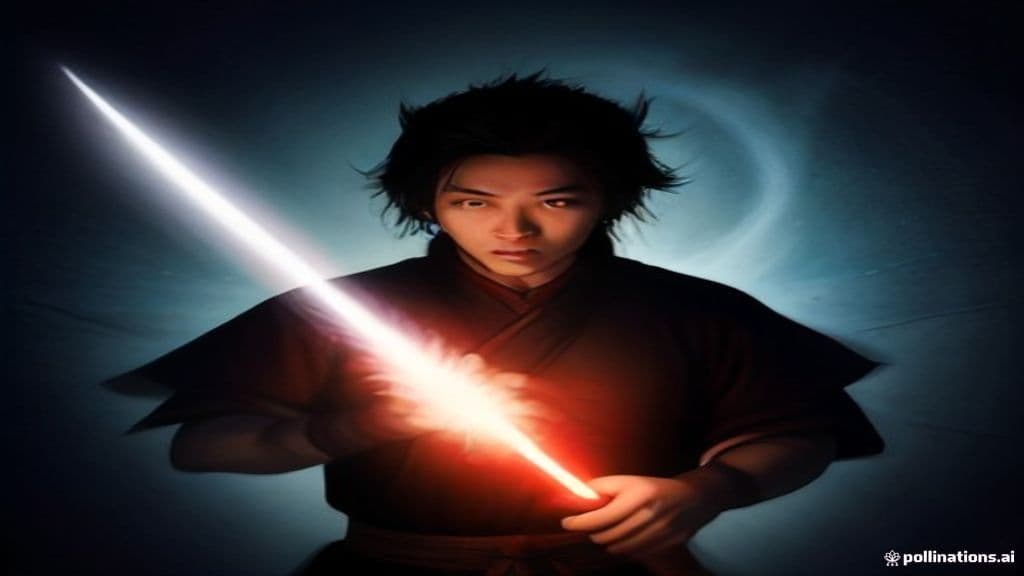
Heavenly Executioner Chiwoo is a fictional human protagonist of a Korean manhwa (comic) series titled 치우천하, presented as an action-fantasy story set in an imagined ancient-Korean milieu. The character is a streetwise youth who discovers his father was a mangnani (executioner) and adopts that stigmatized social role amid imperial persecution of executioners; the series is partly inspired by legends of the mythic figure Chiyou but treats Chiwoo as a literary/fictional character rather than a pre-modern supernatural being.

Heavenly host
Greater

Heavenly host

A collective category in Abrahamic and Near Eastern texts naming an ordered assembly associated with the divine realm. The term can refer to the stars and other celestial bodies, to organized spiritual beings (angels) serving God, and is often described with military vocabulary (hosts, armies, commanders) that places the group within divine governance and occasional cosmic or earthly conflicts.

Hebe
Lesser

Hebe

Hebe is the ancient Greek goddess and personification of youth, serving as the cup-bearer of the Olympian gods and associated with the prime of life; in some accounts she is a daughter of Zeus and Hera and later the wife of Heracles.

Hecale
Lesser

Hecale

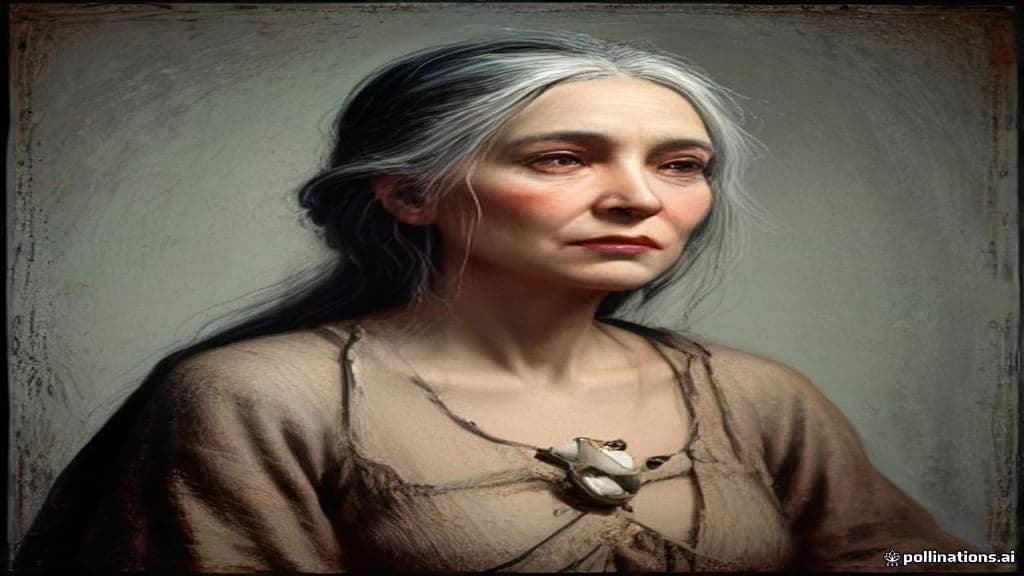
Hecale (Ancient Greek: Ἑκάλη) is an elderly mortal woman of Greek legendary tradition remembered for giving shelter and hospitality to the hero Theseus on his way to capture the Marathonian Bull. Her piety and vow to sacrifice to Zeus were commemorated by the local community in a deme named Hecale and a festival called the Hecalesia.

Hecate
Ancient

Hecate

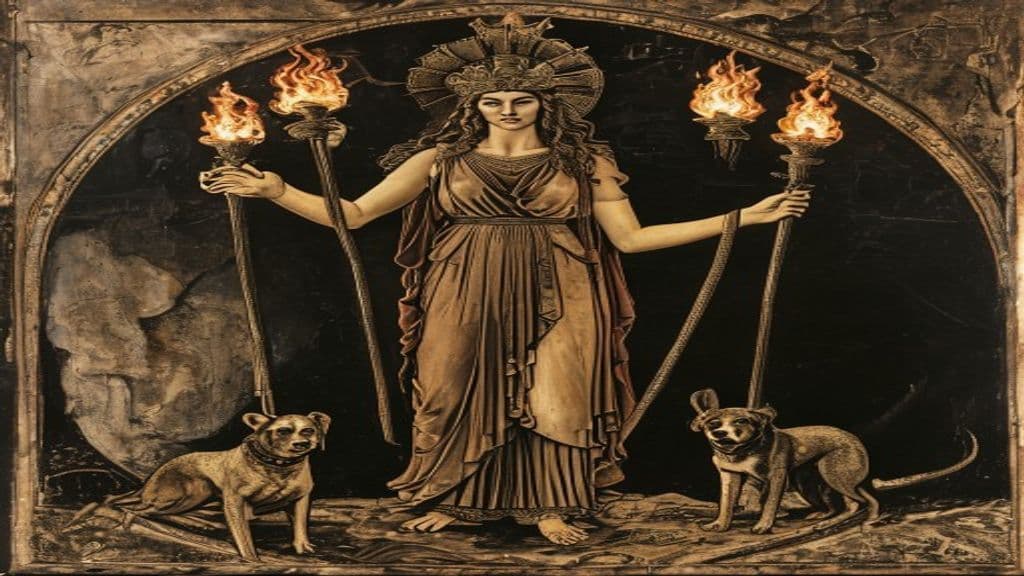
Hecate (Ancient Greek: Ἑκάτη) is a liminal goddess in ancient Greek religion associated with crossroads, night, light, magic/witchcraft, the Moon, and household protection. She appears in early Greek poetry (Hesiod) with broad domains and in later traditions (notably the Chaldean Oracles) with expanded cosmological roles; she retained important regional cults, especially in Anatolia (Lagina) and had popular associations with witches in Thessaly.

Hecatoncheires (Hundred-Handed Ones)
Primordial

Hecatoncheires (Hundred-Handed Ones)

In Greek myth the Hecatoncheires are a triad of primordial monstrous giants, described in tradition as having many heads and arms. Born of Uranus (Sky) and Gaia (Earth) in the earliest generation of divine beings, they appear in accounts of the Titanomachy where, in tradition, they aided Zeus and the Olympian gods against the Titans.

Hector
Lesser

Hector

Hector is a Trojan prince and the foremost warrior of Troy in the Homeric Iliad, celebrated as a devoted husband, father, son, and defender of his city. Portrayed as exemplary in duty and martial skill, his mortal fate is shaped by combat, family obligations, and the interventions of gods.

Hector de Maris
Lesser

Hector de Maris

Hector de Maris is a human knight of the Round Table in the medieval Arthurian prose cycles (Vulgate and Post-Vulgate) and in later retellings. Presented as an illegitimate son of King Ban of Benoic and the half-brother of Lancelot, he is a prominent martial figure: a tournament champion, leader of Lancelot's faction during the court scandal, and a participant in the Grail Quest and subsequent wars.

Hecuba
Lesser

Hecuba

Hecuba (Greek Ἑκάβη, Hekábē) is the wife of King Priam and queen of Troy in Greek epic and tragic traditions. Portrayed primarily as a grieving royal matron who performs ritual acts (libations, leading temple supplication, lamentation), later variant traditions record her revengeful violence after the murder of her son and post-war metamorphoses (notably into a dog) or divine rescue.

Hedjhotep
Lesser

Hedjhotep

Hedjhotep (ḥḏ-ḥtp) is a minor ancient Egyptian deity associated primarily with fabrics, clothing, and the dressing of gods, kings, and the deceased. Attested from the Middle Kingdom Coffin Texts and later sources, his roles expand in the New Kingdom to include technical/medicinal functions (amulet cords, unguents) and in the Late Period onward he appears in syncretic family scenes with major gods.

Hegai
Lesser

Hegai

Hegai is a human court official attested in the Book of Esther (Hebrew Bible), described as the eunuch chamberlain charged with the 'house of the women' (the king's harem) in Shushan. He supervised the preparation and custody of young women presented to King Ahasuerus/Xerxes and is credited with favoring and provisioning Esther prior to her audience with the king.

Hegesandra
Lesser

Hegesandra

Hegesandra (Ancient Greek: Ήγησάνδρα or Ήγησάνδρη) is a mythological Spartan princess attested in Greek genealogical tradition. She is recorded as a daughter of King Amyclas of Sparta, wife of Argeius (son of Pelops of Pisa), and mother of three sons named Melanion, Alector, and Boethoos/Boethous. Surviving references present her only as a genealogical figure linking Lacedaemonian and Pelopid lineages.

Heh
Primordial

Heh

Heh is the ancient Egyptian personification of infinity or eternity, a member of the primordial Ogdoad of Hermopolis whose name originally meant "flood," referring to the primeval watery chaos Nu that preceded creation.

Hei-Tiki (Māori Pendant)
Primordial

Hei-Tiki (Māori Pendant)

A treasured Māori pendant and cultural artifact, symbolizing craftsmanship and family heritage. (Note: 1. Power tier should be Ancient, as Primordial implies a being of cosmic power, which does not align with the description of Hei-tiki as an ornamental pendant. 2. Abilities and sensory cues are missin)

Heibai Wuchang (Black and White Impermanence)
Lesser

Heibai Wuchang (Black and White Impermanence)

A paired set of underworld envoys in Chinese folk religion, the Heibai Wuchang (黑白无常) are color‑coded figures—one black, one white—charged in popular belief with escorting the spirits of the dead to the underworld and venerated in some City God temple contexts and popular ritual life.

Heifeng Guai
Greater

Heifeng Guai

Heifeng Guai (黑风怪), the Black Wind or Black Bear Spirit, is a localized spirit‑monster from the 16th‑century Chinese novel Journey to the West. In the narrative it appears as a dark‑complexioned man armed with a Black Tassel Spear but is revealed to be a huge black bear (xiongpi, 熊罴); after being subdued by Guanyin it is bound with a Golden Cincture and converted into a mountain guardian.

Heimchen
Lesser

Heimchen

Heimchen is a German folk-term applied to a range of related domestic and liminal beings: the house cricket (insect), tiny household or earth-spirits dwelling in mouse-holes/hearths, a Vogtland mountain folk living in a gem-lit cavern, and in Thuringian lore a retinue of wailing souls of unbaptized children who accompany Perchta.

Heinzelmännchen
Lesser

Heinzelmännchen

Local Cologne household spirits portrayed as small nocturnal helpers who performed citizens' work at night until offended by human curiosity and left permanently. They are classed in German folklore with kobold/brownie-type domestic little folk and have been popularized in literature, theatre, and civic memorials in Cologne.

Hel
Greater

Hel

Hel is identified in the supplied sources as the mythological being who rules Hel, a location in Norse mythology. The provided material records her role as ruler of that underworld place but supplies no further details about appearance, genealogy, or specific powers.

Helen of Troy
Lesser

Helen of Troy

A figure of Greek epic and local cult remembered as "the most beautiful woman in the world." Daughter of Zeus in many accounts, her marriage and/or departure to Troy is the proximate cause of the Trojan War; she also appears in local cults in Laconia, Attica, and Rhodes and in variant traditions that place her in Egypt or on Olympus.

Helenus (son of Priam)
Lesser

Helenus (son of Priam)

Helenus is a Trojan prince in Greek epic tradition notable for his prophetic gift. Presented as a mortal seer who 'divined the counsel of the gods' in Homeric passages, later tradition (notably Virgil) extends him into a post-war ruler who helps preserve Trojan identity.

Heleus
Lesser

Heleus

Heleus (Ancient Greek Ἕλειος / Heleius) is a figure in Greek mythographic genealogies — one of the sons of Perseus and Andromeda. He is presented as a Mycenaean-era prince linked to dynastic succession, an expedition to Taphos with his nephew Amphitryon, and as eponym of the Lacedaemonian town Helos in some traditions.

Helgi Hundingsbane
Greater

Helgi Hundingsbane

Helgi Hundingsbane is a legendary Old Norse heroic figure attested in the Poetic Edda and related saga material. Presented as a mortal warrior famed for slaying Hunding, his story includes valkyrie love, death in vengeance, presence among the einherjar in Valhalla, and motifs of rebirth with his lover Sigrún.

Helhest
Lesser

Helhest

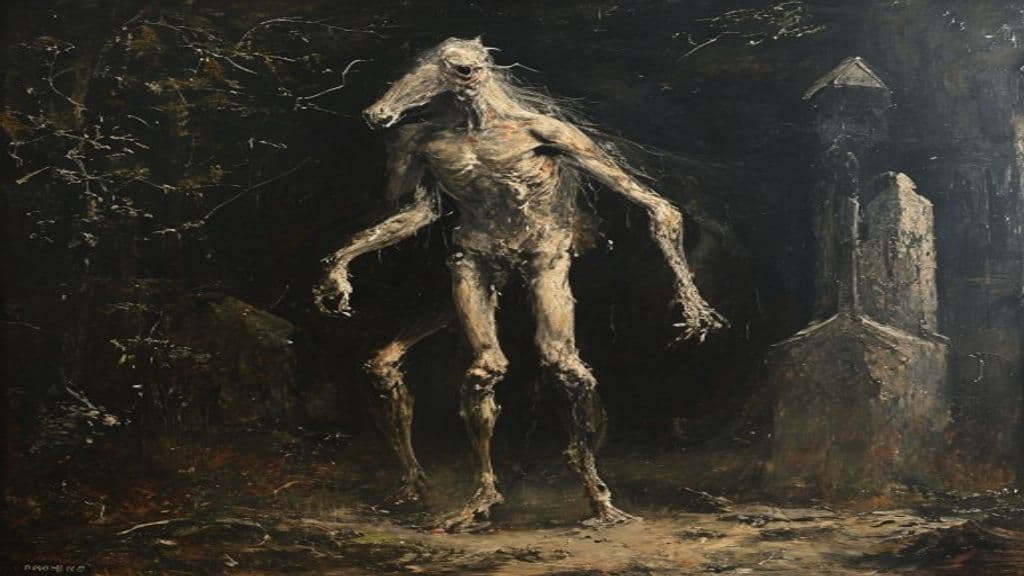
A three‑legged supernatural horse in Danish folklore associated with Hel, graveyards, and outbreaks of disease; it functions in tradition as an omen and agent linked to death rather than as a moralized devil-figure.

Heliadae
Lesser

Heliadae

The Heliadae (Ἡλιάδαι, Hēliádai) are the sons of the sun-god Helios and the nymph Rhodos in Greek myth. Presented as mortal divine descendants and ancestral heroes of Rhodes, they are credited with founding Rhodian cities, driving out the Telchines, and introducing sacrifices to Athena; several are named in tradition and some commit fratricide that leads to exile.

Heliades
Lesser

Heliades

In Greek myth, the Heliades are the daughters of the sun-god Helios (by the Oceanid Clymene) whose intense mourning for their brother Phaëthon leads to their metamorphosis into poplar trees; their tears are said in the tradition to become amber.

Helios
Ancient

Helios

Helios is the ancient Greek personification and god of the Sun who drives his horse-drawn chariot across the sky each day, serves as an all-seeing witness and guardian of oaths, and figures in Homeric myth and later syncretic solar cults. He was the patron deity of Rhodes and had important cult presence at Corinth; relatively minor in Classical Greece, his prominence increased in late antiquity through identification with Apollo and the Roman Sol.

Hellawes
Lesser

Hellawes

Hellawes is a sorceress in Thomas Malory's Le Morte d'Arthur associated with the Castle Nigramous and the episode set at the 'Chapel Perilous'. She attempts to seduce Sir Launcelot and, in the narrative, obstructs the healing of a wounded knight until specified quest actions recover items from a corpse.

Helle
Lesser

Helle

Helle is a named figure in Greek mythology cited in the supplied sources as the eponymous origin of the Hellespont. The provided materials present her role principally as an etiological figure connecting a personal name to a geographic feature (the Hellespont/Dardanelles).

Hellen
Lesser

Hellen

Hellen (Ancient Greek: Ἕλλην, Héllēn) is the eponymous mortal ancestor of the Hellenes in Greek myth. Presented in genealogical traditions as a son (in most accounts) of Deucalion and Pyrrha and as father of Dorus, Xuthus, and Aeolus, Hellen functions as the mythic pivot by which the collective name 'Hellas' and major tribal divisions of Greeks are explained.

Hellhound
Greater

Hellhound

A class of mythic canine beings associated across many cultures with the boundary between the human world and the underworld or otherworld. Depending on tradition they function as guardians or attendants of the realm of the dead, members of spectral hunts, omens of death, or emissaries of diabolic forces.

Helmut Zemo
Lesser

Helmut Zemo

Helmut Zemo is a fictional human antagonist in Marvel Comics, the thirteenth Baron Zemo, introduced in Captain America #168 (1973). A non-superpowered engineer-turned-villain, he leads organized teams (Masters of Evil, Thunderbolts) and pursues schemes rooted in family legacy, science, and political manipulation.

Hemann
Lesser

Hemann

The Hemann is a cluster of German-language folk spirits and restless-soul motifs best known for a distinctive, frightening shout; usually heard rather than seen, variants range from boundary-offender ghosts to field sprites and small household helpers. Its hallmark behavior is a characteristic cry that can harass passersby and—if imitated—cause the entity to 'aufhocken' (leap upon a person's back).

Hemen
Greater

Hemen

Hemen is an Ancient Egyptian falcon god venerated in local cults and frequently syncretized with Horus/Horakhte. Attested from the Pyramid Texts through the Late Period, Hemen received offerings, was cared for via cult statuary, and is recorded once functioning in an oracular capacity.

Hemsut
Minor Spirit

Hemsut

Hemsut (ḥmswt) are ancient Egyptian female divine personifications associated with fate, destiny, nourishment, life-force, and magical protection. They function as female counterparts to the Ka and are particularly linked with the safeguarding and vitality of royal persons; they appear in art and temple contexts, sometimes in pairings with specific Kas or other deities.

Hendursaga
Lesser

Hendursaga

Hendursaga (Sumerian Dḫendur-saŋ) is a Mesopotamian deity described in hymnic and god-list sources as a divine night watchman who patrols city streets, bears an insignia (staff or torch), and protects nocturnal travelers from hostile supernatural beings. He is attested in connection with the state of Lagash and is equated with the Akkadian Išum in later bilingual contexts.

Henet (the Pelican)
Lesser

Henet (the Pelican)

Henet is an Ancient Egyptian funerary figure represented as a pelican. Attested in Pyramid Texts, funerary papyri, and tomb imagery, she functions as a protective, motherly figure for the dead, associated especially with allowing exit from the tomb and protection against snakes.

Hengest
Greater

Hengest

Hengest is a legendary early leader in Anglo‑Saxon tradition, presented in poetry and chronicles as a warrior‑chief and the putative founder or first king of Kent. He appears in Old English heroic material (the Finn/Hengest episodes of Beowulf tradition) and in later historiographical narratives (Anglo‑Saxon Chronicle, Vortigern story) as a culture‑hero and dynastic ancestor.

Hengist and Horsa
Lesser

Hengist and Horsa

Legendary brotherly chieftains presented in Anglo‑Saxon and later medieval sources as the eponymous founders and military leaders who initiated Anglo‑Saxon settlement in parts of southeastern Britain; modern scholarship treats them as likely mythical or literary constructs rather than verifiable historical individuals.

Henioche
Lesser

Henioche

Henioche is a Greek mythic proper name borne by multiple mortal women in genealogies and a local cultic epithet attached to Hera at Lebadea. The name (Ancient Greek Ἡνιόχη, feminine of ἠνίοχος, 'charioteer') appears in literary, scholastic, and topographical sources as wives, daughters, nurses, and as commemorated stone statues at a Theban sanctuary; no independent supernatural agency or hostile nature is recorded in the provided sources.

Hennu (Seker's Underworld Barque)
Greater

Hennu (Seker's Underworld Barque)

In Egyptian mythology, the Hennu is a symbolic entity representing Seker of Memphis's underworld journey. (Note: * Power tier: Lesser (not Greater), as it's an aspect of Seker and doesn't possess deity-level powers. * Origin story: Clarify that the Hennu represents a part of Seker's journey, rather than being "a)

Heodenings
Lesser

Heodenings

A named princely household/retinue in the Germanic heroic-legend tradition, remembered chiefly for its association with a legendary, recurring battle cycle (Hjaðningavíg, the legend of Heðinn and Hǫgni) and cited in Old English poetry as a hall where a poet once held bardic office.

Heorogar
Minor Spirit

Heorogar

Heorogar is a legendary Danish king attested in the Old English poem Beowulf as an elder member of the Scylding (Skjöldung) dynasty. He is presented as the eldest son of Healfdene and is notable in the poem chiefly for former possession of martial regalia later held by Hrothgar and given to Beowulf. He is not described as supernatural in the cited sources and is absent from surviving Norse attestations.

✦
Lesser

Heoroweard

Heoroweard is a human figure of Germanic heroic legend attested in Old English and Norse sources as a claimant and rival within the Scylding/Skjöldung dynasty. He appears in Beowulf as a genealogical mention and in Norse and medieval chronicles/sagas (under forms Hjörvarðr/Hiartuar) as a pretender who rebels against and in some accounts kills Hrólf Kraki, with his origins, seat, and fate varying between traditions.

Hephaestine
Lesser

Hephaestine

Hephaestine (Ancient Greek Ἡφαιστίνης) is a mortal genealogical figure in Greek mythic tradition, named as one of the wives of Aegyptus and mother of several of his sons who appear in the Aegyptus–Danaus cycle. She is attested only as a named progenitrix in surviving summaries of the genealogy; no independent myths, cult, powers, or iconography are recorded in the cited sources.

Hephaestus
Ancient

Hephaestus

Hephaestus is the Greek god and divine artisan of smithing, metalwork, controlled fire, and volcanism; he functions as the blacksmith of the Olympian gods, maker of their tools and weapons, and is the focus of localized cults associated with hearths and manufacturing centres (notably Lemnos and Athens).

Her-Inmutef
Lesser

Her-Inmutef

Her-Inmutef is attested in the provided sources only as a named form or manifestation of the Egyptian god Horus. The available material does not supply independent myths, iconography, powers, rituals, or etymology for this form beyond that classificatory identification.

Her-sema-tawy
Ancient

Her-sema-tawy

Her-sema-tawy is presented in the supplied sources as an epithet or named form of the Egyptian god Horus associated with the idea of "uniting the Two Lands," and thus functions within Egyptian royal ideology as a manifestation of Horus that emphasizes political unity and kingship.

Hera
Ancient

Hera

Hera is an ancient Greek goddess, queen of the Olympian gods, and a principal tutelary deity of marriage, women, and family. She functions in myth and cult as protector of lawful marriage and women in childbirth, a civic tutelary figure (notably of Argos), and a sometimes-jealous consort of Zeus with archaic fertility associations in certain local rites.

Heracleidae
Lesser

Heracleidae

The Heracleidae (Ancient Greek: Ἡρακλεῖδαι) are the collective descendants of the hero Heracles invoked in Greek myth and historiography as a kin-group whose pedigree justifies dynastic rule and territorial claims. In tradition they are mortal dynasts and legendary founders whose exile, repeated attempts to reclaim ancestral lands, consultation of the Delphic oracle, and eventual 'Return of the Heraclidae' explain the founding of Dorian and other ruling houses in the Peloponnese.

Heracles
Ancient

Heracles

Heracles is the greatest hero of Greek myth whose career bridges mortal hero-cult and full divinization. Celebrated for his Twelve Labours, martial prowess, and travels between the mortal world, the underworld, and Olympus, he functioned as a civic patron, ancestor of royal lines (the Heracleidae), and object of cult that treated him both as chthonic hero and as god.

Heraeus
Lesser

Heraeus

Heraeus (also Heraeeus) is an Arcadian prince in Greek mythological genealogies, listed among the many sons of King Lycaon and credited as the eponymous founder of the town Heraea in Arcadia. He appears in local origin-lists rather than as a deity or independently culted hero.

Heramba
Ancient

Heramba

Heramba is a named iconographic form of the Hindu god Ganesha, venerated especially within Tantric streams as a protector of the weak who bestows fearlessness and victory. He is classically depicted with five elephant heads and multiple arms, often riding a lion and sometimes accompanied by Ganesha's rat vahana.

Herambasuta
Lesser

Herambasuta

Herambasuta (Devanagari: हेरम्बसुत, IAST: Heraṃbasuta) is attested in medieval Indian sources as a human Tantric yogi and leader associated with a vamachara (left‑hand) Ganapatya current who headed a cult of Ucchiṣṭa Gaṇapati. He is described in the tenth‑century Śaṅkaravijaya (attributed to Ānandagiri) as expounding an unorthodox, transgressive form of Ganapati worship later characterized by some scholars as Kaula‑like.

Hercle
Greater

Hercle

Hercle is an Etruscan divine hero—an immortal of the Etruscan pantheon, presented as son of Tinia and Uni—portrayed with Heracles-type attributes but invested with distinct local roles as a liminal protector, master of animals, and an oracular cult figure in Etruria.

Hercules
Ancient

Hercules

Hercules (Latin: Hercules) is the Roman reception of the Greek divine hero Heracles: a semi-divine, divinized heroic figure son of Jupiter and the mortal Alcmena who was widely venerated across Italy. Represented in cult, votive art, and literature, he functions as a protector and martial champion whose identity was adapted through Etruscan and local Italic contexts.

Hercules's Dog (discoverer of Tyrian purple)
Lesser

Hercules's Dog (discoverer of Tyrian purple)

A narrative animal actor in a Graeco‑Roman origin myth: Hercules's dog bites a sea‑snail (porphúra/murex) on a Phoenician beach, staining its mouth purple and triggering the discovery/origin story for Tyrian purple. The episode is attested in literary tradition and represented in later art (notably Rubens).

✦
Greater

Heremod

Heremod is a legendary early king attested in Old English poetry (Beowulf), medieval genealogies, and later Latin historiography. Presented as a human ruler whose pride, violence, and failure of kingship lead to banishment and death, he functions as a cautionary exemplar within Germanic/Nordic heroic-historical tradition.