Central African Supernatural Beings

24 documented Central African supernatural beings from the Evil Eye grimoire, including 12 lesser and 5 ancient in power tier.

Abada (unicorn)
Ancient

Abada (unicorn)

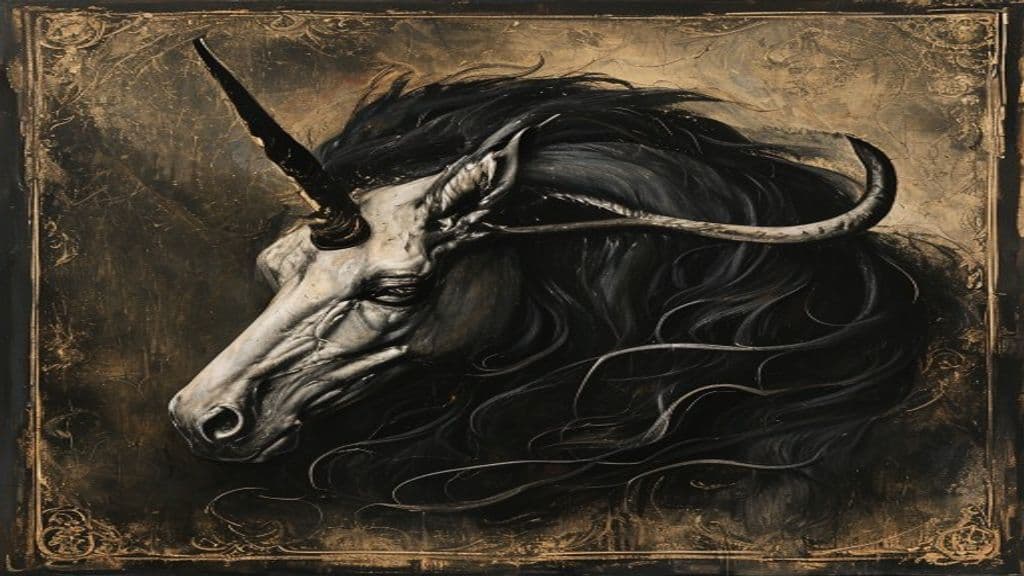
Mythical creature in Central African tradition with two crooked horns, possessing healing properties. (Note: 1. Power tier: Primordial (Abada has cosmic, deity-level healing properties) 2. Sensory cues: physical presence and possibly an aura or energy emanating from the horns 3. Weaknesses: should be mention)
Birongo
Lesser

Birongo

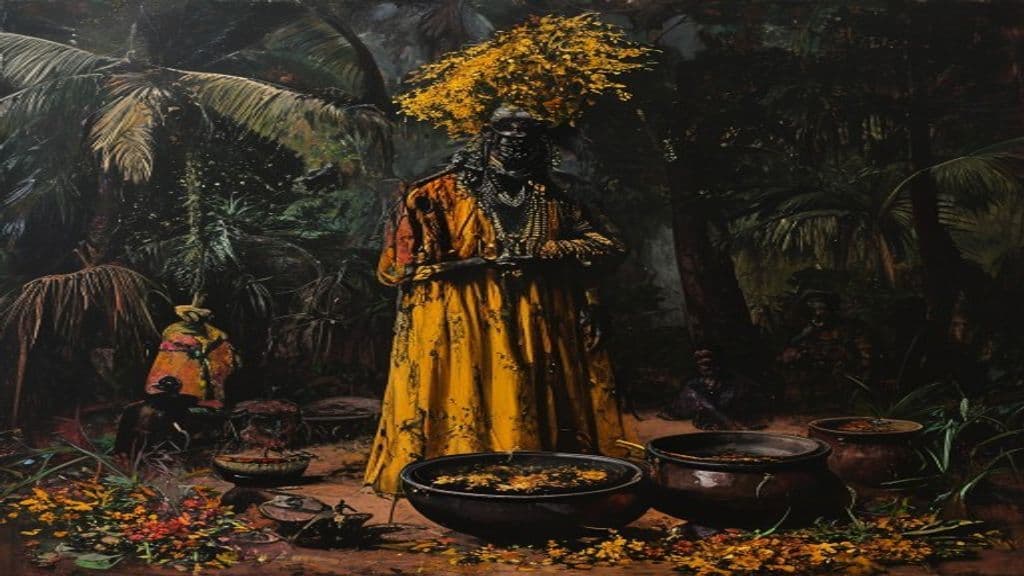
Birongo (also bilongo) is an Afro‑Venezuelan magico‑religious tradition and folk‑healing repertoire derived from Kongo‑area concepts and syncretized with Catholic saint veneration and local Venezuelan ritual forms. It functions as a lived system of diagnosis, healing, mediumship, and communal ritual practice rather than as an individual supernatural being.

Bisimbi (Simbi)
Lesser

Bisimbi (Simbi)

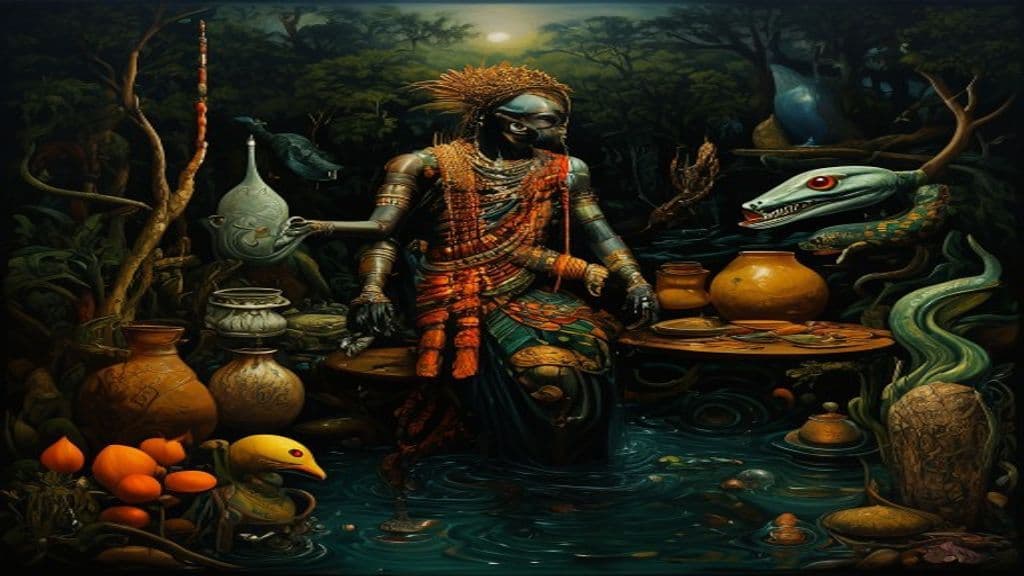
Bisimbi (singular Simbi) are water and nature spirits in Bakongo (Kongo) traditional religion. They are associated with waters and natural sites in the Kongo-speaking region and are attested to continue, with transformation, in Atlantic diaspora spiritual systems such as Lowcountry Hoodoo and Cuban Palo.

Chibados
Lesser

Chibados

Chibados are a historically attested third‑gender social and ritual role found among the Ndongo and neighboring Angolan cultures: male‑assigned people who lived and presented as women and who served as institutionalized diviners, ritual specialists, and political actors in precolonial court contexts.

Darak
Lesser

Darak

No attested supernatural being named 'Darak' appears in the provided sources. The term 'Darak' is documented as a toponym (places in Cameroon and Iran), as the Tagalog common name for rice bran used in traditional Philippine medicine, and as a personal or fictional proper name in varied modern sources. There is no corroborated ethnographic or mythological description of Darak as a spirit, deity, or monster in the consulted materials.

Guegue (siren)
Lesser

Guegue (siren)

Guegue is a contemporary urban-legend spirit in the Democratic Republic of the Congo, represented in popular discourse as a supernatural seducer invoked in rumors about singers and pastors. The label is used to explain alleged sexual seduction, immoral influence, or occult affiliation surrounding public figures rather than as a documented traditional spirit with fixed ritual forms.

Ilomba (Lozi mythology)
Lesser

Ilomba (Lozi mythology)

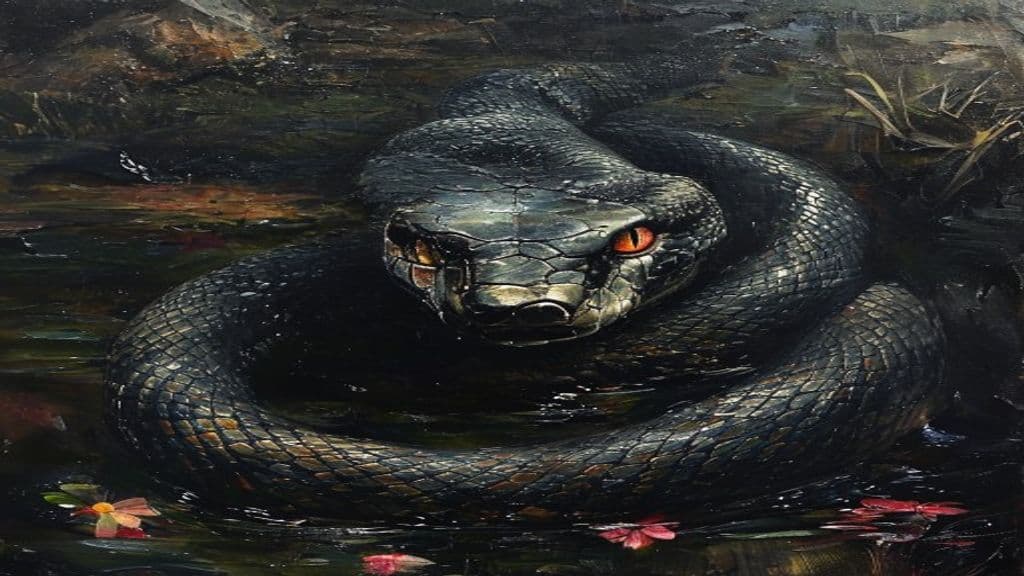
A malevolent sea snake entity created by witch doctors through dark magic, tied to human sacrifice and control. (Note: * Power tier: Greater (not Lesser) as per power_tier classification system * Appearance change: Sources describe that when seen by its owner, the Ilomba takes on the identity of its owner's face, not )

Imbulu (Mbulu)
Lesser

Imbulu (Mbulu)

Imbulu (also spelled Mbulu) appears in Bantu-language material as a 'fabulous creature' that, in the surviving excerpt, overtakes a girl traveling between settlements. The available sources are fragmentary and provide only a brief narrative mention without detailed attributes, rituals, or cosmological placement.

Jengu
Lesser

Jengu

No focused information on Jengu is present in the supplied sources. The materials available discuss water spirits and aquatic spirit traditions generally (including Mami‑Wata) and Bantu religious frameworks, but do not provide primary or detailed descriptions, rituals, or origins specific to Jengu (Sawa sea spirits).

Kalûnga
Ancient

Kalûnga

Kalûnga (Kalûnga Line) is a foundational concept in West-Central African Bantu cosmologies—most prominently Ambundu, Kongo, and Chokwe—referring both to Kalûnga as the Supreme God and to a watery, energetic boundary separating the land of the living from the spiritual realm of deceased ancestors.

Kibenga
Minor Spirit

Kibenga

Kibenga is attested in the provided sources as a modern proper name and toponym occurring in Central African and contemporary records. The supplied materials do not document Kibenga as a defined supernatural being, spirit, or entity within an indigenous cosmology.

Kishi (Central African tradition)
Greater

Kishi (Central African tradition)

A man-eating creature from Central African folklore with multiple heads and regenerative abilities. (Note: 1. Power tier should be Primordial due to its cosmic-level abilities (regenerating heads) and its role in destroying a village. 2. Source 1 only mentions the kishi chief's ability, not a group of kish)

Kongamato
Primordial

Kongamato

A pterosaur-like creature said to be a fearsome entity capable of causing large wounds, reportedly seen in the Jiwundu Swamps in western Zambia, Angola, and Democratic Republic of the Congo. (Note: 1. Power tier: Primordial seems too high given the limited abilities described (causing large wounds, aggressive behavior). Lesser would be more plausible. 2. Sensory cues: Add that witnesses report s)

Mbombo (Bumba)
Primordial

Mbombo (Bumba)

Mbombo, also called Bumba, is the creator god of the Kuba people (in what is now the Democratic Republic of the Congo). In Kuba creation myth Mbombo brings the sun, moon, stars, animals and people into being by vomiting them from his body, teaches humans craft (fire), and then retreats to the heavens, leaving an earthly representative (Yima/Loko Yima).

Mbwiri
Greater

Mbwiri

Central African demon believed to possess people, causing neurological disorders. (Note: * Power tier: Given that the primary behavior of Mbwiri is possession, which seems more in line with a lesser or local spirit, it's unlikely to be classified as Greater. * Origin story: No information)

Mokele-Mbembe
Ancient

Mokele-Mbembe

A water-dwelling entity in Central African tradition, described as reptilian or a member of an extinct sauropod lineage. (Note: 1. Power tier: should be Primordial (cosmic level) since it's often described as a legendary creature rather than a deity-level being. 2. Origin story: The source material does provide etymology, stat)

Ngoubou
Lesser

Ngoubou

Ngoubou is a term used in modern cryptozoological and popular secondary sources for a reported large, horned anomalous beast from Central Africa. In the supplied material it appears in lists and blog posts alongside other Congo Basin cryptids (e.g., Emela Ntouka, Mokele‑mbembe) rather than as a documented figure in primary indigenous cosmologies.

Nkisi (minkisi)
Greater

Nkisi (minkisi)

Nkisi (pl. minkisi, mikisi, zinkisi) are Kongo‑region spiritual agents and the material containers that house or activate them. Employed by specialist practitioners (banganga/nganga), minkisi mediate with ancestors and other powers for healing, protection, justice, oath‑sealing, and the punishment or restraint of harmful forces.

Nkondi (minkondi)
Greater

Nkondi (minkondi)

Nkondi are aggressive minkisi figures of the Kongo (Bakongo) tradition: carved statuettes that house an ancestral or spiritual power isolated and placed into them by a ritual specialist (nganga). Functioning as hunters or enforcers, nkondi are activated to investigate, punish, or otherwise intervene in social wrongs and dangerous unseen forces.

Nzambi a Mpungu
Ancient

Nzambi a Mpungu

Nzambi a Mpungu is the supreme creator sky-deity in traditional Bakongo (Kongo) spirituality, described as the eternal Sky Father and associated with the sun and fire. He occupies the highest place in Kongo theogony, has a female counterpart Nzambici (the Sky Mother and moon goddess), and after Portuguese contact was often equated with the Christian Creator God.

Simbi
Ancient

Simbi

Guardian spirit of water and nature in Central African tradition. (Note: - Add source material on origin story. - Clarify sensory cues to be presence of water features or aquatic animals associated with Simbi's transformative appearance, rather than just their presence. - )

Tokoloshe (Tokolosh)
Lesser

Tokoloshe (Tokolosh)

A diminutive non-human spirit in Nguni and broader Bantu-speaking Southern African traditions, frequently portrayed as a dwarf-like, sometimes hairy water spirit used by malicious people to harass, frighten, or harm others. It functions both as a bogeyman for social discipline and as an explanatory agent for unexplained illness and death, and communities invoke traditional healers or pastors with an apostolic calling to counter it.

Werecat
Lesser

Werecat

A werecat is a folkloric category of therianthropic beings or people associated with transformation between human and feline forms. The motif appears across Europe, Africa, South and Southeast Asia, and China, with locally specific explanations (witchcraft, hereditary curse, sorcery, ghostly influence, or divine/royal descent).

Zār
Lesser

Zār

Zār (also zar) names a class of possessing spirit and the associated ritual system found across the Horn of Africa and adjacent Middle Eastern communities. Governed socially and ritually, Zār possession is treated as an ongoing relationship to be managed through communal rites (the zār ritual or zār cult) that reconcile spirit and person rather than forcibly expelling the spirit.