Finnic Supernatural Beings

109 documented Finnic supernatural beings from the Evil Eye grimoire, including 42 lesser and 22 greater in power tier.

page 2 of 2

Nisse (tomte / tomtenisse / tonttu)
Lesser

Nisse (tomte / tomtenisse / tonttu)

A Scandinavian household and farmstead spirit tied to a particular homestead; a small, human‑like custodian who performs chores, protects livestock and property in return for annual ritual food offerings (notably Yule porridge), and who can become dangerous if offended or neglected.

Nyyrikki
Lesser

Nyyrikki

Nyyrikki is a figure in Finnish and Karelian forest-hunting tradition described as a child of the forest deities Tapio and Mielikki who 'gives' small game (notably squirrels) to hunters. He appears in runic songs and hunting spells across regional oral traditions under multiple name-forms and genders, invoked to release or hand over prey.

Näky (Näkyi) — nightmare spirit
Minor Spirit

Näky (Näkyi) — nightmare spirit

This entry is intended for the Finnish term näky / näkyi, often rendered in English as a 'nightmare spirit.' The three supplied sources do not contain information about this entity; the summary below records what the provided materials are and notes the absence of relevant folkloric content in them. Additional specialized folklore or ethnographic sources are required to document traditional beliefs about näky.

Olevipoeg
Lesser

Olevipoeg

Olevipoeg (also attested as Alevipoeg in some listings) is a named figure within the Kalevipoeg epic and related Estonian mythic/genealogical traditions. He functions as a kinship/companion figure — a son/brother-type persona in the heroic cycle rather than a standalone supernatural deity or spirit in the supplied sources.

Otso
Ancient

Otso

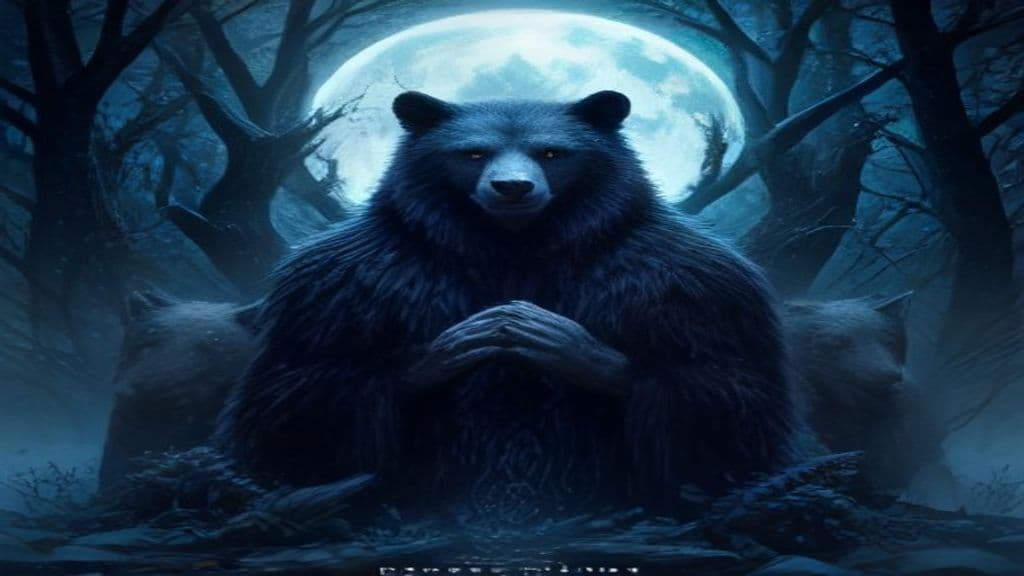
Otso is the sacred collective bear spirit in Finnish mythology, regarded as the king of animals and leader of the forest. Treated with deep fear and reverence, Otso functions as an animistic ancestral figure integrated into origin myths and communal ritual life (notably the Peijaiset).

Paasselkä Devils

Paasselkä Devils

In Finnish folklore, Paasselkä devils are a natural phenomenon that appears as light phenomena at Lake Paasselkä and surrounding areas. (Note: 1. Remove "natural phenomenon" from summary (they're considered natural but folklore-related) 2. Power tier is unclear; based on abilities, it's likely a Lesser or Minor Spirit (no interaction with hu)

Peko
Lesser

Peko

Peko is a Baltic‑Finnic agrarian spirit and cult figure associated with barley, brewing, and field fertility, particularly attested in Seto, Estonian, and Finnish traditions. He appears in cult practice as a guardian of granaries and crops, a focus of seasonal feasts and offerings, and is invoked in rituals for rain, abundance, and certain soil‑related cures.

Pikker (Pikne)
Lesser

Pikker (Pikne)

Pikker (also attested as Pikne) is the Estonian supernatural personification or god of lightning. Attested sources identify the name as referring to lightning and note a likely relation to taboo-euphemism naming practices in the Baltic-Finnic area; beyond this identification, few traditional narratives, iconography, or ritual details are preserved in the supplied materials.

Pikne
Greater

Pikne

Pikne is the Estonian supernatural figure associated with lightning and thunder; treated in tradition as a weather-personification who could be petitioned by priests and farmers for rain and whose name functioned as a taboo euphemism for the dangerous phenomenon of lightning.

Piru (Finnish tradition)
Primordial

Piru (Finnish tradition)

A fiend or demon from Finnish mythology, classified as malevolent entities. (Note: 1. Summary: Remove "malevolent entities" as it's not supported by the source material. 2. Power tier: Change to Lesser or Minor Spirit (no evidence of Primordial power). 3. Appearance: Add that no spe)

Pohjola
Greater

Pohjola

Location in Finnish mythology and a central figure in the Kalevala epic. (Note: 1. Summary should mention that Pohjola is a central figure in the Kalevala epic, but also clarify that it is a location, not just a character. 2. Power tier: Lesser (not Greater), as Pohjola does not )

Päivätär
Ancient

Päivätär

Päivätär is the female personification of the Sun in Finnish traditional mythology, depicted in runic songs and Kalevalaic material as a beautiful lady who owns the Sun's silver, spins and weaves silver yarns into clothes, gives jewellery to maidens when petitioned, and appears in regional myths connected to fire, wasps, and mythic households such as Päivölä.

Rahko
Primordial

Rahko

A figure in Finnish mythology associated with celestial events and the Moon, its exact nature and classification unclear. (Note: - Power tier should be Lowered from Primordial to Ancient, as it only influences lunar cycles and phases. - Origin story is partially correct; the year 1551 is accurate, but it's not clear if Rahko wa)

Rauni
Lesser

Rauni

Rauni is a sparsely attested name for a being in pre-Christian Finnish mythic material, recorded in runic-song variants and mentioned in a 1551 text by Mikael Agricola. Surviving sources preserve the name and variants but do not provide a clear, uncontested account of Rauni’s function, appearance, or rites.

Revenant
Lesser

Revenant

A revenant is a deceased human (corporeal corpse or spirit) that returns from death to appear among or assault the living. The category spans multiple cultures and historical periods and includes walking corpses, barrow-dwellers, and other postmortem returns addressed by communal funerary and ritual responses.

Runic Song (Finnish Tradition)
Lesser

Runic Song (Finnish Tradition)

Oral poetry and national epic representing the collective cultural heritage of Baltic Finnic peoples. (Note: - Power tier: Primordial (it's a national epic representing collective cultural heritage, implying a significant impact on the culture and identity of the Baltic Finnic peoples) - Appearance: missing )

Sampo
Primordial

Sampo

In Finnish mythology, the Sampo is a magical device that brings riches and good fortune to its holder, akin to the horn of plenty. (Note: - Power tier: Reduce from Primordial to Greater (The Sampo's abilities are powerful, but not cosmic in scope) - Abilities: Clarify that the Sampo attracts prosperity and success, but does not necessar)

Sampsa Pellervoinen
Lesser

Sampsa Pellervoinen

A Finnish vegetation haltia — an animate principle who sows all plant growth across the land. Attested in runic songs and Kalevala-derived compilations, Sampsa is ritually awakened in summer festivals to ensure the yearly return of fields, meadows, forests and other vegetation.
Sauna spirit (Saunatonttu)
Lesser

Sauna spirit (Saunatonttu)

A place‑bound guardian or household spirit associated with the sauna in Finnish cultural accounts and modern popular materials; portrayed in contemporary media and retail as a named 'sauna elf' or 'sauna guardian' and linked to the sauna's role as a liminal, ritualized space for cleansing body and soul.

Shishiga
Lesser

Shishiga

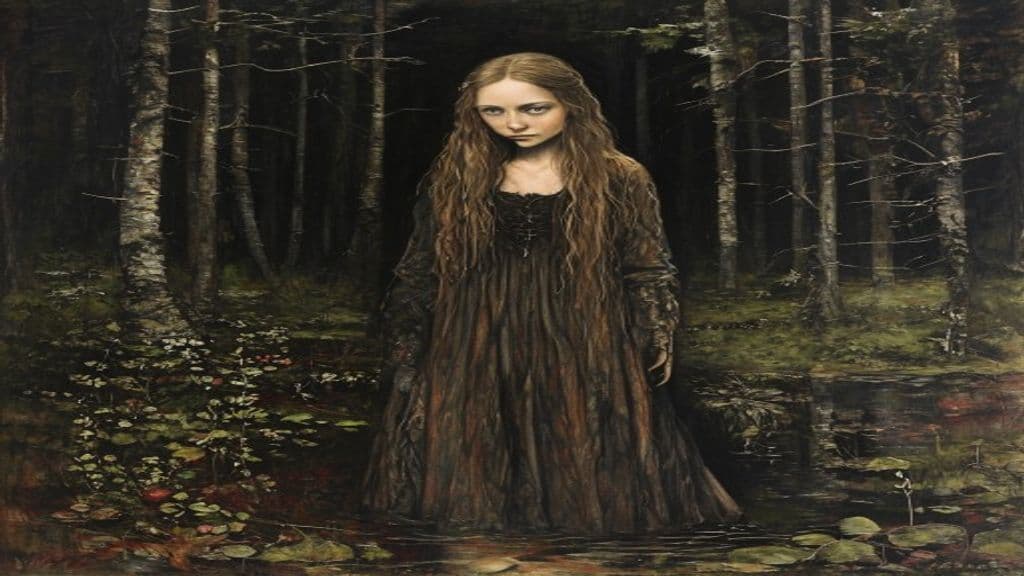
Shishiga (Russian: шиши́га), also called leshenka in one account, is a female swamp or forest spirit in Russian and Komi traditional belief. Presented as a place-bound nature-being, she is associated with marshes, riverbanks and wooded margins and is said to harass people (particularly intoxicated persons) and, in Komi tradition, to be an omen or cause of drowning and death for those who see her.

Skogsrå
Lesser

Skogsrå

A female forest rå in Swedish folklore who rules the woods and its game; she appears as a beautiful woman from the front but reveals non-human features when seen from another angle. She interacts with hunters, woodcutters and charcoal-burners, offering favors (hunting luck, help with work, offspring) or ensnaring men who follow her into the forest.

Sledovik
Lesser

Sledovik

A sacred stone in Slavic and Finnic pagan practices, imbued with spiritual significance. (Note: - Power tier should be Primordial (due to their widespread presence and spiritual significance in Slavic and Finnic cultures). - Abilities description is incomplete and inaccurate (the text only menti)

Soini (Finnish Mythology)
Ancient

Soini (Finnish Mythology)

A giant and son of Kaleva in Finnish mythology, known for his mischievous tendencies. (Note: 1. Power tier should be Lesser (not Ancient) based on the description of Soini as a giant and a son of Kaleva, but not necessarily a deity-level figure. 2. Add sensory cues from Christfried Ganander's)

Sulevipoeg
Lesser

Sulevipoeg

Sulevipoeg is an Estonian runic‑song and literary character presented as a son within the mythic family of Kalev. Attested in runic songs (notably the song 'Suisa suud') and later literature, he appears as a mortal member of a kin-group tradition rather than an explicitly cosmological or supernatural being.

Surma
Lesser

Surma

Surma is a Finnish mythic beast associated with the boundary of the dead (Tuonela) and a personification or synonym of death; in popular and literary summaries it is described as a terrible beast linked to being mauled or devoured and to the gates of the Underworld.

Synty (Finnish)
Primordial

Synty (Finnish)

Concept explaining origin of phenomena, materials, and species in Finnish mythology. (Note: 1. Power tier should be "Ancient" instead of "Primordial", as Synty is an abstract concept explaining origins and has no direct powers. 2. Add sensory cues based on the source material: "No explicit d)

Syöjätär
Primordial

Syöjätär

A malevolent entity associated with disease and unpleasant creatures in Finnish folklore, connected to fertility and maternal powers. (Note: 1. Power tier: Downgrade to Ancient (deity-level) since Syöjätär's connection to fertility and maternal powers is not explicitly primordial in nature. 2. Appearance: Add a note stating that no specifi)

Tapio
Lesser

Tapio

Tapio is a Finnish forest spirit and personification of the woods who functions as the owner/ruler of forests and a recipient of hunters' prayers and offerings. He appears both as an individualized forest-being with household members (wife Mielikki, children such as Tellervo and Nyyrikki) and, in runic song usage, as a synonym for the forest itself.

Tellervo
Lesser

Tellervo

Tellervo is a Finnish forest goddess, described in runic-song tradition as a daughter of Tapio, the King of the Forest. She is regionally invoked in Karelia and adjacent Finnish districts in petitions for aid with bear-hunting, remedies for forest-borne illness, and protection of cattle.

Tharapita (Taara)
Ancient

Tharapita (Taara)

Tharapita, often rendered Taara in Estonian sources, is presented in the provided materials as a prominent deity in Estonian mythology associated with sacred groves (hiis) and invoked in funerary context. Modern summaries compare Tharapita to northern European high gods such as the Finnish Ukko and the Germanic Thor, though the supplied texts do not record detailed myths, iconography, or ritual formulas.

The Nine Diseases (Finnish)
Greater

The Nine Diseases (Finnish)

The sons of Louhi, personifying various diseases and disasters. (Note: - Power tier: Primordial (as they are the sons of a goddess, their origins are more cosmic) - Appearance: Specify that there is no direct description in source material - Abilities: Clarify that they )

The Swan Queen (Swan Maiden)
Lesser

The Swan Queen (Swan Maiden)

A Baltic and adjacent folktale figure: a swan or goose that becomes a woman by shedding a feathered skin and lives among humans until she regains or is restored her swanskin. The motif is classed in folktale catalogs as the Swan Maiden (ATU/AaTh 400* / 404* in local indexing) and appears in Lithuanian and neighboring Mari (Cheremis) traditions.

Tiera
Minor Spirit

Tiera

In Finnish mythology and runic songs, Tiera is a male warrior entity with unknown powers and abilities. (Note: - The power tier should be Primordial, as it's unclear what its "powers and abilities" are, but since it's described as appearing in Finnish mythology and runic songs (which are often deeply connected)

Tietäjä
Ancient

Tietäjä

A magically powerful figure in traditional Finnic culture, possessing supernatural powers derived from great knowledge. (Note: 1. Power tier should be Primordial as "Ancient" is typically reserved for deities and the source doesn't specify otherwise. 2. The sentence in the Origin story could be rephrased to better reflect tha)

Tuonela
Primordial

Tuonela

In Finnish mythology, Tuonela is a primordial realm representing the Underworld and the afterlife, sharing similarities with other Finnic cultural traditions. (Note: 1. Summary: Add that Tuonela's significance extends beyond Finnish mythology, as it shares similarities with other Finnic cultural traditions. 2. Power tier: Corrected - Tuonela is indeed associated w)

Tuonetar
Greater

Tuonetar

Tuonetar is the female sovereign and hostess of Tuonela, the Finnish underworld. In the Kalevala she and her husband Tuoni preside over the dead, administer a lethal 'beer of oblivion', and act to prevent the living from leaving the realm of the dead.

Tuoni
Greater

Tuoni

Tuoni is the personified ruler of Tuonela, the Finnish realm of the dead, described in Finnish mythic and poetic sources as the lord of darkness and head of an underworld household associated with suffering.

Turja (Kalevala)
Minor Spirit

Turja (Kalevala)

No supplied sources describe a supernatural entity named Turja in the Kalevala. The name 'Turja' appears in the provided material only as a place name (an Estonian village and a Belarusian agrotown) and as an academic surname; there is no evidence in the supplied corpus for a folkloric Turja.

Tursaansydän
Primordial

Tursaansydän

An ancient, swastika-like symbol in Finnish tradition associated with protection, good luck, and blessings. (Note: - Power tier should be Lowered from Primordial to Ancient, as it is described as an "ancient symbol" and not cosmic in power. - No sensory cues or weaknesses are mentioned in the source material; add )

Ukko
Greater

Ukko

Ukko is a Finnish sky- and thunder-associated deity figure whose thunder and rain are credited with fertilizing fields and securing agrarian fertility. He occupies the high sky (epithet ylijumala) and was petitioned for weather, harvest success, and various communal needs; his character and antiquity are debated in scholarship.

Ukonvasara
Ancient

Ukonvasara

In Finnish tradition, Ukonvasara (or Ukonkirves) is a magical symbol associated with Ukko, the thunder god. (Note: 1. The power tier should be Primordial since it's associated with a cosmic entity (Ukko). 2. Add sensory cues and weaknesses consistent with the source material (e.g., possibly being indestructible, o)

Untamo
Lesser

Untamo

Untamo is a named human antagonist in the Finnish–Karelian Kullervo cycle. In the supplied sources he is depicted as a harmful magician figure who kills Kullervo's father, kidnaps his mother, and attempts three times to kill Kullervo as a child; one modern retelling summary calls him a "dark magician."

Vammatar
Minor Spirit

Vammatar

Vammatar (also presented in a Finnish-mythology-derived source under the names Kivutar or Kiputyttö) is described in the cited material as a spirit or goddess who is asked to take the pains and injuries of humans onto herself. She is located on named places associated with pain (Kipumäki / Kipuvaara / Kipuvuori) and is called a 'maiden of the underworld' in the cited encyclopedia entry.

Vanemuine
Minor Spirit

Vanemuine

Vanemuine is an Estonian cultural institution — originally the Vanemuine Society (Vanemuise Selts) founded in Tartu in 1865 — that gave rise to the first Estonian-language theatre and later a multi-genre theatre company and concert organization. It played a foundational role in staging Estonian-language drama, organising song festivals, and training theatre practitioners during the late 19th and 20th centuries.

Vellamo
Greater

Vellamo

Vellamo is a named water-being in Finnish traditional belief, a personified 'Mistress of Water' associated with lakes, seas, shores and fish. She appears in runic songs and in fishermen's spells as the being who presides over aquatic resources and is petitioned to bring fish into nets.

Virankannos
Ancient

Virankannos

Virankannos is a figure in Finnish and Karelian runic-song tradition associated with fertility and the wellbeing of crops and is treated in sources as a sky-associated, culture-level divine actor. Attested in Mikael Agricola's 1551 list as a protector of oats and in Kalevala runes (20 and 50), he appears in saga-level scenes such as the attempt to slay the great ox and the baptism/naming of Marjatta's child.

Väinämöinen
Ancient

Väinämöinen

Väinämöinen is the central heroic and sacred figure of Finnish oral tradition and the national epic Kalevala, depicted as an ancient, bearded wise man, master of song and rune‑speech, a tietäjä (seer/shaman) and culture‑hero whose authority expresses itself in magical singing, craft and foundational cosmogenic acts.

Väinämöinen's Blood
Primordial

Väinämöinen's Blood

A manifestation of Väinämöinen's power and wound, bringing about a catastrophic flood in Finnish mythology. (Note: * Power tier: Reduce to Primordial is unclear based on source material; it implies catastrophic flood, which may be more consistent with Ancient or Greater. * Abilities: Specify that flood is not a co)

Väki (Finnish Tradition)
Primordial

Väki (Finnish Tradition)

An impersonal, supernatural power in Finnish mythology associated with the natural world. (Note: - The source material does not explicitly state the origin story of Väki. - No physical description of Väki is provided in the source, but it's mentioned that its presence is felt through impact on na)