Greek Supernatural Beings

1796 documented Greek supernatural beings from the Evil Eye grimoire, including 1106 lesser and 335 minor spirit in power tier.

page 25 of 30

Oreius
Lesser

Oreius

Oreius (also attested as Oreios, Orius, Oreus) is a named centaur figure appearing in two distinct narrative contexts: as one of the centaurs who tried to seize Pholus' wine and was killed by Heracles in Greek myth summaries, and as a centaur military leader (centaur general/commander) in C. S. Lewis's The Chronicles of Narnia and later adaptations/fan works where he fights on Aslan's side.

Orestes
Lesser

Orestes

Orestes (Ancient Greek: Ὀρέστης) is a mythic Greek prince and later king, son of Agamemnon and Clytemnestra, whose avenging of his father's murder by killing Aegisthus and Clytemnestra leads to pursuit by the Erinyes and a landmark divine-legal resolution (the trial on the Athenian Acropolis). His narrative explores guilt, divine command, ritual purification, and the transition from private vengeance to civic justice.
Orestheus
Lesser

Orestheus

Orestheus is a mythic founder-figure in Greek tradition appearing in variant genealogies as either a son of Deucalion and Pyrrha associated with the Ozolian Locrians of Aetolia (noted for a vine-origin wonder-tale) or as one of the fifty sons of Lycaon credited with founding Oresthasion/Oresteion in Arcadia. He functions as an eponymic ancestral figure used to explain place-names and tribal identities.
Orion
Lesser

Orion

Orion is presented in the supplied sources primarily as a name and cultural referent — most centrally the figure 'Orion (mythology), a hunter in Greek mythology' and the constellation named after him — rather than as a single, fully documented folkloric supernatural entity within the supplied materials. The available documents catalogue wide modern reuse of the name (constellation, works of art, characters, companies, places) but do not provide primary mythic narratives, rituals, or detailed cosmological role.

Ormenus
Lesser

Ormenus

Ormenus (Ancient Greek Ὄρμενος) is not a single supernatural being but a personal name attested for several mortal figures in Greek mythic genealogies and epic narratives. Bearers include an eponymous king associated with Ormenion/Ormenium in Thessaly, a father of Ctesius (thus ancestor of Eumaeus in the Odyssey), and various minor warriors appearing in lists of combatants (Trojan casualties; the Seven against Thebes). The name functions primarily as a genealogical and toponymic marker across epic and local traditions.

Ornea (Ornia)
Lesser

Ornea (Ornia)

Ornea (Ancient Greek: Ὀρνία), also attested as Ornia, is an eponymous figure in Greek myth presented as a daughter of the river-god Asopus and Metope and cited as the name-giver of the town Orneae in Argolis. She appears in genealogical and place-origin traditions rather than as an independently agentive supernatural being.

Orpheus
Greater

Orpheus

Orpheus is a legendary Thracian bard, musician, poet, and prophetic figure of ancient Greek tradition whose song charms animals, plants, and in some accounts even the powers of the underworld; he is also traditionally linked with the origin and transmission of Orphic mystery texts and rites.

Orphne
Lesser

Orphne

Orphne (Ancient Greek: Ὀρφνή, from ὄρφνη 'darkness') is a named nymph of the Greek underworld (Hades). She is attested as the mother of Ascalaphus by Acheron and is described in the modern summary tradition as also called Styx or Gorgyra; the available sources provide no further mythology, cultic detail, or narrative exploits.

Orseïs
Lesser

Orseïs

Orseïs (Ancient Greek: Ὀρσηΐς) is attested in Greek mythographic tradition as a Naiad — a freshwater nymph of a spring in Thessalia — who marries Hellen and becomes ancestress of the major Greek tribal progenitors (Dorus, Xuthus, Aeolus). Her attested role is primarily genealogical and place-bound rather than narrative or cultic in the surviving sources.

Orthrus
Lesser

Orthrus

A monstrous multi-headed hound in Greek myth who guarded the red cattle of Geryon on the far-west island of Erytheia; slain by the hero Heracles during his tenth labour. Described as an offspring of Echidna and Typhon and placed in genealogies of Greek monsters.

Ourea
Primordial

Ourea

In Hesiodic cosmology the Ourea (Ancient Greek: Οὔρεα) are the plural, personified mountains produced parthenogenetically by Gaia. They function as primordial, elemental offspring that constitute the mountains themselves and serve as the haunts of nymphs rather than as individualized mythic characters.

Oxylus
Lesser

Oxylus

Oxylus (Greek: Ὄξυλος) is a name applied to multiple related figures in Greek tradition: a local woodland daimon associated with mountain beech-woods (son of a mountain-god and linked to Hamadryads), a genealogical offspring (son of Ares and Protogeneia in some accounts), and a mortal/foundational king of Elis recorded in regional heroic histories. The traditions treat these referents as distinct but related uses of the same name tied to landscape, kinship, and local founding narratives.

Palaechthon
Minor Spirit

Palaechthon

In classical Greek literary context Palaechthon (Παλαίχθονος) is an earth-linked eponymous ancestor invoked to mark indigenous origin; attested only in Aeschylus' The Suppliants and discussed by later commentators and modern reference works. The name combines elements meaning 'old/long' (palai-) and 'earth' (chthon-) and functions as an aetiological device legitimizing Pelasgian claims to the land.

Palaemon
Minor Spirit

Palaemon

Palaemon (Παλαίμων), in the best-attested Greek tradition, is the deified form of the youth Melicertes who becomes a youthful sea-protector associated with sailors and fishermen; he is commonly depicted as a boy riding a dolphin and received local cultic honours in some places (notably linked in some traditions to the Isthmian games).

Palaestra
Lesser

Palaestra

Palaestra (Ancient Greek: Παλαίστρα) is a personal name in the Greek mythic corpus attached to two distinct minor figures associated with the god Hermes — one portrayed as a mortal lover of Hermes and another described as his daughter and a goddess/personification of wrestling. The name derives from the Greek root palē / palaiein, linking the figure to the institutional palaestra (wrestling school) and the art of wrestling.

Pallas
Lesser

Pallas

Pallas is a name applied to multiple distinct figures in Greek myth (several mortal, semi-divine, and Titan personages) and functions as an epithet of the goddess Athena; in later usage the name is also applied to non-mythic objects such as the asteroid 2 Pallas and a genus name in biology. The sources do not treat Pallas as a single unified supernatural species but as a polyvalent label across genealogies and later nomenclature.

Pallas Athena
Ancient

Pallas Athena

Pallas Athena (Athena or Athene) is an ancient Greek goddess associated with wisdom, strategic warfare, and handicraft; she functions as patron and protectress of cities—most notably Athens—and appears throughout art and myth from antiquity into later cultural traditions.

Pallas of Arcadia
Lesser

Pallas of Arcadia

Pallas of Arcadia is a mythic eponymous Arcadian prince and founder-ancestor credited with founding the town Pallantion/Pallantium in Arcadia. He appears in Greek legendary genealogies (sometimes cited as a son of Lycaon) and is used in later Roman tradition as an ancestor linked to Evander and the Italian Pallantium.

Pamisus (Pamisos)
Lesser

Pamisus (Pamisos)

Pamisus (also rendered Pamisos) is primarily attested in the provided sources as the largest river of the Messenia regional unit in the southern Peloponnese, Greece. A separate short catalogue entry (Wikidata) labels Pamisus as a "river god of Messenia," but the geographic sources give no supporting mythic detail; therefore the evidence for personification or cult is minimal and secondary to the river's hydrological description.

Pan
Lesser

Pan

Pan is identified in the provided sources as a Greek deity who is, in those sources, noted to be often depicted with goat features. The available material is limited to a disambiguation listing and does not supply further mythic narrative, functions, or rituals.

Panagia Agiosoritissa (Maria Advocata)
Minor Spirit

Panagia Agiosoritissa (Maria Advocata)

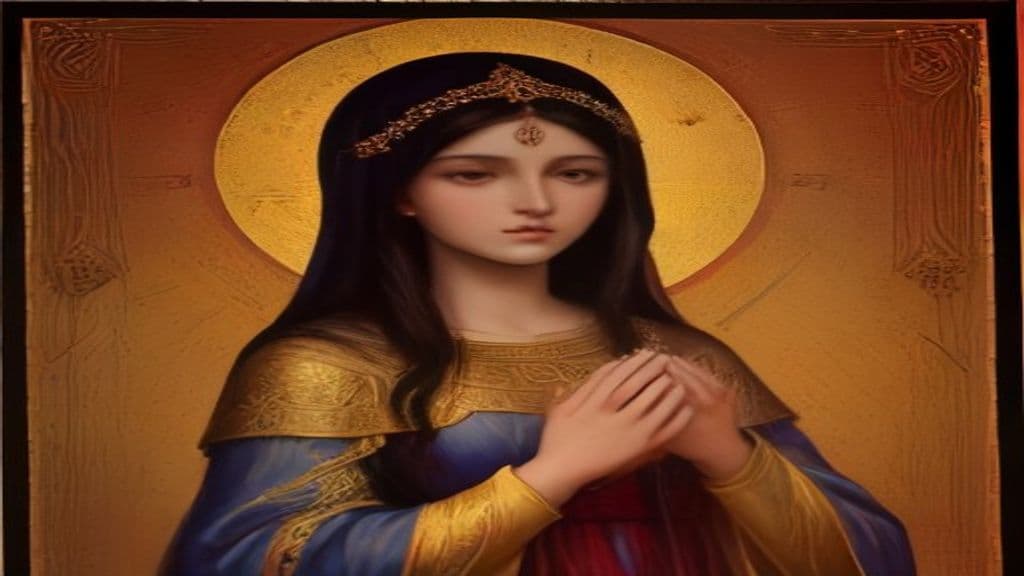
The Panagia Agiosoritissa, known in Latin as Maria Advocata, is an iconographic type of the Virgin Mary in Byzantine and related Christian devotional art. It depicts the Theotokos alone, shown slightly in three-quarter view with both hands raised in a gesture of prayer or intercession, and functions as an image of Mary the intercessor rather than as an autonomous supernatural being.

Pancratis
Lesser

Pancratis

Pancratis (Ancient Greek Παγκρατίς / Παγκρατώ) is a woman in Greek myth, daughter of Aloeus and Iphimedeia and sister of Otus and Ephialtes. In surviving traditions she is captured by Thracian raiders during a Dionysian celebration; her beauty provokes rivalry among captors and her fate differs between accounts (marriage and later rescue in one version; the mutual killing of rival captors in another).

Pandareus
Lesser

Pandareus

Pandareus is a mortal figure in Greek mythic tradition, son of Merops and a nymph, variously placed in Miletus, Ephesus or associated with Crete. He is best known in surviving accounts for stealing a sacred/golden dog that guarded the infant Zeus and for familial tragedies that in some variants end in divine punishment or metamorphosis (including transformation into a sea-eagle).

Pandion (hero)
Lesser

Pandion (hero)

Pandion is the eponymous Athenian hero of the Attic tribe Pandionis, venerated at a heroon in Athens and usually identified in ancient tradition with one or the other legendary kings called Pandion. He functions as a civic ancestor whose name anchors tribal identity and local cultic commemoration rather than as an actively described supernatural agent.

Pandion I
Lesser

Pandion I

Pandion I is a legendary early king of Athens in Greek mythic-historical tradition, presented as a grandson of Hephaestus and a node in Athenian genealogies that link royal houses, priesthoods, and tribal eponyms to a mythic past.

Pandion II
Lesser

Pandion II

Pandion II (Ancient Greek: Πανδίων) is a legendary king in Greek mytho-historical tradition, presented in Athenian royal succession lists as a heroic-age ruler and ancestral figure. He is portrayed as son of Cecrops II, father of Aegeus and others, exiled by rivals to Megara where he became king and received local hero-cult commemoration.

Pandora
Minor Spirit

Pandora

In Hesiod's Greek theogony, Pandora is the first woman fashioned by Hephaestus at Zeus's command, endowed with gifts from the gods and introduced into the human world as the agent whose opening of a sealed pithos releases evils upon humankind; she functions in the poem as an explanatory figure for the existence of human misery.

Panopeus
Lesser

Panopeus

Panopeus (Πανοπεύς; variant Φανοτεύς/Phanoteus) is an ancient town of Phocis in Greek mytho-historical geography. Cited in Homeric, Hellenistic, and Roman-era sources, it is associated with foundation myths, heroic personages (notably Schedius), the grave of Tityos, and local etiologies linking Prometheus to the area's geology; by Pausanias' time it was reduced to a few huts amid ruined walls.

Paros (island)
Minor Spirit

Paros (island)

Paros is a Greek island in the central Aegean (the Cyclades) with a long history of mythic associations, local cults, and eponymous legendary figures. The provided sources treat Paros as a geographic and cultic locus rather than a discrete supernatural being named 'Paros.'

Parthaon
Minor Spirit

Parthaon

Parthaon is a mytho-historical personal name in Greek tradition attested in two principal genealogical contexts: (1) as a variant of Porthaon, king of Calydon and father of Oeneus in Aetolian genealogies, and (2) as an Arcadian ancestor linked in local founder-lists that include Periphetes, Nyctimus, Aristas, Erymanthus, Arrhon, and the eponym Psophis. He functions as an ancestral/royal nexus in regional origin myths rather than as a supernatural being.

Parthenopaeus
Lesser

Parthenopaeus

A youthful mortal hero of the Seven against Thebes cycle in Greek myth, noted for exceptional beauty, martial prowess, and a tragic death in the assault on Thebes. He appears across Greek and Roman literary traditions with variant parentage, shield-emblems, and accounts of his death.

Parthenope
Minor Spirit

Parthenope

Parthenope is attested in the supplied sources as a named figure in Ancient Greek mythic tradition, identified specifically as one of the Sirens. The name Parthenope is also applied elsewhere in Greek contexts — notably as a daughter of Ancaeus in myth and as a toponym for an ancient Greek settlement on the site of modern Naples.

Pasiphaë
Greater

Pasiphaë

Pasiphaë is a figure of ancient Greek myth tied to the royal house of Crete, traditionally wife of King Minos and mother of the Minotaur. Sources portray her variously as a daughter of Helios (semi-divine) or as a mortal queen; her story intersects divine punishment, magical arts, and monstrous maternity.

Pasithoe
Minor Spirit

Pasithoe

Pasithoe (Ancient Greek: Πασιθόη) is named in Greek mythographic lists as one of the 3,000 Oceanids, daughters of the Titans Oceanus and Tethys. She appears only as a name-entry within Hesiodic-derived cataloguing of nymphs and has no independent surviving myths, attributes, or rites in the supplied sources.

Patroclus
Minor Spirit

Patroclus

Patroclus is a mortal heroic figure of the Greek epic tradition associated with the Trojan War, famed as Achilles' close companion and the Myrmidons' commander in Achilles' stead; his death and subsequent ghost-appearance in Homeric narrative drive Achilles' return to battle and demand proper funerary rites.

Pegasides / PEGASIS
Lesser

Pegasides / PEGASIS

Two distinct uses of a similar name: (1) Pegasides — a classical epithet applied to the Muses in Greek mythology, named for their association with Pegasus or the fountain he created; (2) PEGASIS / Pegasis — a modern engineering label for a power‑efficient data‑gathering routing protocol in wireless sensor network research, with additional unrelated modern name usages in media and datasets.

Pegasus
Greater

Pegasus

A singular winged horse of ancient Greek myth, usually depicted as a white stallion. Born in variants tied to Medusa's death and the springs of Oceanus, Pegasus creates sacred springs, serves as a bearer of Zeus's thunderbolts or storm-attendants, is tamed by Bellerophon with divine aid, and is later taken to Olympus and catasterized as a constellation.

Peisistratus (son of Nestor)
Lesser

Peisistratus (son of Nestor)

In the Homeric tradition Peisistratus is a mortal nobleman, the son of Nestor of Pylos, who accompanies Telemachus during parts of his voyage in the Odyssey. The same name also belongs to a separate historical figure, the 6th-century BC Athenian ruler Pisistratus; modern sources sometimes conflate the two by name only.

Peitho
Lesser

Peitho

In ancient Greek thought Peitho (Πειθώ) is the personification and occasional goddess of persuasion, winning eloquence, and charm. She functions both as a named divine attendant in myth and cult and as the abstract power or virtue of persuasive speech, especially in erotic/nuptial and civic contexts.

Pelagon
Lesser

Pelagon

Pelagon is a personal name attested in ancient Greek mythic and genealogical sources for several distinct mortal or semi-divine figures (kings, warriors, hunters, companions). The supplied sources present multiple individuals called Pelagon rather than a single coherent supernatural entity; later modern uses of the name are homonymous and do not indicate a unified mythic being.

Pelasgians
Primordial

Pelasgians

In Greek tradition, the Pelasgians were a collective term for indigenous people inhabiting Greece before the emergence of the Greeks. (Note: 1. Power tier should be Primordial is incorrect; given that there's no information about their abilities or behaviors, they should not have a power tier assigned. 2. Appearance should state "No physic)

Pelasgos
Ancient

Pelasgos

Pelasgos is an eponymous ancestral figure (and ethnic label Pelasgians/Pelasgoi) from Greek mythohistory used to account for the antiquity and origins of certain peoples and cults in Greece. He appears across regionally variable traditions as a foundational progenitor rather than a supernatural monster or spirit.

Pelasgus
Ancient

Pelasgus

Pelasgus (Πελασγός) is a mythic ancestral and eponymous founder figure in ancient Greek tradition credited in various local accounts with founding cities, teaching agriculture, receiving Demeter, and giving his name to the Pelasgians and regions such as Pelasgiotis. He appears across competing regional genealogies (Argive, Arcadian, Thessalian) rather than as a standardized supernatural being.

Peleus
Lesser

Peleus

Peleus (Ancient Greek Πηλεύς) is a mortal heroic king of the Greek heroic age—son of Aeacus and an oread, husband of the sea-nymph Thetis, and father of Achilles—figuring as a founder-ancestor and culted hero in later local practice. He is portrayed in epic narrative as a warrior-king, Argonaut, and participant in the web of marriages and purifications that link human rulership to divine beings.

Peliades (Daughters of Pelias)
Lesser

Peliades (Daughters of Pelias)

In Greek myth, the Peliades (Greek: Πελιάδες) are the daughters of King Pelias who, deceived by Medea's staged 'rejuvenation' demonstration, dismembered their father believing he would be restored to youth. The story survives in fragmentary literary references, summaries of Euripides' lost play Peliades, and later mythographic accounts.

Pelias
Lesser

Pelias

Pelias (Πελίας) is a mortal king of Iolcus in Greek myth who usurped power in Thessaly, sent Jason to fetch the Golden Fleece, and was ultimately killed through Medea's deception when his daughters dismembered him in an attempted false rejuvenation.

Pelopia
Lesser

Pelopia

Pelopia (Ancient Greek: Πελόπεια) is an ancient Greek female personal name applied to several distinct mortal women in different mythic cycles (Theban/Niobid, Iolcan/Argonautic, Ares‑related, and the Thyestean/Atreid cycle). The name marks genealogical and narrative roles—daughters, sisters, and mothers—whose stories intersect major dynastic tragedies rather than a single coherent supernatural persona.

Pelops
Ancient

Pelops

Pelops is a mythic heroic-royal figure of ancient Greek tradition, an eponymous founder-ancestor of the Peloponnesus, ruler of Pisa/Olympia, and progenitor of dynasties (notably the House of Atreus). He is both a cult hero venerated at Olympia with chthonic libations and a narrative focal point whose deeds generate a long-lasting familial curse.

Peloris (Peloro / Peloris Cape)
Lesser

Peloris (Peloro / Peloris Cape)

Peloris appears in the supplied sources not as a supernatural being but as a toponym for the northeastern promontory of Sicily (Faro Point / Peloro Cape) and as a personal name in Greek genealogical tradition (wife of Agasthenes, mother of Polyxenus). The material contains etiological myths linking the cape to figures like Orion, but provides no evidence that Peloris is an independent spirit, deity, or monster.

Penates (Di Penates)
Lesser

Penates (Di Penates)

The Penates are Roman household deities (dii familiares) who inhabit the domestic sphere of the domus. They are cultic presences maintained by routine family ritual—most notably the practice of casting a morsel into the hearth fire at meals—and are associated with Vesta, the Lares, and the Genius of the pater familias.

Peneleos
Lesser

Peneleos

Peneleos (Ancient Greek: Πηνελέως), sometimes spelled Peneleus, is an Archaic Greek heroic figure from Boeotia presented in epic and post‑epic traditions as an Achaean leader. He is named among the Argonautic traditions in some accounts, appears as a suitor of Helen and commander of twelve ships at Troy, and functions primarily as a mortal genealogical and martial exemplar within the Greek heroic cycle.

Penelope
Minor Spirit

Penelope

Penelope is a legendary mortal queen of Ithaca in the Homeric epic tradition, famed for her marital fidelity to Odysseus and for using weaving as a stratagem to delay remarriage. Later commentators record etiological and folk-etymological tales linking her name to certain birds (pēnelopes) and to motifs of disappearance and return.

Peneus
Ancient

Peneus

Peneus (Ancient Greek: Πηνειός, Pēneiós) is the Thessalian river-god in Greek myth, counted among the offspring of the Titans Oceanus and Tethys. He functions as the personification of the Peneus River, appears in genealogies as progenitor of local kings and eponyms, and is attested intervening in the Daphne myth by transforming her into a laurel tree.

Penthesilea
Lesser

Penthesilea

An Amazonian queen in Greek epic tradition famed for martial excellence and a heroic death at Troy; depicted as a leading Amazon warrior who arrives to aid the Trojans and is slain in the post‑Homeric cycle, provoking tragic recognition in her slayer.

Pentheus
Lesser

Pentheus

A mytho-historical mortal king of Thebes in ancient Greek literature whose refusal to recognize Dionysus and forbid the new cult leads to divine retribution: his spying on Bacchic rites results in his being torn apart (sparagmos) by the frenzied women of Thebes. His story appears most fully in Euripides' The Bacchae and in poetic retellings such as Ovid's Metamorphoses; a variant appears in Oppian in which metamorphosis is literal.

Peraethus
Minor Spirit

Peraethus

Peraethus is an otherwise sparsely attested Arcadian eponymous figure listed as one of the many sons of King Lycaon in Greek genealogical tradition. His primary role in the surviving sources is etiological: he is named as the ancestral founder who gives his name to the people or town called Peraethenses / Peraetheis.

Pereus
Minor Spirit

Pereus

Pereus (Ancient Greek: Περέος) is an Arcadian prince in Greek myth attested in genealogical sources as a son of King Elatus and Laodice and father of Neaera. He functions as a mortal node in local dynastic myth rather than as a supernatural being.

Periboea (daughter of Alcathous)
Lesser

Periboea (daughter of Alcathous)

Periboea is a personal name borne by several distinct women in Greek mythic tradition; one attested bearer is named as a daughter of Alcathous (or alternatively of Cychreus of Salamis) who is involved in the Telamon/Ajax cycle and appears in variant accounts that connect her to sacrificial-maiden lists and to Theseus. The name also occurs for Oceanid and Naiad figures and for a foster-mother of Oedipus in other traditions.

Periclymene
Minor Spirit

Periclymene

Periclymene (Ancient Greek: Περικλύμενη, 'renowned') is a personal name attested in Greek mythic sources for two distinct mortal figures: a Minyan princess appearing in genealogical traditions (mother of several notable offspring in variant accounts) and, separately, as the name of a maenad preserved in vase-painting iconography. The attestations are genealogical and iconographic; no supernatural powers or ritual cult specific to her are recorded in the provided sources.

Periclymenus
Greater

Periclymenus

Periclymenus is a figure from Greek heroic genealogy associated chiefly with Pylos and the generation of the Argonauts. In the surviving mythographic tradition he is a royal hero (son or scion of Neleus in the Pylian lineage) who is also, in some accounts, granted shapeshifting powers by Poseidon; multiple local traditions attach different parentage, deeds, and fates to bearers of the name.