Greek Supernatural Beings

1796 documented Greek supernatural beings from the Evil Eye grimoire, including 1106 lesser and 335 minor spirit in power tier.

page 23 of 30

Meges
Lesser

Meges

Meges (Ancient Greek: Μέγης, Latinized Meges) is a mortal aristocratic war-leader of the Homeric Trojan War tradition. He is attested as commander of Dulichian/Epean contingents, a warrior credited with multiple slayings in the battle narratives, and one of the Greeks who entered the Trojan Horse; later authors give variant accounts of his fate.

Melaeneus
Lesser

Melaeneus

Melaeneus (Ancient Greek Μελαινέα / Μελαινέυς) is an Arcadian prince in Greek myth, listed among the fifty sons of King Lycaon and credited in literary tradition as the eponymous founder of the Arcadian settlement Melaeneae. He appears only as a genealogical/foundational figure and as one of Lycaon’s sons punished by Zeus; no independent deeds, cult, or physical description are preserved in the cited sources.

Melampus
Lesser

Melampus

Melampus (Μελάμπους) is a legendary human seer and healer of Greek mythic tradition, originally associated with Pylos and later with Argos. Sources present him as the ancestral founder of a hereditary house of seers (the Melampodidae), a culture‑hero who performs cures and divinations for kings and communities and who, in some accounts (per Herodotus), introduced aspects of Dionysian worship.

Melaneus
Lesser

Melaneus

Melaneus is a name applied to several minor figures in ancient Greek mythic genealogies and narratives, most notably a son of Apollo described as a founder-king of Oechalia and a noted archer. Other fragmentary attestations use the name for an Ethiopian chief killed in the Perseus–Phineus conflict and possibly an Indian figure, indicating the name's reuse for distinct minor personages.

Melanion (Milanion)
Lesser

Melanion (Milanion)

Melanion (also spelled Milanion) is an Arcadian prince in Greek myth who wins the huntress Atalanta in marriage, typically by prevailing in her footrace with the aid of divine intervention. He is a mortal heroic figure frequently conflated with the name Hippomenes in variant traditions.

Melanippe
Lesser

Melanippe

Melanippe (Ancient Greek: Μελανίππη, lit. 'black mare') is a personal name applied to several distinct female figures in Greek mythic tradition — including a daughter of the centaur Chiron transformed into a mare, an Amazon warrior, a Meleagrid princess turned into a guinea‑fowl, and various genealogical wives and daughters. The name recurs across metamorphosis narratives, Amazon cycles, and genealogical lists rather than designating a single unified supernatural being.

Melantheia (Melanthea)
Lesser

Melantheia (Melanthea)

Melantheia (also Melanthea or Melanthia) is a personal name borne by multiple mythological women in ancient Greek tradition. The attestations record her as daughter of either Deucalion or the river-god Alpheus and as mother, in differing accounts, of figures such as Melainis and Eirene; her significance in the sources is genealogical and etiological, linking lineages and place-names.

Melantho
Lesser

Melantho

Melantho (Ancient Greek: Μελανθώ) is a personal name borne by multiple women in Greek mythic tradition: a Phthian princess variously linked to Deucalion and Pyrrha and to the birth of Delphus, an Argive queen married to Criasus, and a disloyal maid in the household of Penelope. The name is also reused in modern contexts (a role in Fauré’s Pénélope and as the species epithet Solenocera melantho).

Meleager
Lesser

Meleager

Meleager is a named mortal hero of ancient Greek myth, a prince of Calydon famed as the leader and host of the Calydonian boar hunt. His life is bound to a prophesied household token (a charred piece of wood), his actions precipitate family conflict and metamorphosis, and he is remembered in local cult at Calydon and in epic and Hellenistic literary traditions.

Meleagrids
Lesser

Meleagrids

In classical Greek myth the Meleagrids are the sisters (or daughters) of the hero Meleager who, mourning his death, were transformed by Artemis into guineafowl and transferred to the island of Leros, where the birds were kept in a shrine and treated as sacral, not to be eaten.

Melete
Greater

Melete

Melete (Ancient Greek: Μελέτη) is one of the original triad of Boeotian Muses—Aoide (song), Melete (practice/contemplation), and Mneme (memory)—personified in ancient Greek cultic contexts as the principle of practice, meditation, or rehearsal necessary for poetic and musical performance.

Melia
Lesser

Melia

Melia is a mythic nymph figure in ancient Greek tradition, presented in some sources as an Oceanid or local naiad consort of the river-god Inachus and as a cultic/genealogical mother linked to Argive and Theban origin myths.

Meliae
Lesser

Meliae

The Meliae (Μελίαι / Μελιάδες) are a class of Greek tree-nymphs associated specifically with ash trees. In Hesiod they are described as earth-born beings produced from the drops of Uranus's blood on Gaia and are linked in myth to the origins of a Bronze Age generation and to caregiving roles in early divine history.

Meliboea
Lesser

Meliboea

Meliboea (Ancient Greek: Μελίβοια) is a personal name borne by multiple mythic women in classical Greek tradition: chiefly two Oceanid nymphs (an Arcadian/Okeanid of Mount Kyllene and a Syrian Oceanid loved by the river-god Orontes), a Niobid who survives the slaughter and becomes known as Chloris, and several mortal/eponymous heroines associated with places such as Ephesus and the Thessalian town Meliboea. The name functions across local genealogies and foundation stories rather than indicating a single coherent supernatural entity.

Meliboea of Ephesus
Lesser

Meliboea of Ephesus

Meliboea of Ephesus is a mortal maiden in Greek myth whose love-story with a youth named Alexis is presented as an aetiology explaining the Ephesian cult epithets of Aphrodite Automate and Epidaetia. The surviving account (recorded in later commentarial literature, cited via Servius) recounts her failed suicide, flight to a boat that sailed by divine will, and the subsequent foundation of a temple in thanksgiving.

Melinoë
Lesser

Melinoë

Melinoë is an Orphic/Hellenistic chthonic female divinity invoked in Orphic hymnody and late antique magical practice. She is associated with the underworld (born at the mouth of the Cocytus), nocturnal apparitions, and disturbance of the living mind, and appears in ritual petitions and on at least one inscribed bronze magical tablet.

Melite
Lesser

Melite

Melite is a water-associated female figure in Greek myth recorded in multiple, variable traditions: a Nereid (daughter of Nereus and Doris) often glossed as 'the Nereid of the calm seas', a local naiad associated in some accounts with Mount Melite/Phaeacia, and an eponymous heroine of the Athenian deme Melite (daughter of Apollo or Myrmex). She functions mainly as a named sea-nymph/personification and local eponym rather than a figure with an extensive individual mythology.

Melpomene
Ancient

Melpomene

Melpomene is one of the Nine Muses of ancient Greek tradition, the personified patron of tragic song and dramatic poetry. Daughter of Zeus and Mnemosyne, she is invoked in literary contexts for tragic composition and is commonly represented with tragic mask and buskins.

Melqart
Ancient

Melqart

Melqart is the principal tutelary deity of the Phoenician city of Tyre, venerated as the city's divine patron, protector of its colonies, and a central figure in Phoenician/Punic civic religion. He is associated in the sources with an annual 'awakening' festival often interpreted as a dying-and‑rising motif, and his name was invoked to sanction oaths and protect settlements.

Memnon
Greater

Memnon

Memnon is a semi-divine heroic king of Aethiopia in Greek epic tradition, son of Tithonus and the dawn-goddess Eos, who comes to Troy with vast forces, kills Antilochus, wounds Achilles, and is slain by Achilles; later traditions vary about divine honors after his death and metamorphoses of his followers.

Memphis (wife of Epaphus)
Minor Spirit

Memphis (wife of Epaphus)

Memphis is a mythological woman in Greek tradition, described as a daughter of the river-god Nilus, the wife of Epaphus, and the mother of Libya. She functions primarily as an eponymous ancestress: through marriage and maternity she is tied to the foundation and naming of the Egyptian city Memphis in Greek-origin narratives.

Mendeis
Minor Spirit

Mendeis

Mendeis (Ancient Greek: Μενδέις) is a Thracian nymph in Greek mythic genealogies, presented as consort to the local king Sithon and mother of the princess Pallene. She functions primarily as a place-linked maternal figure anchoring lineage and toponymy in regional legend.

Menelaus
Minor Spirit

Menelaus

Menelaus is a mytho-historical king of Sparta in the Greek epic tradition, husband of Helen and a leader in the Trojan War cycle. He appears in Homeric epic (Iliad, Odyssey) and many later literary retellings and traditions; he is portrayed as a mortal royal figure whose fortunes are affected by divine intervention.

Menemachus
Minor Spirit

Menemachus

Menemachus is not a mythological being in the supplied sources but a personal name with two distinct attestations: (1) a historical Greek physician (Greek: Μενέμαχος) of the Methodic school, active in the 2nd century CE and cited by later medical authors; and (2) a taxonomic usage recorded on Wikidata as a genus of insects. Neither source treats Menemachus as supernatural.

Menestheus
Lesser

Menestheus

Menestheus (Ancient Greek: Μενεσθεύς) is a legendary Athenian king of the heroic age, recorded in Greek epic and mythographic tradition as the ruler of Athens during the Trojan War who led ships to Troy and later settled at Melos.

Menippe
Lesser

Menippe

Menippe (Ancient Greek: Μενίππη) is a name borne by multiple female figures in Greek mythic genealogies: attested as an Oceanid, as a Nereid, as a Thessalian Naiad of the river Peneios, and as one of the Coronidian maidens (a daughter of Orion paired with Metioche). The attestations are catalogic and local rather than a single unified biography.

Menoeceus
Minor Spirit

Menoeceus

Menoeceus is an Ancient Greek personal name borne by two principal figures in classical literature: a Theban noble connected with the Seven against Thebes cycle whose voluntary death is recounted as obedience to an oracle, and the addressee of Epicurus's didactic "Letter to Menoeceus." The name functions in mythic-civic and philosophical registers rather than as a supernatural being.

Menoetius
Ancient

Menoetius

Menoetius (Greek: Μενοίτιος / Μενοίτης) is a name applied to multiple figures in ancient Greek narrative traditions: a second‑generation Titan associated with hubristic violent force and punished in the Titanomachy; a chthonic herdsman (Menoetes) who guards Hades’ cattle and wrestles Heracles during the twelfth labor; and a mortal of Opus counted among the Argonauts and father of Patroclus. The shared name carries an etymological sense of 'doomed might.'

Meriones
Lesser

Meriones

Meriones is a mortal Cretan hero of the Trojan War cycle in Greek epic tradition, known as a skilled warrior, charioteer and companion of Idomeneus. He appears in Homeric rosters and narratives (notably the Iliad) and was traditionally associated with a hero-tomb and local cult at Knossos (Cnosus).

Mermaid
Greater

Mermaid

An aquatic folkloric being with the head and upper body of a female human and the tail of a fish, appearing across many cultures as both omen of maritime danger and occasional benefactor or romantic partner to humans.

Merman
Lesser

Merman

A male sea‑humanoid figure, typically described as human above the waist and fish‑like below, attested across Greek, Norse/Icelandic, Mesopotamian‑influenced, and early modern sources as mythic sea‑beings, transformed humans, or catalogued maritime curiosities.

Mermerus
Lesser

Mermerus

Mermerus is a mortal figure in Greek mythic genealogies, most commonly named as one of the two sons of Jason and Medea (paired with Pheres) whose fate figures in the Medea domestic tragedy. The name also appears independently in other epic contexts (notably as a minor Trojan warrior killed in battle) and in fragmentary/local genealogical notes linking a Mermerus into royal lines.

Mermerus and Pheres
Lesser

Mermerus and Pheres

Mermerus and Pheres are the named sons of Jason and Medea in Greek myth. Sources present them as mortal children whose deaths are variably attributed either to Medea herself, to hostile Corinthians, or (in one variant) to an accident (Mermerus killed by a lioness), with these variants serving differing narrative and local-topographical purposes.

Meropes (Greek)
Greater

Meropes (Greek)

Mythological beings mentioned in the Ancient Greek epic poem Meropis, fighting alongside Heracles against Asteron. (Note: * Power tier should be Lesser or Minor Spirit (no clear indication of regional power), but more likely Minor Spirit given their role alongside Heracles. * Abilities statement is too vague; consider re)

Merops
Lesser

Merops

Merops is a personal name borne by multiple mortal figures in Greek myth—kings, fathers, and local rulers—appearing across genealogical, foundation, and metamorphosis-related traditions rather than as a single consistent supernatural species.

Mese
Lesser

Mese

Mese is attested in a modern reference work as one of a triad called 'the three Muses of the lyre' associated with worship at Delphi. The available documentation for this entry consists of a single-line modern listing; no primary ancient texts, iconography, or detailed cultic descriptions were provided in the consulted sources.

Mestor
Lesser

Mestor

Mestor (Ancient Greek: Μήστωρ, 'adviser, counsellor') is primarily an Ancient Greek personal name borne by several mortal figures in mythic genealogies (sons of Perseus, Pterelaus, Priam, Ajax and one of Poseidon's ten Atlantean princes in Plato). In modern popular culture the name was reused for a human antagonist in the Doctor Who serial 'The Twin Dilemma'.

Mestra
Lesser

Mestra

Mestra (Μήστρα) is a mortal woman in ancient Greek myth who, according to surviving sources, was granted the ability to change her shape by the god Poseidon. Her metamorphic gift is used to escape slavery and to provide for her father Erysichthon; in other traditions Poseidon carries her to Cos where she bears a son, Eurypylus.

Metanira
Lesser

Metanira

Metanira is the mortal queen of Eleusis in Greek myth, wife of King Celeus, who figures in the episode where Demeter, disguised as a nurse, attempts a secret rite to make a royal child immortal. Metanira’s discovery and frightened cry interrupt the goddess’s ritual and thereby alter the outcome, after which Demeter gives the household the gift of agricultural knowledge instead.

Methone
Minor Spirit

Methone

Methone (Greek: Μεθώνη) is a multi‑use Greek name attested as place‑names in ancient Greece, the name of several minor figures in Greek mythology, a modern toponym, a monotypic genus of metalmark butterflies, and a small moon of Saturn. The supplied sources do not present Methone as a single, coherent supernatural entity within a folkloric cosmology.

Metope
Lesser

Metope

Metope (Μετώπη) is attested in Greek myth as a local Naiad — a freshwater nymph tied to the spring and stream called Metope near the town of Stymphalos in Arcadia. The lexical form 'metope' also denotes an architectural element in the Doric frieze, but this entry treats the mythological personage; the architectural sense is non-supernatural and separate.

Miasma (Ancient Greek)
Ancient

Miasma (Ancient Greek)

In ancient Greek religion, a miasma is a malevolent force arising from human wrongdoing that can cause catastrophe and has an independent life. (Note: - The draft states that a miasma causes catastrophe, disease, famine, or war, which is not supported by the source material. - Power tier: Primordial (not Ancient), since it's described as having an ")
Mideia (Midea)
Lesser

Mideia (Midea)

Mideia (Ancient Greek Μιδεία / Μιδέα) is a name appearing in ancient Greek tradition applied to several mytho-geographic and genealogical figures: notably a nymph described as mother of Aspledon by Poseidon and multiple eponymous or mortal women whose names are attached to towns or genealogies. The name also denotes ancient place-names in Boeotia and Argolis preserved in Homeric and later geographical accounts.

Minoan Genius
Lesser

Minoan Genius

A recurrent composite supernatural attendant in Bronze Age Minoan iconography, typically depicted as a libation-bearer and cultic supporter in sacrificial, processional, and ritual scenes. The label "Minoan Genius" is a modern scholarly convention; the figure appears widely on seals, sarcophagi and other ritual art in Minoan Crete and later in Mycenaean contexts.

Minos
Ancient

Minos

Minos is a legendary Cretan king in ancient Greek myth, remembered as a lawgiver and founder of Cretan naval power in life and as one of the three judges of the dead in Hades after death. Classical sources present him as a semi-divine, politically powerful mortal (son of Zeus and Europa) whose authority is both terrestrial and judicial in the afterlife.

Minotaur
Lesser

Minotaur

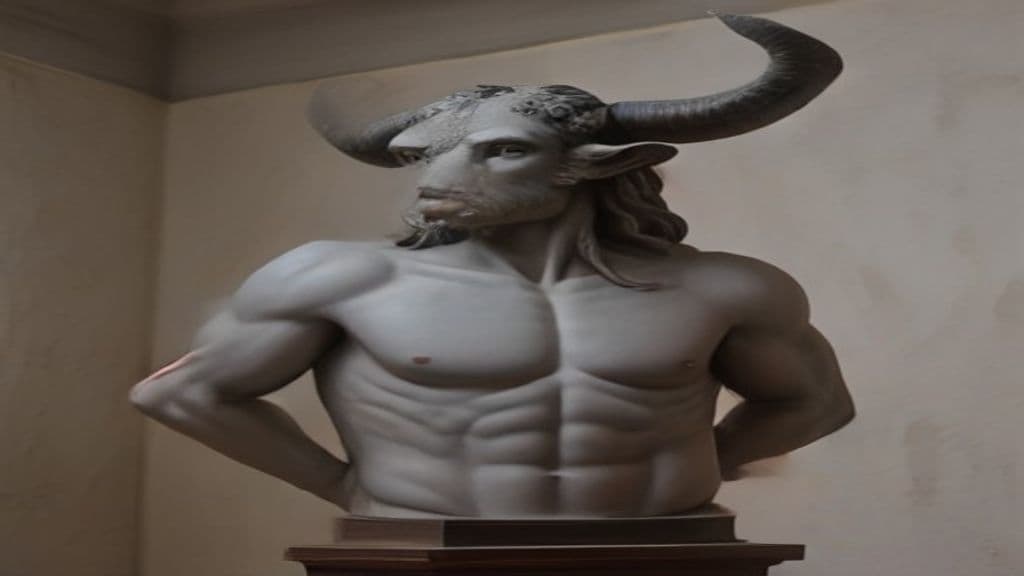
A singular monstrous offspring in classical Greek myth, born of a union between a human woman and a bull, confined at the center of Daedalus's Labyrinth at Knossos and fed on human tribute until slain by the hero Theseus with Ariadne's aid.

Minyans
Lesser

Minyans

A named people and ancestral lineage in Greek literary tradition, associated especially with Orchomenus in Boeotia and the eponymous founder Minyas; in modern scholarship the term is also applied (controversially) to a Middle Helladic pottery horizon called 'Gray Minyan ware.'

Minyas
Minor Spirit

Minyas

Minyas is a legendary founder-king and eponymous ancestor of the Minyans, traditionally credited as founder of Orchomenus in Boeotia. He functions in Greek myth as a genealogical and dynastic progenitor rather than as a supernatural being.

Misenus
Lesser

Misenus

Misenus is a figure from Greek and Roman mythic narrative traditions, chiefly known from Virgil's Aeneid as Aeneas's trumpeter whose death and required burial become a ritual hinge for the hero's descent to the Underworld. The name also appears elsewhere in Greek tradition as a friend of Odysseus.

Mneme
Lesser

Mneme

Mneme (Ancient Greek: Μνήμη, literally 'Memory') is recorded by Pausanias as one of a local triad of Muses at Mount Helicon (with Aoede and Melete) in Boeotian tradition; the name personifies memory within the Muse category and was later superseded in wider tradition by the canonical nine Muses.

Mnemosyne
Ancient

Mnemosyne

In ancient Greek myth and cult Mnemosyne (Μνημοσύνη) is a Titaness-personification of memory who functions as the ancestral source of the nine Muses and as a presiding power in poetic invocation and certain initiatory/oracular rites. In Hesiodic and classical practice she underwrites poetic authority; in Orphic and oracle contexts she is associated with waters of memory that contrast with Lethe.

Mnesimache
Lesser

Mnesimache

Mnesimache (Ancient Greek: Μνησιμάχη) is a minor mortal figure in Greek mythic genealogies—an Olenian princess, daughter of King Dexamenus—noted chiefly as a victim of a forced betrothal/near-abduction by the centaur Eurytion and as a genealogical link (mother of Diores in one tradition; possibly named as mother of Menestheus in another variant). Her rescue by Heracles places her within Heraclean narrative cycles.

Moirai
Ancient

Moirai

In ancient Greek religion and mythology, the Moirai (μοῖραι) are a triad of personified destinies who spin, allot, and cut the thread of life. They function as apportioners of fate, ensuring that both mortals and gods live out the portions assigned by the universe's ordering principles.

Molus of Aetolia
Minor Spirit

Molus of Aetolia

Molus is a minor figure recorded in Greek mythic genealogies as a member of an Aetolian royal family. The available source treats him as a legendary mortal used to organize lineage rather than as an active supernatural agent or cult figure.

Molus of Crete
Lesser

Molus of Crete

Molus is a figure in Cretan mythic genealogy, presented in surviving sources as a son in the house of Minos and chiefly significant as the father of Meriones, the Cretan warrior at Troy. He is also attested in one account as the subject of a ritual image shown at a Cretan festival: an image of a headless man called Molus, linked to a tradition that he attempted to violate a nymph and was later found decapitated.

Monopod
Lesser

Monopod

A class of mythological humanoid peoples described in classical, medieval, Chinese, and Norse sources as having a single central leg with a very large foot. Treated in literature and maps as a wondrous race inhabiting the margins of the known world rather than as a lone monster.

Monster (tradition)
Greater

Monster (tradition)

A broad cultural category for imagined creatures that transgress natural and social norms. In literature, mythology, religion, and popular culture, monsters mark otherness, danger, or omenatic significance rather than denoting a single, uniform being.

Mopsus
Lesser

Mopsus

Mopsus is a legendary seer of the Graeco-Anatolian tradition known from archaic Greek poetry and later Anatolian and Phoenician inscriptions. He appears in myth as a prophetic figure—sometimes son of Manto or of Apollo—and in epigraphic records as an eponymous ancestor (Muksa/Muksos) connected to early Iron Age dynastic houses in southern Anatolia.

Moritasgus (Apollo Moritasgus)
Lesser

Moritasgus (Apollo Moritasgus)

Moritasgus is a Celtic epithet for a healing deity attested in four inscriptions at Alesia. In two of those inscriptions he is explicitly identified with the Greco‑Roman god Apollo, and his consort is named as the goddess Damona.

Mormo
Lesser

Mormo

A Greek child-eating bogeywoman used to frighten children into obedience, sometimes depicted as a shape-shifting female phantom who bit naughty children.