Greek Supernatural Beings

1796 documented Greek supernatural beings from the Evil Eye grimoire, including 1106 lesser and 335 minor spirit in power tier.

page 22 of 30

Leucophrye
Lesser

Leucophrye

Leucophrye is a mythological human figure in Greek narrative tradition, attested as the daughter of Mandrolytus who, during a siege, fell in love with an attacking commander (named Leucippus in at least one account) and betrayed her city. She functions as a literary archetype exemplifying the motif of a daughter who betrays kin or polis for an amorous enemy; sources treat her as a narrative exemplar rather than a supernatural being.

Leucosia
Lesser

Leucosia

Leucosia is a name applied in the source corpus to multiple distinct referents: a possible name for one of the Sirens of Greek mythology (a sea-associated, singing female figure), a modern taxonomic genus of small 'pebble' crabs (family Leucosiidae), and several modern/pop-cultural uses. The supplied sources do not preserve a standalone ancient narrative or ritual corpus specifically attached to a Siren named Leucosia.

Libya (daughter of Epaphus)
Lesser

Libya (daughter of Epaphus)

A mythic eponymous ancestress in Greek and Roman genealogical tradition: a daughter of Epaphus whose name personifies the land/ethnonym Libya. In some variant sources she is said to be beloved of Poseidon and, in those accounts, mother of progenitors such as Agenor and Belus. Surviving testimonia treat her primarily as an etiological genealogical figure rather than an active cultic or supernatural agent.

Lichas (Spartan)
Greater

Lichas (Spartan)

A mortal human figure in Greek tradition, associated with ancient Sparta. He demonstrated leadership and diplomatic skills during the Peloponnesian War. (Note: 1. Power tier should be Primordial, as Lichas is described as a mortal human figure in Greek tradition with significant impact on historical events. 2. Abilities description can be expanded to include)

Lilaea
Lesser

Lilaea

Lilaea (Ancient Greek: Λίλαια / Lilaia) is attested in classical and modern reference sources as (1) a Naiad — a freshwater nymph of a named spring in Phocis, daughter of the river-god Cephissus — and (2) separately, as the name of a Maenad recorded on a vase painting. The name is also preserved in toponyms (the ancient polis and modern village Lilaea/Lilaia) and in later namesakes (asteroid 213 Lilaea).

Liminal deity (category)
Greater

Liminal deity (category)

A scholarly category of gods and divine figures whose proper sphere is thresholds, borders, and transitions — places and moments where one state gives way to another. The term aggregates culturally specific deities (e.g., Janus, Hecate, Charon, Cheng'huang, Menshen, Jangseung, Bes) that function as guardians, psychopomps, or mediators at crossings of space, time, or condition.

Limnades
Lesser

Limnades

Limnades (Ancient Greek: Λιμνάδες) are classically attested nymphs associated with lakes in ancient Greek literature. They function as the lake-dwelling subgroup within the broader taxonomy of nymphs and are referenced as resident or offspring-attendants of named lake deities such as Bolbe.

Limnaee
Lesser

Limnaee

Limnaee (also rendered Limnaíē or Limnaee) is a type of naiad — a freshwater nymph in Greek tradition — conceived as a female nature-spirit presiding over localized bodies of fresh water such as springs, wells, brooks and fountains. She is presented in sources as a place-bound guardian-personification of a water-site, distinct from river-gods who embody whole rivers.

Linus of Thrace
Minor Spirit

Linus of Thrace

Linus of Thrace (Λῖνος) is a mythic Greek culture-bringer associated with the origin and exemplification of the linos (a dirge/threnody) and with early lyric song, music-teaching, and the transmission of letters and instruments. He is variously described as son of a Muse and a god and is the focal figure of annual commemorative lament and local tomb-claims in multiple Greek locales.

Lion of Cithaeron
Lesser

Lion of Cithaeron

A place-linked man-eating lion of classical Greek myth associated with Mount Cithaeron and nearby lowlands whose depredations against cattle and people provoke heroic hunts (variously by Heracles or by the local hero Alcathous) and, in some local traditions, political rewards and temple-building as commemoration.

Liriope
Minor Spirit

Liriope

Liriope is primarily attested in the supplied sources as (a) a minor mythological figure — a nymph named in Ovid’s Metamorphoses as the mother of Narcissus by the river-god Cephissus — and (b) as a modern scientific name reused for genera in botany and zoology (and for an asteroid). The provided material does not document Liriope as an active, continuing supernatural agent with associated rituals or powers.

Lixus
Minor Spirit

Lixus

Lixus (Ancient Greek: Λίξος) is a named figure in Greek mythic genealogies, recorded as an Egyptian prince, one of the sons of King Aegyptus by the naiad Caliadne. He appears in literary name-lists alongside multiple brothers and is otherwise unattested in surviving narrative, cultic, or ritual material in the supplied sources.

Locrus
Lesser

Locrus

Locrus (Ancient Greek: Λοκρός) is not a single consistent supernatural being but a name attached to several mytho-historical figures in Greek tradition who serve as eponymous ancestors/founders of the Locrians or localities; in one tradition a Locrus, after death, appears as a ghost and commands the foundation of a city. Accounts are fragmentary and vary by source.

Lotis
Minor Spirit

Lotis

Lotis is a named nymph in Greek mythology attested in modern reference works and represented in visual art, most notably in scenes pairing her with the fertility god Priapus. Surviving references in the supplied sources identify her as a mythic female nature-being but provide no extended ancient narrative, ritual tradition, or etymology.

Lucifer
Ancient

Lucifer

A multilayered figure whose core identity in the cited sources is the planet Venus as the brilliant morning star (Latin lucifer, 'light-bringer' / Hebrew hêlêl, 'shining one'). In later Jewish and especially Christian exegesis the Isaiah image Helel ben Shachar is reinterpreted as a mythic fall motif and becomes associated with a rebellious heavenly being identified with the adversary; this development overlays the earlier astronomical and poetic personification.

Luxovius
Lesser

Luxovius

Luxovius (Latinized Luxovios) is a local Gallo‑Roman god associated with the waters of Luxeuil (the sanctuary at Luxeuil‑les‑Bains). He is attested in votive inscriptions as a place‑bound healing/spring deity and is paired in the cult with a female consort, Bricta (Brixta). Etymology links his name to a Proto‑Indo‑European *leuk‑ 'light/whiteness', suggesting combined associations of light and curative waters in his character.

Lycaon (king of Arcadia)
Lesser

Lycaon (king of Arcadia)

Lycaon is a legendary early king of Arcadia in Greek myth, portrayed as an archetypal impious ruler whose filicidal crime and attempt to deceive Zeus function as a moral and etiological tale linking Arcadian genealogy to mythic origins.

Lycaon of Arcadia
Greater

Lycaon of Arcadia

Lycaon is a mythic king of Arcadia who, in the commonly attested classical version, murders and cooks his son to test Zeus's omniscience and is by divine retribution transformed into a wolf; the tale functions as an etiological and moral narrative about impiety and metamorphosis in Greek myth.

Lycastus
Lesser

Lycastus

Lycastus (Greek Λύκαστος) is a personal name attested in Greek mythic and geographic tradition for several human figures and an eponymous place: a Cretan king in the Minos genealogies, an Arcadian twin/hero (son of Ares and Phylonome) exposed and suckled by a she‑wolf, a lover in a sacrificial tale, and an autochthonic eponym for a town in Crete.

Lycomedes
Lesser

Lycomedes

Lycomedes is attested in the provided sources as a human figure from Greek myth — the king of the Dolopians on the island of Scyros during the Trojan War — and as a modern reuse of the name in biological taxonomy and as an online contact/handle. The supplied material contains no evidence treating Lycomedes as a supernatural spirit.

Lycurgus (son of Aleus)
Lesser

Lycurgus (son of Aleus)

A legendary Arcadian king of Tegea known chiefly from genealogical notices in classical sources. Presented in the supplied materials as a mortal member of Aleus' family who functions within mythic kinship networks (brother to figures tied to the Argonaut cycle and father to named descendants such as Ancaeus), rather than as a divine or chthonic being.

Lycurgus of Arcadia
Greater

Lycurgus of Arcadia

Lycurgus (Anc. Greek: Λυκοῦργος) is a legendary king of Tegea in Arcadia celebrated in Greek epic and local tradition for ambushing and killing the famed warrior Areithous. He is remembered in Arcadian ritual as the honoree of the Moleia feast and figures in variant genealogies and succession accounts.

Lycurgus of Thrace
Lesser

Lycurgus of Thrace

Lycurgus (Lykourgos) is a legendary king of the Edoni in Thrace, son of Dryas, remembered in Greek mythic tradition for his opposition to the arrival or cult of Dionysus. Classical and modern reference sources record episodes in which he persecutes Dionysus' followers and is punished by the god, and other traditions place him in chronologies of the mythic past.

Lycus
Lesser

Lycus

Lycus (Ancient Greek: Λύκος, lit. 'wolf') is not a single supernatural being but an ancient Greek personal name and toponym applied to multiple mythological human figures (notably regents and rulers in Theban cycles) and to several rivers across the classical world. The extant sources present Lycus primarily as mortal mythic actors or as geographic names rather than as an independent class of spirit or creature.

Lynceus
Lesser

Lynceus

Lynceus is a recurring proper name in Greek myth borne by several distinct human figures (and once by a hound) rather than a single supernatural class. Bearers of the name appear across heroic and founding narratives — notably as a son of Aegyptus who survives the Danaid massacre and becomes king of Argos, and as Lynceus son of Aphareus, an Argonaut noted for his role as lookout of the Argo.

Lynceus of Argos
Lesser

Lynceus of Argos

Lynceus of Argos is a mythic human figure in Greek legendary genealogy: a prince of Egypt, son of Aegyptus, who marries the Danaid Hypermnestra and thereby begins the Danaid dynasty that, in mythic descent, leads to Perseus. He is presented as a mortal king of Argos who succeeds Danaus on the throne and functions as an ancestor/founder figure in Argive dynastic legend.

Lyrcus
Lesser

Lyrcus

Lyrcus (Ancient Greek Λύρκος) is a mythological human figure in Greek tradition known from two principal strands: a Hellenistic romantic episode preserved by Parthenius (Lyrcus son of Phoroneus) and a local eponymic tradition (Lyrcus son of Abas) that explains the name Lyrceia. He appears as an eponymous founder/hero and as a mortal actor in stories of exile, marriage, oracular consultation, and dynastic recognition; no supernatural powers or ritual prescriptions directed specifically at him are recorded in the cited sources.

Lysianassa
Minor Spirit

Lysianassa

Lysianassa (Ancient Greek: Λυσιάνασσα) is a personal name borne by multiple figures in Greek myth, including one of the Nereids (sea-nymphs) and several mortal princesses who appear in genealogical traditions (an Egyptian-linked consort of Poseidon, a Sicyonian princess who married into Argive royalty, and a daughter of Priam). The name functions as an individual personal/epithet across different local myths rather than denoting a single type of supernatural being.

Lysidice
Lesser

Lysidice

Lysidice (Greek: Λυσιδίκη) is a minor mortal figure in Greek mythic genealogies, attested as a daughter of Pelops and Hippodamia and appearing as an ancestress in Pelopid family trees (for example as mother of Hippothoe by Mestor and as a kin‑link to Alcmena). She is preserved in classical genealogical summaries rather than in independent narrative or cultic contexts.

Lysinomus
Lesser

Lysinomus

Lysinomus (Ancient Greek: Λυσίνομον) is a Mycenaean prince in Greek mythic genealogy, one of the sons of King Electryon of Mycenae and Anaxo. He is recorded as having been killed in the feud between Electryon’s sons and the sons of the Taphian king Pterelaus; his death functions etiologically in the succession-disputes that precede the generation of Heracles.

Lysithea
Minor Spirit

Lysithea

Lysithea is a name applied to multiple unrelated referents in classical myth, modern astronomy, biological taxonomy, and contemporary fiction. In Greek mythic genealogies she appears as a daughter of Oceanus and is listed among lovers of Zeus; separately, Lysithea is the name of an irregular satellite of Jupiter, a genus of red algae, and a modern fictional character in the video game Fire Emblem: Three Houses.

Macar / Macareus
Lesser

Macar / Macareus

Macar (Ancient Greek: Μάκαρ; Latin Macareus) is a personal name borne by multiple distinct mortal figures in Greek myth—kings, princes, companions, and eponymic ancestors—rather than a single supernatural species. The name literally means "happy, blissful," and its bearers appear in varied local genealogies, foundation myths, and heroic narratives (e.g., sons of Lycaon, a Heliad of Rhodes, a Lapith warrior, and a companion of Odysseus).

Macareus (name-bearers in Greek myth)
Lesser

Macareus (name-bearers in Greek myth)

Macareus (Macar, Macareas) is an onomastic cluster: a name borne by several distinct mortal personages in Greek myth (e.g., a son of Lycaon, a son of Aeolus, a Heliad, island kings, a Lapith warrior, and a companion of Odysseus). The attested figures are narrative and genealogical characters rather than a single coherent supernatural being.

Maenad
Greater

Maenad

In ancient Greek religion and myth, maenads (Ancient Greek: μαινάδες, mainádes) are the female followers and ritual participants of Dionysus who enter ecstatic frenzy to commune with the god. They function both as organized cult members in Dionysian worship (the thiasus) and as mythic agents through whom Dionysus' power—sometimes restorative, sometimes destructive—is manifest.

Maeon
Lesser

Maeon

Maeon is a recurring personal name in Greek and Roman epic and tragic tradition applied to several distinct mortal figures (Theban, Trojan, Rutulian and other local variants). The name does not denote a single supernatural species but appears across multiple genealogies and episodic narratives where each Maeon’s parentage, role, and fate vary by source.

Magnes
Lesser

Magnes

Magnes (Ancient Greek: Μάγνης, Magnēs, literally 'the magnet') is a personal name applied to several mythic men in the Greek tradition. The name functions chiefly as an eponymic and genealogical marker (not as a recurring supernatural class), most notably for a Thessalian prince who became the eponymous first king of Magnesia; other attestations include a son of Argos and a possibly mythological 'shepherd' later linked to the discovery of magnetism.

Magnes the shepherd
Minor Spirit

Magnes the shepherd

Magnes the shepherd is a legendary etiological figure credited in classical and medieval sources with the discovery of magnetic ore when the iron parts of his shoes and staff adhered to a rock. He functions as an eponymous origin-figure linking a person or place-name to the term for magnet and the recognition of magnetism.

Maia
Lesser

Maia

Maia is a figure of ancient Greek myth: the eldest of the seven Pleiades, a mountain-nymph (oread) daughter of Atlas and Pleione traditionally associated with Mount Cyllene in Arcadia, and the mother of the god Hermes. She functions in myths as a maternal and nurturing foster-figure and as an aetiological link between terrestrial narratives and the Pleiades star-cluster.

Makedon
Lesser

Makedon

Makedon (Μακεδών; also Makednos, transcribed Macedon) is the eponymous ancestor and founding progenitor of the Makedones (ancient Macedonians) in fragmentary ancient Greek genealogical narratives. He functions as a legendary first man in etiological accounts that explain the origin of the Macedonian ethnonym and identity.

Mandrake (plant/tradition)
Lesser

Mandrake (plant/tradition)

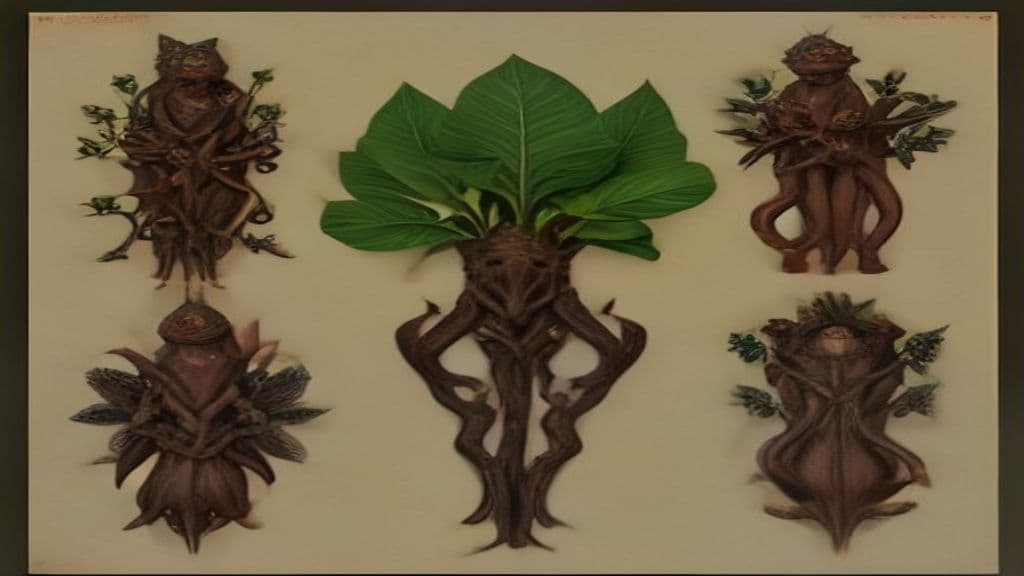
A human-shaped root (primarily Mandragora spp.) treated in classical and later European tradition as a toxic, psychoactive pharmakon whose anthropomorphic form and powerful alkaloids generated ritualized harvesting rules and medicinal prescriptions. It is a botanical substance invested with magical and medical significance rather than an independently volitional spirit in the provided sources.

Mantineus
Lesser

Mantineus

Mantineus (Greek: Μαντινεύς) is a mythic human figure of ancient Greek tradition: an Arcadian prince, one of the fifty sons of King Lycaon, and an eponymous founder-figure credited with the origin of the city Mantineia. He appears in the Lycaon cycle as a member of a household punished by Zeus for sacrilege and is also preserved in local foundation-memory and inscriptions linking the name to civic places.

Manto (daughter of Teiresias)
Lesser

Manto (daughter of Teiresias)

Manto is a named figure in classical mythological lists identified in the supplied sources as a daughter of the seer Teiresias. The provided materials record her genealogical identity but do not supply narratives, descriptions, or ritual material concerning her.

Mares of Diomedes
Greater

Mares of Diomedes

A herd of man-eating horses belonging to the Thracian chieftain Diomedes, famed as the eighth labour of Heracles. They are monstrous animals whose carnivorous habit and violence against guests make them a canonical threat in Greek heroic narrative.

Marpessa
Lesser

Marpessa

Marpessa (Ancient Greek: Μάρπησσα, romanized Márpēssa) is a personal and place name in Greek myth and local memory applied to several distinct mortal figures — an Aetolian princess, an Amazon queen (Marpesia), a Theban woman linked to the Seven against Thebes, a Tegean woman who led city defense, and a toponym on Paros. Sources treat these as discrete legendary/historical-personal identities rather than as a single supernatural being.

Marsyas
Lesser

Marsyas

Marsyas is a satyr/silenus of Phrygian myth celebrated as an expert aulos-player who challenges Apollo and is ultimately punished (flayed) for that contest. He is associated with springs and rivers around Celaenae/Kelainai and with older chthonic/Mother-Goddess cultic strands (Rhea/Cybele) in Greek tradition.

Maschalismos (Undead Entity)
Greater

Maschalismos (Undead Entity)

In Greek tradition, Maschalismos refers to the practice of rendering the dead unable to rise or haunt the living. (Note: - Power tier: Lesser (as it's a local, regional concept rather than a powerful deity-level entity) - Abilities: The source material doesn't support specific details about its powers; should be rephras)

Mavroneri
Primordial

Mavroneri

A metaphorical entity associated with the River Styx, serving as a boundary between the mortal world and the underworld. (Note: 1. Power tier is incorrect; Primordial is typically associated with cosmic entities, but Mavroneri's abilities are related to a specific geographical location (the River Styx) rather than cosmological)

Meander
Minor Spirit

Meander

A meander is a geomorphological feature: a series of regular sinuous curves in the channel of a stream or river. The term derives from the river name Maiandros (Greek Μαίανδρος) and in classical usage came to denote anything winding or convoluted.

Mecisteus
Lesser

Mecisteus

Mecisteus is a mortal heroic figure from ancient Greek tradition attested in genealogical lists and epic-cycle episodes. He appears in connections with the Theban cycle (Seven Against Thebes), Trojan War narratives, and Argive genealogies, primarily as a warrior and ancestor rather than a developed individual character.

Medea
Greater

Medea

Medea is a mythic Greek woman of royal lineage associated with practiced pharmakeía (drugcraft) and ritual knowledge; in epic she functions as the helper who enables Jason's success, and in tragedy she becomes a transgressive avenger whose actions include murder. Sources present her variably as mortal with divine ancestry (granddaughter of Helios) and as a skilled worker in magical substances and rites often linked in literature to Hecate.

Medesicaste
Lesser

Medesicaste

Medesicaste is the name borne by two distinct mortal women in the Trojan royal house in classical Greek myth. One is a daughter of Laomedon and sister of Priam who, with her sisters, is said in some traditions to have set fire to the Greek ships after the Trojan War; the other is an illegitimate daughter of Priam who became the wife of Imbrius.

Medon
Lesser

Medon

Medon (Μέδων) is a Greek personal name attested across mythic, epic, and civic sources for multiple distinct mortal figures (herald, warriors, local notable) and once for a centaur; it functions as a name-cluster rather than a single supernatural being. The name also recurs in modern taxonomic and toponymic usages, which are homonymous transfers rather than indications of a unified mythic entity.

Medus
Lesser

Medus

Medus (Greek Μῆδος / Μήδειος) is a legendary Greek prince, usually described as a son of Aegeus and Medea (with variant accounts making him son of Jason). In myth he functions as an eponymous founder and conqueror associated with Media/Ecbatana and as an agent of dynastic vengeance in Colchis; he is presented as a mortal heroic-age figure rather than a supernatural being.

Medusa (the Gorgon)
Greater

Medusa (the Gorgon)

Medusa, also called Gorgo or the Gorgon, is one of the three Gorgons in ancient Greek mythology. She is described as a mortal woman whose hair is composed of living snakes and whose gaze turns onlookers to stone; she is usually named as a daughter of the sea-associated figures Phorcys and Ceto and sister to Euryale and Stheno.

Megamede
Lesser

Megamede

Megamede (Ancient Greek: Μεγαμήδη) is a mortal woman attested in Greek mythographic genealogies as daughter of Arneus, wife of King Thespius of Thespiae, and in one tradition the mother of the fifty daughters who consorted with Heracles. She is presented solely as a human royal figure in the sources rather than as a supernatural being.
Meganeira
Minor Spirit

Meganeira

Meganeira (Μεγάνειρα, Megáneira) is a personal name borne by mortal women in Greek mythic genealogies and narratives. The name, glossed as 'great lady' or 'woman of high status,' appears attached to several human figures who function as daughters, wives, or mothers within Arcadian, Eleusinian, and local Parnassian stories.

Megapenthes (son of Menelaus)
Lesser

Megapenthes (son of Menelaus)

Megapenthes (Ancient Greek Μεγαπένθης) is a mortal figure in Greek mythic-historical tradition, identified as an illegitimate son of Menelaus of Sparta by a bondwoman. He appears in Homeric household scenes in the Odyssey and in later genealogical summaries concerning Spartan dynastic arrangements; he has no supernatural attributes in the supplied sources.

Megara
Minor Spirit

Megara

Megara is attested in the provided sources in two distinct, non-supernatural senses: (1) as an historic Greek city and polis in West Attica with two harbors and a record of colonization and political history; and (2) as a mortal mythic figure, the Theban princess—eldest daughter of King Creon—who is named in tradition as the first wife of Heracles. The corpus contains no evidence treating Megara as an autonomous supernatural spirit, deity, or class of spirits.

Megareus (Menoeceus)
Lesser

Megareus (Menoeceus)

Megareus (Greek Menoeceus, Μενοικεύς) is a mortal warrior of Thebes in the Greek heroic-age cycle. Surviving accounts present him as a large-statured combatant who came from Onchestus to aid Nisus of Megara and was slain during Minos' capture of Megara; he appears as a named figure within Theban and Theseidic genealogical narratives rather than as a supernatural being.

Megareus of Onchestus
Lesser

Megareus of Onchestus

Megareus of Onchestus is a mytho-historical king and warrior-ally from ancient Greek tradition associated with Onchestus in Boeotia and, in some accounts, with Megara as an eponymous founder. He appears in narratives of the Cretan invasion led by Minos, where he comes from Onchestus to aid Nisus and is slain in the conflict; Pausanias records a tomb to him at Megara.