Greek Supernatural Beings

1796 documented Greek supernatural beings from the Evil Eye grimoire, including 1106 lesser and 335 minor spirit in power tier.

page 5 of 30

Amphimachus
Lesser

Amphimachus

Amphimachus (Ancient Greek Ἀμφίμαχος) is an ancient Greek personal name borne by several mythological mortals — warriors, princes, kings, and suitors — attested across epic and genealogical traditions of the heroic age rather than a single supernatural entity. The name, derived from ἀμφί (amphi) 'around' and μάχη (machē) 'battle', marks a martial character and recurs in Homeric, mythographic, and local genealogical accounts.

Amphimachus I of Elis
Lesser

Amphimachus I of Elis

Amphimachus (Ancient Greek: Ἀμφίμαχος) of Elis is a mortal heroic leader in the Homeric and later mythographic tradition. He is named as one of the Epeian captains who brought ships to the Trojan War and is slain in battle by Hector in the Iliad; his identity is chiefly genealogical and martial, tied to Elis and its local aristocratic networks.

Amphimachus of Caria
Minor Spirit

Amphimachus of Caria

A mortal Homeric leader: son of Nomion and co-captain (with his brother Nastes) of the Carian contingent allied with Troy in the Trojan War tradition. Attested in Homeric catalogue material and later commentary; sources record a variant tradition in which one of Nomion's sons was slain and stripped of gold by Achilles, with disagreement over whether that was Amphimachus or Nastes.

Amphimachus of Mycenae
Lesser

Amphimachus of Mycenae

Amphimachus of Mycenae is a figure in Greek mythic genealogies recorded as a Mycenaean prince, identified in the sources as a son of King Electryon and Anaxo. He appears only as a named member of the Perseid-descended dynastic network and is attested in genealogical lists rather than in independent narrative episodes.

Amphimedon
Minor Spirit

Amphimedon

In Homer's Odyssey, Amphimedon (Ancient Greek: Ἀμφιμέδων) is an Ithacan, son of Melaneus, one of the suitors of Penelope who fights in Odysseus's hall, is killed during the slaughter of the suitors, and (within the Homeric narrative) later appears among the dead in the Underworld to recount the events of that slaughter. The same name is also used in modern biological taxonomy for a genus of sponges; that referent is distinct.

Amphinome
Lesser

Amphinome

Amphinome is an ancient Greek proper name attested for multiple distinct female figures in myth — chiefly a Nereid (sea-nymph) and several mortal women (including a wife of Aeson and one of the Peliades). The name is also reused in modern taxonomic and creative contexts (annelid genus, butterfly species, and contemporary fantasy), but these are later reuses rather than continuations of a single mythic being.

Amphinomus
Minor Spirit

Amphinomus

Amphinomus (Ἀμφίνομος) is a personal name borne by several human figures in Greek tradition, most notably a princely suitor of Penelope in Homer's Odyssey; other bearers appear in local genealogies, a Catanian civic legend, and a later historical record as a geometer. The sources treat Amphinomus as mortal personages rather than a supernatural being.

Amphion
Lesser

Amphion

Amphion is a figure (or set of figures sharing a name) in Greek myth best known as the son of Zeus and Antiope, twin brother of Zethus, husband of Niobe, and famed in some traditions for using music to raise the walls of Thebes. The name also appears for several minor mythic characters (an Argonaut, an Achaean at Troy, a centaur), indicating multiple onomastic uses in the Greek corpus.

Amphion and Zethus
Lesser

Amphion and Zethus

Amphion and Zethus are twin brothers of Greek myth who function as the culture‑founding heroes of Thebes: Amphion the musician and Zethus the hunter/herdsman who together conquer Thebes, build the Cadmea, and rule jointly. Their story links human founders with gods (commonly Zeus as father; Hermes, Apollo and Artemis as intervening deities) and ends in later family tragedy surrounding Niobe and divergent accounts of the brothers' deaths.

Amphirho
Lesser

Amphirho

Amphirho (Ancient Greek: Amphirho) is attested in the supplied sources as one of the Oceanids — daughters of the Titans Oceanus and Tethys — and is named in a brief mythological taxonomy entry. The name is said in that source to possibly mean "surrounding-river" (from amphi- and rhoos). Modern uses of the form "Amphiro/Amphirho" appear in the provided sources as taxonomic and commercial names (e.g., Wikidata taxon entry, a butterfly species, and a company/product), but those uses are not presented in the supplied materials as folkloric attestations.

Amphisbaena
Lesser

Amphisbaena

A legendary two‑headed serpentine or lizard‑like marvel from Greco‑Roman and medieval bestiary traditions, described with a functional head at each end and noted for moving in either direction without turning. It appears in poetry, natural histories, and folk remedies, and its parts are recorded as materia magica in sources such as Pliny and medieval bestiaries.

Amphithea
Lesser

Amphithea

Amphithea (Ancient Greek Ἀμφιθέα) is a recurring personal name in ancient Greek mythic genealogies, borne by several mortal women who function as wives, mothers, and sisters within Argive, Nemean, Odyssean, and Aeolian family networks. She is not presented in the sources as a supernatural being but as a human figure whose primary narrative role is genealogical linkage among heroic lineages.

Amphithemis
Lesser

Amphithemis

Amphithemis (Ancient Greek: Ἀμφίθεμις) is a name applied in Greek literary tradition to at least two distinct mythic figures: a semi-divine progenitor, son of Apollo and Acacallis connected with Libya and eponymy (also called Garamas), and, in a later poetic treatment by Nonnus, a centaur among Dionysus' retinue. The figure appears in genealogical material (Apollonius/Hyginus tradition) and in Late Antique epic (Nonnus' Dionysiaca).

Amphithoë
Lesser

Amphithoë

Amphithoë is a named Nereid in Greek mythology, listed among the fifty daughters of Nereus and the Oceanid Doris and identified in modern summaries as the Nereid associated with sea currents. She is attested as a member of the collective of sea-nymphs but is not the subject of independent myths in the supplied sources.

Amphitrite
Ancient

Amphitrite

Amphitrite is an ancient Greek sea-divinity, queen of the sea and consort of the sea-god Poseidon; in poetry her name is often used metonymically for the sea itself. She is counted among the daughters of Nereus and Doris in Hesiod and in some accounts is also listed among the Oceanids, and appears chiefly in mythic narrative and iconography rather than as an independent civic cult figure.

Amphitryon
Minor Spirit

Amphitryon

Amphitryon is a mortal nobleman of Greek mythic-historical tradition: son of Alcaeus of Tiryns, husband of Alcmene, and the acknowledged stepfather of Heracles. He appears in heroic-age narratives as a warrior, dynastic actor, and the human whose identity is impersonated by Zeus in literary treatments that explore paternity and identity.

Amphoterus (son of Alcmaeon)
Lesser

Amphoterus (son of Alcmaeon)

Amphoterus (Ancient Greek Amphoteros) is a figure in Greek heroic genealogy, son of Alcmaeon and Callirrhoe. He and his brother Acarnan are reported to have 'suddenly become grown-up' in order to avenge their murdered father and appear in accounts tied to the Epigoni cycle and local traditions around Psophis and Delphi.

Ampycus (Ampyx)
Lesser

Ampycus (Ampyx)

Ampycus (also Ampyx/Ampyce) is a name borne by several related mortal figures in Greek myth: chiefly a father of seers (notably Mopsus), and in variant traditions a local eponym, a priest of Demeter, and a Lapith warrior. He functions as a genealogical marker and occasional ritual or martial actor within heroic-age narratives rather than as an independent supernatural being.

Ampyx
Minor Spirit

Ampyx

Ampyx (Ancient Greek Ἄμπυξ, also Ampycus/Ampykos) is a personal name borne by several distinct mortal figures in Greek myth. The name is attached to seers, a priest, warriors, and ancestral/founder figures across different local traditions rather than to a single supernatural species or class.

Amun
Ancient

Amun

Amun is a major ancient Egyptian deity whose name (imn) means 'the hidden one.' Originating as a local Theban tutelary god, he rose to national prominence and was syncretized with the sun‑god Ra (Amun‑Ra), becoming a transcendent, self‑created creator and king of the gods closely tied to royal legitimation and personal petitionary religion.

Amycus
Lesser

Amycus

Amycus (Ancient Greek: Amykos / Ἄμυκος) is a named figure in Greek myth chiefly attested as the king of the Bebryces of Bithynia who challenges the Argonauts and is slain in single combat by Pollux. The name is also reused in other, distinct contexts (a centaur in other sources; modern onomastic reuses such as an asteroid, a naval ship, and taxonomic names).

Amykos
Lesser

Amykos

Amykos is a semi-divine legendary king of the Bebryces in Bithynia who challenged strangers to lethal boxing matches and was killed by a visiting Argonaut. He is presented in Greek myth as a son of Poseidon and the Bithynian nymph Melia and functions as a localized antagonist encountered during the Argonauts' voyage.

Amymone
Lesser

Amymone

Amymone is a figure in Greek mythic genealogies and local sacred geography, counted among the Danaids and also identified with a spring (a naiad-like eponym) at or near Lerna. She appears in literary, visual, and theatrical traditions as a mortal woman whose encounter with Poseidon produces a named freshwater source and links human lineage to divine patronage.

Amyntor
Minor Spirit

Amyntor

Amyntor (Ancient Greek: Ἀμύντωρ, romanized: Amýntor, lit. 'defender') is a personal name attested in Ancient Greek mythic and genealogical registers. The name is borne by several mortal figures—most notably Amyntor son of Ormenus, a king and father of Phoenix (tutor and companion of Achilles); also by an Amyntor son of Aegyptus killed by his wife Damone, and by an Amyntor son of Phrastor who is an ancestor in a genealogical line.

Amyrus (Ἄμυρος)
Lesser

Amyrus (Ἄμυρος)

Amyrus is a mythic eponym in Greek tradition: a legendary figure after whom a river and town in western Magnesia, Thessaly, were believed to be named. Surviving sources present variant traditions that cast him as a son of Poseidon or as an Argonaut; otherwise he functions chiefly as a place-founding or name-giving ancestor in literary and geographic accounts.

Amythaon
Lesser

Amythaon

Amythaon (Ancient Greek Ἀμυθάων) is a mytho-historical genealogical figure from Greek tradition, presented as a son of King Cretheus and Tyro and a member of the Cretheid dynasty. He functions primarily as an ancestor and local eponym (linked to Amythaonia in Elis) and appears in narratives as a mediator in dynastic affairs (notably interceding with Pelias on Jason's behalf) and as progenitor of seer-families such as the house of Melampus.

Anactor
Lesser

Anactor

Anactor is a Mycenaean prince in the Perseid genealogical cycle of Greek myth, attested as a son of King Electryon and Anaxo. He appears in accounts as one of the brothers slain by the sons of Pterelaus in a dynastic dispute that precedes the generation of Heracles.

Anaideia
Lesser

Anaideia

Anaideia is the ancient Greek personification of shamelessness, described in sources as a companion of Hybris and opposed to Eleos (mercy). She functions as an abstract moral force within Greek mythopoetic thought rather than as a deity with an attested cult or narrative cycle.

Ananke
Primordial

Ananke

In ancient Greek religion and Orphic tradition, Ananke (Ἀνάγκη) is the personification of necessity, compulsion, and inevitability. Presented as a primordial metaphysical power, she functions in cosmogony and moral-philosophical accounts as a binding principle that constrains gods and mortals alike.

Anapus
Lesser

Anapus

Anapus (Ancient Greek: Ἄναπος) is the personification and divine presence of a river called Anapus/Anapo in Greek tradition. Best attested in eastern Sicily where Syracusans worshiped him and depicted him as a young man, the name also appears for a separate river in ancient Acarnania.

Anaxarete
Minor Spirit

Anaxarete

Anaxarete is a mythic mortal woman in Greco-Roman tradition who, according to Ovid's Metamorphoses, scorned a suitor named Iphis and was transformed by Aphrodite into a stone statue preserved at Salamis. Her story is cited as an exemplum of divine punishment for cruel disregard of love and belongs to the broader corpus of metamorphosis myths.

Anaxibia
Minor Spirit

Anaxibia

Anaxibia (Ancient Greek: Ἀναξίβια) is a personal name used for multiple distinct figures in Classical Greek mythic genealogies — chiefly mortal women who serve as wives and mothers in heroic-age lineages, and in one attestation a naiad associated with a river. The name also appears in modern biological nomenclature as a reused classical label.

Anaxiroe
Minor Spirit

Anaxiroe

Anaxiroe is a named female figure in archaic Greek genealogical tradition associated with the ruling families of Elis. In the supplied sources she appears only in relational roles (daughter of Coronus; in some accounts the wife of Epeius) and carries no supernatural attributes, cult, or ritual functions.

Anaxithea
Minor Spirit

Anaxithea

Anaxithea (Ancient Greek: Ἀναξιθέα) is a figure in Greek mythic genealogy identified as one of the fifty Danaides and cited as the mother of Olenus, the eponymous founder/ruler of the city of Olenus in Achaea. Surviving references are strictly genealogical; no independent myths, cult, or deeds are preserved in the cited sources.

Anaxo
Minor Spirit

Anaxo

Anaxo (Ancient Greek Ἀναξώ) is a proper name applied to mortal women in ancient Greek mythic genealogies and narratives. Attested figures named Anaxo appear as a Mycenaean princess—daughter of Alcaeus, wife of Electryon, and mother of Alcmene—and as a young woman from Troezen who was carried off by the hero Theseus. The name carries a lexical sense of female authority in Greek but denotes human participants in dynastic and abduction cycles rather than a supernatural class.

Ancaeus (son of Poseidon)
Lesser

Ancaeus (son of Poseidon)

Ancaeus is a mythic Greek heroic figure, typically described as king of Samos, an Argonaut and an especially skilled helmsman. Often presented as a son of Poseidon, he belongs to the generation of heroes who sailed with Jason in the quest for the Golden Fleece. In the tradition he is a mortal hero (semi-divine by parentage) rather than a deity or monster; he is also frequently confused with another Argonaut named Ancaeus (son of Lycurgus), both of whom share a motif of dying by a boar's tusk.

Anchinoe
Lesser

Anchinoe

Anchinoe (also Achiroë, Anchirrhoë, Ankhinoe) is presented in Greek mythographic sources as a Naiad — a freshwater nymph — identified in some accounts as a daughter of the river-god Nilus and as the wife of King Belus of Egypt, mother of Aegyptus and Danaus. Attestations are genealogical; no independent cult, iconography, or specific deeds are recorded in the surveyed sources.

Anchiroe
Lesser

Anchiroe

Anchiroe (also rendered Achiroë, Anchirrhoë, or Anchinoë) is a figure in Greek myth described as a daughter of the river-god Nilus and the wife of the Egyptian king Belus; she is presented as the mother of Aegyptus and Danaus and, in some accounts, of Cepheus and Phineus. The sources treat her as a genealogical/maternal ancestor rather than an active supernatural agent.

Anchises
Lesser

Anchises

Anchises is a mortal Trojan noble of myth, famed as the father of Aeneas and as a lover of the goddess Aphrodite/Venus; he appears in Greek and Roman epic traditions as a living elder rescued from Troy and later as an advising shade in the Roman underworld vision.

Anchius
Lesser

Anchius

Anchius is attested in modern compilations as a named member of the centaur class in Greek mythic listings. The supplied sources, however, provide no narrative, genealogy, or distinctive attributes for Anchius beyond his classification as a centaur (half‑human, half‑horse).

Ancyor
Lesser

Ancyor

Ancyor (Ancient Greek Ἀγκύορα, transl. Ankyora) is an Arcadian prince in Greek myth, listed among the numerous sons of King Lycaon. He appears in genealogical compilations and myth summaries as one of the brothers who, with their father, offended Zeus and were slain by the god as punishment.

Andraemon
Lesser

Andraemon

Andraemon (Ancient Greek: Ἀνδραίμων, Andraímon) is a personal name borne by several mortal figures in Greek myth and genealogical tradition. The name appears across variant accounts as husbands, fathers, kings, colonists, and a suitor; it functions within heroic genealogies and local foundation stories rather than as a supernatural being.

Androgeos
Lesser

Androgeos

Androgeos (Greek Ἀνδρόγεως, Latin Androgeus) is a personal name borne by mortal figures in classical Greek and Roman literary tradition, most notably a son of Minos and Pasiphaë whose death in mythic narratives precipitates Athenian tribute to Crete. A separate, less-detailed bearer of the name is listed as a Greek soldier present at the sack of Troy in some sources.

Androgeus
Lesser

Androgeus

Androgeus is a mythic human name borne by at least two distinct figures in Classical Greek and Roman tradition: a Cretan prince, son of Minos and Pasiphaë, famed for athletic victories and whose death in some accounts is linked to the Marathonian/Cretan bull; and Androgeos, a Greek soldier named by Virgil in the Aeneid who, during the sack of Troy, mistakes Aeneas and his companions for fellow Greeks. Both are mortal figures woven into larger heroic and epic cycles rather than supernatural beings.

Androktasiai
Lesser

Androktasiai

Androktasiai (Ἀνδροκτασίαι, sing. Androktasia) are plural personifications in ancient Greek poetry that embody manslaughters or the slayings of men in battle. They appear chiefly as named offspring of Eris in Hesiod's Theogony and as elements in Homeric/Hesiodic ekphrasis (the Shield of Heracles), functioning as poetic embodiments of wartime slaughter rather than individualized cult-deities.

Andromache
Minor Spirit

Andromache

Andromache (Ancient Greek Ἀνδρομάχη) is a human figure of ancient Greek literary tradition: the wife of Hector of Troy who exemplifies virtuous fidelity, ritual mourning, and the losses suffered by women in war. She appears in Homeric epic and later classical sources as grieving spouse, captive concubine after Troy's fall, and later queen in post-war narratives.

Andromachus
Minor Spirit

Andromachus

Andromachus (Ancient Greek: Ἀνδρόμαχος, Andromachos) is a personal name borne by multiple historical and mythological figures in classical Greek and later sources — including commanders, rulers, physicians, a grammarian/philologus, and a minor mythic warrior from Knossos. The name literally means "fighting with men" and in the cited traditions denotes human individuals rather than a supernatural being.

Andromeda
Minor Spirit

Andromeda

Andromeda is a mortal princess in ancient Greek myth, daughter of Cepheus and Cassiopeia, who is offered as a sacrificial victim to the sea monster Cetus and rescued by the hero Perseus. Her story links human hubris, divine punishment, heroic rescue, and catasterism—she is later placed among the stars as the constellation Andromeda in some accounts.
Andron
Lesser

Andron

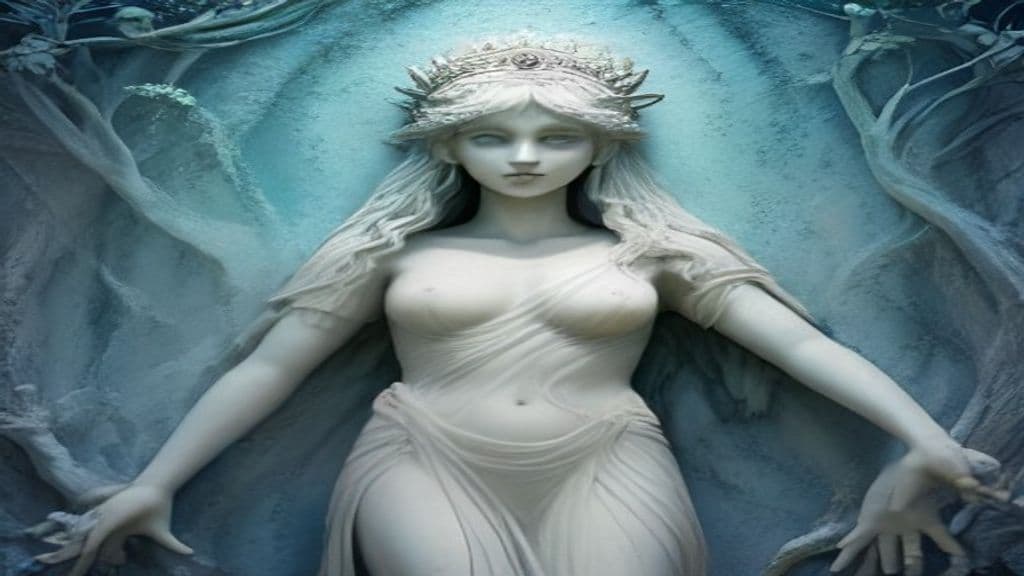
Andron (Ancient Greek: Ἄνδρων) is an ancient Greek personal name attested for multiple historical individuals (writers, a dancer/composer, historians, a sculptor, a physician) in classical biographical and bibliographical sources; it also appears as a modern given name/surname in contemporary records. The provided sources do not present Andron as a supernatural being.
Anemoi
Lesser

Anemoi

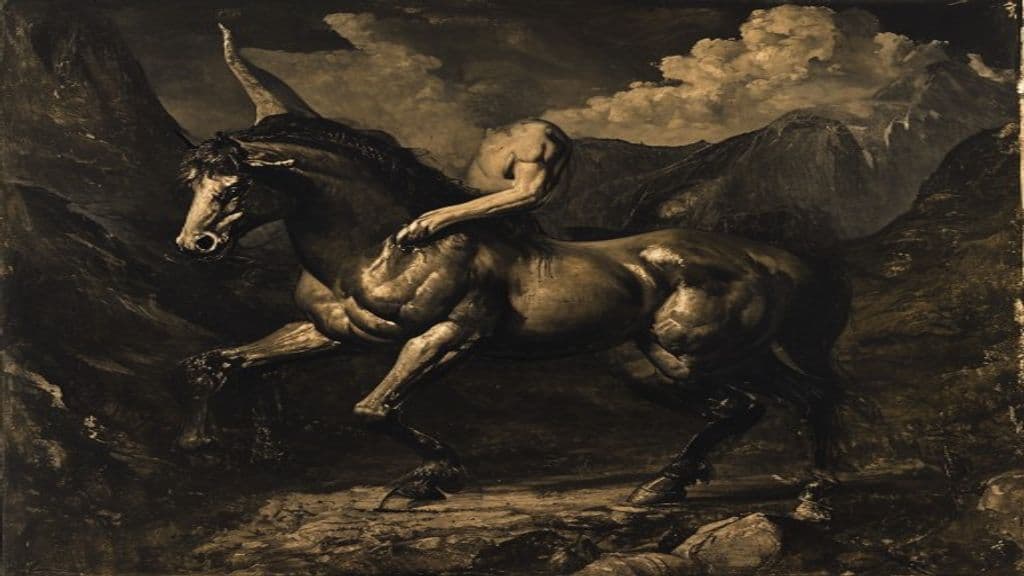
In ancient Greek religion and myth the Anemoi (Ἄνεμοι, 'Winds') are the personified winds: a group of minor wind-gods each associated with a compass direction and with characteristic weather or seasonal phenomena that come from that direction.

Anethus
Minor Spirit

Anethus

Anethus (Ancient Greek Ἄνηθος, Ánēthos) is a fragmentarily attested mythic figure from Greek tradition who is named as a beautiful youth transformed into the dill plant (Anethum graveolens). He functions as an aetiological or name-origin figure preserved only in late-antique grammatical/mythographic commentary.

Angelia
Minor Spirit

Angelia

Angelia (Ancient Greek: Ἀγγελία) is an ancient Greek poetic personification of 'Message', attested in Pindar (5th century BC) as named a daughter of the messenger-god Hermes. She functions in the literary-cosmic vocabulary as the embodiment of a delivered message rather than as a separately attested cultic deity or independent supernatural class.

Angelos (Angelia)
Lesser

Angelos (Angelia)

Angelos (Ancient Greek: Ἄγγελος) or Angelia (Ἀγγελία) is a minor divine figure in Greek myth attested only in a scholion on Theocritus' Idyll 2. She is described as a daughter of Zeus and Hera who was entrusted to and raised by nymphs; the preserved account is fragmentary and breaks off abruptly.

Anguiped
Lesser

Anguiped

The anguiped is an iconographic/divine motif in the Graeco‑Roman world depicting a human upper body with serpentine lower limbs (literally 'snake‑foot'). It functions as a pictorial property or amuletic emblem—found on magical amulets, gems, and in public art—rather than as a single named personal being.

Anigrides
Lesser

Anigrides

The Anigrides are local freshwater nymphs (naiads) of the river Anigrus/Anigros in southern Elis (Triphylia), venerated at a coastal grotto near Samicum. In antiquity they were petitioned by those with skin diseases and associated with healing via prayers, sacrifices, and bathing in the sulfuric springs.

Anippe
Lesser

Anippe

Anippe (Ancient Greek: Ἀνίππης) is a river-nymph (naiad) in Greek mythology, described in mythographic sources as a daughter of the river-god Nilus and as the mother of the Egyptian king Busiris by the god Poseidon. She is attested primarily as a genealogical figure tying Egyptian place-figures into Greek divine genealogy.

Anius
Primordial

Anius

Mortal king and priest of Apollo in Greek mythology, with significant spiritual roles. (Note: * Power tier: Lower than Primordial; considering Anius is described as a mortal king and priest, a more accurate power tier would be Greater or at least Ancient, but likely not Primordial. * Abilities)

Anogon
Lesser

Anogon

Anogon (Ancient Greek: Ἀνώγων), also called Anaxias, is a minor figure in Greek myth attested as a son of Castor (one of the Dioscuri) and Hilaeira, daughter of Leucippus of Messenia. He appears in genealogical notices that connect the Dioscuri to local heroic families rather than in independent narrative cycles.

Antaeus
Greater

Antaeus

Antaeus (Greek: Ἀνταῖος; Berber: Anti) is a mythic giant of Greek and Berber narrative worlds, son of Poseidon and Gaia, whose invulnerability derives from direct contact with the earth. Found in accounts placing him in the interior of Libya or in local North African memory, he challenges travelers to wrestling matches and is defeated by Heracles when lifted off the ground and crushed.

Antaios / Antaeus (tradition)
Lesser

Antaios / Antaeus (tradition)

Antaios (Greek Antaeus; Berber Anti) is a polyvalent name attested as (a) a mythic Berber/Greek figure famed for his wrestling encounter and defeat by Heracles, (b) a Hellenized rendering of an obscure archaic Egyptian deity called Antiwy/Antwey often depicted as paired falcons in early iconography, and (c) a modern German cultural magazine and publisher imprint; the provided sources treat these as distinct referents that share a common name rather than a single coherent supernatural being.