Greek Supernatural Beings

1796 documented Greek supernatural beings from the Evil Eye grimoire, including 1106 lesser and 335 minor spirit in power tier.

page 6 of 30

Antenor
Lesser

Antenor

Antenor is a Trojan elder and counsellor in the epic tradition of the Trojan War. Portrayed in Homeric passages and later literature as a prudent diplomat and host, he advocates negotiation (notably advising the return of Helen) and participates in Trojan public councils and hospitable rites.

Anteros
Lesser

Anteros

Anteros is a minor Greek divine personification of requited or returned love, presented in classical sources as the counterpart and companion of Eros and as an avenger of scorned or unreciprocated affection. He appears both in mythic accounts within Aphrodite's retinue and in at least one civic cultic commemoration in Athens.

Anthelea
Lesser

Anthelea

Anthelea (Ancient Greek: Ἀνθήλεια) is a named figure in Greek myth listed among the Danaïdes. Surviving references record her parentage (daughter of Danaus and Polyxo) and that she married Cisseus, son of Aegyptus and Caliadne; no independent deeds, powers, appearance, or cult are attested in the cited sources.

Antheus
Minor Spirit

Antheus

Antheus (Ancient Greek: Ἀνθεύς, from ἀνθέω 'to blossom') is a personal name occurring in multiple independent ancient Greek mythic attestations. It is borne by several mortal figures — soldiers, youths, and genealogical persons — and also appears as an epithet/surname of the god Dionysus (Anthea, Achaea), linking the name to vegetative imagery rather than to a single supernatural being.

Anthousa, Xanthousa, Chrisomalousa
Minor Spirit

Anthousa, Xanthousa, Chrisomalousa

Anthousa, Xanthousa, Chrisomalousa is the heroine of a Greek fairy tale collected by Georgios A. Megas and recorded in modern folkloristic anthologies; the compound name functions as a personal name with descriptive epithets meaning roughly "Anthousa the Fair, the Blond, the Golden-Haired" and the story is classed within the Rapunzel/maiden-in-the-tower cycle in comparative commentary.

Anthracia
Lesser

Anthracia

Anthracia (Ancient Greek: Ἀνθρακία / Anthrakia) is an Arcadian nymph of Mount Lycaeus in Greek myth, named among a group of local nurse-nymphs who tended the infant Zeus. She is attested in ancient cultural contexts by cultic representation, notably depicted holding a torch on a table at a temple in Megalopolis.

Anthropophage
Lesser

Anthropophage

A literary-mythical category of peoples described as cannibals in classical, medieval and later European literature and reference works. Originating in ancient ethnographic reports and transformed through compilations of marvels, the Anthropophage functions as an imaginative type marking exotic or monstrous others rather than a documented historical tribe.

Anthus
Lesser

Anthus

Anthus (Greek Ἄνθος, 'flower, bloom') is a name applied to more than one mortal figure in ancient Greek myth whose misfortunes are remembered by their metamorphosis into birds; in one tradition Zeus and Apollo transform Anthus and his kin into birds, and the transformed bird called 'anthus' is said to mimic a horse's neigh while fleeing from horses. Another Anthus is an Anthedon youth who is lost in childhood and later recognized by his brother after serving as a cup-bearer.

Antianeira
Lesser

Antianeira

Antianeira (Ancient Greek: Ἀντιάνειρα, lit. 'a match for men') is a personal name borne by several mortal women in Greek mythic tradition. The name appears in variant genealogical and heroic contexts: as a possible mother of the Argonaut Idmon (in a tradition naming Apollo as father), as mother of the Argonauts Eurytus and Echion in other listings, and as an Amazon (also spelled Antianara) who in some accounts succeeds Penthesilea as queen and fights at Troy.

Antianeira of Argos
Lesser

Antianeira of Argos

Antianeira (Ancient Greek: Ἀντιάνειρα, Antiáneira) is a mortal woman of Argos named in Greek epic catalogue material as the mother of the Argonaut Idmon in some traditions, with Apollo given as the father in those lines. She functions as a genealogical marker linking a hero to place (Argos; the river Amphryssos in the Orphic line) rather than as a supernatural figure.

Anticlea
Minor Spirit

Anticlea

Anticlea (Ancient Greek: Ἀντίκλεια) is a figure of Greek myth best known as the mother of Odysseus and former queen of Ithaca who appears as a speaking shade in Odysseus’ katabasis to the underworld (Odyssey, Book XI). In Homeric tradition she exemplifies the category of deceased human spirits who can converse with the living under ritualized conditions but are incorporeal and cannot be physically embraced.

Anticlus
Lesser

Anticlus

Anticlus (Ancient Greek: Ἄντικλος) is a named mortal Greek warrior of the epic Trojan cycle who hid inside the wooden horse at Troy. He is chiefly remembered for nearly revealing the concealed Greeks when Helen imitated the voice of his wife, and for being physically restrained by Odysseus to prevent detection.

Antigone (daughter of Laomedon)
Lesser

Antigone (daughter of Laomedon)

Antigone is a Trojan princess in Latin literary tradition who, according to a small set of ancient sources, incurred Hera's wrath and was transformed by the gods into a stork (or related crane/stork bird). Her tale functions as a metamorphosis aetiology explaining a bird's enmity to snakes and as a moral exemplar of hubris toward the gods. The story survives mainly in Latin authors (notably Ovid) and later scholiasts and mythographers and exists in several variant forms.

Antilochus
Lesser

Antilochus

Antilochus is a princely warrior of Pylos in the Homeric epic tradition, son of Nestor and a youthful Achaean fighter at Troy. He is famed for his swiftness, beauty, charioteering skill, close companionship with Achilles, role in the funeral games for Patroclus, and for dying in later epic-cycle accounts while saving his father.

Antimache
Minor Spirit

Antimache

Antimache (Ancient Greek: Ἀντιμάχη) is a mortal figure in Greek mythic genealogy—the wife of King Eurystheus of Tiryns (sometimes associated with Mycenae) and mother of his children. She is known from genealogical lists and post-Herculean narratives that link Eurystheus' household to Arcadian lineages and to conflicts following the Labors of Heracles.

Antimachus
Minor Spirit

Antimachus

Antimachus is attested in the provided sources primarily as a classical Greek personal name borne by historical figures (notably Antimachus of Colophon, a poet and grammarian ca. 400 BC, and Antimachus I Theos, a Greco-Bactrian king). The name is also reused in modern contexts (a Wikidata taxon entry and small-press fictional/divinatory pages). The sources do not present Antimachus as a supernatural or folkloric entity.

Antimachus of Teos
Lesser

Antimachus of Teos

Antimachus of Teos (Greek: Ἀντίμαχος ὁ Τήϊος) is an early Greco-Ionian epic poet cited in later antiquity as the putative author or ascription-anchor for fragmentary Theban-cycle material (notably sometimes the Epigoni). Later authors quote or reference him for sententiae and as a chronological marker; his identity is contested and sometimes conflated with the much later Antimachus of Colophon.

Antinoe
Lesser

Antinoe

Antinoe (Ancient Greek: Ἀντινόη) is primarily attested as a proper name in classical and later sources: several mortal women in Greek myth (founding and tragic narratives) and as the place-name Antinopolis/Antinoë in Roman Egypt. The surveyed materials do not present Antinoe as a discrete supernatural being, nor record rituals or wards directed against an entity by this name.

Antinous
Lesser

Antinous

Antinous was a Greek youth from Bithynia who became the favourite of the Roman emperor Hadrian; after his premature death c.130 CE Hadrian ordered his deification and founded an organized cult (including the city Antinoöpolis and commemorative games) that spread across the Roman Empire and was syncretized in some contexts with the Egyptian god Osiris.

Antinous of Ithaca
Lesser

Antinous of Ithaca

Antinous is a mortal Ithacan noble, the son of Eupeithes, and the leading suitor of Penelope in the Homeric tradition. Portrayed as violent, over‑confident, and a violator of xenia, he organizes aggression against Odysseus's household and is the first suitor slain by Odysseus upon his return.

Antinous son of Eupeithes
Minor Spirit

Antinous son of Eupeithes

Antinous son of Eupeithes is a named Ithacan suitor of Penelope in the Epic Cycle/Odyssey tradition. He is presented as a mortal member of the group of suitors who occupy Odysseus's household during his absence.

Antioche
Minor Spirit

Antioche

Antioche is a variant form of the Greek personal name more commonly rendered as Antiope, attested for several distinct women in Greek myth (including Amazonic and dynastic figures) and reused as a toponym and ecclesiastical/literary name in later traditions. The sources treat Antioche not as a single supernatural class but as a personal name with multiple local and literary usages.

Antiochus
Minor Spirit

Antiochus

Antiochus is primarily a Greek personal name (Ancient Greek: Ἀντίοχος) borne by multiple historical, dynastic, and mythic figures in the Hellenistic world; most notably it names Seleucid kings including Antiochus IV Epiphanes, who figures in Jewish historical memory as the antagonist linked to the Maccabean Revolt and the origin of Hanukkah. The sources do not present Antiochus as a single coherent supernatural being.

Antion
Lesser

Antion

Antion (Ancient Greek: Ἀντίων) is a mythic human figure from Greek genealogical tradition, described in the provided sources as the eldest son of Periphas and Astyaguia and the father (with Perimele) of the legendary Ixion; some traditions ascribe Ixion's paternity instead to Ares, Phlegyas, or Leonteus. He functions in the sources primarily as an ancestral link connecting mortals to the god Apollo through his grandfather Lapithus.

Antiope
Lesser

Antiope

Antiope is a name applied to several distinct mortal women in Greek mythic tradition, most commonly an Amazon daughter of Ares and a Theban princess mother of Amphion (by Zeus). The figures named Antiope appear across variant local narratives rather than as a single, consistent supernatural type.

Antiphates
Lesser

Antiphates

Antiphates is an ancient Greek personal name borne by multiple distinct characters in the epic tradition (at least five figures): a king of the Laestrygones (giant cannibals) encountered by Odysseus, a warrior concealed in the wooden horse at Troy, a Trojan warrior slain by Leonteus in Italian/late-epic tradition, and at least two genealogical bearers (son of Melampus; son of Sarpedon). The name functions as a personal name across heroic genealogies and episodic narratives rather than as a single supernatural species.

Antiphus
Lesser

Antiphus

Antiphus (Ancient Greek Ἄντιφος) is a personal name borne by several mortal men in Greek myth and epic traditions rather than a single supernatural being. Multiple figures named Antiphus appear in genealogies and narratives as princes, warriors, companions of heroes, colonists, and victims in the heroic age (generation of Heracles, the Trojan War, and the Odyssey).

Anytos
Ancient

Anytos

Anytos (Ancient Greek: Ἄνυτος, Ánytos) is a male divine figure attested in local Arcadian cult at Lycosura, represented in the Temple of Despoina and identified in modern summaries as one of the Titans. He appears in the cult group alongside Despoina, Demeter, and Artemis and is known from Pausanias' description and a fragmentary acrolithic bust now in the National Archaeological Museum of Athens.

Aoede
Ancient

Aoede

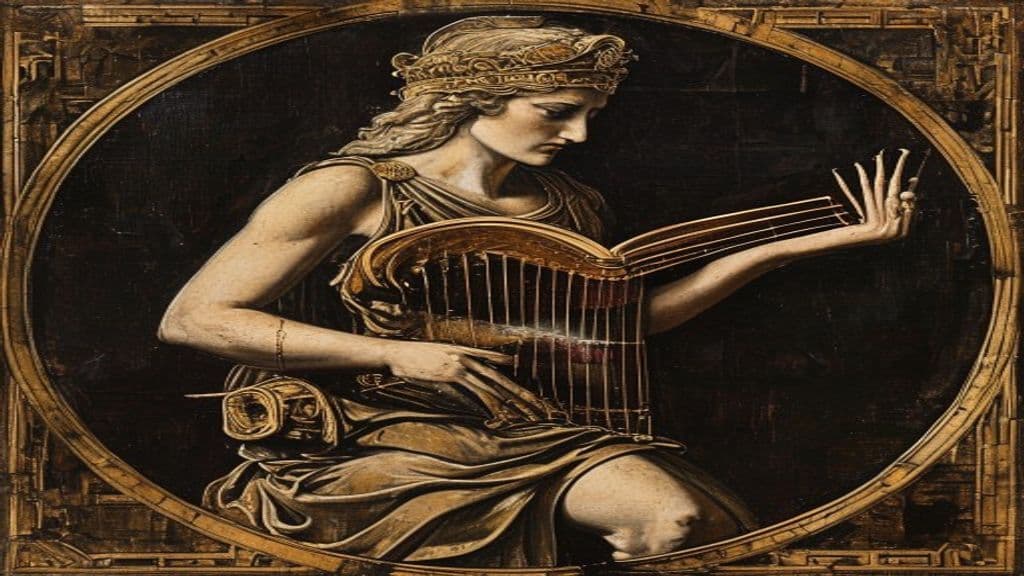
Aoede (Ancient Greek: Ἀοιδή, literally 'Song') is an ancient Greek personification named among early lists of Muses. Attested in literary sources as an inspirer of song and poetry, she appears in variant local traditions (three or four Muses) later supplanted by the canonical nine.

Aora
Lesser

Aora

Aora (Ancient Greek: Ἀώρα) is attested in the classical Greek mythic record as a nymph and eponymous ancestress: the town of Aoros in Crete was said to have been named for her, and aristocrats of Eleutherna claimed descent from her and her husband Eleuther, one of the Kouretes.

Apate
Primordial

Apate

Apate is the personification and divine power of deceit in ancient Greek myth: a named theonym that functions as the embodiment of guile, illusion, and perjury. She appears in mythic narrative (notably in Nonnus' Dionysiaca where she supplies a magical girdle) and in philosophical commentary (Neoplatonic readings) as an explanatory category for deception and illusion.

Apemosyne
Minor Spirit

Apemosyne

A mortal Cretan princess in Greek myth, daughter of King Catreus and sister of Althaemenes, whose flight from Crete to Rhodes and subsequent encounter with the god Hermes result in her rape and death at her brother's hands. Her story appears in genealogical accounts tied to the house of Minos and is preserved in summaries of Apollodorus.

Aphaia
Ancient

Aphaia

Aphaia is a local Greek goddess worshipped chiefly on the island of Aegina, associated in the sources with fertility, the agricultural cycle, and huntress attributes through identification with Britomartis/Diktynna and later with Artemis and Athena. Her cult was centered on a single prominent sanctuary and temple on a 160 m peak at the northeastern end of Aegina, with a monumental Late Archaic temple rebuilt ca. 500 BCE on the site of an earlier shrine destroyed by fire c. 510 BCE.

Aphareus
Lesser

Aphareus

Aphareus (Ancient Greek: Ἀφαρεύς) is an ancient Greek anthroponym attested for several distinct figures in myth and history (a Messenian king, a Centaur, a Greek warrior at Troy, and an Athenian rhetor/tragedian) and separately as a modern taxonomic genus of fish. The name does not denote a single autonomous supernatural being in the supplied sources but is used across multiple narrative registers.

Aphareus of Messenia
Lesser

Aphareus of Messenia

Aphareus (Ancient Greek: Ἀφαρεύς) is a legendary king of Messenia attested in Greek mytho-historical genealogies. He appears in literary and local traditions as a member of heroic-age lineages, a regional ruler, and an ancestral figure used to anchor Messenian dynastic claims.
Apheidas
Lesser

Apheidas

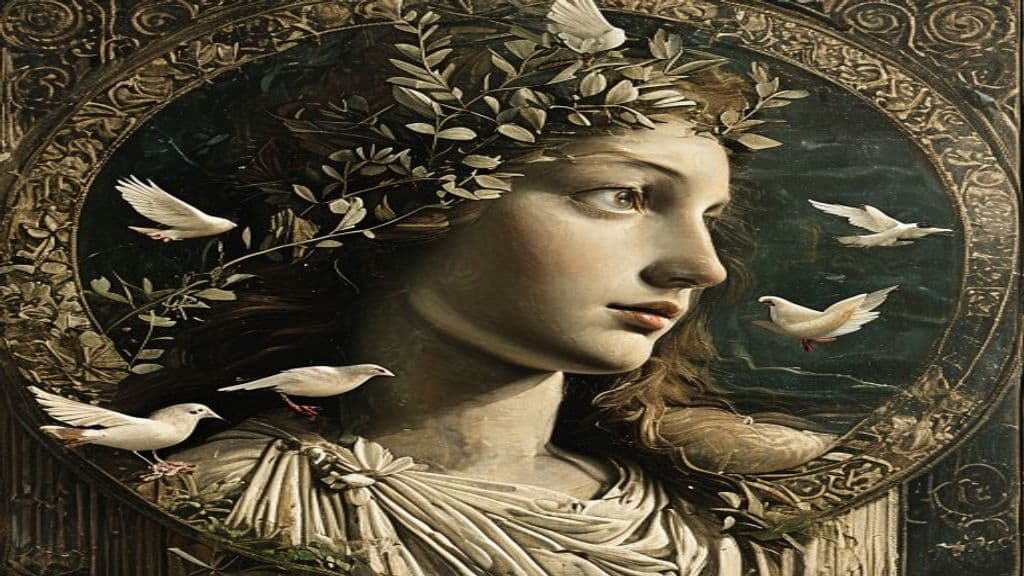
Apheidas is a personal name attested in ancient Greek mythic genealogies and narratives that refers to multiple distinct figures — including an Arcadian son of Arcas, a centaur at the wedding of Pirithous and Hippodamia, one of Odysseus’ companions slain by the Cyclops Polyphemus, a short-reigning legendary king of Athens, and an eponymous ancestor of a Molossian subgroup. The name appears across epic, genealogical, and local-regional traditions rather than as a single, consistent supernatural class.
Apheleia
Minor Spirit

Apheleia

Apheleia (Ancient Greek: Ἀφέλεια) is a personified spirit in ancient Greek religion representing ease, simplicity, and a valorized primitivity — glossed in modern English as "the good old days." A late antiquity testimony reports an altar to her on the Athenian Acropolis and that she was honored as a nurse of Athena.

Aphrodite
Ancient

Aphrodite

Aphrodite is a major ancient Greek goddess associated with love, lust, beauty, pleasure, passion, procreation, and related social and cosmic forces. She is counted among the principal Olympian deities with major cult-centers (Cythera, Cyprus, Corinth, Athens), celebrated annually at the Aphrodisia, and syncretized with the Roman Venus.

Aphrodite Pandemos
Ancient

Aphrodite Pandemos

Aphrodite Pandemos is an epithet of the Greek goddess Aphrodite denoting either her role as goddess of communal, bodily/sensual love or her civic function as ‘Aphrodite of all the people’ who unites the demos. The epithet appears in literary, epigraphic, and archaeological sources and is attested in sanctuaries and festivals in multiple Greek locales.

Aphroditus
Lesser

Aphroditus

Aphroditus (Ἀφρόδιτος) is a Cyprus-origin cultic form of Aphrodite celebrated in Amathus and adopted in Athens; depicted with female dress and form yet bearing male genitalia, the deity functions in ancient testimonia as a fertility and apotropaic figure whose rituals include sanctioned gender reversal.

Apis
Ancient

Apis

Apis (Ancient Greek: Ἄπις) is a name applied to several early mythic figures in Greek tradition—kings, a seer-healer, and local heroes—whose stories explain place-names (notably Apia/Peloponnesus) and foundational events in the Peloponnesus. Classical sources treat Apis as a mythic ancestor or culture-hero embedded in genealogies and early regal chronology rather than as a narrowly ‘otherworldly’ being.

Apis of Argos
Ancient

Apis of Argos

Apis of Argos is a mythic early king of Argos in Greek tradition, remembered as an eponymous ruler and lawgiver whose violent end and posthumous honours gave rise to local cult memory and later cross-cultural confusion with Egyptian traditions.

Apkallu (Abgal)
Ancient

Apkallu (Abgal)

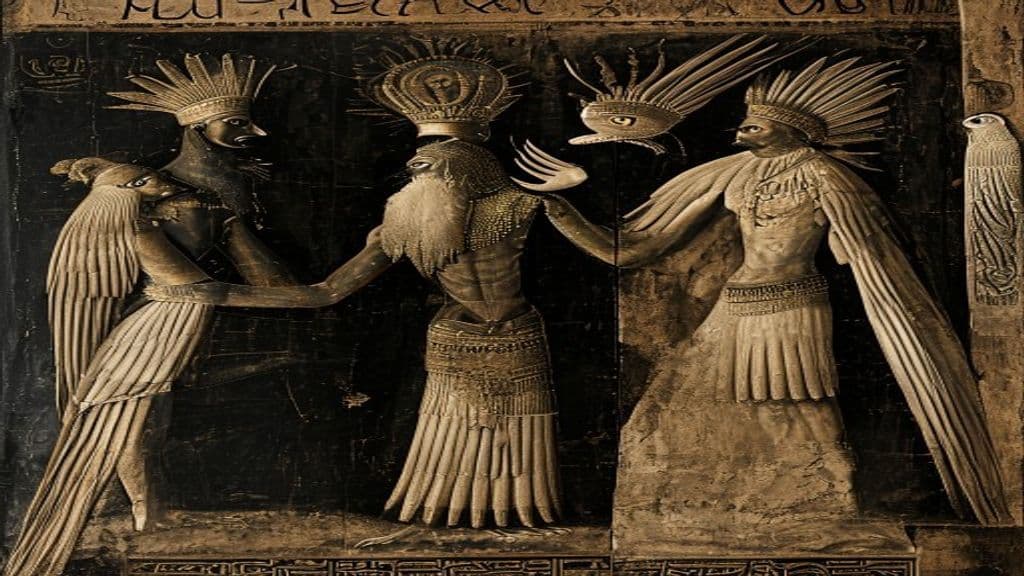
Apkallu (Akkadian; Sumerian: Abgal) are polyvalent Mesopotamian wisdom figures attested as mythic/semi-divine sages (notably a group of seven), as professional human experts (ummânu), and as apotropaic images used in household and cultic ritual. They are closely associated with the god Ea (Nudimmud) as transmitters of secret knowledge and are represented in diverse iconography including fish-man and bird-headed types.

Apollo
Ancient

Apollo

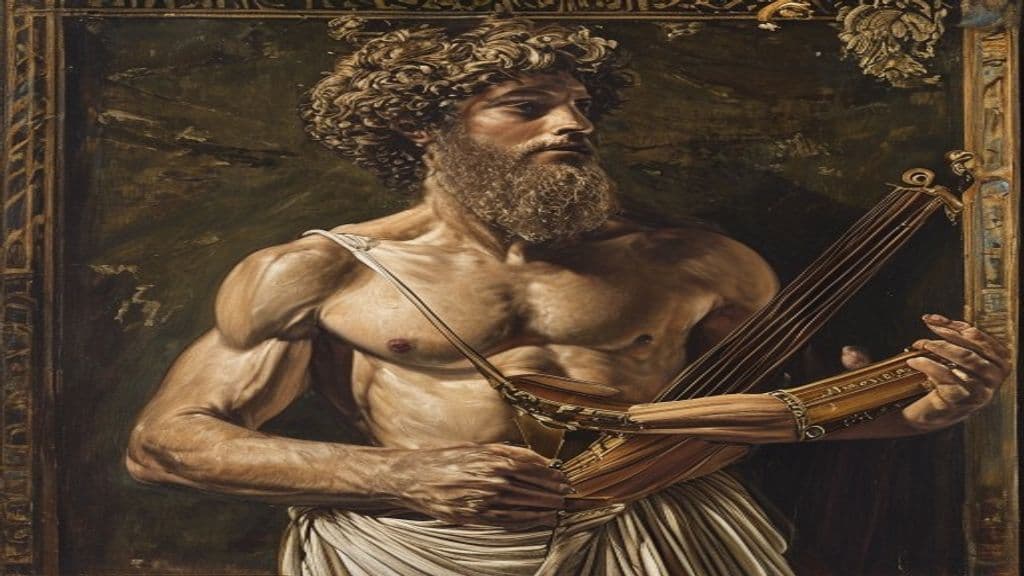
Olympian deity of ancient Greek religion associated with prophecy, healing, music, archery, purification, and civic order. Principal patron of the Delphic oracle, protector of youth and flocks, and ambivalently both healer and bringer of plague.

Apollo Archetype
Ancient

Apollo Archetype

A concept in Greek tradition representing a particular aspect of human personality that values clear definitions, mastery of skills, and harmony. (Note: - Power tier seems too high given the described abilities (Ancient=deity-level); Lesser or Greater might be more plausible. - No description of wards; add relevant information from source material if )

Apollonis
Lesser

Apollonis

Apollonis is an Ancient Greek name associated both with a local Muse (one of the Apollonides, daughters of Apollo worshipped at Delphi) and with a Hellenistic royal woman, Apollonis of Cyzicus, who received posthumous civic cult and a temple in the 2nd century BCE.

Apseudes
Minor Spirit

Apseudes

Apseudes is one of the fifty Nereids in Greek mythology, daughters of Nereus and the Oceanid Doris. She is primarily known from genealogical name-lists; her name is glossed in sources as meaning 'truthful' or 'she who never lies,' but no independent myths, rituals, or iconography for her are attested in the supplied materials.

Apsyrtus (Absyrtus)
Lesser

Apsyrtus (Absyrtus)

Apsyrtus (Absyrtus) is a Colchian prince in the Greek mythic cycle, described in the supplied sources as the brother or half-brother of Medea and a participant in the narrative surrounding Jason's theft of the Golden Fleece. He is presented as a mortal member of Aeetes' household within the Argonautica tradition rather than as a supernatural class of being.

Arachne
Lesser

Arachne

Arachne is a mortal woman from classical Greco-Roman myth (best known from Ovid's Metamorphoses, Book 6) whose unrivaled weaving skill and challenge to the goddess Athena/Minerva lead to her metamorphosis into a spider; the tale functions as an etiological myth explaining why spiders spin webs and as a cautionary exemplum about hubris toward the gods.

Arae (Arai)
Greater

Arae (Arai)

In Greek myth the Arae (Αραι, Arai) are female chthonic spirits who personify curses—especially imprecations of the dead—and act as underworld enforcers of vengeance and blood-redress. They are often treated as interchangeable with or closely related to the Erinyes (Furies) and are invoked in dramatic and ritual speech when murder, household pollution, or ancestral guilt demand retribution.

Arcadia (Utopia)
Primordial

Arcadia (Utopia)

In Greek tradition, Arcadia is an idealized concept representing a harmonious relationship with nature. (Note: 1. The power tier should be "Primordial" is correct, but clarify that this refers specifically to its conceptual or idealized nature, not implying it has traditional magical powers. 2. No explicit des)

Arcas
Lesser

Arcas

Arcas (Ancient Greek Ἀρκάς) is a mythic Greek culture-hero and eponymous founder of Arcadia: a hunter who becomes king, credited with teaching weaving, baking, and agriculture, and whose narrative involves Zeus, Callisto, Lycaon, and apotheosis among the stars.

Arcesilaus
Minor Spirit

Arcesilaus

Arcesilaus is a Greek personal name attested for at least two distinct human figures in classical sources: a 3rd-century BC Hellenistic philosopher who led the Platonic Academy into its skeptical phase, and a mythic Boeotian leader in the Trojan War who commanded ten ships and was slain by Hector. Neither figure is represented as a supernatural being in the provided sources.

Arcesius
Lesser

Arcesius

Arcesius (Ancient Greek: Ἀρκείσιος, also Arceisius/Arkeisios/Arcisius) is a mythic ancestral king of Ithaca attested in classical genealogical traditions as the father (or ancestor) of Laertes and an ancestor of Odysseus and Telemachus. Sources record multiple, conflicting parentage variants and occasional miraculous birth motifs; later uses of the name appear in non-mythic contexts (opera role, Roman technical literature, and a modern taxonomic label).

Archander
Lesser

Archander

Archander (Ancient Greek: Ἄρχανδρος; Latinized Archander/Archandrus) is a legendary human figure from Greek genealogical and migration myths, described as a son of Achaeus who fought with his brother, married Scaea (a daughter of Danaus), settled in Argos, and is linked in some traditions to an eponymous city in Egypt.

Arche
Lesser

Arche

Arche (Ancient Greek: Ἀρχή) is attested in surviving classical references as a personified muse of origins and beginnings, named among a local Boeotian set of muses recognized at Delphi and identified with the Mouse Titanides in some sources.

Archelochus
Lesser

Archelochus

Archelochus (Ancient Greek: Ἀρχέλοχος) is a mortal Homeric warrior, son of Antenor and Theano, who served as a commander of the Dardanian contingent allied with Troy during the Trojan War. He appears in the Iliad as a named noble-born combatant and is killed in battle by Ajax son of Telamon; later tradition and scholiasts note his shared command with his brother Acamas and Aeneas.

Archilycus
Minor Spirit

Archilycus

Archilycus (Ancient Greek Ἀρχίλυκος, Archílykos; Latinized Areilycus in some lists) is a mythic mortal attested only in genealogical and cataloguing traditions of ancient Greece. He is recorded as a member of a Boeotian noble lineage and as the father of leaders who took part in the Trojan expedition; he is not presented as a deity, monster, or active narrative character in surviving sources.

Architeles
Minor Spirit

Architeles

Architeles (Ancient Greek: Ἀρχιτέλης) is a personal name attested for multiple human figures in ancient Greek mythic and historical literature. The name appears in genealogical contexts (son of Achaeus; brother of Archander) and in a Calydonian/Oeneus cycle episode as the father who forgave Heracles for accidentally killing his cupbearer.

Arctus
Minor Spirit

Arctus

Arctus is a polyvalent name rooted in the Greek word for 'bear' (Arktos) that appears across astronomical nomenclature (the Great Bear/Arctic), classical mythographic name-lists (personal names such as a centaur or a Hora), taxonomy (species and genus names), and modern/fictitious proper names. The provided sources do not support treating Arctus as a single coherent supernatural being within a specific folkloric tradition.