Greek Supernatural Beings

1796 documented Greek supernatural beings from the Evil Eye grimoire, including 1106 lesser and 335 minor spirit in power tier.

page 8 of 30

Aspalis
Lesser

Aspalis

Aspalis is a local heroine and cultic eponym from Melite (Melitaea) in Phthia, Thessaly. According to the tradition preserved via Antoninus Liberalis (summarized in modern compendia), she hanged herself to avoid enforced concubinage under a tyrant; her body vanished and was said to have been replaced by a wooden statue that became a cult image of Artemis, giving rise to an annual ritual in the city.
Assaracus
Lesser

Assaracus

Assaracus is a mytho-historical king of Dardania in ancient Greek genealogical tradition, presented as a mortal ancestor within the royal house that connects to the foundation and lineage of Troy (Ilium). He is primarily attested as a dynastic progenitor—son of Tros, brother of Ilus, and father of Capys—and is not described in the supplied sources as a supernatural being.

Astacia
Lesser

Astacia

Astacia is attested in a brief encyclopedic note as a nymph in Greek mythology after whom, according to that note and a referenced Pauly‑Wissowa entry, Dionysus named a city. Attestation in the supplied materials is extremely limited: a one-line Wikipedia entry and a bibliographic pointer to Paulys Realencyclopädie der classischen Altertumswissenschaft (RE).

Astarte
Ancient

Astarte

Astarte (Ancient Northwest Semitic ʿAṯtart; Hellenized Ἀστάρτη) is a major Bronze–Iron Age Levantine goddess worshipped in Canaanite and Phoenician contexts and widely syncretized across the ancient Mediterranean. Sources portray her with martial, erotic, and civic associations and attest organized cultic worship (temples, shrines, coin iconography) rather than folkloric anti‑spirit traditions.

Asteria
Ancient

Asteria

Asteria is a Greek mythic goddess, daughter of the Titans Phoebe and Coeus, associated with stars and with the island later identified as Delos. In myth she flees Zeus, transforms into a quail and then into an island that shelters Leto and hosts the birth of Apollo and Artemis; she is also named as mother of Hecate in Hesiodic tradition.

Asterion
Lesser

Asterion

Asterion (Ancient Greek Ἀστερίων, 'starry') is the river-god of the Asterion in Argos. He functions as a local potamos in Greek myth and cult: participant in territorial myth concerning Hera and Poseidon, progenitor of nymph-nurses of Hera, and source of a plant used in Hera's sanctuary rites.

Asterius (Giant)
Lesser

Asterius (Giant)

Asterius (also Asterion, Aster) is a named member of the Gigantes in ancient Greek myth who takes part in the Gigantomachy and is recorded in some summaries as a Giant slain by Athena; his death is mentioned in connection with Panathenaic civic imagery in certain modern summaries of the tradition.

Asterodeia
Lesser

Asterodeia

Asterodeia (also Asterodia, Asterodea) is a name applied to several female figures in Greek myth: an Oceanid (a nymph daughter of Oceanus and Tethys) and various mortal royal women used in regional genealogies, including a Phocian princess and possible consorts of Endymion and Icarius.

Asterodia
Lesser

Asterodia

Asterodia is a personal name found across multiple Greek mythic genealogies rather than a single coherent supernatural agent. The name appears for an Oceanid (daughter of Oceanus and Tethys) and for several mortal or near-mortal women (princesses or wives) used to explain descent, marriage alliances, and local eponymy in regions such as Phocis, Elis, and Colchis.

Asteropaios
Lesser

Asteropaios

Asteropaios is a named Homeric Paeonian leader and warrior in the Iliad, grandson of the river-god Axios (son of Pelagon), noted for ambidexterity (throwing two spears at once), who wounds Achilles' forearm before being slain and whose arms are later awarded as prizes at Patroclus' funeral games.

Asterope
Lesser

Asterope

Asterope is a name used in Greek myth for one of the Pleiades — the seven daughters of Atlas and Pleione who are identified with the stars of the Pleiades cluster — and appears in variant traditions as the name of a Hesperid. In modern usage the name Asterope has been applied to the star 21 Tauri (IAU-approved name), an asteroid (233 Asterope), and a genus of butterflies (Wikidata).

Asteropeia
Minor Spirit

Asteropeia

Asteropeia is primarily a botanical genus of evergreen shrubs and small trees endemic to Madagascar (family Asteropeiaceae). Separately, a brief classical mythographic notice records a mortal woman named Asteropeia — a daughter who, with her sisters, murdered her father and was later commemorated by tomb-mounds in Arcadia. The sources treat these as distinct usages of the same name rather than a single supernatural entity.
Astraea
Ancient

Astraea

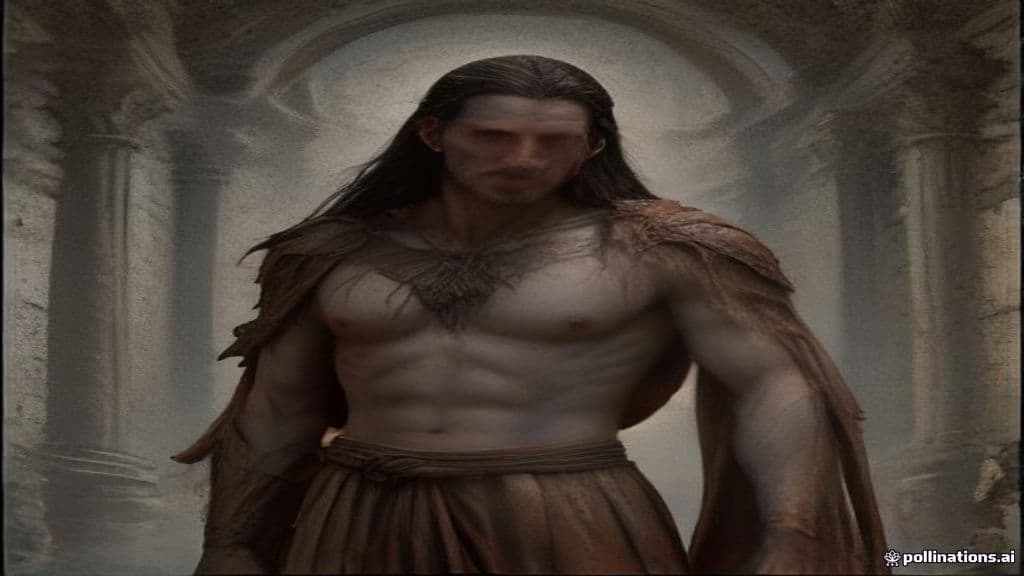
Astraea (Ancient Greek: Ἀστραία) is the star-linked personification of justice, modesty, and good faith in Greek myth who, according to literary sources, lived among humans during the Golden Age and later withdrew to the heavens, becoming the constellation Virgo. Ancient poets and later writers sometimes identify her with or contrast her to other justice-figures such as Dike.

Astraeus
Ancient

Astraeus

Astraeus is an ancient Greek divine figure whose name means 'starry.' In standard theogonic genealogies he is son of Crius and Eurybia, consort of Eos (Dawn), and father of the winds, Eosphorus (the morning star) and the stars; in later literature he appears as an oracular figure. A minority late tradition (via Hyginus and echoed by Servius) treats him as counted among the Gigantes, a divergent identity.
Astrape and Bronte
Minor Spirit

Astrape and Bronte

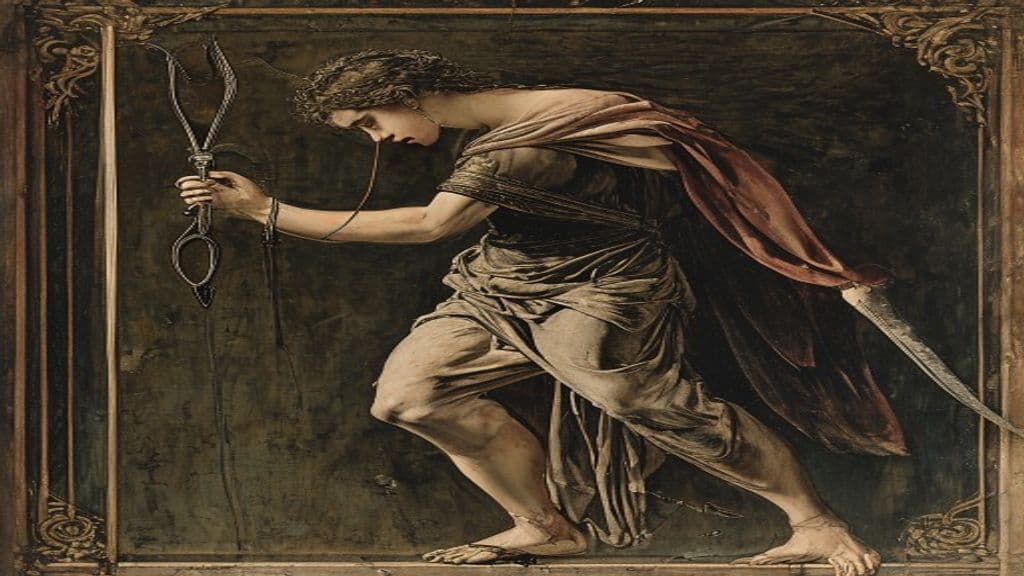
Personified embodiments of lightning (Astrape) and thunder (Bronte) in Greek literary and iconographic tradition, depicted as ministerial attendants of Zeus who manifest the flash and roar that accompany divine epiphany.

Astris
Minor Spirit

Astris

Astris is a minor figure in Greek literary tradition, named among the Heliades in Nonnus's Dionysiaca; she is presented as a daughter of Helios who marries the river-god Hydaspes and becomes mother of the Indian king Deriades. Her attestation in the supplied material is primarily genealogical rather than cultic or narrative.

Astyaguia
Lesser

Astyaguia

Astyaguia (Ancient Greek Ἀστυάγυια), also spelled Astyagyia in some modern references, is attested in Greek mythographic tradition as a Thessalian princess of the Lapiths. She appears in genealogical lists as a daughter of King Hypseus, probably by the naiad Chlidanope, sister of Cyrene, Themisto, and Alcaea, wife of Periphas (son of Lapithus), and mother of eight sons including the eldest Antion, placing her in the ancestral line that leads to Ixion.

Astyanassa
Minor Spirit

Astyanassa

Astyanassa (Ancient Greek: Ἀστυάνασσα) is a named figure in late Greek mythographic and Byzantine tradition, presented as Helen of Troy's maid. Late sources record anecdotes linking her to the theft of Aphrodite's "kestos himas" and to a tradition naming her among early authors of erotic literature.

Astyanax
Minor Spirit

Astyanax

In classical Greek and Roman literature Astyanax is the infant son of Hector and Andromache whose survival or death symbolizes the potential continuity of Troy's royal house. He is depicted as a mortal child whose fate is contested in the immediate aftermath of the sack of Troy; later medieval and Renaissance traditions sometimes recast him as a legendary founder-figure who survives.

Astydameia
Lesser

Astydameia

Astydameia (Ancient Greek Ἀστυδάμεια) is not a single supernatural being but an ancient Greek personal name borne by several mortal women in mythic tradition — queens, wives, and mothers who appear as genealogical and narrative nodes in the heroic age (figures associated with Peleus, Heracles, Acastus, Pelops, etc.). The name literally evokes civic rulership, and the bearers act within social and political roles rather than as spirits or deities.

Astydamia
Minor Spirit

Astydamia

Astydamia is a mortal woman attested in classical Greek genealogical myth. In the primary mythographic excerpt provided she is named as a daughter of Pelops and as wife of Alcaeus (mother of Amphitryon and Anaxo in that account); a modern botanical note alternatively identifies an Astydamia as wife of Acastus, son of Pelias, a conflicting attribution in the sources given.

Astymedusa
Lesser

Astymedusa

Astymedusa (Ancient Greek: Ἀστυμέδουσα), sometimes called simply Medusa, is a Mycenaean princess in Greek mythic tradition who is occasionally named as a later wife of Oedipus. In some accounts her accusation that Polynices and Eteocles attempted to rape her is given as an alternate cause for the curse and subsequent fraternal discord at Thebes.

Astynome
Lesser

Astynome

Astynome (Ancient Greek: Ἀστυνόμη) is not a single supernatural being but a personal name attested for several different mortal women in Greek mythic and genealogical traditions — for example, a Niobid, a daughter of Talaus and mother of Capaneus, a captive woman identified with Chryseis in Trojan War material, and a woman transformed into a rock after seeing Artemis naked.

Astyoche
Lesser

Astyoche

Astyoche (Ancient Greek Ἀστυόχη / Ἀστυόχεια) is a name applied to multiple female figures in Greek myth, most notably a naiad of a Troy spring and several mortal princesses/mothers who appear in heroic genealogies and post-Trojan-war narratives. The name etymologically links the bearer to a town or polis—literally 'town-possessing'—and so figures named Astyoche serve as place-linked sacred presences or matrilineal connectors in foundation myths.

Astypalaea
Lesser

Astypalaea

In Greek myth Astypalaea (Ancient Greek Ἀστυπάλαια) is a Phoenician princess, daughter of King Phoenix and (in varying accounts) Perimede or Telephe, sister of Europa and consort of Poseidon; she is an eponym for the island Astypalaia. In modern planetary nomenclature the name Astypalaea designates a geological feature on Jupiter's moon Europa (Astypalaea Linea), a strike-slip fault system described in Galileo/NASA imagery.

Atalanta
Lesser

Atalanta

Atalanta is a mortal heroine of ancient Greek myth, famed as a swift-footed huntress and archer who lives at the margins between wilderness and polis. Her story—exposure and fosterage by a she-bear, prominence in the Calydonian boar hunt, a marriage-footrace won by Hippomenes with Aphrodite's golden apples, and a later metamorphosis into a lion—appears in multiple regional variants and literary traditions.

Ate
Ancient

Ate

Ate (Ancient Greek: Ἄτη, Átē) is the personified force of delusion, reckless folly, and ruin in ancient Greek poetic and mythic tradition. She functions both as an abstract condition—an aition for misguided action—and as an active agent who can blind the minds of gods and men and be sent, notably by Zeus, as a form of retribution.

Athamas
Lesser

Athamas

Athamas is a legendary Boeotian king from Greek myth whose tragic family conflicts, madness induced by a deity, and subsequent exile are used etiologically to explain place-names (e.g., Hellespont), cultic transformations (Ino → Leucothea; Melicertes → Palaemon), and the origin of the Athamanian people and region.

Athena
Ancient

Athena

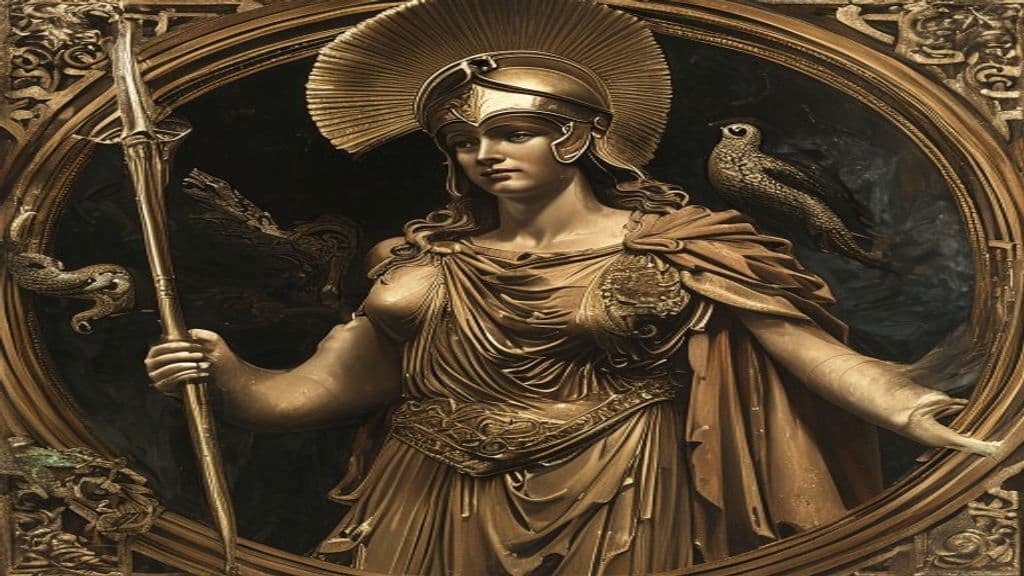
Athena is a major ancient Greek goddess associated with wisdom, handicraft (notably weaving), and warfare; she serves as a tutelary protector of cities—most prominently Athens—and is central to myth, cult, and civic identity in the Greek world.

Athena Alea
Ancient

Athena Alea

Athena Alea is the composite cult figure formed when a local eastern Arcadian goddess called Alea was synchronised with the pan-Hellenic goddess Athena. Centered on a major sanctuary at Tegea and celebrated in a local festival (the Aleaia), the cult preserves traces of a distinctive local identity alongside attributes associated with Athena.

Athis
Minor Spirit

Athis

Athis is an obscure named figure attested only in modern reference listings as part of the corpus of Greek and Roman mythology. The supplied sources provide the name but no primary narrative, attributes, ritual traditions, or consistent biographical details.

Athos
Lesser

Athos

Athos is identified in the provided sources as the name of a figure listed among the Gigantes in Greek mythology. The available materials do not supply narrative, descriptive, or ritual details about this figure beyond that cataloguing entry.

Atlanteia
Lesser

Atlanteia

Atlanteia (Ancient Greek: Ἀτλαντεία) is attested in Greek mythic genealogies as a Libyan hamadryad — a tree-nymph — named among the wives/concubines of King Danaus and jointly listed with Phoebe as mother-figures of ten of the Danaïdes. Beyond these genealogical listings, no independent narratives, descriptive accounts, or ritual instructions specific to Atlanteia are provided in the sampled sources.

Atlantia
Minor Spirit

Atlantia

Atlantia is not a single folkloric supernatural being in the provided sources but a modern proper name applied to multiple, independent referents — including a brief classical name-form (Atlanteia/Atlantia) listed as a Hamadryad in Greek mythic genealogies, a contemporary YA novel's underwater city, names of vessels in science-fiction media, a Society for Creative Anachronism regional designation, and a biological genus entry in a taxonomic database. The sources do not present a unified mythic ontology or associated rituals for an entity called 'Atlantia.'

Atlas
Ancient

Atlas

Atlas is a Titan of ancient Greek myth condemned after the Titanomachy to stand at the western edge of the world and hold up the sky on his shoulders. He is both a punished cosmic agent who bears the heavens and an eponymous figure linked to geographic features (the Atlas Mountains) and to traditions of celestial knowledge such as the invention of the celestial sphere.

Atrax
Minor Spirit

Atrax

Atrax is an eponymous ancestral founder in Greek mythic genealogy, described as a son of the river-god Peneus and Bura and the name-giver of the town Atrax (Atracia) in ancient Thessaly. He functions primarily as an onomastic ancestor linking a place to divine lineage rather than as an active supernatural agent.

Atreus
Lesser

Atreus

Atreus is a legendary king of Mycenae in Greek myth, progenitor of the House of Atreus and father of Agamemnon and Menelaus. Presented as a mortal dynastic figure, his story in the sources revolves around rivalry with his brother Thyestes, contested kingship, and extreme acts of revenge that form part of a multi‑generational cycle of curse and retribution.

Atropos
Ancient

Atropos

Atropos is the third of the Three Fates (Moirai) in Greek myth, the named agent who executes the termination of mortal lives by cutting their life-threads. She embodies finality and inflexibility in the ordering of life and death.

Attis
Lesser

Attis

Attis is a mythic consort and semi-divine cult figure associated with the Anatolian Mother Goddess (Cybele / Agdistis). He functions as a vegetation-associated beloved whose self-castration, death, and ritual rebirth form the core myth enacted by his priests and festivals, especially around the vernal equinox in Phrygia, Greece and later Rome.

Atymnius
Lesser

Atymnius

Atymnius is a name applied to several related figures in Greek myth: a Cretan beautiful youth associated with the house of Minos and said to have been adored by Sarpedon and Minos (and reputedly venerated at Gortyn alongside Europa), and one or more minor epic combatants in the Trojan War cycle (a Trojan son of Emathion and a Lycian companion of Sarpedon). The attestations appear in genealogical summaries (Apollodorus tradition as preserved in Europa passages and reference works) and in Homeric/post‑Homeric epic listings (Homer/Quintus Smyrnaeus as summarized in modern reference compilations).

Auge
Lesser

Auge

Auge (Ancient Greek: Αὐγή, Augḗ, lit. "sunbeam, daylight, dawn") is an Arcadian princess and virgin priestess of Athena Alea in Greek myth, mother of the hero Telephus by Heracles. Her narrative (in multiple variant traditions) treats oracular fate, the sanctity and vulnerability of a priestess, exposure/abandonment motifs, and the foundation of cross-regional ties when she and Telephus come to Mysia and are received by King Teuthras.

Augeas
Lesser

Augeas

Augeas is a mythic king of Elis in the Greek Heracles cycle, famous for the Augean stables which housed an immense herd and had not been cleaned for decades; his contractual refusal to pay Heracles for cleaning the stables leads to his death and the transfer of kingship to his son Phyleus in the traditions summarized by the sources.

Aura
Lesser

Aura

Aura (Ancient Greek Αὔρα, plural Αὔραι) is a minor Greek and Roman divine figure personifying a cool breeze. She appears both as an individual breeze-nymph in literary accounts (most fully in Nonnus) and as a class of breeze-spirits (Aurae) in other sources and lexica.

Autochthe
Lesser

Autochthe

Autochthe (Ancient Greek: Αὐτόχθη) is a minor mythological princess of the Perseid line, named in classical genealogies as a daughter of Perseus and Andromeda. In some traditions she is said to have married Aegeus of Athens and borne daughters but no sons, and her chief narrative role is as a dynastic connector between ruling houses (Argos/Mycenae and Athens).

Autochthon (ancient Greece)
Ancient

Autochthon (ancient Greece)

In ancient Greek myth and civic ideology, an autochthon is an 'earth-born' person or people—literally generated by the soil of a place—to claim the deepest form of indigenous origin and thereby political legitimacy. The term functions as a social-mythic category grounding territorial belonging and priority rather than as an independently acting supernatural creature.

Autolycus
Lesser

Autolycus

Autolycus is a mythic Greek trickster-thief, son most commonly of Hermes, famed for cunning, theft, and the ability to alter the appearance of stolen goods; he is a legendary ancestor and occasional tutor within the heroic age rather than an impersonal spirit or cult deity.

Automate
Lesser

Automate

Automate is a named figure in Ancient Greek mythic genealogy, one of the Danaids (daughters of Danaus). In mythographic summaries (following Apollodorus and later compilations) she is said to have killed the mythical Egyptian king Busiris, who had been betrothed to her. Her name in Ancient Greek is glossed as 'acting of one's own will, of oneself.'

Automaton (tradition)
Lesser

Automaton (tradition)

An automaton is a crafted, self‑operating mechanical device or engineered construct described in ancient myth, technical history, and modern usage; in traditional accounts it is a human‑made figure or mechanism that imitates living actions through concealed mechanisms rather than by an animating spirit.

Automedon
Minor Spirit

Automedon

Automedon (Ancient Greek Αὐτομέδων) is a named mortal charioteer in the Homeric epic tradition, best known as the trusted driver of Achilles who manages the immortal horses Balius and Xanthos and acts as a combatant in episodes of the Iliad. He appears in scenes surrounding Patroclus' death and in later Roman reference (Virgil's Aeneid).

Automedusa
Minor Spirit

Automedusa

Automedusa is a mortal figure in Greek mythic genealogies, a Megarian princess, daughter of King Alcathous, wife of Iphicles, and mother of Iolaus. She functions chiefly as a genealogical link within networks connecting the houses of Pelops, Perseus, and the Theban/Heraclean circles.

Autonoe
Minor Spirit

Autonoe

Autonoe is a name attested in ancient Greek mythic traditions as (a) a Theban princess, one of the daughters of Cadmus and Harmonia, wife of Aristaeus and mother of Actaeon (and possibly Macris); and (b) separately, as one of the list-figures among the fifty Nereids (sea-nymph daughters of Nereus and Doris). Sources do not reconcile these attestations into a single, unified identity.

Autonous
Lesser

Autonous

Autonous is a named mortal from a single surviving Greek metamorphosis narrative (recorded in Antoninus Liberalis' Metamorphoses as preserved in modern summaries). A pastoral household head whose neglect of husbandry leads to a tragedy in which his son Anthus is killed by the family's horses; the gods Zeus and Apollo pity the grieving family and transform Autonous into a bird identified as the stone‑curlew (Greek ὄκνος).

Auxesia
Minor Spirit

Auxesia

Auxesia (Αυξησία) is a figure in ancient Greek religious tradition associated with growth and increase of fields. She appears in local cults around the Saronic Gulf (Epidaurus, Aegina, Troezen) as an independent local goddess or as an epithet/aspect of better-known deities (notably Persephone), often paired with Damia.

Auxo
Minor Spirit

Auxo

Auxo is a name attested across modern commercial, taxonomic, and fictional contexts and, in classical reference frameworks, is historically associated with the Horae — the Greek goddesses of the seasons and natural portions of time. The provided sources do not supply a consistent folkloric persona, mythology, or rites tied to a supernatural being named Auxo.

Axia
Lesser

Axia

Axia (Ancient Greek: Αξία) is a minor figure in Greek mythography, attested as a Minyan princess of Orchomenus whose primary role in the surviving record is genealogical and toponymic. She is cited as a daughter of King Clymenus and Budeia and sister to several named siblings; one source records that a town in Ozolian Locris was named for her.

Axioche
Lesser

Axioche

Axioche (Ancient Greek: Άξιόχη, romanized Axiókhē), also called Danais in some accounts, is a named woman or nymph in Greek mythic genealogies. She is principally attested as the mother of Chrysippus by King Pelops and otherwise appears only as a genealogical figure in the Peloponnesian heroic cycle.

Axius
Lesser

Axius

Axius (Ancient Greek: Άξιος, Axios) is the personified river-god of the Axius (modern Vardar) in the regions variously called Macedonia / Paeonia in northern Greece. In classical genealogies he is listed among the Potamoi as a son of Oceanus and Tethys and is cited as the father of Pelagon by Periboea.

Axylus
Lesser

Axylus

Axylus (Ancient Greek: Ἄξυλος) is a Trojan warrior featured in Homer's Iliad (Book VI). Portrayed as a wealthy and hospitable man from Arisbe, he is slain in battle by the Greek warrior Diomedes, a brief episode used by Homer to underscore themes of hospitality, mortality, and the costs of war.

Azeus
Greater

Azeus

Azeus (Ancient Greek: Ἀζεύς; also Aezeius Ἀζειός) is a mortal figure in Greek mythic genealogies, identified as a Minyan prince of Orchomenus. He is recorded as the youngest son of King Clymenus and as a participant in a vengeance expedition against Thebes; through his descendants he is an ancestor of leaders who fought at Troy.

Aëdon
Minor Spirit

Aëdon

Aëdon is a mythic woman in ancient Greek tradition who, after killing (or attempting to kill) a child in a tragic episode of jealousy or madness, is transformed into the nightingale; the bird's plaintive song is presented as her eternal mourning for the lost child.