Greek Supernatural Beings

1796 documented Greek supernatural beings from the Evil Eye grimoire, including 1106 lesser and 335 minor spirit in power tier.

page 10 of 30

Caerus (Kairos)
Minor Spirit

Caerus (Kairos)

In ancient Greek religion and thought, Caerus (Greek: Καιρός, Kairos) is the personified divinity of the opportune or fitting moment. Depicted as a youthful, swift figure who can be seized by the forelock, Caerus functions as a concrete embodiment and didactic reminder that timely action secures advantage while delay forfeits it.
Caicus (Kaikos)
Lesser

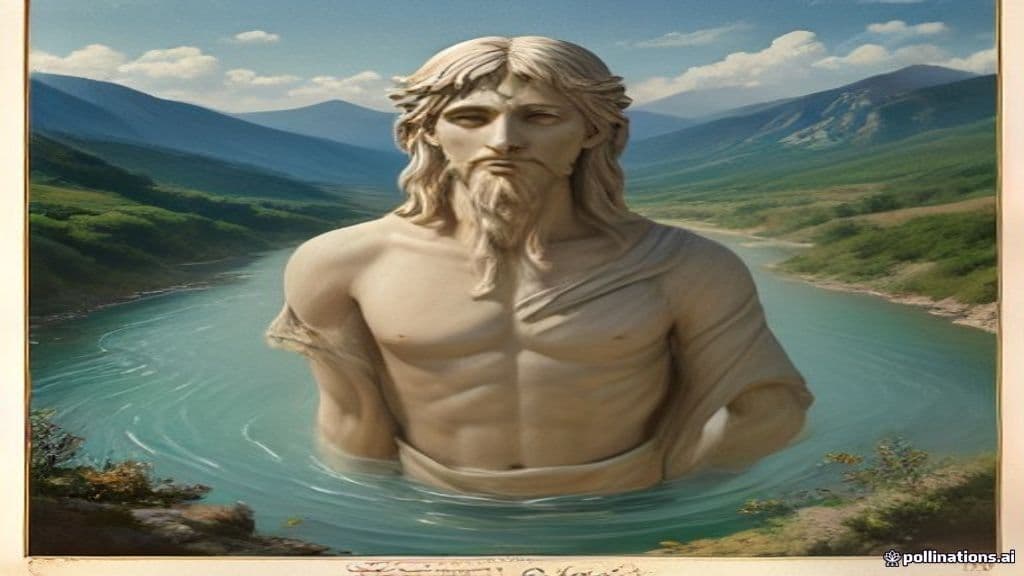
Caicus (Kaikos)

Caicus (Kaikos, Kaïkos) is the ancient name of a river in western Anatolia (modern Bakırçay) and the river's personification as a local potamos (river‑god) in Greek mythic geography. Surviving references treat Caicus primarily as a geographic feature important to navigation, settlement, and local legend, and secondarily as the named divine identity attached to that river.

Calchas
Lesser

Calchas

Calchas is a human Argive seer (mantis, oionopólos) of the Trojan War tradition, a member of a hereditary mantic family who interprets omens and entrails on behalf of Greek commanders and declares the will of Apollo to guide ritual and military decisions.

Calchus
Minor Spirit

Calchus

Calchus (Ancient Greek: Κάλχος, Kalkhos) is a mortal king of the Daunians in a later Greek mythic episode preserved by Parthenius of Nicaea. He persistently courted the sorceress-goddess Circe at her island Aeaea, was transformed into a pig by her enchantments, and later restored after his people intervened.

Calesius
Minor Spirit

Calesius

Calesius (Greek Καλήσιος) is a minor human figure in the Homeric epic: the attendant and charioteer of Axylus who is killed alongside his master on the Trojan battlefield in Book VI of the Iliad. He appears as a named mortal illustrative of loyalty and the human cost of war, with no supernatural attributes in the cited sources.

Caletor
Lesser

Caletor

Caletor (Ancient Greek: Καλήτωρ) is a personal name borne by at least two mortal figures in the Trojan War cycle: a Trojan defender, son of Clytius, who attempted to burn an Achaean ship and was slain by Ajax; and a separate Caletor attested as the father of the Achaean warrior Aphareus. He is treated in the sources as a human participant in epic narrative and genealogy.

Caliadne
Lesser

Caliadne

Caliadne (Ancient Greek: Καλιάδνη) is attested in Greek mythographic tradition as a naiad of the River Nile who is named as a wife of King Aegyptus and the mother of twelve of his sons who married (and were murdered by) the Danaids. She appears in genealogical lists rather than as an active cultic or narrative agent.

Callianassa
Lesser

Callianassa

Callianassa (Ancient Greek Καλλιάνασσα, Kallianassa, 'lovely/beautiful queen') is attested as one of the approximately fifty Nereids — sea‑nymph daughters of Nereus and Doris — in ancient Greek mythic catalogues. She is named in lists and reference works but has no independent myths or distinct cultic attributes recorded in the supplied sources.

Callianeira
Lesser

Callianeira

Callianeira (Ancient Greek: Καλλιάνειρα) is one of the fifty Nereids in Greek mythology, the sea‑nymph daughters of the sea‑god Nereus and the Oceanid Doris. She is named among the Nereids who appear to Thetis in epic tradition and otherwise functions as an individual member of the collective group of marine nymphs.

Callidice
Lesser

Callidice

Callidice (Ancient Greek: Καλλιδίκη, Kallidíkē, lit. 'beautiful justice') is a personal name attested in Ancient Greek literary and mythographic traditions for multiple mortal women — an Eleusinian princess, one of the Danaids in some lists, and a Thesprotian queen who, in Telegony-related accounts, becomes a wife of Odysseus and mother of Polypoetes. She functions as a genealogical and narrative figure within heroic-age stories rather than a supernatural being.

Calliope
Ancient

Calliope

Calliope (Greek Καλλιόπη) is one of the Muses in ancient Greek myth, traditionally presiding over eloquence and epic poetry. She is portrayed as an immortal divine inspirer and instructor of poetic composition, called 'Chief of all Muses' in classical sources and invoked by later poets for epic authority.

Calliphaea
Lesser

Calliphaea

Calliphaea (Ancient Greek Καλλιφάεια, Kalliphaeia) is a naiad of Greek tradition, one of the Ionides sisterhood associated with a healing spring on the River Cytherus (Kytheros) in Elis. Her spring waters were locally venerated for their curative properties for diseases and aches and pains.

Callirhoe
Minor Spirit

Callirhoe

Callirhoe (also Callirrhoe, Callirhoé) is a name attested across Greek myth, classical literature, toponymy, and botanical taxonomy. The provided sources do not present Callirhoe as a single supernatural spirit or consistent cosmological entity; instead the name refers to several mythological characters, an ancient Greek novel and its artistic adaptations, a place with baths near the Dead Sea, and a genus of mallow-family plants used in horticulture and traditional herbal practice.

Callirrhoe (Oceanid)
Lesser

Callirrhoe (Oceanid)

Callirrhoe (Καλλιρρόη, Kallirrhoê) is an Oceanid — a daughter of the Titans Oceanus and Tethys — whose name literally means "beautiful flow" or "beautiful stream." She functions in Greek myth as a water-nymph (naiad/Oceanid) and appears in genealogical contexts, notably as the mother of Chione by the river-god Nilus in some traditions.

Calliste (Kalliste / Callistis)
Lesser

Calliste (Kalliste / Callistis)

Calliste (Ancient Greek Kalliste/Callistis, 'the most beautiful') is a local Aegean sea-nymph figure tied to the island called Kalliste (modern Santorini). In surviving summaries she appears as a youthful woman who was given to the Argonaut Euphemos as a clod of earth which transformed into a woman; she is also attested as a surname/epithet (Calliste/Callistis) applied to other goddesses such as Artemis in cultic contexts.

Callisto
Lesser

Callisto

Callisto is a figure from Greek mythology described as an Arcadian mountain nymph (Oread) whose life is altered by the Olympian gods: she is seduced by Zeus, becomes mother of Arcas, is transformed into a bear (in many accounts by Hera's jealousy), and is ultimately placed among the stars as a constellation. She functions as a nature-spirit, an ancestral/etiological figure for Arcadia, and a mythic explanation for a bear-shaped constellation.

Callithyia
Minor Spirit

Callithyia

Callithyia (Ancient Greek: Καλλίθυια), also called Callithoe, Callithea, or Io, is an Argive princess in Greek mytho-historical tradition described as the first priestess of Hera at Argos. She functions as a foundational, legitimating figure for the local Hera-cult rather than as a supernatural being.

Calybe
Minor Spirit

Calybe

Calybe (Ancient Greek: Καλυβη, Kalybē) is a name applied to minor female personages in classical literature: a Trojan nymph named as a consort of King Laomedon and mother of Bucolion, a follower in Dionysus’ retinue in Nonnus’ Dionysiaca, and an attested occurrence as an "aged priestess of Juno" in a Vergilian index entry. The attestations are brief and nominative; no sustained myth or ritual tradition centred on Calybe survives in the provided sources.

Calyce
Lesser

Calyce

Calyce is a personal name borne by several minor women in Greek mythic genealogies and nymph-lists. Bearers of the name appear as a Nysiad who nursed the young Dionysus and as various mortal princesses or matrons (e.g., a daughter of Aeolus, a wife of Aethlius, and an occasional mother of Endymion or of Cycnus) across competing local traditions.

Calydon (son of Aetolus)
Lesser

Calydon (son of Aetolus)

Calydon (Ancient Greek: Καλυδών, Kalydōn) is an eponymous mythic figure recorded in Greek tradition as the son of Aetolus and the namesake of the city and plain called Calydon in Aetolia. Sources treat him as a genealogical/foundational ancestor within local royal genealogies rather than as a deity or active supernatural agent.

Calydonian Boar
Greater

Calydonian Boar

A singular monstrous boar sent by the goddess Artemis (Diana) to ravage Calydon in Aetolia as punishment for a king's failure to honour her rites. The beast functions in Greek myth as a tangible incarnation of divine wrath that provokes the assembly of renowned heroes—notably Meleager and Atalanta—for a great hunt whose outcome produces both heroic glory and social conflict.

Calypso
Lesser

Calypso

Calypso is a name attested across many cultural registers; within classical-mythological mention in the supplied sources it appears as a nymph who detained Odysseus for seven years. The provided materials are primarily a disambiguation of uses (places, music, taxa, media) rather than a sustained folkloric dossier on a single spirit-entity.

Camarina (Καμάρινα)
Lesser

Camarina (Καμάρινα)

Camarina is an Oceanid in Greek mythic/toponymic tradition, presented as a daughter of Oceanus and the eponymous nymph of the ancient city Kamarina (Camarina) in southern Sicily. She is understood as a localized water-nymph who personified the town's water-source (spring or fountain) and served as the city's divine namesake.

Cancer (the Crab)
Lesser

Cancer (the Crab)

In Greek myth and uranography, Cancer is a large crab or crayfish that appears as a minor antagonist in the Heracles cycle (sent against Heracles during the Lernaean Hydra episode) and is immortalized as the constellation Cancer, a member of the Zodiac.

Candybus
Minor Spirit

Candybus

Candybus (Ancient Greek Κάνδυβος, Kándubos) is a mythic prince attested in Greek genealogical tradition as a child of Deucalion and probably Pyrrha, and is reported by later lexicographers to be the eponym of the Lycian town Kandyba. He appears only in brief onomastic/genealogical notices rather than as a developed mythic character.

Capaneus
Lesser

Capaneus

Capaneus (Ancient Greek Καπανεύς) is a mortal warrior of the generation known as the Seven against Thebes, famed in Greek and Roman literary tradition for exceptional size and strength and for extreme pride; his taunt that even Zeus could not stop him results in divine execution by a thunderbolt as he scales the walls of Thebes. Later authors (Statius, Dante) reuse him as a figure illustrating hubris and blasphemy.

Capella
Minor Spirit

Capella

Capella (α Aurigae) is the brightest star in the northern constellation Auriga, historically named for a goat (Latin Capella, Greek Aix) and treated across cultures as a calendrical and weather sign as well as an architectural orientation marker. Astronomically it is a quadruple star system composed of two close yellow-giant primaries and a distant pair of red dwarfs and is one of the sky's brightest X-ray sources.

Capheira
Lesser

Capheira

Capheira (also Kapheira) is a Rhodian Oceanid (Okeanid) nymph in Greek mythology, attested as one of the daughters of Oceanus who, together with the Telchines, was entrusted by Rhea to nurse and protect the infant god Poseidon. She appears in concise mythographic summaries but lacks independent cultic or iconographic attestation in the supplied sources.

Capys
Minor Spirit

Capys

Capys is a personal name in Greco‑Roman legendary history borne by several legendary human figures connected to the Trojan and early Roman genealogies. Bearers of the name appear as a king of Dardania, a Trojan who warned against bringing the wooden horse into Troy, and a mythic king of Alba Longa in Roman annalistic tradition; a later Victorian poet (Macaulay) renders a Capys figure as a prophetic elder.

Carme
Minor Spirit

Carme

Carme is a name listed in modern reference works as belonging to a figure in Greek mythology, but the supplied sources contain no substantive mythological account. The available material attests the name in several modern and astronomical usages and points to a disambiguation entry noting a mythological figure without providing details.

Carnus
Lesser

Carnus

Carnus (also Carneus, Carneius) is a mortal seer from Acarnania in Greek mythic-historical tradition, said to have been instructed in divination by Apollo. He accompanied the Heracleidae/Dorians; his killing by Hippotes prompted Apollo to strike the Dorians with plague and led to consultation of an oracle, banishment of the killer, and the institution of the cult/festival of Apollo Carneius (the Carneia).

Carystus
Lesser

Carystus

Carystus is an eponymous mythic ancestor and local heroic figure associated with the town of Carystus (modern Karystos) on Euboea. In the surviving modern summaries of classical material he is presented as a son of the centaur Chiron and the nymph Chariclo and as a genealogical/name-giving figure rather than as a narratively active deity.

Cassandra
Lesser

Cassandra

A mortal Trojan princess and priestess of Apollo who utters true prophetic visions but is divinely cursed so that her true predictions are not believed; appears in the corpus of Greek epic and tragedy associated with the Trojan War and its aftermath.

Cassandra Metaphor
Primordial

Cassandra Metaphor

A person whose valid warnings or concerns are disbelieved by others, representing a prophetic figure with ignored predictions and warnings. (Note: * The power_tier is not supported by the source material, which only discusses Cassandra as a metaphor, not a Primordial entity with cosmic powers. * There is no information in the sources about appea)

Cassiopeia (mother of Andromeda)
Lesser

Cassiopeia (mother of Andromeda)

Cassiopeia is a named mortal figure from Greek myth presented in the sources as the queen of Aethiopia and mother of Andromeda; her name is also applied to a northern constellation that represents that mythic queen. The provided materials also record other mythic women bearing the same name in varied genealogies and many modern cultural and scientific reuses of the name.

Cassotis
Lesser

Cassotis

Cassotis (Ancient Greek: Κασσοτίς) is an ancient Greek nymph who is the eponymous spirit of a spring at Delphi on Mount Parnassus. She is attested in classical sources as the named local nymph associated with the water source that was part of Apollo's sanctuary at the Oracle of Delphi.

Castalia
Greater

Castalia

Castalia (Ancient Greek Κασταλία, Kastalia) is a mythic naiad-nymph and the eponymous sacred spring of Delphi. In classical tradition she is a daughter of the river-god Achelous whose waters were consecrated to the Muses and were associated with poetic inspiration and ritual cleansing of the Delphic sanctuary.

Castor and Pollux (the Dioscuri)
Greater

Castor and Pollux (the Dioscuri)

A pair of mythic twin brothers of Greek and Roman tradition (the Dioscuri/Gemini) who occupy a liminal heroic/divine status. They function as patrons and protectors of sailors, travellers, horsemen and athletes, and are ultimately placed among the stars as the constellation Gemini.

Catoblepas
Lesser

Catoblepas

A legendary Greco‑Roman monstrous beast reported from Ethiopia: a mid‑sized, sluggish quadruped with a heavy head habitually pointed toward the ground and described in sources as possessing lethal properties expressed either as a deadly gaze or poisonous breath.

Catreus
Lesser

Catreus

Catreus is a mortal figure in Greek myth, presented in mythographic sources as the eldest son of King Minos and Pasiphaë and a king of Crete whose life is shaped by an oracle predicting that one of his children would kill him; efforts to avoid that fate, and variants of the tale, link him etiologically to later heroic genealogies.

Cattle of Helios
Lesser

Cattle of Helios

A herd of sacred, immortal oxen belonging to the sun-god Helios in Greek myth. Pastured on the island Thrinacia, their slaughter by Odysseus' crew in the Odyssey precipitates supernatural signs and divine vengeance by Helios (and Zeus).

Caucon
Lesser

Caucon

Caucon (Ancient Greek Καύκων, Kaukōn) is a mythic Greek hero and eponymic founder attested in two principal traditions: an Arcadian prince counted among the sons of Lycaon and an Eleusinian/Messenian priestly figure credited with transmitting the rites of the Great Goddesses from Eleusis to Andania. He functions as a local ancestral hero invoked in cult and political aetiologies rather than as a consistently divine or demonic being.

Cayster (Caystrus / Küçük Menderes)
Lesser

Cayster (Caystrus / Küçük Menderes)

Cayster is primarily attested as a geographic river in western Anatolia (modern Küçük Menderes) that flows westward to the Aegean near Pamucak beach by Selçuk. In one cataloging entry the name is also labeled as a “river god of Asia Minor,” indicating at least a classificatory or personifying tradition, but the available sources supply no mythic narratives, cultic details, or iconography for a deity figure.

Caystrus
Lesser

Caystrus

Caystrus is the ancient name of a river in western Asia Minor (modern Küçük Menderes) and the personified river-god associated with that watercourse in local ancient summaries. Attested in geographic and mythological reference summaries, Caystrus functions as a local river-deity tied to place and to civic genealogy (a son described as an autochthon is said to give the name of Ephesus).

Cebren
Lesser

Cebren

Cebren (Ancient Greek: Κέβρην) is a Greek river-god (potamos) of the Troad, a divine personification of the river Kebren near ancient Troy. He is named as a son of Oceanus and Tethys and as the father of naiads such as Asterope/Hesperia and Oenone; the nearby city Cebrene took its name from him.

Cecrops I
Ancient

Cecrops I

Cecrops I is a legendary autochthonous founder‑king of Attica and the first king of Athens, portrayed as a culture‑hero who instituted marriage, burial rites, civic divisions, and cult practices. He appears in Greek tradition as human above and serpentine or fish‑tailed below, and as the mortal witness/arbitrator in the mythic contest between Athena and Poseidon over patronage of the city.

Cecrops II
Minor Spirit

Cecrops II

Cecrops II (Ancient Greek: Κέκροψ) is a legendary or semi-legendary seventh king of Athens in Greek mytho-historical traditions. Presented as a human dynastic ruler rather than a supernatural being, he functions primarily as a node in king-lists and chronologies that organize Athenian mythic history.

Celadon
Lesser

Celadon

Celadon is a personal name appearing for multiple distinct characters in Greek mythic lists and as a lover-shepherd figure in French pastoral romance (not a class of spirit). The pastoral Celadon in Honoré d'Urfé's L'Astrée (1627) is best known for wearing pale green ribbons, a detail that later gave rise to the European colour-name and pottery term 'celadon'.

Celaeneus
Lesser

Celaeneus

Celaeneus (Ancient Greek Κελαινεύς, romanized Kelainéus) is a named Mycenaean princely figure of the Perseid genealogies: a son of King Electryon and Anaxo, brother of Alcmena and several princes, and one of the Electryon sons killed in the feud with the sons of Pterelaus. He functions in the tradition as a mortal genealogical figure whose death helps set the stage for the exile of Amphitryon and the circumstances of Heracles' birth.

Celaeno
Lesser

Celaeno

Celaeno (Ancient Greek: Κελαινώ, 'the dark one') is a personal name applied to multiple distinct figures in Greek myth — notably one of the Pleiades (a named star in Taurus), one of the Harpies encountered in Vergil's Aeneid, and several mortal women (a Danaid, a Phocian princess, an Amazon, and various mothers in genealogical traditions). The name appears across astronomical, epic, and genealogical traditions rather than designating a single unified being.

Celaenus (Kelainos)
Lesser

Celaenus (Kelainos)

Celaenus (Ancient Greek Kelainos / Κελαινός) is a personal name appearing for several minor genealogical figures in Greek myth. He is attested as a son of Poseidon and the Danaid Celaeno in one tradition, as son of the autochthon Phlyus in another, and as father or forebear of figures such as Caucon (Kaukon) and Tragasia in variant local genealogies. His significance in the sources is genealogical: he links divine or autochthonous origins to later cult-transmitters rather than acting as an active supernatural agent himself.

Celeus
Lesser

Celeus

Celeus (Greek Κελεός, Keleós) is a mythic king of Eleusis in Attica who, as a hospitable mortal, becomes an early recipient of Demeter's favors and teachings; his household events (the attempted immortalization of his son Demophon and the instruction of Triptolemus in agriculture) are foundational to the Eleusinian origin-myths.

Centaur
Lesser

Centaur

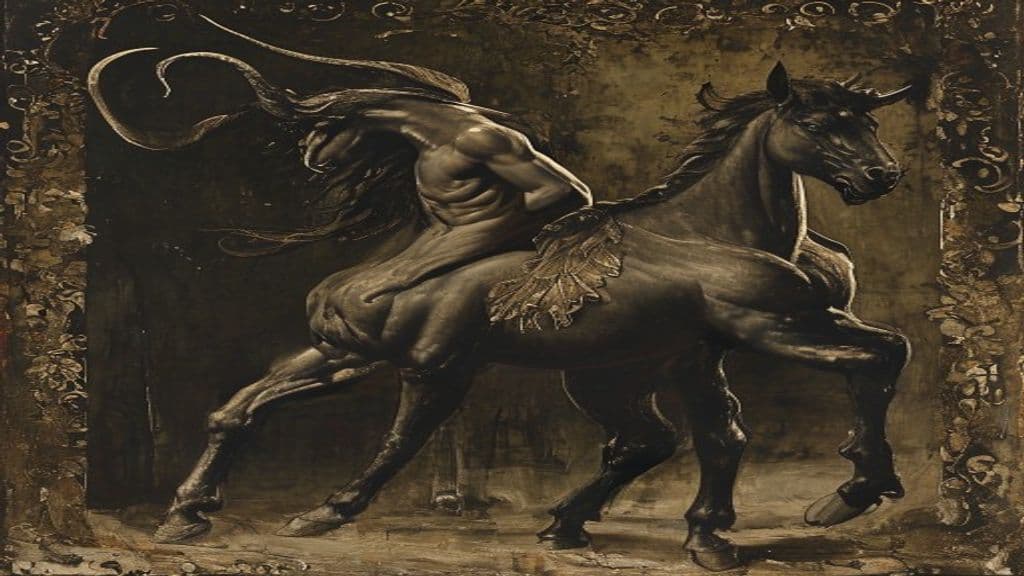
A mythic hybrid from ancient Greek tradition with the upper body of a human and the lower body and legs of a horse. Centaurs appear as a tribal population associated with mountainous and wooded regions of Greece and embody tensions between human social order and untamed nature.

Centaurides (Centauresses)
Lesser

Centaurides (Centauresses)

Female members of the centaur (Kentauroi) tribe in Greek myth. Attested sparsely in literature (notably Hylonome) but frequently represented in Greek and especially Roman-period and late-antique visual art, often in attendant or decorative roles.

Centaurus
Ancient

Centaurus

Centaurus (Ancient Greek: Κένταυρος, Kentauros) is the eponymous mythic progenitor of the centaur race in Greek tradition and a figure immortalized as the southern constellation Centaurus. Sources present him as a son of Apollo and Stilbe and as twin brother to Lapithes; traditions vary about which centaur the constellation specifically represents.

Cephalion
Lesser

Cephalion

Cephalion is attested in classical and late-antique sources as a human name appearing in two distinct registers: (1) an authorial/historian or rhetorician cited by later chroniclers (placed by one source in the time of Hadrian and by another as author of a multi-volume history beginning with Assyria), and (2) a mytho‑genealogical figure named as the son of Amphithemis and the nymph Tritonis. The supplied materials present these as separate, unreconciled references rather than as a single supernatural entity.

Cephalus
Lesser

Cephalus

Cephalus (Ancient Greek: Κέφαλος) is an ancient Greek masculine personal name borne by several mythological and literary figures. In surviving sources he appears as a hunter, husband of Procris, a beloved of the dawn-goddess Eos in some traditions, a son in varying genealogies, and as a named interlocutor in Plato's Republic rather than as a class of supernatural being.

Cepheus (son of Aleus)
Lesser

Cepheus (son of Aleus)

Cepheus (Ancient Greek: Κηφεύς) is a mythic king of Tegea in Arcadia attested in classical Greek legendary cycles. He is portrayed as a mortal heroic-age ruler and warrior—an Argonaut and participant in pan-Hellenic heroic lists—who was killed, along with most of his twenty sons, during Heracles's campaign against Hippocoon of Sparta. The name Cepheus is also shared by another mythic king (the king of Aethiopia, father of Andromeda) and by a northern constellation; some later summaries conflate details between these figures.

Cephisso
Minor Spirit

Cephisso

Cephisso is attested in classical-era lists as one of a triad of Muses described in some local Greek traditions as daughters of Apollo and associated symbolically with lyre-string names. She appears in brief encyclopedic and mythographic notices rather than in extended mythic narratives.

Cephissus
Lesser

Cephissus

Cephissus (Kephisos) is the personified river-divinity name applied to several distinct rivers in ancient Greece (notably in Attica, Boeotia/Phocis, and Argolis). As one of the Potamoi, Cephissus functions primarily as a local river-god appearing in genealogies (father of naiads and certain mortals), in topographical myths, and in occasional civic or adjudicatory mentions.