
Greater
Cerberus
The three-headed hound of Hades, guardian of the underworld's gates — welcoming the dead in but allowing no shade to leave and no living mortal to enter uninvited.
1796 documented Greek supernatural beings from the Evil Eye grimoire, including 1106 lesser and 335 minor spirit in power tier.
page 11 of 30
The three-headed hound of Hades, guardian of the underworld's gates — welcoming the dead in but allowing no shade to leave and no living mortal to enter uninvited.
Cercaphus (Ancient Greek Κέρκαφος) is a name borne by several related figures in Greek mythic genealogies and local foundation stories. Most prominently he appears among the Heliadae of Rhodes—portrayed as a son/descendant of Helios whose descendants become eponymous founders of Rhodian cities—but variant traditions attach the name to other ancestral figures in Thessaly and localized etiologies.

Cerceis (Ancient Greek Κερκηίς, Kerkēís) is named in Greek mythological genealogies as one of the Oceanids, the many nymph-daughters of the Titans Oceanus and Tethys. She is attested as a water-associated nymph whose name in the surviving tradition is glossed either as 'of the weaving shuttle' (from kerkis) or as 'gorgeous in form.'

Cercetes (Ancient Greek: Κερκέτης) is a named Egyptian prince in Greek mythic genealogy, recorded as one of the fifty sons of King Aegyptus who married (and was slain by) one of the Danaïdes. He is attested in mythographic catalogues such as the Bibliotheca and preserved in modern summaries like Wikipedia.

The Cercopes (Greek Κέρκωπες, 'tailed ones') are a pair (or more) of mischievous trickster woodland figures in Greek myth, proverbial as liars, thieves, and comic rascals. Best known for stealing Heracles' weapons during his servitude to Omphale and being bound and humiliated by him, they appear across literary fragments and vase imagery and are variously explained as primordial offspring, human tricksters, or etiological figures for monkeys.

Cercyon (Ancient Greek: Κερκύων, Kerkýōn) is a name applied in Greek tradition to at least two figures: a malefactor killed by the hero Theseus during his clearing of the road to Athens, and a genealogical figure described as son of Agamedes and father of Hippothous. Sources present him as a human antagonist or ancestor rather than a supernatural species.

Cercyon (Greek Κερκύων, Kerkúōn) is a figure from Greek myth, portrayed as a violent local ruler or robber near Eleusis who challenged travelers to wrestling matches and killed those he defeated. He is best known as one of the opponents overcome by the culture-hero Theseus, who defeated him by skillful wrestling and slew him, an episode that both eliminates a local menace and links to the institution of wrestling in the mythic tradition.
Cerdo is a named female figure in Greek mythic genealogy, attested in some accounts as the wife of Phoroneus of Argos and mother within early Argive royal lists. She appears only in variant genealogical traditions and is not portrayed in the supplied sources as a deity, cult figure, or supernatural agent.

Ceroessa (Ancient Greek Κερόεσσα, Keróessa) is a legendary human heroine in the foundation-myth cycle of Byzantium. Daughter of Io and Zeus and mother of Byzas by Poseidon, she functions etiologically as the ancestress who links divine genealogy to the founding and toponymy of the Golden Horn.

A singular, extraordinary deer of Greek myth sacred to Artemis and famed as the quarry of Heracles' third labour; described as unusually large, extremely swift, and ritually dedicated to a goddess rather than merely a wild animal.

Cestrinus (Ancient Greek Κεστρῖνος) is a mythic mortal figure from Greek tradition, presented as a son of Helenus (and in some accounts Andromache) who, according to the sources, seized and settled territory north of the River Thyamis and gave his name to the district Cestrine in Epirus. He functions as an eponymous founder in post‑Trojan War genealogical narratives; an alternative, less‑attested tradition identifies him with a king of the Cimmerian Bosporus called Genger.
Ceteus (Ancient Greek Κητεύς, romanized Kêteus) is a name borne by at least two mythic figures in Greek literatures: an Arcadian prince counted among the sons of King Lycaon and a commander listed among the Lamian Centaurs who join Dionysus in his Indian campaign. The name appears in genealogical catalogues and epic lists rather than as a recurring supernatural class.

Ceto (Ancient Greek: Κητώ, Kētṓ) is a primordial sea goddess in Greek mythic cosmology, daughter of Pontus and Gaia, primarily notable as the maternal progenitor of various named monstrous beings (e.g., the Graeae and Gorgons) by Phorcys. Her name is etymologically linked to the common Greek term for sea-monster (kētos), and she functions chiefly as a genealogical and cosmological figure rather than an active, individualized actor in surviving narratives.

Cetus (Greek ketos, Latinized Cetus) is a monstrous sea-being in Greek myth whose ravaging of the Ethiopian coast—sent as divine punishment—threatens Andromeda and is slain by a hero; the creature is commemorated as the constellation Cetus in classical star-maps.

Ceuthonymus (Ancient Greek: Κευθώνυμος) is an attested named daimon of the underworld in ancient Greek mythic listings, known primarily as the father of the underworld figure Menoites. Surviving references give his name and classificatory role but no sustained narrative, cult, or iconography.
Chaetus (Ancient Greek: Χαῖτος) is a mortal figure in Greek mythic genealogies identified as one of the sons of King Aegyptus. He is best known as one of the Aegyptid princes who married a daughter of Danaus (Asteria) and was slain on his wedding night along with most of his brothers.

Chalbes is a named mortal attendant or herald in Greek mythic accounts of the Busiris episode; he is listed among those slain by Heracles when the hero resists an attempted human sacrifice at the Egyptian king's court.
Chalciope (Ancient Greek: Χαλκιόπη, Khalkiópē, literally 'bronze-face') is a personal name attested for several distinct mortal women in Greek mythic genealogies. In the sources she functions as a dynastic or marital figure—daughter, wife, or mother—whose significance lies in lineage and offspring rather than any supernatural attributes.

Chalcodon is a recurring personal name in ancient Greek tradition borne by several distinct mortal figures — kings, princes, and warriors — who appear across local genealogies and heroic narratives (e.g., as a son of Aegyptus, a king of the Abantes, and a king of Kos). The name functions as a legendary human ancestor and narrative foil rather than as a single supernatural being.

Chalcon (Ancient Greek: Χάλκων) is a personal name borne by several distinct figures in Greek myth and epic—ranging from ordinary mortal princes, fathers, and a charioteer/tutor to one attested member of the Telchines. The name does not denote a single species or office but recurs across genealogies and Trojan War–cycle episodes.

Charaxus (Greek Χάραξος) is a mytho-historical male figure in Ancient Greek tradition who appears in two distinct registers: as one of the Lapiths killed in the centauromachy at the wedding of Pirithous, and as a historical/legendary merchant identified in later anecdotes as the brother of the archaic lyric poet Sappho.

Chariclo is a name assigned to one or two nymph figures in Ancient Greek myth. In surviving sources she appears either as the wife of the centaur Chiron and member of a Chironian household (nurse of Achilles in some scholia) or as a devotee/attendant of Athena who is the mother of the seer Tiresias; both roles place her among domestic, caregiving, and intercessory minor divine figures rather than as an independent cultic deity.

Charisius is an Arcadian prince in Greek myth, counted among the fifty sons of King Lycaon and traditionally credited as the eponymous founder of Charisia (Charisiae) in Arcadia. He is attested only in genealogical and toponymic lists and is not described as a supernatural being or cult figure in the available sources.

In ancient Greek tradition the Charites (singular Charis) are divine female personifications who embody grace, beauty, festivity and the social arts of banquet, dance and song. Treated primarily as a collective presence and attendants of major Olympian gods (notably Aphrodite and Apollo), they feature in regional cults and poetic traditions as figures who enhance attractiveness, conviviality and ritual joy.
Charnabon (also attested as Carnabon) is a figure from Greek mythic fragments described as a mortal king of the Getae/Thrace who treacherously attacked the culture-hero Triptolemus during the latter's mission to disseminate agriculture; Demeter punished him and, in the tradition, placed him among the stars as the constellation Ophiuchus.
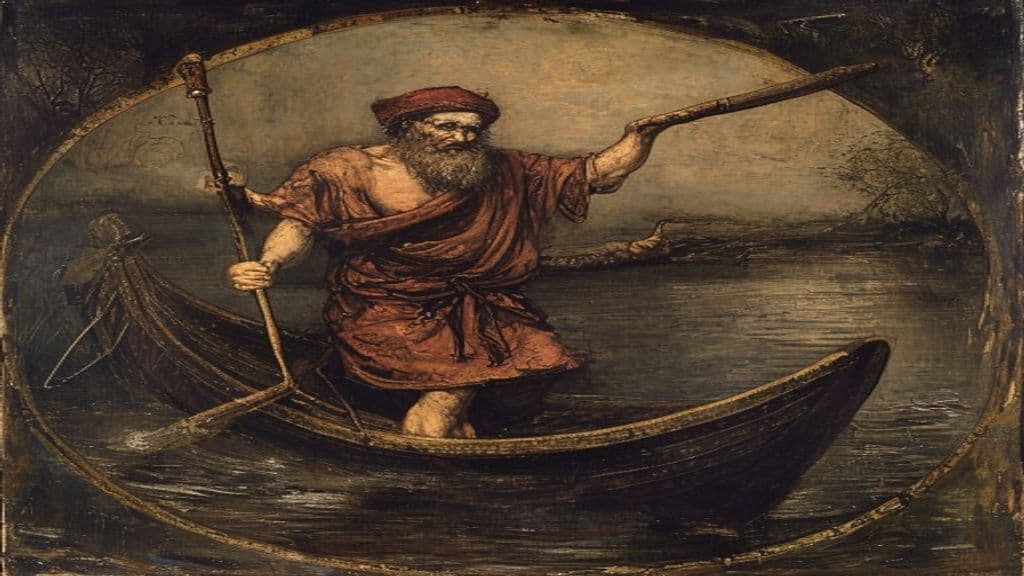
Charon (Χάρων) is the ferryman of the Greek underworld who conveys the souls of the dead across the boundary river (variously Acheron or Styx). He functions as an underworld attendant and psychopomp whose service typically requires funeral rites and payment (Charon's obol).

In Greek myth, Charybdis is a sea-associated monstrous force localized to the Strait of Messina, treated in sources either as an anthropomorphized sea-monster or as a violent whirlpool/stream that three times a day swallows and belches the sea. Paired with Scylla, she functions as an unavoidable maritime hazard and proverbial dilemma for voyagers.

Chelidon is an attested personal name appearing in modern reference works as belonging to multiple figures in Greek mythology; the provided sources do not supply narrative, descriptive, or cultic details for any specific Chelidon figure. The name also appears in 20th-century English-language newspapers as the name of a ship or crew, but those usages are not linked to mythic narratives in the supplied materials.
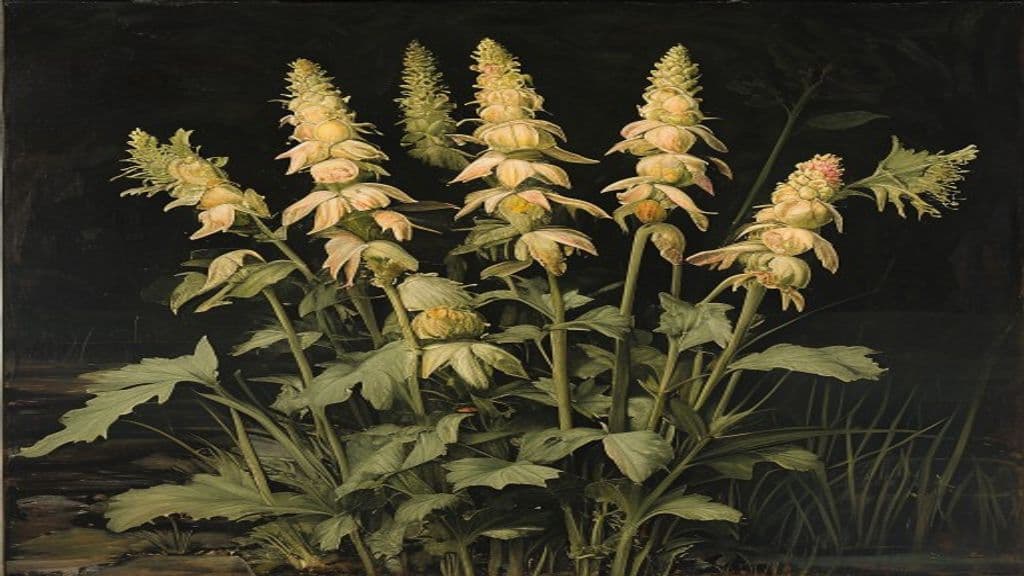
Chelone is primarily documented as a botanical genus of perennial plants native to eastern North America (commonly called turtlehead or balmony) and secondarily as the name of a nymph attested in classical Aesopic fable tradition. The sources provide horticultural, taxonomic, and herbal-medicinal information for the plants and only a brief literary mention for the mythic name.

The name Chersidamas (Χερσιδάμας) refers to two distinct mortal princes in Greek myth: a Taphian prince, son of Pterelaus, listed among brothers slain in a dynastic feud; and a Trojan prince, a son of Priam, who is said to have been killed by Odysseus during the Trojan War.

Chesias (Ancient Greek: Χησιὰς, Khēsiàs) is a named nymph in Greek mythology, described in the sources as "the fairest of the nymphs," wife of the Samian river-god Imbrasus, and mother of the Naiad Ocyrhoë. She is attested as a local nature-nymph associated with the island of Samos.

A group of mortal descendants of the hero Heracles (Hērakleidai) represented in Euripides' tragedy Children of Heracles (performed 430 BCE). In the play they appear as suppliants persecuted by Eurystheus whose fate raises civic, religious, and moral questions rather than as a class of supernatural beings.

The Chimera (Ancient Greek Χίμαιρα) is a monstrous hybrid from Greek myth—traditionally a fire‑breathing composite described with a lion forepart, a goat in the middle, and a serpent hind—portrayed as a destructive beast from Lycia that ravaged cattle and countryside and was slain by the hero Bellerophon. In later tradition its image also appears in visionary or allegorical contexts as an omen.

A name-attested figure in Greek mythic genealogies listed among several women called Chione (Χιόνη, 'snow'); in the surviving summary sources the Daedalion figure is recorded as having borne sons by the gods Hermes and Apollo. The name Chione appears across multiple, distinct mythic women rather than indicating a single unified supernatural office.
Chirimachus (Ancient Greek: Χειρίμαχον) is a minor figure in Greek mythic genealogy: a Mycenaean prince, son of King Electryon and Anaxo, named among his brothers and reported to have been killed by the sons of Pterelaus during a dynastic conflict over the descendants of Perseus.
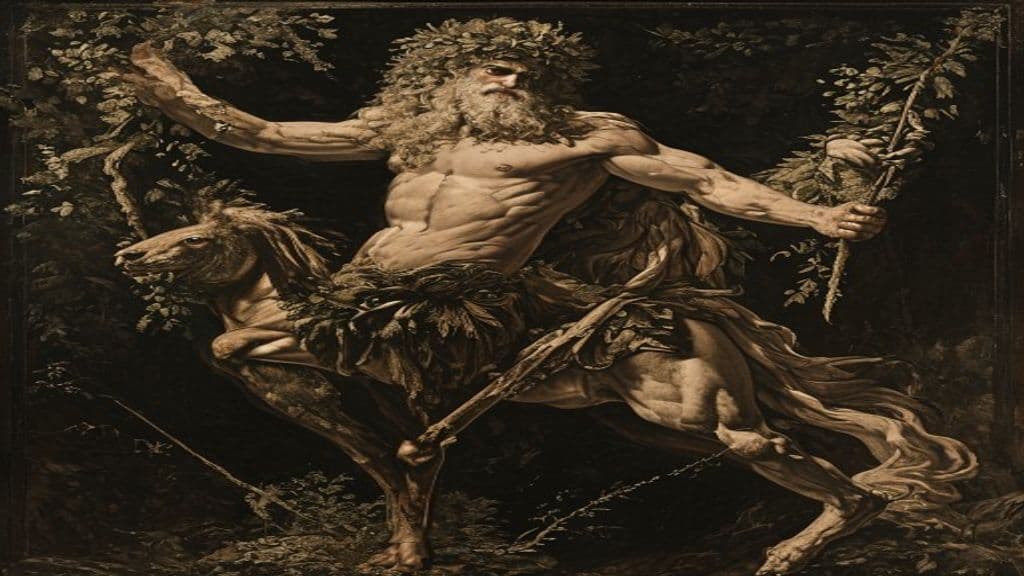
Chiron (Ancient Greek: Χείρων, Kheírōn) is a unique centaur of Greek myth, famed as a cultured tutor, healer, and oracle who taught skills such as medicine, music, archery, hunting, and prophecy to culture-heroes. Associated with Mount Pelion in Thessaly, he is presented as wise and civilized in contrast to other, wilder centaurs.
Chloris (Greek Χλῶρις Chlōris) is a personal name borne by multiple female figures in Greek myth—nymphs, queenly wives, and mortal women—whose name derives from the adjective for green/pale and evokes vegetal/fresh imagery. The sources treat Chloris not as a single, uniform supernatural species but as several mythic persons appearing in different genealogies and narratives.

Chloris of Pylos is a figure in Greek mythic genealogy presented in the supplied sources as a Minyan princess, daughter of Amphion (and in one source, of Amphion and Niobe), wife of Neleus, and mother of Periclymenus. Her attested role is genealogical and dynastic rather than narrative or supernatural.

Chloris of Thebes (Ancient Greek: Χλῶρις), also called Meliboea in some traditions, is a mythological mortal woman named among the Niobids — the children of Amphion and Niobe — in Greek genealogical traditions. In some sources and later summaries she is conflated with a Chloris who is said to have married Neleus of Pylos, a variant that integrates her into Pylian genealogies.

Chlorus is a mythic genealogical figure attested in brief classical/compilatory sources of Greek tradition. He appears as a link in a lineage (son of Pelasgus, father of Haemon, ancestor of Thessalus) used etiologically to connect eponyms such as Haemonia and Thessaly to named progenitors.

Chremetes is the Greek name of a river in Libya and the river's divine personification (a Potamos). He appears in classical geographical and mythographic lists and as the father of the naiad Anchiroe, serving a primarily local genealogical and toponymic role in Greek sources.

Chromia (Ancient Greek: Χρωμία, Khrōmía) is a minor mythological woman in Greek genealogies, identified as daughter of Itonus (son of Amphictyon, grandson of Deucalion) and in some traditions named as consort of Endymion and mother of Aetolus, Paeon, Epeius, and Eurycyda. The same modern lexical form 'Chromia' is also used as a name for a public blockchain platform, a Miraheze project wiki, and as the English mineral/oxide term (Cr2O3), but these are homonymous and not conflated with the mythic figure in the available sources.

Chromios is an ancient Greek personal name attested for several human figures in classical literary and historical sources (not a single supernatural being). Attestations include Chromios of Aitna, victor in a chariot race celebrated by Pindar (Nemean I, c. 473 BCE); a warrior/captain name found in epic/Homeric indices and scholia; an Argive survivor in the tradition of the Battle of the 300 Champions; and the modern asteroid 32726 Chromios, a Jupiter Trojan named from the Greek onomastic repertoire.

Chromis (Ancient Greek Χρόμις) is an anthroponym attested across multiple ancient Greek and Roman mythic episodes. The name is borne by several distinct minor figures — including at least one centaur at the Centauromachy and several mortal warriors in epic war-lists — rather than a single supernatural species or cult figure.
Chromius is an ancient Greek personal name borne by multiple mortal males in the epic and mythographic tradition (princes, warriors, and allies appearing in genealogies and the Trojan War cycle). The entries are distinct human figures tied to dynastic and martial roles rather than a single supernatural entity.
Chronos is the ancient Greek personification of Time, treated in Orphic and related traditions as a primordial, generative principle that orders the cosmos. He is depicted in art as an aged bearded man associated with the zodiac wheel and later conflated with the Titan Cronus and the Renaissance 'Father Time' figure.

Chrysanthius of Sardis (Ancient Greek: Χρυσάνθιος; died AD 505) was a late-antique Greek Neoplatonist philosopher and the high-priest of Lydia. A pupil in the lineage of Iamblichus via Aedesius, he is recorded as devoted to the mystical side of Neoplatonism and noted for moderation in his priestly office.

Chrysaor is a figure from Greek myth born from the beheading of the Gorgon Medusa; traditionally presented as the brother of Pegasus and the father of Geryon, he functions chiefly as a genealogical and etiological link within Hesiodic and related traditions.

A mortal woman in Greek myth best known from Book 1 of the Iliad as the daughter of Chryses, a priest of Apollo, taken as a captive/concubine by Agamemnon; her father's supplication to Apollo and the resulting plague force Agamemnon to return her, illustrating the nexus of religious and political obligation in the epic. Later traditions give her personal names (Astynome) or rework her into medieval figures such as Cressida and, in some post-Homeric accounts, assign her children by Agamemnon.
Chryses is a mortal Trojan priest of Apollo at the sanctuary of Chryse who appears in the opening episode of Homer’s Iliad as a suppliant seeking the return of his captive daughter. His ritual petition to Apollo leads the god to afflict the Greek army with a plague when Agamemnon dishonors him, and the eventual restitution of the daughter ends the divine punishment.

Chrysopeleia is an Arcadian hamadryad (tree-nymph) of Greek myth whose life is bound to a particular oak (or tree). In the surviving tradition she is rescued when floodwaters threaten her tree, becomes the lover of the mortal Arcas, and bears him two sons, Apheidas and Elatus.

Chrysothemis (Ancient Greek Χρυσόθεμις) is a mortal woman in the Greek tragic tradition, presented as a daughter of Agamemnon and Clytemnestra and sister to Electra and Orestes. In surviving dramatic sources she functions as a domestic and psychological foil to Electra: she mourns her father but counsels conciliation and self-preservation rather than avenging Agamemnon's murder.

Chrysus (Ancient Greek Χρυσός, Khrusos) is the personification of the metal gold in ancient Greek literary and scholastic sources. Attested chiefly in poetic lines (Pindar) and scholia, Chrysus functions as a minor divine personification or daimon that indexes gold's value, brilliance, and cosmological provenance rather than a cultic deity with independent mythic narratives.

Chthonia (Ancient Greek: Χθονία, 'of the earth' or 'subterranean') is a polyvalent term in ancient Greek myth and cult used as a personal name for several mythic women, an epithet for gods and goddesses in their earth-or underworld-aspects (notably Demeter), and a poetical/toponymic name for Crete. It marks persons, sanctuaries, festivals and divine functions associated with the chthonic (earth/subterranean) domain rather than designating a single, individuated supernatural being.

A classificatory term from ancient Greek religion (χθόνιος, khthónios) for gods, spirits, and divine aspects associated with the earth beneath the living surface and the underworld; the label marks subterranean, funerary, or fertility-oriented cult and ritual practice rather than a single uniform species of being.

Chthonius is an Ancient Greek name and epithet meaning "belonging to the earth/the underworld." It is applied to multiple distinct mythic figures — several mortal or semi-divine personages (a Spartos, a son of Aegyptus, a founder-son of Poseidon and Syme, a Centaur, a Giant) — and used as a chthonic epithet for major gods; in modern taxonomy it names a genus of pseudoscorpions.
The Cicones (Greek Κίκονες, Latinized Cicones or Ciconians) are a Homeric Thracian tribe associated with the town of Ismarus (Ismara) on the south coast of Thrace. In epic sources they appear as a martial human people who repel Odysseus' raiders after the sack of Ismarus (Odyssey Book IX) and are listed among allies in the Iliad; they are treated as a human ethnic/political group rather than as supernatural beings.
Cilix is a figure from Greek myth presented as a Phoenician prince and eponymous founder whose settlement in Asia Minor explains the place-name Cilicia. In modern usage the name is also applied to a genus of insects and to an impact structure on Jupiter's moon Europa, but those are scientific reuses of the name.

A widespread folktale protagonist and narrative archetype: a young woman who endures neglect or obscurity and is unexpectedly elevated to recognition and higher social status, typically by marriage. The motif appears in many cultures and historical periods and functions as a moral and social narrative about identity, tokens of recognition, and social mobility rather than as a supernatural being.

Cinyras is a mythic human king and eponymous founder-figure in Greek and Roman literary traditions, chiefly associated with Cyprus (notably Paphos). He functions as a legendary ancestor, founder of priestly lines connected to the cult of Aphrodite Paphia, and the tragic protagonist of the Myrrha–Adonis cycle; classical authors also link him with musical skill and eastern (Phoenician/Cilician/Byblian) cultural connections.